ZTE(000063)

Search documents
港股高开 科技股普涨 铜价新高铜业股大涨
Ge Long Hui· 2025-10-30 01:43
Group 1 - The Federal Reserve has lowered interest rates by 25 basis points as expected, which may influence market liquidity and investment strategies [1] - The US-China summit is scheduled to begin today at 10 AM, potentially impacting trade relations and market sentiment [1] - Nvidia's market capitalization has reached $5 trillion, marking a significant milestone for the company and the tech sector [1] Group 2 - The Hong Kong stock market opened higher, with the Hang Seng Index rising by 0.76%, the National Index by 0.59%, and the Hang Seng Tech Index by 0.53%, indicating positive investor sentiment [1] - Major technology stocks such as JD.com, Tencent, and Alibaba have all seen increases, reflecting a strong performance in the tech sector [1] - Copper prices have reached record highs due to supply risks from mining disruptions, leading to a surge in copper-related stocks, particularly Jiangxi Copper, which rose over 6% [1] Group 3 - The Hong Kong stock market closed with the Hang Seng Index down by 0.54%, while Alibaba reached a four-year high, demonstrating volatility in the market [1] - The Hong Kong Technology ETF and the Hang Seng Index ETF both increased by over 1%, indicating strong interest in technology investments [1] - The Central Enterprise Dividend ETF in Hong Kong has attracted over 3 billion yuan in investments in October, highlighting a growing trend towards dividend and technology-focused investments [1]



中兴通讯前三季营收破千亿、净利润承压 发力算力新增长点
2 1 Shi Ji Jing Ji Bao Dao· 2025-10-30 00:46
Core Viewpoint - ZTE Corporation reported a revenue of 100.52 billion yuan for the first three quarters of the year, marking an 11.6% year-on-year increase, while net profit fell by 32.69% to 5.322 billion yuan [1] Financial Performance - The decline in revenue from operator networks was influenced by reduced investment in communication infrastructure by domestic operators, with domestic market revenue decreasing while international market revenue increased [2] - The government and enterprise business saw a significant revenue increase of 130%, while consumer business revenue remained stable [2] - Capital expenditure by the three major operators is expected to decline in the first half of 2025, with a noted shift towards increased investment in computing power [2] Strategic Shift - ZTE is transitioning towards a "connectivity + computing power" strategy, focusing on consolidating its domestic base while actively investing in future technologies such as intelligent computing and high-speed network access [3] - The company has segmented its business into four main areas: network, computing power, home, and personal, with computing power now accounting for 25% of revenue [3] Growth in Computing Power Segment - Revenue from computing power increased by 180% year-on-year, with server and storage revenue growing by 250% and data center product revenue increasing by 120% [4] - ZTE's self-developed DPU chips and high-capacity switching chips are facilitating the large-scale interconnection of domestic GPU cards, with its intelligent computing servers being adopted by major domestic internet and financial companies [4] Market Reaction - As of October 29, ZTE's A-share price fell by 6.46%, closing at 46.2 yuan per share, with a market capitalization of 221 billion yuan [5]

中兴通讯前三季营收破千亿、净利润承压,发力算力新增长点
2 1 Shi Ji Jing Ji Bao Dao· 2025-10-30 00:23
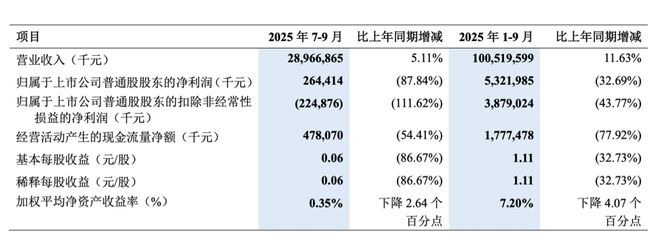
Core Viewpoint - The telecommunications industry is accelerating the exploration of computing power business potential, with ZTE Corporation reporting a revenue increase but a significant decline in net profit for the first three quarters of the year [1] Financial Performance - For the first three quarters, ZTE achieved a total revenue of 100.52 billion yuan, a year-on-year increase of 11.6% [2] - The net profit attributable to shareholders was 5.32 billion yuan, down 32.69% year-on-year [2] - Operating cash flow for the first three quarters decreased by 77.92% to 1.78 billion yuan [2] - Basic and diluted earnings per share were both 1.11 yuan, reflecting a decrease of 32.73% [2] Business Segments - The operator network revenue was under pressure due to a decline in domestic telecom infrastructure investment, while international market revenue grew [2][3] - The enterprise business revenue increased by 130% year-on-year, and consumer business revenue showed steady growth [2] - The computing power segment saw a significant revenue increase of 180% year-on-year, with server and storage revenue up 250% and data center product revenue up 120% [6] Industry Trends - Domestic telecom operators are reducing capital expenditures on communication infrastructure as the 5G-A network matures, impacting ZTE's performance [3] - Capital expenditure in the computing power sector is expected to continue rising, with China Mobile planning to allocate 373 billion yuan to computing power in 2025, representing an increase to 25% of its total capital expenditure [3] Strategic Direction - ZTE is transitioning towards a "connectivity + computing power" strategy, focusing on consolidating its domestic market while actively investing in future technologies [4] - The company has segmented its business into four areas: network (50%), computing power (25%), home (15%), and personal (10%), indicating a rising share of computing power revenue [4] - ZTE's self-developed DPU chips and high-capacity switching chips are being utilized in major domestic internet and financial companies, enhancing its position in the computing power market [7]

中兴通讯营收1005亿归母净利减26亿 营业成本激增经营现金流净额降77.9%
Chang Jiang Shang Bao· 2025-10-29 23:52
Core Viewpoint - ZTE Corporation has reported significant revenue growth but a substantial decline in net profit, indicating a challenging financial situation despite increased sales [2][3]. Revenue Performance - In the first three quarters of 2025, ZTE's operating revenue reached approximately 100.5 billion yuan, marking a historic increase of over 11% year-on-year [4]. - This is the first time ZTE's revenue has surpassed the 100 billion yuan mark in its history, with a notable acceleration in growth compared to previous years [4]. Profitability Issues - The net profit attributable to shareholders for the first three quarters was approximately 5.3 billion yuan, a decrease of about 2.6 billion yuan compared to the previous year, representing a decline of over 32% [5]. - The third quarter saw a dramatic drop in net profit, with a nearly 90% year-on-year decline, and a negative non-recurring net profit of -225 million yuan, indicating a rare loss for the company [5][6]. Cost and Expense Analysis - ZTE's operating costs surged to 69.81 billion yuan, reflecting a year-on-year increase of 30.08%, significantly outpacing revenue growth [2]. - Research and development expenses decreased, and net operating cash flow fell to 1.78 billion yuan, down 77.92% year-on-year [2][13]. Market Dynamics - The slowdown in global 5G investments has prompted ZTE to pivot towards new markets, such as intelligent computing servers [2]. - The company's gross margin has declined by nearly 10 percentage points, indicating potential challenges in maintaining profitability amid competitive pressures [7][12]. Business Segment Performance - The revenue from operator network business decreased to 35.06 billion yuan, while government and enterprise business revenue surged by 109.9% to 19.25 billion yuan, becoming a key driver of overall revenue growth [11]. - However, the gross margin for the government and enterprise business was only 8.27%, reflecting a 13.5 percentage point decline, which is the lowest among ZTE's business segments [12].
陈志萍:用科技创新向世界讲述中国品牌故事
Ren Min Wang· 2025-10-29 16:19
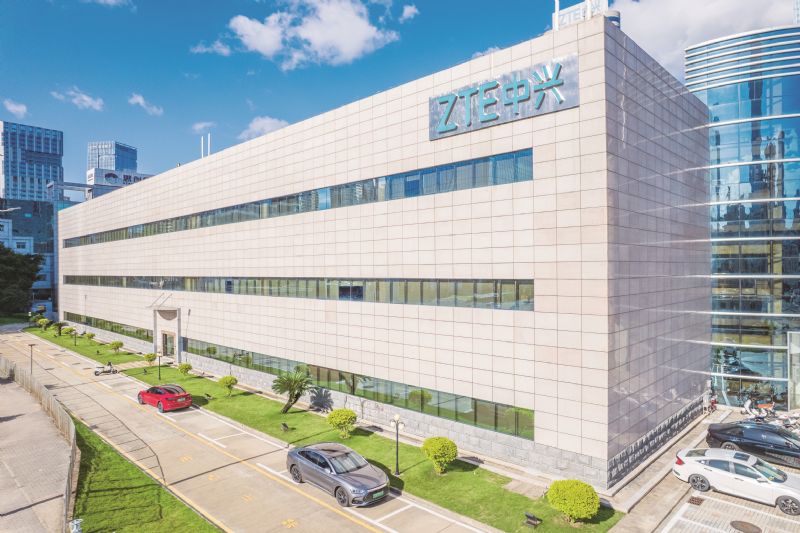
Core Viewpoint - ZTE Corporation emphasizes its commitment to technological innovation and sustainable development, aiming to provide practical benefits to the public through its advancements in technology and services [2][3][4]. Group 1: Technological Innovation - ZTE focuses on a human-centered approach to technological innovation, transforming breakthroughs into accessible services for the public [3]. - The company collaborates with partners to create a "city air life corridor" using 5G-A and drone technology, reducing the average delivery time for emergency blood transport by 30 minutes [3]. - ZTE has launched the "AI Intelligent Total Inspection Machine" in collaboration with partners, enabling remote access to high-quality medical resources for communities in remote areas [3]. - The company offers a range of smart terminals designed for personal users, focusing on health, entertainment, and travel scenarios [3]. Group 2: Sustainable Development - ZTE places sustainable development at the core of its corporate strategy, aligning its operations with the United Nations Sustainable Development Goals [4]. - The company has published a sustainability report for 17 consecutive years, showcasing its commitment to green innovation across various domains, including green operations and supply chains [4]. - ZTE actively contributes to global digital inclusivity, engaging in educational and humanitarian efforts, such as building solar-powered communication bases in Liberia [4]. Group 3: Global Market Strategy - ZTE builds a localized ecosystem by deeply engaging with local markets, including signing agreements for local smartphone manufacturing in countries like Angola and Zambia [5]. - The company emphasizes local talent development through partnerships with educational institutions and technical training programs [5]. - ZTE participates in over 60 major exhibitions globally each year and hosts more than 40 brand events, creating a comprehensive international communication matrix [5].

通信行业:“十五五”规划建议稿发布,商业航天将加速发展
Dongxing Securities· 2025-10-29 12:04
Investment Rating - The report maintains a "positive" investment rating for the communication industry, indicating an expected performance that is stronger than the market benchmark by over 5% [4]. Core Insights - The report highlights the acceleration of commercial aerospace development as a key driver for the "14th Five-Year Plan," emphasizing the importance of building a modern industrial system and advancing new economic growth points such as quantum technology and sixth-generation mobile communication [2][11]. - The communication and computing network infrastructure is transitioning from large-scale investment to efficient development, with ongoing expansion in related markets such as base station equipment, IDC, liquid cooling, optical modules, and computing chips [3][10]. - The report notes significant advancements in satellite internet, with a total of 93 satellites launched by China Star Network in 2025, and the successful launch of 18 satellites in one mission by Shanghai Yanjin Satellite [3][10]. Summary by Sections Industry Overview - As of mid-2025, China has 4.549 million 5G base stations, with a net increase of 298,000 from the previous year, while the number of 5G-A networks is expanding across over 300 cities [10]. - The smart computing industry is experiencing growth, with the total number of operational computing center racks reaching 10.85 million, a 23.3% increase from the end of 2024 [10]. Future Developments - The report discusses the early-stage development of quantum technology and sixth-generation mobile communication, with significant potential for future economic contributions [11][12]. - The global 6G development timeline is outlined, with key milestones set for 2025 and 2029, indicating a strategic push for technological advancement [12]. Investment Recommendations - The report identifies several companies within the satellite internet industry, including China Satellite (600118.SH) and China Satcom (601698.SH), as potential investment opportunities [14]. - For communication networks and computing networks, companies such as ZTE Corporation (000063.SZ) and Xinwei Technology (688387.SH) are highlighted as key players [15].



主力资金 | 3股尾盘获主力资金爆买
Zheng Quan Shi Bao· 2025-10-29 10:25
Market Overview - The Shanghai Composite Index surpassed 4000 points, with the ChiNext Index rising nearly 3% and the North Star 50 Index soaring over 8% [1] - Most industry sectors experienced gains, particularly in energy metals, photovoltaic equipment, non-ferrous metals, and multi-financial sectors, while banking and shipbuilding sectors saw declines [1] Capital Flow Analysis - The net outflow of main funds in the Shanghai and Shenzhen markets was 618 million yuan, with 13 industries experiencing net inflows [1] - The power equipment, banking, and non-ferrous metal industries had net inflows of 9.441 billion yuan, 1.556 billion yuan, and 1.174 billion yuan respectively [1] - The telecommunications industry led the net outflows with 4.163 billion yuan, followed by electronics, defense, and food and beverage sectors, each exceeding 1 billion yuan in outflows [1] Individual Stock Performance - Six stocks saw net inflows exceeding 1 billion yuan, with Shanzi Gaoke leading at 2.02 billion yuan, followed by Sunshine Power at 1.465 billion yuan [2][3] - Shanzi Gaoke reported a net profit of 437 million yuan for the first three quarters, a year-on-year increase of 132.03%, largely due to non-recurring gains [2] - Sunshine Power's stock rose over 15% amid a surge in energy metals and battery sectors, supported by strategic planning for new industries [2] Tail-End Capital Flow - At the market close, the net inflow of main funds was 3.239 billion yuan, with significant inflows in non-ferrous metals and power equipment [5] - Notable stocks with net inflows exceeding 200 million yuan included Ningde Times, Xian Dao Intelligent, and Tianfu Communication [5][6] - Sunshine Power experienced a significant net outflow of over 300 million yuan at the close, the highest among individual stocks [7]



数据复盘丨锂矿、固态电池等概念走强 125股获主力资金净流入超1亿元
Zheng Quan Shi Bao Wang· 2025-10-29 09:57
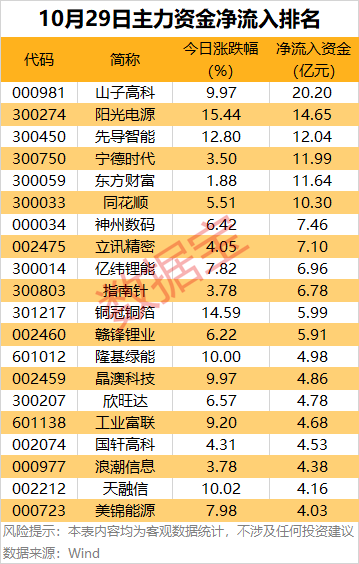
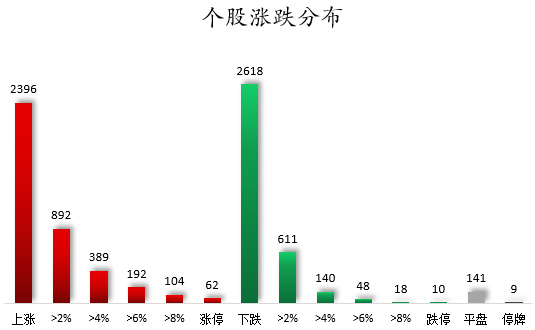
Market Overview - The Shanghai Composite Index closed at 4016.33 points, up 0.7%, marking a 10-year high [1] - The Shenzhen Component Index rose by 1.95% to 13691.38 points, while the ChiNext Index increased by 2.93% to 3324.27 points [1] - Total trading volume in the Shanghai and Shenzhen markets reached 22560.14 billion yuan, an increase of 1081.15 billion yuan from the previous trading day [1] Sector Performance - Strong performance was observed in sectors such as electric equipment, non-ferrous metals, securities, precious metals, chemicals, steel, electronics, and building materials [3] - Active concepts included lithium mining, solid-state batteries, quantum technology, rare earth permanent magnets, and phosphorus chemicals [3] - Conversely, sectors like banking, food and beverage, textiles, light manufacturing, and beauty care experienced declines [3] Individual Stock Movements - A total of 2396 stocks rose while 2618 stocks fell, with 62 stocks hitting the daily limit up and 10 stocks hitting the limit down [3] - ST Zhongdi led with 9 consecutive limit-up days, followed by Shikong Technology with 6 consecutive days [4] Capital Flow - The net outflow of main funds in the Shanghai and Shenzhen markets was 6.18 billion yuan, with the ChiNext seeing a net inflow of 16.62 billion yuan [5][6] - The electric equipment sector saw the highest net inflow of 94.41 billion yuan, while the communication sector experienced the largest net outflow of 41.63 billion yuan [6] Notable Stocks - 125 stocks received net inflows exceeding 1 billion yuan, with Shanzi Gaoke leading at 20.2 billion yuan [11][12] - Conversely, 101 stocks faced net outflows over 1 billion yuan, with ZTE Corporation experiencing the largest outflow of 17.2 billion yuan [15][16] Institutional Activity - Institutional investors net bought approximately 18.72 billion yuan, with Yangguang Electric Power being the top net purchase at 10.55 billion yuan [19][20]
10月29日主力资金流向日报
Zheng Quan Shi Bao Wang· 2025-10-29 09:43
Market Overview - On October 29, the Shanghai Composite Index rose by 0.70%, the Shenzhen Component Index increased by 1.95%, the ChiNext Index climbed by 2.93%, and the CSI 300 Index gained 1.19% [1] - Among the tradable A-shares, 2,672 stocks rose, accounting for 49.19%, while 2,621 stocks declined [1] Capital Flow - The net inflow of main funds was 5.406 billion yuan for the day [1] - The ChiNext saw a net inflow of 2.059 billion yuan, while the STAR Market experienced a net outflow of 3.783 billion yuan [1] - The CSI 300 constituent stocks had a net inflow of 9.392 billion yuan [1] Industry Performance - Out of the 24 first-level industries classified by Shenwan, the top-performing sectors were Electric Equipment and Nonferrous Metals, with increases of 4.79% and 4.28%, respectively [1] - The sectors with the largest declines were Banking and Food & Beverage, with decreases of 1.98% and 0.56% [1] Industry Capital Flow - The Electric Equipment industry led with a net inflow of 16.132 billion yuan and a daily increase of 4.79% [1] - The Nonferrous Metals industry followed with a net inflow of 5.997 billion yuan and a daily increase of 4.28% [1] - The Electronics industry had the largest net outflow, totaling 6.540 billion yuan, despite a daily increase of 1.16% [1] - Other sectors with significant net outflows included Communication and Defense Industry, with outflows of 4.736 billion yuan and 3.374 billion yuan, respectively [1] Individual Stock Performance - A total of 2,050 stocks experienced net inflows, with 889 stocks having inflows exceeding 10 million yuan [2] - The stock with the highest net inflow was Longi Green Energy, which rose by 10.00% with a net inflow of 2.192 billion yuan [2] - Other notable stocks with significant inflows included Shanzi Gaoke and Industrial Fulian, with net inflows of 2.143 billion yuan and 1.432 billion yuan, respectively [2] - Conversely, 130 stocks had net outflows exceeding 100 million yuan, with ZTE, Zhaoyi Innovation, and SMIC leading in outflows of 1.848 billion yuan, 1.076 billion yuan, and 922 million yuan, respectively [2]