FINANCIAL STREET(000402)

Search documents
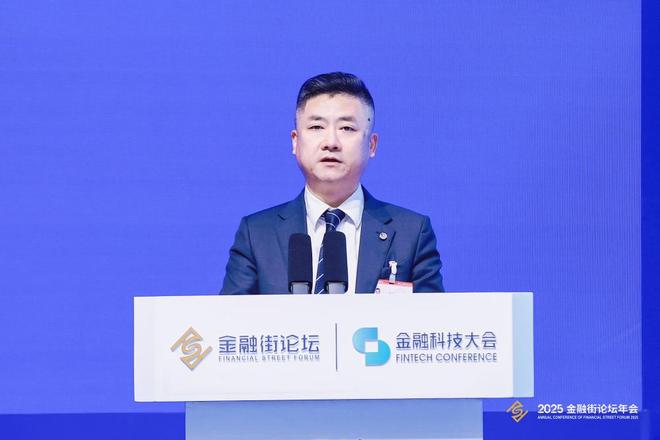
2025金融街论坛|2025全球金融科技中心城市榜单:北京排名第一,新兴中心崛起
Bei Jing Shang Bao· 2025-10-29 14:42
Core Insights - The report highlights the competitive landscape of global fintech cities, with a focus on the top 50 cities selected from over 80 worldwide, showcasing their fintech ecosystems and industry development status [1][3] Ranking Overview - Beijing ranks first globally in the 2025 fintech city rankings, followed by San Francisco, New York, London, Shanghai, Shenzhen, Hangzhou, Singapore, Hong Kong, and Paris [3] - The rankings show minimal changes compared to 2024, with Hong Kong rising one position and Paris replacing Sydney in the top 10 [3] Trends in Fintech Development - The report identifies five core trends in fintech development, emphasizing the need for innovation and competitive advantage amidst a rapidly evolving global landscape [1] - The gap in fintech development index scores between the top-ranked city and the tenth has decreased from 29.7 points in 2020 to 22.8 points in 2025, indicating a more competitive environment [4] Regional Analysis - Asia leads the global fintech competition, with 25 cities in the top 50, representing 50% of the total [6][7] - Among the top 10 cities, 60% are from Asia, with five cities from China, highlighting the region's dominance in fintech [6] Emerging Market Dynamics - The report notes that 14 cities in the top 50 have improved their rankings, with a significant presence from emerging markets, which account for 50% of the cities showing upward movement [9] - The rise of new fintech centers is attributed to both industry/technology-driven and ecosystem/rules-driven development models [9] Importance of Fintech Development - Fintech is crucial for modern financial system innovation, driving economic growth and creating job opportunities [10] - The report emphasizes the need for diverse and inclusive market innovation, high research investment, and international collaboration to enhance the competitiveness of cities in fintech [10]


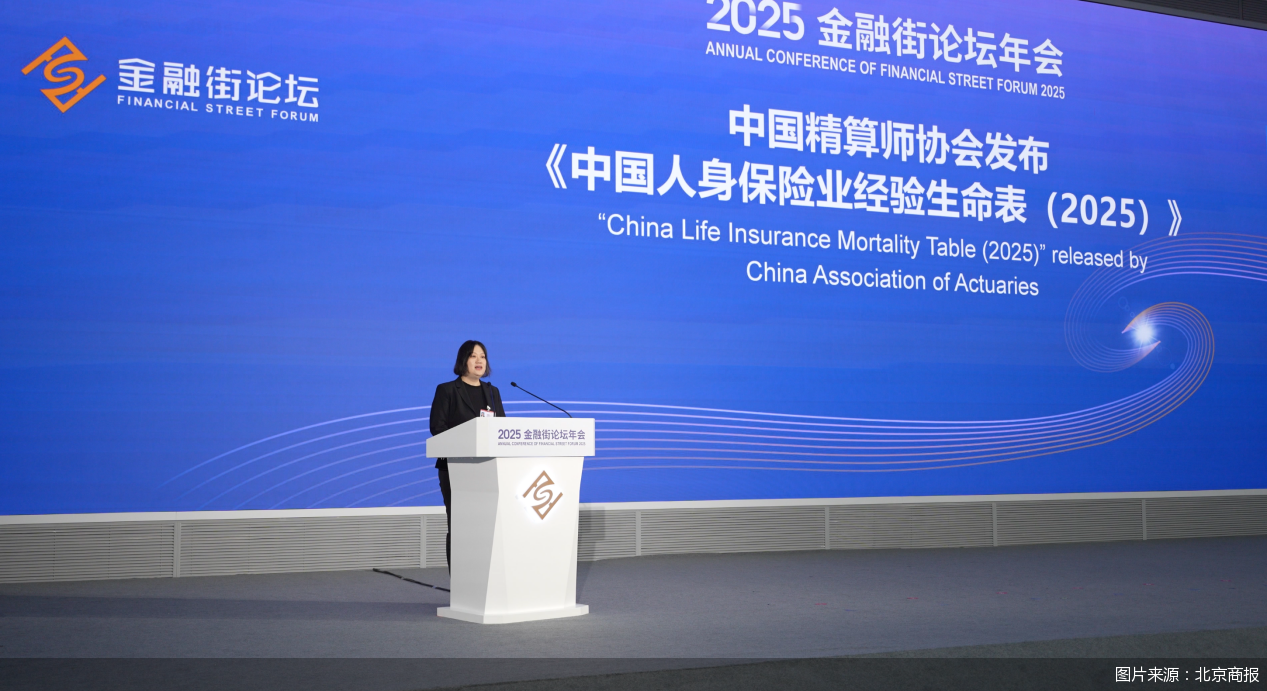
2025金融街论坛|人身险第四套经验生命表重磅发布,终身寿险保费有望下降,年金险保费或涨
Bei Jing Shang Bao· 2025-10-29 14:22
Core Viewpoint - The release of the "2025 Experience Life Table" by the China Actuarial Society marks a significant update in the life insurance industry, reflecting changes in population life expectancy and mortality rates, which will influence product design and pricing in the insurance sector [1][4][10]. Group 1: Life Table Overview - The 2025 version of the life table includes various tables for pension and non-pension businesses, serving as a crucial tool for pricing, reserve assessment, and risk management in insurance [4][6]. - The life table indicates a continuous increase in life expectancy, with the fourth version showing an approximate 10-year increase compared to the first version [4][6]. - Improvements in child mortality rates and reduced mortality in economically underdeveloped regions highlight the success of national strategies like poverty alleviation and rural revitalization [4][6]. Group 2: Impact on Insurance Products - The updated life table will provide essential data for designing more scientifically sound insurance products, particularly in pension and death risk coverage [6][10]. - The introduction of the single life table allows for more personalized product pricing and risk assessment, enabling insurance companies to better meet consumer needs [6][10]. - The anticipated changes in mortality rates suggest potential decreases in premiums for life insurance products, while pension products may see an increase due to extended payout periods [8][9]. Group 3: Regulatory Framework - The Financial Regulatory Authority has issued a notification to guide the use of the new life table, emphasizing the need for prudent assessment of mortality rates and fair distribution of dividends [11][12]. - The notification aims to enhance the actuarial responsibilities of insurance companies, ensuring that they effectively utilize the life table for risk management and consumer protection [12]. - Future developments may include real-time adjustments to individual risk rates based on advanced AI models, promoting fairness in insurance pricing [12][13].
2025金融街论坛|全球头部机构齐聚G-SIFIs,共商AI驱动下的金融创新与治理
Bei Jing Shang Bao· 2025-10-29 14:09
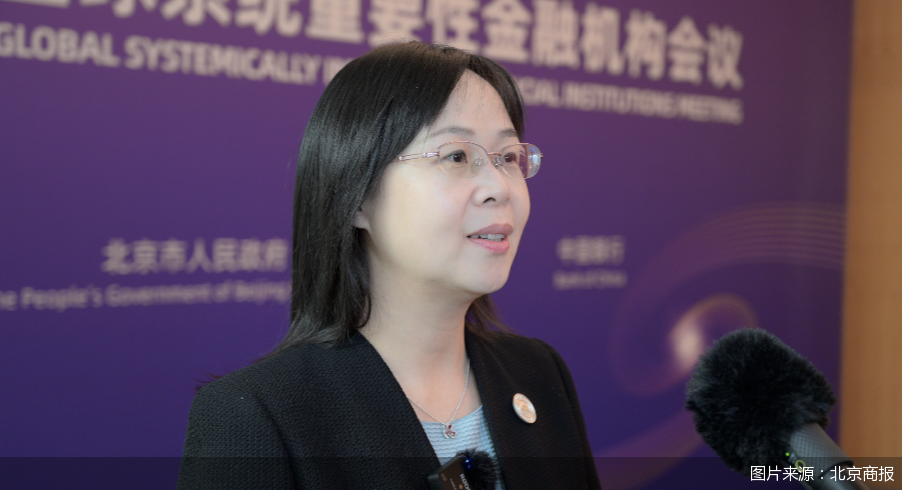
Group 1 - The conference on global systemically important financial institutions (G-SIFIs) is held annually, focusing on international financial governance and promoting global cooperation [2] - This year's conference emphasizes the transformative impact of artificial intelligence (AI) on the financial industry, discussing its role in financial innovation, risk evolution, regulatory adaptation, and international collaboration [5][6] - The event gathers top global financial institutions and experts, enhancing its representativeness and significance in addressing current financial challenges [4][7] Group 2 - The conference aims to build a stable and interconnected global financial system in the AI era, highlighting the need for compliance and orderly operations [5] - Previous conferences have addressed various critical topics, including green finance, sustainable development, and digital economy, leading to actionable initiatives like the "Climate-Friendly Banking Beijing Initiative" [6] - The role of G-SIFIs is crucial in global financial stability, risk prevention, and resource allocation, with ongoing efforts to enhance global financial governance [7]

北京金融街服务局:持续深化与国际金融中心城市共同交流
Xin Hua Cai Jing· 2025-10-29 13:56
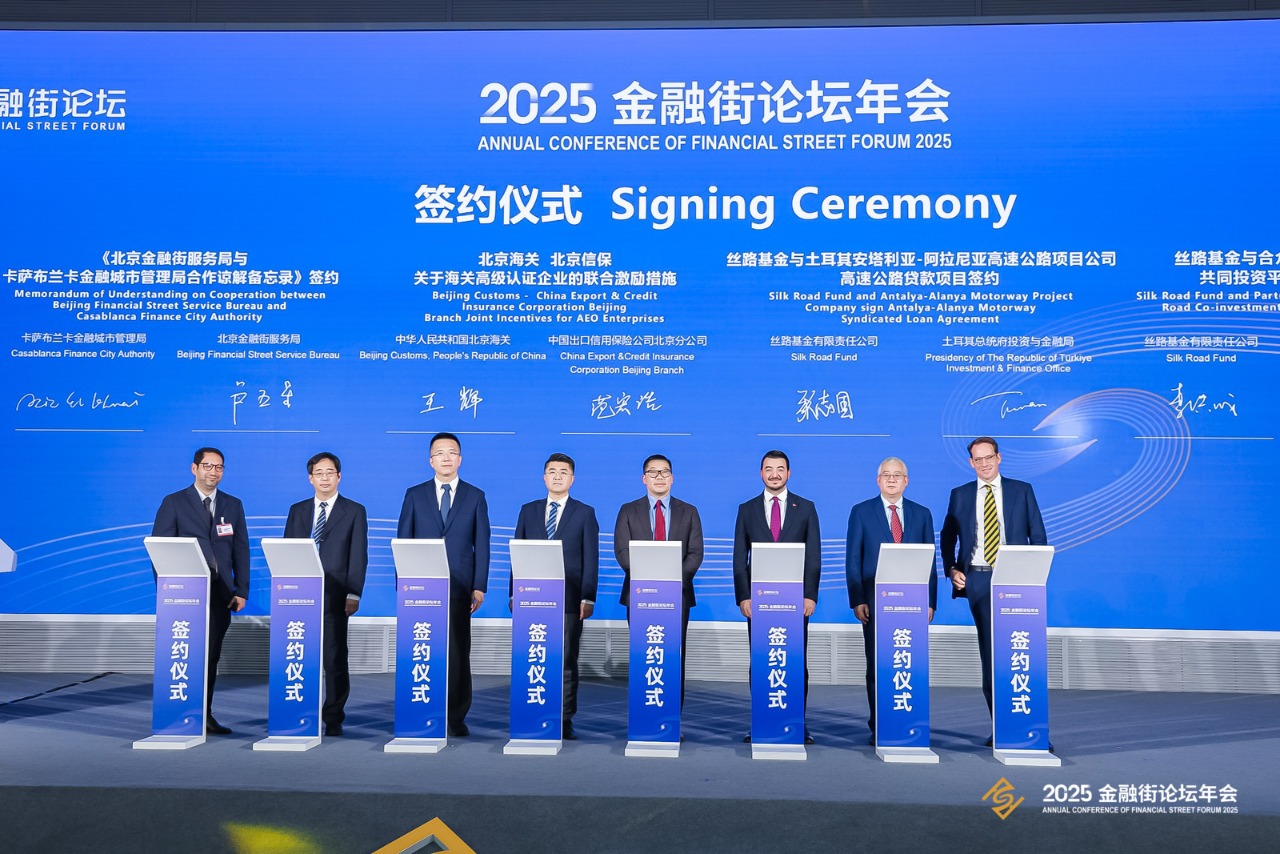
Core Viewpoint - Beijing is expanding its high-level opening-up and enhancing financial capabilities to support international cooperation, as evidenced by recent agreements signed during the "Financial Street Release" event [1][3]. Group 1: Agreements Signed - The Beijing Financial Street Service Bureau signed a cooperation memorandum with the Casablanca Financial City Authority, marking a new phase in their collaboration since their first agreement in 2018 [3]. - Beijing Customs and Beijing Credit Insurance signed a joint incentive measure for customs advanced certification enterprises [1]. - The Silk Road Fund signed a loan project agreement with the Antalya-Alanya Highway Project Company in Turkey [1]. - The Silk Road Fund also established a joint investment platform project with Hezhong Group under the Belt and Road Initiative [1]. Group 2: Areas of Cooperation - The collaboration between Beijing Financial Street and Casablanca Financial City will focus on promoting green and sustainable finance, financial innovation and technology, mutual establishment of financial institutions, experience sharing, talent education and training, and organizing forums [3]. - Casablanca Financial City is recognized as a significant financial economic hub, and its development director expressed eagerness to strengthen exchanges and collaborate with Chinese financial institutions in areas like green finance and financial technology [5]. - The Beijing Financial Street aims to deepen exchanges with international financial centers, expand high-level financial openness, and enhance bilateral investment cooperation, contributing to the construction of a strong financial nation [5].
2025金融街论坛|便利外汇资金结算,外汇局新政来了!
Bei Jing Shang Bao· 2025-10-29 13:36
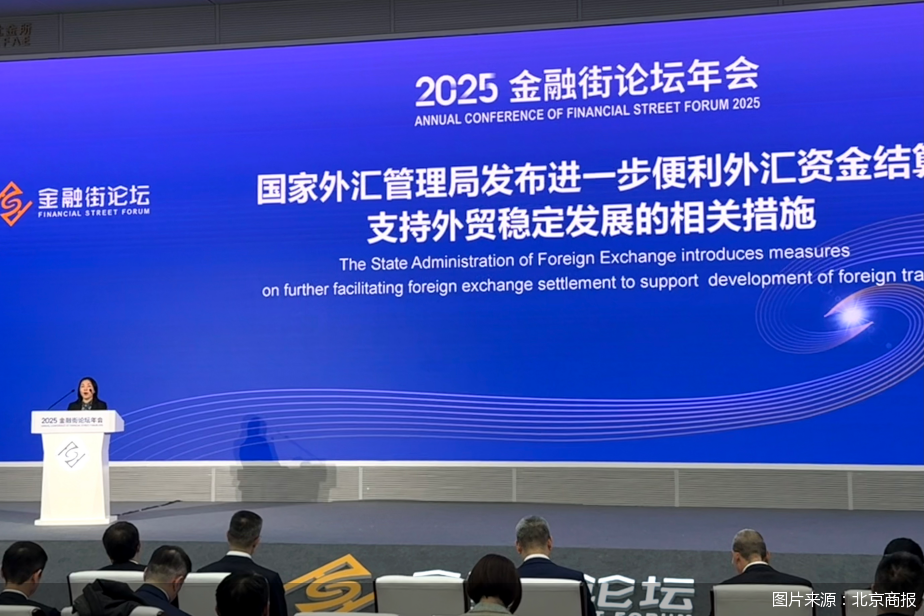
Core Viewpoint - The State Administration of Foreign Exchange (SAFE) has issued a notification to enhance the convenience of cross-border trade settlement and improve the quality of foreign exchange support for stable foreign trade development [1][3]. Group 1: Policy Measures - SAFE will introduce nine new policy measures focused on trade facilitation, including expanding pilot areas for high-level cross-border trade openness and optimizing foreign exchange settlement for new trade entities [3]. - The notification aims to optimize and expand convenience policies, covering more regions with compliant business entities and supporting various types of net settlement for service fees related to goods trade [3][4]. - The notification simplifies procedures for quality multinational companies in foreign exchange business, allowing banks to facilitate their transactions more efficiently [3][4]. Group 2: Support for New Trade Formats - The notification supports the healthy development of new trade formats, such as cross-border e-commerce, by recommending quality e-commerce platforms to banks for better access to convenient settlement policies [4]. - It encourages banks to adopt automated systems for reviewing electronic transaction information, streamlining the process for new trade entities [4]. - Banks are guided to establish special mechanisms for handling foreign exchange business with legitimate transaction backgrounds, focusing on substance over form [4]. Group 3: Efficiency in Fund Utilization - The notification enhances the efficiency of fund utilization for service trade enterprises, particularly for those involved in overseas contracting projects [5]. - It supports the centralized management of overseas funds, helping to reduce financial costs and activate "idle" funds in overseas projects [5]. - The notification also relaxes management of service trade advance payment, allowing domestic enterprises to handle related fund transfers conveniently [5]. Group 4: Future Directions - SAFE plans to further facilitate cross-border trade settlement and ensure that policy benefits reach business entities quickly and accurately, contributing to the construction of a higher-level open economic system [6].
2025金融街论坛年会发布多项成果 促进金融与科技“双向奔赴”
Zheng Quan Ri Bao Wang· 2025-10-29 13:28
Group 1 - The 2025 Financial Street Forum Annual Conference focuses on the theme of "Global Financial Development under Innovation, Transformation, and Reshaping," aiming to deepen the coordinated development of finance and the technology innovation industry [1] - Key achievements and collaborations were announced, including the launch of the "Technology Achievement Transformation Zone" and the "Torch Entrepreneurship Incubation Collaborative Network" [1] - The conference highlighted the stable development of China's technology innovation economy, emphasizing the need for financial product innovation to support the growth of technology enterprises [1][2] Group 2 - The integration of finance and technology innovation provides funding motivation for technological advancements, creating an information exchange channel between financial institutions and technology companies [2] - The forum organized a "Production-Finance Symbiosis" investment and financing matching event, introducing practical measures benefiting small and medium-sized enterprises [2] - Financial institutions actively participated in the forum, with representatives expressing confidence in the acceleration of a technology-driven, capital-supported industrial era [2][3]
2025金融街论坛|聚焦四大方面,北京证监局等六部门发布政策吸引中长期资金入市
Bei Jing Shang Bao· 2025-10-29 13:17
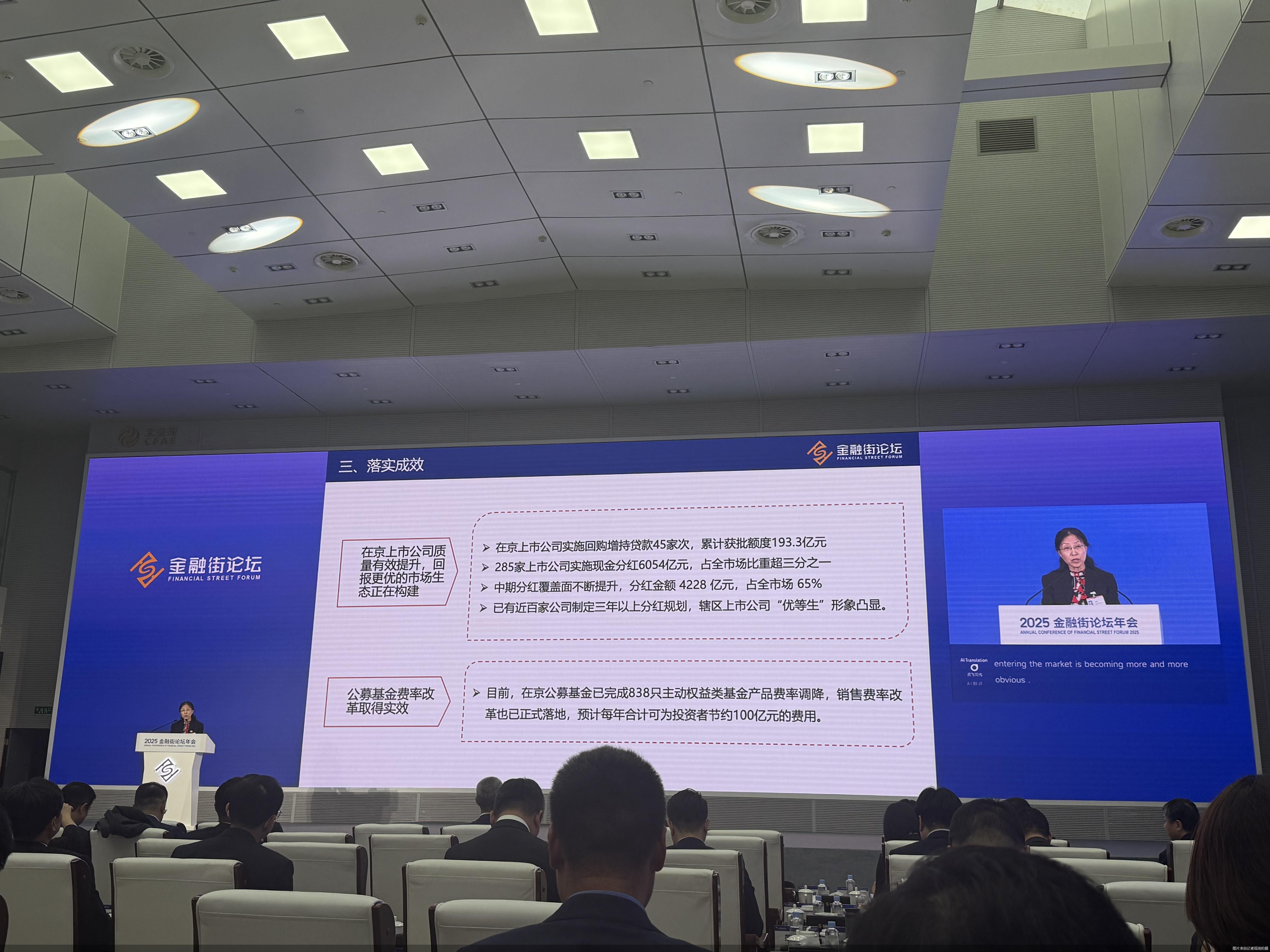
Core Viewpoint - The Beijing Securities Regulatory Bureau and five other departments have jointly issued the "Implementation Opinions on Promoting Long-term Funds to Enter the Market" to enhance the quality of listed companies and encourage long-term investment strategies [5][6]. Group 1: Implementation Opinions - The implementation opinions focus on four main areas: optimizing market ecology, developing equity public funds, improving investment policies for commercial insurance and pensions, and encouraging bank wealth management and trust funds to participate in the capital market [5]. - The plan aims to establish a long-term performance-oriented assessment mechanism for commercial insurance funds and promote share buybacks and increases among qualified listed companies [5]. Group 2: Market Impact - The quality of listed companies in Beijing has improved, with 45 companies implementing buybacks totaling 19.33 billion yuan and 285 companies distributing cash dividends amounting to 605.4 billion yuan [6]. - The coverage of mid-term dividends is increasing, with nearly 100 companies developing three-year dividend plans, enhancing the reputation of listed companies [6]. Group 3: Fund Management - The number of equity funds managed by public funds in Beijing has reached 1,090, a year-on-year increase of 19%, with a total scale of 1.94 trillion yuan, reflecting a growth of 25.56% [7]. - Public fund fee reforms have been effective, with 838 actively managed equity fund products reducing fees, potentially saving investors 10 billion yuan annually [6][7]. Group 4: Long-term Investment Trends - The total assets managed by various pension funds in the region have reached 2.44 trillion yuan, a year-on-year increase of 20.73%, indicating a positive cycle of long-term investment [7]. - Long-term assessment mechanisms are being established for public funds and pension funds, with a focus on three-year performance evaluations [7].
2025金融街论坛|加快推出北证50ETF!事关北交所、新三板未来建设,重点来了
Sou Hu Cai Jing· 2025-10-29 13:13
Core Viewpoint - The Beijing Stock Exchange (BSE) aims to enhance its role in serving innovative small and medium-sized enterprises (SMEs) by accelerating the launch of the North Exchange 50 ETF, deepening reforms in the New Third Board, and promoting the integration of the third and fourth boards [1][4]. Group 1: BSE Initiatives - The BSE plans to expedite the launch of the North Exchange 50 ETF and explore the introduction of after-hours fixed-price trading to improve investment convenience [3]. - The BSE has completed the transition to the new 920 securities code for existing stocks, marking its full entry into an independent code era, which aims to strengthen its market positioning for innovative SMEs [4]. - The BSE and the New Third Board will operate in tandem, with a focus on enhancing the service capabilities for innovative SMEs and improving the regulatory framework for the New Third Board [5][6]. Group 2: Investment and Funding Strategies - The BSE is committed to fostering long-term capital and patient capital, implementing plans to encourage more public funds to invest in small-cap stocks, and enhancing services for various types of funds [6]. - The BSE emphasizes the importance of nurturing a robust investor base and attracting long-term investors to support innovative SMEs [6]. Group 3: R&D and Innovation - BSE-listed companies have significantly increased their R&D investments, with a total of over 9.1 billion yuan expected in 2024, and more than 60% of these companies reporting year-on-year growth in R&D spending [9]. - The total number of patents held by BSE companies reached 26,900 by the end of 2024, reflecting an 8.64% year-on-year increase, with nearly 7,000 of these being invention patents, which grew by 21.86% [10]. - The BSE aims to optimize its listing mechanisms to support innovative enterprises and traditional industry upgrades, ensuring that financial resources are directed towards key technological sectors [10].
2025金融街论坛|中国证监会副主席李超:以AI赋能资本市场创新发展,推动资本市场高质量数字化转型
Bei Jing Shang Bao· 2025-10-29 13:10
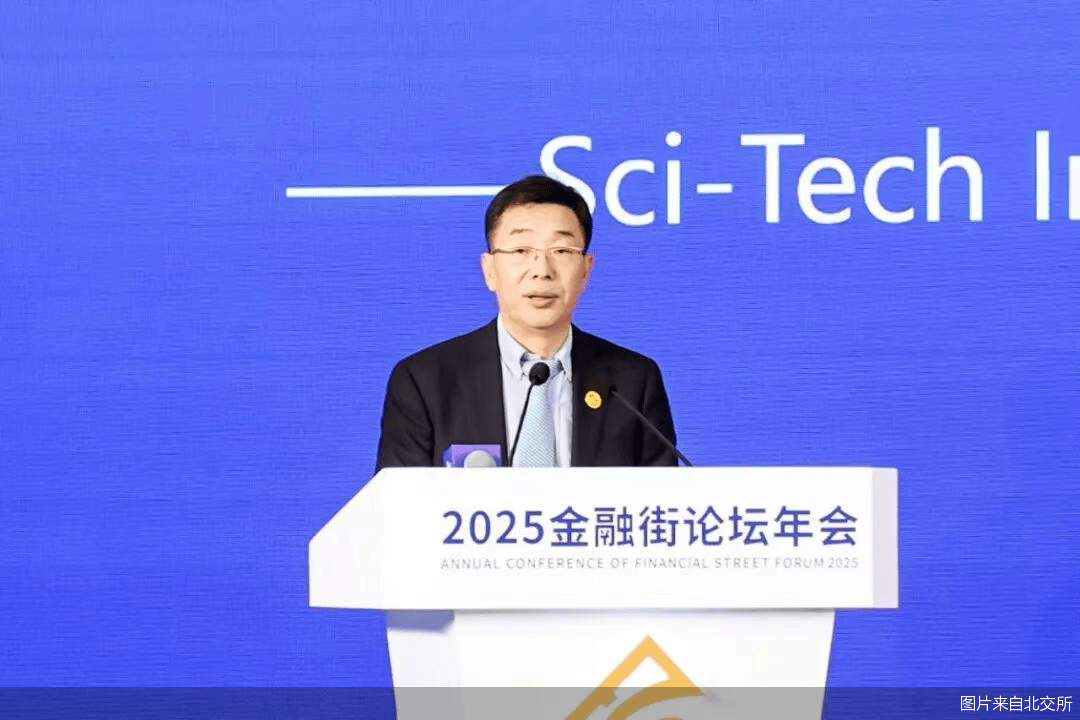
Core Viewpoint - The forum emphasizes the transformative impact of artificial intelligence (AI) on the capital market, highlighting the need for regulatory measures to ensure safe and effective application of AI technologies [1][2]. Group 1: AI Application in Capital Markets - The focus should be on high-value application scenarios, promoting deep integration of business and technology, and exploring pilot projects for "AI + capital markets" [1]. - Continuous research and application of AI in key business scenarios should be pursued, aiming for scalable innovative service models [1]. Group 2: Infrastructure and Data Sharing - Strengthening foundational support by enhancing intelligent computing infrastructure and promoting data sharing within the industry is essential [2]. - The establishment of a common high-quality dataset and an industry knowledge repository is necessary to support AI model applications [2]. Group 3: Risk Management and Safety Measures - A comprehensive risk control system covering the entire model development and deployment process should be established to assess safety risks [2]. - Emphasis on human oversight in critical decision-making processes is crucial to avoid systemic risks associated with AI applications [2].
平安产险龙泉出席2025金融街论坛年会,分享人工智能重塑保险价值链的创新实践
2 1 Shi Ji Jing Ji Bao Dao· 2025-10-29 11:55
Core Insights - The 2025 Financial Street Forum Annual Conference was held in Beijing from October 27 to 30, focusing on "Innovation, Transformation, and Reshaping Global Financial Development" [1] - The forum is recognized as a "barometer" for China's financial reform and development, attracting significant attention from the industry [1] - The event featured a forum on "Safe Development and Application of Artificial Intelligence to Support High-Quality Development of Digital Finance," where Ping An Property & Casualty was the only invited insurance company [1][6] Company AI Application - Ping An Property & Casualty has entered the 3.0 phase of large-scale AI application, achieving 100% AI coverage in core business scenarios, significantly enhancing the depth and breadth of AI applications across five key areas: marketing, service, operations, management, and business [3][5] - The company has implemented over 1,000 sub-business scenarios focusing on intelligent marketing, service, operations, management, and business [5] - Ping An has a team of over 350 algorithm engineers and has built a flexible AI architecture that allows for rapid integration of new large models within a week [5] AI Safety Governance - The company emphasizes AI safety governance, establishing a comprehensive AI safety governance system that includes application safety, data security, model algorithm safety, and compliance operations [6] - This governance framework is aligned with the principles set forth by the National Financial Regulatory Administration for responsible AI development and application [6] AI Empowerment in Insurance - Ping An Property & Casualty has developed the "Eagle Eye" system, which integrates over 100 risk models to enhance digital risk reduction services, providing disaster warnings and risk assessments for projects along the Belt and Road Initiative [7] - During the "14th Five-Year Plan" period, the Eagle Eye system issued 162 million disaster warnings, covering 130 million customers [7] - The company has successfully automated 90% of new car insurance policy operations using AI, reducing processing time from 6 minutes to 1.2 minutes [8] Strategic Focus - The company aims to deepen the safe development and application of AI, focusing on high-quality development and innovation to meet the growing needs of the public [9] - Ping An Property & Casualty is committed to contributing to China's modernization efforts by providing warm insurance services and enhancing financial capabilities [9]