BOE(000725)

Search documents
AI智能眼镜出货量同比增长超64%,消费电子ETF(561600)长期值得关注
Xin Lang Cai Jing· 2025-10-22 02:25
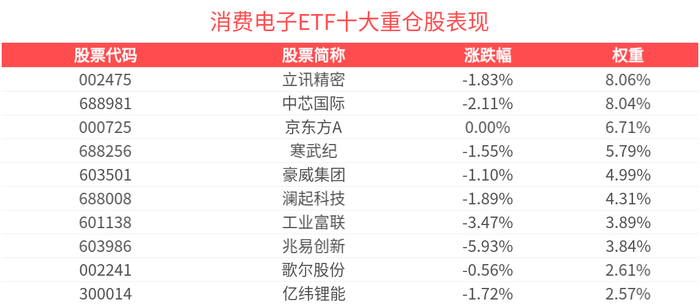
Group 1: Market Overview - The global smart glasses market is expected to reach a shipment volume of 4.065 million units in the first half of 2025, representing a year-on-year growth of 64.2% [1] - The industry is entering a rapid development phase driven by AI technology, supply chain optimization, optical solution advancements, and major players entering the market [1] - By 2029, global smart glasses shipments are projected to exceed 40 million units, with China's market share steadily increasing and a five-year compound annual growth rate (CAGR) of 55.6% from 2024 to 2029, the highest globally [1] Group 2: Index Performance - As of October 22, 2025, the CSI Consumer Electronics Theme Index (931494) has decreased by 1.77%, with component stocks showing mixed performance [1] - Leading gainers include Lixun Precision (3.85%), Deli Technology (2.93%), and Huagong Technology (1.76%), while major decliners include Zhaoyi Innovation (5.93%), Huatian Technology (5.12%), and Silan Microelectronics (4.23%) [1] - The Consumer Electronics ETF (561600) has fallen by 2.09%, with a recent price of 1.22 yuan, but has seen a cumulative increase of 3.84% over the past week as of October 21, 2025 [1] Group 3: Index Composition - The CSI Consumer Electronics Theme Index comprises 50 listed companies involved in component production and consumer electronics brand design and manufacturing [2] - As of September 30, 2025, the top ten weighted stocks in the index include Luxshare Precision, SMIC, Cambricon, Industrial Fulian, and others, collectively accounting for 55.93% of the index [2]







研判2025!中国微纳光学器件行业产业链、市场规模及重点企业分析:高端应用面临技术挑战,规模化生产仍待突破[图]
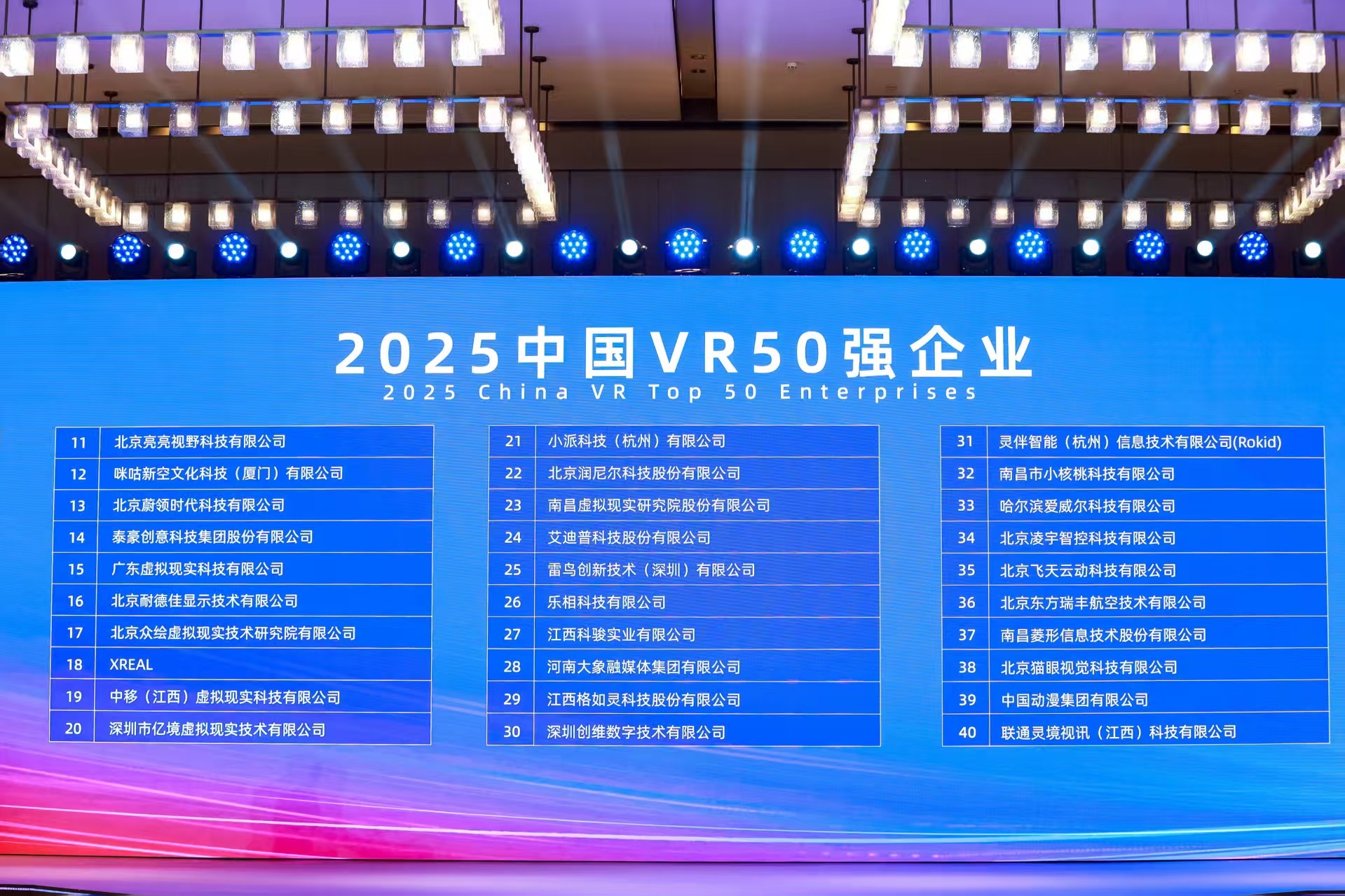
Chan Ye Xin Xi Wang· 2025-10-22 01:15
Core Insights - The Chinese micro-nano optical device industry is experiencing rapid growth driven by technological breakthroughs and market demand, with a projected market size of approximately 865 million yuan in 2024, representing a year-on-year increase of 2.13% [1][4][8] - China has achieved global leadership in areas such as 3nm lithography, atomic-level manufacturing (0.3nm precision), and all-solid-state deep ultraviolet lasers, supporting the nano-level processing of micro-nano components like superlenses and diffraction gratings [1][4][8] - High-end applications of micro-nano optical devices, such as quantum information and biosensing, face technical challenges including insufficient nano-imprinting precision and poor stability of phase-change materials, limiting large-scale production [1][4][8] Industry Overview - Micro-nano optical devices operate at sub-wavelength scales (micron to nano level) to emit, guide, modulate, localize, absorb, and detect light, characterized by micro-nano structural designs that precisely control light field properties [4][5] - These devices are compact, highly integrated, and multifunctional, meeting the demands for miniaturization and multifunctionality in modern equipment, with typical applications in AR/VR near-eye displays, biosensing, optical communication, and quantum information processing [4][5] Industry Value Chain - The upstream of the micro-nano optical device industry includes raw materials such as optical glass, optical crystals, optical plastics, coating materials, and nano materials, as well as production equipment like lithography machines and nano-imprinting machines [4][5] - The midstream involves the manufacturing of micro-nano optical devices, while the downstream applications span consumer electronics, optical communication, biomedical imaging, and automotive electronics [4][5] Market Size - The micro-nano optical device industry in China is projected to grow significantly, with a market size of approximately 865 million yuan in 2024, reflecting a year-on-year growth of 2.13% [1][4][8] - The lithography machine market in China is expected to reach 17.875 billion yuan in 2024, with an 11.11% year-on-year increase, driven by the rising demand for chips due to emerging technologies like 5G, AI, and IoT [6][7] Key Companies - Suzhou Su Da Wei Ge Technology Group Co., Ltd. is a leading enterprise in the micro-nano optical industry, developing nano-imprinting and laser direct-write lithography equipment, achieving 12-inch wafer-level imprinting, and supporting high-end products like AR diffraction waveguide lenses [8] - Shenzhen Hui Chuang Da Technology Co., Ltd. is a global leader in laptop light guide structure components, utilizing micro-nano imprinting technology to achieve self-sufficient production of light guide films and backlight modules, entering supply chains of major companies like Lenovo and HP [9] Industry Development Trends 1. Continuous technological innovation will drive improvements in high-precision manufacturing, with advanced lithography technologies like EUV expected to enhance manufacturing precision [10] 2. Significant growth in market demand is anticipated, with micro-nano optical devices expanding from traditional optical instruments to emerging markets such as semiconductor lighting, VR, and AR [10] 3. The industry landscape is optimizing, with Chinese companies expected to enhance their competitiveness in technology innovation and market expansion, potentially becoming the largest production base for ultra-precision micro-nano optical devices globally [11]



北京东方园林环境股份有限公司关于独立董事获得独立董事培训证明的公告
Shang Hai Zheng Quan Bao· 2025-10-21 19:27
Core Viewpoint - Beijing Oriental Garden Environment Co., Ltd. has announced the election of independent directors and provided updates on ongoing litigation, indicating a focus on corporate governance and legal matters affecting the company [1][2]. Group 1: Independent Director Training - The company held its third extraordinary general meeting on July 28, 2025, where Yang Lei and Zhang Xiaoyu were elected as independent directors for the ninth board, with their term lasting until the board's term ends [1]. - Yang Lei has completed the required training and obtained the independent director training certificate from the Shenzhen Stock Exchange [1]. Group 2: Litigation Progress - The company and its subsidiaries have faced a total of 31.7 million yuan in litigation and arbitration cases over the past twelve months, representing approximately 20.61% of the company's latest audited net assets [2]. - Of this amount, 13.5 million yuan is related to cases where the company is the plaintiff, accounting for about 8.79% of the latest audited net assets [2]. Group 3: Ongoing Legal Matters - The company is actively managing its litigation cases, with ongoing cases as a plaintiff progressing normally, and any significant developments will be disclosed as required [4]. - For cases where the company is a defendant, creditors can seek repayment based on the reorganization plan for debts incurred before November 22, 2024, without impacting the company's post-reorganization operations [5][6]. - Other minor lawsuits primarily involve engineering contract disputes and labor disputes, which do not meet the disclosure standards set by the Shenzhen Stock Exchange [5].

半年研发“烧掉”1900亿,哪家科技创新力最强?
和讯· 2025-10-21 09:00
Core Viewpoint - Chinese hard technology companies are experiencing unprecedented development opportunities against the backdrop of accelerated global technological competition and industrial upgrades. Hard technology is becoming a focal point for capital markets and society, transitioning from laboratory research to large-scale industrialization [2]. Group 1: Innovation Evaluation Framework - The evaluation of a hard technology company's innovation capability should consider dimensions such as talent reserves, R&D investment, and technology output, rather than just market share and revenue [2]. - The "2025 China Hard Technology Listed Companies Innovation Power Ranking" focuses on the A-share information technology sector, using key indicators like the scale and proportion of technical personnel, R&D expenses and growth rates, R&D expense ratios, and patent numbers and structures [2]. - The ranking aims to provide a relatively objective and scientific reference for capital markets, industry research institutions, and the public regarding the innovation paths and development trends of Chinese hard technology companies [2]. Group 2: Ranking Results and Industry Insights - Leading companies in hardware sectors such as communication equipment, display panels, and servers continue to maintain leadership in technological innovation, while semiconductor companies demonstrate strong R&D resilience and technological breakthroughs [3]. - Software service companies are emerging with new achievements in cutting-edge fields like artificial intelligence, large models, security, and financial technology [3]. - The overall ranking reflects the real situation of hard technology companies in terms of talent accumulation, R&D intensity, and patent output, showcasing the technological ambition and industrial competitiveness of China's hard technology sector in 2025 [3]. Group 3: R&D Investment Trends - In the first half of 2025, the A-share information technology industry invested approximately 1900.90 billion yuan in R&D, a year-on-year increase of about 1.57%. Hardware equipment accounted for the largest share at approximately 1141.12 billion yuan, while the semiconductor sector saw the fastest growth with an investment of 396.84 billion yuan, up 13.96% year-on-year [25]. - The software service sector experienced a slight decline in R&D investment, reflecting structural adjustments and cyclical influences [35]. - The differentiation in R&D investment across hard technology sub-sectors indicates varying growth dynamics, with hardware benefiting from scale and semiconductor firms accelerating investments due to policy and capital support [25][34]. Group 4: Company-Specific Insights - The top companies in the innovation power ranking include ZTE Corporation, Dahua Technology, Hikvision, iFlytek, BOE Technology Group, Inspur Information, and others, each demonstrating significant R&D investments and technological capabilities [5][6][7]. - For instance, ZTE Corporation reported a technical personnel ratio of 49% and R&D expenses of 127 billion yuan in the first half of 2025, while Hikvision had a technical personnel ratio of 47% with R&D expenses of 57 billion yuan [22][23]. - The semiconductor sector's leading companies, such as Haiguang Information and Zhongwei Company, are also highlighted for their substantial R&D investments and patent outputs, indicating a robust innovation landscape [16][17]. Group 5: Future Trends in Hard Technology - The competitive advantage in hard technology is shifting from single-point breakthroughs to platform ecosystem development and controllable industrial chain capabilities, driven by market demands for comprehensive solutions [44][45]. - Companies are increasingly focusing on creating integrated solutions that combine hardware, computing power, algorithms, and applications, reflecting a strategic shift in response to complex competition [45]. - The future of hard technology companies will depend on their ability to build stronger comprehensive capabilities in platform ecosystem development and industrial chain control [46].





京东方研究新封装方案提升Micro LED光效
WitsView睿智显示· 2025-10-21 07:44
Core Viewpoint - The research team from BOE has developed an innovative Micro LED packaging solution that addresses key technical challenges in the industry, such as high sidewall light emission, low optical efficiency, and color deviation [2][4]. Group 1: Technical Innovations - The new packaging structure consists of high-refractive-index transparent glue, white high-reflective resin, micro-lens arrays, and patterned black matrices, effectively improving light extraction and reducing color deviation [4][5]. - By introducing a gradient refractive index layer on the Micro LED chip, the critical angle for light emission has been increased from 25 degrees to a maximum of 65.9 degrees, significantly enhancing top light extraction efficiency [5]. - The white reflective resin forms an isosceles trapezoidal structure between chips, resulting in a 27% increase in brightness at a 0° viewing angle [5]. Group 2: Performance Metrics - Simulation results indicate that with a lens curvature of 0.03 and a refractive index of 1.85, light intensity can be increased by over 53% [5]. - The introduction of a patterned black matrix in the packaging glass layer has effectively reduced reflectivity to less than 2%, achieving a high contrast ratio of over 20,000:1, thereby significantly enhancing display quality [5][7]. Group 3: Market Applications and Future Directions - The new packaging design not only improves optical efficiency and uniformity but also enhances packaging reliability, making it suitable for mass production in automotive displays, AR/VR headsets, and wearable devices [7]. - BOE continues to advance Mini/Micro LED direct display technology and applications, with a presentation scheduled at the 2025 Self-emissive Display Industry Seminar to share the latest developments in direct display COG technology [7][9].

79股连续5日或5日以上获融资净买入
Zheng Quan Shi Bao Wang· 2025-10-21 03:41
Core Insights - As of October 20, a total of 79 stocks in the Shanghai and Shenzhen markets have experienced net financing inflows for five consecutive days or more [1] Group 1: Stocks with Longest Continuous Net Inflows - The stocks with the longest continuous net inflows are Yongmaotai, Kede CNC, and Fanwei Network, each having recorded net inflows for nine consecutive trading days [1] - Other notable stocks with significant net inflows include Mindray Medical, BOE Technology Group, Xingqi Eye Medicine, Maixinlin, Dongfang Electronics, Cangzhou Mingzhu, Zhongke Software, and Yingke Medical [1]




2030年VR/MR头戴装置全球出货量预估将达1,440万台
WitsView睿智显示· 2025-10-20 09:19
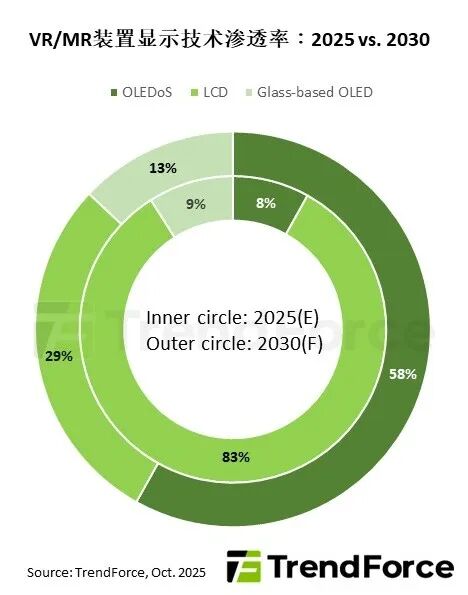
Core Insights - Apple is re-entering the market with an upgraded Vision Pro, focusing on enhancing computational performance and improving weight distribution in VR/MR headsets [2] - TrendForce's report predicts that OLEDoS technology will see a significant increase in penetration, reaching 58% in VR/MR applications by 2030 [2] - Despite a projected decline in global VR/MR product shipments to 5.6 million units in 2025, long-term growth is expected, with shipments reaching 14.4 million units by 2030 [2] Group 1: Market Trends - OLEDoS is emerging as a key display technology for mid-to-high-end VR/MR devices, benefiting from breakthroughs in both supply chain and application [2] - The current market is dominated by high-cost LCD displays, but the expansion of OLEDoS production lines by Chinese suppliers is expected to lower production costs [5] - Major brands are investing in both software and hardware upgrades, which will drive the long-term growth of the VR/MR market [2] Group 2: Competitive Landscape - Apple and Samsung are enhancing user experience through application platforms and generative AI, with Apple’s Vision Pro utilizing the new M5 chip for improved performance [6] - Samsung is collaborating with Google and Qualcomm to launch the Galaxy XR, featuring a 4K OLEDoS display, integrating applications across devices [6] - Meta is also innovating by using a combination of 0.9-inch OLEDoS and Pancake optical architecture to meet the demand for thinner VR/MR products [6] Group 3: Future Outlook - OLEDoS is expected to transition from the mid-to-high-end market to mainstream adoption, becoming a crucial driver for the transformation of the VR/MR industry [6]





TrendForce集邦咨询:预计2030年OLEDoS于VR/MR渗透率将快速增长至58%
智通财经网· 2025-10-20 09:16
Core Insights - OLEDoS technology is experiencing breakthroughs in both supply chain and application, with a projected VR/MR penetration rate reaching 58% by 2030 [1] - Global VR/MR product shipments are expected to decline to 5.6 million units in 2025 due to underperformance from major brands, but long-term projections estimate shipments will rise to 14.4 million units by 2030 [4] - Display technology is crucial for VR/MR product pricing, with LCD remaining the mainstream choice, while OLEDoS is anticipated to gain market share as Chinese suppliers expand production [4][6] Industry Developments - Apple is enhancing its Vision Pro with the new M5 chip to improve computational power and battery life, focusing on better software experiences through generative AI [5] - Samsung is collaborating with Google and Qualcomm to launch the Galaxy XR, featuring a 4K OLEDoS display, integrating applications across mobile and tablet platforms [5] - Meta plans to utilize a 0.9-inch OLEDoS with Pancake optical architecture to meet the demand for thinner VR/MR devices, indicating a shift towards mainstream market penetration for OLEDoS [6] Supply Chain Dynamics - Over ten Chinese companies, including Seeya, BOE, and Sidtek, are establishing 12-inch OLEDoS production lines, which will help reduce production costs as yield rates improve [4][6] - The competitive landscape is shifting as international brands increasingly adopt OLEDoS technology to achieve high-resolution and lightweight VR devices [4]
上周融资余额减少超120亿元,这些个股被显著加仓
Sou Hu Cai Jing· 2025-10-20 04:08
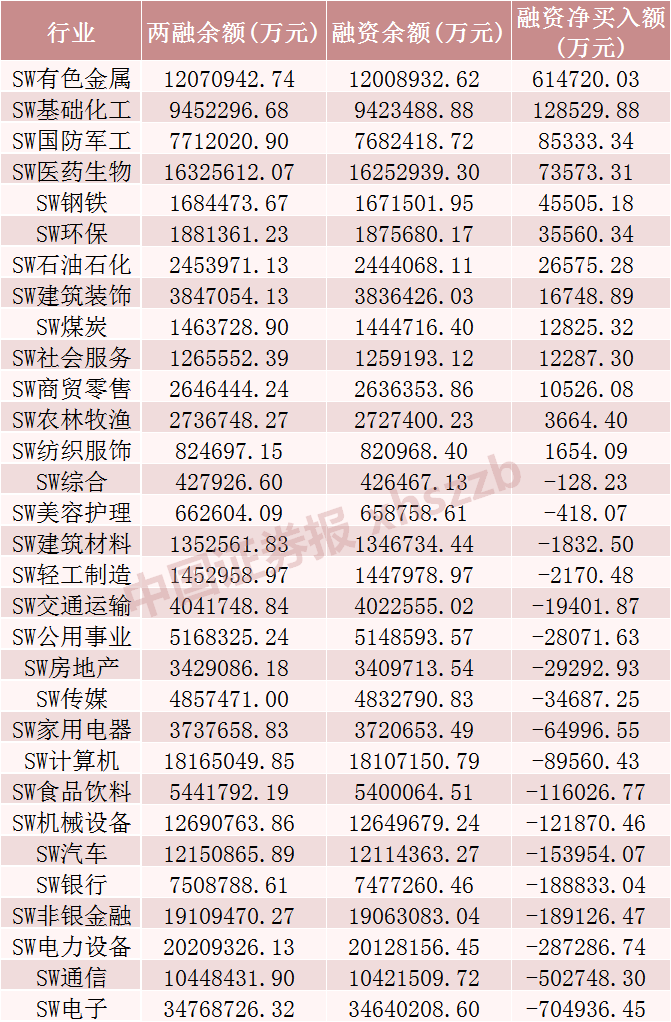
Market Overview - The A-share market experienced fluctuations last week, with the margin balance reaching 24,293.85 billion yuan as of October 17, marking a decrease of 12.82 billion yuan in financing balance over the week [1] - On October 16, both the margin balance and financing balance hit historical highs [1] Financing Balance Changes - During the last week, the financing balance increased on four days: October 13 (+2.24 billion yuan), October 14 (+2.34 billion yuan), October 15 (+2.31 billion yuan), and October 16 (+7.59 billion yuan), while it decreased significantly on October 17 (-27.30 billion yuan) [1] - Out of 31 industries, 13 saw an increase in financing balance, with the non-ferrous metals, basic chemicals, and defense industries leading in net buying amounts of 6.15 billion yuan, 1.29 billion yuan, and 0.85 billion yuan respectively [1][3] Industry Performance - The industries with the largest net selling amounts included electronics (-7.05 billion yuan), communications (-5.03 billion yuan), and electric power equipment (-2.87 billion yuan) [1][3] - The detailed financing balance for selected industries shows significant variations, with the non-ferrous metals industry having a total margin balance of 120.71 billion yuan and a financing balance of 120.09 billion yuan [3] Individual Stock Activity - A total of 104 stocks saw an increase in financing amounts exceeding 1 billion yuan, with the top ten stocks being Zijin Mining, Zhongjin Gold, and Beijing Junzheng, among others [4] - The largest net buying stock was Zijin Mining with a net purchase of 1.58 billion yuan, despite a price drop of 2.27% [5] - The stock with the highest increase in price was Antai Technology, which rose over 19% [4]




“2025中国VR50强企业”发布 歌尔股份、京东方、宏达通讯位居前三
Mei Ri Jing Ji Xin Wen· 2025-10-19 07:24
Core Insights - The "2025 China VR Top 50 Enterprises" list was officially released at the "2025 World VR Industry Conference," marking the seventh consecutive year of publication [1] - In 2025, the number of enterprises with revenue exceeding 100 million yuan reached 31, with a significant representation of both hardware and VR large-space content companies [1][6] - Over half of the listed companies have been recognized as national high-tech enterprises, indicating a strong focus on innovation and technology [1][6] Revenue and Growth - The revenue scale of the "China VR Top 50 Enterprises" has remained stable, with 31 companies achieving annual sales exceeding 100 million yuan, accounting for over 60% of the list [6] - Companies with annual sales between 10 million and 100 million yuan represent the largest share, while those with sales between 1 million and 10 million yuan increased from 9 to 15 compared to the previous year, showcasing rapid growth among small and medium-sized VR enterprises [6] Research and Development - The average R&D investment of the "China VR Top 50 Enterprises" has consistently remained around 50% from 2019 to 2025, with a total of 75,084 invention patents reported in 2025 [6] - The top ten companies in terms of patent numbers are primarily involved in hardware, near-eye display technology, development software, and industry solutions, with notable companies including BOE, GoerTek, HTC, and XREAL [6] Innovation and Recognition - The number of enterprises recognized as national-level "specialized, refined, and innovative" small giants and national high-tech enterprises has significantly increased from 4 in 2023 to 38 in 2025, representing 76% of the total [6] - In 2025, 27 companies were awarded national high-tech enterprise status, and 11 were recognized as national-level specialized and innovative small giants [6] Regional Distribution - Beijing leads the nation in the number of listed enterprises, with Jiangxi and Shenzhen forming the second tier, indicating a growing regional influence and the initial formation of a VR ecosystem [7]