
Zhong Ke San Huan Co., Ltd.(000970)

Search documents
趋势研判!2025年中国光电新材料行业产业链、专利数量、代表企业经营现状及发展趋势研判:光电新材料在技术和市场应用方面已经取得了长足进展,市场需求持续增长[图]
Chan Ye Xin Xi Wang· 2025-06-12 01:31
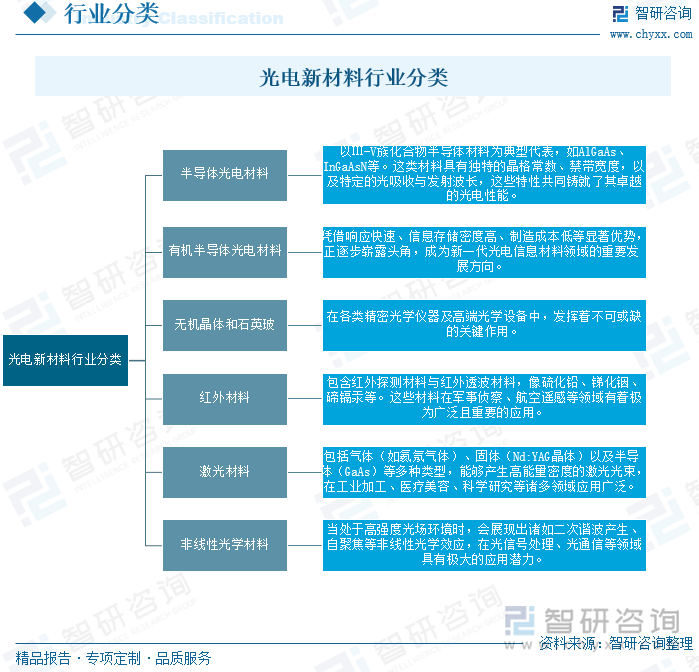
Core Viewpoint - The optoelectronic new materials industry is experiencing significant growth in China, driven by advancements in technology and increasing market demand, particularly in solar cells, optical communication, and display technologies [1][4][23]. Industry Definition and Classification - Optoelectronic materials are defined as materials that can generate, convert, transmit, process, and store optical signals, encompassing categories such as semiconductor optoelectronic materials, organic semiconductor materials, inorganic crystals, quartz glass, infrared materials, laser materials, and nonlinear optical materials [2][4]. Industry Development Status - The number of patents for optoelectronic new materials in China reached 122 in 2022, but has seen a decline in recent years, with projections of 99 in 2023 and 76 in 2024, and only 11 by May 21, 2025 [1][4]. - The optoelectronic materials sector is crucial for the advancement of the optoelectronic industry, with applications in solar cells, optical communication, and displays [4]. Industry Chain - The industry chain consists of upstream core raw materials (basic chemicals, rare metals, targets), midstream production of optoelectronic materials and devices, and downstream applications in high-growth areas such as photovoltaic power generation and optical communication [6][8]. Semiconductor Materials - The semiconductor materials market in China is projected to reach approximately 147 billion yuan in 2024 and about 164.69 billion yuan in 2025, accounting for around 27.24% and 27.20% of the electronic materials market, respectively [8]. Optical Communication - The optical communication market in China is expected to grow from 139 billion yuan in 2023 to approximately 175 billion yuan by 2025, driven by advancements in 5G, cloud computing, and big data technologies [10]. Competitive Landscape - Major companies in the optoelectronic new materials industry include BOE Technology Group, Longi Green Energy, Jiangfeng Electronics, Sanan Optoelectronics, and others, reflecting a diverse and international competitive landscape [12][14]. Representative Companies - **BOE Technology Group**: A leading global company in semiconductor display products, with over 100,000 patents and significant market share in LCD and OLED technologies [14][15]. - **Shaanxi Lait Optoelectronic Materials Co., Ltd.**: Focuses on OLED organic light-emitting materials, with a revenue of 442 million yuan in 2024, reflecting a strong growth trajectory [17][19]. - **Ningbo Jiangfeng Electronics**: Specializes in ultra-pure metal sputtering targets, with a revenue of 2.333 billion yuan in 2024, highlighting its strong market position [21]. Industry Development Trends - The demand for optoelectronic materials is expected to continue growing, with advancements in silicon-based solar cells and organic light-emitting diodes (OLEDs) leading the way [23]. - Future developments will focus on higher performance, lower costs, and multifunctionality, with new materials such as perovskite solar cells and quantum dot emitters gaining traction [23].





稀土:从资源龙头到永磁先锋,政策与需求双重驱动下的产业链价值解析
Sou Hu Cai Jing· 2025-06-09 14:32
Core Viewpoint - The article discusses the evolving landscape of the rare earth industry, highlighting the impact of policy changes, supply-demand dynamics, and emerging market opportunities driven by technological advancements and strategic resource management [1][2][3]. Group 1: Policy and Supply Dynamics - China's rare earth mining quota is expected to remain at 270,000 to 280,000 tons REO by 2025, with a year-on-year growth rate of 5%-10%, significantly lower than the previous years' growth of over 20% [1]. - The policy shift emphasizes "quality control" over "scale expansion," with all sources of rare earths now included in quota management, enhancing state control over supply [1]. - The supply of heavy rare earths is tightening, with a 17.3% year-on-year decline in imports from Myanmar due to ongoing conflicts and resource tax disputes, leading to a supply gap of 5.8% for heavy rare earths [4]. Group 2: Demand Drivers - The demand for rare earth permanent magnet materials (NdFeB) is surging, particularly in sectors such as electric vehicles, wind power, industrial motors, and humanoid robots [2]. - By 2025, global sales of electric vehicles are projected to reach 18 million units, driving the demand for praseodymium-neodymium oxide to over 70,000 tons [4]. - The penetration rate of permanent magnet direct-drive wind turbines is expected to exceed 65%, with a projected demand of 15,000 tons by 2025 [4]. Group 3: Market Space and Price Trends - The global rare earth market is anticipated to reach a scale of $14-16 billion by 2025, with China accounting for over 60% of this market [4]. - The price of praseodymium-neodymium oxide is expected to rise to a central price range of 450,000 to 500,000 yuan per ton by 2025, driven by tightening domestic quotas and recovering demand [4]. - The price of dysprosium oxide is projected to exceed 2,000 yuan per kilogram, while terbium oxide is expected to surpass 7,000 yuan per kilogram due to supply disruptions and export control policies [4]. Group 4: Company Insights - Northern Rare Earth is the largest light rare earth supplier globally, controlling 83% of the Baiyun Obo mine's reserves, with a projected 69.8% share of the national mining quota by 2025 [7]. - China Rare Earth Group, as a core platform, has seen a turnaround with a 141.32% year-on-year revenue increase in Q1 2025, primarily due to rising rare earth prices [8]. - Xiamen Tungsten is the only company in China capable of recycling all rare earth elements, with a complete supply chain from mining to magnetic materials [8]. Group 5: Technological Advancements and Future Outlook - The development of high-temperature resistant NdFeB materials and low rare earth content magnets has strengthened competitiveness in high-end markets [10]. - The establishment of a joint venture with China Rare Earth Group in Fujian aims to enhance resource development in southern heavy rare earths [10]. - The recycling of rare earths is projected to reach 32,000 tons by 2025, with the market scale exceeding 100 billion yuan by 2030 [9].



2025年中国稀土行业市场主体分析:民营企业是行业发展最鲜活的血液
Qian Zhan Wang· 2025-06-05 06:12
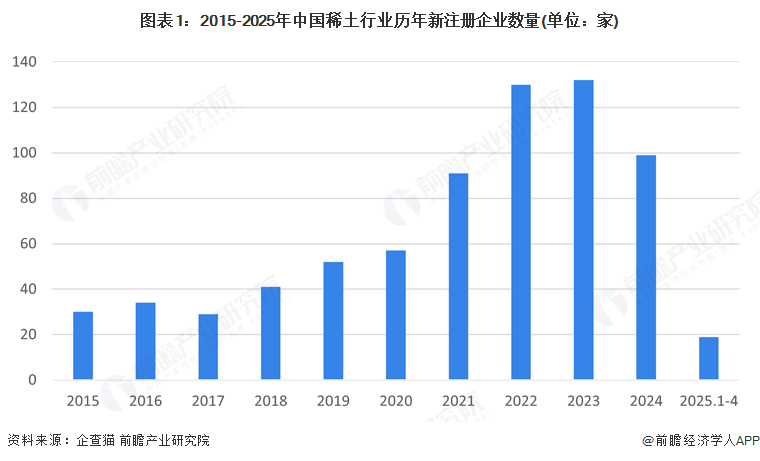
Group 1: Industry Overview - The number of newly registered companies in China's rare earth industry has shown a fluctuating growth trend from 2015 to 2023, with a significant decline in 2024, registering only 99 new companies compared to the previous year [1] - As of April 17, 2025, the number of newly added companies in the rare earth sector is 19 [2] Group 2: Company Characteristics - As of April 17, 2025, 50.33% of registered rare earth companies in China are operational, while 26.79% have been deregistered, indicating a generally stable operational status [2] - The majority of registered capital in the rare earth industry is concentrated in companies with capital under 1 million, accounting for 40% of the total, while 35% of companies have registered capital exceeding 5 million [6] Group 3: Regional Distribution - The majority of operational rare earth companies are located in Jiangxi, Zhejiang, Inner Mongolia, and Shaanxi, with Jiangxi having the highest number at 197 companies, representing 16.4% of the national total in the rare earth mining sector [9] - Zhejiang ranks second with 105 companies, where 94% are involved in rare earth metal processing [9] Group 4: Company Type Distribution - As of April 17, 2025, 90.32% of operational rare earth companies in China are privately owned, while state-owned enterprises account for 7.91%, highlighting the dominance of private enterprises in the industry [12]


趋势研判!2025年中国新材料行业相关政策、发展现状及未来前景展望:在政策支持、市场需求和技术创新的多重驱动下,产业发展空间巨大 [图]
Chan Ye Xin Xi Wang· 2025-06-01 01:14
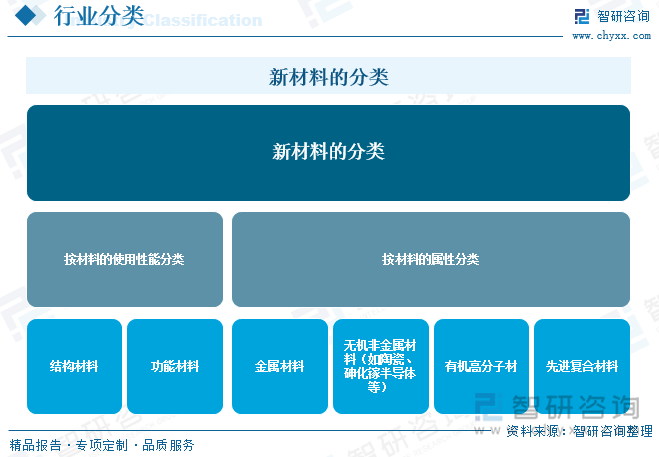
Core Viewpoint - The new materials industry in China is experiencing rapid growth driven by policy support, market demand, and technological innovation, with a projected total output value of 8.48 trillion yuan in 2024, maintaining double-digit growth for 14 consecutive years [1][3][20]. Group 1: Industry Definition and Classification - New materials refer to recently developed or developing structural and functional materials with superior properties. They can be classified into structural materials and functional materials based on their usage, and further categorized into four types: metal materials, inorganic non-metal materials, organic polymer materials, and advanced composite materials [1]. Group 2: Current Development Status - The new materials industry has expanded significantly, with the government focusing on electronic information materials, aerospace materials, new energy materials, and environmentally friendly materials. National high-tech industrial bases for new materials have been established in seven cities [3][5]. Group 3: Market Size and Structure - In 2024, the chemical new materials market is expected to account for approximately 22.08% of the total new materials market in China, while battery new materials will represent about 6.66%. By 2025, these figures are projected to be 21.75% and 6.97%, respectively [7]. Group 4: Competitive Landscape - Major companies in the new materials sector include Lens Technology, Antai Technology, China National Materials, and others, which are enhancing their international competitiveness through technological innovation and market expansion [12][16]. Group 5: Development Trends - The demand for new materials is increasing due to the rapid development of downstream industries such as information technology and new energy. The industry is transitioning towards low-carbon and green development, supported by significant technological advancements [20][23].


【投资视角】启示2025:中国稀土行业投融资及兼并重组分析(附投融资事件、产业基金和兼并重组等)
Qian Zhan Wang· 2025-05-31 01:11
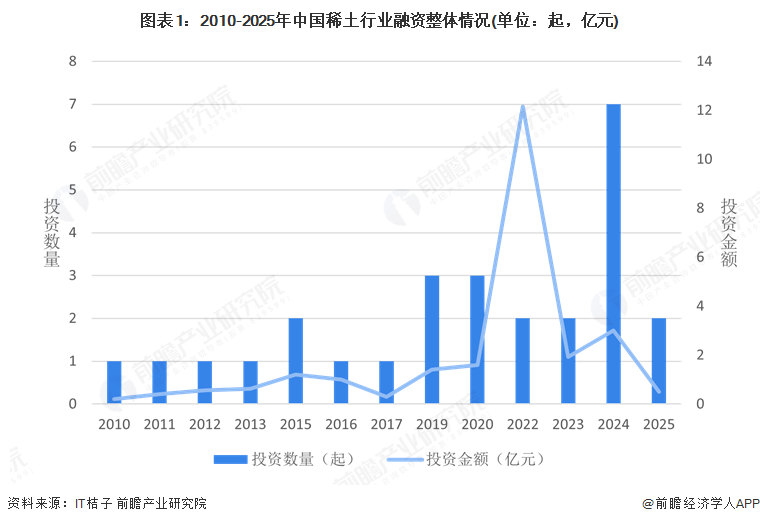
Core Insights - The recent trend in China's rare earth industry shows an increase in investment and financing activities, with a notable rise in financing events in 2024 [1][2] Group 1: Financing Trends - The number of financing events in China's rare earth industry has fluctuated from 2010 to 2023, with a significant increase in 2024, where two financing events totaling 0.5 billion yuan have already occurred by April 17, 2025 [1] - The average single financing amount in 2025 is 0.25 billion yuan, indicating that financing amounts have generally remained below 1 billion yuan, except for specific years [2] - Financing rounds are primarily concentrated in strategic investments and A-round financing, reflecting the industry's emphasis on technological maturity [4] Group 2: Regional Financing Characteristics - Financing activities in the rare earth sector are concentrated in regions such as Jiangsu, Anhui, and Inner Mongolia, with Jiangsu leading with five financing events [7] - The regional disparities in financing reflect the availability of rare earth resources, strong policy support, and the growth potential of enterprises in these areas [7] Group 3: Investment Focus - The primary focus of investments in the rare earth industry is on technology research and development companies, with 13 out of 27 financing events targeting R&D firms [12] - The majority of investors in the rare earth sector are capital organizations, accounting for over two-thirds of the total, with notable investors including Fengshang Capital and Yunsong Investment [14] Group 4: Mergers and Acquisitions - The rare earth industry is experiencing horizontal mergers and acquisitions aimed at expanding scale and enriching product lines, with a focus on midstream enterprises [17] - Recent notable acquisitions include the absorption of 100% equity stakes in various companies, with transaction values ranging from 1.05 billion to 14.97 billion yuan [18]
2025年中国稀土行业贸易分析:中国稀土进口规模大于出口,美国稀土需求对华依赖严重
Qian Zhan Wang· 2025-05-28 02:06
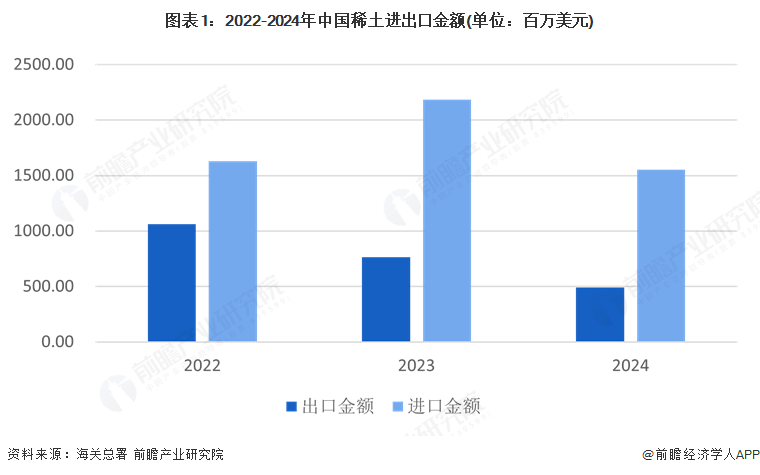
Core Insights - China's rare earth imports have surpassed exports in recent years, driven by increased domestic demand for high-tech industries and strategic resource enhancement [1][2] - The U.S. heavily relies on China for rare earth elements, with approximately 70% of its imports coming from China, highlighting the need for the U.S. to diversify its supply sources [4][9] Import and Export Trends - In the first quarter of 2025, China imported 24,679.1 tons of rare earths worth 1.87 billion yuan, a decrease of 30.9% in quantity and 30.2% in value compared to the previous year [2] - During the same period, China exported 14,177.6 tons of rare earths valued at 920 million yuan, with a 5.1% increase in quantity but a 9.8% decrease in value year-on-year [2] U.S. Dependency and Strategic Moves - The U.S. is a major consumer of rare earths, particularly for defense applications, which account for 35% of its usage, significantly higher than the global average of 8% [9] - The U.S. government has initiated several measures to reduce reliance on Chinese rare earths, including contracts with companies like Lynas USA to establish domestic processing facilities [11] Government Actions and Policies - The U.S. Department of Defense signed a contract worth $120 million with Lynas in June 2022 to build a heavy rare earth separation facility in Texas, which was later increased to approximately $258 million [11] - The U.S. has also passed legislation to encourage domestic mining and processing of critical minerals, aiming to reduce dependence on foreign imports [11] International Cooperation and Future Outlook - The U.S. is exploring partnerships with other countries to develop rare earth projects, including discussions with Greenland for resource access [11] - The U.S. is considering regulatory changes to expedite deep-sea mining for critical minerals, reflecting a strategic shift towards enhancing domestic resource development [11]
中科三环:中泰证券、领航超越私募基金等多家机构于5月23日调研我司
Zheng Quan Zhi Xing· 2025-05-23 09:38
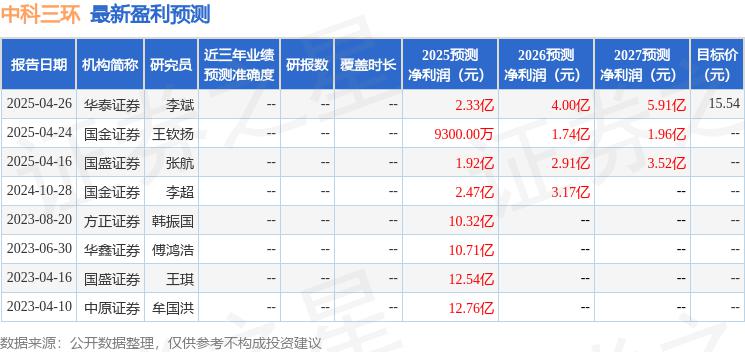
Core Viewpoint - The company, Zhongke Sanhuan, is actively managing the impact of export control measures on its neodymium-iron-boron permanent magnet materials, which are essential for various industries, including automotive and consumer electronics [2][3]. Group 1: Company Operations - The company has received export licenses for a small number of orders after complying with the new export control regulations [2]. - Zhongke Sanhuan's main products are neodymium-iron-boron permanent magnet materials, which are widely used in automotive (including new energy vehicles), consumer electronics, industrial robots, computers, energy-saving appliances, wind power, and industrial motors [3]. - The company has a 2-3 month inventory of light rare earth materials and a slightly larger inventory of medium and heavy rare earth materials, indicating a just-in-time purchasing strategy [4]. Group 2: Market Outlook - The demand for rare earth permanent magnet materials is expected to increase in mainstream application areas such as new energy vehicles, energy-saving appliances, and industrial motors, with potential expansion into emerging fields like humanoid robots and low-altitude economy [6]. - The company is currently focusing on the development of humanoid robots, which could positively impact the neodymium-iron-boron permanent magnet materials industry once successfully commercialized [3][6]. Group 3: Financial Performance - In the first quarter of 2025, the company reported a main revenue of 1.461 billion yuan, a year-on-year decrease of 11.58%, while the net profit attributable to shareholders increased by 113.66% to 13.49 million yuan [6]. - The company's net profit margin is reflected in a gross margin of 8.65%, with a debt ratio of 25.7% [6]. Group 4: Analyst Ratings - Over the past 90 days, five institutions have rated the stock, with four buy ratings and one neutral rating, indicating a generally positive outlook [7]. - The average target price set by analysts for the stock is 12.53 yuan [7]. Group 5: Profit Forecasts - Various institutions have provided profit forecasts for the company, with projected net profits of 233 million yuan for 2025, 400 million yuan for 2026, and 591 million yuan for 2027 [9].

中科三环(000970) - 2025年5月23日投资者关系活动记录表.
2025-05-23 07:28
Group 1: Export Control and Licensing - The current export control measures mainly affect the company's production of neodymium-iron-boron permanent magnet materials containing dysprosium and terbium, requiring declaration and approval for export [1] - The company has taken proactive measures for export declaration and has already obtained export licenses for a small number of orders [1] Group 2: Product Applications - The company's main product, neodymium-iron-boron permanent magnet materials, is widely used in various fields including automotive (including new energy vehicles), consumer electronics, industrial robots, computers, energy-saving appliances, wind power, and industrial motors [1] - The company has been applying its products in the robotics field for many years, primarily in industrial robots, while humanoid robots are still in the R&D stage [1] Group 3: Inventory and Order Cycle - The company currently has 2-3 months of light rare earth inventory, with slightly more medium and heavy rare earth materials, purchasing based on actual usage [1] - The typical order cycle for the company's products is generally two to three months [1] Group 4: Market Outlook - Demand for rare earth permanent magnet materials is expected to further increase in mainstream application areas such as new energy vehicles, energy-saving appliances, and industrial motors [2] - Emerging fields like humanoid robots and low-altitude economy are anticipated to expand the application scenarios for rare earth permanent magnet materials [2]
重磅!2025年中国及31省市稀土行业政策汇总及解读(全)“加强保护、提高创新应用能力是政策主旋律”
Qian Zhan Wang· 2025-05-22 02:02
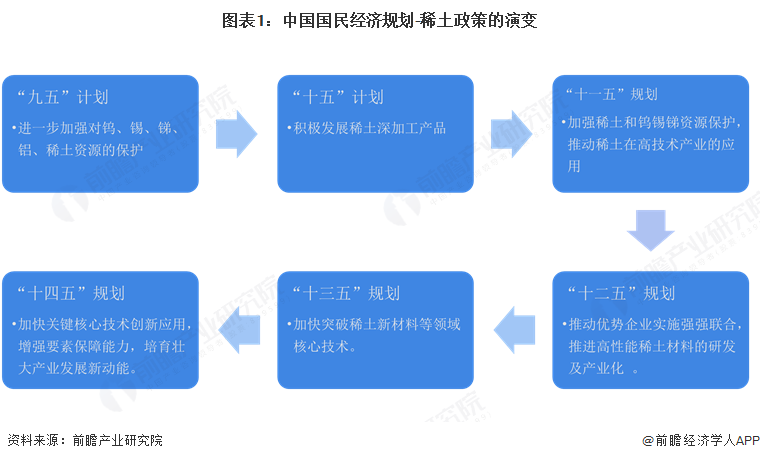
Core Insights - China is a major player in the rare earth industry, holding significant global market share, with a production of 270,000 tons in 2024, accounting for 69.2% of the total global output of 390,000 tons [1] - The government has implemented various policies at both national and local levels to support the development of the rare earth industry, focusing on resource protection and technological innovation [2][4] National Policy Summary - The Chinese government has issued multiple policies to guide the rare earth industry, emphasizing the importance of sustainable development and technological advancement [2] - Key policies include the "Rare Earth Management Regulations," which will take effect on October 1, 2024, aimed at enhancing resource protection and establishing a comprehensive management system for the entire industry chain [14] - The "14th Five-Year Plan" outlines goals for the rare earth industry, including promoting high-quality development and ensuring resource security [10][12] Local Policy Summary - Various provinces have introduced specific policies to enhance their rare earth industries, such as Sichuan's goal to establish itself as a major rare earth production base by 2027, targeting an industry scale exceeding 100 billion yuan [17] - Inner Mongolia aims to become a leading base for rare earth new materials and applications, focusing on technological innovation and sustainable practices [17] - Zhejiang's plan emphasizes the development of high-performance rare earth materials and their applications in various industries [19] Development Goals - The rare earth industry aims to achieve a self-sufficiency rate of over 80% by 2025, transitioning from a follower to a leader in the field of rare earth functional materials [10] - By 2035, the goal is to establish China as a global leader in rare earth materials, with significant advancements in innovation and competitiveness [10][12]
中科三环: 中科三环2024年年度权益分派实施公告
Zheng Quan Zhi Xing· 2025-05-20 11:12
Core Viewpoint - The company has announced its 2024 annual profit distribution plan, which includes a cash dividend distribution based on the adjusted total share capital after excluding repurchased shares [1][2][4] Group 1: Profit Distribution Plan - The profit distribution plan was approved at the shareholders' meeting held on April 8, 2025, with a base of 1,203,568,538 shares for the distribution calculation [1][2] - The cash dividend is set at 0.0198000 yuan per share, calculated from a total cash dividend amount of 24,071,370.76 yuan [1][4] - The distribution will be executed on May 27, 2025, with the ex-dividend date on May 28, 2025 [2][3] Group 2: Shareholder Eligibility and Taxation - The distribution is applicable to all shareholders registered with the China Securities Depository and Clearing Corporation Limited Shenzhen Branch as of May 27, 2025 [2][3] - Different tax rates will apply for various types of investors, with no withholding of personal income tax by the company at the time of distribution [2][3] Group 3: Adjustments and Calculations - The company will adjust the distribution plan if there are changes in the total share capital before the implementation of the distribution [2][3] - The reference price for ex-dividend will be calculated based on the closing price on the registration date minus the cash dividend per share [4]