IFLYTEK(002230)

Search documents
AI进军银行业 重新定义服务业态 科技公司盯上千亿“蛋糕”
Xin Hua Wang· 2025-08-12 06:29
Core Insights - The widespread application of intelligent customer service is a reflection of how fintech is reshaping banking services [1][3] - The digital transformation of banks is deepening, with a significant reduction in customer visits to physical branches, leading to the adoption of intelligent customer service as a standard [2][3] Group 1: Industry Transformation - The number of bank customer service personnel in China decreased to 50,200 by the end of 2021, down by 4,200 from 2020, marking a shift from previous growth trends [3] - The total amount of off-counter transactions in the banking sector reached 257.28 trillion yuan in 2021, a year-on-year increase of 11.46%, with an average electronic channel diversion rate of 90.29% [3] - The COVID-19 pandemic has accelerated the digital transformation of banks, pushing user habits further online and increasing the frequency and depth of online interactions [3] Group 2: Investment in Technology - In 2020, A-share listed banks invested 207.8 billion yuan in information technology, a year-on-year increase of 25% [6] - Major state-owned banks invested nearly 100 billion yuan in fintech in 2020, with Industrial and Commercial Bank of China investing 23.82 billion yuan, a 45.47% increase year-on-year [7] - China Merchants Bank reported an information technology investment of 13.29 billion yuan in 2021, a year-on-year increase of 11.58%, accounting for 4.37% of its operating income [7] Group 3: AI and Customer Service - In 2021, China Merchants Bank's AI initiatives replaced over 6,000 human roles through intelligent customer service and related technologies [4] - Intelligent customer service has expanded its application beyond routine inquiries to marketing and collection efforts, with voice robots effectively screening potential customers [5] - A report indicated that the satisfaction level of intelligent customer service is limited, with common complaints about repetitive responses and inadequate problem-solving capabilities [5] Group 4: Competitive Landscape - The demand for AI in the financial sector is steadily increasing, with total AI investment expected to exceed 22 billion yuan in 2022 [9] - Companies like BaiRong Cloud have reported significant revenue growth, with a 43% increase in total revenue to 1.623 billion yuan in 2021 [9] - Smaller banks are beginning to adopt AI technologies, with Guilin Bank collaborating with iFlytek to launch a virtual digital employee for customer service [10]





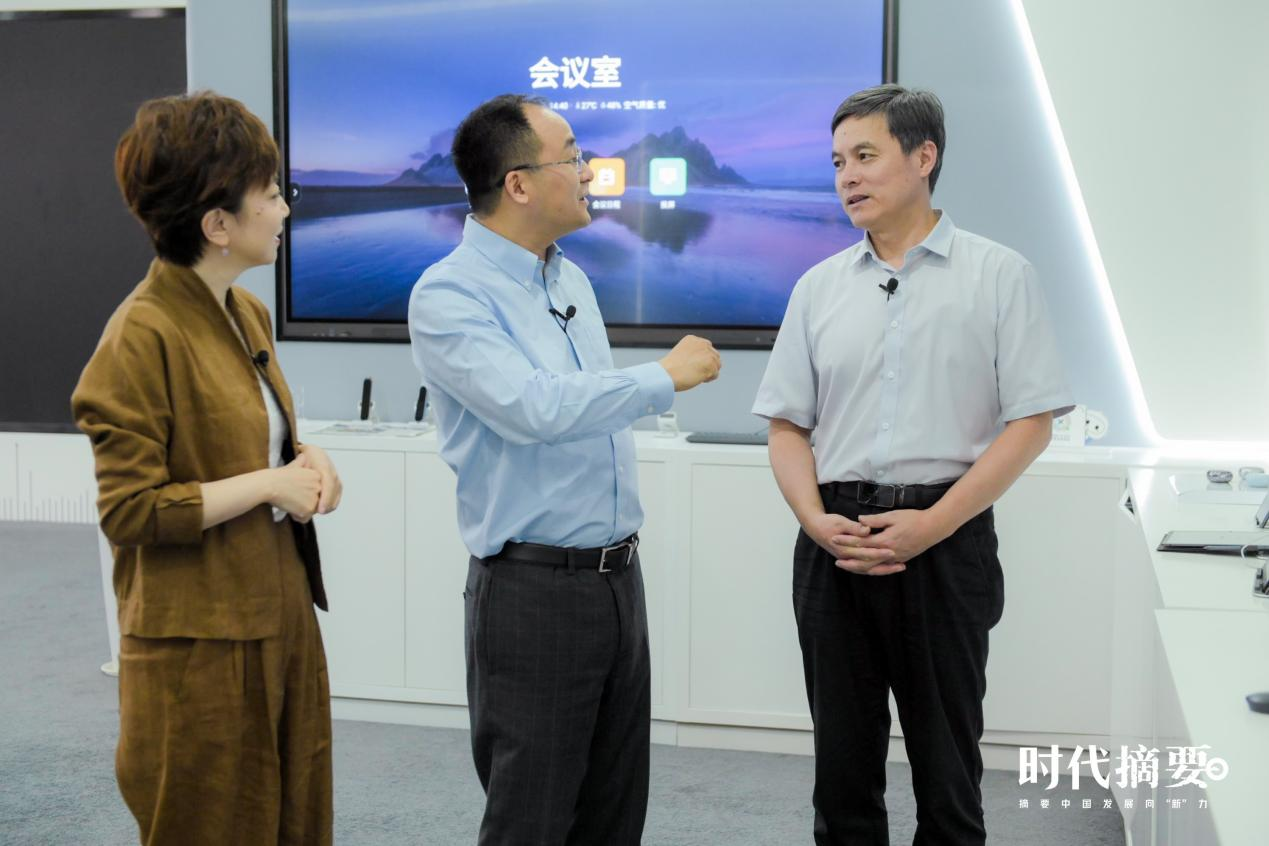
《时代摘要》第三季走进科大讯飞(下):“星火”燎原 用人工智能共创美好世界
Xin Hua Wang· 2025-08-12 06:02
Core Insights - The article emphasizes the rapid transformation of China's artificial intelligence (AI) industry, highlighting the role of AI as a key engine for new productivity and innovation in various sectors [1][2]. Group 1: AI Development and Innovation - The emergence of large models, particularly represented by ChatGPT, marks a significant technological leap in the evolution towards general artificial intelligence [4]. - iFLYTEK launched its Spark large model on May 6, 2023, and introduced the 4.0 Turbo version on October 24, 2023, which reportedly surpasses GPT-4 Turbo in seven core capabilities, indicating that domestic AI technology has gained international competitiveness in specific fields [4][5]. - The Spark 4.0 Turbo model outperformed GPT-4o in nine out of fourteen mainstream test categories, achieving a 50% improvement in efficiency [5]. Group 2: Industry Applications - iFLYTEK is applying AI technology in the automotive sector, with models equipped with edge-side large models set to launch in the fourth quarter, covering over 90% of mainstream domestic and joint venture car brands in China [5]. - The company aims to deepen the application of large models across various industries, including education, healthcare, smart cities, and sports operations, to enhance human-machine interaction and productivity [5]. Group 3: Ecosystem and Collaboration - iFLYTEK's annual Global Developer Festival on October 24 fosters collaboration among AI developers and entrepreneurs, promoting cross-industry connections and sustainable AI ecosystem development [7]. - The 2024 iFLYTEK AI Developer Competition attracted 35,268 teams from 14 countries and 348 cities, showcasing the company's commitment to building an open platform for innovation and collaboration [7]. Group 4: Vision and Philosophy - iFLYTEK believes that the development of AI requires collective efforts and cooperation, emphasizing the importance of shared goals and mutual support among entrepreneurs [8][10]. - The company is focused on the long-term growth of the AI industry, advocating for patience and encouragement to nurture the sector, which is seen as essential for enhancing the quality of life and economic development in China [10].

科大讯飞董事长“卡点”减持约4000万股还债
Xin Hua Wang· 2025-08-12 05:49
8月14日晚间,科大讯飞(002230)发布公告,公司董事长刘庆峰卖出自家公司3995.61万股股份;此次减 持后,刘庆峰对科大讯飞持股数量从1.68亿股降至1.28亿股,持股比例则由7.27%缩减至5.54%。不过, 此次股权变动不会导致科大讯飞控制权发生变更,公司实控人仍为刘庆峰。 2021年1月,公司市值站上千亿的阶段性新高。此时,为巩固科大讯飞控制权,刘庆峰决定再次认购公 司定增股票。2021年7月,科大讯飞完成定向增发,刘庆峰通过质押融资等方式借款筹集资金23.5亿元 参与增发,累计认购7040万股股份。 2022年3月后,因宏观社会经济环境持续下行等因素影响,科大讯飞股价4月26日下跌,逼近质押的平仓 线,在政府和企业家朋友的帮助下,刘庆峰通过筹措资金和补充质押,才及时化解了平仓风险。同年10 月,科大讯飞股价一度下探至最低点29.64元,参照定增的发行价格33.58元/股计算,合计浮亏4.4亿 元。(记者 唐强) 【纠错】 【责任编辑:黄海荣 】 科大讯飞于当日召开交流会强调,刘庆峰此次减持主要是用于偿还债务。科大讯飞称,刘庆峰坚定看好 人工智能行业和科大讯飞发展前景,没有多卖1分钱股份用于个人 ...

首个大模型工业互联网平台将发布 机构扎堆关注35股
Xin Hua Wang· 2025-08-12 05:48
Group 1: Industrial Internet Development - The 2023 World Manufacturing Conference will introduce the "Antelope 3.0" platform, the first industrial internet platform with large model capabilities, along with industrial large models and "digital craftsman" application scenarios [1] - In 2022, the added value of China's industrial internet industry accounted for 3.64% of GDP [1] - The industrial internet industry in China has surpassed 1.2 trillion yuan, with over 240 influential platforms and services provided to more than 260,000 enterprises [2] Group 2: Market Growth and Projections - IDC projects that by 2025, the market for industrial internet platforms and application solutions in China will reach approximately 56.1 billion USD (about 361.6 billion yuan), with a compound annual growth rate of 29.6% from 2021 to 2025 [2] - There are over 160 concept stocks related to industrial internet in the A-share market, with companies like Dingjie Software and Industrial Fulian enhancing their business layouts in smart manufacturing and industrial internet [2] Group 3: Company Innovations - Changhong Meiling's industrial internet platform emphasizes openness and scalability, leveraging AI and big data to enhance consumer experience in the home appliance sector [3] - Dongtu Technology has developed an industrial operating system and software tools, promoting software-defined control technology in the industrial field [3] Group 4: Investment Opportunities - In September, several stocks related to industrial internet saw significant investment from northbound funds, with eight stocks receiving over 100 million yuan in net purchases [4] - A total of 35 stocks are expected to have a net profit growth rate exceeding 30% in the next two years, with 13 stocks projected to double their net profit growth rate [4] - Notable stocks with significant upside potential include Nandu Power, with an expected increase of 93.71% according to Minsheng Securities [5]





分拆上市队伍持续扩容 已有51家子公司成功上市
Xin Hua Wang· 2025-08-12 05:47
分拆上市队伍持续扩容。据东方财富Choice数据统计,按首次公告日计算截至2024年1月10日,累计有 145家A股公司发起163单分拆计划。其中,2022年、2023年分别披露分拆计划30单、36单。从进度来 看,其中51单子公司已成功上市,84单分拆计划仍在推进中,还有28单选择终止分拆。 28单分拆计划终止 A股上市公司分拆趋于理性。据东方财富Choice数据统计,目前A股市场累计有28单分拆计划终止,其 中2022年、2023年终止分拆数量均超过10单,其中"A拆A"居多。 从分拆终止的原因来看,主要包括上市公司业绩不达标、控股股东和实际控制人发生重大变化、子公司 净利润占比过高、在期限内受到过行政处罚等。此外,独立性、同业竞争、持续经营能力等问题也受到 关注。 整体来看,一方面,分拆上市类型愈发丰富,"A拆A"占据主流,"A拆港""港拆A"频频出现;另一方 面,也有公司按下分拆"终止键"。 分拆目的地多元化 从拟上市地来看,前述163单分拆计划中,有115单属于"A拆A",占比超七成。从拟上市板块来看,分 拆至沪深主板的有21家、创业板49家、科创板23家、北交所22家。就分拆母公司的行业来看,近八 ...
首款舞蹈AI肢体比对引擎“舞界AI”正式发布,获科大讯飞生态投资
Xin Lang Ke Ji· 2025-08-11 14:47
Core Insights - The company "Body Cognition" launched its AI product "Dance AI" aimed at providing personalized learning services for youth aged 4-16, featuring a comprehensive technology system for dance education [2] - The AI model can accurately capture 133 key body points and achieve a 93% recognition rate for 46 basic dance movements, with evaluation report generation in under 3 seconds [2] - The company aims to cover 80% of training and assessment institutions by 2026, with plans to connect with over 100,000 teachers and establish global digital standards for dance by 2028 [3] Group 1 - "Dance AI" offers a full SaaS service system, covering 3 major assessment platforms and 459 assessment combinations, transforming them into standardized digital teaching materials [2] - The system allows teachers to assign quantifiable homework and automatically syncs practice records to the teacher's end [2] - The company has received angel investment from iFLYTEK, indicating strong backing for its innovative approach [2] Group 2 - The founder of "Dance AI" projects that by 2026, the platform will serve 500 million dance students across China, with an accuracy improvement to over 95% [3] - By 2027, "Dance AI" plans to integrate with other sectors of the dance industry, enhancing its reach and capabilities [3] - The long-term vision includes establishing a global standard for dance types and expanding internationally by 2028 [3]
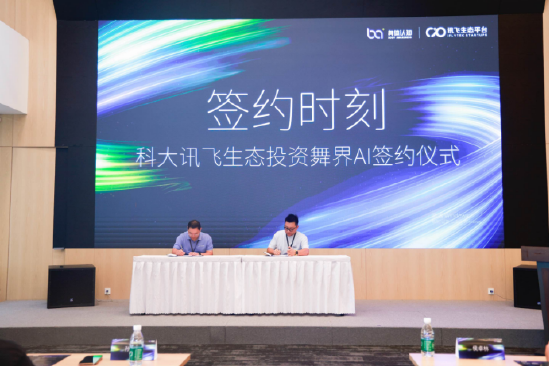
舞蹈AI肢体比对引擎“舞界AI”发布 以技术创新推动行业重构
Huan Qiu Wang· 2025-08-11 11:35
Core Viewpoint - The company "Body Cognition" has launched the dance AI body comparison engine "Dance AI," aimed at providing personalized intelligent learning services for youth aged 4-16, marking the first application of a large AI model in the dance education sector [1][6]. Technical Breakthrough - The dance education industry faces challenges such as lack of standards, uneven teacher quality, and difficulties in quantifying practice at home. "Dance AI" addresses these issues by shifting from traditional teaching methods reliant on teacher experience to a more data-driven approach [2][6]. - The technology behind "Dance AI" began development in 2019, utilizing algorithms like openpose and alphapose to create a comprehensive technical system for action tracking, 3D posture reconstruction, dance action analysis, and practice evaluation. The AI model can accurately identify 133 key body points with a recognition accuracy of 93% for 46 basic dance movements, with evaluation loading times under 3 seconds [4][6]. Industry Collaboration - "Dance AI" integrates into the dance education industry through a "three-end collaboration" model, covering institutions, teachers, and hardware manufacturers. The SaaS service system provided to institutions includes 459 assessment combinations and reduces teacher costs by 30%, while increasing student retention rates by 25% [5][6]. - The system allows teachers to assign quantifiable homework and automatically sync practice records, reducing repetitive work by 50% and enhancing teaching standardization [5][6]. Industry Reconstruction - "Dance AI" is driving the digital transformation of dance education, addressing issues of standardization and data silos. The company plans to cover 80% of training and assessment institutions by 2026, aiming for a recognition accuracy of over 95% and serving 5 million dance students [6][9]. - The collaboration with iFLYTEK, a leader in AI, signifies a commitment to enhancing action recognition accuracy and exploring scalable models for "AI + arts education," aiming to democratize access to quality dance education [7][9].
计算机行业今日涨1.94%,主力资金净流入15.67亿元
Zheng Quan Shi Bao Wang· 2025-08-11 09:25
Market Overview - The Shanghai Composite Index rose by 0.34% on August 11, with 24 out of 28 sectors experiencing gains, led by the power equipment and communication sectors, which increased by 2.04% and 1.95% respectively [1] - The computer industry ranked third in terms of daily gains, with a rise of 1.94% [2] Capital Flow - The net inflow of capital in the two markets was 10.02 billion yuan, with 16 sectors seeing net inflows. The power equipment sector led with a net inflow of 4.14 billion yuan, followed by the electronics sector with 3.33 billion yuan [1] - The defense and military industry had the highest net outflow, totaling 2.01 billion yuan, followed by the public utilities sector with a net outflow of 1.43 billion yuan [1] Computer Industry Performance - The computer industry saw a net inflow of 1.57 billion yuan, with 297 out of 335 stocks in the sector rising, including three hitting the daily limit [2] - The top three stocks by net inflow were Huasheng Tiancheng with 878 million yuan, Tonghuashun with 448 million yuan, and Guiding Compass with 333 million yuan [2][3] Top Gainers in Computer Industry - The top gainers in the computer sector included: - Huasheng Tiancheng: +9.99%, 3.78% turnover, 878.33 million yuan inflow - Tonghuashun: +7.26%, 8.86% turnover, 447.97 million yuan inflow - Guiding Compass: +4.67%, 7.96% turnover, 333.17 million yuan inflow [3] Top Losers in Computer Industry - The top losers in the computer sector included: - Tuowei Information: +0.41%, 6.37% turnover, -156.33 million yuan outflow - Aerospace Zhizhuang: +2.84%, 13.89% turnover, -115.39 million yuan outflow - Xiongdi Technology: -3.19%, 23.21% turnover, -113.53 million yuan outflow [4]




GPT-5驱动应用端落地持续深入,人工智能AIETF(515070)上涨1.34%,持仓股新易盛涨幅超5%
Mei Ri Jing Ji Xin Wen· 2025-08-11 04:25
Group 1 - The three major indices collectively rose, with the Shanghai Composite Index approaching previous highs. Sectors such as energy metals, power equipment, batteries, and wind power equipment saw significant gains [1] - The AI ETF (515070) increased by 1.34%, with holdings like Xinyi Technology rising over 5%. Other holdings such as Zhongji Xuchuang, Hanwujing, Kingsoft Office, and iFLYTEK also experienced gains [1] - OpenAI officially released the GPT-5 series model, achieving significant breakthroughs in coding, mathematics, writing, health, and visual perception. The model enhances reliability through intelligent routing architecture and deep reasoning modules [1] Group 2 - The performance of the GPT-5 model has significantly improved, particularly in mathematics, coding, visual perception, and health. The hallucination rate has notably decreased, dropping to 1/6 of the previous rate in multiple benchmark tests [1] - The pricing for the GPT-5 model has decreased substantially, with input and output prices set at $1.25 per million tokens and $10 respectively, making it more cost-effective compared to Claude Opus 4.1 [1] - The enhanced cost-performance ratio of the GPT-5 model is expected to accelerate the application deployment in various sectors [1]


具身智能:机器人打破“专用”枷锁 柔性制造迎来新范式
Huan Qiu Wang· 2025-08-11 04:10
Core Insights - The current manufacturing automation faces a fundamental contradiction between the demand for personalized, flexible production and the traditional structured environment of industrial robots [1] - The shift from model-based programming to data-driven learning in robotics is being driven by advancements in large model technologies, particularly those based on the Transformer architecture [1][4] Group 1: Challenges and Opportunities - The paradox of efficiency and versatility in robotics indicates that while general-purpose robots may not be as efficient in specific tasks compared to specialized robots, the industry is focused on resolving this issue [2] - The core breakthrough in embodied intelligence is enabling robots to understand and plan tasks, moving beyond simple programmed actions to a complex architecture of task understanding, action planning, and execution [4] Group 2: Data and Technological Framework - The "data pyramid" theory proposed by the company emphasizes the importance of various data types, ranging from vast internet data at the base to high-value real-world data at the top, with increasing quality and cost as one moves up the pyramid [5] - The "one brain, multiple small brains" model is a practical approach where a foundational model is pre-trained on large datasets, while specialized models are fine-tuned with real-world data to optimize actions in specific scenarios [7] Group 3: Industry Collaboration and Standards - The transition to embodied intelligence is expected to follow a gradual path from structured to semi-structured and eventually to fully general scenarios, necessitating collaboration across the industry [7] - The company's "platform + track" strategy aims to empower ecosystem partners through foundational model capabilities, while also focusing on specific sectors like industrial manufacturing, logistics, and retail [8]