IFLYTEK(002230)

Search documents
腾讯研究院AI速递 20251107
腾讯研究院· 2025-11-06 16:09
Group 1: Generative AI Developments - Google plans to release the Gemini 3 Pro preview version to select developers and enterprise users in November, with a formal launch expected in December. The model features a context window of up to 1 million tokens, making it suitable for handling long documents and complex data pipelines, particularly for AI researchers and teams with high context capacity requirements [1] - Apple is nearing an agreement to pay approximately $1 billion annually to Google for the Gemini model to enhance the new version of Siri with summarization and task planning capabilities. The Gemini model will operate on Apple's private cloud servers, ensuring user data does not interact with Google's systems. The model boasts 1.2 trillion parameters, significantly surpassing Apple's existing model with 150 billion parameters [2] - The Kimi-k2 thinking model, recently launched by Moon's Dark Side, excels in deep reasoning and can solve complex problems through multi-turn tool invocation. It demonstrates strong performance in programming, capable of generating a complete web project in 3 minutes, although it still has room for improvement in solving 2025 IMO math competition problems [3] Group 2: AI Model Innovations - iFlytek has released the new X1.5 deep reasoning model, trained on a fully domestic computing platform, featuring a total of 293 billion parameters with only 30 billion activated for reasoning. This model achieved first place in the AIME 2025 math competition, with deep reasoning training efficiency improved from 25% to 84% and reasoning speed doubled compared to its predecessor [4] - Tencent Cloud's CodeBuddy has become the first AI programming tool in China to support the Skills standardized interface, allowing developers to add diverse skill packages to the AI. Skills encapsulate specialized knowledge into reusable modules, enabling efficient execution of tasks by the AI [5] Group 3: Autonomous Vehicle Collaborations - Gaode has announced a partnership with Xiaopeng Motors to jointly provide Robotaxi services globally, marking a significant application of Gaode's spatial intelligence capabilities. The TrafficVLM model enables "beyond-visual-range" capabilities, allowing for the detection of sudden accidents and congestion predictions several kilometers away, thus enhancing preemptive warning systems [6] Group 4: Consumer Technology Innovations - A former Meta engineer has launched the Stream Ring, a smart ring equipped with a microphone and touchpad, supporting voice transcription, AI assistant interaction, and music control. Priced from $249, it has secured $13 million in funding and offers an app that provides unlimited note support without a subscription [7] - FutureHouse has introduced Kosmos, a next-generation AI scientist capable of completing the workload equivalent to six months of research in a single day. It can analyze 1,500 papers and execute 42,000 lines of analysis code, with 79.4% of research conclusions verified as accurate in fields like neuroscience and materials science [8] Group 5: AI and Programming Perspectives - Amjad Masad, founder of Replit, argues that syntax is counterintuitive for humans, suggesting that English will become the programming language, with user identity shifting from humans to AI agents. He notes that AI's long-term reasoning capabilities have advanced from minutes to hours, emphasizing the importance of reinforcement learning and "verification loops" in model training [9]






科大讯飞刘庆峰:国产集群推理训练效率已从对标英伟达A800的30%提升至84%
Zhong Guo Jing Ying Bao· 2025-11-06 14:41
Group 1 - The core viewpoint is that AI is rapidly evolving and significantly transforming the world, with a notable increase in the user base of generative AI in China, which grew from 249 million in December 2024 to 515 million by June 2025, marking a doubling in just six months [1] - The World Economic Forum predicts that in the next five years, AI will replace 9 million jobs but will also create 11 million new positions, indicating a net positive impact on employment [1] - In the first half of this year, 57% of the 54 newly minted unicorn companies globally are AI-related, highlighting the concentration of capital in the AI sector and its critical role in future industrial competition [1] Group 2 - The company has made significant advancements in autonomous computing capabilities, with a domestic computing cluster developed in collaboration with Huawei achieving a training efficiency of 84% compared to Nvidia's A800, and 93% efficiency in MoE model training [2] - The company emphasizes that its general-purpose large model, Xinghuo, is the only one trained on fully domestic computing power among all mainstream large models in China, showcasing a strategic advantage in AI infrastructure [2] Group 3 - At the 2025 iFlytek Global 1024 Developer Festival, the company announced the launch of the deep reasoning large model, Xinghuo X1.5, which integrates AI with various hardware solutions including microphone arrays, speaker arrays, and camera arrays [4]
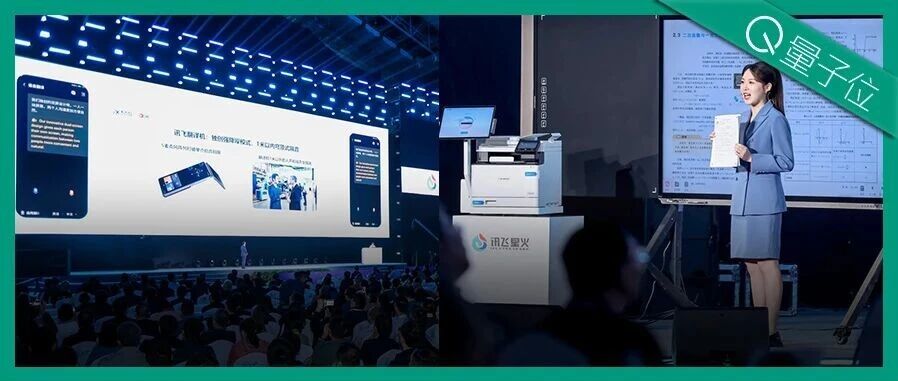
星火X1.5及软硬一体方案发布 刘庆峰:AI红利已到兑现时刻
Bei Ke Cai Jing· 2025-11-06 13:36
Core Insights - The launch of the deep reasoning model, iFlytek Spark X1.5, marks a significant advancement in AI technology, emphasizing the importance of achieving AI dividends through key technological breakthroughs [1][2] - iFlytek's chairman, Liu Qingfeng, highlighted four critical areas for realizing AI dividends: autonomous control, integrated hardware and software, industry depth, and personalization [1] Group 1: Product Launch and Features - iFlytek Spark X1.5 features a MoE architecture with a total parameter count of 293 billion and an activation of 30 billion, achieving a 100% improvement in inference efficiency compared to its predecessor [1] - The model has improved the efficiency of long reasoning chain reinforcement learning training from 30% to over 84%, addressing two major technical challenges [1] - iFlytek has introduced a non-autoregressive speech model architecture, which allows for parallel output of entire text sequences, resulting in a 16% performance improvement and a 520% reduction in inference costs compared to autoregressive models of the same size [1] Group 2: Integrated Solutions - iFlytek showcased a series of integrated hardware and software solutions, including the iFlytek Smart Office Book X5, which utilizes an innovative 8-microphone array to achieve a recognition accuracy of 95.08% in noisy environments [2] - The iFlytek AI translation earphones feature a unique single-ear three-microphone noise reduction system, achieving a recognition accuracy of 97.1% in complex noise conditions [2] - The iFlytek Dual-Screen Translation Machine 2.0 incorporates a strong noise reduction mode, achieving a recognition rate of 98.69% in environments with 90 dB noise [2] Group 3: Company Vision - Liu Qingfeng emphasized that AI should empower individuals to better integrate into the world and create a warmer future, reflecting iFlytek's mission to develop AI that understands and enhances human capabilities [3]
告别盲目卷参数!科大讯飞1024亮出底牌:all in“更懂你”
量子位· 2025-11-06 13:22
Core Viewpoint - The article emphasizes that the true competitive barrier in AI is not just about model size or intelligence, but about creating AI that truly understands and resonates with human needs, as demonstrated by iFLYTEK's latest advancements in AI technology [10][12][114]. Group 1: AI Understanding and Interaction - iFLYTEK's new AI model, Spark X1.5, aims to enhance emotional understanding and task comprehension, moving beyond traditional capabilities to truly "understand you" [6][14]. - The AI's ability to dynamically engage with users, recognizing emotions and intentions, marks a shift from basic interaction to empathetic communication [38][44]. - The integration of multi-modal interaction capabilities allows the AI to process and respond to complex human cues, enhancing user experience [42][46]. Group 2: Technological Advancements - The Spark X1.5 model is fully domestically developed, utilizing a completely independent computing platform without reliance on foreign technology [8][19]. - Significant improvements in reasoning and task decomposition capabilities have been achieved, with the model's reasoning efficiency rising from 25% to over 84% [22]. - The model's architecture has been upgraded to MoE, allowing for a reduction in total parameters while enhancing performance, achieving a 100% increase in reasoning speed compared to its predecessor [30][34]. Group 3: Industry Applications - iFLYTEK's AI technology is being applied across various sectors, including education and healthcare, with specific tools designed to enhance learning and medical diagnostics [75][83]. - The AI's capabilities in medical settings have reached a level comparable to senior physicians, showcasing its potential in assisting with diagnosis and patient management [76][84]. - In education, the AI has advanced from simple grading to detailed error analysis, significantly improving the efficiency and accuracy of assessments [83][86]. Group 4: Ecosystem and Developer Engagement - The growth of the developer ecosystem around iFLYTEK's AI has been rapid, with a notable increase in new developers contributing to the platform [106]. - iFLYTEK has launched an open-source platform to support the development of intelligent agents, aiming to foster innovation within the AI community [108]. - The company believes that a thriving ecosystem is essential for the future of artificial intelligence, emphasizing collaboration and shared growth [104].
科大讯飞攻克国产算力MoE训练效率难题
Guan Cha Zhe Wang· 2025-11-06 13:21
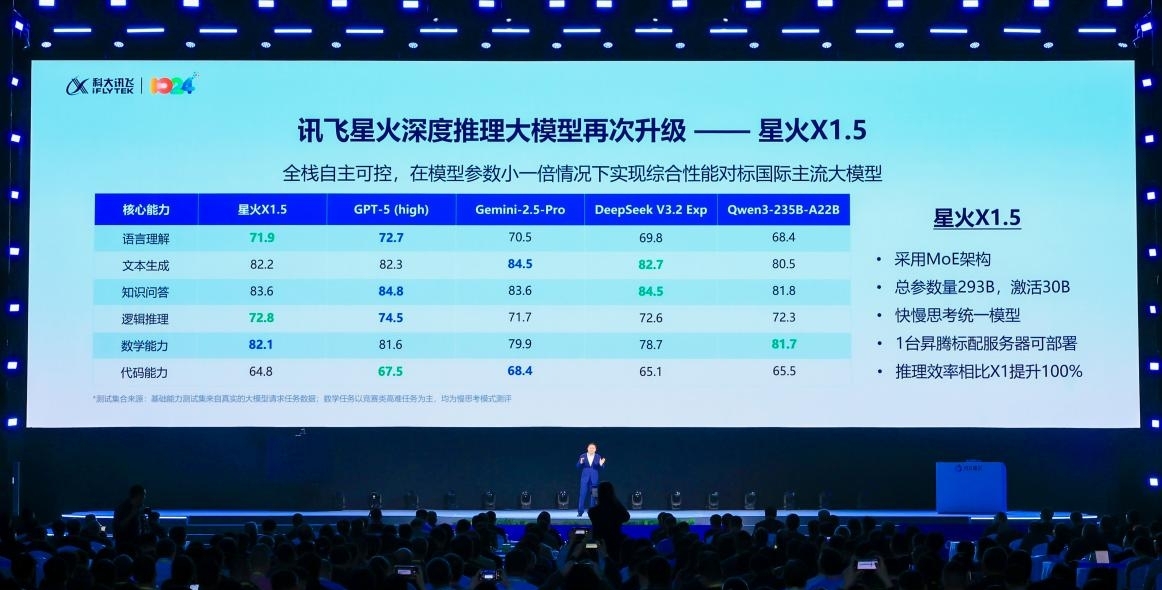
Core Insights - The company iFLYTEK has unveiled significant advancements in AI technology and products, emphasizing a clear path for realizing AI industry benefits through four key areas: autonomy, integrated hardware and software, industry depth, and personalization [1][2]. Group 1: AI Model Advancements - The newly launched iFLYTEK Starfire X1.5 model features a MoE architecture with a total parameter count of 293 billion and an activation of 30 billion, achieving a 100% improvement in inference efficiency compared to its predecessor [2][3]. - The Starfire X1.5 model demonstrates comprehensive capabilities in language understanding, text generation, knowledge Q&A, logical reasoning, mathematical skills, and coding, with performance metrics exceeding 95% of GPT-5 [2][3]. Group 2: Hardware Integration Solutions - iFLYTEK has introduced integrated hardware and software solutions, including advanced microphone arrays and noise-canceling technologies, achieving recognition rates of 95.08% in high-noise environments with its smart office products [4][6]. - The company has developed a unique AI translation headset and a dual-screen translation machine, both achieving high accuracy rates in noisy conditions [4]. Group 3: Personalized AI Capabilities - The Starfire X1.5 model incorporates personalized memory capabilities, allowing it to build a comprehensive understanding of user profiles and interactions [7]. - The model can replicate any voice with just one recording, showcasing its advanced voice synthesis technology [7]. Group 4: Industry Applications - iFLYTEK's AI applications span various sectors, including education, healthcare, and automotive, with notable advancements in AI-assisted diagnosis and personalized learning tools [8]. - The company has launched the "Smart Medical Assistant Hospital Version 1.0," which enhances diagnostic accuracy and reduces documentation time significantly [8]. Group 5: Developer Ecosystem and Global Initiatives - The 2025 iFLYTEK AI Developer Competition attracted 36,898 teams from 17 countries, highlighting the growing developer ecosystem with 9.68 million developers on the iFLYTEK platform [9]. - iFLYTEK has initiated the "Starfire Lights Up the World" plan to foster global collaboration in AI development, aiming to provide a second choice for AI advancement worldwide [9].
批量上新,科大讯飞兑现AI红利
Bei Jing Shang Bao· 2025-11-06 13:16
Core Insights - Keda Xunfei has released the Xunfei Spark X1.5 and a series of AI hardware-software integrated solutions, marking a significant advancement in AI technology and applications [1] - The company reported a revenue growth of 10.02% year-on-year in Q3 2025, achieving a net profit of 172 million yuan, indicating a successful transition from loss to profitability [1][6] - The focus of Keda Xunfei's products is on personalization and understanding user needs, as emphasized by Chairman Liu Qingfeng [1][3] Financial Performance - Keda Xunfei ended its losses in Q1 and H1 of 2025, achieving a revenue of 6.078 billion yuan in Q3, with a net profit of 172 million yuan [6] - The company has successfully transitioned to a profitable model, showcasing its ability to convert technology into financial success [1][6] Product Development - The Xunfei Spark X1.5 model demonstrates advanced capabilities in language understanding, text generation, and multi-language support, achieving over 93% efficiency compared to international competitors [4] - The company showcased various applications of AI in education, healthcare, automotive, and emotional companionship, highlighting the versatility of its technology [3][4] Market Positioning - Keda Xunfei aims to capitalize on the growing demand for practical AI applications, focusing on four key areas: autonomy, hardware-software integration, industry depth, and personalization [1] - The company is positioned within a broader AI ecosystem that includes large language models (LLM), autonomous driving, and embodied intelligence, each with distinct development paths [6]
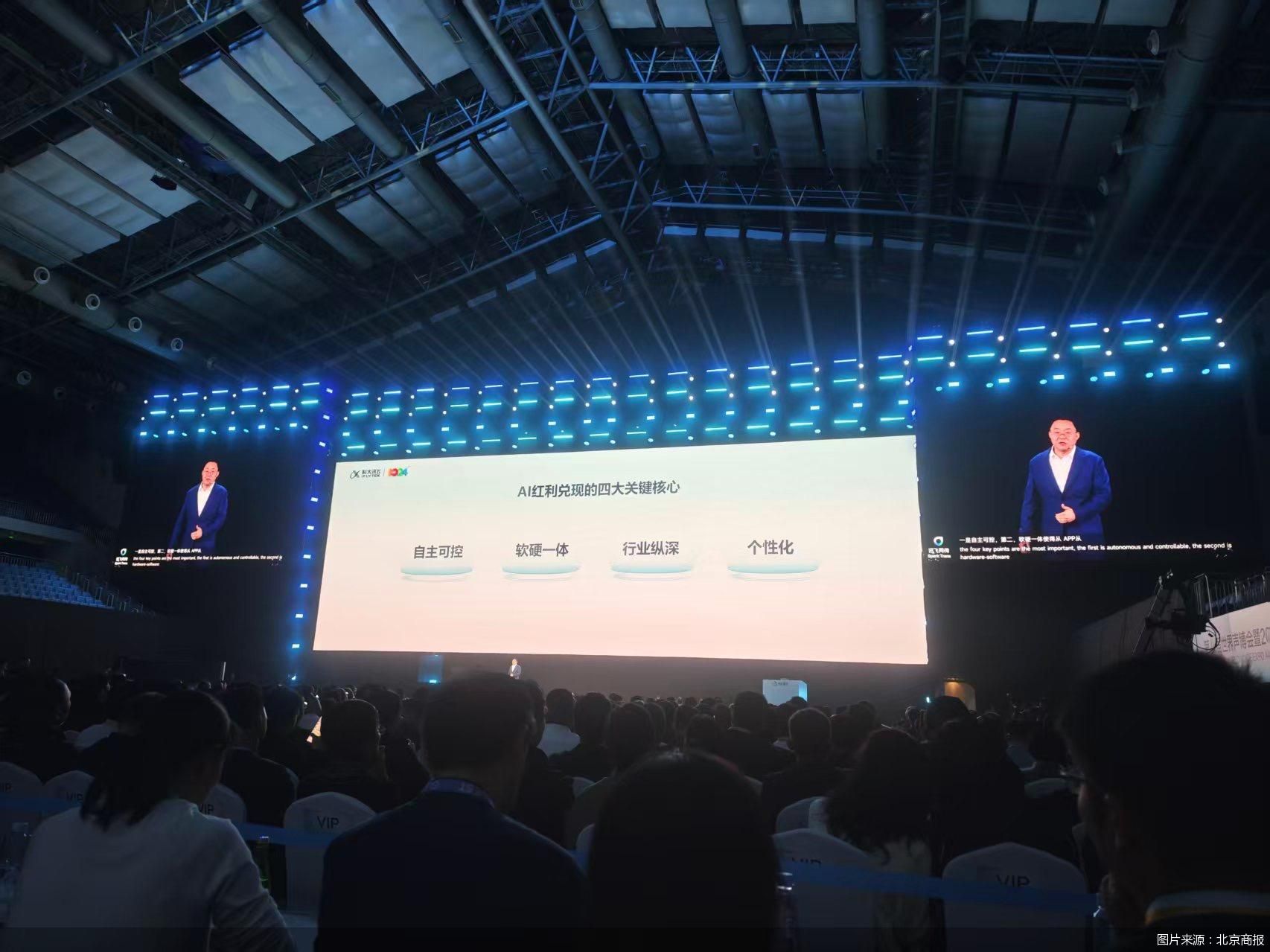
科大讯飞发布星火X1.5大模型 推理效率较上代提升一倍
Jing Ji Guan Cha Wang· 2025-11-06 12:44
Core Insights - The core focus of the news is the launch of iFlytek's deep reasoning model "Xunfei Spark X1.5" and its advancements in AI technology, showcasing various AI hardware and software integration solutions and industry applications [2][3] Group 1: Product Launch and Features - iFlytek introduced the "Xunfei Spark X1.5" model, which utilizes a MoE (Mixture of Experts) architecture with a total parameter count of 293 billion and 30 billion active parameters [2] - The inference efficiency of Spark X1.5 has improved by approximately 100% compared to its predecessor, with enhancements in language understanding, logical reasoning, mathematical operations, and code generation, supporting over 130 languages [2] - The model's deep reasoning training efficiency has increased from 30% to over 84%, while optimizing the MoE training process to reduce energy consumption and costs [2] Group 2: Technological Capabilities - iFlytek highlighted two major technological capabilities: personalized memory, allowing for comprehensive understanding of user profiles and feedback, and versatile voice replication, enabling the recreation of any voice with just one recording [2] - A non-autoregressive speech model was also released, which can output complete text sequences in parallel, improving inference efficiency by about 16% and reducing inference costs by 520% [2] Group 3: AI Applications and Developer Engagement - iFlytek showcased various AI applications, including the Smart Office Book X5, AI translation headphones, and dual-screen translation machines, which support multilingual communication and personalized memory [3] - In the healthcare sector, the "Smart Medical Assistant Hospital Edition 1.0" provides auxiliary diagnosis and medical record generation [3] - The company launched the first intelligent agent platform supporting RPA (Robotic Process Automation) named "Astron," with over 300 intelligent agents developed in collaboration with leading enterprises [3] - As of October 2025, the number of registered developers on iFlytek's open platform reached 9.68 million, an increase of 2 million from the previous year, with a 125% growth in the large model sector [3]

推理效率提升100%!“星火X1.5”发布,科大讯飞刘庆峰:AI红利已到兑现时刻
Zhong Guo Zheng Quan Bao - Zhong Zheng Wang· 2025-11-06 12:21
Core Insights - The company iFLYTEK has launched the "Xinghuo X1.5" deep reasoning model based on domestic computing power, emphasizing the transformative impact of AI on various industries and the need for integrated hardware and software solutions [1][2] Group 1: Product Development and Performance - The "Xinghuo X1.5" model utilizes a MoE (Mixture of Experts) architecture with a total parameter count of 293 billion and an activation count of 30 billion, achieving a 100% improvement in inference efficiency compared to its predecessor [2] - The model demonstrates capabilities in language understanding, text generation, knowledge Q&A, logical reasoning, mathematical skills, and coding, with its mathematical ability being internationally leading [2] - iFLYTEK's revenue for the first three quarters reached 16.989 billion yuan, a year-on-year increase of 14.41%, while the net profit for Q3 was 172 million yuan, a 202.40% increase year-on-year [3][4] Group 2: Market Position and Competitive Edge - iFLYTEK has secured the highest number and value of bids in the large model project market in China from January to September, with a total bid amount of 5.45 billion yuan in Q3 alone [4] - The company has made significant advancements in training efficiency for deep reasoning, increasing it from 30% to over 84% [3] Group 3: AI Integration and User Engagement - iFLYTEK has introduced integrated hardware solutions that enhance AI applications in real-world scenarios, achieving high accuracy rates in noisy environments with products like the intelligent office notebook and AI translation earphones [5] - The "AI Star Friend" product, designed as an emotional companion, has shown high user engagement with an average usage frequency of 9.8 times per week and a monthly active rate of 56% [6]
科大讯飞发布星火X1.5,加速兑现AI红利
Zheng Quan Shi Bao Wang· 2025-11-06 11:57
Core Insights - The core viewpoint emphasizes that the realization of AI benefits requires overcoming four key challenges: autonomy, integrated hardware and software, industry depth, and personalization [1] Group 1: AI Model Development - The newly launched AI model, Xunfei Spark X1.5, features a MoE architecture with a total parameter count of 293 billion and an activation of 30 billion, achieving a 100% improvement in inference efficiency compared to its predecessor [1] - The model demonstrates comprehensive capabilities in language understanding, text generation, knowledge Q&A, logical reasoning, mathematical skills, and coding abilities, with its mathematical capability remaining internationally leading [1] - Xunfei Spark X1.5 supports over 130 languages and achieves 95% performance of GPT-5, with superior results in 14 key languages including those from Latin America and ASEAN [1] Group 2: Technological Innovations - Xunfei has introduced a non-autoregressive speech model architecture, enhancing inference capability by 16% while reducing inference costs by 520% compared to autoregressive models of the same size [2] - The company has released integrated hardware and software solutions, including AI-enabled products like the Xunfei Smart Office Book X5 and Xunfei AI Translation Earphones, which achieve high accuracy rates in noisy environments [2] Group 3: Multi-modal Interaction and Personalization - The company is advancing multi-modal interaction capabilities, integrating technologies such as far-field microphone recognition and 3D visual perception [3] - Two core technologies were unveiled: personalized memory technology for comprehensive user understanding and voice replication technology that can recreate any voice style with a single recording [3] Group 4: Industry Applications - Xunfei's AI applications span various sectors, including education, healthcare, automotive, and emotional companionship, with significant advancements in personalized education and AI-assisted medical diagnostics [4][5] - In education, the AI model has developed a comprehensive error analysis system and facilitates personalized teaching through intelligent grading and assistance tools [3] - In healthcare, the AI diagnostic capabilities have reached the level of senior hospital physicians, improving diagnostic accuracy and reducing documentation time significantly [4] Group 5: AI in Industry - The company has collaborated with leading enterprises to create over 300 "ready-to-use" intelligent agents, with notable applications like the "Xunfei Industry Analyst" achieving a score of 92 in a technical exam, surpassing 85% of human candidates [6]
从“夸父”奔跑到“锦绣”绽放,创新生态链驱动高质量发展 龙华区机器人产业开始“大步跑”
Shen Zhen Shang Bao· 2025-11-06 11:27
Core Viewpoint - The robot industry is rapidly advancing, becoming a significant force in promoting high-quality economic and social development, particularly in Longhua District, Shenzhen, which has established a robust ecosystem for artificial intelligence and robotics [1][2]. Group 1: Industry Overview - Longhua District has gathered 591 AI and robotics companies, with 360 of them classified as "four above" enterprises, projecting an industrial added value of 4.18 billion yuan in 2024 and an expected output value exceeding 32 billion yuan by the end of the 14th Five-Year Plan [1]. - The district's policy framework and technological advancements are driving the rapid growth of the robotics industry, with a clear path for industrial upgrading [1][2]. Group 2: Technological Innovation - Longhua has established a complete industrial chain covering foundational, technical, and application layers, with 35 "four above" companies focusing on core technologies like chips and algorithms, and 287 companies in application sectors such as intelligent manufacturing and smart services [2]. - The total number of patents and software copyrights in the district has surpassed 500, with companies like Jieshun Technology and Yinxing Intelligent accumulating over a thousand intellectual property rights [2]. Group 3: Innovation Infrastructure - Longhua has built 64 AI-related innovation platforms, including one national-level and 23 provincial-level platforms, creating a multi-level innovation support system [3]. - The "Longhua Central Axis AI Gathering Area" has been recognized as one of Shenzhen's top AI clusters, focusing on key areas like chips and intelligent sensors [3]. Group 4: Future Industry Trends - The humanoid robot industry is experiencing explosive growth, with Longhua actively positioning itself in this emerging sector, exemplified by the launch of the world's first 5G-A humanoid robot "Kua Fu" [4]. - Companies like Hanyang Technology and Yuanding Intelligent are leading innovations in consumer-grade snow-clearing robots and pool cleaning robots, respectively, showcasing the district's diverse application of robotics [4][5]. Group 5: Economic Development and Policy Support - Longhua has implemented a comprehensive policy system to support the AI and robotics industry, including financial incentives like the "computing power voucher" program, which offers up to 3 million yuan in subsidies to each enterprise [6]. - The district has attracted numerous high-growth companies, creating a "magnetic effect" for industrial clustering [7]. Group 6: Talent Development and Community Engagement - Longhua has integrated AI systems into local governance, enhancing administrative processes and community services [7]. - Training programs have been established to improve digital skills among various community members, with over 2,300 individuals trained since 2024 [7]. Group 7: Future Outlook - Longhua plans to implement the "1+2+6+100" action plan, aiming to exceed 1,000 related enterprises and establish high-level research platforms and innovation centers, positioning itself as a leader in robotics technology innovation [8].