Sinocare(300298)

Search documents
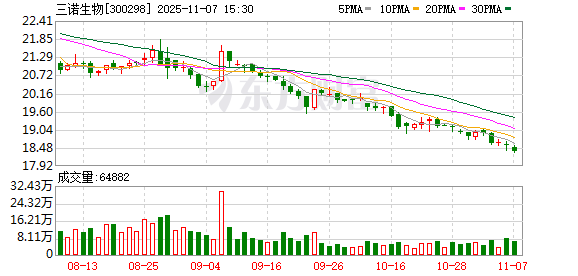
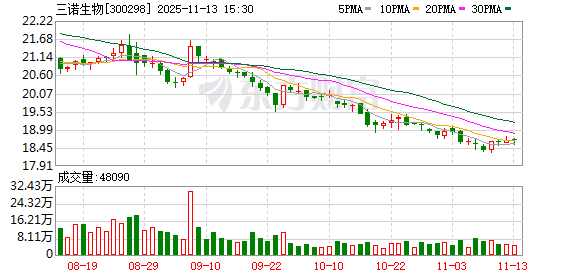
三诺生物跌2.04%,成交额7242.62万元,主力资金净流出243.20万元
Xin Lang Cai Jing· 2025-11-21 03:04
Core Viewpoint - Sanofi Biotech's stock has experienced a significant decline this year, with a 30.69% drop, reflecting broader challenges in the medical device sector [1][2]. Company Overview - Sanofi Biotech, established on August 7, 2002, and listed on March 19, 2012, specializes in the research, design, production, and sales of point-of-care testing (POCT) products for chronic disease management [1]. - The company's revenue composition includes: 73.29% from blood glucose monitoring systems, 6.59% from diabetes nutrition and care products, 5.03% from glycated hemoglobin testing systems, 4.14% from blood lipid testing systems, 4.11% from blood pressure monitors, 3.94% from iPOCT monitoring systems, 2.05% from other products, and 0.85% from miscellaneous [1]. Financial Performance - For the period from January to September 2025, Sanofi Biotech reported a revenue of 3.453 billion yuan, marking an 8.52% year-on-year increase, while the net profit attributable to shareholders decreased by 17.36% to 211 million yuan [2]. - The company has distributed a total of 1.512 billion yuan in dividends since its A-share listing, with 344 million yuan distributed over the past three years [3]. Shareholder Information - As of September 30, 2025, the number of shareholders increased by 58.52% to 24,600, with an average of 18,347 circulating shares per person, a decrease of 37.47% [2]. - Major shareholders include Hong Kong Central Clearing Limited, which holds 25.666 million shares, and Ruiyuan Growth Value Mixed A, which has reduced its holdings by 873,240 shares [3].

联合国糖尿病日:国产血糖检测仪加速突围,如何重塑千亿市场?
2 1 Shi Ji Jing Ji Bao Dao· 2025-11-14 03:29
Core Insights - The global diabetes patient population is projected to reach 589 million by 2024, with China having the highest number of patients aged 20-79 at 148 million, expected to rise to 168 million by 2050 [1][2] - Continuous Glucose Monitoring (CGM) technology is rapidly replacing traditional methods due to its accuracy and convenience, becoming a key growth area in diabetes management [1][3] Industry Overview - The domestic CGM market is divided into two main camps: imported brands like Abbott and domestic companies such as Sanofi and Yuyue Medical, which are competing by lowering costs and enhancing product differentiation [2][4] - The CGM market is expected to grow significantly, with a projected market size of 71.8 billion yuan by 2025 and a compound annual growth rate of 14.49% until 2032, reaching 185.2 billion yuan [3][4] Company Performance - Sanofi reported a revenue of 3.453 billion yuan in the first three quarters, an increase of 8.52%, with a net cash flow from operating activities of 537 million yuan, up 33.25% [4] - Yuyue Medical has invested 2.375 billion yuan in R&D from 2020 to 2024, with CGM products becoming a significant growth driver, achieving a revenue of 6.545 billion yuan in the first three quarters of 2025 [4][5] Technological Advancements - The integration of AI in CGM products is enhancing their capabilities, with Yuyue Medical's new Anytime series achieving global leading technical standards [5][6] - The CGM technology is evolving from simple monitoring to a comprehensive diabetes management system, enabling personalized interventions based on data analysis [6][9] Market Dynamics - Domestic CGM companies are rapidly gaining market share by offering products at 30%-50% lower prices than international competitors, aided by favorable healthcare policies [2][4] - The shift from low-cost market filling to comprehensive capability building is evident, with domestic firms focusing on both mid-range and high-end market segments [6][9] Challenges and Opportunities - Domestic CGM companies face challenges such as regulatory compliance and operational costs, particularly in decentralized healthcare settings [7][8] - There is a need for improved training and data integration in grassroots healthcare to enhance the effectiveness of CGM products [8][9] Future Outlook - The CGM market is poised for significant growth, driven by technological advancements and increasing demand for chronic disease management solutions [3][9] - The potential for Chinese CGM companies to transition from domestic players to global competitors hinges on overcoming regulatory hurdles and enhancing product capabilities [7][9]

三诺生物:关于第三期员工持股计划第一个锁定期届满的提示性公告
Zheng Quan Ri Bao· 2025-11-13 14:12
Core Viewpoint - Sanofi Bio announced that the first lock-up period of its third employee stock ownership plan will expire on November 13, 2025, allowing for the release of 375,000 shares, which represents 12.50% of the total shares in this plan [2] Summary by Relevant Sections - Employee Stock Ownership Plan - The total number of shares in the third employee stock ownership plan is 3,000,000 shares [2] - Upon expiration of the first lock-up period, 375,000 shares will be unlocked, accounting for 0.07% of the company's total share capital [2]

三诺生物(300298) - 关于第三期员工持股计划第一个锁定期届满的提示性公告
2025-11-13 09:02
| 证券代码:300298 | 证券简称:三诺生物 | 公告编号:2025-082 | | --- | --- | --- | | 债券代码:123090 | 债券简称:三诺转债 | | 三诺生物传感股份有限公司 关于第三期员工持股计划第一个锁定期届满的提示性公告 本公司及董事会全体成员保证信息披露的内容真实、准确、完整,没有虚 假记载、误导性陈述或重大遗漏。 三诺生物传感股份有限公司(以下简称"公司")分别于 2024 年 1 月 2 日、 2024 年 1 月 19 日召开第五届董事第八次会议、第五届监事会第八次会议和 2024 年第一次临时股东大会,审议并通过《关于〈三诺生物传感股份有限公司第三期 员工持股计划(草案)〉及其摘要的议案》《关于〈三诺生物传感股份有限公司第 三期员工持股计划管理办法〉的议案》《关于提请股东大会授权董事会办理第三 期员工持股计划相关事宜的议案》;于 2024 年 4 月 24 日召开第五届董事会第十 次会议,审议并通过《关于〈三诺生物传感股份有限公司第三期员工持股计划(草 案修订稿)〉及其摘要的议案》,具体内容详见公司于 2024 年 1 月 4 日、2024 年 1 月 1 ...
“血糖焦虑”的年轻人,买爆一款时尚单品
3 6 Ke· 2025-11-12 09:22
Core Insights - The trend of "sugar control" has emerged as a new lifestyle choice, with increasing public interest in blood sugar management and its impact on health [1][2][4] - The popularity of continuous glucose monitors (CGMs) has surged among young people, transforming from a medical device for diabetes patients to a fashionable health accessory [5][14][33] Group 1: Market Trends - Discussions on social media regarding "blood sugar," "sugar control," and "blood sugar and weight" remain highly active, indicating a growing awareness and concern [2][9] - In the past 90 days, there have been approximately 51,800 posts related to sugar control on platforms like Xiaohongshu, nearly matching the number of posts about weight loss meals [3] - The number of early-onset type 2 diabetes patients aged 15-39 in China has increased from 9.61 million in 1990 to 23.74 million in 2021, a 147% rise over 31 years [9][10] Group 2: Consumer Behavior - Young consumers are increasingly curious about their blood sugar levels, leading to a habit of checking real-time blood sugar data after meals [7][8] - The use of CGMs allows individuals to monitor the effects of various foods on their blood sugar, leading to more informed dietary choices [11][19] - The trend of using CGMs is not unique to China; similar communities have formed in Western markets, where sharing data has become a health fashion [13][14] Group 3: Product Development - The demand for CGMs has prompted manufacturers to focus on making devices smaller, more user-friendly, and capable of seamless integration into daily life [24][25] - Leading brands are enhancing their products with features like 24-hour monitoring, real-time data synchronization, and personalized health management services [26][27][30] - The introduction of policies and subsidies has made CGMs more accessible, contributing to their popularity among younger demographics [30][31] Group 4: Cultural Shift - The perception of health management is shifting from a reactive approach to a proactive one, with young people embracing the idea of "preventive health" [33][34] - CGMs have evolved from being seen as medical tools to becoming symbols of a healthy lifestyle, with users openly sharing their experiences and data on social media [33][36] - This cultural change reflects a broader understanding that health is not merely the absence of illness but an active pursuit of well-being [34][35]

三诺生物(300298):业绩符合预期 收入增长提速
Xin Lang Cai Jing· 2025-11-12 00:41
Core Insights - The company reported its Q3 2025 results, showing a revenue of 3.453 billion yuan, an 8.52% year-on-year increase, but a net profit decline of 17.36% to 211 million yuan [1] - The significant drop in net profit was primarily due to patent licensing fees impacting the financials, with a specific charge of 19 million USD affecting Q3 net profit by approximately 136 million yuan [2] - The company continues to expand its Continuous Glucose Monitoring (CGM) product line, achieving significant sales growth and global market penetration [2] Financial Performance - For the first three quarters of 2025, the company achieved a revenue of 34.53 billion yuan, with a net profit of 2.11 billion yuan, reflecting a year-on-year decrease [1] - In Q3 2025, revenue reached 1.19 billion yuan, marking a 13.40% increase, while net profit fell to 30 million yuan, a 47.55% decline [1][2] - Excluding the impact of patent fees, the adjusted net profit for Q3 would have been 1.05 billion yuan, representing an 82% year-on-year growth [2] Product Development and Market Strategy - The second-generation CGM product received EU CE MDR certification in July 2025, featuring improved design for user comfort and convenience [2] - The company is exploring a new model integrating "biosensing + artificial intelligence + healthcare," aiming to enhance clinical decision-making through comprehensive data support [3] - The launch of the "Ai Kan Health" app is part of the strategy to leverage AI for customer service and data analysis, enhancing operational efficiency [3] Market Challenges - Ongoing patent disputes have temporarily affected the sales of the first-generation iCanCGM product in certain European markets, although the second-generation product remains unaffected [3] - The company faces potential risks related to overseas sales performance and increasing market competition [4]
三诺生物(300298):业绩符合预期,收入增长提速
Changjiang Securities· 2025-11-11 23:30
Investment Rating - The investment rating for the company is "Buy" and is maintained [8]. Core Insights - The company's performance met expectations, with revenue growth accelerating. In Q3 2025, the company reported revenue of 1.19 billion yuan, a year-on-year increase of 13.40%. However, the net profit attributable to shareholders decreased by 47.55% to 30 million yuan, primarily due to patent licensing fees impacting profits. Excluding this effect, the net profit would have been 105 million yuan, reflecting an 82% year-on-year increase [2][11]. - For the first three quarters of 2025, the company achieved a revenue of 3.453 billion yuan, up 8.52% year-on-year, while the net profit attributable to shareholders was 211 million yuan, down 17.36% [6][11]. - The sales of Continuous Glucose Monitoring (CGM) products continue to grow, supported by a global expansion strategy. The second-generation CGM product received EU CE MDR certification in July 2025, enhancing user convenience and comfort [11]. - The company is exploring a new model combining "biosensing + artificial intelligence + healthcare," aiming to provide comprehensive data support for clinical decision-making through its "AiKan Health" app [11]. - Profit forecasts indicate that the company, as a leader in blood glucose monitoring, is expected to achieve net profits of 388 million, 484 million, and 611 million yuan for 2025, 2026, and 2027, respectively, with corresponding P/E ratios of 27, 22, and 17 [11]. Financial Summary - In Q3 2025, the company's revenue was 1.19 billion yuan, with a net profit of 30 million yuan. The net profit for the first three quarters was 211 million yuan, with a revenue of 3.453 billion yuan [2][6]. - The company’s total revenue for 2024 is projected at 4.443 billion yuan, with a net profit of 326 million yuan, and is expected to grow to 6.320 billion yuan and 611 million yuan by 2027 [16].
湖南长沙以科技创新引领产业创新 增强研发聚集度 提升产业含新量
Ren Min Ri Bao· 2025-11-10 22:15
Group 1 - Sanofi Biologics has made significant progress in a project that integrates artificial intelligence technology to enhance the stability of enzyme preparations [1] - The company is establishing a new R&D center in Changsha, Hunan, which will focus on developing biosensors, wearable devices, and high-end implantable medical devices, set to be operational by the end of this year [1] - The concentration of R&D efforts in Changsha is expected to accelerate innovation and product development [1] Group 2 - Changsha is enhancing its public innovation platform, focusing on advanced computing and artificial intelligence, as well as biomedical fields, with the establishment of key laboratories [2] - The city has signed deep cooperation agreements with local universities to promote industry-academia collaboration, facilitating technology innovation [2] - Changsha has built 18 technology transfer bases and 10 intellectual property transformation centers to support innovation [2] Group 3 - The city is optimizing its development environment to stimulate innovation, with a focus on the biomanufacturing sector [3] - A professor from Central South University has successfully commercialized over 130 independent intellectual property rights through a startup, applying technology to more than 20 companies [3] Group 4 - The government has facilitated connections between academic research and market needs, enabling efficient technology transfer within the innovation park [4] - Changsha's technology contract transaction volume has exceeded 100 billion yuan, reaching 109.528 billion yuan this year, indicating a robust innovation ecosystem [4] - The number of technology-based small and medium-sized enterprises in Changsha has surpassed 10,000, totaling 11,700 [4]

三诺生物新一代CGM亮相第八届进博会 展示糖尿病管理技术与全球布局
Huan Qiu Wang· 2025-11-09 03:35
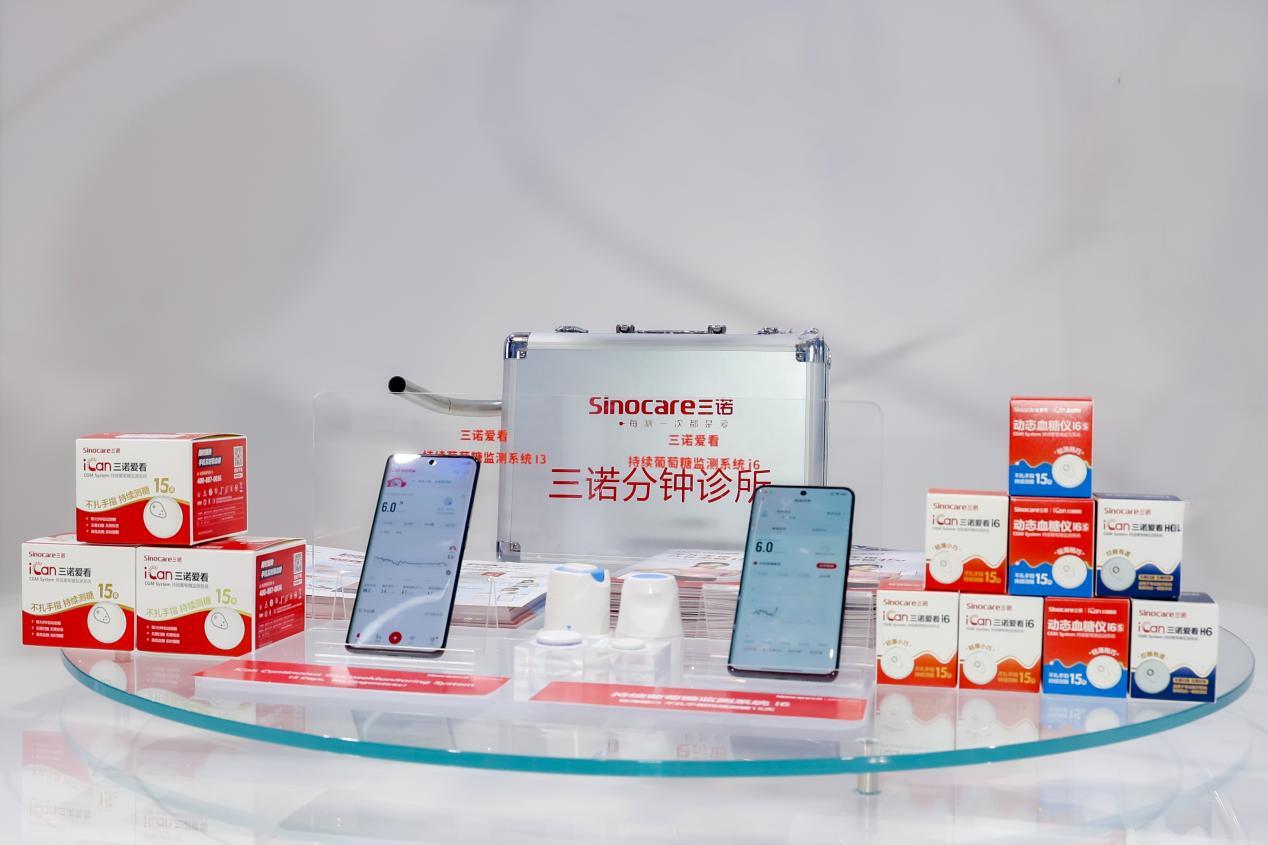
Core Viewpoint - Sanofi Bio showcased its new generation Continuous Glucose Monitoring System (CGM) at the 8th China International Import Expo, highlighting its advancements in diabetes digital management [1][3]. Group 1: Product Innovations - The Sanofi Aikan CGM is based on third-generation glucose sensing technology, reducing product size by 60%, enhancing comfort and concealment [3]. - The sensor's accuracy has reached international leading levels, with improved anti-interference performance and a battery life extended to 15 days, providing a comprehensive glucose fluctuation profile [3]. - The product has received EU CE-MDR certification and is currently pursuing FDA registration in the U.S. [3]. Group 2: Market Strategy - Sanofi Bio has integrated Trividia to leverage its established brand and channel resources, successfully entering mainstream retail systems like Walmart and Amazon [4]. - The company exports an average of 40,000 devices monthly to over 40 countries in Africa, targeting both grassroots healthcare and home users [4]. - Sanofi Bio ranks as the fourth largest blood glucose meter company globally and holds the top position in the Chinese market [4]. Group 3: Collaborative Ecosystem - Sanofi Bio participated in the Sanofi Type 1 Diabetes Ecosystem Cooperation Forum, discussing new diabetes management ecosystems with representatives from various sectors [4]. - The company emphasizes a multi-party collaboration model involving government, industry, academia, healthcare, and investment to create a sustainable diabetes management ecosystem [4][5]. - The integration of rapid testing capabilities, continuous data collection, and personalized analysis through the SinoGPT AI system aims to cover the entire diabetes management process from screening to long-term management [5]. Group 4: Future Vision - Sanofi Bio aims to become a global leader in diabetes digital management, focusing on innovation in medical technology to enhance health outcomes across diverse demographics [5].
三诺生物:目前,公司参与并中标的5个集采项目中已在全国13个省份的62个城市成功落地实施
Mei Ri Jing Ji Xin Wen· 2025-11-07 11:45
Group 1 - The company actively participates in government centralized procurement for blood glucose test strips, focusing on regional projects [2] - Currently, the company has successfully implemented five procurement projects across 62 cities in 13 provinces nationwide [2] - The company aims to enhance its market competitiveness by improving product quality control, optimizing production costs, and enhancing sales services [2]