Mindray(300760)

Search documents
医药生物周报(26年第5周):Roche口服BTK抑制剂PPMS三期临床数据公布-20260212
Guoxin Securities· 2026-02-12 12:27
Investment Rating - The report maintains an "Outperform" rating for the pharmaceutical and biotechnology sector [5][39]. Core Insights - The pharmaceutical sector has shown resilience, outperforming the overall market, with traditional Chinese medicine leading the gains [1][28]. - Roche's oral BTK inhibitor Fenebrutinib has demonstrated non-inferiority to Ocrelizumab in a Phase III trial for primary progressive multiple sclerosis (PPMS), marking a significant advancement in treatment options for this condition [2][11]. - The global market for multiple sclerosis (MS) treatment exceeds $20 billion, with Roche's Ocrevus projected to generate CHF 7 billion in sales by 2025, indicating substantial unmet needs in the PPMS segment [3][25]. Summary by Sections Market Performance - The overall A-share market declined by 1.3%, while the biopharmaceutical sector increased by 0.1%, indicating a stronger performance relative to the market [1][28]. - Specific segments within the biopharmaceutical sector showed varied performance, with traditional Chinese medicine rising by 2.6% and medical services increasing by 1.3% [1][28]. Clinical Data and Drug Development - Roche's Fenebrutinib trial included 985 PPMS patients and achieved its primary endpoint, showing a 12% reduction in disease progression risk compared to Ocrelizumab [2][11]. - The trial results suggest potential benefits for upper limb function, reinforcing the viability of BTK inhibitors in MS treatment [3][25]. Company Earnings Forecast and Investment Recommendations - Key companies in the sector, such as Mindray Medical, WuXi AppTec, and Aier Eye Hospital, are rated as "Outperform" with projected earnings growth over the next few years [4][39]. - Mindray Medical is highlighted for its strong R&D and international expansion, while WuXi AppTec is recognized for its comprehensive drug development services [39]. Valuation Metrics - The TTM price-to-earnings ratio for the pharmaceutical and biotechnology sector stands at 37.31x, compared to the overall A-share market at 21.98x, indicating a premium valuation for the sector [35][36]. - Within the sector, chemical pharmaceuticals and biological products have higher valuations at 45.18x and 46.09x, respectively [35].



国信证券:医药生物行业关注低估值和业绩修复的服务及消费板块 创新药出海合作持续深化
Zhi Tong Cai Jing· 2026-02-12 02:08
Core Viewpoint - The report from Guosen Securities indicates that the medical services and consumer-related sectors have experienced long-term adjustments, resulting in valuations at historical lows. By 2026, improvements in supply structure, increased treatment volumes, and store optimization are expected to lead to a dual recovery in fundamentals and valuations, with AI empowerment providing new momentum for leading companies [1][2]. Group 1: Medical Services and Consumer Sectors - The medical services and consumer-related sectors are currently undervalued and poised for performance recovery, with a focus on specific sub-sectors [2]. - In medical services, improvements in supply structure and consumer environment are anticipated to gradually revive business, with stable customer spending and increased treatment volumes. Leading companies are expected to provide positive earnings guidance for 2026, indicating a potential dual recovery in fundamentals and valuations. AI-related business developments are also expected to drive new growth for leading medical service firms. Key companies to watch include Aier Eye Hospital (300015), Gushengtang, Tongce Medical (600763), and Haijia Medical [2]. - The pharmacy sector has shown significant marginal improvement in performance since Q3 2025, with leading companies improving same-store performance quarterly. Regulatory support from nine ministries emphasizes the long-term development direction of industry concentration and chain rate enhancement, with non-pharmaceutical adjustments and store structure optimization driving short-term performance improvements. Key companies include Yifeng Pharmacy (603939) and Dazhenglin (603233) [2]. Group 2: Home Medical Devices - The growth of home medical device companies is driven by increased product penetration and domestic production rates. Rapid growth is observed in products like Continuous Glucose Monitors (CGM) and sleep apnea machines, with leading domestic brands expanding internationally. Traditional categories like blood pressure monitors are increasingly focusing on the high-end market, with domestic brands steadily increasing market share. The combination of high domestic growth and new overseas markets is expected to contribute to sustained performance growth for home medical device companies. Key companies include Yuyue Medical (002223), Kefu Medical (301087), Sanofi Biological (300298), and Ruimaite (301367) [3]. Group 3: Innovative Drug Development - The collaboration for the international expansion of innovative drugs continues to deepen, with recent significant agreements between Shiyao Group and AstraZeneca, as well as Innovent Biologics and Eli Lilly. These collaborations highlight the growing recognition of China's innovative drug development capabilities by multinational pharmaceutical companies, showcasing the efficiency and cost advantages of Chinese innovative drugs [4]. Group 4: Investment Portfolio for 2026 - The investment portfolio for 2026 includes A-shares such as Mindray Medical (300760), United Imaging Healthcare, WuXi AppTec (603259), New Industry (300832), Meihua Medical (301363), Adebiotech (300685), Zhend Medical (603301), Yaokang Biological, Kingmed Diagnostics (603882), Aier Eye Hospital, Yuyue Medical, Yifeng Pharmacy, and Dazhenglin; H-shares include Kangfang Biologics, Kelun-Botai Biologics-B, Hutchison China MediTech, Kangnuo-B, Sanofi Biopharma, Gushengtang, and Aikang Medical [5].


医药生物行业2026年2月投资策略:关注低估值和业绩修复的服务及消费板块
Guoxin Securities· 2026-02-11 14:18
Core Insights - The report emphasizes the focus on undervalued and performance-recovering sectors within the medical services and consumer segments, predicting a fundamental improvement in 2026 [4]. Group 1: Investment Strategy - The report maintains an "outperform" rating for the sector, indicating a positive outlook for the medical and consumer-related segments [2]. - Key areas of focus include medical services, pharmacies, and home medical devices, which are expected to see performance recovery and valuation improvements in 2026 [4]. Group 2: Sector Analysis - Medical services are anticipated to recover due to improved supply structure and consumer environment, with leading companies expected to show positive earnings guidance for 2026 [4]. - The pharmacy sector has shown significant marginal improvement since Q3 2025, with leading companies experiencing quarterly performance enhancements [4]. - Home medical devices are expected to benefit from increased product penetration and domestic production rates, contributing to sustained performance growth [4]. Group 3: Notable Companies - The report highlights specific companies to watch, including Aier Eye Hospital, Yuyue Medical, and Yifeng Pharmacy, which are positioned for growth in their respective segments [4]. - The investment portfolio for February 2026 includes a mix of A-share and H-share companies, such as Mindray Medical, WuXi AppTec, and Kangfang Biotech, indicating a diversified approach to investment [4]. Group 4: Market Performance - The medical sector outperformed the broader market in January 2026, with a 3.14% increase compared to the 1.49% rise of the CSI 300 index [10]. - Sub-sectors such as medical services and medical devices showed significant gains, with respective increases of 8.82% and 5.28% [17]. Group 5: Macro Data - In 2025, the pharmaceutical manufacturing industry reported a total revenue of 24,870 billion yuan, reflecting a slight decline of 1.2% year-on-year, while total profits increased by 2.7% [9]. - The retail sales of pharmaceuticals reached 7,294 billion yuan, with a year-on-year growth of 1.8%, indicating a stable demand in the market [9].

股市必读:迈瑞医疗(300760)2月10日董秘有最新回复
Sou Hu Cai Jing· 2026-02-10 16:27
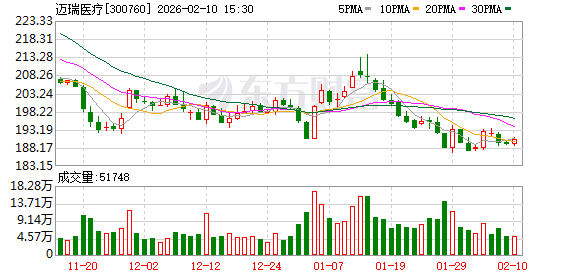
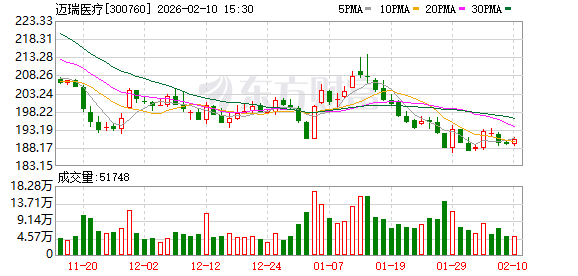
Core Viewpoint - The company is actively pursuing international expansion and product innovation while addressing currency fluctuations and market competition challenges. Group 1: Stock Performance and Market Activity - As of February 10, 2026, the company's stock closed at 190.36 yuan, with a slight increase of 0.63% and a trading volume of 51,700 shares, resulting in a transaction value of 983 million yuan [1] - On February 10, 2026, there was a net inflow of 45.8035 million yuan from main funds, indicating significant buying interest [10] Group 2: International Listing and Regulatory Approvals - The company submitted an application for H-share listing on the Hong Kong Stock Exchange on November 10, 2025, which is pending approval from various regulatory bodies [2] Group 3: Currency Impact on Financial Performance - Approximately 50% of the company's sales revenue comes from overseas, primarily settled in USD and EUR, making it susceptible to fluctuations in the RMB exchange rate, which can affect revenue and profit margins [3] - The company is implementing strategies such as foreign exchange hedging and fixed-rate agreements to mitigate the impact of currency fluctuations on its business operations [3] Group 4: Product and Market Positioning - The company has established a strong global network in R&D, manufacturing, marketing, and service, with its six major product lines ranking among the top three in global markets [4] - As of June 30, 2025, the company's products were sold in over 190 countries, with overseas revenue accounting for approximately 45% of total revenue in 2024 [4] - In the European and American markets, the company achieved over 5.5 billion yuan in revenue in 2024, representing 15% of total revenue, highlighting its brand strength and sales growth [4] Group 5: AI and Innovation Strategy - The company emphasizes its commitment to medical AI, with applications in critical care and various clinical scenarios, although it faces challenges in market perception and growth potential [5] - There is a call for the company to enhance its corporate culture and innovation focus to bridge the gap with international competitors and improve product pricing power [6] Group 6: Shareholder Engagement and Future Plans - As of September 30, 2025, the total number of shareholders was 108,835 [7] - The company plans to release its annual report for 2025 on March 31, 2026, which will provide insights into its financial performance [8]
迈瑞医疗:公司目前不涉及脑机接口的业务
Mei Ri Jing Ji Xin Wen· 2026-02-10 14:43
Group 1 - The company, Mindray Medical (300760.SZ), has stated that it is not currently involved in the brain-computer interface business as mentioned by an investor inquiry on the interactive platform [2]

迈瑞医疗:截至2025年6月30日公司的产品已销往190多个国家和地区
Xin Lang Cai Jing· 2026-02-10 13:13
Core Insights - Company has established a comprehensive global network covering R&D, manufacturing, marketing, and services, laying a solid foundation for ongoing internationalization [2][4] - The six major product lines, including monitors, anesthesia systems, ventilators, defibrillators, blood cell analyzers, and ultrasound imaging devices, rank among the top three in global markets [2][4] - Company's products have been adopted by 87 out of the top 100 hospitals globally as per Newsweek, demonstrating strong market presence [2][4] Financial Performance - By June 30, 2025, products will be sold in over 190 countries and regions, with overseas revenue expected to account for approximately 45% of total revenue in 2024 [2][4] - Revenue from the European and American markets is projected to exceed RMB 5.5 billion in 2024, representing 15% of total revenue for that year [5] Market Position and Strategy - Company has successfully penetrated numerous top-tier medical institutions known for strict procurement standards, reflecting its international leadership in technological innovation, product reliability, and clinical application value [5] - In the U.S., the company has covered about 80% of IDN medical systems and over 2,100 IDN hospitals, with nearly 35% of these hospitals using two or more product combinations [5] - The company has also entered the top 30 hospitals in the U.S. and over 660 European teaching hospitals, positioning itself as a key player in the global healthcare market [5] Growth Opportunities - The accelerating trends in medical digitization, chronic disease management, home care, and aging population are driving demand for smart monitoring, precise diagnostics, and minimally invasive treatments in the European and American markets [5] - These trends provide significant growth opportunities for the company to enhance penetration in high-end medical systems and optimize its product structure [5]
迈瑞医疗:人民币汇率波动会对公司盈利状况造成一定影响
Sou Hu Cai Jing· 2026-02-10 07:20
Core Viewpoint - The company, Mindray Medical (300760), acknowledges that fluctuations in the RMB exchange rate can significantly impact its financial performance, particularly due to its substantial overseas sales and domestic production costs [1]. Group 1: Impact of RMB Appreciation - The company reports that as of the first half of 2025, approximately 50% of its sales revenue comes from overseas, primarily settled in USD and EUR [1]. - The appreciation of the RMB against the USD and EUR can affect the company's operating performance in several ways, including revenue and gross margin [1]. - The company's production is mainly domestic, and the primary raw materials are sourced locally, making it sensitive to exchange rate fluctuations [1]. Group 2: Competitive Pricing and Financial Effects - The fluctuation in the RMB exchange rate directly impacts the pricing competitiveness of the company's products sold in foreign currencies [1]. - Exchange rate variations will also affect the company's foreign exchange gains and losses, further influencing profitability [1]. Group 3: Risk Management Strategies - The company plans to closely monitor exchange rate changes and utilize foreign exchange hedging tools to mitigate risks [1]. - Strategies include timely currency conversion and negotiating fixed exchange rates in business contracts to manage adverse effects from exchange rate volatility [1].
沪深北交易所同日“亮剑”:再融资新政对A股影响(附精选股票)
Sou Hu Cai Jing· 2026-02-10 06:14
Core Viewpoint - The simultaneous release of refinancing optimization measures by Shanghai, Shenzhen, and Beijing stock exchanges marks a significant transformation in China's capital market, aimed at enhancing capital allocation efficiency and reshaping the A-share market landscape [1]. Group 1: Policy Framework and Differences - The policy frameworks of the three exchanges are highly similar, focusing on "supporting the strong, limiting the weak, promoting innovation, and enhancing convenience and regulation" [2]. - Shanghai Stock Exchange emphasizes "main board" characteristics, tailoring financing rules for large, mature technology companies [2]. - Shenzhen Stock Exchange adopts a bolder stance on supporting technology innovation, easing fundraising restrictions for growth-oriented enterprises [2]. - Beijing Stock Exchange focuses on "innovative small and medium-sized enterprises," addressing their financing challenges with flexible policies [2]. Group 2: Strategic Insights on Separate Announcements - The decision to release policies on the same day rather than a joint announcement reflects the nuanced wisdom of tiered regulation in China's capital market [3]. - Different market positioning allows each exchange to cater to the unique characteristics and needs of the enterprises they serve, avoiding a one-size-fits-all approach [3]. - The simultaneous release creates a strong policy resonance, reinforcing market perception of deepening capital market reforms while maintaining the distinct identities of each exchange [3]. Group 3: Deep Impacts on Market Perception - The new measures aim to shift the long-standing fear of "blood-sucking" effects of refinancing, which was believed to drain market funds and destabilize the market [4]. - The principle of "supporting the strong, limiting the weak" will act as a catalyst for market differentiation, favoring quality companies, especially in hard technology, while raising barriers for poorly performing firms [4]. - The policy directs resources towards "new productive forces," providing strong support for leading companies in sectors like semiconductors, AI, biomedicine, and high-end manufacturing [5]. - Allowing companies that have experienced stock price declines to raise funds through methods like private placements and convertible bonds offers a lifeline to solid businesses facing temporary challenges [6]. - A complete regulatory loop is established, tightening post-fundraising supervision while relaxing initial approvals, transforming refinancing from a mere "money-raising tool" to an "engine" for corporate development [7]. Group 4: Implications for Investors - The coordinated actions of the three exchanges signify the entry of China's refinancing mechanism into a "precise drip irrigation" era, providing tailored financing support for different types of enterprises [8]. - Investors are advised to focus on genuinely innovative and well-governed companies while avoiding those that merely chase trends without substance [8]. - The transformation of refinancing from a "blood-sucking machine" to a "blood-producing pump" is expected to enhance the value discovery function of the A-share market, leading to a healthier and more vibrant capital market [8].





医疗设备招采规模高基数影响部分回落,关注手术机器人市场机遇
GUOTAI HAITONG SECURITIES· 2026-02-10 02:35
Investment Rating - The report maintains an "Overweight" rating for the medical device industry [2][6]. Core Insights - The medical device procurement scale is experiencing a partial decline due to high base effects, but there are opportunities in the surgical robot market [2]. - The report emphasizes that the ongoing implementation of equipment upgrade policies is expected to drive long-term procurement levels in the medical device sector, recommending companies that are likely to benefit from these policies [4]. - The report highlights that the four ministries jointly issued a notice in 2024 aiming for a more than 25% increase in medical equipment investment by 2027 compared to 2023, which is expected to enhance the configuration of high-end equipment to levels comparable to middle-income countries [6]. Summary by Sections Investment Recommendations - The report suggests maintaining an "Overweight" rating and recommends companies likely to benefit from the equipment upgrade policies, including Mindray Medical, United Imaging, Kaili Medical, Aohua Endoscopy, and Jingfeng Medical-B. It also suggests paying attention to MicroPort Scientific-B [6]. Monthly Procurement Data - In January 2026, the procurement scale for new devices showed a year-on-year decline: MR down 22.6%, CT down 25.6%, DR down 18.2%, ultrasound down 10.1%, while endoscopy grew by 1.1%, and surgical robots declined by 20.1%. Company-specific performance showed United Imaging MR down 36.5%, United Imaging CT up 8.5%, Mindray ultrasound up 10.9%, Kaili ultrasound down 14.8%, Kaili endoscopy up 55.4%, and Aohua endoscopy down 11.7% [6]. Policy Impact - The report discusses the release of a guideline by the National Healthcare Security Administration on January 20, 2026, which establishes a unified pricing project for surgical robots, expected to accelerate the penetration and application of robotic surgery technology [6].


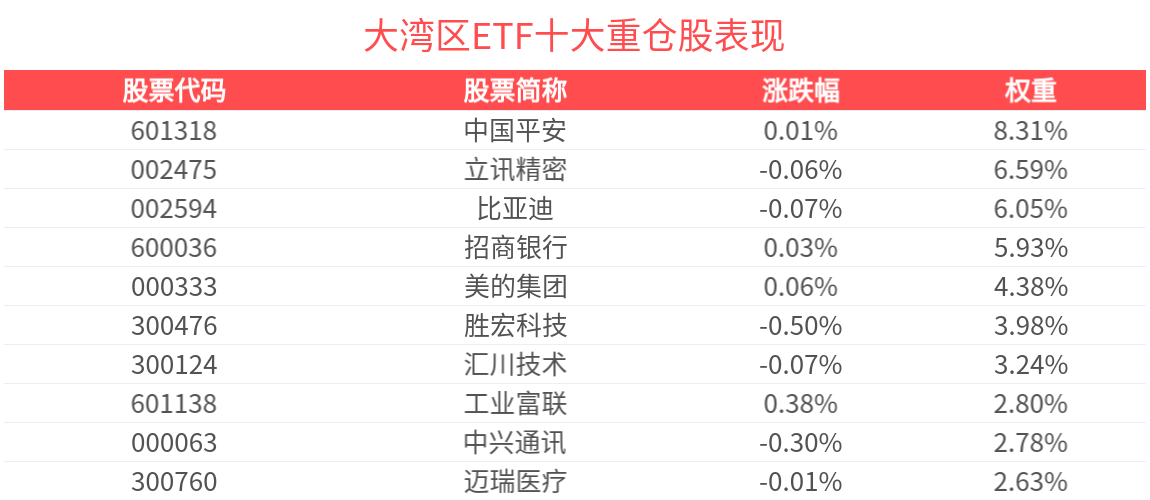
中证粤港澳大湾区发展主题指数上涨0.02%,大湾区ETF(512970)成立以来超越基准年化收益达3.32%
Sou Hu Cai Jing· 2026-02-10 01:43
Core Viewpoint - The performance of the Zhuhai-Hong Kong-Macao Greater Bay Area Development Theme Index and its related ETF reflects the overall performance of companies benefiting from the development of the Greater Bay Area, with notable movements in specific constituent stocks [1][2]. Group 1: Index Performance - As of February 10, 2026, the Zhuhai-Hong Kong-Macao Greater Bay Area Development Theme Index (931000) increased by 0.02%, with notable gains from stocks such as Zhaochi Co. (+9.96%) and Mingyang Smart Energy (+1.56%) [1]. - The Greater Bay Area ETF (512970) showed a mixed performance, with a recent price of 1.52 yuan and a cumulative increase of 2.91% over the past week as of February 9, 2026 [1]. Group 2: Liquidity and Trading Data - The trading volume for the Greater Bay Area ETF was reported at 0.00 yuan, with an average daily trading volume of 711,700 yuan over the past month [1]. - The Sharpe ratio for the Greater Bay Area ETF over the past year was 1.41, indicating a favorable risk-adjusted return [1]. Group 3: Drawdown and Fees - The maximum drawdown for the Greater Bay Area ETF year-to-date was 5.52%, with a relative benchmark drawdown of 0.02% [1]. - The management fee for the Greater Bay Area ETF is set at 0.15%, while the custody fee is 0.05% [1]. Group 4: Index Composition - As of January 30, 2026, the top ten weighted stocks in the Zhuhai-Hong Kong-Macao Greater Bay Area Development Theme Index accounted for 44.55% of the index, with China Ping An, Luxshare Precision, and BYD among the leading constituents [2][3]. - The index includes a maximum of 50 Hong Kong market securities, 300 companies from the Shanghai-Hong Kong-Shenzhen market, and 100 mainland market securities, all selected based on their alignment with the Greater Bay Area development theme [2].