Adobe(ADBE)

Search documents
Why I Fear Adobe's AI Risks, Yet Still See Large Upside
Seeking Alpha· 2025-08-11 05:13
Core Insights - There is ongoing debate regarding the impact of artificial intelligence on Adobe, drawing parallels to the experiences of Duolingo [1] Group 1 - The analysis emphasizes the uncertainty surrounding the effects of AI on Adobe's business model and future growth [1]



万亿美元AI狂欢的另一面:Wix/Adobe股价暴跌30% 美银列26家高危企业平均跑输大盘22%
智通财经网· 2025-08-11 05:03
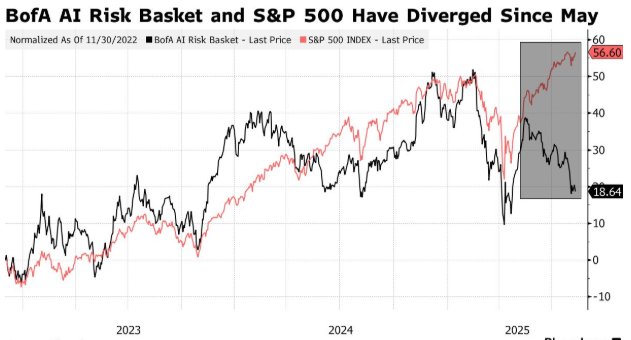
Group 1 - The impact of artificial intelligence (AI) on the U.S. financial market is significant, with companies like Nvidia (NVDA.US) reaching a market capitalization of nearly $4.5 trillion, while startups like OpenAI and Anthropic have raised billions [1] - Investors are increasingly concerned about the potential disruption caused by AI, leading to sell-offs in stocks of companies expected to see declining demand due to AI advancements, including Wix.com (WIX.US), Shutterstock (SSTK.US), and Adobe (ADBE.US) [1][5] - Since mid-May, the performance of the group of companies identified as most at risk from AI has lagged the S&P 500 index by approximately 22 percentage points [1] Group 2 - Daniel Newman, CEO of Futurum Group, indicated that the anticipated impact of AI on service-oriented industries may occur sooner than expected, potentially within two years instead of five [2] - Major tech companies like Microsoft (MSFT.US) and Meta (META.US) are investing hundreds of billions into AI research, causing investors to adopt a more cautious stance [5] - By 2025, Wix.com and Shutterstock's stock prices are projected to drop by at least 33%, while Adobe's stock is expected to decline by 23% due to fears of clients shifting to AI-generated content [5] Group 3 - Investor sentiment is turning negative as AI changes how information is accessed and how businesses operate, with even leading tech firms like Microsoft reducing jobs to allocate more resources for AI investments [6] - Gartner Inc. recently lowered its revenue forecasts, resulting in a 30% drop in its stock price, highlighting the market's concerns about AI's disruptive potential [6][9] - Historical precedents exist where new technologies have replaced old industries, raising fears that many companies may become obsolete due to AI [9] Group 4 - The current market dynamics show that AI is a dominant factor in determining stock winners and losers, contrasting with earlier concerns about competition from low-cost AI models in China [10] - Major companies like Microsoft, Meta, Alphabet, and Amazon are expected to invest approximately $350 billion in capital expenditures this fiscal year, a nearly 50% increase from the previous year, primarily for AI infrastructure [10] - Google is seen as well-positioned in the AI landscape, yet it is also included in the basket of companies assessed for AI risk, indicating ongoing concerns about its stock performance [10] Group 5 - Companies in the advertising sector, such as Omnicom Group, are facing significant challenges, with Omnicom's stock down 15% due to competition from AI-driven advertising solutions [11] - WPP, a competitor, has seen its stock price drop over 50%, reflecting the pressure on traditional advertising models from AI advancements [11][12] - Analysts predict that the investment theme surrounding AI risks will continue to gain traction as many companies face potential threats from AI technologies [12]


Adobe: Initiating Coverage; A Buy On Solid Fundamentals
Seeking Alpha· 2025-08-10 14:52
Company Overview - Adobe is a multinational software company valued at over $140 billion [2] - The company recently missed the opportunity to acquire Figma, which is now valued at nearly $40 billion [2] Investment Strategy - The Value Portfolio focuses on building retirement portfolios using a fact-based research strategy [2] - This strategy includes thorough analysis of 10Ks, analyst commentary, market reports, and investor presentations [2]

Adobe: Don't Count This Stock Out Yet As Firefly AI Drives New Subscribers
Seeking Alpha· 2025-08-10 13:10
Group 1 - The stock market is experiencing volatility but remains near all-time highs during the Q2 earnings season, indicating strong investor interest in large-cap momentum trades [1] - There is a noticeable trend of investors crowding into several momentum-driven large-cap stocks, particularly in the technology sector [1] Group 2 - The article highlights the author's extensive experience in covering technology companies and working with startups, which provides insights into current industry trends [1]
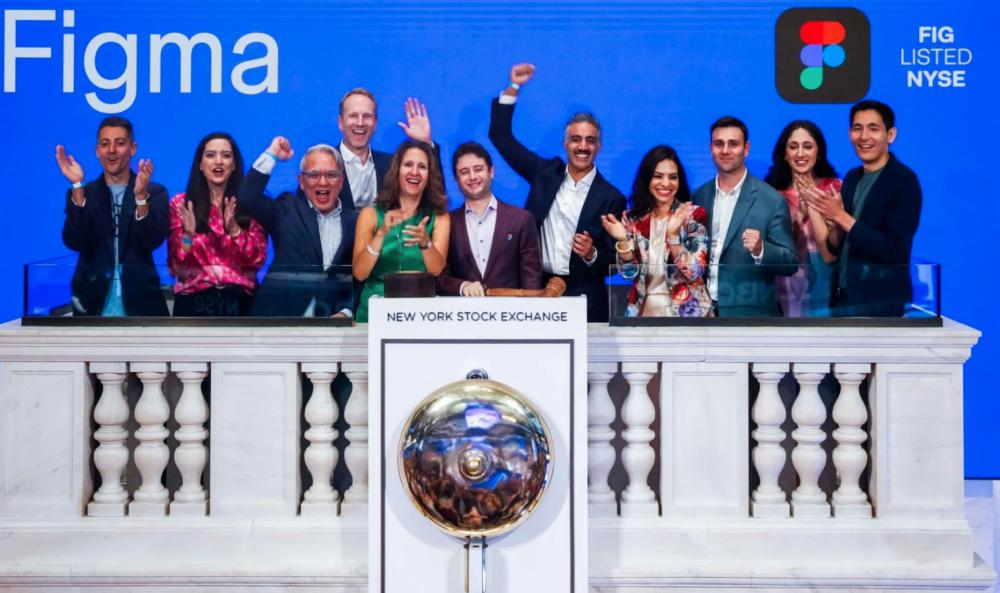
Figma敲钟背后:90后辍学少年,如何站上AI资本塔尖?
首席商业评论· 2025-08-06 04:16
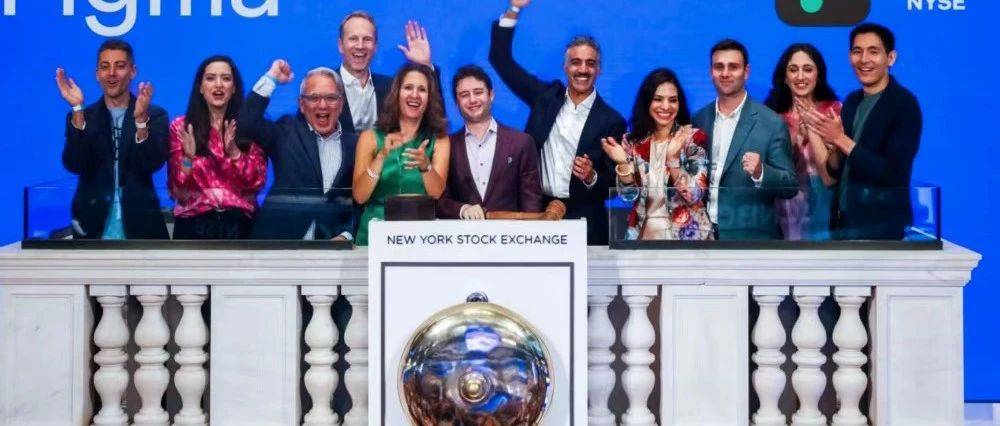
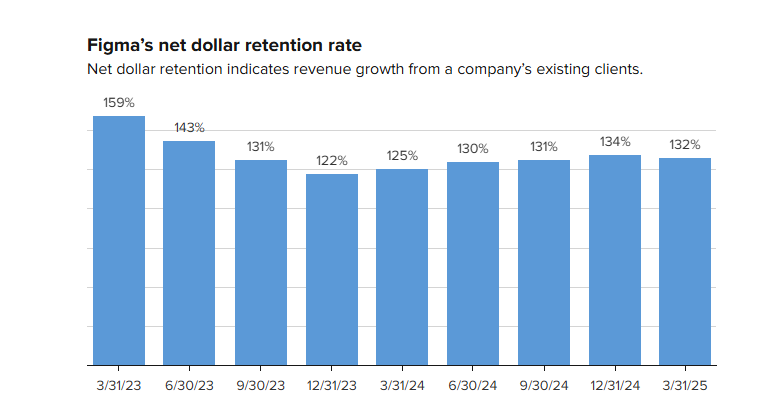
Core Viewpoint - Figma's recent IPO marks a significant event in Silicon Valley, showcasing a resurgence in capital markets after a downturn in 2022 due to inflation and rising interest rates. CEO Dylan Field emphasizes the volatility of stock prices, reminding the team that they are merely snapshots of a moment in time [3][4]. Group 1: Figma's Founding and Growth - Dylan Field's entrepreneurial journey began with a $100,000 scholarship from Peter Thiel, which he used to co-found Figma with Evan Wallace, initially creating a simple 3D ball animation [5][7]. - Figma aimed to democratize design by providing a free web-based design tool, especially after Adobe discontinued its Fireworks software, creating a market opportunity [8][9]. - The company faced early challenges, including poor user feedback and slow progress, but a pivotal moment came with the hiring of Sho Kuwamoto, leading to the launch of a free preview version [9][10]. Group 2: Competitive Landscape and Acquisition Attempts - Adobe, a $1.7 trillion giant, recognized Figma as a competitor and attempted to acquire it, but Figma's real-time collaboration features gained traction during the pandemic, making it a necessity for remote teams [12][13]. - Field rejected Adobe's acquisition offers twice, asserting Figma's independence and vision, which led to a valuation exceeding $10 billion [12][13]. - Despite the acquisition discussions, regulatory challenges arose, ultimately preventing the deal and leading to a significant $1 billion breakup fee for Adobe [14][15]. Group 3: Financial Performance and Market Position - Figma's net revenue retention rate (NDR) dropped from 159% to 122% during the acquisition turmoil, raising concerns about customer loyalty and market stability [15][16]. - Following the failed acquisition, Figma's NDR rebounded to 132%, indicating resilience and a strong employee commitment, with 95% choosing to stay after a compensation adjustment [16][15]. Group 4: Future Prospects in AI - As Figma navigates the AI landscape, it introduced Figma Make, a tool designed to convert sketches into functional prototypes, but initial demonstrations faced technical issues [20][21]. - Critics question Figma's ability to replicate its design tool success in the AI domain, with some suggesting it appears to be lagging behind competitors [20][21]. - Field actively engages with user feedback to improve Figma Make, demonstrating a commitment to innovation and responsiveness to market needs [21].
ClearBridge Large Cap Growth Strategy Q2 2025 Portfolio Positioning
Seeking Alpha· 2025-08-05 06:35
Core Insights - ClearBridge is a leading global asset manager focused on active management [1] - The investment approach is guided by research-based stock selection, reflecting high-conviction ideas from portfolio managers [1] - The company frequently shares insights with investors through various channels including investment commentaries, white papers, blog posts, videos, and podcasts [1]

Figma敲钟背后:90后辍学少年,如何站上AI资本塔尖?
Hu Xiu· 2025-08-05 00:23
Core Insights - Figma recently completed its IPO, marking a significant event in Silicon Valley after a long period of market downturn due to inflation and rising interest rates [1] - CEO Dylan Field emphasizes the volatility of stock prices, reminding the team that they are merely snapshots of the moment [2] Company Background - Dylan Field's entrepreneurial journey began with a $100,000 scholarship from Peter Thiel, which he used to co-found Figma with Evan Wallace in 2011 [3] - Figma aimed to create a user-friendly web design tool, capitalizing on Adobe's decision to discontinue its Fireworks software [3][4] - The company faced early challenges, including poor user feedback and a slow development pace, but eventually found success with the introduction of a free preview version and real-time collaboration features [5][6] Growth and Development - By 2019, Figma had gained significant traction, with a valuation of $4.4 billion led by Sequoia Capital [6] - The COVID-19 pandemic accelerated the demand for Figma's collaboration tools, leading to a surge in its user base [8] - Figma's valuation reached $10 billion after rejecting two acquisition offers from Adobe, which sought to acquire the company for $20 billion [9][10] Regulatory Challenges - The acquisition deal with Adobe faced regulatory scrutiny, with UK regulators expressing concerns about potential stifling of innovation [10][12] - Despite the failed acquisition, Figma's net revenue retention rate rebounded from 122% to 132%, indicating strong customer loyalty [13][16] Future Prospects - Figma is now focusing on integrating AI into its offerings, launching Figma Make, a tool designed to convert sketches into functional prototypes [17][18] - However, there are concerns about Figma's ability to compete in the AI space, with critics suggesting it may be lagging behind competitors [17][18]
Figma股价疯涨三倍,它凭啥让华尔街如此疯狂?
Hu Xiu· 2025-08-04 13:07
8月4日消息,Figma以122美元的股价收盘,较7月31日的发行价33美元上涨近三倍。 Figma于7月31日正式登陆纽约证券交易所,首日即大涨250%,当日收盘价115美元,估值高达563亿美 元(约合4069亿元人民币)。8月1日上午,Figma一度触及盘中高点138美元,成为自2021年以来美股 IPO中估值最高的软件公司。 两年前,Adobe曾试图收购Figma,最终并购失败,Adobe赔付给Figma"分手费"10亿美元。如今,Figma 的身价已经是"分手"时的3倍多。 "做自己"的十年 Figma诞生于2012年,由Dylan Field和Evan Wallace在旧金山创立。当时,Figma还是一个基于云端的协 作式设计工具,曾获得Greylock、Index Ventures 等硅谷VC的早期融资。 2019年起,Figma用户增长加速,Notion、Slack等新兴团队型公司广泛采用Figma作为视觉生产平台, Figma逐步挑战Adobe XD的市场地位。 疫情爆发后,远程办公大潮带动协作工具使用增长,Figma用户数迅速翻倍,成长为Web时代设计协作 的"标配"。Figma完成E轮融 ...
Figma敲钟背后:CEO如何从90后辍学少年,炼成AI圈的亿万富翁
3 6 Ke· 2025-08-04 12:14
Core Insights - Figma's recent IPO has significantly increased its valuation, marking a notable event in Silicon Valley after a period of market downturn due to inflation and rising interest rates [3] - CEO Dylan Field emphasizes the importance of maintaining a grounded perspective on stock prices, viewing them as temporary snapshots rather than long-term indicators [4] - Figma's strategic shift towards becoming an AI creation platform is highlighted by the launch of Figma Make, which aims to transform design processes [17] Company Background - Dylan Field dropped out of Brown University to co-found Figma with Evan Wallace, supported by Peter Thiel's "Thiel Fellowship" [1][5] - Figma's journey began in 2011 with a $100,000 scholarship, leading to the development of a web-based design tool that aimed to democratize design [5][9] - The company faced early challenges but gained traction with the introduction of real-time collaboration features and a freemium model [9][10] Competitive Landscape - Adobe initially viewed Figma as a threat, attempting to acquire the company for $20 billion, but the deal was blocked by antitrust regulators [1][10][11] - Figma's growth was accelerated during the pandemic, as its collaboration tools became essential for remote work [10] - Despite the failed acquisition, Figma's net dollar retention rate rebounded, indicating strong customer loyalty [15] Recent Developments - Figma Make, launched as part of the company's AI strategy, aims to allow designers to create prototypes from simple prompts, although it has faced technical challenges [17][18] - The company has received mixed feedback regarding its AI capabilities, with some industry experts questioning its ability to replicate its success in design tools within the AI space [17][18] - Field's leadership style, characterized by responsiveness to feedback and maintaining high employee loyalty, has been crucial for Figma's resilience [1][12]
AI重塑商业竞争格局:大摩揭示五大投资机遇 ,亚马逊(AMZN.US)获重点推荐
贝塔投资智库· 2025-08-04 04:03
Core Insights - Artificial intelligence is transitioning from experimental phases to large-scale deployment across various industries, enhancing operational efficiency and reshaping competitive advantages [1] - Companies are rapidly advancing AI applications in both digital and physical realms, utilizing generative AI, automation, and machine learning to optimize supply chains, improve customer service, enhance financial forecasting, and accelerate R&D processes [1] Industry Trends - A recent survey indicated that 60% of CIOs expect generative AI workloads to be in production applications by the end of 2025, maintaining the same percentage as earlier this year [1] - Core objectives of corporate AI strategies include improving internal production efficiency, reducing labor costs, and developing customer-facing applications that generate revenue and enhance satisfaction [1] Investment Opportunities - The report identifies five categories of AI investment opportunities, ranging from companies with strong pricing power and deep AI integration capabilities to those undervalued in the options market regarding their AI revenue potential [1] - Notable companies highlighted for their strong AI application strategies include Adobe, Amazon, and Johnson Controls, recognized as high-quality large-cap AI application pioneers [2] - Other significant players in the scalable application space include NVIDIA, Microsoft, Alphabet, Meta Platforms, and Tesla, all receiving "overweight" ratings from Morgan Stanley for their dual advantages as AI technology enablers and users [2] Conclusion - The trend of AI deployment is accelerating across industries, with varying applications such as predictive maintenance in energy, fraud detection in finance, and autonomous robotics in manufacturing, indicating a universal shift towards AI as a key driver of operational efficiency and competitive advantage [2]