
Amazon(AMZN)

Search documents
财报后,美国四大云厂市值蒸发1万亿美元,市场甚至寻求对冲“大厂风险”
美股IPO· 2026-02-15 04:09
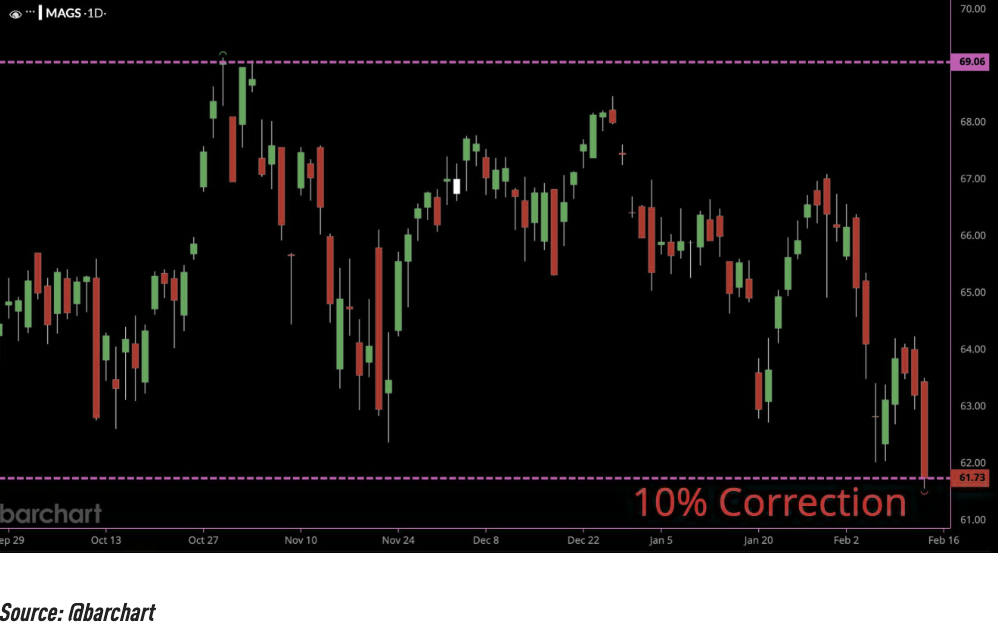
Core Viewpoint - The market is shifting focus from whether AI investments are worthwhile to whether the capital expenditures of major cloud companies can be sustained, as concerns over excessive spending, cash flow pressures, and rising debt levels lead to significant market value losses for the top four cloud providers [2][3][10]. Group 1: Market Reactions and Valuation - Following the latest earnings reports, the combined market value of the four major cloud companies has decreased by over $1 trillion, with Microsoft down 27%, Amazon down 21%, Meta down 16%, and Alphabet down 11% [3][10]. - Investors are increasingly worried that the rapid increase in AI spending may lead to overcapacity and elongated return cycles, prompting a reevaluation of these companies' financial health [3][10]. Group 2: Debt and Capital Expenditure Projections - Goldman Sachs predicts that capital expenditures for large-scale cloud providers will approach $1.4 trillion from 2025 to 2027, significantly up from approximately $485 billion from 2022 to 2024 [8][10]. - Microsoft’s capital expenditure is expected to rise from $76 billion in 2024 to $376 billion during 2025-2027, while Amazon, Alphabet, and Meta are projected to spend $321 billion, $304 billion, and $279 billion respectively [11]. Group 3: Credit Derivatives and Market Dynamics - The demand for credit derivatives is increasing as debt investors express concerns over the rising leverage of tech giants competing for AI capabilities, leading to an expansion in credit default swap (CDS) trading [4][13]. - The CDS contracts for Alphabet and Meta have become significantly more active, with current outstanding contracts valued at approximately $895 million and $687 million respectively [7][13]. Group 4: Cash Flow and Debt Financing - The internal cash flow of tech giants is insufficient to support their AI investment levels, with projections indicating that if capital expenditures reach $700 billion by 2026, it would nearly equal the total operating cash flow of these companies [14][16]. - Major debt issuances have set records, with Oracle issuing $25 billion in bonds and Alphabet increasing its bond issuance from $15 billion to $20 billion, reflecting strong demand [16]. Group 5: Market Divergence and Future Outlook - Despite strong current demand for bonds, there is a divergence in market sentiment, with some hedge funds viewing the demand for protection as a profit opportunity, while others warn of potential mispricing of credit risks [17]. - Goldman Sachs notes that to maintain investor return expectations, these companies would need to achieve over $1 trillion in profits annually, while the consensus estimate for 2026 profits is only $450 billion [18].





大摩Q4持仓维持核心科技主线 苹果荣登榜首、指数ETF仓位下降
美股IPO· 2026-02-15 04:09
Core Viewpoint - Morgan Stanley's Q4 2025 holdings report indicates a strategy focused on maintaining core technology positions, reducing index exposure, and enhancing active selection capabilities [1]. Group 1: Overall Holdings Summary - Morgan Stanley's total market value for Q4 is $1.67 trillion, up 1.2% from $1.65 trillion in the previous quarter [3][4]. - The fund added 454 new stocks, increased holdings in 4,007 stocks, reduced holdings in 3,028 stocks, and completely sold out of 415 stocks [3][4]. - The top ten holdings account for 22.15% of the total market value [4]. Group 2: Top Holdings and Changes - The top five holdings include Apple (AAPL) at 3.74%, NVIDIA (NVDA) at 3.6%, Microsoft (MSFT) at 3.5%, Alphabet Class A (GOOGL) at 2.28%, and Amazon (AMZN) at 2.23% [5]. - Apple has risen to the first position with an increase of approximately 1.38 million shares, while NVIDIA remains second with an increase of nearly 780,000 shares [4][6]. - Microsoft dropped from first to third but still saw an increase of about 980,000 shares [4]. Group 3: Sector Allocation and Adjustments - Morgan Stanley has not significantly reduced its allocation to the technology sector but has rebalanced internally, favoring companies with strong profit certainty and stable cash flows [7]. - The firm reduced its holdings in healthcare stocks such as Johnson & Johnson (JNJ), AbbVie (ABBV), and Thermo Fisher Scientific (TMO), as well as consumer staples like Walmart (WMT), Procter & Gamble (PG), and Coca-Cola (KO) [7]. - Energy stocks like ExxonMobil (XOM) and Chevron (CVX) were also reduced, reflecting a potential decrease in the attractiveness of defensive and high-dividend sectors as interest rate paths become clearer [8]. Group 4: New Purchases and Sales - Morgan Stanley increased positions in JPMorgan (JPM), Uber (UBER), and gold ETFs (GLD) [9]. - New purchases included Medline (MDLN), Total (TTE), Qnity Electronics (Q), Solstice (SOLS), and Dreamlong (MICC) [9]. - The top five purchases were Alphabet Class C (GOOG), Eli Lilly (LLY), Apple, Micron (MU), and Vanguard FTSE Developed Markets ETF (VEA) [10]. Group 5: ETF Exposure - The decrease in ETF positions indicates a preference for stock selection to achieve excess returns rather than relying on broad index exposure [11].



Líderes tecnológicos globales lanzan Trusted Tech Alliance
Prnewswire· 2026-02-15 03:30
Core Viewpoint - The Trusted Tech Alliance (TTA) has been launched by 15 leading global technology companies from 10 countries to promote a reliable technology ecosystem based on shared principles of transparency, security, and data protection, addressing the growing skepticism towards digital technologies and their societal impacts [1][2]. Group 1: Alliance Formation - The TTA was announced at the Munich Security Conference, with members including Anthropic, AWS, Google Cloud, Microsoft, and others, aiming to collaborate across borders [1]. - The alliance is formed in response to unprecedented technological changes and increasing demands for reliability and resilience in technology services [1]. Group 2: Principles of the Alliance - The TTA members have agreed on five specific principles: 1. Respect for the rule of law and data protection 2. Open, cooperative, inclusive, and resilient digital ecosystem 3. Strong supply chain and security oversight 4. Operational transparency, secure development, and independent assessment 5. Transparent corporate governance and ethical conduct [1][2]. - These principles emphasize the need for robust corporate governance and ethical behavior, ensuring technology is developed and managed responsibly throughout its lifecycle [1]. Group 3: Commitment to Collaboration - The alliance aims to work with governments and clients to enhance public trust in emerging technologies, thereby fostering job creation and economic growth [1]. - Members are committed to adhering to strict global security standards and supporting an open and cooperative digital environment that encourages innovation [1][2]. Group 4: Industry Perspectives - Leaders from various member companies expressed their commitment to the alliance, highlighting the importance of collaboration in building a secure and reliable digital infrastructure [2]. - Statements from executives emphasize that no single company or country can build a secure digital infrastructure alone, and that trust and security must be achieved collectively [2].


财报后,美国四大云厂市值蒸发1万亿美元,市场甚至寻求对冲“大厂风险”
Hua Er Jie Jian Wen· 2026-02-15 03:15
Core Viewpoint - The recent earnings reports have led to a significant decline in the market capitalization of the four major cloud companies in the U.S., with a total loss exceeding $1 trillion, as investors express concerns over unsustainable AI infrastructure investments, cash flow pressures, and rising debt levels [1][8]. Group 1: Market Reactions - Microsoft shares have dropped 27% from recent highs, while Amazon, Meta, and Alphabet have seen declines of 21%, 16%, and 11% respectively, indicating a shift in market sentiment from "Is AI worth it?" to "Can capital expenditures be sustained?" [1][8]. - The capital expenditure of major cloud firms is projected to surge from approximately $485 billion between 2022-2024 to nearly $1.4 trillion from 2025-2027, raising concerns about potential overcapacity and elongated return cycles [8]. Group 2: Debt Market Dynamics - Concerns among debt investors are driving the rapid expansion of the credit derivatives market, with single-name credit default swaps (CDS) for companies like Meta and Alphabet becoming increasingly active [3][11]. - The CDS contracts for Alphabet and Meta are valued at approximately $895 million and $687 million respectively, reflecting heightened market activity [5][11]. - Morgan Stanley forecasts that the borrowing by major cloud firms will reach $400 billion this year, significantly higher than the $165 billion expected in 2025 [6]. Group 3: Financial Projections and Risks - Goldman Sachs anticipates that if capital expenditures reach $700 billion by 2026, it would nearly equal the total operating cash flow of major cloud firms, indicating a potential cash flow crisis [12][14]. - Only Microsoft is expected to have operating cash flow sufficient to cover its capital expenditures by 2026, while other firms may face a shift from "net debt neutral" to "net positive debt" [14]. - The issuance of bonds has reached record levels, with Oracle issuing $25 billion and Alphabet increasing its bond issuance from $15 billion to $20 billion, both attracting substantial investor interest [14]. Group 4: Market Divergence and Future Outlook - Despite strong current demand for bonds, there is a divergence in market sentiment, with some hedge funds viewing the demand for protection as a profit opportunity, while others warn of potential mispricing of credit risks [15]. - Goldman Sachs notes that to maintain investor return expectations, these companies would need to achieve annual profits exceeding $1 trillion, while current consensus estimates for 2026 profits stand at only $450 billion [15]. - The ultimate outcome will depend on whether AI investments can replicate the profitability trajectory of cloud computing, as seen with Amazon AWS achieving breakeven within three years and a 30% operating margin within ten years [16].
WELTWEIT FÜHRENDE TECHNOLOGIEUNTERNEHMEN GRÜNDEN TRUSTED TECH ALLIANCE
Prnewswire· 2026-02-15 03:11
Core Viewpoint - The Trusted Tech Alliance (TTA) has been established by 15 leading global technology companies from 10 countries to promote a trustworthy technology stack that emphasizes transparency, security, and data privacy, addressing the growing skepticism towards digital technologies and their societal impacts [1][2]. Group 1: Formation and Purpose - The TTA aims to create a collaborative environment among technology providers to ensure reliability and resilience in technology services, responding to the rapid pace of technological change and increasing complexity in the global landscape [1]. - The alliance is built on a shared set of principles that all member companies must adhere to, focusing on creating public trust and ensuring that the benefits of emerging technologies are widely accessible [1][2]. Group 2: Member Companies and Principles - Founding members of the TTA include prominent companies such as Amazon Web Services (AWS), Google Cloud, Microsoft, and Ericsson, among others [1]. - The TTA has agreed on five key principles that define what it means to be a trusted global technology provider: 1. Upholding the rule of law and data privacy 2. Fostering an open, cooperative, inclusive, and resilient digital ecosystem 3. Ensuring reliable supply chain monitoring and security 4. Maintaining operational transparency, secure development, and independent assessment 5. Promoting transparent corporate governance and ethical behavior [1][2]. Group 3: Industry Impact and Collaboration - The TTA emphasizes the importance of collaboration among like-minded companies to enhance customer trust and maximize the benefits of technology for economic and societal advancement [2]. - The alliance seeks to strengthen global standards and promote a trustworthy digital ecosystem that can adapt to the evolving technological landscape, particularly in areas such as artificial intelligence and cybersecurity [2][3].
DES LEADERS MONDIAUX DE LA TECHNOLOGIE LANCENT LA TRUSTED TECH ALLIANCE
Prnewswire· 2026-02-15 03:09
Core Points - The Trusted Tech Alliance (TTA) has been launched by 15 leading global technology companies from 10 countries to promote a trustworthy technology stack and enhance collaboration across borders [1][2] - The alliance aims to address concerns regarding digital technologies and their potential negative impacts by establishing common principles for transparency, security, and data protection [1][2] - Members of the TTA include major companies such as Amazon, Google Cloud, Microsoft, and Ericsson, which have committed to five specific principles that define responsible technology development and deployment [1][2] Group 1: Alliance Objectives - The TTA seeks to foster trust in technology by ensuring that all member companies adhere to shared commitments regarding data protection and operational transparency [1][2] - The alliance emphasizes the importance of collaboration among technology providers to enhance reliability and resilience in the face of rapid technological evolution [1][2] - By defining attributes of trustworthy technology, the TTA aims to support job creation and economic growth while addressing public concerns about emerging technologies [1][2] Group 2: Member Commitments - The five principles agreed upon by TTA members include respect for the rule of law, an open and cooperative digital ecosystem, robust supply chain security, operational transparency, and ethical governance [1][2] - Companies are required to implement strong corporate governance and ethical behavior, ensuring that technologies are developed and managed responsibly throughout their lifecycle [1][2] - The alliance will continue to expand its community of global suppliers dedicated to promoting a reliable, interoperable, and open technology stack [1][2]

哪怕投资者砸崩股价,2000亿美元也必须“烧下去”,亚马逊要“重整旗鼓”
Hua Er Jie Jian Wen· 2026-02-15 02:29
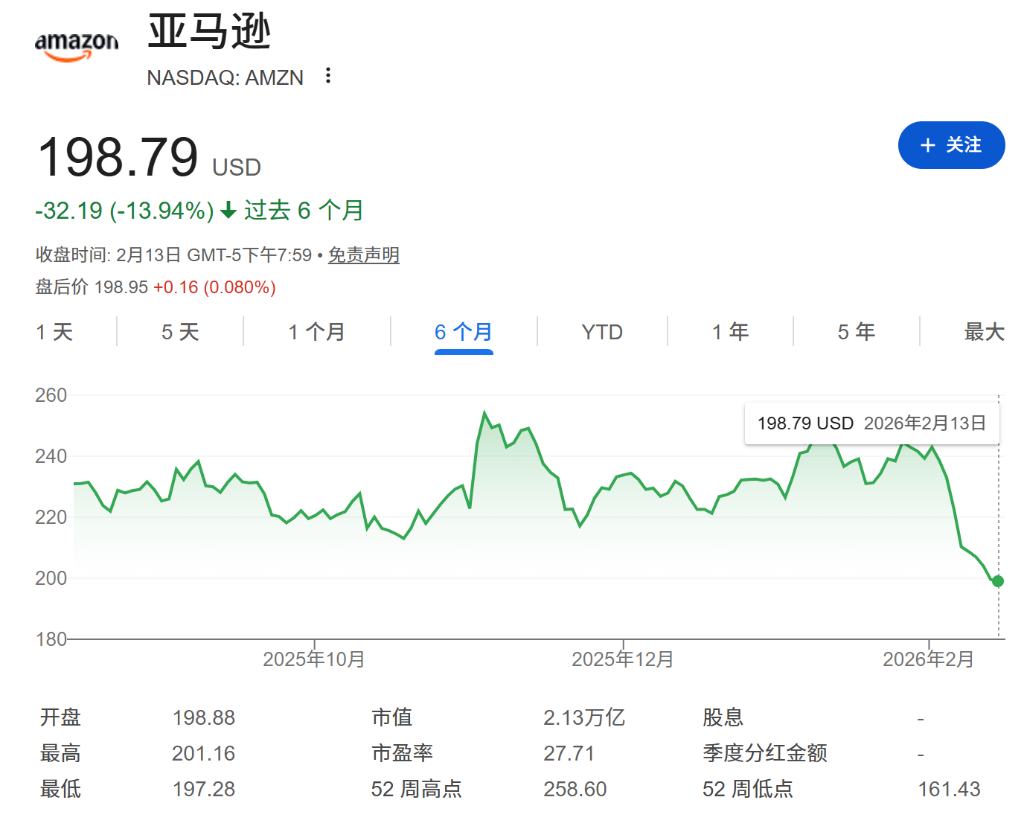
Core Insights - Amazon is initiating its largest capital expenditure plan in history, aiming to regain momentum in the AI sector and defend its leading position in cloud computing against strong competition from Microsoft and Google [1][4] - CEO Andy Jassy announced that the company's capital expenditure will rise to $200 billion this year, surpassing the spending levels of Google and Microsoft, with approximately 75% allocated to its cloud computing division, AWS [1][4] - Despite the significant investment, investor concerns about the slow conversion of spending into returns have led to a more than 20% decline in Amazon's stock price since its peak last November [1] Capital Expenditure Plan - Amazon plans to invest $200 billion, primarily focused on expanding AWS, while total spending by Microsoft, Google, and Oracle is expected to approach $400 billion this year [4] - The company aims to increase data center capacity significantly, adding nearly 4 gigawatts by 2025, equivalent to the annual energy consumption of over 3.2 million U.S. households, with plans to double this capacity by 2027 [4] - Jassy has restructured the organization to unify chip, model, and advanced research teams under a single leadership structure, emphasizing a customer-centric and agile operational approach [4] Competitive Anxiety - Despite generating nearly $130 billion in sales last year and contributing over 60% of Amazon's total profit, AWS faces predictions that Microsoft's cloud business will surpass AWS within the next three years due to the surge in demand for AI-driven cloud services [5] - Internal concerns have emerged regarding AWS's ability to secure enterprise AI contracts, with employees expressing that the company was unprepared for the rapid developments in the market [5] Strategic Partnerships and Contracts - Microsoft secured an exclusive cloud computing contract with OpenAI early on, while Amazon only signed a $38 billion agreement after OpenAI allowed for company restructuring, which pales in comparison to Microsoft's $250 billion contract [6] - Amazon's investment of $8 billion in Anthropic for data center construction came after Google had already supported the startup, indicating a reactive rather than proactive approach [6] Chip Strategy and Performance - To reduce reliance on Nvidia products and improve profit margins, Amazon is promoting its self-developed chips, with projected annual revenues exceeding $10 billion from Graviton and Trainium chips [7] - Amazon is negotiating to join OpenAI's latest funding round to ensure the adoption of its semiconductor products, although competition remains fierce, with Google successfully attracting Anthropic to purchase its TPUs [7] AI Model Development - Amazon is investing in its AI model named "Nova," positioned as a low-cost alternative to competitors, but independent benchmarks show that Nova lags behind models from OpenAI, Google, Meta, and Anthropic [8] - Some AWS employees have informally referred to Nova as "Amazon Basics," reflecting concerns about its performance, while many engineers prefer using Anthropic's Claude model over Nova [8] - The pressure to regain ground in the AI competition is palpable among employees, with fears of stagnation and decline echoing sentiments expressed by founder Jeff Bezos in 2018 [8]
桥水去年Q4增持英伟达和黄金股, 减持谷歌、微软
Mei Ri Jing Ji Xin Wen· 2026-02-15 02:16
Group 1 - Bridgewater, the world's largest hedge fund, disclosed its U.S. stock holdings report (13F) as of the end of 2025 [2] - In Q4 2025, Bridgewater increased its positions in technology stocks such as Micron Technology, Oracle, NVIDIA, and Amazon, as well as in gold stocks like Newman Mining [2] - The fund reduced its holdings in stocks like Google and Microsoft [2]


大摩Q4持仓维持核心科技主线 苹果(AAPL.US)荣登榜首、指数ETF仓位下降
智通财经网· 2026-02-15 01:36
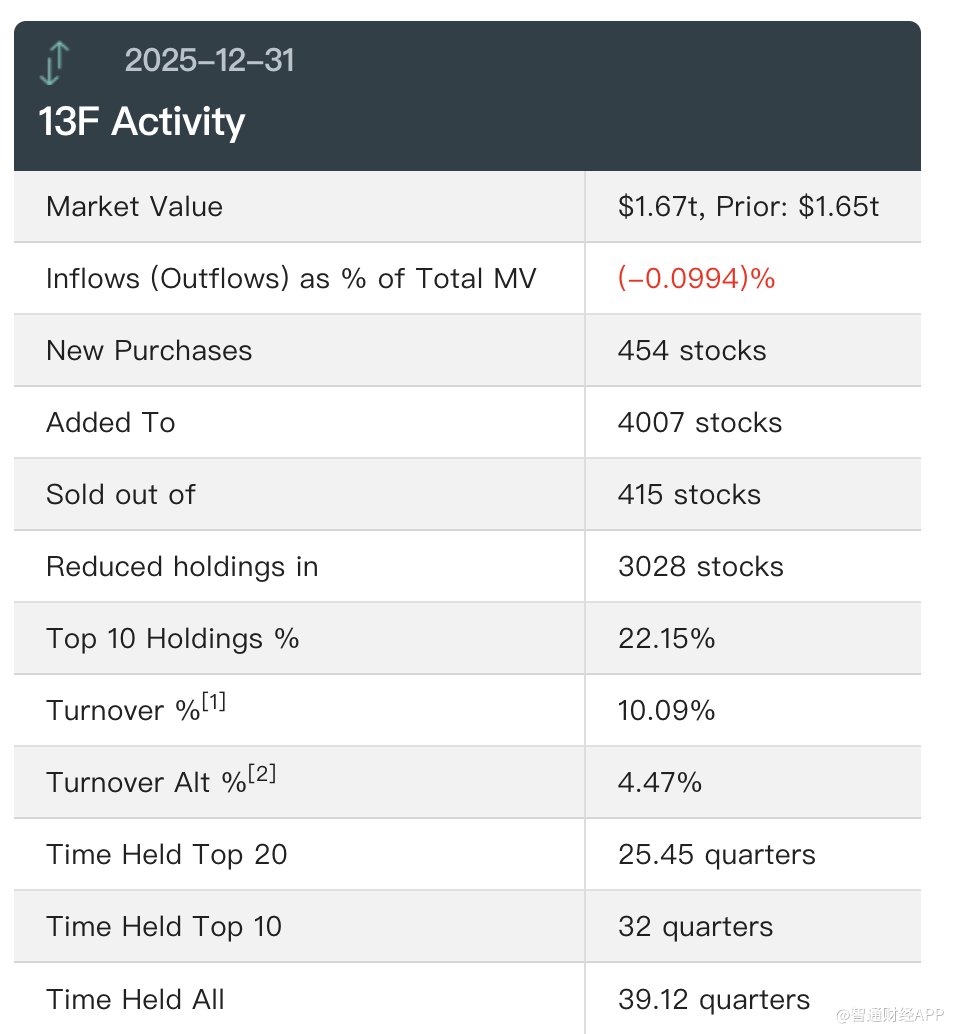
Core Insights - Morgan Stanley's Q4 2025 13F filing indicates a strategy focused on maintaining core technology positions, reducing index exposure, and enhancing active selection capabilities [1][2] Holdings Overview - The total market value of Morgan Stanley's Q4 holdings reached $1.67 trillion, up 1.2% from $1.65 trillion in the previous quarter [1][2] - The portfolio saw the addition of 454 new stocks, an increase in 4,007 stocks, a reduction in 3,028 stocks, and the complete sale of 415 stocks [1][2] - The top ten holdings accounted for 22.15% of the total market value [1][2] Top Holdings - The top five holdings include: - Apple (AAPL.US) - 3.74% of the portfolio, with an increase of approximately 1.38 million shares - NVIDIA (NVDA.US) - 3.6% of the portfolio, with an increase of nearly 780,000 shares - Microsoft (MSFT.US) - 3.5% of the portfolio, with an increase of about 980,000 shares - Alphabet Class A (GOOGL.US) - 2.28% of the portfolio, with a reduction of approximately 150,000 shares - Alphabet Class C (GOOG.US) - increased by 1.13 million shares, holding approximately 71.84 million shares - Amazon (AMZN.US) - 2.23% of the portfolio, with a reduction of about 1.28 million shares [2][3] Sector Adjustments - Morgan Stanley did not significantly reduce its allocation to the technology sector but opted for internal rebalancing, favoring companies with strong profit certainty and stable cash flows [4] - The firm reduced holdings in healthcare stocks such as Johnson & Johnson (JNJ.US), AbbVie (ABBV.US), and Thermo Fisher Scientific (TMO.US), as well as consumer staples like Walmart (WMT.US), Procter & Gamble (PG.US), and Coca-Cola (KO.US) [4] - Energy stocks such as ExxonMobil (XOM.US) and Chevron (CVX.US) were also reduced, indicating a potential decrease in the attractiveness of defensive and high-dividend sectors as interest rate paths become clearer [4] New Positions and Sales - New positions included Medline (MDLN.US), Total (TTE.US), Qnity Electronics (Q.US), Solstice (SOLS.US), and Dreamland (MICC.US) [5] - The top five new purchases were Alphabet Class C, Eli Lilly (LLY.US), Apple, Micron (MU.US), and Vanguard FTSE Developed Markets ETF (VEA.US) [5][6] - The top five sales included SPDR S&P 500 ETF (SPY.US), Invesco QQQ Trust (QQQ.US), Home Depot (HD.US), ServiceNow (NOW.US), and MercadoLibre (MELI.US) [5][6] Investment Strategy - The decrease in ETF positions suggests a preference for individual stock selection to achieve excess returns rather than relying on broad index exposure [5]
谷爱凌回应被传入职硅谷风投公司:这不是真的;黄仁勋跌出全球十大富翁之列;极佳视界具身基础模型GigaBrain-0.5M*发布丨邦早报
Sou Hu Cai Jing· 2026-02-15 01:27
Group 1: ByteDance and Chip Development - ByteDance's chip research team is starting large-scale recruitment in cities like Beijing, Shanghai, and Shenzhen, focusing on positions such as chip architecture and SoC design [1] - The team is currently centered on chip design, developing custom hardware for cloud scenarios using advanced semiconductor processes to enhance performance and reduce computing costs [1] - Multiple cloud chips have already entered mass production, with steady progress in research and deployment across various advanced process nodes [1] Group 2: GigaAI and GigaBrain-0.5M* - GigaAI has launched GigaBrain-0.5M*, a more powerful model following the success of GigaBrain-0.1, which won first place in RoboChallenge [2] - The new model utilizes a world model paradigm to redefine embodied intelligence capabilities, achieving error-free performance in real-world robotic tasks [2] Group 3: Wealth Changes Among Billionaires - Jensen Huang, CEO of NVIDIA, has fallen out of the top ten billionaires list, with a net worth of $151 billion, down over $3 billion this year [3][4] - Other tech billionaires, including Larry Page and Sergey Brin, have also seen significant wealth declines, with losses exceeding $5 billion each [4] - The Walton siblings have entered the top ten billionaires list, collectively holding a net worth of $465.8 billion [4] Group 4: Automotive Industry Developments - Beijing Benz is recalling 19,481 units of EQA and EQB vehicles due to safety concerns, with the recall set to begin on June 25, 2026 [6] - BYD and Geely are reportedly in the final bidding for a Nissan-Mercedes-Benz factory in Mexico, aiming to establish a manufacturing base in the country [6] - The Chinese electric vehicle market saw exports of over 302,000 units in January 2026, marking a 100% year-on-year increase [7] Group 5: AI and Technology Investments - Anduril, a U.S. defense tech startup, is negotiating a new funding round that could value the company at $60 billion, nearly doubling its previous valuation [6] - Various companies, including Wuji Power and Starfire Space, have completed significant funding rounds to advance their technology and product development [6] Group 6: Film Industry Performance - The film "Zootopia 2" has surpassed 4.545 billion yuan in box office revenue, ranking among the top seven in Chinese film history [7] - The Valentine's Day box office for 2026 has exceeded 100 million yuan, indicating strong consumer interest during the holiday season [7]



