BIDU(BIDU)

Search documents
百度Apollo Go首个海外控制中心落成
Shang Wu Bu Wang Zhan· 2026-01-13 15:21
Group 1 - The core point of the article is the inauguration of Baidu's first overseas Apollo Go autonomous driving operation control center in Dubai, which aims to support the development of smart transportation in the region [1] Group 2 - The control center will be responsible for fleet management, charging, software updates, and safety testing [1] - This initiative marks Baidu's expansion beyond China, indicating its commitment to international growth in the autonomous driving sector [1]
中概科技股盘前下跌


Ge Long Hui A P P· 2026-01-13 13:44
Group 1 - Chinese technology stocks experienced a decline in pre-market trading, with Alibaba down by 1.5% [1] - Pinduoduo Holdings saw a significant drop of 5.7% [1] - NetEase and Baidu also faced declines, with NetEase down 1.8% and Baidu down 3.4% [1] Group 2 - The Invesco MSCI China ETF decreased by 1.2% [1] - The Invesco China Large Cap ETF fell by 1% [1] - The KraneShares CSI China Internet ETF dropped by 2% [1]
Travere Therapeutics, Sony And Other Big Stocks Moving Lower In Tuesday's Pre-Market Session - Amrize (NYSE:AMRZ), Baidu (NASDAQ:BIDU)
Benzinga· 2026-01-13 13:04
Group 1 - U.S. stock futures are lower, with Dow futures down approximately 0.2% [1] - Travere Therapeutics Inc expects total U.S. net product sales of $127 million for Q4 and $410 million for 2025 [1] - Travere Therapeutics will restart its Phase 3 HARMONY study in Q1 2026 [1] Group 2 - Travere Therapeutics shares fell 28.2% to $24.50 in pre-market trading [2] - Lulu's Fashion Lounge Holdings Inc shares decreased 10.4% to $10.89 after a significant rise of 79% on Monday [3] - Other stocks such as Graf Global Corp, Ready Capital Corp, and Baidu Inc also experienced declines in pre-market trading [3]


为什么都在期待百度拆分上市?
3 6 Ke· 2026-01-13 12:26
Core Viewpoint - Baidu's subsidiary Kunlun Chip has submitted an A1 listing application to the Hong Kong Stock Exchange, signaling a potential shift in strategy towards valuing its core assets through spin-offs [1][2]. Group 1: Spin-off Significance - The spin-off of Kunlun Chip is not just a subsidiary listing but a signal of Baidu's intent to unlock value amid a challenging environment for Chinese internet giants regarding asset separation [2]. - The market has historically undervalued Baidu, perceiving it primarily as a traditional search advertising company, despite its significant investments in AI and technology [3][4]. - Kunlun Chip, as a leading AI chip manufacturer, has been undervalued within Baidu, which limits its growth potential and financing capabilities [5][6]. Group 2: Market Dynamics and Identity - The chip industry operates on a principle of neutrality, which has hindered Kunlun Chip's growth while it remained a part of Baidu [7]. - By becoming an independent entity, Kunlun Chip can attract a broader customer base and tap into a larger total addressable market (TAM) [7]. - The financial burden of funding chip development through Baidu's advertising revenue is no longer sustainable, making the spin-off a strategic move to optimize cash flow [8]. Group 3: Future Speculations on Autonomous Driving - The potential for Baidu to spin off its autonomous driving business, particularly the Apollo project, is being speculated as the next logical step following Kunlun Chip's separation [9][10]. - The autonomous driving sector is at a critical juncture, with the need for significant investment to scale operations, which could negatively impact Baidu's financial performance if retained within the company [10][11]. - A proposed spin-off could involve creating a new company focused solely on autonomous driving, allowing for better valuation and attracting strategic investors [11][12]. Group 4: Strategic Implications - The spin-off of Kunlun Chip may serve as a precursor to further separations within Baidu, allowing each business unit to thrive independently [14][15]. - The historical context of successful spin-offs in the tech industry suggests that separating high-growth potential businesses can lead to enhanced valuations and operational efficiencies [13][14]. - Baidu's actions indicate a shift from maintaining a large conglomerate to enabling individual units with unique growth trajectories to compete effectively in their respective markets [15].
美国银行将百度公司目标价从151美元上调至180美元。
Xin Lang Cai Jing· 2026-01-13 11:30
美国银行将百度公司目标价从151美元上调至180美元。 来源:滚动播报 ...
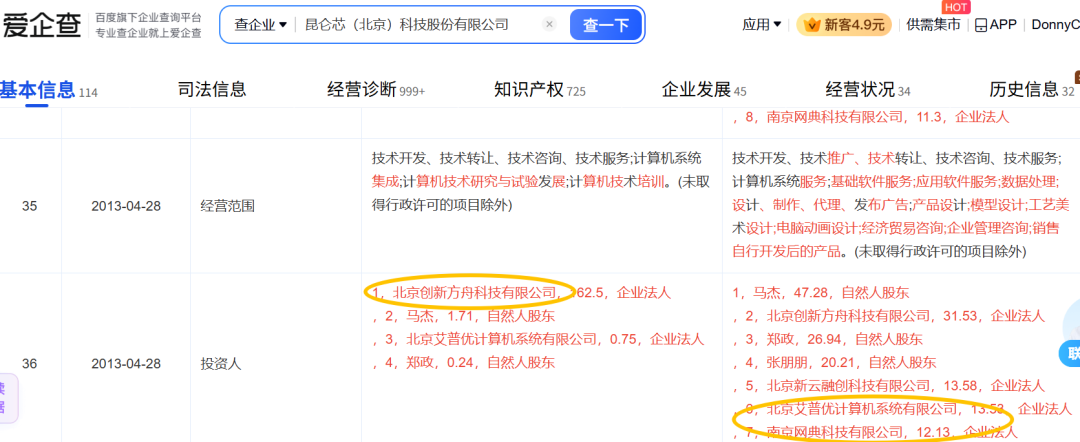
百度分拆昆仑芯的另一面:与百度安全业务的并购与重组
Xin Lang Cai Jing· 2026-01-13 11:27
Core Viewpoint - Baidu's AI chip subsidiary Kunlun Chip has officially submitted a listing application to the Hong Kong Stock Exchange, marking a response to market speculation about the spin-off of Baidu's chip business [1][14]. Group 1: Company Background - Kunlun Chip (Beijing) Technology Co., Ltd. is the business entity behind Baidu's chip operations, originally established as Xingyun Rongchuang (Beijing) Technology Co., Ltd., which was acquired by Baidu in 2015 as part of its "Security Treasure" business [1][15]. - The chip business began with the FPGA AI accelerator project in 2011, leading to the development of the Kunlun XPU architecture in 2017 and the launch of the Kunlun 1 AI chip in 2018 [2][14]. Group 2: Business Evolution - The transition from a security business to a chip-focused entity reflects Baidu's strategic positioning in the AI computing infrastructure for large models [3][14]. - In 2021, significant changes were made to the company, including the exit of founders from the board and the introduction of new leadership focused on chip development, alongside a name change to Kunlun Chip [8][19]. Group 3: Financing and Investment - Kunlun Chip has undergone several rounds of financing, with a strategic round in March 2021 raising approximately 13 billion RMB, involving multiple investment firms [19][22]. - The financing history indicates a shift towards independent operations, laying the groundwork for the current spin-off and listing plans [19][22].
部分热门中概股盘前走低,百度跌超3%
Mei Ri Jing Ji Xin Wen· 2026-01-13 09:17
Group 1 - Some popular Chinese concept stocks experienced a decline in pre-market trading, with Baidu dropping over 3% and Xpeng Motors falling more than 2% [1]

ChatGPT坐拥亿级用户但付费率不足10%,AI如何转化持久利润?
3 6 Ke· 2026-01-13 08:22
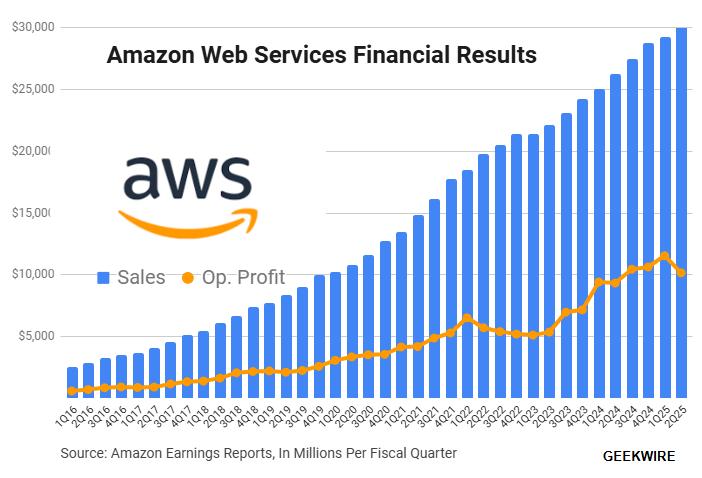
Core Insights - The narrative around the AI industry is undergoing significant scrutiny as massive capital expenditures collide with stagnant revenue growth, raising concerns about a potential "bubble" [1] - There is a growing gap between substantial investments in AI and the actual commercial returns, leading to a shift in focus from technological optimism to financial pragmatism [2] Group 1: Investment and Market Performance - In the U.S. market, NVIDIA's stock has reached new highs, reflecting investor enthusiasm for its AI chip business, while companies like Microsoft, Google, and Meta show structural differences in stock performance [1] - In China, Alibaba's stock has hit multi-year highs, with Tencent and Baidu also showing active performance in AI-related stocks, indicating ongoing market interest in domestic AI applications and infrastructure [1] - Despite high valuations in the global capital markets for the AI industry, concerns about the sustainability of these valuations are becoming a focal point of discussion [1] Group 2: Profitability Challenges in ToB AI - The global enterprise AI market is experiencing an asymmetric cycle of investment and profitability, with major players like Amazon and Google facing challenges as they expand [3] - Amazon's AWS is projected to have a capital expenditure of $125 billion in 2025, primarily for AI data center expansion, but its profit margins are under pressure due to rising operational costs [4][6] - AWS's revenue and operating income showed signs of recovery in Q3 2025, but profitability remains sensitive to capital expenditure and customer purchasing cycles [7] Group 3: Google Cloud's Growth and Challenges - Google Cloud has positioned AI at the core of its growth strategy, achieving significant revenue growth, but concerns about the mismatch between capital expenditure and returns persist [8][10] - Despite high ROI cases reported, the majority of AI projects struggle to achieve measurable returns, with only 25% of enterprise AI projects meeting initial ROI goals [14][15] Group 4: ToC AI Market Dynamics - The consumer AI segment faces challenges in converting user growth into revenue, with only 5% of AI projects yielding measurable benefits [16] - OpenAI's ChatGPT is projected to have annual revenue exceeding $20 billion in 2025, but its operational costs are rising exponentially, leading to significant losses [17] - The user base for ChatGPT has grown rapidly, but the conversion rate to paid subscriptions remains low, highlighting a disconnect between user acquisition and monetization [20][23] Group 5: Commercialization and Long-term Perspectives - The current investment-return imbalance in AI is seen as a phase rather than a failure of technology, with the potential for long-term value creation through efficiency improvements across industries [25][26] - The AI industry's commercial path is expected to follow a "J-curve," indicating that current losses are part of a necessary accumulation phase before significant returns can be realized [26][27] - The ongoing challenges in both ToB and ToC segments are contributing to the narrative of an "AI bubble," but the long-term potential of AI technology remains intact [27][28]




收评:港股恒指涨0.9% 科指涨0.11% 黄金股普涨 生物医药股强势 商业航天概念回调
Xin Lang Cai Jing· 2026-01-13 08:12
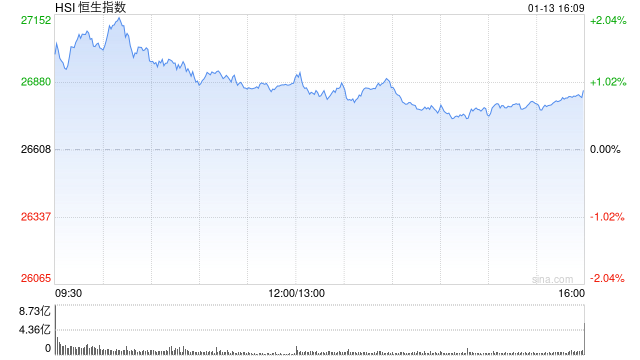
Market Overview - The Hong Kong stock market indices collectively rose, with the Hang Seng Index increasing by 0.9% to close at 26,877.42 points, the Hang Seng Tech Index up by 0.11%, and the State-Owned Enterprises Index rising by 0.71% [1][7]. Sector Performance - **Technology Stocks**: Mixed performance observed, with Alibaba and Bilibili both rising over 3%, while Kuaishou fell over 2%, and Xiaomi and Baidu dropped over 1% [1][7]. - **Biopharmaceutical Sector**: Strong performance noted, particularly with WuXi AppTec rising over 8%. The upcoming JPMorgan Healthcare Conference is expected to act as a catalyst for the innovative drug market, with expectations for updates on the operational progress of Chinese innovative drug companies [3][9]. - **Gold Stocks**: Continued upward trend, with China Gold International increasing over 7%. Citigroup has aggressively raised its short-term outlook for precious metals, predicting gold prices could reach $5,000 per ounce and silver $100 per ounce within the next three months, driven by geopolitical risks, physical shortages, and uncertainties in Federal Reserve policies [3][9]. - **Commercial Aerospace Sector**: A pullback was observed, with Goldwind Technology declining over 9%. Recent shareholder sell-offs have contributed to market volatility. However, significant breakthroughs in reusable rocket technology in China are expected to reshape the cost structure of the aerospace industry, benefiting upstream companies in aerospace manufacturing, new materials, and satellite applications [3][9]. New Listings - Three new stocks were listed today, with Zhaoyi Innovation rising over 37%, BBSB International up over 11%, and Hongxing Cold Chain increasing by 0.33% [4][9].



文库“换脸”,搜索“换命”,百度的AI重构
3 6 Ke· 2026-01-13 05:11
Core Insights - Baidu's document library has undergone a significant rebranding, with its AI-native application "Chengpian" renamed to "Daogu" to target a younger audience and shift focus from serious writing to a community for creative content [1][4][5] - The rebranding was executed quietly without a major announcement, raising questions about the effectiveness of the original application and the strategic direction of Baidu's AI initiatives [4][6] - The transition reflects a broader trend in Baidu's strategy to enhance its AI capabilities in consumer-facing applications, particularly in the context of evolving user expectations for productivity tools [15][18] Baidu's AI Strategy - Baidu's document library has been restructured to operate as an independent business unit, indicating a strategic shift towards generating revenue and enhancing user engagement [4][11] - The original application "Chengpian" was designed to facilitate long-form content creation but struggled to gain traction, leading to its rebranding as "Daogu" to better align with user interests in creative content [5][11] - The company aims to tap into the growing demand for AI-driven productivity tools, particularly among the younger generation, with a focus on the "AIGC" (AI-generated content) market [13][20] Market Position and Competition - Baidu's AI applications, including the document library and cloud storage, are positioned as complementary tools for enhancing productivity, with a focus on user engagement and monetization [18][20] - Despite the rebranding, Baidu faces stiff competition from other AI applications that have gained significant user bases, highlighting the challenges in converting early advantages into sustained market leadership [15][16] - The company is navigating a complex landscape where traditional search functionalities are being redefined by AI capabilities, necessitating a balance between maintaining existing revenue streams and innovating for future growth [30][32] User Engagement and Performance Metrics - Baidu's document library has reported impressive growth in user engagement, with AI monthly active users exceeding 97 million and a significant increase in paid subscriptions [20] - The rebranding to "Daogu" is seen as a strategic move to attract a younger audience, capitalizing on the high willingness to pay among users interested in creative content [11][13] - The transition reflects a broader industry trend where user expectations are shifting from information retrieval to direct content generation, necessitating a reevaluation of traditional search paradigms [25][29]