
Berkshire Hathaway(BRK.A)

Search documents
How Berkshire's Retail Arm Drives Its Service and Retailing Business
ZACKS· 2026-01-12 18:01
Core Insights - Berkshire Hathaway's (BRK.B) Service and Retailing operations are crucial for long-term growth, providing significant revenue, earnings stability, and diversification [1][9] Retail Segment Overview - The retail group, primarily Berkshire Hathaway Automotive, accounts for approximately 69% of retail revenues, while furnishings businesses contribute about 17% [2] - The retail sub-segment contributes around 13-21% to total revenues and 28-34% to earnings, experiencing fluctuations in both metrics [3] Performance Drivers - Scale and brand strength are key to strong retail performance, with furnishings businesses benefiting from purchasing power for competitive pricing, while confectionery products offer premium margins [4] - Consistent cash flows from these operations support reinvestment and acquisitions, enhancing competitive advantages and positioning the Service and Retailing segment as a resilient growth engine [5] Competitive Landscape - Williams-Sonoma (WSM) benefits from a strong operating model, diversified brand portfolio, and global expansion, alongside the introduction of an AI culinary and shopping companion [6] - RH (RH) is innovating luxury retail by integrating residential, retail, and hospitality experiences, with a focus on international expansion and digital transformation [7] Stock Performance - BRK.B shares have increased by 12% over the past year, outperforming the industry [8] Valuation Metrics - BRK.B has a price-to-book value ratio of 1.54, which is above the industry average of 1.47, and carries a Value Score of C [11] Earnings Estimates - The Zacks Consensus Estimate for BRK.B's EPS for Q4 2025 and Q1 2026 has remained unchanged, with revenue estimates indicating year-over-year increases, while EPS estimates for 2025 and 2026 show a decline [13][14]

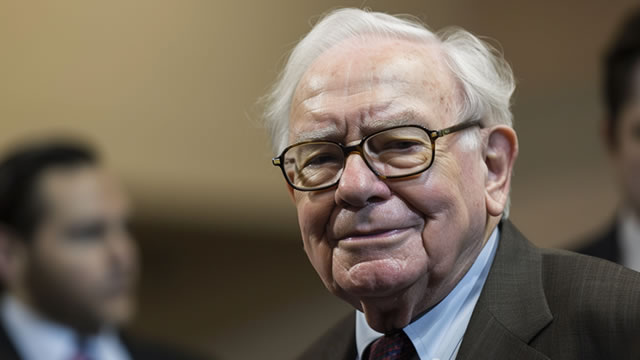
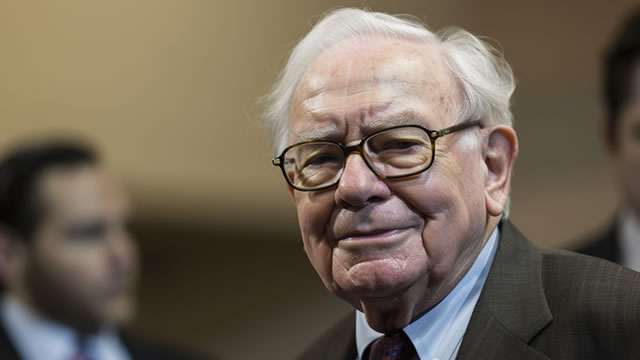
It's Official: Warren Buffett Has Retired. But Here Are 3 Ways to Continue Benefiting From His Investing Wisdom in 2026.
The Motley Fool· 2026-01-11 23:15
Core Viewpoint - Warren Buffett has retired as CEO of Berkshire Hathaway after 60 years, but his investment principles and strategies remain influential for investors moving forward [1][4]. Group 1: Buffett's Legacy and Investment Principles - Buffett's tenure at Berkshire Hathaway saw the company achieve a compounded annual gain of about 20%, significantly outperforming the S&P 500's 10% increase [1]. - Throughout his career, Buffett consistently adhered to his investment principles, focusing on quality companies with strong competitive advantages and purchasing them at reasonable prices [4][5]. Group 2: Transition of Leadership - Greg Abel has been appointed as the new CEO of Berkshire Hathaway, having been hand-picked by Buffett, who continues to hold his shares in the company [6]. - Abel has assured that capital allocation and strategy will remain consistent under his leadership, suggesting continuity in investment decisions that align with Buffett's approach [7]. Group 3: Future Engagement with Buffett - Buffett will still be involved with Berkshire Hathaway as chairman and is expected to share his insights during the annual shareholders' meeting and through a Thanksgiving letter [8][9]. - Investors can anticipate insights from Buffett's past decisions when 13F filings are released, providing a glimpse into his investment strategies even after his retirement [9].
What Warren Buffett’s actions are telling ASX investors as 2026 begins
Rask Media· 2026-01-11 22:33
Group 1: Market Overview - Global share markets remain resilient, trading near historic highs despite underlying uncertainties [1] - Corporate earnings held up over 2025, with artificial intelligence dominating productivity discussions [1] - The geopolitical backdrop is perceived as more fragile than in previous years, with various global tensions impacting market signals [2] Group 2: Berkshire Hathaway's Strategy - Berkshire Hathaway's cash balance has been growing, indicating restraint amidst market rallies and enthusiasm for sectors like AI and energy transition [4] - The concentration of global equity returns in a few mega-cap technology companies has made it challenging for large investors like Berkshire to find attractive opportunities [5] - Recent portfolio adjustments include a small position in Alphabet and a reduction in Apple holdings, reflecting a strategy of balancing concentration, valuation, and future flexibility [6] Group 3: Leadership Transition and Long-term Strategy - With Greg Abel set to lead Berkshire, there is a belief that Buffett is preparing the portfolio for future evolution by reducing concentration and increasing liquidity [7] - Berkshire's scale means it seeks rare, exceptional businesses capable of absorbing large investments, which differs from the opportunities available to smaller investors [8] Group 4: Investment Philosophy - Investors are encouraged to think like business owners, focusing on earnings growth, capital allocation, and the defensibility of business positions [11] - Long-term investing principles emphasize the importance of process over prediction, patience, and maintaining conviction in productive businesses [14][16] - In a noisy market environment, maintaining discipline and focusing on business fundamentals rather than headlines is crucial for long-term success [18]

Billionaire Bill Gates Has 59% of His Foundation's $38 Billion Portfolio Invested in 3 Phenomenal Stocks
Yahoo Finance· 2026-01-11 19:35
分组1: Berkshire Hathaway - Berkshire Hathaway has a strong balance sheet and its core insurance business remains stable despite challenges from California wildfires [1] - Greg Abel took over leadership on January 1, managing $670 billion in investable assets and numerous subsidiaries [2] - The stock price has stagnated since Buffett's retirement announcement, but the company continues to generate strong cash flow and grow its assets [8] 分组2: Gates Foundation - The Gates Foundation receives annual donations from Warren Buffett, including a recent donation of 9.4 million Class B shares of Berkshire Hathaway [4] - The foundation's trust holds a portfolio worth approximately $38 billion, with 59% invested in three major companies [5] - Bill Gates aims to give away nearly all his wealth through the foundation over the next 20 years [6][7] 分组3: WM (Waste Management) - WM operates a solid waste collection and disposal business with a competitive moat due to regulatory barriers for new landfills [10] - The company has shown strong revenue growth and improved operating margins, even amidst challenges in the recycling market [11] - WM trades at an attractive valuation with an enterprise value to EBITDA ratio of less than 14, making it a solid investment option [12] 分组4: Canadian National Railway - Canadian National Railway has a wide competitive moat and geographic advantages, operating tracks from coast to coast in Canada and into the U.S. [13][14] - The company has managed to offset declines in certain freight categories with increases in others, although overall volume growth has been modest [15] - With an enterprise value to EBITDA ratio of less than 12, Canadian National Railway is considered a good long-term value stock [18]



Abel's $25 million Berkshire paycheck is in the same league as other S&P 500 CEOs
CNBC· 2026-01-10 12:50
Core Viewpoint - The article discusses the compensation of Berkshire Hathaway's Vice Chairman Greg Abel, highlighting the significant difference between his pay and that of the company's founder, Warren Buffett, while also addressing the implications of this shift in compensation structure for the company and its future direction [2][4]. Compensation Comparison - Greg Abel's total compensation, including stocks and noncash awards, exceeds the median of over $16 million for S&P 500 CEOs, with many top executives earning more than $25 million [2]. - Warren Buffett's annual salary is notably low at $100,000, with additional personal security costs, and he has historically returned half of his salary to cover personal expenses [2]. Share Ownership and Investment - Abel currently owns Berkshire shares valued at approximately $171 million, which is considered a significant amount by investors [3]. - Investor Jonathan Boyar suggests that Abel should invest more of his personal wealth in Berkshire stock to align his interests with those of shareholders [3]. Future of Berkshire Hathaway - The article suggests that Abel's increasing salary may indicate a trend towards "normalization" of executive compensation at Berkshire, potentially making the company more similar to its corporate peers [4]. - Professor Randall Peterson notes that the transition may take a long time and could be influenced by Buffett's eventual departure [4]. Performance Metrics - As of early 2026, Berkshire Hathaway's stock performance has lagged behind the S&P 500 by approximately one percentage point, with the S&P outperforming Berkshire's A shares by 7.0 percentage points in the previous year [7].

Warren Buffett Left Wall Street 3 Deafening Warnings Before Retiring. Was Anyone Paying Attention?
The Motley Fool· 2026-01-10 11:00
Core Insights - Warren Buffett's final moves before retirement may signal caution for investors, particularly regarding the S&P 500's sustainability [2][10] - Berkshire Hathaway has transitioned to a net seller of stocks, indicating a strategic shift in investment approach [5][10] Group 1: Portfolio Adjustments - Berkshire sold its stakes in S&P 500 ETFs, including Vanguard S&P 500 ETF and SPDR S&P 500 ETF, during Q4 2024 [4] - Since the end of 2022, Berkshire has been actively trimming its portfolio, exiting positions in Citigroup and consistently selling shares of Apple and Bank of America [5] - The company has been a net seller of stocks amounting to $184 billion over the past two years [5] Group 2: Cash Reserves - Berkshire's cash and equivalents reached a record $382 billion by the end of Q3, reflecting its cautious stance [6][8] - The company has opted to earn steady interest from Treasury Bills rather than participating in the current bull market [8] Group 3: Investment Philosophy - Recent investments in UnitedHealth Group and Alphabet represent only a small fraction (2%) of Berkshire's total portfolio, indicating a selective approach [9] - Buffett's strategy suggests a belief that the current market levels are unsustainable, advocating for cash accumulation until better buying opportunities arise [10][11] - The investment philosophy emphasizes value investing and avoiding overpriced stocks, aligning with Buffett's contrarian approach [11][12]
How Berkshire's Service Arm Drives Its Service and Retailing Business
ZACKS· 2026-01-09 17:40
Core Insights - Berkshire Hathaway's Service and Retailing operations are crucial for its long-term growth strategy, significantly contributing to revenues, earnings stability, and diversification [1][4] Group 1: Service and Retailing Operations - The service group includes various businesses such as NetJets, FlightSafety, TTI, Dairy Queen, XTRA, CORT, Charter Brokerage, Business Wire, IPS-Integrated Project Services, and WPLG [2] - The service sub-segment contributes approximately 13-15% to total revenues and about 48% to segment earnings, with revenues showing continuous improvement despite fluctuations in earnings [3][8] - Service businesses benefit from recurring demand and long-term contracts, providing predictable cash flows and enhancing customer relationships, which supports reinvestment and disciplined acquisitions [4][8] Group 2: Competitive Position and Market Performance - Berkshire Hathaway's shares (BRK.B) have gained 12.6% over the past year, outperforming the industry [7] - The company trades at a price-to-book value ratio of 1.54, slightly above the industry average of 1.49, indicating a relatively expensive valuation [10] - The Zacks Consensus Estimate for BRK.B's EPS for the fourth quarter of 2025 and first quarter of 2026 has remained unchanged, with revenue estimates indicating year-over-year increases while EPS estimates show a decline [11][12]
If This Warren Buffett Stock Plunged by 99% Today, It Would Still Have Outperformed the S&P 500 Since 1965
The Motley Fool· 2026-01-09 10:17
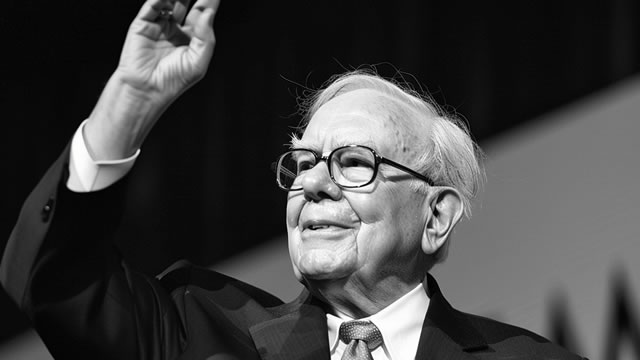
Core Insights - Berkshire Hathaway has transformed from a struggling textiles manufacturer into a highly successful holding company under Warren Buffett's leadership, showcasing the power of compounding returns [1][2] Group 1: Company Performance - Berkshire Hathaway's shares have significantly outperformed the broader market over Buffett's 60-year tenure, with an average annual return of 19.7% compared to the S&P 500's 10.5% [7] - A $1,000 investment in Berkshire stock 60 years ago would be worth $48.5 million today, while the same investment in the S&P 500 would have grown to only $399,702 [8] Group 2: Investment Strategy - Buffett focused on companies with steady growth, consistent profits, and strong management, favoring those with shareholder-friendly initiatives like stock buybacks and dividends to enhance compounding returns [3] - Berkshire's top five stock positions—Apple, American Express, Bank of America, Coca-Cola, and Chevron—account for 63% of its entire portfolio [5] Group 3: Future Leadership - Although Buffett has stepped down as CEO, he remains chairman and continues to influence the company's investment strategy, with Greg Abel, his chosen successor, well-prepared for the role [9] - Berkshire Hathaway is in a strong financial position, holding $381 billion in cash, providing ample opportunity for future acquisitions [10]
As a Concerned Warren Buffett Exits, His 4 Safest Dividend Stocks Are 2026 Gems
247Wallst· 2026-01-08 19:47
Core Insights - Warren Buffett announced his intention to step down as CEO of Berkshire Hathaway by the end of 2025, although he will continue to provide guidance on investment decisions [1] - Berkshire Hathaway has been a net seller of equities, selling over $24 billion in stocks in the first nine months of 2025, following a more aggressive $143 billion in 2024, resulting in a cash reserve of $354 billion [2][3] Berkshire Hathaway's Investment Strategy - Despite being a net seller for 12 consecutive quarters, Buffett made a notable $4.3 billion investment in Alphabet Inc. in 2025, indicating a cautious approach towards future economic conditions [3] - The company continues to focus on acquiring high-quality dividend-paying stocks, with four identified as potential total return opportunities for 2026 and beyond [4] Company Highlights Chevron - Chevron Corp. offers a 4.58% dividend, which was increased by 5% earlier in the year, and has a strong credit rating of AA [7] - The company completed a $53 billion acquisition of Hess, which positively impacted its third-quarter earnings, reporting $1.85 earnings per share and $49.73 billion in revenue, exceeding analyst expectations [9] Coca-Cola - Coca-Cola Co. maintains a 2.86% dividend and is a long-term holding for Buffett, with ownership of 400 million shares [10] - The company is the largest beverage provider globally, serving over 1.9 billion servings daily across more than 200 countries [11] Kraft Heinz - Kraft Heinz Co. pays a substantial 6.63% dividend and is North America's third-largest food and beverage company [12] - The company announced a split into two independent companies, expected to unlock value and drive growth, with the separation anticipated in the second half of 2026 [14] Kroger - Kroger Co. offers a 2.15% dividend and operates a variety of retail formats across the U.S., including supermarkets and multi-department stores [16] - The company has an Outperform rating with a target price of $77, indicating strong market confidence [18]
Warren Buffett Loved American Express Stock. With the Oracle of Omaha Now in Retirement, How Should You Play AXP in 2026?
Yahoo Finance· 2026-01-08 18:24
Core Insights - Warren Buffett has retired as CEO of Berkshire Hathaway at age 95, after a 60-year tenure, but remains as Chairman [1] - New CEO Greg Abel has taken over day-to-day responsibilities, raising questions about potential changes in the company's investment philosophy [2] Investment in American Express - Berkshire Hathaway holds a 22% stake in American Express, valued at $58.1 billion, which constitutes about 18% of its $316 billion investment portfolio [3] - American Express has been a significant investment for Buffett since 1964, when he invested $13 million at a share price of $30, resulting in a 124% return in two years [4] Stock Performance - American Express shares have increased by 27% over the past year, outperforming competitors Mastercard and Visa, which rose by 13%, and the S&P 500, which gained 17% [5] - The price-to-earnings (P/E) ratio for American Express is 25.7, lower than Mastercard's 36 and Visa's 31, indicating a more attractive valuation for investors [6] Dividend Information - American Express pays an annual dividend of $3.28, with quarterly payments of $0.82 per share, resulting in a dividend yield of 0.87% [7] - The company's dividend has shown notable growth over the last three years [7]
