Blackstone(BX)

Search documents
“PE巨头”黑石总裁:华尔街低估了AI的颠覆性,现在投项目首先评估“颠覆风险“
智通财经网· 2025-10-19 04:02
Core Insights - Wall Street is underestimating the disruptive potential of AI on traditional business models and market structures [1][2] - Blackstone has elevated AI risk assessment to the top priority in investment decisions, requiring all teams to address AI impacts in investment memorandums [2][3] - The company is actively repositioning its investment portfolio to capitalize on opportunities presented by AI infrastructure while also reassessing existing investments for potential risks [3] Group 1: AI Disruption Risks - Jonathan Gray, President of Blackstone, warns that AI technology is beginning to disrupt business models and lead to job losses [1][2] - Traditional industries, particularly those based on rules such as legal, accounting, and transaction processing, face significant upheaval due to AI [1][2] - Blackstone has decided against acquiring companies that are seen as vulnerable to AI risks, such as certain software and call center firms [1] Group 2: Investment Strategy Adjustments - Blackstone is conducting a comprehensive review of new deals and existing portfolios to assess the implications of AI on business software and data processing services [2][3] - The company has provided billions in loans to enterprise software companies, which are at risk of losing clients to AI-driven competitors [3] - Despite the potential negative economic disruptions caused by AI, the technology may also yield underestimated productivity gains and create trillions in new enterprise wealth [3]

“PE巨头”黑石总裁:华尔街低估了AI的颠覆性,现在投项目首先评估“颠覆风险"
Hua Er Jie Jian Wen· 2025-10-19 02:53
Core Insights - Wall Street is underestimating the disruptive potential of AI on traditional business models and market structures [1][2] - Blackstone has elevated AI risk assessment to the top priority in investment decisions, requiring all teams to address AI impacts in investment memorandums [2][3] - The company is actively repositioning its investment portfolio to capitalize on opportunities presented by AI infrastructure [3] Group 1: AI Disruption Risks - Jonathan Gray, President of Blackstone, warns that AI technology is beginning to disrupt business models and lead to job losses [1][2] - Traditional industries, particularly those based on rules such as legal, accounting, and transaction processing, face significant upheaval due to AI [1][2] - Blackstone has decided against acquiring companies perceived to be vulnerable to AI risks, such as certain software and call center firms [1] Group 2: Investment Strategy Adjustments - Blackstone is conducting a comprehensive review of new deals and existing portfolios to assess AI's impact on enterprise software and data processing services [2][3] - The company has provided billions in loans to enterprise software firms like Medallia, which are at risk from AI-driven competitors [3] - Despite the potential negative economic disruptions caused by AI, the technology may also yield underestimated productivity gains and create trillions in new enterprise wealth [3]
'Cockroach' jabs and regional bank breakdowns: The week private credit's 'golden' narrative got a little less shiny
Business Insider· 2025-10-18 10:02
Core Insights - The private credit market, once seen as thriving, is facing scrutiny and criticism amid recent bankruptcies and losses reported by major financial institutions [2][3][4][7][20]. Private Credit Market Overview - Private credit has grown significantly since the Great Financial Crisis, with firms like Blackstone managing substantial amounts of non-real estate credit, surpassing their private equity assets [14][16]. - The segment has become a competitive alternative to traditional bank lending, particularly in high-risk loans and direct lending to investment-grade clients [15]. Recent Developments - Jamie Dimon of JPMorgan Chase highlighted concerns about potential issues in the private credit sector, suggesting that the presence of one bankruptcy could indicate more problems [3][4]. - Following Dimon's comments, regional banks reported losses, raising fears about the stability of the credit ecosystem [7][22]. Industry Reactions - Executives from private credit firms defended the sector, arguing that recent bankruptcies do not reflect broader market issues and that their portfolios remain healthy [20][21][23]. - Critics, including academics and IMF officials, have raised questions about the sustainability of returns in private credit, suggesting that the industry's performance may not justify its growth [8][9][18]. Market Sentiment - Despite the criticisms, some analysts believe that the private credit market is not on the brink of a crisis, and that the recent bankruptcies are not indicative of a systemic problem [18][19]. - The private credit industry continues to assert its strength, with leaders claiming that the market is more robust than perceived [22][24].



Blackstone Charitable Foundation Awards $3 Million to Launch Blackstone Skilled Futures
Businesswire· 2025-10-17 17:30
Core Insights - The Blackstone Charitable Foundation has awarded a $3 million grant to launch the Blackstone Skilled Futures program [1] - The program is in partnership with Arizona State University, Maricopa Community Colleges, and local nonprofits [1] - The initiative aims to enhance access to high-quality training and workforce development, particularly in construction and advanced manufacturing sectors in the Phoenix area [1] - Blackstone Skilled Futures will provide support for students in need and focus on capacity building for training [1]

商务部部长王文涛会见美国黑石集团董事长兼首席执行官苏世民
Shang Wu Bu Wang Zhan· 2025-10-17 12:17
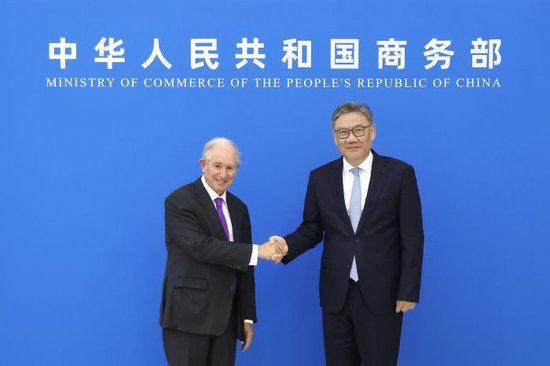
Core Viewpoint - The meeting between Wang Wentao, the Minister of Commerce of China, and Stephen Schwarzman, the Chairman and CEO of Blackstone Group, highlighted the importance of dialogue and cooperation in Sino-U.S. economic relations, emphasizing that both countries should work together to resolve differences and avoid escalating tensions [2]. Group 1: Economic Relations - Wang Wentao stated that since May, the economic teams of both countries have held four rounds of talks, achieving significant consensus that has helped stabilize bilateral economic relations [2]. - Despite the progress, the U.S. has implemented multiple restrictive measures against China following the Madrid economic talks, which have severely harmed Chinese interests [2]. - Wang emphasized that China has the right to take necessary measures to firmly protect its own interests, advocating for equal dialogue and negotiation to resolve disputes [2]. Group 2: Importance of Communication - Stephen Schwarzman remarked that the Sino-U.S. relationship is crucial for both nations and the world, stressing the need for enhanced communication to eliminate misunderstandings and misjudgments [2]. - He noted that further escalation of tensions between the two countries is not in the interest of any party involved [2]. - Schwarzman expressed his willingness to act as a bridge to promote stable, healthy, and sustainable development in the economic relationship between the two countries [2].
朱鹤新会见黑石集团苏世民
券商中国· 2025-10-17 09:44
Group 1 - The meeting between the Vice Governor of the People's Bank of China and the CEO of Blackstone focused on global macroeconomic development and financial market trends [1] - The discussion included insights on the current state of the financial markets and potential future developments [1] - The meeting was attended by the Deputy Director of the State Administration of Foreign Exchange, indicating the importance of the dialogue [1] Group 2 - There was a significant market reaction with major stocks experiencing sharp increases, particularly in the chip sector [2] - A notable surge of 167% was reported in certain stocks, indicating high volatility and investor interest [2] - The mention of "Wall Street's top figure" issuing a major warning suggests potential market risks that could affect investor sentiment [2]

王毅分别会见瑞典外交大臣、美国黑石集团董事长兼首席执行官
Xin Hua Wang· 2025-10-16 16:11
Group 1 - The year marks the 75th anniversary of diplomatic relations between China and Sweden, with both sides agreeing to deepen practical cooperation and develop bilateral relations [1] - China expresses willingness to implement a visa-free policy for Sweden and hopes for Sweden to play a constructive role in promoting healthy development of China-Europe relations [1] - Sweden's Foreign Minister emphasizes the importance of mutual respect and dialogue to enhance understanding and trust, while supporting an open and free trade system [1] Group 2 - The meeting highlights the significance of China-US relations as one of the most important bilateral relationships in the world, with a call for peaceful coexistence as a fundamental principle [1] - Both parties are encouraged to engage in effective communication to resolve differences and promote stable, healthy, and sustainable development of China-US relations [1] - The CEO of Blackstone expresses the importance of US-China relations for global stability and prosperity, advocating for enhanced communication to eliminate misunderstandings [1]
“次贷危机”再现?华尔街“捉蟑螂”论战:PE与银行互相指责
华尔街见闻· 2025-10-16 13:36
Core Viewpoint - A fierce debate is unfolding on Wall Street regarding loan risks, particularly following the bankruptcies of Tricolor Holdings and First Brands Group, highlighting tensions between traditional banks and private equity firms over accountability in the credit market [1][2][3]. Group 1: Bank and Private Equity Tensions - The recent bankruptcies have intensified the conflict between traditional banks and private equity firms, with banks blaming private equity for systemic risks in the $1.7 trillion private credit market [2][3]. - Apollo Global Management's CEO Marc Rowan attributes the bankruptcies to banks' long-standing pursuit of high-risk borrowers, suggesting that the failures reflect deeper issues within banking practices [3][4]. - The International Monetary Fund has called for regulatory scrutiny of banks' exposure to private credit, noting that banks are increasingly lending to private credit funds due to higher net asset returns compared to traditional loans [3][8]. Group 2: Responses from Key Industry Figures - Jamie Dimon, CEO of JPMorgan Chase, warned of potential systemic issues, stating that the sight of one failure may indicate more problems ahead, while acknowledging that the Tricolor incident revealed flaws within the bank [5][6]. - Blue Owl Capital's Marc Lipschultz criticized the linking of private credit to the bankruptcies as a panic-inducing narrative, suggesting that banks should examine their own practices instead [2][7]. - Blackstone's Jonathan Gray echoed the sentiment that the responsibility lies with banks, emphasizing that the bankruptcies were part of bank-led processes [4][5]. Group 3: Market Reactions and Implications - The bankruptcies have triggered a chain reaction in the credit market, leading to significant losses for major investment firms and banks, with JPMorgan Chase reporting a $170 million loss due to Tricolor's collapse [5][6]. - The complex financial structures between banks and private equity firms have obscured the true holders of underwriting risks, complicating the accountability landscape in the credit market [5][7].



Hologic ticks higher amid report on financing for potential takeover (HOLX:NASDAQ)
Seeking Alpha· 2025-10-16 13:16
Hologic (NASDAQ:HOLX) rose 2% in premarket trading after a report about financing for a potential takeover by Blackstone (BX) and TPG Inc. (TPG). Direct lenders are preparing a $9 billion debt financing package as they attempt to compete with banks to ...



国际不动产市场周期修复与中国市场的均衡重塑
Feng Huang Wang Cai Jing· 2025-10-16 10:31
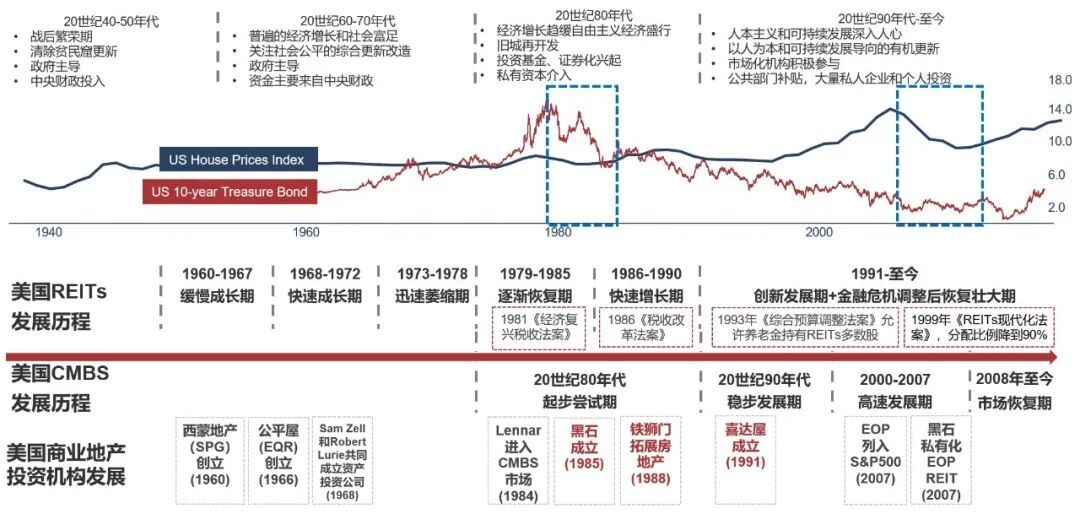
Core Insights - The current real estate market in China is at a cyclical low, facing severe challenges, with a lack of consensus on the core pricing benchmarks for real estate assets [1] - The restructuring of the real estate cycle is fundamentally achieved through the price formation mechanism, which is driven by the micro-level interactions between supply and demand [1] International Insights - Asset management institutions play a crucial role in market restructuring, as evidenced by the cyclical nature of real estate prices in mature economies [2] - The U.S. has experienced significant crises that led to the emergence of new financial instruments like CMBS and REITs, which reshaped the market landscape [4][5] - The shift from "subject credit" to "asset credit" in the U.S. real estate market highlights the importance of institutions that can efficiently connect physical assets with financial markets [5][6] Implications for China's Real Estate Market - The current inventory pressure in China is substantial, with an estimated 4 billion square meters of inventory and a potential de-stocking period of up to 5 years [13] - The rental yield in major Chinese cities is approximately 1.8%, which is significantly lower than historical levels in the U.S. and Japan during their respective crises [14][15] - A new pricing anchor based on rental yield rather than price-to-income ratios is suggested to better reflect asset value [12][13] Future Price Evolution - A sensitivity analysis indicates that a 0.5% reduction in expected price growth could lead to a 22% decline in property prices, while a 1% reduction could result in a 36% decline [16] - The need for a balanced market is emphasized, requiring measures to lower interest rates, reduce risks, and enhance rental yields [16] Commercial Real Estate Market Dynamics - There is a significant gap between primary and secondary market valuations in China's commercial real estate, indicating a disconnect in asset pricing [17] - Historical examples from the U.S. suggest that innovative risk-sharing mechanisms can help restore market confidence during downturns [17] Asset Price Cycle Reconstruction - The restructuring of the real estate cycle necessitates a shift from traditional developer-led models to a new financial ecosystem involving specialized asset management institutions [18][19] - The creation of a new type of real estate asset management institution is essential for developing a complete ecosystem that includes private equity funds, REITs, and effective exit strategies [19] Policy Recommendations - The core objective should be to convert excess inventory into new demand through market mechanisms, addressing the mismatch between supply structure and diverse demand [20] - A market-oriented approach to asset acquisition and transformation is recommended, leveraging professional asset management institutions to mitigate risks [20][21] - Financial innovations and exit mechanisms must be synchronized to ensure sustainable participation from market entities [21][22]