
CHINA RES BEER(CRHKY)

Search documents
华润啤酒东北大撤退余波
3 6 Ke· 2025-12-16 03:34
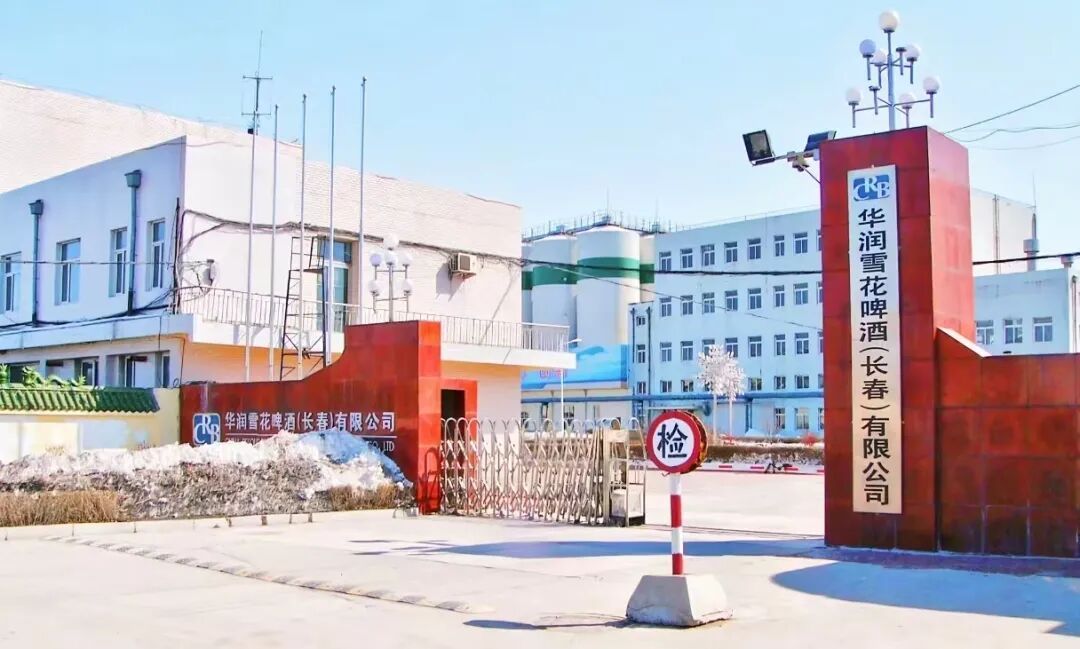
Core Viewpoint - The closure of the China Resources Snow Beer (Changchun) factory marks the end of an era for the company in Northeast China, highlighting the challenges of employee placement, asset disposal, and historical burdens as the company shifts its focus to Southern China [1][9]. Group 1: Company History and Operations - The Changchun factory, established in 2001, has roots dating back to the late 1990s, originally known as the "Nongan County Brewery" [3][4]. - China Resources Beer expanded rapidly in Northeast China after acquiring local brands and production lines, becoming a significant player in the region [4][15]. - At its peak in 2011, the factory achieved a production and sales volume of 216,000 kiloliters, contributing over 100 million yuan in taxes, and became the first Chinese beer company to exceed annual sales of 10 million tons [4][15]. Group 2: Labor Disputes and Factory Closure - Following the factory's closure in 2019, over 180 labor dispute cases were filed, primarily concerning compensation and recognition of employment periods [7][9]. - Many disputes arose after the factory's dissolution, with employees seeking compensation for their years of service, leading to lengthy legal processes [8][9]. - The formal cancellation of the factory signifies a resolution to many labor disputes, with most employees reportedly receiving compensation [9]. Group 3: Market Dynamics and Strategic Shifts - The beer industry in Northeast China has faced significant challenges, including overcapacity and declining market demand, leading to a strategic retreat by China Resources Beer from the region [17][19]. - From 2016 to 2024, the number of operational breweries decreased from 98 to 62, with 36 factories closed, reflecting a broader trend of capacity optimization [21]. - The company has been actively disposing of underperforming assets, particularly in Northeast China, with many factories remaining unsold despite multiple attempts to auction them off [22][23].

300291,重大资产重组,即将停牌
Zhong Guo Ji Jin Bao· 2025-12-15 15:01
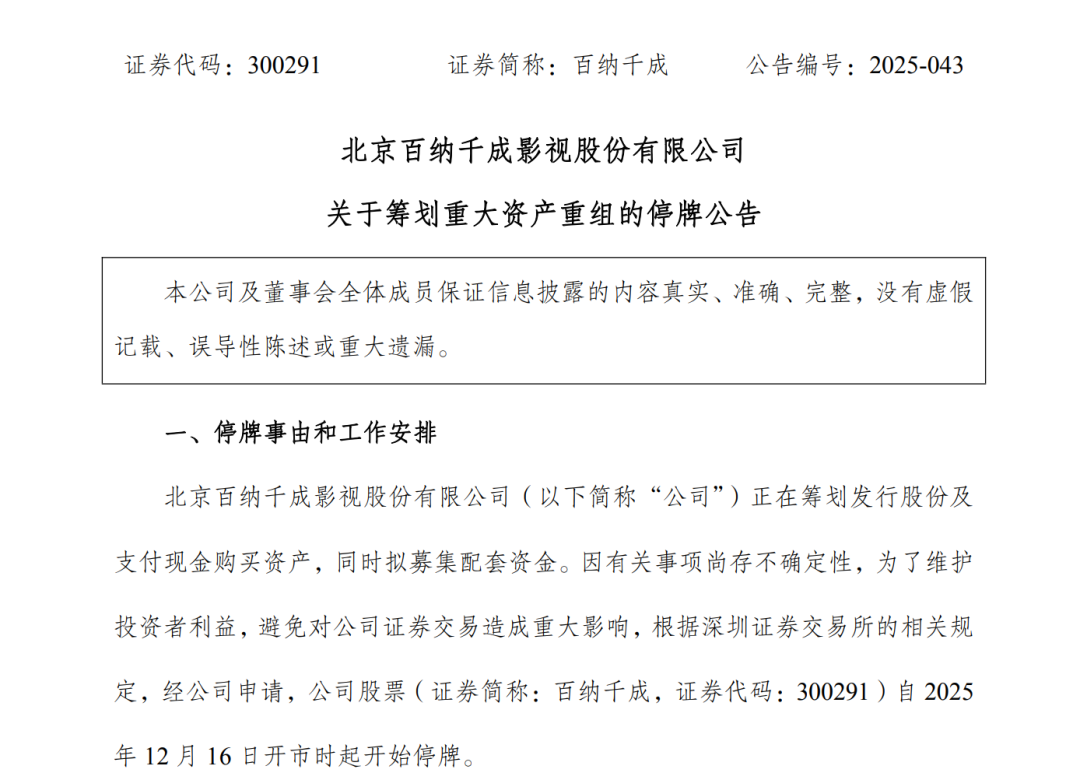
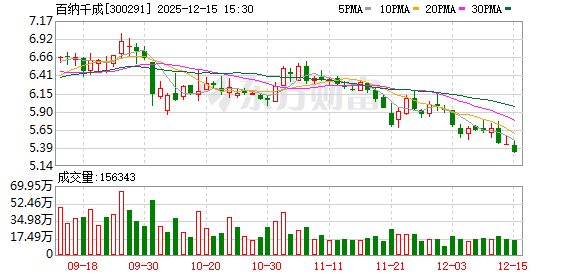
Core Viewpoint - The company Baina Qiancheng (stock code: 300291) is planning a significant asset restructuring to transition into the AI sector by acquiring 100% equity of Xiamen Zhonglian Century Co., Ltd. [1][3] Group 1: Acquisition Details - Baina Qiancheng announced on December 15 that it is in the process of planning to purchase 100% equity of Zhonglian Century and raise supporting funds through share issuance and cash payment [1][3] - The transaction is expected to constitute a major asset restructuring, with the company's stock being suspended from trading starting December 16 [1][3] - The company has signed a letter of intent for equity acquisition with some major counterparties and is currently in discussions with shareholders of the target company [3] Group 2: Target Company Overview - Zhonglian Century, established in 2013, is an AI and big data-driven technology enterprise headquartered in Xiamen, with branches in multiple locations including Beijing, Hong Kong, and Thailand [3] - The company has developed a comprehensive service model that includes three core business systems: one-stop smart marketing solutions, AI application scenario solutions, and digital channel construction [3] - Zhonglian Century has provided smart transformation services to over 3,000 industry clients across sectors such as telecommunications, finance, and e-commerce [3] Group 3: Baina Qiancheng's Business Context - Baina Qiancheng, formerly known as Hualu Baina, was established in 2002 and went public in 2012, but has seen a significant decline in its traditional film and television business [8] - The company has attempted multiple business transformations, including ventures into cultural tourism, marketing, and IP operations, but has not achieved satisfactory results [9] - For the first half of 2025, the film business revenue was only 1.607 million yuan, a decrease of 70.68%, accounting for less than 12% of total revenue [9] Group 4: Financial Performance - In the first three quarters of 2025, Baina Qiancheng's performance continued to deteriorate, with revenue of 177 million yuan, a year-on-year decline of 73.43%, and a net profit attributable to shareholders of -67.54 million yuan, with losses expanding [12] - As of December 15, the company's stock price was 5.33 yuan per share, with a total market capitalization of 5.02 billion yuan [12]

300291,重大资产重组!明起停牌
Zhong Guo Ji Jin Bao· 2025-12-15 14:48
Group 1 - The core point of the article is that Baina Qiancheng plans to acquire 100% equity of Zhonglian Century as part of its strategic shift towards the AI sector amid declining performance in its traditional media business [2][8] - The acquisition is expected to constitute a major asset restructuring, with the company's stock suspended from trading starting December 16, pending the announcement of the transaction plan within 10 trading days [2][4] - Baina Qiancheng has signed a letter of intent for the equity acquisition and is currently in discussions with shareholders of Zhonglian Century, which is a data-driven AI technology company established in 2013 [4][8] Group 2 - Baina Qiancheng, formerly known as Hualu Baina, was founded in 2002 and went public in 2012, becoming part of Yingfeng Group in 2018 [8] - The company has seen a significant decline in its traditional film and television business, with film revenue dropping to 16.08 million yuan, a decrease of 70.68% year-on-year, accounting for less than 12% of total revenue [8][9] - For the first three quarters of 2025, Baina Qiancheng reported revenue of 177 million yuan, a year-on-year decline of 73.43%, and a net profit attributable to shareholders of -67.54 million yuan, indicating an expanded loss [12]
华润啤酒东北大撤退后工厂无人接:36家工厂关停、数亿安置费
Sou Hu Cai Jing· 2025-12-15 09:57
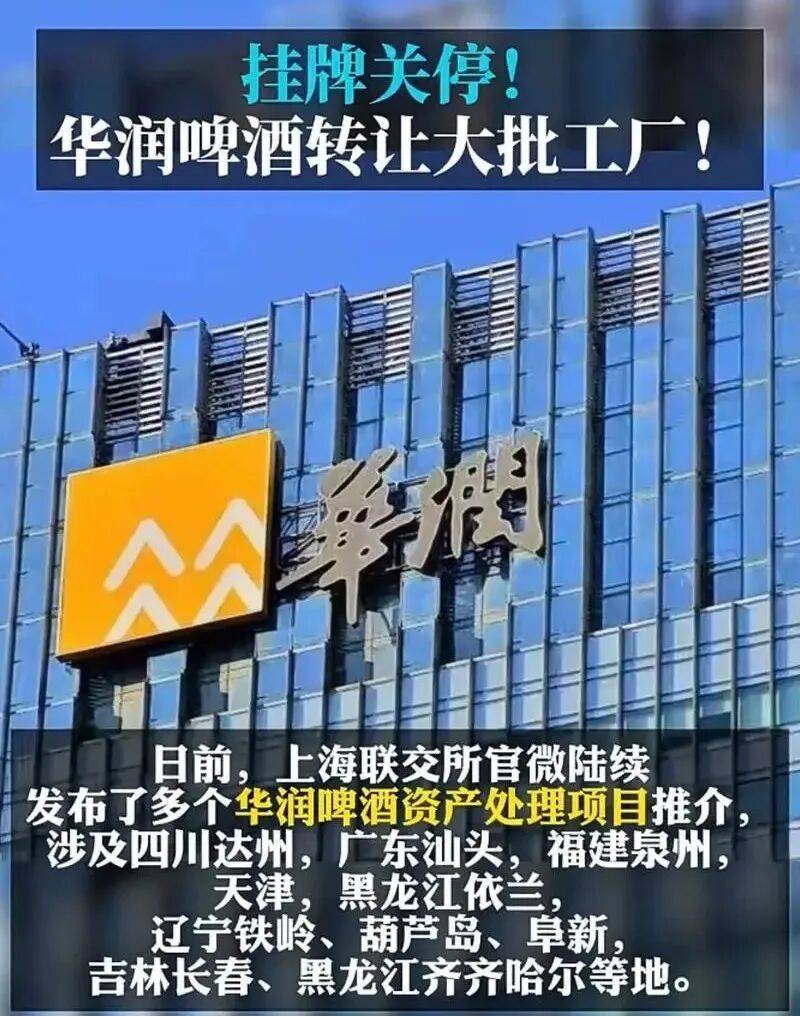
Core Insights - The article highlights the challenges faced by China Resources Beer in disposing of its assets in Northeast China, particularly the significant price drops and lack of buyers for its factories [1][5][6] Group 1: Asset Disposal Challenges - The land use rights and buildings of the Qiqihar factory were listed for transfer at a price reduced from 6.35 million yuan to 5.08 million yuan, a drop of over 1.2 million yuan, yet remained unsold [1] - The Changchun factory, which had been closed for six years, faced similar difficulties, with its transfer price dropping by over 40% in four attempts, but still found no buyers [1] - The closure of 36 breweries across the country, particularly in Northeast China, has resulted in significant challenges in asset disposal, with many low-efficiency capacities unable to sell even at reduced prices [1][5] Group 2: Historical Context and Market Dynamics - Northeast China was once a key market for China Resources Beer, with the company establishing a strong presence through aggressive acquisitions starting in 1993 [3] - By 2011, the company held a 68% market share in Liaoning, but began to face losses as the market entered a phase of excess capacity and declining demand [3][5] - The company initiated capacity optimization in 2017, focusing on eliminating low-efficiency production in Northeast China [3][5] Group 3: Financial Implications and Employee Issues - From 2016 to 2024, the number of factories decreased from 98 to 62, with 36 closures primarily in smaller cities, leading to substantial employee compensation costs totaling 1.823 billion yuan from 2017 to 2020 [5] - Labor disputes have arisen following factory closures, with over 180 disputes linked to the Changchun factory alone, highlighting ongoing challenges in employee relations [5] - The company has faced significant asset impairment losses, with a reported 1.301 billion yuan in fixed asset and inventory impairments in 2018 [5] Group 4: Strategic Shift and Future Outlook - In December 2025, the company announced the relocation of its headquarters from Beijing to Shenzhen, signaling a strategic shift away from reliance on the Northeast market [6] - Analysts suggest that the company's difficulties stem from the failure to effectively manage the historical burdens of its acquisitions, raising questions about balancing shareholder interests with social responsibilities [6] - The ongoing restructuring in the Northeast beer market may continue to have lasting effects on the company and the region [6]
深圳再添总部企业,华润啤酒全国总部迁入宝安
Sou Hu Cai Jing· 2025-12-15 02:23
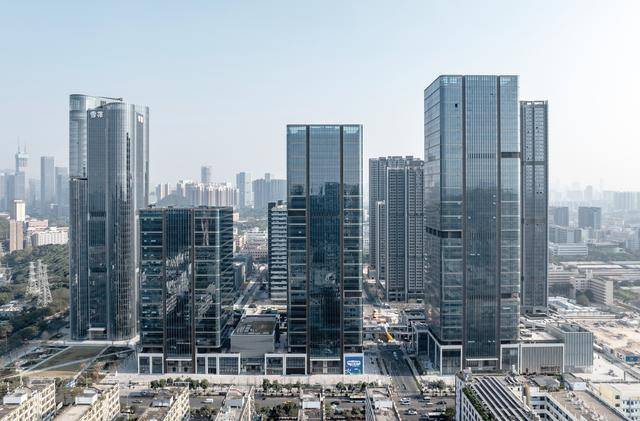
Group 1 - China Resources Beer has officially relocated its headquarters from Beijing to the Snowflake Innovation City in Bao'an, Shenzhen, with the new 180-meter headquarters building now in operation [1] - Established in 1993, China Resources Beer is a subsidiary of China Resources (Group) Company, focusing on the production, sales, and distribution of beer products, with a total of 60 breweries across the country and an annual production capacity of approximately 19.2 million kiloliters by June 30, 2025 [3] - The company has developed a high-end brand matrix that includes four domestic brands and four international brands, catering to various market segments [3] Group 2 - The Snowflake Innovation City project, co-developed by China Resources Land and China Resources Snow Beer, spans approximately 1.15 million square meters and integrates headquarters offices, R&D, high-end manufacturing, and technology experiences [5] - The project aims to create an innovative industrial ecosystem focused on information technology and intelligent manufacturing, attracting over 80 well-known companies, including 9 listed companies and 49 national high-tech enterprises [5] - Additionally, the project features the Snow Beer Town, a commercial space of nearly 50,000 square meters that combines retail, dining, and entertainment, with over 120 brands already established, more than 40% of which are city or regional first stores [5]
华润啤酒携手歪马送酒推出“雪花全麦白啤” 加码即时零售新赛道
Zheng Quan Ri Bao Wang· 2025-12-12 10:16
Core Insights - The launch of "Snowflake Whole Wheat White Beer" marks a significant collaboration between China Resources Beer and the instant retail platform Yima Songjiu, indicating a shift from traditional supply and sales relationships to deep integration and value co-creation [1][2] Group 1: Product Launch - "Snowflake Whole Wheat White Beer" is the first customized product developed through the strategic agreement signed in March 2025 between China Resources Beer and Yima Songjiu [1] - The product is priced competitively at 7.5 yuan per can (500ml) and 74.9 yuan per box (12 cans), aiming to penetrate the market with a strong value proposition [1] - The product was launched on December 5, available exclusively through Yima Songjiu's network of over 2,000 terminals, offering an average delivery time of 15 minutes [1] Group 2: Strategic Collaboration - The partnership addresses the long-standing challenge of disconnection between traditional beer companies and end consumers, utilizing consumer data from instant retail platforms to guide product development [2] - The launch exemplifies the ability of traditional beer companies and emerging instant retail platforms to collaborate effectively, responding quickly to market demands and creating popular products [2] - The ongoing strategic collaboration is expected to foster a more agile, efficient, and personalized beer consumption ecosystem, benefiting the entire beverage industry [2]
华润啤酒侯孝海:啤酒消费品如果被年轻人抛弃,那就没有发展的可能性了
Xin Lang Cai Jing· 2025-12-10 09:05
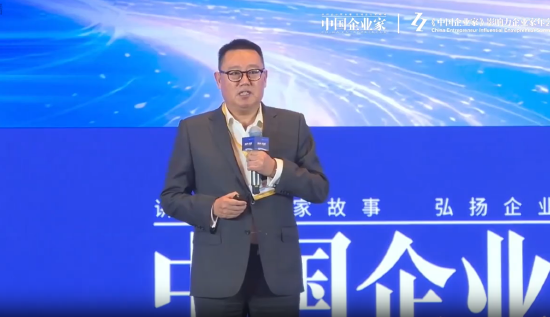
Core Insights - The 2025 China Entrepreneur Influence Entrepreneur Conference emphasizes the theme "Emergence·Infinity - Co-creating New Forms of Intelligent Business" [1][6] Group 1: Changes in the Business Environment - The beer industry is undergoing significant transformation, with declining competitive capabilities and increasing pressure on business growth, leading to a need for companies to rethink their strategies [3][8] - The concept of "New World" was introduced to signify the necessity for companies to break away from outdated business models and embrace new opportunities [3][8] Group 2: Technological Advancements - Rapid technological development is a double-edged sword for businesses, presenting both opportunities and challenges, particularly with the rise of artificial intelligence [4][9] - The shift towards automation has drastically reduced the workforce in manufacturing, as exemplified by a 2016 factory that required 500-600 workers for a capacity of 1 million tons [4][9] Group 3: Changing Consumer Demographics - There has been a significant generational shift in consumer demographics over the past decade, with the current consumer base showing over 50% difference from that of ten years ago [5][10] - The new generation of consumers possesses distinct values, consumption habits, and a strong sense of individuality, which companies must adapt to in order to remain relevant [5][10] - The importance of appealing to younger consumers is highlighted, as losing their interest can jeopardize a product's future [5][10]
华润啤酒(00291) - 截至2025年11月30日止月份的月报表
2025-12-01 10:19
股份發行人及根據《上市規則》第十九B章上市的香港預託證券發行人的證券變動月報表 | 截至月份: | 2025年11月30日 | 狀態: 新提交 | | --- | --- | --- | | 致:香港交易及結算所有限公司 | | | | 公司名稱: | 華潤啤酒(控股)有限公司 | | | 呈交日期: | 2025年12月1日 | | | I. 法定/註冊股本變動 不適用 | | | FF301 第 1 頁 共 10 頁 v 1.1.1 FF301 II. 已發行股份及/或庫存股份變動 | 1. 股份分類 | 普通股 | 股份類別 | | 不適用 | | 於香港聯交所上市 (註1) | 是 | | | --- | --- | --- | --- | --- | --- | --- | --- | --- | | 證券代號 (如上市) | 00291 | | 說明 | | | | | | | 多櫃檯證券代號 | 80291 | RMB 說明 | | | | | | | | | | 已發行股份(不包括庫存股份)數目 | | | 庫存股份數目 | | 已發行股份總數 | | | 上月底結存 | | | | 3,24 ...
华润啤酒20251128
2025-12-01 00:49
Summary of China Resources Beer Conference Call Company Overview - **Company**: China Resources Beer - **Industry**: Beer and Liquor Key Points Financial Performance and Projections - **2025 Revenue Growth**: Expected to achieve low single-digit growth, with profits projected to grow in the high single to double-digit range [2][10] - **Dividend Policy**: Targeting a dividend payout ratio of 60% for 2025, with plans to increase it to over 70% in the next two years [2][10] - **Cost Control**: Benefiting from the use of cheaper Australian raw materials and effective expense management, leading to an improvement in gross margin, although the increase is expected to be smaller in the second half of the year [2][7] Beer Market Dynamics - **Competitive Environment**: The beer industry is characterized by rational competition with no large-scale price wars. Most companies are under manageable operational and profit pressures [5][19] - **Product Performance**: The Heineken brand is expected to grow by approximately 20% for the year, while other brands like Super Dry are projected to have single-digit growth, and Full Beer is expected to decline [12][2] - **Price Range Potential**: The 8-10 RMB price range for beer products shows significant growth potential, with plans to develop differentiated products to meet diverse consumer needs [13][15] Liquor Business Challenges - **White Liquor Business**: Facing challenges with high-end product sales and a shift from business banquets to personal home consumption. The company aims to expand sales channels and control expenses [8][9] - **Impairment Considerations**: The company maintains a long-term view on its liquor business but may consider impairment adjustments based on future developments [9][23] - **Intangible Asset Amortization**: Annual amortization of approximately 700 million RMB is putting pressure on profits [8][23] Market Trends and Consumer Behavior - **Consumer Preferences**: There is a noted shift in consumer preferences, with a willingness to choose high-end products within certain price ranges. The industry is expected to see increased differentiation [4][21] - **New Restaurant Trends**: The turnover and replacement rate of trendy restaurants and popular stores are high, indicating a rapidly changing market landscape [11] Management and Strategic Adjustments - **Management Changes**: Recent adjustments in the management team aim to balance experience and youth to better adapt to industry changes [22] - **Operational Environment**: The overall operational environment has not changed significantly compared to the previous year, although there are ongoing adjustments to market strategies [20] Future Outlook - **2026 Projections**: If economic conditions remain stable, revenue and order volume are expected to grow, with slight improvements in gross margin and profit growth outpacing revenue growth [15][17] - **Government Subsidies**: Anticipated decline in government subsidies for 2026, with one-time income from land sales in Shenzhen not expected to recur at the same level [27] Inventory and Supply Chain - **White Liquor Inventory**: Current inventory levels for white liquor are approximately four months, showing a slight decrease from the beginning of the year [24] - **Cost Pressures**: Limited pressure from aluminum can price increases, with overall procurement costs remaining manageable [17][5] This summary encapsulates the key insights from the conference call, highlighting the company's financial outlook, market dynamics, challenges in the liquor segment, and strategic management adjustments.
华润啤酒20251125
2025-11-26 14:15
Summary of China Resources Beer Conference Call Company Overview - **Company**: China Resources Beer - **Industry**: Beverage (Beer and Liquor) Key Points Financial Performance - In 2025, overall operations remained stable with a slight decline in gross margin in the second half, but a more than 2% improvement in the first half due to the use of Australian barley and the implementation of the "Three Gold" plan [2][5] - The company expects capital expenditure to be around 2 billion in 2025, maintaining this level in the coming years while making necessary investments [2][10] Market Trends - There is an increasing consumer demand for differentiated products with high cost-performance ratios, driving the development of regional premium product portfolios [2][6] - The beer market remains stable in terms of consumption and competition, with a year-on-year sales growth of approximately 20% in Q3 2025 [3] Strategic Initiatives - The company is adopting an omnichannel strategy to penetrate the craft beer market and is collaborating with emerging channels like Hema and Sam's Club to produce and sell private label beers [4][12] - Material costs, particularly aluminum cans, constitute the largest expenditure, accounting for about 20%-25% of production costs [13] White Liquor Business - The white liquor industry is undergoing a transformation, with pressure on wholesale prices for leading companies. The company is cautiously optimistic about its white liquor business, which is expected to contribute limited profits in the short term [2][7] Future Outlook - For 2026, if the economic environment remains stable, volume, price, and premiumization trends are expected to be similar to 2025 [2][8] - The company plans to increase its dividend payout ratio from 52% in 2024 to around 60% in 2025, aiming for a gradual increase to over 70% in the following years [2][10] Competitive Landscape - The company is focused on strengthening its competitive advantages against rivals like Budweiser, which has lost market share, by optimizing product structure and enhancing service quality [18][19] - Heineken's brand positioning and consumer perception are seen as significant advantages, with ongoing efforts to enhance brand influence through sponsorships and marketing [17] Cost Management - The company is implementing digital strategies to optimize marketing and production processes, aiming for a slight annual reduction in overall expense ratios over the next 3-5 years [13][15] - The company anticipates manageable material cost pressures in 2026, with strategies in place to adjust procurement practices as needed [14] Product Development - The core product SPRIX has shown unit growth, with expectations for increased sales, although reaching the target of 1 million kiloliters remains challenging [20] - The company is diversifying its product offerings in the 8-10 yuan price range to enhance competitiveness and meet varying consumer preferences [20] Additional Insights - The company is cautious about the white liquor sector's future, maintaining a long-term perspective while adjusting strategies to adapt to industry changes [2][8] - The establishment of new factories, such as the one in Jinan, is part of a broader strategy to enhance operational efficiency and supply chain management [20]