Ford Motor(F)

Search documents
合资车企逆风局
Di Yi Cai Jing· 2025-06-05 00:55
Group 1 - The core viewpoint of the articles highlights the significant decline of joint venture automotive companies in China, driven by the rise of domestic electric vehicle brands and changing consumer preferences [1][2][17] - Joint venture companies held over 60% market share in 2020, but this has dropped to 35% by 2024, indicating a major shift in the automotive landscape [2][21] - The decline in sales and profitability for joint venture companies has led to layoffs and operational challenges, with many companies struggling to adapt to the new market dynamics [2][8][12] Group 2 - The crisis for joint venture companies began around 2019, with a noticeable shift in financing practices as dealers sought better loan conditions from banks rather than automotive financial companies [7][8] - The pandemic exacerbated existing issues, as foreign executives were unable to gauge the rapidly changing Chinese market, leading to a lack of urgency in addressing the challenges [17][18] - The traditional decision-making structure of joint ventures, requiring consensus between foreign and local partners, has hindered their ability to respond quickly to market changes [18][19] Group 3 - The competitive landscape has shifted, with domestic brands like AITO and Li Auto gaining traction, prompting established brands to reconsider their strategies [1][27] - Joint venture companies are now exploring partnerships with local firms to leverage technology and adapt to the electric vehicle market, as seen with Audi and Toyota's recent collaborations [27][28] - The overall sentiment within the industry reflects a need for transformation, with some companies adopting a more aggressive and flexible approach to survive the current downturn [25][29]



Why Is Ford Motor (F) Down 2.4% Since Last Earnings Report?
ZACKS· 2025-06-04 16:36
Company Overview - Ford Motor Company shares have decreased by approximately 2.4% over the past month, underperforming the S&P 500 index [1] - The most recent earnings report is crucial for understanding the potential catalysts affecting the stock [1] Earnings Estimates - Estimates for Ford Motor have trended upward in the past month, with a consensus estimate shift of 7.73% [2] VGM Scores - Ford Motor has a subpar Growth Score of D and a Momentum Score of F, but it received an A grade for Value, placing it in the top quintile for this investment strategy [3] - The aggregate VGM Score for Ford Motor is B, which is relevant for investors not focused on a single strategy [3] Outlook - The upward trend in estimates and the magnitude of revisions appear promising for Ford Motor [4] - The company holds a Zacks Rank of 3 (Hold), indicating expectations for an in-line return in the coming months [4] Industry Performance - Ford Motor is part of the Zacks Automotive - Domestic industry, where Paccar (PCAR) has seen a 5.2% increase in the past month [5] - Paccar reported revenues of $6.91 billion for the last quarter, reflecting a year-over-year decline of 16% [5] - Paccar's earnings per share (EPS) for the same period was $1.46, down from $2.27 a year ago [5] Paccar's Outlook - Paccar is expected to report an EPS of $1.29 for the current quarter, indicating a year-over-year decline of 39.4% [6] - The Zacks Consensus Estimate for Paccar has decreased by 6.9% over the last 30 days, resulting in a Zacks Rank of 5 (Strong Sell) [6] - Paccar has a VGM Score of A, indicating strong value characteristics despite the negative earnings outlook [6]
Ford (F) 2025 Conference Transcript
2025-06-04 14:40
Summary of Ford Motor Company Conference Call Company Overview - **Company**: Ford Motor Company (Ticker: F) - **Date of Conference**: June 04, 2025 Key Points Industry and Market Dynamics - The automotive industry is experiencing volatility, with significant changes in tariffs and supply chain dynamics impacting costs and operations [21][22][29] - Ford's strategy includes a mix of hybrid, electric, and internal combustion engine (ICE) vehicles, providing customer choice and flexibility [5][6] Financial Impact of Tariffs - Ford reported a gross impact of $2.5 billion due to tariffs, with a net impact of $1.5 billion, split between materials (steel and aluminum) and vehicle tariffs [21][24] - The company is studying the effects of recent changes in China policy and steel/aluminum tariffs, with more details expected in Q2 earnings [25][28] Supply Chain Challenges - Rare earth minerals are critical for production, with export controls from China causing delays and potential backlogs [31][32] - Ford is managing supply chain issues by exploring alternative parts and expediting shipments when necessary [33] Sales Performance - Ford experienced a 16% year-over-year sales increase in May, with a year-to-date increase of over 6% [47] - The "From America For America" program has positively impacted dealer and customer engagement [46] Cost Management and Competitive Position - Ford is focused on closing a $7 billion cost gap with competitors, emphasizing warranty and material costs as key areas for improvement [49][52] - The company has seen three consecutive quarters of year-over-year cost improvement due to focused efforts on cost reduction [56] Investment Strategy - Ford is adapting its capital expenditures based on market signals, with a focus on electrification while remaining flexible to consumer demand [60][64] - The company has established an internal capital committee to evaluate investment returns across different segments [65] Future Outlook - Ford anticipates continued growth in hybrid sales, with a 25% year-over-year increase [66] - The company is committed to developing new models and technologies, with significant investments planned for the advanced EV development center starting in 2027 [80][81] Partnerships and Collaborations - Ford is open to partnerships with competitors to enhance efficiency and share resources, particularly in non-core areas [74][75] - The company has existing partnerships with Volkswagen and others, indicating a strategic approach to collaboration in the evolving automotive landscape [75] Regulatory Environment - Ford's diverse powertrain strategy allows for flexibility in response to regulatory changes, potentially providing a competitive advantage [83][84] Additional Insights - The cultural shift within Ford includes bringing in specialists for key roles and fostering cross-functional collaboration to enhance decision-making speed [17][19] - The company is focused on transforming its operational processes to achieve higher efficiency and impact, moving beyond incremental improvements [14][15]
Cooper Standard Wins 2024 Ford Supplier of the Year Award
Prnewswire· 2025-06-04 12:30
Core Insights - Cooper Standard was recognized as a 2024 Ford Supplier of the Year in the Crisis Management category for its effective response to Hurricane Helene [1][3] - The award reflects Cooper Standard's commitment to operational excellence and strong customer partnerships [4] Company Response to Crisis - The Spartanburg team initiated emergency protocols immediately after Hurricane Helene struck in late September 2024, establishing a command center and prioritizing communication with team members and customers [2] - Despite facing significant damage in the surrounding area, the team safely resumed production to ensure uninterrupted customer supply, with safety as the top priority [2] Recognition and Awards - Ford's Supplier of the Year awards honor companies demonstrating exceptional performance and commitment, particularly in navigating unexpected disruptions [3] - The Crisis Management category specifically recognizes suppliers for outstanding leadership and operational excellence during crises [3] Company Overview - Cooper Standard is a leading global supplier of sealing and fluid handling systems, headquartered in Northville, Michigan, with operations in 20 countries [4] - The company employs approximately 22,000 team members and focuses on innovative and sustainable engineered solutions for various markets [4]


据美国国家公路交通安全管理局(NHTSA)披露,福特汽车公司正在召回部分2016至2017款Explorer汽车,共计492,145辆。
news flash· 2025-06-04 10:39
Group 1 - Ford Motor Company is recalling a total of 492,145 units of the 2016 to 2017 Explorer vehicles [1]
从美国的几次价格战看中国车市价格战
首席商业评论· 2025-06-04 03:36
Core Viewpoint - The article discusses the historical context and implications of price wars in the automotive industry, particularly focusing on the U.S. market and the recent price competition initiated by Tesla in the electric vehicle sector. It emphasizes the cyclical nature of these price wars and their impact on market dynamics, competition, and technological advancements. Group 1: Historical Price Wars - The introduction of the assembly line by Ford in the early 20th century drastically reduced production costs, leading to the first price war in the automotive industry, where car prices fell from approximately $850 in 1913 to $290 in 1925 [2] - In the 1980s, Japanese automakers entered the U.S. market aggressively, leading to significant price reductions by American manufacturers, with GM lowering prices by 10% and Ford offering discounts up to $1,000 (equivalent to about $3,500 today) [4] - By 1985, Japanese brands captured 20% of the U.S. market share, doubling from 10% in 1975, forcing American companies to accept price cuts to maintain market presence [4] Group 2: Tesla's Impact on the Market - Since 2023, Tesla's pricing strategy has significantly affected traditional automakers, with average electric vehicle prices in the U.S. dropping to $50,683, a decrease of over 20% year-on-year [6] - Traditional manufacturers like Ford and Lucid have responded with their own price reductions, with Ford offering cash rebates of up to $7,500 on certain electric models [6] - The price war initiated by Tesla, while boosting sales in the short term, has created financial pressures for startups like Lucid and Fisker, leading to cash reserve depletion [8] Group 3: Current Market Dynamics in China - In 2024, the Chinese automotive market is expected to see significant price reductions, with new energy vehicles experiencing an average price drop of 9.2% and fuel vehicles by 6.8% [12] - The market is characterized by structural oversupply, with 77 brands and a total production capacity of 40 million units, while actual sales were only around 12.9 million units [13] - The ongoing price war is driven by the need for market clearing and efficiency, with many companies facing cash flow pressures leading to production delays [14] Group 4: R&D and Market Consolidation - Many domestic brands are increasing R&D investments, with some exceeding 5% of their revenue, contrasting with foreign automakers who are reducing R&D spending [17] - The automotive industry is shifting from a scale competition to a cost control paradigm, emphasizing the need for efficiency and technological advancement [20] - Market consolidation is accelerating, with companies like BYD restructuring their sales networks to enhance efficiency and reduce redundancy [18] Group 5: Future Outlook - The end of the current price war will depend on the resolution of capacity adjustments, market concentration, and the convergence of new energy vehicle technologies [21] - The article warns against unsustainable price competition that undermines product quality and consumer trust, advocating for competition based on technological innovation and quality improvement [23]





Ford Motor: Dividend Safety Has Come Into Question
Seeking Alpha· 2025-06-03 18:44
Group 1 - The article discusses the previous coverage of Ford Motor Company, indicating a downgrade in stock rating to Hold due to comparisons with BYD [1] - The investment style emphasized in the article focuses on providing actionable and clear ideas based on independent research [1] Group 2 - The service mentioned claims to help members outperform the S&P 500 and avoid significant losses during market volatility [2] - A trial membership is offered to assess the effectiveness of the investment method [2]
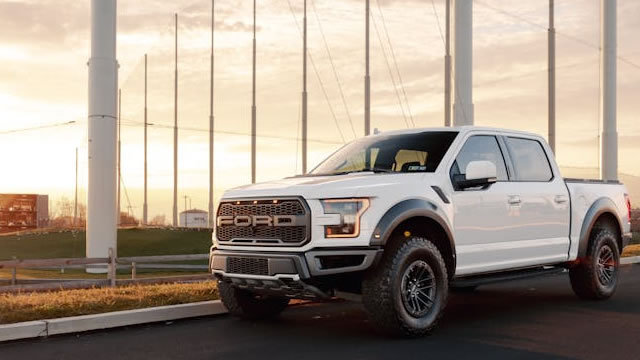
Ford sees double-digit sales growth in May, driven by trucks and SUVs
Proactiveinvestors NA· 2025-06-03 16:04
Group 1 - Proactive provides fast, accessible, informative, and actionable business and finance news content to a global investment audience [2] - The news team covers medium and small-cap markets, as well as blue-chip companies, commodities, and broader investment stories [3] - Proactive focuses on sectors such as biotech and pharma, mining and natural resources, battery metals, oil and gas, crypto, and emerging digital and EV technologies [3] Group 2 - Proactive is committed to adopting technology to enhance workflows and content production [4] - The company utilizes automation and software tools, including generative AI, while ensuring all content is edited and authored by humans [5]

特朗普做法惹怒全球?中方换了新的打法,连美铁杆盟友都不干了
Sou Hu Cai Jing· 2025-06-03 14:49
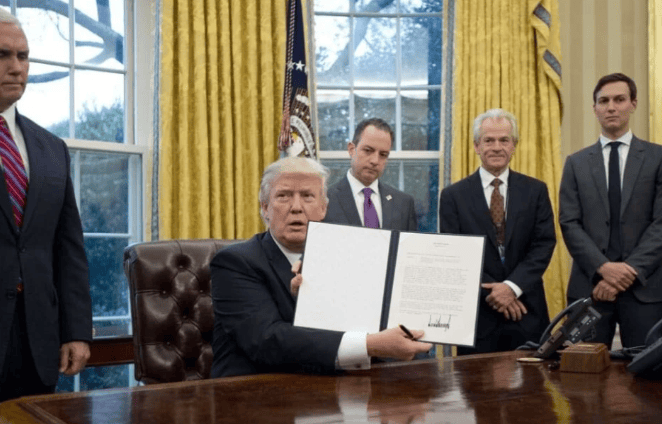
近期,美国联邦巡回上诉法院批准恢复执行特朗普的关税政策,这一消息瞬间吸引全球目光,再次将特朗普 的关税政策推至风口浪尖。 回溯特朗普的关税政策,其范围之广、力度之大令人咋舌。当地时间2月1日,特朗普签署行政令,宣布对来 自加拿大和墨西哥的进口商品征收25%的关税,对进口自中国的商品加征10%的关税;10日,又宣布对所有进 口至美国的钢铁和铝征收25%关税,后续还考虑对汽车、芯片和药品征收关税。这些举措涉及商品价值高达2 万多亿美元,远超2018年中美贸易摩擦期间。其所谓"对等关税"政策,更是企图以匹配美国和贸易伙伴进口 商品税率为借口,颠覆全球贸易现状。 特朗普(资料图) 特朗普的关税大棒挥舞之下,全球企业苦不堪言。美国本土的福特等汽车制造商,因关键汽车零部件加征 25%关税,面临额外成本和市场不稳定问题。GlobalData数据显示,汽车制造大国日本在2023年向美国出口了 148万辆汽车,汽车行业占其对美国出口总额近30%,美国此举令日本汽车行业遭受重创。不仅如此, AlixPartners预测,特朗普关税施行后,美国市场每年销售的1600万辆汽车中,近1/4将受到直接冲击,零部件 供应链也难以幸免,额外 ...

Ford reports 16% sales increase in May amid employee pricing, tariffs
CNBC· 2025-06-03 13:20
Core Insights - Ford Motor reported a 16.3% year-over-year increase in U.S. sales for May 2025, driven by an employee pricing program amidst rising tariff costs and vehicle price increases [1][2] Sales Performance - Sales of vehicles with traditional internal combustion engines increased by 17.2%, while hybrid models saw a roughly 29% jump [2] - There was a 25% decline in sales of all-electric vehicles, particularly the electric F-150, compared to May 2024 [2] - May marked the third consecutive year of double-digit sales increases for Ford, supported by the employee pricing program continuing through the Fourth of July weekend [2] Pricing Strategy - The pricing promotion was initiated as President Trump's 25% auto tariffs on imported vehicles took effect in early April [3] - Ford announced price increases on certain vehicles imported from Mexico, effective for those built after May 2, attributed to seasonal adjustments and tariff impacts [3]