Alphabet(GOOG)

Search documents
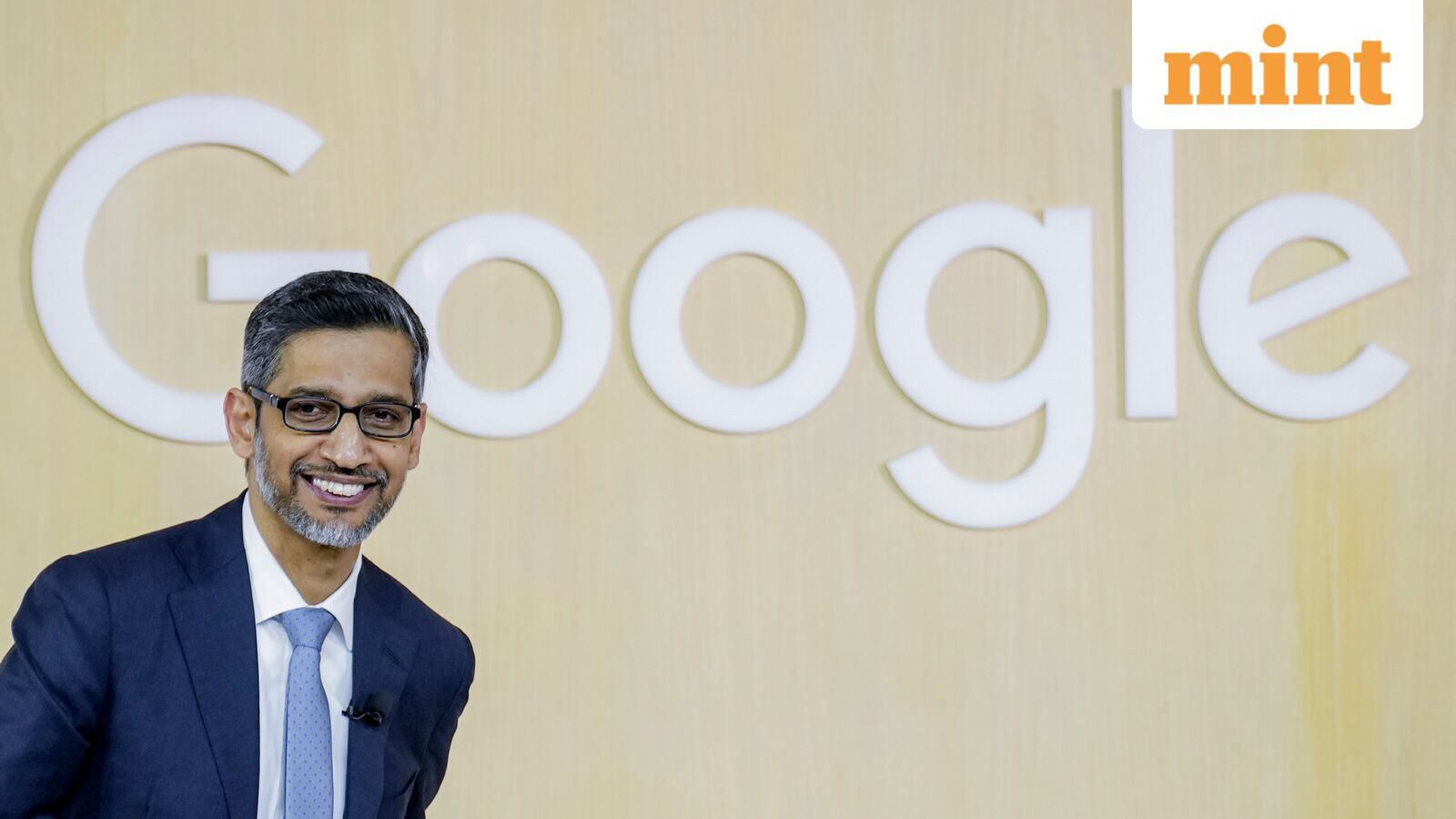
Google's Sundar Pichai gets $692 million — How his pay stacks up against other Big Tech CEOs
MINT· 2026-03-08 04:16
Core Insights - Google's CEO Sundar Pichai is set to receive a new compensation plan that could total up to $692 million over the next three years, making him one of the highest-paid CEOs globally [1][4] - Pichai's current annual salary remains at $2 million, with the majority of his compensation coming from stock options in Alphabet and its subsidiaries [4][5] - Pichai's net worth is reported to be $1.5 billion, positioning him among the wealthiest individuals in the tech industry [2] Compensation Details - The new pay structure includes a fixed salary of $6 million over three years, with $2 million per year remaining unchanged [4] - Additional compensation is expected to come from stock in Alphabet, Waymo, and Wing, with potential earnings of approximately $130 million from Waymo and $45 million from Wing [4][5] - The performance of the stock and dividends will influence the actual compensation received [5] Comparison with Other Tech CEOs - Pichai's potential earnings significantly exceed those of other major tech CEOs, such as Satya Nadella of Microsoft at $96.5 million and Tim Cook of Apple at $74.6 million [3] - Other notable compensation figures include Rick Smith of Axon at $164.5 million and Larry Culp of GE Aerospace at $87.4 million, highlighting the competitive landscape of executive pay in the tech sector [3]



48小时“烧光”56万!三人创业团队濒临破产,仅因Gemini API密钥被盗:“AI账单远超我们的银行余额”
猿大侠· 2026-03-08 04:12
Core Viewpoint - A small Mexican startup faced a catastrophic financial crisis when their Google Cloud API key was stolen, leading to an astronomical bill of $82,314.44 in just 48 hours, a staggering increase of nearly 46,000% from their usual monthly expense of approximately $180 [1][5]. Group 1: Incident Description - The developer RatonVaquero reported that their Google Cloud API key was leaked between February 11 and 12, although the exact method of the leak remains unknown [4]. - An unknown attacker exploited the stolen key to make excessive calls to the Gemini 3 Pro API, resulting in a bill that was approximately 455 times higher than their normal expenses [5]. - The startup's team took immediate action by deleting the compromised API key, disabling related interfaces, changing all access credentials, and implementing two-factor authentication [5][6]. Group 2: Response from Google - The startup reached out to Google Cloud for support, but the response was not encouraging. Google referred to the "Shared Responsibility Model," indicating that users are responsible for managing their keys and accounts [7]. - RatonVaquero expressed concern that even a partial payment of the bill could lead to the company's bankruptcy, as they are a small team struggling to maintain operations [7][10]. Group 3: Security Concerns - RatonVaquero raised questions about the lack of basic anomaly protection mechanisms within Google Cloud, noting that the sudden spike in expenses should have triggered automatic safeguards [9]. - The incident highlighted a broader issue, as research indicated that at least 2,863 Google API keys, originally intended for billing identification, could be misused for Gemini API authentication [11]. - Truffle Security pointed out that the root of the problem lies in Google Cloud's use of the same API key format for different purposes, leading to potential security vulnerabilities [15]. Group 4: Default Configurations and Vulnerabilities - The default configuration for newly created API keys is "unrestricted," allowing immediate access to all enabled APIs, including sensitive ones like Gemini, which poses significant security risks [24]. - Attackers can easily exploit publicly available API keys, leading to unauthorized access and potentially crippling financial consequences for the key owners [25]. Group 5: Ongoing Issues and Community Reactions - Despite previous disclosures about the vulnerabilities, Google initially dismissed the concerns as expected behavior until further evidence prompted a reevaluation [27]. - The developer community has engaged in discussions regarding the incident, with some speculating on the role of automated coding tools in key leaks, while others emphasize the importance of persistent communication with Google for resolution [30].

一键接入OpenClaw,谷歌开源CLI狂揽15k Stars,Agent开始接管Workspace
机器之心· 2026-03-08 04:08
Core Viewpoint - The article discusses the launch and popularity of Google's new Command Line Interface (CLI) for Google Workspace, which integrates various Google services and facilitates automation for AI agents, particularly highlighting its compatibility with OpenClaw [2][4]. Group 1: Google Workspace CLI Overview - Google has released a new CLI tool that consolidates APIs for Google Drive, Gmail, Calendar, and more into a single command-line interface, making it easier for both developers and AI agents to interact with Google Workspace [2][4]. - The project has gained significant traction, receiving 15,000 stars on GitHub shortly after its release, indicating strong community interest and engagement [3]. Group 2: Features and Benefits - The CLI provides a user-friendly experience by eliminating the need for developers to manually write API requests, offering built-in help information and support for previewing requests [4]. - It returns all results in structured JSON format, which is beneficial for AI agents, allowing them to manage Google Workspace without additional tools [4][6]. - The CLI includes over 100 built-in Agent Skills, covering various Google applications and providing high-level skills for common workflows [6][8]. Group 3: Installation and Setup - The CLI can be easily installed via npm, with precompiled binaries available for different operating systems, eliminating the need for a Rust toolchain [10]. - Users need Node.js version 18 or higher and a Google Cloud project to obtain OAuth credentials for setup [12].
人工智能行业专题:2025年度海外大厂CapEx和ROIC总结梳理
Guoxin Securities· 2026-03-08 02:45
Investment Rating - The investment rating for the artificial intelligence industry is "Outperform" [1] Core Insights - The capital expenditures (CapEx) and return on invested capital (ROIC) of major cloud companies have shown significant growth, indicating an acceleration in downstream cloud demand. Companies like Microsoft, Meta, Amazon, and Google have all reported year-on-year and quarter-on-quarter increases in CapEx and revenue growth [2][57] - The overall ROIC for major players has increased due to revenue and profit growth, although net profit growth has slowed down, affecting the quarter-on-quarter ROIC performance [2][58] Summary by Sections Capital Expenditures and Performance Review - In Q4 2025, Microsoft reported a CapEx of $37.5 billion, a year-on-year increase of 65.9% and a quarter-on-quarter increase of 7.5%, primarily for GPU and CPU purchases to meet AI infrastructure needs [8][6] - Meta's Q4 2025 CapEx reached $22.1 billion, up 49.17% year-on-year and 14.26% quarter-on-quarter, mainly for server and data center investments [21][19] - Google's Q4 2025 CapEx was $27.85 billion, reflecting a 95.1% year-on-year increase and a 16.3% quarter-on-quarter increase, with significant investments in servers and data centers [32][30] - Amazon's Q4 2025 CapEx was $39.5 billion, a 50.2% year-on-year increase and a 12.9% quarter-on-quarter increase, focusing on AWS-related investments [46][43] Revenue and Profit Analysis - Microsoft achieved revenue of $81.27 billion in Q4 2025, a 16.7% year-on-year increase, with Azure cloud revenue growing by 39% [15][9] - Meta's Q4 2025 revenue was $59.893 billion, up 23.78% year-on-year, driven by advertising revenue growth [25][22] - Google's Q4 2025 revenue reached $113.83 billion, a 16.0% year-on-year increase, with Google Cloud revenue growing by 47.8% [37][34] - Amazon reported Q4 2025 revenue of $213.49 billion, a 13.63% year-on-year increase, with AWS revenue growing by 24% [49][47] Profitability Metrics - Microsoft reported a net profit of $38.46 billion in Q4 2025, a 59.5% year-on-year increase, with a significant contribution from its cloud services [15][12] - Meta's net profit for Q4 2025 was $22.768 billion, a 9.26% year-on-year increase, with advertising revenue driving profitability [25][24] - Google's net profit in Q4 2025 was $34.46 billion, a 29.8% year-on-year increase, supported by strong performance in its cloud and advertising segments [37][36] - Amazon's net profit for Q4 2025 was $21.2 billion, a 5.94% year-on-year increase, with AWS and advertising business contributing significantly [49][50]



人工智能行业专题:2025年度海外大厂CapEx和ROIC总结梳理-20260308
Guoxin Securities· 2026-03-08 02:29
Investment Rating - The report maintains an "Outperform" rating for the AI industry [1] Core Insights - The capital expenditures (CapEx) and return on invested capital (ROIC) of major cloud companies are on the rise, reflecting accelerated demand for cloud services driven by AI applications [2] - Major companies like Microsoft, Meta, Amazon, and Google have shown significant growth in both CapEx and revenue, indicating a robust market outlook for AI and cloud services [2] - The overall ROIC for these companies has increased, driven by revenue and profit growth, although there are fluctuations in quarterly performance [2][58] Summary by Sections Capital Expenditures and Performance Review - In Q4 2025, Microsoft reported a CapEx of $37.5 billion, a year-on-year increase of 65.9% and a quarter-on-quarter increase of 7.5%, primarily for AI infrastructure [8][15] - Meta's Q4 2025 CapEx reached $22.1 billion, up 49.17% year-on-year, reflecting investments in servers and data centers [21][25] - Google's Q4 2025 CapEx was $27.85 billion, a 95.1% increase year-on-year, with significant investments in servers and data centers [32][36] - Amazon's Q4 2025 CapEx was $39.5 billion, a 50.2% increase year-on-year, focusing on AWS and customized chips [46][49] Revenue and Profit Analysis - Microsoft achieved revenue of $81.27 billion in Q4 2025, a 16.7% year-on-year increase, with Azure cloud revenue growing by 39% [15][57] - Meta's Q4 2025 revenue was $59.893 billion, a 23.78% increase year-on-year, driven by advertising revenue growth [25][26] - Google's Q4 2025 revenue reached $113.83 billion, a 16.0% increase year-on-year, with Google Cloud revenue growing by 47.8% [37][57] - Amazon reported Q4 2025 revenue of $213.49 billion, a 13.63% increase year-on-year, with AWS revenue growing by 24% [47][49] Profitability Metrics - Microsoft reported a net profit of $38.46 billion in Q4 2025, a 59.5% year-on-year increase [15] - Meta's net profit for Q4 2025 was $22.768 billion, a 9.26% increase year-on-year [25] - Google's net profit reached $34.46 billion in Q4 2025, a 29.8% increase year-on-year [37] - Amazon's net profit was $21.2 billion in Q4 2025, a 5.94% increase year-on-year [49] ROIC Trends - The overall ROIC for major cloud companies has increased, with Microsoft and Meta showing significant year-on-year growth in Q4 2025 [58]
Tango Therapeutics (TNGX) Soars 52% on Buy Reco
Insider Monkey· 2026-03-08 01:20
Core Insights - Generative AI is viewed as a transformative technology by Amazon's CEO Andy Jassy, indicating its potential to significantly enhance customer experiences across the company [1] - Elon Musk predicts that by 2040, humanoid robots could create a market worth $250 trillion, representing a major shift in the global economy driven by AI innovation [2][3] - Major firms like PwC and McKinsey acknowledge the multi-trillion-dollar potential of AI, suggesting a broad consensus on its economic impact [3] Company and Industry Analysis - A breakthrough in AI technology is redefining work, learning, and creativity, leading to increased interest from hedge funds and top investors [4] - There is speculation about an under-owned company that may play a crucial role in the AI revolution, with its technology posing a threat to competitors [4][6] - Prominent figures in technology and investment, including Bill Gates and Warren Buffett, recognize AI as a significant advancement with the potential for substantial social benefits [8]



X @TechCrunch
TechCrunch· 2026-03-08 00:23
Google just gave Sundar Pichai a $692M pay package https://t.co/2mJkZYRhiX ...

Google just gave Sundar Pichai a $692M pay package
TechCrunch· 2026-03-08 00:20
Compensation Package - Sundar Pichai's new pay package could be worth $692 million, structured as a three-year deal with performance-based incentives [1] - The compensation includes new stock incentives linked to Waymo and Wing, Alphabet's drone delivery venture [1] Public Perception - Pichai attracts less public fascination compared to Google's founders, Larry Page and Sergey Brin, who have been in the news for their real estate purchases [2] - Page and Brin are among the richest individuals globally, with Page spending over $173 million on two mansions and Brin linked to a $51 million property [2] Personal Wealth - Pichai has seen significant personal wealth growth due to Google's market cap increase since he became CEO in 2015, with his and his wife's shares valued at nearly $500 million [3] - An estimated $650 million worth of shares has been sold by Pichai as of last summer, according to Bloomberg [3]

The Best "Magnificent Seven" Stocks to Buy in March
The Motley Fool· 2026-03-07 23:06
Group 1: Overview of the Magnificent Seven - The "Magnificent Seven" stocks have been market leaders and are among the top 10 largest companies globally [1] - Past performance does not guarantee future success, raising questions about which stocks will continue to perform well [1] Group 2: Individual Stock Analysis - Tesla is currently down about 18% from its all-time highs, but it is not considered a strong buy at this moment [3] - Apple has struggled to launch significant AI products and relies heavily on past revenue, making it less appealing for investment [5] - Nvidia, Microsoft, Meta Platforms, and Amazon are identified as strong buy opportunities in March [6] Group 3: Valuation and Performance - Nvidia, Microsoft, and Meta are trading at valuations similar to the S&P 500, despite growing faster than the market average [9][10] - Alphabet and Amazon are trading at premium valuations of 27 times forward earnings, justified by their strong performance and growth potential [11][12] - Amazon's AWS has shown significant growth, with its best quarter in over three years, indicating strong demand [14] Group 4: Future Outlook - Alphabet is emerging as a leader in generative AI, with its AI model, Gemini, gaining popularity and driving growth in its cloud computing segment [12] - Amazon's AI strategy is proving effective, with its custom chip business experiencing triple-digit revenue growth [14] - Microsoft, Meta, and Nvidia are seen as offering more value compared to Amazon and Alphabet, despite the latter's premium valuations [15]


Alphabet Owns 8.9 Million Shares of This Hot Space Stock. Is It a Buy?
The Motley Fool· 2026-03-07 23:05
Core Viewpoint - Alphabet, the parent company of Google and YouTube, has a significant investment arm focusing on high-growth sectors including AI, healthcare, infrastructure, and space [1] Investment in AST SpaceMobile - Alphabet's largest public stock investment is in AST SpaceMobile, holding 8.9 million shares valued at $903 million [2] - AST SpaceMobile is an early-stage satellite company transitioning from R&D to commercial operations, aiming to create a global cellular-broadband network in low Earth orbit [3] Investment Details - Alphabet initially invested in AST SpaceMobile through convertible notes in early 2024, alongside AT&T and Vodafone, with a conversion price of $5.75 per share [4] - The company converted these notes into nearly 26 million shares when the stock price exceeded 130% of the conversion price for 30 days, with Alphabet retaining 8.9 million shares [5] Contracts and Partnerships - AST SpaceMobile has secured contracts with 50 mobile operators serving 3 billion subscribers and significant contracts with the U.S. government, including a $43 million contract with the Space Development Agency [7] Future Plans - The company plans to deploy a satellite constellation for continuous coverage in the U.S., Europe, and Japan, aiming for 45 to 60 satellites in orbit by the end of the year [8] - Currently, six BlueBird satellites have been deployed, with plans for a total of 90 to 100 satellites in low Earth orbit [9][10] Financial Position - AST SpaceMobile had nearly $2.8 billion in cash and equivalents at the end of last year and raised an additional $1 billion in February [11] - Analysts project revenue of $178 million for this year, increasing to $805 million in 2027 and $2 billion by 2028, with expectations of profitability by 2028 [12][13] Stock Valuation - AST SpaceMobile's stock trades at 155 times this year's projected sales and around 81 times projected 2028 earnings, indicating a high valuation [14]