Alphabet(GOOGL)

Search documents
2 Unstoppable AI Stocks That Warren Buffett and Berkshire Hathaway Own
The Motley Fool· 2025-12-28 10:30
Core Viewpoint - Alphabet and Amazon are identified as strong investment opportunities, particularly in light of their potential growth in 2026, despite differing performances in 2025 [2][6]. Group 1: Company Performance - Alphabet's stock increased by approximately 60% in 2025, overcoming initial doubts regarding its capabilities in artificial intelligence and concerns about potential monopoly issues [6][7]. - Amazon's revenue grew by 13% in the third quarter, with its cloud computing unit, Amazon Web Services (AWS), accounting for 66% of operating income despite only representing 18% of total revenue [10][11]. Group 2: Investment Insights - Berkshire Hathaway's portfolio includes Alphabet, which makes up about 1.7% of its total holdings, and Amazon, which constitutes 0.7% [5]. - The performance of Alphabet in 2025 suggests continued dominance in generative AI, potentially leading to new revenue streams in 2026 [8][9]. - Amazon's AWS has shown its fastest growth quarter in several years, indicating a strong rebound potential for the company in 2026 [11].




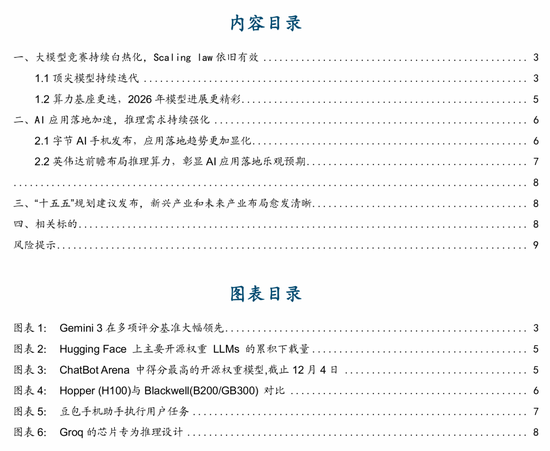
国金证券:一切仍然指向算力
Xin Lang Cai Jing· 2025-12-28 09:41
Group 1: Industry Insights - The competition in large models remains intense, with the Scaling Law still effective. Google's Gemini 3 has made significant advancements in foundational reasoning and multimodal capabilities, while OpenAI's GPT-5.2 emphasizes the potential of large models in creating economic value [1][11][14] - Meta is actively developing two heavyweight AI models, Mango for image and video processing, and Avocado to enhance programming capabilities, indicating a strong commitment to AI development [1][15] - The Chinese open-source model DeepSeek-V3.2 is approaching the performance of top closed-source models, showcasing innovations in sparse attention (DSA), high post-training ratios, and large-scale synthetic data [1][16][18] Group 2: AI Application Acceleration - ByteDance released the Doubao AI mobile assistant, which allows for cross-application autonomous operations, marking a significant evolution in mobile interaction methods [2][26] - The daily token usage of the Doubao model surged from over 16.4 trillion in May 2025 to over 50 trillion by December 2025, reflecting a rapid increase in inference demand [2][28] - NVIDIA's collaboration with Groq, a startup specializing in inference chips, highlights a strategic move towards enhancing inference capabilities while maintaining its dominance in training power [2][29][30] Group 3: Policy and Future Industry Layout - The "14th Five-Year Plan" emphasizes support for strategic emerging industries such as aerospace, quantum technology, and AI, indicating a clear direction for future industrial development [3][42] - The plan also calls for proactive infrastructure development, including information communication networks and integrated computing networks, reinforcing the importance of computational power in the AI era [3][42] Group 4: Related Companies - Key players in computing power include Cambrian, Haiguang Information, and Zhongke Shuguang, among others, indicating a diverse landscape of companies involved in AI and computing infrastructure [4][43] - Companies involved in AI agents include Google, Alibaba, Tencent, and others, showcasing a broad spectrum of firms engaged in AI development [5][44] - In the autonomous driving sector, companies like Jianghuai Automobile and Xiaopeng Motors are notable participants, reflecting the industry's growth [6][45]




美国“创世纪”决战打响!24科技巨头签下“卖身契”,中国如何应对?
商业洞察· 2025-12-28 09:28
Group 1 - The core viewpoint of the article is that the "Genesis Project," led by the U.S. Department of Energy, represents a significant strategic initiative aimed at enhancing foundational scientific research efficiency, particularly in areas like nuclear fusion and quantum computing [3][9][10] - The project has garnered participation from 24 major tech companies, including Microsoft, Google, and NVIDIA, indicating a rare collaboration among competitors to address long-term scientific challenges [5][12] - The initiative is seen as a shift from corporate-level competition to a national-level scientific ecosystem, raising questions about the feasibility of collaboration among historically rival companies [6][7][10] Group 2 - The "Genesis Project" aims to integrate AI capabilities into national research systems to shorten research cycles and improve efficiency in foundational science [10][12] - The U.S. Department of Energy's leadership in this project is attributed to its control over significant computational resources and strategic research data, essential for tackling complex scientific challenges [13][14] - The article contrasts the U.S. initiative with China's technological ambitions, suggesting that while both may be seen as "Manhattan Projects," the U.S. approach is more open and market-driven [16][18] Group 3 - Successful execution of the "Genesis Project" requires overcoming significant challenges, including aligning the diverse corporate cultures and technical approaches of participating companies [22][26] - The project faces scrutiny from capital markets, which demand short-term results, while the goals of nuclear fusion and quantum computing typically require long-term investment [26][27] - Political stability is crucial for the project's success, as shifts in government priorities could jeopardize long-term scientific endeavors [27][28]



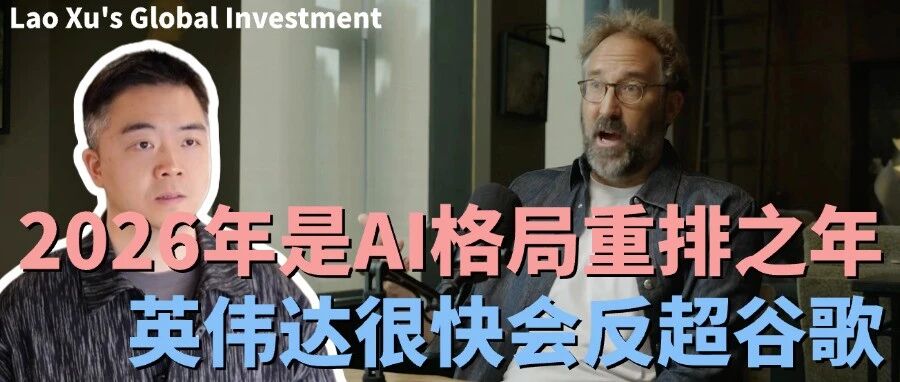
哈佛老徐:2026年是AI格局重排之年,英伟达很快会反超谷歌
老徐抓AI趋势· 2025-12-28 08:45
Core Viewpoint - The article discusses the evolving landscape of AI and computing power, emphasizing that while Google's TPU has gained temporary advantages, NVIDIA's upcoming Blackwell architecture is expected to reclaim dominance in the AI model training space by 2026 [4][6][7]. Group 1: Google's TPU and NVIDIA's Blackwell - Google's TPU has recently outperformed competitors with its Gemini 3 model, leading to speculation about the end of NVIDIA's dominance [6]. - Gavin Baker argues that the advantages of Google's TPU are temporary, as NVIDIA's Blackwell architecture has not yet been fully deployed [6]. - The transition from NVIDIA's H200 to Blackwell represents a significant leap in performance, necessitating extensive infrastructure changes [6][7]. Group 2: Predictions for 2026 - The first quarter of 2026 is predicted to be a turning point in the AI landscape, with the potential emergence of leading models utilizing Blackwell technology [7][8]. - Key indicators to watch for include the performance of Grok5, advancements from OpenAI and Anthropic, and the widening gap between companies that adopt Blackwell technology and those that do not [8][10]. Group 3: AI Monetization - Contrary to the belief that AI is a high-cost, low-return investment, the first non-tech Fortune 500 company has begun to see quantifiable benefits from AI implementation [11][12]. - The case of CH Robinson illustrates how AI can enhance revenue by automating processes rather than merely reducing costs, shifting the focus from cost-cutting to revenue generation [12][16]. Group 4: Future of Computing Infrastructure - The article posits that future computing power centers should be established in space rather than on Earth, due to advantages in energy efficiency, cooling costs, and transmission speeds [18][19][21]. - Space-based computing centers can leverage constant solar energy, reduce cooling costs, and utilize faster transmission methods, making them a more optimal solution for future AI needs [19][21][23]. Group 5: Strategic Implications - Companies like Tesla, SpaceX, and xAI are positioned to create a synergistic ecosystem that enhances their competitive advantages in AI and computing [27]. - The article suggests that the next two decades will be defined by AI and computing advancements, with significant opportunities for those who can recognize and act on emerging trends [28][30].
马斯克评宇树机器人「下黑脚」/OpenAI联创:从未感到如此落后/围棋比赛选手戴AI眼镜引争议|Hunt Good周报
Sou Hu Cai Jing· 2025-12-28 07:28
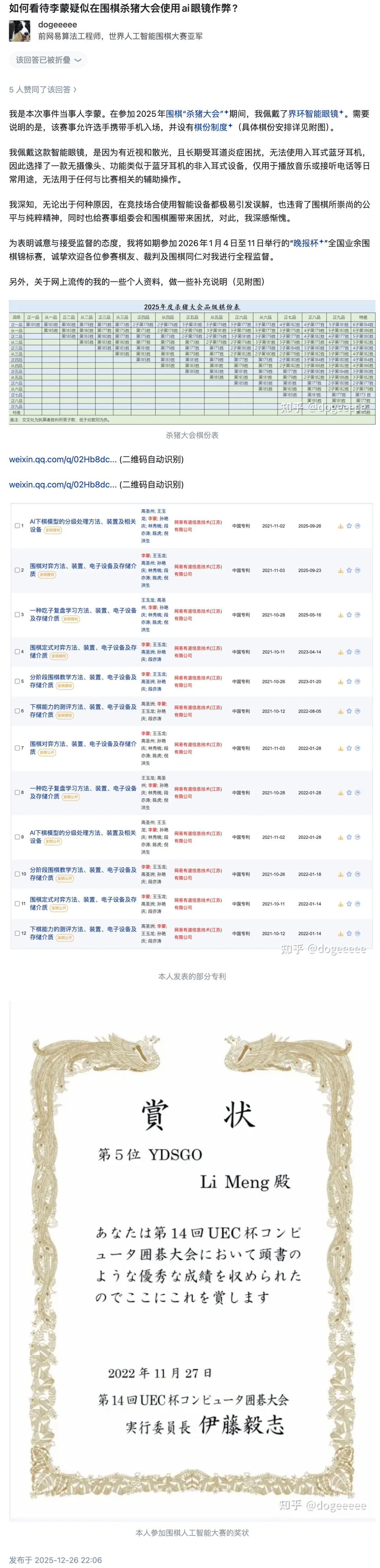
Group 1 - Elon Musk commented on the Chinese robot, UTree's G1 humanoid robot, which unexpectedly kicked a test engineer during a demonstration, leading to viral attention on social media [1][2] - The eighth "Pig Killing Conference" Go tournament raised controversy when amateur player Li Meng was found wearing AI glasses, leading to accusations of cheating after winning against several professional players [2][12] - The Beijing Economic-Technological Development Area announced a humanoid robot half marathon scheduled for April 19, 2026, featuring both autonomous navigation and remote control categories [12][13][15] Group 2 - OpenAI acknowledged that its AI browser, Atlas, is vulnerable to prompt injection attacks, which can manipulate the AI to execute hidden commands, such as sending resignation emails [16][17] - The market share of generative AI tools is shifting, with ChatGPT's share dropping to 68% from 87.2% a year ago, while Google's Gemini has surged to 18.2% [17][20] - Microsoft CEO Satya Nadella has taken a hands-on approach to improve the Copilot AI assistant, expressing dissatisfaction with its performance compared to competitors [21][23] Group 3 - Joshua Bengio, a Turing Award winner, expressed concerns about AI risks, emphasizing the need for responsible development and the potential dangers of AI systems resisting shutdowns [42][44] - Former Tesla AI director Andrej Karpathy highlighted the significant transformation in the programming profession due to AI advancements, suggesting that programmers must adapt to new tools and methodologies [45][48] - Leonardo DiCaprio discussed the impact of AI on filmmaking, asserting that while AI can enhance creativity, true artistry must originate from human experience [50]


第一批拿 12.8 万月薪的实习生已经出现!AI 人才抢夺战真的好激烈
程序员的那些事· 2025-12-28 04:18
Core Insights - The article highlights the significant increase in salaries for AI-related internships and short-term research positions, with monthly salaries reaching approximately 14,000 RMB, which is comparable to full-time research roles [1][2]. Group 1: Salary Trends - AI internships and research positions now offer monthly salaries in the range of 7,000 to 18,000 USD, equivalent to about 49,000 to 126,000 RMB [1]. - OpenAI's six-month residency program offers a monthly salary of approximately 18,300 USD (about 128,000 RMB), with potential for participants to transition to full-time roles [8][9]. - Anthropic's AI Safety Fellow program provides a weekly stipend of 3,850 USD (around 27,000 RMB) and monthly access to computational resources valued at 15,000 USD (approximately 105,000 RMB) [14][15]. - Google's Student Researcher program offers annual salaries ranging from 113,000 to 150,000 USD (approximately 790,000 to 1,050,000 RMB), indicating a shift away from traditional internship compensation [17][18]. - Meta's Research Scientist Intern program has a monthly salary range of 7,650 to 12,000 USD, reflecting the overall trend of increasing compensation for AI internships [19]. Group 2: Industry Competition - Major tech companies are competing aggressively for AI talent, with significant investments in internship and research programs [3][4]. - The competition has extended to students and early-career researchers, indicating a shift in how companies view and recruit talent [3][4]. - Domestic companies like ByteDance, Tencent, and Alibaba are also increasing their investment in AI talent, with Tencent planning to add 28,000 internship positions over three years, focusing heavily on technical roles [29][30][33]. Group 3: Talent Acquisition Strategies - Companies are seeking candidates with verifiable research output capabilities, emphasizing the importance of published papers and innovative methodologies [36][37]. - The design of these short-term projects often mimics full-time roles, allowing companies to assess candidates' performance in a high-pressure environment [42][45]. - The trend indicates that internships are evolving into a method for companies to cultivate and secure top talent, rather than merely filling temporary roles [46][48].



第一批拿12.8万月薪的实习生已经出现!AI人才抢夺战真的好激烈
创业邦· 2025-12-28 03:08
Core Insights - The article highlights the significant increase in salaries for AI-related internships and short-term research positions, with monthly pay reaching approximately 14,000 RMB, equivalent to 7,000–18,000 USD, or about 4.9-12.6 million RMB annually [2][3][4] Salary Trends - Interns and student researchers are now earning salaries comparable to full-time research positions, particularly in Silicon Valley [4] - OpenAI's 6-month residency program offers a monthly salary of around 18,300 USD (approximately 128,000 RMB), with potential for full-time employment post-program [6] - Anthropic's AI Safety Fellow program provides a weekly stipend of 3,850 USD (about 27,000 RMB) and monthly computational support worth 15,000 USD (approximately 105,000 RMB) [7] - Google's Student Researcher program offers annual salaries ranging from 113,000 to 150,000 USD (approximately 790,000 to 1,050,000 RMB), targeting PhD students [8] Domestic Market Trends - The trend of increasing salaries and expanding opportunities for AI internships is also evident in China, with companies like ByteDance, Tencent, and Alibaba enhancing their internship programs [10][12] - ByteDance recently awarded scholarships to 20 PhD students, doubling the amount to 100,000 RMB in cash and academic funding [10] - Tencent plans to add 28,000 internship positions over three years, with a focus on technical roles, reflecting the growing demand for AI talent [12] Talent Acquisition Strategies - Companies are seeking candidates with proven research output capabilities, emphasizing the importance of independent problem-solving and long-term commitment to complex issues [14][15] - The short-term projects are designed to assess candidates' performance in high-intensity environments, with the goal of identifying potential future core researchers or technical leaders [17] - This approach allows companies to invest in talent early, creating a hidden elite selection mechanism, which may pose challenges for startups with limited resources [17]

研究发现YouTube新用户推荐内容中逾两成是低质量AI视频
Xin Lang Cai Jing· 2025-12-28 02:57
Core Insights - Over 20% of videos recommended to new YouTube users are classified as "AI Slop," which refers to low-quality, clickbait-driven AI-generated content [1] Group 1: Research Findings - A study conducted by video editing company Kapwing analyzed 15,000 popular YouTube channels globally, identifying 278 channels that exclusively produce "AI Slop" content [1] - These identified channels have accumulated a total of 63 billion views and 221 million subscribers, generating an estimated annual revenue of approximately $117 million [1] Group 2: User Experience - A new account created by researchers revealed that out of the first 500 recommended videos, 104 were categorized as "AI Slop," indicating a significant presence of low-quality content aimed at attracting user attention for monetization [1]
Have $2,000? 3 Artificial Intelligence (AI) Stocks to Buy and Hold for at Least a Decade.
The Motley Fool· 2025-12-28 02:30
Industry Overview - The AI revolution presents numerous investment opportunities and potential for significant economic transformation and productivity enhancements [1] - Companies of all sizes are heavily investing in AI research and infrastructure to remain competitive in the global technology landscape [1][2] Institutional Support - Strong institutional support is anticipated to accelerate the development and adoption of AI technologies, creating a stable environment for AI-focused businesses [2] Investment Recommendations - For investors with $2,000, three AI stocks are recommended for long-term holding [3] Company Analysis: Alphabet - Alphabet has a comprehensive AI ecosystem, including proprietary AI chips (TPUs), foundational models (Gemini), and a robust cloud platform, which provide competitive advantages [5][6] - TPUs are specifically designed for AI tasks, enhancing efficiency and reducing costs in AI training and inference [6] - Alphabet's ability to develop its own silicon allows for greater control over AI development and positions it as a significant player in the AI hardware market [7] - The company utilizes user interaction data from its platforms to refine AI models, boosting its core revenue-generating business, Google Search [9][10] - Alphabet reported a 33% increase in net income in Q3, demonstrating strong financial health and ongoing investment in AI infrastructure [11] Company Analysis: SoundHound - SoundHound specializes in voice and conversational AI solutions, enabling businesses to integrate customized voice assistants [12] - The company has diversified its client base beyond the automotive sector into industries like restaurants and customer service [13][14] - SoundHound's Q3 2025 revenue reached $42 million, a 68% increase year-over-year, although it has not yet posted an annual profit [15] - The company has a significant contractual backlog of approximately $1.2 billion, indicating potential future growth [16] - SoundHound offers customizable solutions that allow businesses to maintain brand control and data privacy, differentiating it from larger tech competitors [17] Company Analysis: Amplitude - Amplitude is a digital analytics platform that leverages AI to enhance user experience and drive revenue growth [18] - The company reported Q3 2025 results with annual recurring revenue (ARR) of $347 million, up 16% year-over-year, and remaining performance obligations (RPO) of $391.9 million, up 37% year-over-year [20] - Amplitude employs a freemium software-as-a-service model, acquiring customers through a free tier and scaling revenue as they adopt more features [21] - The company has over 4,500 customers, with a 15% year-over-year increase in customers generating $100,000 or more in ARR [22] - Although still posting a GAAP net loss, Amplitude is cash-flow positive and anticipates achieving non-GAAP operating income for the full year 2025 [23]



AI在2025年捧出50+新亿万富翁,有人才22岁
3 6 Ke· 2025-12-28 01:19
henry 发自 凹非寺量子位 | 公众号 QbitAI 2025年的AI,真·八方来财。 福布斯最新数据显示,仅今年一年,AI产业就捧出了50多位新晋亿万富翁。 福布斯最新数据 其中,数据标注公司SurgeAI的CEO Edwin Chen以180亿美元净资产居首;凭借DeepSeekR1在年初搅动硅谷的梁文锋,也已站上115亿美元的财富高点。 然而,新钱喷涌的同时,老钱们并未退场。 今年,马斯克的净资产同比增长近50%,升至6450亿美元;谷歌创始人拉里·佩奇与谢尔盖·布林,则凭借公司在AI方向上的强势反弹,分别位列硅谷富豪 榜第二、第四,过去一年财富增长均接近60%。 黄仁勋与马斯克 更广泛来看,AI还吸走了全球创投市场近一半的融资。 所以,先甭管康波不康波,这轮AI浪潮,至少在"钱"这一块已经是完全到位了。 新钱已就位 据Crunchbase数据,今年投资者向AI领域投入了超过2023亿美元,其中约50%流向初创公司,比2024年增长了16%。 Crunchbase数据 这些资金覆盖了整个AI生态——从基础模型、AI Infra、应用开发和人才争夺,同时也塑造了一批新的亿万富翁。 在基础模型赛道,De ...