JP MORGAN CHASE(JPM)

Search documents
Wall Street Lunch: JPMorgan To Take Over Apple Card From Goldman Sachs (undefined:JPM)
Seeking Alpha· 2026-01-08 19:16
Group 1: JPMorgan Chase and Apple Card Acquisition - JPMorgan Chase has agreed to acquire the Apple credit card program from Goldman Sachs, enhancing its position in consumer credit [5][6] - The Apple Card, which has approximately $20 billion in balances, will continue to offer key features such as 3% cash back and a high-yield savings account until the deal closes in about two years [6] - This acquisition reinforces JPMorgan's dominance in the credit card market, as it was the top U.S. issuer in 2024 with over $1.344 trillion in purchase volume [7] Group 2: Goldman Sachs Earnings Impact - Goldman Sachs anticipates that the acquisition will contribute approximately $0.46 per share to its Q4 2025 earnings [7] Group 3: Costco and Tariffs - Costco Wholesale is experiencing a rally following a strong December sales report, with expectations of a favorable resolution on tariffs potentially coming soon [8] Group 4: Snowflake Stock Upgrade - Snowflake has seen an increase in stock value after Argus Research upgraded it to Buy from Hold, setting a price target of $300, citing its importance for enterprises in generative and agentic AI applications [9] Group 5: BlackRock and Blackstone Clarification - BlackRock is mistakenly associated with large-scale single-family rental ownership, but it does not purchase or own single-family rental homes; this is primarily the domain of Blackstone [10][11] Group 6: January Stock Performance Insights - BofA notes that lower-quality stocks have historically outperformed higher-quality stocks in January, with a significant trend observed since 1987 [12] - The analysis highlights that funds are entering January with elevated quality exposure, while low-quality stocks that are underweight in long-only funds but rated Buy by BofA analysts include Amcor, Camden Property Trust, Healthpeak Properties, Devon Energy, and Hasbro [13]



JPMorgan to Leverage AI Solutions, Will Abandon Reliance on Proxy Advisory Firms
Crowdfund Insider· 2026-01-08 18:56
Core Viewpoint - JPMorgan Chase has decided to discontinue its reliance on third-party proxy advisory firms, opting for an in-house artificial intelligence solution to enhance efficiency and customization in proxy voting [1][5]. Group 1: Proxy Advisory Industry Context - Proxy advisors like Institutional Shareholder Services (ISS) and Glass Lewis have historically guided institutional investors on corporate governance matters, influencing trillions in investments [2]. - The proxy advisory industry is under scrutiny, with the Federal Trade Commission (FTC) investigating potential anticompetitive practices and conflicts of interest due to market concentration [4]. Group 2: JPMorgan's Strategic Shift - CEO Jamie Dimon has criticized proxy advisors for their "one-size-fits-all" approaches, which often overlook company-specific contexts [3]. - JPMorgan's move to internalize proxy voting processes is seen as a pioneering step, making it the first major investment bank to sever ties with external proxy services [5]. Group 3: Proxy IQ and AI Implementation - JPMorgan is developing Proxy IQ, a custom-built AI platform designed to manage the proxy voting process and analyze data from over 3,000 corporate meetings annually [6]. - The AI platform utilizes machine learning algorithms to process complex governance documents and financial reports, providing real-time recommendations tailored to JPMorgan's investment strategies [7]. Group 4: Industry Implications and Future Trends - The shift towards in-house AI solutions may prompt other financial institutions to reassess their reliance on external proxy advisory services, potentially disrupting the $2 billion proxy advisory market [9]. - This transition reflects a broader trend in finance where AI is increasingly used to enhance operations, reduce costs, and minimize biases associated with external firms [8].
JPMorgan expands blockchain goals, plans to build ‘interoperable digital money’
Yahoo Finance· 2026-01-08 18:26
Core Viewpoint - JPMorgan aims to create a "regulated, interoperable digital money" through its JPM Coin, facilitating secure and near-instant transactions across financial markets [1] Group 1: JPM Coin Development - JPMorgan plans to expand JPM Coin beyond the Ethereum Layer 2 network, Base, to include Digital Asset's Canton Network and other blockchain platforms, aiming for a multichain settlement system for institutional payments [2] - The introduction of JPM Coin on multiple blockchain networks is intended to establish a foundation for regulated digital money, allowing institutions on Canton to transact with JPM Coin securely and instantly [3] Group 2: Operational Details - JPM Coin functions as a deposit token representing U.S. dollar deposits at JPMorgan, enabling institutional clients to make payments using a digital token on distributed ledgers [3] - Currently, JPM Coin is available to institutional clients on Base, allowing secure and near-instant value transfers, but only to whitelisted wallet addresses to ensure compliance [4] - Unlike JPMorgan's private Kinexys network, JPM Coin operates entirely on public blockchain infrastructure, recording transactions directly on-chain [5][6] Group 3: Use Cases and Benefits - The bank's Kinexys Digital Payments network allows institutional clients to conduct cross-border foreign exchange payments, enhancing efficiency and reliability in multi-currency transactions [5][6] - For instance, Siemens utilizes Blockchain Deposit Accounts for near-instant USD-to-EUR payments, improving liquidity management within its treasury platform [6]
JPM to Take Over Apple Card, Plans to Record a $2.2B Provision in Q4
ZACKS· 2026-01-08 18:15
Core Insights - JPMorgan Chase & Co. will become the new issuer of Apple Card, replacing Goldman Sachs, with the transition expected to be completed in approximately 24 months, pending regulatory approvals [1][9] - JPMorgan anticipates recognizing a $2.2 billion provision for credit losses in Q4 2025 related to the Apple Card portfolio [2] - The acquisition of the Apple Card loan portfolio is estimated to bring over $20 billion in card balances to JPMorgan Chase [3] Background of the Transition - Apple Card was launched in 2019 in partnership with Goldman Sachs, marking Goldman Sachs' entry into the consumer credit card market [4] - In 2023, Goldman Sachs indicated its intention to exit the partnership due to increasing losses in its consumer banking sector [4] - Apple explored options for a new issuer in late 2023, with JPMorgan being a natural successor due to its existing relationship with Apple and presence in retail [5] Strategic Rationale - The agreement enhances JPMorgan's position in the U.S. credit card market by expanding its co-brand portfolio and increasing scale in consumer payments [6] - The onboarding of a large cardholder base is expected to accelerate transaction volumes and broaden JPMorgan's consumer reach [6] - JPMorgan's card segment has seen steady growth, with a 7.6% year-over-year increase in card sales volume in the first nine months of 2025 [7] Market Performance - Over the past six months, JPMorgan's shares have increased by 15.6%, compared to a 22.6% growth in the industry [8]

Retail traders had one of their best years ever in 2025. Here's what they're buying now
CNBC· 2026-01-08 18:09
Core Viewpoint - Retail investors are increasingly focusing on energy stocks, particularly following the U.S. military intervention in Venezuela, which has led to significant inflows into oil-related companies [2][4][5]. Group 1: Retail Investor Behavior - Retail investors have returned to the market with a strong interest in energy stocks, marking the second-highest buying level in nearly eight months at the start of 2026 [2]. - There has been a notable spike in net daily inflows into Halliburton, reaching the highest level since early 2022, while Chevron also saw significant inflows, indicating a strong interest in companies that could benefit from the situation in Venezuela [4]. - The trend of retail investors gravitating towards energy stocks suggests a potential shift from high-growth sectors to those with more stable cash flow generation [7]. Group 2: Market Dynamics and Predictions - The situation in Venezuela, where the country has the largest proven crude oil reserves, has prompted speculation about the return of Venezuelan heavy crude to the U.S., which could benefit companies involved in rebuilding the oil infrastructure [3][5]. - Despite recent stock price fluctuations, retail investors are likely to remain committed to energy stocks, similar to their behavior with artificial intelligence stocks, indicating a potential long-term interest in the sector [6][7]. - The strong performance of retail investors in 2025, with record inflows into various sectors, has shifted perceptions of retail traders from "dumb money" to more mature market participants, prompting institutional investors to reconsider their strategies [9][10].



JPMorgan Flags Crypto Sell-off Bottom as ETF Flows Turn Two-Way
Yahoo Finance· 2026-01-08 16:01
Core Insights - JPMorgan analysts observed a stabilizing flow pressure in spot crypto ETFs in early January, following a period of de-risking in late 2025 that was characterized by ETF redemptions rather than a liquidity freeze [1][2] - Bitcoin is currently trading at $90,428, down 2.50%, while Ethereum is at $3,100, down 4.54% [1] Group 1: ETF Flow Dynamics - U.S. spot Bitcoin ETFs experienced $697.25 million in net inflows on January 5, which shifted to $243 million in net outflows by January 7, indicating a transition from "forced reduction" to "tactical rotation" [2] - This change in flow dynamics is expected to tighten intraday ranges and enhance bid support in Bitcoin perpetual funding regimes [2] Group 2: Market Positioning and Sentiment - JPMorgan's analysis aligns with previous insights from Nikolaos Panigirtzoglou's team, which differentiated between October's perpetual deleveraging and November's ETF-led selling by non-crypto investors, primarily retail ETF users [3] - This distinction helps maintain the correction narrative focused on positioning rather than systemic market issues [3] Group 3: Traditional Allocators and Risk Sentiment - Traditional allocators received a positive signal when MSCI announced it would not remove digital-asset treasury companies (DATCO) from indexes, which alleviated near-term forced-selling risks for passive index products holding crypto-related equities [4] - The shares of Strategy's (MSTR) increased following this update, indicating a reduction in selling pressure [4] Group 4: Trade Setup Changes - The current trading environment is characterized by alternating creation and redemption days, allowing desks to hedge more effectively through basis and options [5] - If MSCI retains the "DATCO" category in benchmarks during the February review, it could prevent systematic equity reallocations from acting as a hidden sell program for crypto beta, thereby supporting tighter correlations among Bitcoin spot, CME basis, and ETF flow momentum [6]


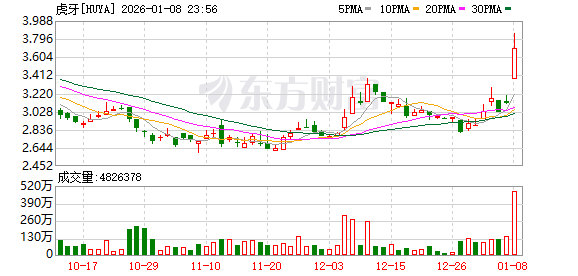
深夜中概股拉升,虎牙飙涨22%,美股军工股大涨,脑再生跳水30%
2 1 Shi Ji Jing Ji Bao Dao· 2026-01-08 15:55
Market Overview - The U.S. stock market opened lower on January 8, with the Dow Jones up 0.34%, S&P 500 up 0.01%, and Nasdaq down 0.51% [2] - Major tech stocks mostly declined, with Nvidia and Intel dropping over 2%, and Apple and Facebook down over 1% [4] - Defense stocks surged, with Northrop Grumman rising over 9% and Lockheed Martin up over 7%, following President Trump's proposal to increase U.S. military spending from $1 trillion to $1.5 trillion for fiscal year 2027 [4] Chinese Stocks - The Nasdaq Golden Dragon China Index saw a short-term rise of over 1.14%, with notable gains from Huya (up over 22%), Bilibili (up over 7%), and Alibaba (up over 4%) [5] - However, Canadian Solar fell over 8%, and Dingdong Maicai dropped over 4% [5] Commodity Prices - Silver prices fell significantly, with spot silver down over 5% and COMEX silver down over 4% [5] - The gold-silver ratio has dropped below 60, currently around 59, with the ratio hitting a ten-year low of 57.22 on January 6 [5] Oil Prices - International oil prices increased, with Brent crude rising nearly 2% to $61 per barrel and WTI crude up 1.95% to $57 per barrel [7] Cryptocurrency Market - Major cryptocurrencies experienced a collective decline, with Bitcoin dropping over 2% to below $90,000 [7][8] - Other cryptocurrencies also saw significant losses, including Ethereum down 3.81% and XRP down 6.66% [8] Employment Data - The number of initial jobless claims in the U.S. was recorded at 208,000, slightly below the forecast of 212,000, with the previous value revised to 200,000 [9] - Federal Reserve Governor Milan indicated a potential interest rate cut of about 150 basis points by 2026, which could create approximately one million jobs without triggering inflation [9] Federal Reserve Outlook - Market expectations suggest the Federal Reserve may enter a rate-cutting cycle, with predictions varying from one to two rate cuts this year [10] - The overall sentiment among Fed officials is cautious, with a focus on balancing employment and inflation data [9][10]



摩根大通:ETF 资金流出放缓,加密市场抛售或已接近底部
Xin Lang Cai Jing· 2026-01-08 15:54
Group 1 - The core viewpoint of the article is that the cryptocurrency market's sell-off may be nearing its bottom as the outflow of funds from spot ETFs slows down [1] - JPMorgan analysts indicate that despite recent market volatility, the holding data for Bitcoin futures on the Chicago Mercantile Exchange (CME) does not show significant deleveraging signs, suggesting that institutional investors are not making large-scale withdrawals [1] - The report suggests that if the trend of ETF outflows continues to improve, the market may stabilize and rebound in the short term, although close attention should be paid to changes in macroeconomic data [1]
苹果将其信用卡业务转移至摩根大通
Xin Lang Cai Jing· 2026-01-08 15:24
Core Viewpoint - Apple Inc. (AAPL) experienced a 1.5% decline in early trading on Thursday following the announcement of a transition in the issuance of the Apple Card from Goldman Sachs (GS) to JPMorgan Chase (JPM) over a period of approximately 24 months, involving a balance transfer of about $20 billion [1][2]. Group 1 - Apple has selected JPMorgan Chase to take over the issuance of the Apple Card from Goldman Sachs [1][2]. - The transition period for this change is expected to last around 24 months [1][2]. - The Apple Card will continue to utilize the Mastercard (MA) network during and after the transition [1][2]. - The balance transfer involved in this transition is approximately $20 billion [1][2].

Exploring Analyst Estimates for JPMorgan Chase & Co. (JPM) Q4 Earnings, Beyond Revenue and EPS
ZACKS· 2026-01-08 15:16
Core Viewpoint - Analysts project that JPMorgan Chase & Co. will report quarterly earnings of $5.01 per share, reflecting a 4.2% year-over-year increase, with revenues expected to reach $45.71 billion, a 6.9% increase from the same quarter last year [1]. Earnings Estimates - Over the last 30 days, there has been a 1% upward revision in the consensus EPS estimate for the quarter, indicating analysts' reassessment of their initial forecasts [2]. - Revisions to earnings projections are crucial for predicting investor behavior regarding the stock, as empirical studies show a strong correlation between earnings estimate trends and short-term stock performance [3]. Revenue Projections - Analysts estimate that 'Consumer & Community Banking - Revenue By Business - Card Services & Auto' will reach $7.15 billion, a year-over-year change of +3.4% [5]. - The revenue for 'Consumer & Community Banking - Revenue By Business - Banking & Wealth Management' is projected at $10.94 billion, indicating a +7.7% year-over-year change [5]. - For 'Commercial & Investment Bank - Revenue by Business - Payments', the estimate is $4.80 billion, reflecting a +2.1% change from the prior year [6]. - The total revenue for 'Commercial & Investment Bank - Revenue by Business - Total Banking & Payments' is expected to be $9.55 billion, with a +3% year-over-year change [6]. - Analysts forecast 'Commercial & Investment Bank - Revenue by Business - Fixed Income Markets' to reach $5.61 billion, indicating a +12.1% change from the year-ago quarter [7]. Key Financial Metrics - The average prediction for 'Book value per share' is $126.57, up from $116.07 a year ago [7]. - The consensus estimate for 'Total Interest Earning Assets - Average Balance' stands at $3986.42 billion, compared to $3571.96 billion a year ago [7]. - Analysts estimate 'Total Non-Performing Assets' at $11.16 billion, up from $9.29 billion in the same quarter last year [8]. - 'Total Non-Performing Loans' are projected to reach $10.54 billion, compared to $8.83 billion in the same quarter last year [9]. - The 'Tier 1 Capital Ratio' is expected to be 15.9%, down from 16.8% a year ago [9]. - The 'Total Capital Ratio' is projected to be 17.8%, compared to 18.5% in the same quarter last year [9]. Stock Performance - Shares of JPMorgan Chase & Co. have increased by +5.4% over the past month, outperforming the Zacks S&P 500 composite, which moved +0.9% [11].