
L'Oreal(LRLCY)

Search documents
进博会开幕倒计时!“老朋友”带来“新惊喜”
Zhong Guo Zheng Quan Bao· 2025-10-05 01:16
Core Points - The 8th China International Import Expo (CIIE) will be held in Shanghai from November 5 to 10, with preparations underway and exhibits being shipped [1][2] - The first batch of exhibits, including clothing, bags, and equestrian gear, has arrived in Shanghai, with 279 items in total, many being global debuts [2] - The CIIE has introduced several innovations this year, including a dedicated area for least developed countries and expanded cooperation with foreign provinces and cities [3][4] Group 1 - The first batch of exhibits has successfully cleared customs at Shanghai Pudong International Airport, marking the start of the customs clearance process for this year's expo [1][2] - The CIIE has set up a service window and green channel at the airport to facilitate efficient customs procedures, ensuring that compliant exhibits are inspected and released promptly [2] - The expo aims to enhance the experience for participating companies through various initiatives, including a cross-border e-commerce selection platform and live streaming events [4] Group 2 - Schneider Electric, a returning participant, will showcase its AI-enabled solutions and achievements in supply chain collaboration, emphasizing its commitment to innovation in China [5] - Grin, a New Zealand oral care brand, will present a commemorative edition of its products, integrating high-quality oral care with a travel experience [5] - L'Oréal will participate with the largest single exhibition area in the personal care sector, featuring 25 brands and several Asia-first product launches, highlighting China's commitment to high-level openness and quality development [6]

自然堂获欧莱雅4.4亿元“战略卡位”,家族控股仍超八成
Xin Lang Cai Jing· 2025-10-02 10:15
Core Viewpoint - The Chinese beauty brand Chando, after 24 years of establishment, is making its debut in the Hong Kong capital market, having recently completed a financing round that valued the company at over 7.1 billion yuan [1][2]. Group 1: Company Overview - Chando has received significant investments from L'Oréal's Meiting, which invested 442 million yuan for a 6.67% stake, and Huachuang Capital, which invested 300 million yuan for a 4.20% stake [1][2]. - The company is primarily controlled by the Zheng family, with the four family members holding over 80% of the voting rights prior to the IPO [1][4]. Group 2: Financial Performance - Chando's net profit has shown volatility, with a 117% increase in 2023 to 302 million yuan, followed by a 37.1% decrease in 2024 to 190 million yuan, and a recovery in the first half of 2025 with a net profit of 191 million yuan [5][8]. - The company's revenue heavily relies on its main brand, Chando, which accounted for over 94% of total revenue from 2022 to the first half of 2025 [3][5]. Group 3: Market Position and Strategy - Chando is the third-largest domestic cosmetics group in China by retail sales as of 2024 [4]. - The brand's online sales channel has been increasing, with its revenue share rising from 59.7% in 2022 to 68.8% in the first half of 2025, while offline sales have decreased from 32% to 16.9% [4]. Group 4: Investment and Governance - The entry of strategic investors like L'Oréal is expected to enhance market confidence in Chando, although investors will ultimately focus on the company's fundamentals and growth potential [3][8]. - Concerns exist regarding the governance structure of the family-controlled company, as the concentrated ownership may pose challenges for minority shareholders [8].

自然堂启动赴港IPO!2025年获欧莱雅、加华资本超7亿元投资丨港美股看台·IPO观察
Zheng Quan Shi Bao· 2025-10-01 09:36
Core Viewpoint - The Chinese domestic cosmetics brand, Chando Global Holdings Limited, is set to list on the Hong Kong Stock Exchange, following the successful debut of another domestic brand, Mao Geping, which saw a first-day increase of over 70% and a subsequent fourfold rise from its issue price [1]. Industry Overview - China is the second-largest cosmetics market globally, with a market share of approximately 11.4% of the global cosmetics industry retail sales in 2024. The market size of China's cosmetics industry is projected to grow from RMB 779.4 billion in 2019 to RMB 934.6 billion in 2024, reflecting a compound annual growth rate (CAGR) of 3.7% [2]. - The domestic cosmetics industry is expected to maintain a stable growth trajectory, with an anticipated CAGR of 6.6% from 2024 to 2029, which is about twice the growth rate of the global cosmetics market during the same period [2]. - Factors driving the expansion of domestic cosmetics brands include a deep understanding of local culture, confidence in domestic brands due to the "Guochao" trend, increased investment in research and development, and the growth of online platforms enhancing brand exposure [2]. Company Overview - Chando, established in 2001, has become one of the most recognized brands in China's cosmetics industry, ranking as the second-largest domestic cosmetics brand by retail sales in 2024 [4]. - The company has a diversified brand portfolio that includes five main brands: Chando, Pofuyan, MAYSU, Spring Summer, and 1GB, covering skincare, makeup, personal care, and children's products [6]. - Chando is the first domestic cosmetics company in China to own proprietary rights to yeast ingredients and to conduct space skincare research projects [7]. Financial Performance - Chando's revenue has shown consistent growth, with figures of RMB 42.92 billion, RMB 44.42 billion, RMB 46.01 billion, and RMB 24.48 billion for the years 2022, 2023, 2024, and the first half of 2025, respectively. Net profits for the same periods were RMB 1.39 billion, RMB 3.02 billion, RMB 1.9 billion, and RMB 1.91 billion [8]. - The company has established three major research systems: skin science, raw material science, and product science, enhancing its innovation and product development capabilities [8]. Investment and Strategic Moves - Chando has received over RMB 700 million in investments from global cosmetics giant L'Oréal and well-known institution Cahua Capital prior to its listing [1][14]. - The company plans to strengthen its offline channel presence by opening flagship stores in major shopping centers, with the first store launched in Shenzhen in July 2025, followed by others in Shanghai, Wuhan, and Chongqing [10][12]. - The funds raised from the IPO will primarily be used to enhance direct-to-consumer (DTC) capabilities, improve online and offline sales network synergy, enrich the multi-brand matrix, invest in research and development, and strengthen digital capabilities in membership and supply chain management [14].

前欧莱雅总裁转投老对手
3 6 Ke· 2025-09-29 23:16
Core Insights - The beauty industry is undergoing significant personnel changes, with executives from L'Oréal being highly sought after by various companies [1] - LG Household & Health Care appointed Lee Sun-joo, former president of L'Oréal Korea, as its new CEO effective October 1 [1][4] - Lee Sun-joo is recognized for her diverse brand marketing and business experience, which LG believes will help elevate its beauty and health sectors [4] Company Background - Lee Sun-joo has nearly 20 years of experience in the beauty industry, having started her career at L'Oréal in 2002 [8] - She held various significant positions at L'Oréal, including managing the Kiehl's brand, which became the second-largest luxury brand for L'Oréal during her tenure [7][8] - Prior to joining LG, she also served in leadership roles at L&P and Unilever, enhancing her credentials in the beauty sector [8] Current Challenges - LG Household & Health Care is facing severe challenges, with its latest financial report indicating a 47.4% drop in operating profit, nearly halving [10][14] - The beauty and cosmetics division has seen an 11.5% revenue decline and a staggering 70% drop in operating profit [10][14] - In contrast, competitors like Amorepacific have reported significant profit increases, highlighting LG's struggles in the market [10][12] Market Performance - LG's revenue in South Korea fell by 8.5% in the first half of 2025, and it was the only major Korean beauty company to experience a decline in the Chinese market, down 6% [10][12] - In North America, LG's performance was also underwhelming compared to competitors, with only a 4.8% growth, while others like APR saw a 236.3% increase [12][14] - The appointment of Lee Sun-joo is seen as a strategic move to address these challenges and revitalize the company's performance [14]
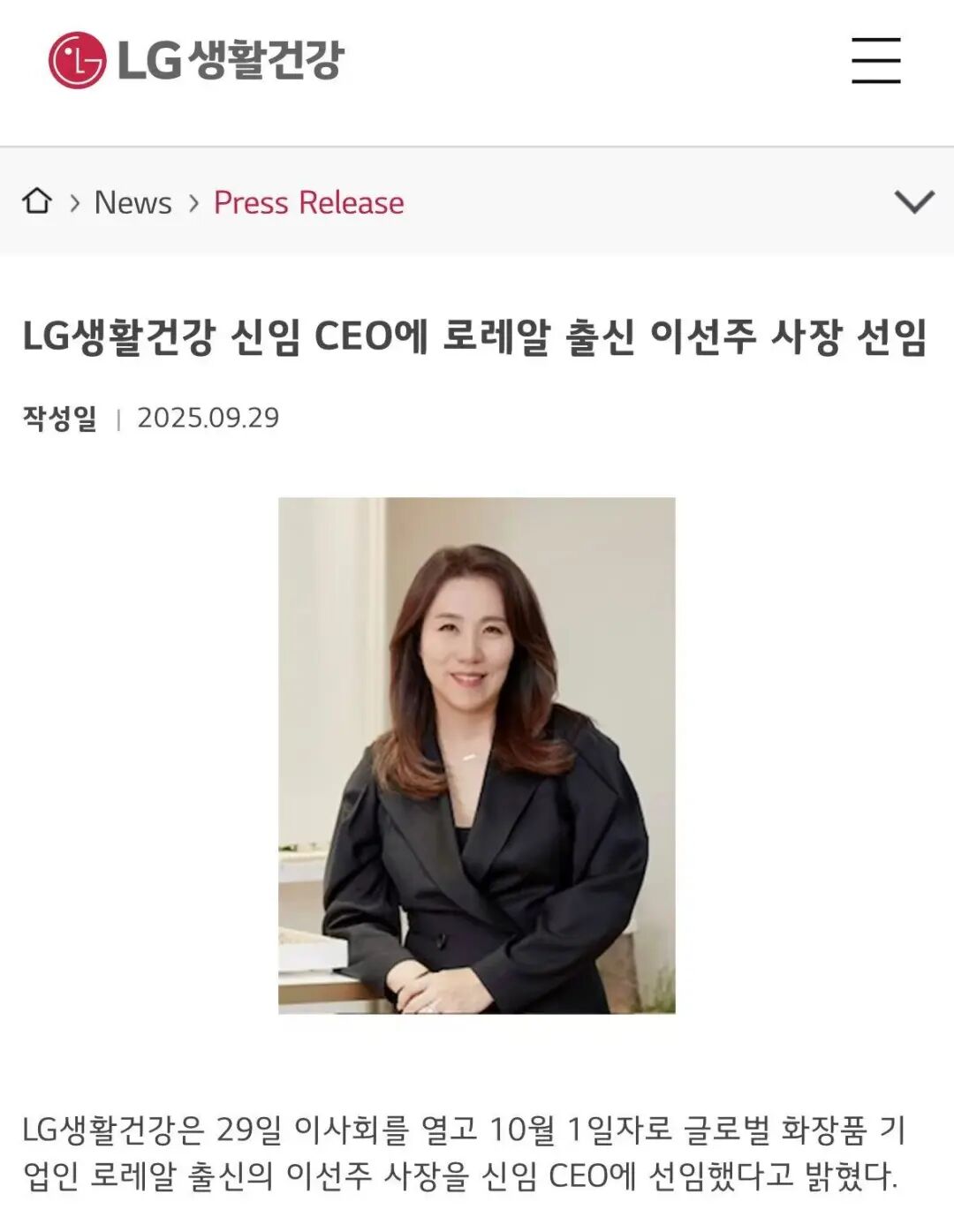
欧莱雅高管洗牌;雅诗兰黛大幅降薪丨二姨看时尚
2 1 Shi Ji Jing Ji Bao Dao· 2025-09-29 11:59
Group 1: Major Corporate Changes - L'Oréal announced significant adjustments to its executive committee, with new appointments set to take effect in January 2026, aiming to enhance its strategic focus in the U.S. market [2] - Estée Lauder is undergoing a substantial salary reduction for its executive team, with a total annual compensation decrease of 28% for FY2025, reflecting a collective compromise amid poor performance and declining stock prices [3] - Burberry's global procurement and marketing director has left the company, indicating challenges in retaining key executives during its transformation strategy [11] Group 2: Market Performance and Reactions - H&M reported better-than-expected Q3 results for FY2025, with net sales increasing by 2% year-on-year, leading to a 10% surge in stock price [6][5] - Brunello Cucinelli's stock plummeted by 15% following allegations of regulatory violations in the Russian market, highlighting the fragility of luxury brand valuations [7] - LVMH continues to expand its media asset portfolio, indicating a strategic move to enhance its influence in the media landscape [9] Group 3: Strategic Developments - Ralph Lauren secured a significant legal victory in China, confirming its "POLO" trademark as a well-known brand, which strengthens its position in the market [4] - LVMH's Kendo has sold its beauty brand KVD Beauty to Windsong Global, marking its first brand sale and a shift in strategy to streamline its offerings [9] - Reports suggest that L'Oréal is primarily interested in retaining only the profitable beauty business of Armani, with a licensing agreement extended until 2050 [13]


美妆行业:周度市场观察-20250927
Ai Rui Zi Xun· 2025-09-27 09:16
Investment Rating - The report does not explicitly provide an investment rating for the beauty industry Core Insights - The beauty industry is experiencing a significant transformation driven by consumer preferences for high-quality, effective products and the integration of technology in skincare and cosmetics [4][6][10] Industry Trends - The high-end fragrance segment is witnessing robust growth, with the Chinese perfume market projected to reach 24.9 billion yuan by 2025 and exceed 33.9 billion yuan by 2028, reflecting a compound annual growth rate of 8% [4] - Domestic beauty brands are focusing on scientific innovation, market segmentation, and globalization to enhance competitiveness [6][7] - The integration of medical aesthetics and beauty is becoming a trend, with a projected annual growth rate of 10%-15% for the medical aesthetics market from 2024 to 2027 [10] - The beauty market is seeing a shift towards multi-brand strategies, with companies like Proya and Shiseido leading the way [6][11] Market Environment - Douyin e-commerce is revitalizing the perception of "Chinese good ingredients," enhancing consumer trust in domestic skincare products through educational campaigns [4] - The domestic beauty market grew by 3.1% in the first half of 2025, with significant performance disparities among companies [6] - The trend of "reverse export" to South Korea is emerging, as domestic brands seek to penetrate the Korean market through differentiated product offerings [6] Top Brand Dynamics - Proya leads the domestic beauty market with a revenue of 5.36 billion yuan, followed closely by other major players [11] - The report highlights the rise of makeup artist brands, with Unilever investing in Hung Vanngo Beauty, indicating a growing interest in professional makeup lines [13] - L'Oréal is accelerating its presence in the fragrance market with the launch of high-end perfumes, reflecting a strategic shift towards premium products [14] - The beauty industry is witnessing a surge in e-commerce, with platforms like JD.com reporting double-digit growth in beauty sales [18]




欧莱雅巨变
3 6 Ke· 2025-09-26 00:10
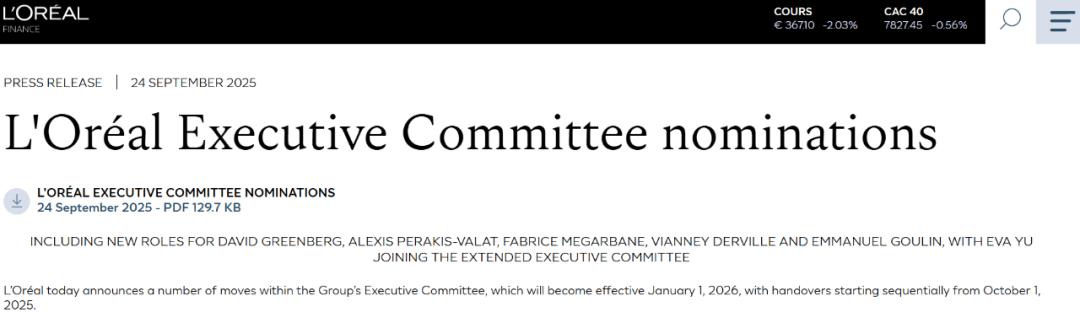
Core Insights - L'Oréal is undergoing significant executive changes aimed at strengthening its leadership in key markets, particularly the U.S. and Asia-Pacific, to sustain business growth and enhance digital transformation [1][3][26] Group 1: Executive Changes - L'Oréal announced multiple personnel changes within its executive committee, effective January 1, 2026, with transitions starting from October 1, 2025 [1][4] - The adjustments involve six key positions, primarily through internal promotions or cross-assignments, affecting regions such as North America, Europe, and Hong Kong [4][15] - David Greenberg has been appointed as the new Chairman of L'Oréal USA, emphasizing the importance of the U.S. market for future growth [7][10] Group 2: Market Focus - The company aims to enhance its leadership in the U.S. market through a dual management structure, with Greenberg collaborating with the CEO of L'Oréal USA [7][10] - L'Oréal is also focusing on expanding its travel retail business in the Asia-Pacific region, with Eva Yu appointed as the new Travel Retail President [19][21] Group 3: Performance Context - L'Oréal's sales for the first half of 2025 reached €22.473 billion (approximately ¥186.46 billion), showing a slight year-on-year increase of 1.6% [22][30] - The North American market, however, has shown slow growth, with a year-on-year increase of only 0.4%, indicating potential challenges in this key region [23][26] Group 4: Industry Trends - The executive reshuffling at L'Oréal reflects a broader trend in the beauty industry, with other major companies like Estée Lauder and Shiseido also announcing significant personnel changes amid ongoing market pressures [30]
欧莱雅又有新的收购目标?
3 6 Ke· 2025-09-25 00:11
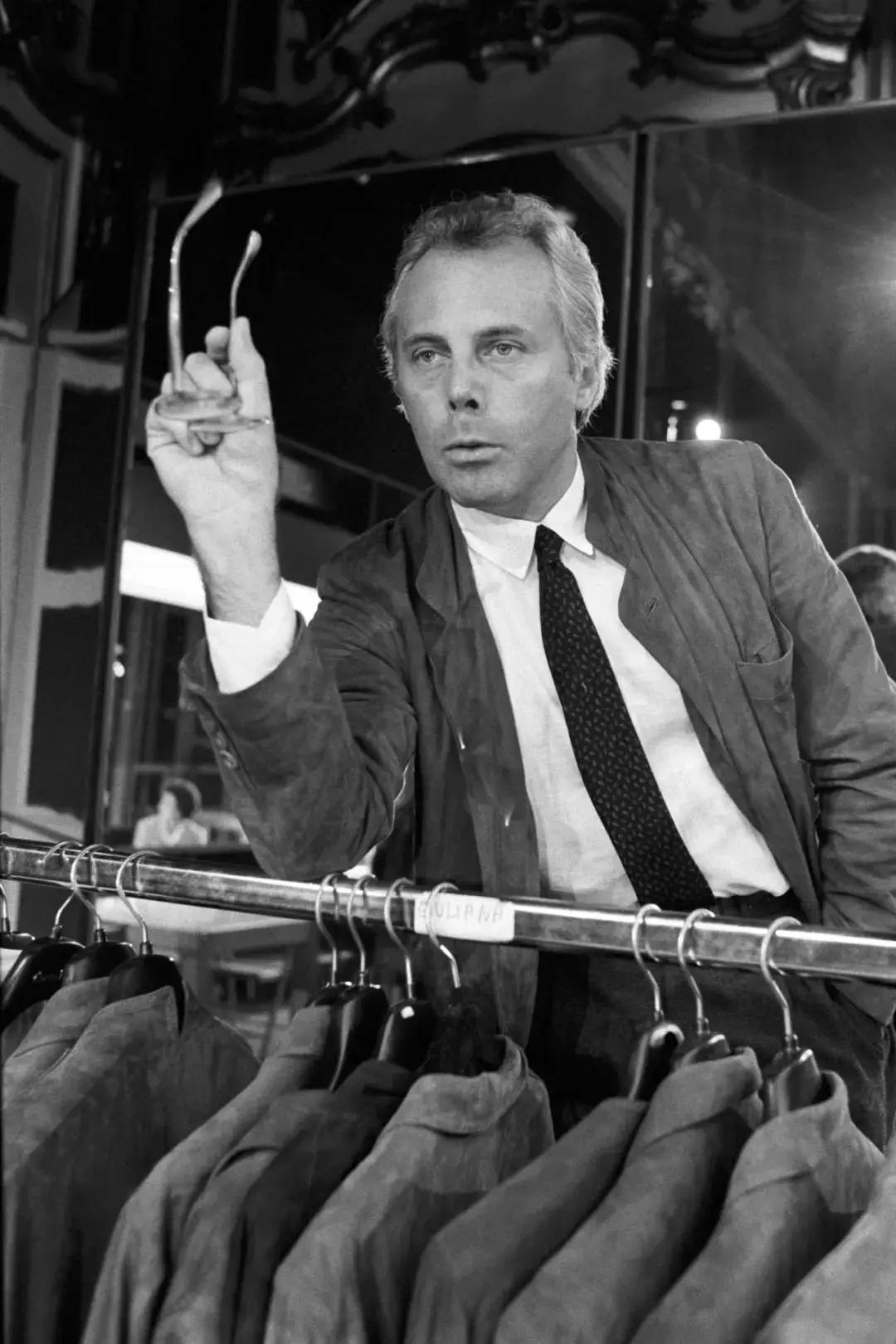
Group 1 - The core point of the news is that L'Oréal is planning to acquire the beauty business of the late Italian designer Giorgio Armani, which includes cosmetics, perfumes, and skincare, but excludes fashion and accessories [1][3][5] - The acquisition plan consists of two steps: initially acquiring a 15% stake as per Armani's will, followed by increasing the stake to a majority ownership [5][6] - L'Oréal has a long-standing partnership with Armani Beauty since 1988, which has allowed them to collaborate on product development and market expansion [6][10] Group 2 - Armani Beauty's revenue surpassed €1 billion (approximately ¥83.75 billion) in 2017, with annual sales of around €1.5 billion (approximately ¥125.59 billion) for its fragrance and beauty products [6][11] - The acquisition could help L'Oréal strengthen its position in the high-end beauty market and enhance its brand portfolio amid slowing growth in its existing brands [10][11] - The acquisition is seen as a win-win situation, as L'Oréal needs established brands for growth, while Armani Beauty faces challenges following the founder's passing [21]
L’Oréal USA Names David Greenberg Chairman and Alexis Perakis-Valat CEO
Yahoo Finance· 2025-09-24 16:44
Core Insights - L'Oréal USA has appointed Alexis Perakis-Valat as CEO, succeeding David Greenberg, who will take on the newly created role of chairman of L'Oréal USA, effective January 1, 2026 [1][2][3] Leadership Changes - Alexis Perakis-Valat is currently the president of L'Oréal's Consumer Products division, which is the largest within the group, and will be succeeded by Fabrice Megarbane [2] - David Greenberg, who has been with L'Oréal for 32 years, led the division to nearly 12 billion euros in sales, up from around 8 billion euros in 2021 [3][4] Market Strategy - The creation of the chairman role highlights the strategic importance of the U.S. market for L'Oréal's future growth [3] - Greenberg emphasized the need for agility and a culture that feels small despite the company's size, focusing on external relations and public affairs in his new role [5] Consumer Trends - Greenberg noted that consumer confidence has improved throughout 2025, with a need to cater to a diverse range of consumers with varying spending abilities [6][7] - The Consumer Products Division has seen significant growth, particularly in emerging markets, which accounted for 50% of its growth in 2024 [11] Financial Performance - The Consumer Products Division reported a 1.1% rise in sales on a reported basis and a 2.8% increase in like-for-like terms, reaching 8.41 billion euros in the first half of 2025 [15] Innovation and Sustainability - Perakis-Valat has driven innovation within the division, launching key products and enhancing beauty services powered by technology [10] - The division has also made strides in sustainability, redesigning product ranges and launching refill pouches with 60% less plastic [14]
Executive Committee-level Changes Afoot at L’Oréal
Yahoo Finance· 2025-09-24 16:41
Core Insights - The appointment of Alexis Perakis-Valat as CEO of L'Oréal USA and president of North America initiates significant changes within L'Oréal's executive committee, with transitions starting from October 1 to January 1 [1] - Fabrice Megarbane is appointed as president of the Consumer Products Division, having previously served as chief global growth officer, where he drove e-commerce expansion and strategic growth initiatives [2][3] - Vianney Derville succeeds Megarbane as chief growth officer, recognized for his leadership in Europe, where sales exceeded 11.4 billion euros, making it the largest contributor to L'Oréal's growth [6] Leadership Changes - Fabrice Megarbane's leadership in China resulted in record market share and doubled sales, positioning the region as a leader in digital engagement and achieving carbon neutrality by 2022 [3] - Vianney Derville's new role as chief growth officer aims to leverage his market experience and strategic vision to accelerate L'Oréal's growth trajectory [5][7] - Emmanuel Goulin, taking over as president of Europe, has a strong background in key European markets and has driven significant growth and transformation [8][9] Strategic Focus - The company emphasizes a "One L'Oreal" transformation project, leveraging AI to shape future growth [7] - Eva Yu is appointed president of travel retail, bringing extensive experience from her previous role in Hong Kong, where she significantly increased market share [10][11] - The leadership changes reflect L'Oréal's commitment to innovation and growth across various regions and market segments [4][11]