L'Oreal(LRLCY)

Search documents
“你本来就很美”的自然堂启动港股IPO,引入欧莱雅能否助其向科技美妆转型?
Mei Ri Jing Ji Xin Wen· 2025-10-15 09:59
Core Viewpoint - Chando Group has submitted its IPO application to the Hong Kong Stock Exchange, marking a significant transformation opportunity for the company as it aims to evolve into a technology-driven beauty enterprise with the support of capital markets [1][8]. Company Overview - Founded by Zheng Chunying in 2001, Chando Group has established itself as a prominent domestic cosmetics brand in China, initially focusing on high-end anti-aging products and later expanding its brand portfolio [3][4]. - The company has historically capitalized on various market trends, successfully navigating through different retail channels, including specialty stores and e-commerce [4]. Financial Performance - Chando Group's revenue has shown steady but slow growth, with figures of 4.292 billion, 4.442 billion, and 4.601 billion for the years 2022, 2023, and 2024 respectively, reflecting a compound annual growth rate of only 3.5% [6]. - The company's net profit has exhibited volatility, with figures of 139 million, 302 million, and 190 million for the years 2022, 2023, and 2024 respectively, resulting in a net profit margin of 7.8% in the first half of 2025, which is significantly lower than its competitors [7]. Brand Dependency - Chando Group relies heavily on its single brand, which accounted for approximately 94.6% to 95.9% of total revenue from 2022 to 2025, indicating a failure in its multi-brand strategy [6][2]. - The rebranding from "Jialan Group" to "Chando Group" in January 2024 highlights the company's struggle to diversify its brand portfolio [6]. Investment and Strategic Moves - The recent investments from L'Oréal and Himalaya International, amounting to 442 million and 300 million respectively, have provided the company with both capital and technological backing [1][2]. - The company plans to utilize the funds raised from the IPO to enhance its direct-to-consumer capabilities, expand its brand matrix, increase product development investment, and explore international markets [8]. Market Position - Chando Group is recognized as one of the top domestic cosmetics brands in China, having ranked among the top two in retail sales for 12 consecutive years from 2013 to 2024 [4].

最高暴增229%,男士“美妆”的春天终于来了
Xin Lang Cai Jing· 2025-10-15 06:03
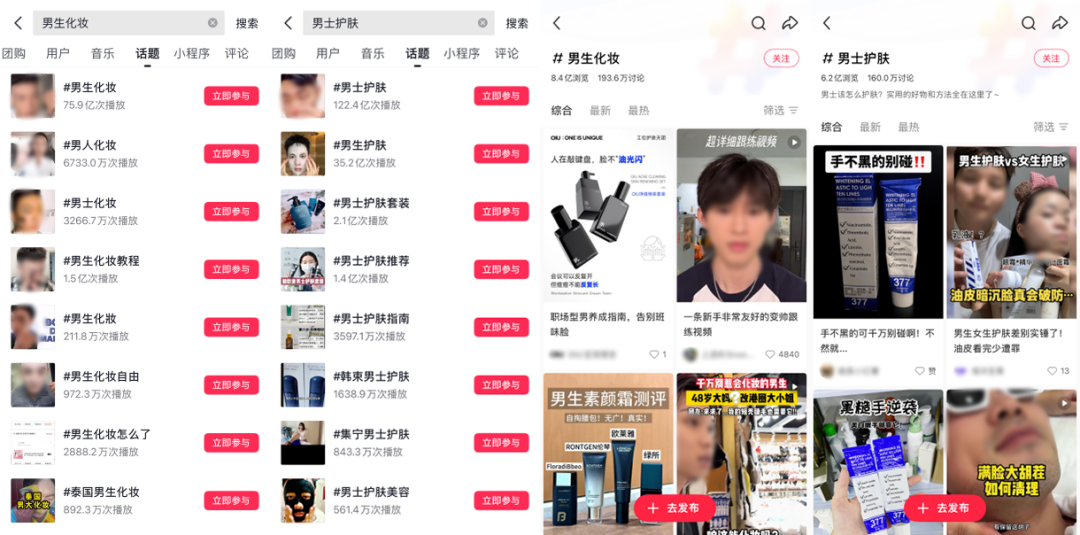
Core Insights - The men's beauty market is experiencing significant growth, with a focus on reaching male consumers aged 15 and above as a key demographic for brands like L'Oréal [1][2] - The market is witnessing a "new cycle" characterized by a shift in consumer preferences and the emergence of new brands, while traditional players face challenges [3][14] Market Performance - In the first eight months of the year, the men's beauty sector achieved a total transaction value of 60.35 billion yuan, with a year-on-year growth of 10.39% and a transaction volume increase of 33.47% [6][7] - The men's hair care segment saw a remarkable increase in transaction value by 122.75%, while men's foundation products surged by 228.78% [7][10] Consumer Trends - Social media engagement around men's beauty topics is rising sharply, with "men's skincare" videos reaching 12.24 billion views on Douyin and "men's makeup" videos hitting 7.59 billion views [4] - The demand for diverse beauty products among men is growing, with an increasing number of men incorporating items like anti-aging serums and makeup into their routines [3][20] Brand Dynamics - The competitive landscape is shifting, with 9 out of the top 20 brands experiencing a decline in sales, while brands like 韩束 (KANS), SAZA, and 清扬 (Qingyang) are achieving exponential growth [14][19] - L'Oréal, Ocean Supreme, and 左颜右色 (Left and Right Color) are leading the market, with L'Oréal's sales declining by 4.16% while Ocean Supreme grew by 48.46% [12][19] Future Outlook - The men's skincare market is projected to reach 170 billion yuan in 2024, with a compound annual growth rate of 11% expected to drive the market to 292 billion yuan by 2029 [3] - The trend towards multi-functional products is evident, with brands like 韩束 and 左颜右色 responding to the demand for products that serve multiple purposes [20][23] Innovation and Development - Brands are increasingly focusing on product innovation and brand building to capture market share, with a notable emphasis on research and development [30][31] - The competition is expected to intensify as brands expand their product lines and enhance their technological capabilities to meet evolving consumer needs [30][31]

全球美妆 - 中国 “双十一” 购物狂欢即将开启-Global Beauty-China 11.11 Shopping Spree to Begin
2025-10-15 03:14
Summary of Key Points from the Conference Call Industry Overview - **Industry**: Beauty and Cosmetics in China - **Current Trends**: China's beauty demand and promotions have stabilized in 2025, with growth driven by onshore e-commerce channels while travel retail continues to decline [1][2][4] Market Performance - **Sales Growth**: Government data indicates a 3.3% growth in cosmetics sales from January to August 2025, slightly below GDP growth but an improvement from a 1.1% decline in 2024 [2][4] - **Channel Performance**: - E-commerce platforms experienced a 5-10% growth in beauty sales [2] - Hainan travel retail saw an 8-10% decline [2] - Offline sales are expected to be a drag on overall performance [2] Key Brand Performances - **L'Oréal**: Sales dipped by 0.2% to 0.3% in Q1 2025 but rose by 3% in Q2 2025, with a full-year target of approximately 5% growth [4] - **Estée Lauder**: Onshore e-commerce grew in mid-single digits in Q1 2025, with travel retail contributing about 15% of full-year sales [4] - **Shiseido**: Reported a low single-digit decline in Q2 2025 sales, with e-commerce up in low teens but offline and travel retail down sharply [4] - **Amorepacific**: Post-restructuring, sales in China increased by 30% YoY in Q2 2025, with expectations for double-digit growth into Q3 2025 [4] - **LG Household & Health Care (LGHH)**: Focus on profit led to over a 10% sales decline in China and a 30% drop in travel retail in H1 2025 [4] - **Giant Biogene**: Expected 21% sales growth in H2 2025 for Comfy and 33% for Collgene, with strong performance anticipated during the 11.11 shopping event [4] - **Proya**: Sales trends remain weak in Q3 2025, with potential for growth momentum in 2026 [4] 11.11 Shopping Event Insights - **Promotions**: Tmall's event began on October 15, 2025, with a notable reduction in overall promotions compared to previous years [3][4] - **Average Selling Price (ASP)**: Most leading brands' flagship products showed similar or slightly higher ASP year-over-year [3] Market Risks and Future Outlook - **Risks**: The industry faces risks related to over-reliance on large promotions and macroeconomic weaknesses [2] - **Price Competition**: Expected to moderate somewhat, indicating a potential stabilization in pricing strategies [2] Additional Insights - **Korean Cosmetics**: Travel retail for Korean cosmetics shipped to China is estimated to have declined by 25-30% in the first half of 2025 [2] - **Channel Overhaul**: The necessary channel overhaul for China's beauty market appears to have concluded, with travel retail dropping to approximately 50% and 60% of their respective peaks in 2021 [2] This summary encapsulates the key points discussed in the conference call regarding the beauty and cosmetics industry in China, highlighting market performance, brand-specific insights, and future outlooks.

欧莱雅、加华资本押注7亿!61岁的辽宁人去港股IPO
Sou Hu Cai Jing· 2025-10-14 16:06
Core Viewpoint - The news highlights the IPO application of CHANDO, a well-established Chinese beauty brand, aiming to enter the Hong Kong stock market with a valuation exceeding 7.1 billion RMB, backed by significant investments from L'Oréal and other capital firms [3][5][6]. Company Overview - CHANDO has been in operation for 25 years and is now the third-largest domestic cosmetics group in China, with annual revenues exceeding 4.5 billion RMB [4][7]. - The company has a diverse brand portfolio, including CHANDO, Biorrier, MAYSU, SPRING SUNMER, and others, covering various product categories such as skincare, makeup, and personal care [7][8]. - The flagship brand, CHANDO, has consistently contributed over 94% of the company's total revenue from 2022 to 2025 [7][11]. Financial Performance - Revenue figures for CHANDO from 2022 to 2025 are projected to be 42.92 billion RMB, 44.42 billion RMB, and 46.01 billion RMB, with a significant increase in gross margin from 66.5% in 2022 to 70.1% in the first half of 2025 [7][11]. - The company has a registered membership of 37.7 million, with a repurchase rate of 32.4%, indicating a stable customer base [8]. Investment Backing - L'Oréal invested 442 million RMB and Cahua Capital invested 300 million RMB in CHANDO, holding 6.67% and 4.20% of shares, respectively, leading to a pre-IPO valuation exceeding 7.1 billion RMB [6][10]. Market Position and Challenges - The beauty industry in China is highly fragmented, with the top five domestic cosmetics groups holding only about 10.1% market share, indicating a low concentration [11]. - CHANDO's revenue growth rate of 3.6% for 2024 is significantly lower than competitors like Mao Geping and Lin Qingxuan, which have higher growth rates [11]. - The brand's international recognition and market share are limited, with a need to leverage L'Oréal's backing to expand overseas [11][12]. Industry Trends - The domestic beauty market is evolving, with Chinese brands capturing approximately 55.2% market share by 2024, reflecting a growing preference for local products among consumers [12]. - The competition is intensifying, with brands focusing on research and development, emphasizing patent acquisition and scientific investment [12].
欧莱雅董事长建议上海打造科创与消费“双核驱动飞轮”|第37次上海市咨会
Xin Lang Cai Jing· 2025-10-12 09:53
Group 1 - The Shanghai International Entrepreneur Consultation Conference gathered 40 global business leaders to provide insights for Shanghai's high-quality development [1] - The conference is the 37th of its kind, with 24 member companies listed in the 2025 Fortune Global 500 and 7 in the Forbes 2000, collectively valued over $3.5 trillion and contributing over 35 billion RMB in annual taxes [1] - L'Oréal's chairman proposed a "dual-core driving flywheel" model for Shanghai, emphasizing the synergy between technological innovation and consumer demand [1][3] Group 2 - L'Oréal's sales in China saw a year-on-year increase of approximately 3% in Q2, indicating a significant recovery in the market [3] - Schneider Electric's chairman suggested optimizing industrial policies to attract high-end manufacturing headquarters and promote digital and green transformations [4] - Schneider Electric's EcoFit low-voltage distribution innovation center was established in Shanghai, providing end-to-end services for low-voltage component adaptation [5] Group 3 - Intuitive Surgical's chairman highlighted the need for Shanghai to balance innovation, product quality, and patient safety in the biomedicine sector [5] - Intuitive Surgical has been involved in over 800,000 surgeries in China since 2006 and has established seven regional training centers, training over 15,000 doctors [5] - The company aims to continue its growth in China, aligning with the "Healthy China 2030" vision and contributing to the local medical technology ecosystem [6]

不止欧莱雅系“吃香”,美妆人才大战进入「无界」时代
FBeauty未来迹· 2025-10-12 08:16
Core Insights - The global beauty industry is experiencing a significant shift in personnel changes, moving from simple organizational restructuring to a deeper strategic integration through cross-industry and cross-regional appointments, aiming for a comprehensive reconstruction of research and development paradigms, experience output, business boundaries, and organizational ecosystems [2][4][6]. Group 1: R&D Paradigm Breakthrough - Estee Lauder appointed former PepsiCo Chief Scientist René Lammers as Executive Vice President and Chief Research and Innovation Officer, marking a significant shift towards a fast-to-market innovation model [8][10]. - Lammers' background in fast-moving consumer goods (FMCG) emphasizes efficiency and data-driven processes, which are crucial for traditional luxury beauty brands like Estee Lauder to overcome innovation bottlenecks [10][11]. Group 2: Ecosystem Linkage - Up Beauty appointed Dr. Karl Lintner, a pioneer in peptide beauty technology, as its Chief Scientific Advisor, marking the company's first such position [12][14]. - Lintner's role will focus on providing forward-looking planning for global peptide technology and facilitating connections with top international research institutions, representing a new path for local companies to acquire cutting-edge technology [15]. Group 3: Globalization of Chinese Market Experience - L'Oreal's personnel adjustments reflect a trend of exporting "Chinese market experience" globally, with Alexis Perakis-Valat, former CEO of L'Oreal China, appointed as CEO of L'Oreal USA [17][19]. - This strategic move aims to leverage Perakis-Valat's experience in agile digital marketing and complex multi-channel operations to address growth challenges in mature markets like North America [21]. Group 4: Strategic Expansion and Focus - Beiersdorf established a new position for President of "Derma & Health Care," integrating several brands to enhance strategic leadership in skin and health care, blurring the lines between beauty and health industries [23][24]. - In contrast, Coty is focusing on strategic contraction by integrating its high-end beauty and mass fragrance businesses to concentrate on its core strengths, aiming for sustainable profit growth [25][28]. Group 5: External Leadership Injection - LG Household & Health Care appointed Lee Sun-joo as CEO, a rare move in the Korean corporate landscape, to address stagnant domestic growth and enhance global market presence [31]. - Proya has built a diverse executive team with backgrounds in various industries to strengthen its brand and global competitiveness, indicating a shift towards a more systematic capability construction [37]. Group 6: Industry Trends - The personnel changes in Q3 2025 highlight a core trend in the beauty industry: competition has evolved from internal optimization to a boundary-less capability war, with the lines between beauty, technology, health, and new consumption increasingly blurred [38].


美妆巨头集体换血?自然堂赴港上市?亮白饮翻车?|美周热点
Sou Hu Cai Jing· 2025-10-11 03:25
Group 1 - Chando has submitted its IPO application to the Hong Kong Stock Exchange, with funding primarily aimed at enhancing DTC capabilities and expanding its brand matrix [2] - L'Oreal has invested 442 million yuan in Chando, holding a 6.67% stake, while Huachuang Capital holds 4.20% [2] - Chando's revenue for H1 2025 reached 2.45 billion yuan, a 6.4% year-on-year increase, with its main brand contributing 2.32 billion yuan, a 35.6% increase [2] Group 2 - Coty has announced a strategic review of its mass beauty division, valued at approximately 1.2 billion USD (about 85.59 billion yuan), exploring options including partnerships and spin-offs [3] - The brands involved in this review include CoverGirl, Kylie Cosmetics, and Miss Sporty, along with its independent Brazilian business generating nearly 400 million USD annually [3] - Coty aims to focus on brands with strong profit potential and global growth opportunities, appointing Gordon von Bretten as the new president of consumer beauty [3] Group 3 - Mystique's whitening drink has faced backlash for allegedly causing menstrual irregularities, with numerous complaints regarding its effectiveness and ingredient transparency [4] - The company has responded by clarifying that all ingredients are listed on the packaging and that their marketing complies with regulations [4] - Mystique is a Spanish brand established in 1985, providing high-end beauty products globally [4] Group 4 - HARMAY has opened its first store in Changzhou, marking a significant expansion in Jiangsu province with multiple new locations planned [5] - The brand has opened nine new stores across various cities since March, indicating a shift from previous cautious expansion to aggressive growth [5] - HARMAY now operates 20 stores in 11 cities, including major first-tier and strong second-tier cities [5] Group 5 - CeraVe has partnered with the NBA as its official skincare and haircare partner, enhancing its visibility through various NBA events and digital platforms [6] - This collaboration follows previous marketing efforts involving NBA players, indicating a strategic move into sports marketing [6] Group 6 - SOSU Cosmetics has recalled its Peach Dreams eyeshadow palette due to arsenic levels exceeding EU regulations, posing potential health risks [7] - The brand, founded in 2015, has over 400 products and is sold in more than 2000 stores globally [7] Group 7 - The synthetic biology company Weiming Shiguang has secured several rounds of financing, with the latest round raising tens of millions of yuan to enhance its AI technology platform [8] - The company has completed multiple funding rounds since its establishment in 2021, indicating strong investor interest [8] Group 8 - POLA ORBIS has appointed Takahiro Tabata as the new CEO of Jurlique, aiming to strengthen the brand's operations in China [9] - Jurlique has faced declining sales, with a 9.8% drop in mid-2025, prompting this leadership change as part of a resource consolidation strategy [9] Group 9 - LG Household & Health Care has appointed former L'Oreal executive Lee Sun-joo as its new CEO, effective October 1 [11] - Lee brings over 30 years of experience in the beauty industry, having previously driven significant growth for Kiehl's in South Korea [11] Group 10 - Revlon has appointed Amber Garrison to lead Elizabeth Arden, focusing on brand innovation and market expansion [12] - Garrison's previous experience includes leading digital transformation efforts at Origins, indicating a strategic push towards high-end skincare and fragrance [12] Group 11 - L'Oreal has announced significant management changes within its executive committee, affecting six key positions across various regions and business sectors [13] - The restructuring aims to enhance the strategic importance of the U.S. market and improve operational efficiency [13] Group 12 - Procter & Gamble plans to gradually cease its manufacturing and commercial operations in Pakistan, transitioning to third-party distributors [14] - This decision is part of a global restructuring effort aimed at optimizing its portfolio and supply chain [14] Group 13 - New regulations for the online sale of medical devices have been implemented, requiring e-commerce platforms to establish quality management systems [15][16] - The regulations aim to enhance risk management and ensure compliance with safety standards in the sale of medical devices [15][16] Group 14 - Shanghai has introduced measures to support the cosmetics industry, including financial incentives for innovation and new raw materials [17][18] - The policy aims to promote high-quality development and establish "Shanghai manufacturing" as a new brand [17][18] Group 15 - Douyin has halted live promotions for medical dressings to improve user experience, implementing a dual mechanism for risk management [20] - The platform will allow qualified influencers to sell specific medical devices through live streams in the future [20]


国货离成为“中国欧莱雅”,还差多少个第二品牌?
3 6 Ke· 2025-10-09 01:52
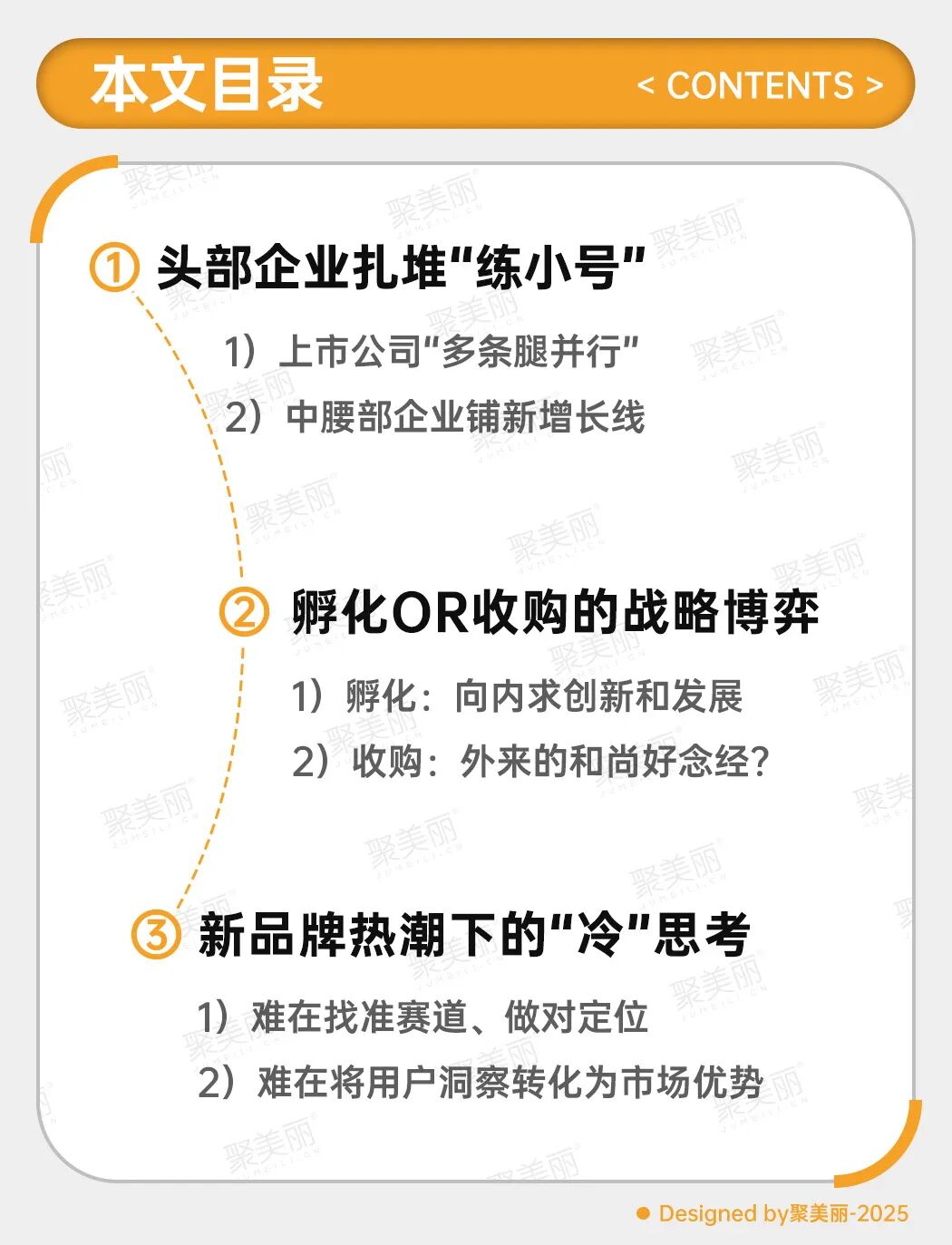
Core Insights - The Chinese beauty industry is experiencing a significant transformation, with many brands exiting the market while others are rapidly launching new sub-brands to adapt to changing consumer demands and market conditions [1][8][24]. Group 1: Industry Trends - The beauty industry is facing a "winter" period, leading to the exit of several brands such as Qiaodi Shanghui and Jing Sheng Zhi Yuan [1]. - Despite the challenges, there is a surge in new brand launches, indicating a robust response from leading companies [1][8]. - Major players like Shangmei Co., Beitaini, and Polaroid are actively developing multiple sub-brands to enhance their market presence [8][24]. Group 2: Company Strategies - Shangmei Co. has launched three new brands this year, including NAN beauty, a high-end anti-aging brand Tazu, and a baby care brand [10][11]. - Beitaini is set to introduce a new acne treatment brand, Ansta, which has been in development for three years [15][16]. - Polaroid is considering overseas acquisitions to fill gaps in its product offerings, targeting markets such as baby care and men's grooming [17][24]. Group 3: Market Positioning - The multi-brand strategy allows companies to cater to diverse consumer needs across different demographics, enhancing their competitive edge [24][29]. - Companies are focusing on leveraging their main brand strengths to create differentiated sub-brands that address specific market segments [27][30]. - The trend of building a multi-brand matrix is becoming standard among leading beauty companies in China, moving away from a single-brand dominance [28][39]. Group 4: Growth Strategies - Companies are employing both internal brand incubation and external acquisitions as primary methods for expanding their brand portfolios [29][33]. - Internal incubation allows companies to innovate and meet emerging consumer demands effectively, while acquisitions provide immediate access to established brands and markets [32][38]. - The balance between these strategies is crucial for sustained growth and market relevance in a competitive landscape [39].
进博会开幕倒计时!“老朋友”带来“新惊喜”
Zhong Guo Zheng Quan Bao· 2025-10-05 01:16
Core Points - The 8th China International Import Expo (CIIE) will be held in Shanghai from November 5 to 10, with preparations underway and exhibits being shipped [1][2] - The first batch of exhibits, including clothing, bags, and equestrian gear, has arrived in Shanghai, with 279 items in total, many being global debuts [2] - The CIIE has introduced several innovations this year, including a dedicated area for least developed countries and expanded cooperation with foreign provinces and cities [3][4] Group 1 - The first batch of exhibits has successfully cleared customs at Shanghai Pudong International Airport, marking the start of the customs clearance process for this year's expo [1][2] - The CIIE has set up a service window and green channel at the airport to facilitate efficient customs procedures, ensuring that compliant exhibits are inspected and released promptly [2] - The expo aims to enhance the experience for participating companies through various initiatives, including a cross-border e-commerce selection platform and live streaming events [4] Group 2 - Schneider Electric, a returning participant, will showcase its AI-enabled solutions and achievements in supply chain collaboration, emphasizing its commitment to innovation in China [5] - Grin, a New Zealand oral care brand, will present a commemorative edition of its products, integrating high-quality oral care with a travel experience [5] - L'Oréal will participate with the largest single exhibition area in the personal care sector, featuring 25 brands and several Asia-first product launches, highlighting China's commitment to high-level openness and quality development [6]
自然堂获欧莱雅4.4亿元“战略卡位”,家族控股仍超八成
Xin Lang Cai Jing· 2025-10-02 10:15
Core Viewpoint - The Chinese beauty brand Chando, after 24 years of establishment, is making its debut in the Hong Kong capital market, having recently completed a financing round that valued the company at over 7.1 billion yuan [1][2]. Group 1: Company Overview - Chando has received significant investments from L'Oréal's Meiting, which invested 442 million yuan for a 6.67% stake, and Huachuang Capital, which invested 300 million yuan for a 4.20% stake [1][2]. - The company is primarily controlled by the Zheng family, with the four family members holding over 80% of the voting rights prior to the IPO [1][4]. Group 2: Financial Performance - Chando's net profit has shown volatility, with a 117% increase in 2023 to 302 million yuan, followed by a 37.1% decrease in 2024 to 190 million yuan, and a recovery in the first half of 2025 with a net profit of 191 million yuan [5][8]. - The company's revenue heavily relies on its main brand, Chando, which accounted for over 94% of total revenue from 2022 to the first half of 2025 [3][5]. Group 3: Market Position and Strategy - Chando is the third-largest domestic cosmetics group in China by retail sales as of 2024 [4]. - The brand's online sales channel has been increasing, with its revenue share rising from 59.7% in 2022 to 68.8% in the first half of 2025, while offline sales have decreased from 32% to 16.9% [4]. Group 4: Investment and Governance - The entry of strategic investors like L'Oréal is expected to enhance market confidence in Chando, although investors will ultimately focus on the company's fundamentals and growth potential [3][8]. - Concerns exist regarding the governance structure of the family-controlled company, as the concentrated ownership may pose challenges for minority shareholders [8].