
PJSC LUKOIL(LUKOY)

Search documents
Lukoil trading arm shrinks fast under Western sanctions
Reuters· 2025-11-21 14:07
Core Insights - U.S. sanctions are significantly impacting Lukoil's Litasco, which was once the largest oil trader in Russia and a competitor to leading Swiss firms and major oil companies [1] Company Impact - Litasco, previously a dominant player in the oil trading sector, is facing dismantlement due to the enforcement of U.S. sanctions [1] Industry Context - The sanctions are reshaping the competitive landscape of the oil trading industry, particularly affecting Russian entities like Litasco that were once key competitors to established global firms [1]



大越期货原油早报-20251121
Da Yue Qi Huo· 2025-11-21 02:01
Report Industry Investment Rating No relevant information provided. Core Viewpoints - Overnight, European diplomats expressed dissatisfaction with the US - led Russia - Ukraine agreement, but Zelensky didn't strongly oppose it, causing geopolitical concerns to fade and oil prices to plunge. The increase in US non - farm payrolls in September reduced the probability of a Fed rate cut in December, affecting the equity market and indirectly influencing oil prices. The implementation of sanctions on Russia starts today, which provides some support for oil prices, but in the short term, oil prices are expected to operate at a low level. SC2601 is expected to trade in the range of 448 - 458, and long - term investors should wait and see [4]. - The short - term negative impacts are exhausted, geopolitical positive factors are not obvious, and there is a risk of oversupply in the medium - to - long term [7]. Summary by Directory 1. Daily Hints - **Fundamentals**: European diplomats' stance on the Russia - Ukraine agreement, US sanctions on Russian oil companies, and US non - farm payroll data. Overall, the fundamentals are neutral [4]. - **Basis**: On November 20, the spot price of Oman crude was $64.42 per barrel, and that of Qatar Marine crude was $63.78 per barrel. The basis was 34.84 yuan/barrel, with the spot price higher than the futures price, which is positive [4]. - **Inventory**: The US API crude inventory increased by 4.448 million barrels in the week ending November 14, while the EIA inventory decreased by 3.426 million barrels (expected to decrease by 603,000 barrels). Cushing region's inventory decreased by 69,800 barrels in the week ending November 14. As of November 20, the Shanghai crude oil futures inventory remained unchanged at 3.464 million barrels, which is positive [4]. - **Market Trend**: The 20 - day moving average is downward, and the price is below the average, which is negative [4]. - **Main Position**: As of September 23, the main long positions in WTI crude oil increased; as of November 11, the main long positions in Brent crude oil increased, which is positive [4]. 2. Recent News - US sanctions on Russian oil companies may cause nearly 480 million barrels of Russian crude to be stranded at sea, forcing oil tankers to find new destinations. Asian buyers are in a hurry to find alternative supplies, and the freight rate on the Middle - East route has reached a five - year high [6]. - Ukraine expressed opposition to the US proposal on the Russia - Ukraine issue, while Zelensky didn't mention the agreement but called on the US to play a leading role. Russia said it had not received official information about the peace agreement [6]. 3. Bullish and Bearish Concerns - **Bullish Factors**: The approaching sanctions on Russia and OPEC+ suspending production increases in the first quarter of next year [7]. - **Bearish Factors**: The easing of the Middle - East situation, consistent expectations of oil oversupply among institutions, and the possibility of a new meeting and negotiation between the US and Russia [7]. 4. Fundamental Data - **Futures Quotes**: The settlement price of Brent crude dropped from $64.89 to $63.51, a decrease of 2.13%; WTI crude dropped from $60.67 to $59.25, a decrease of 2.34%; SC crude rose from 462.3 to 463.2, an increase of 0.19%; Oman crude rose from $64.51 to $64.75, an increase of 0.37% [8]. - **Spot Quotes**: The price of UK Brent Dtd rose from $63.56 to $63.64, an increase of 0.13%; WTI rose from $60.74 to $59.44, a decrease of 2.14%; Oman crude rose from $64.70 to $64.98, an increase of 0.43%; Shengli crude rose from $60.45 to $60.90, an increase of 0.74%; Dubai crude rose from $64.73 to $65.04, an increase of 0.48% [10]. - **Inventory Trends**: The API inventory increased by 4.448 million barrels in the week ending November 14, and the EIA inventory decreased by 3.426 million barrels in the same period [4]. 5. Position Data - **WTI Crude Oil Fund Net Long Position**: As of September 23, the net long position was 102,958, an increase of 4,249 [18]. - **Brent Crude Oil Fund Net Long Position**: As of November 11, the net long position was 164,867, an increase of 12,836 [20].
英美对俄油下死手?卢克石油清空海外资产,特朗普施压成笑话!
Sou Hu Cai Jing· 2025-11-20 06:23
Core Insights - The article discusses the recent developments surrounding the sanctions imposed by the U.S. and the U.K. on Russian oil giant Lukoil, highlighting the company's response through asset divestiture [1][2][3] Group 1: Company Overview - Lukoil has initiated a plan to divest overseas assets in response to sanctions, evaluating potential buyers [1] - The company, founded in 1991, is the second-largest oil producer in Russia, accounting for 2% of global oil production and employing over 100,000 people worldwide [1][2] Group 2: Business Operations - By the end of 2024, Lukoil plans to operate approximately 2,500 gas stations across 20 countries, with daily exports of 730,000 barrels of crude oil and 300,000 barrels of petroleum products [2] - The company is projected to achieve a net profit of $10 billion in 2024 [2] Group 3: Sanctions Context - The sanctions were announced due to Russia's failure to fulfill commitments regarding the peace process in Ukraine, while Russia claims to seek a lasting solution [2] - Russian officials, including President Putin, have stated that the sanctions are viewed as unfriendly actions and will not significantly impact the Russian economy [3] Group 4: Market Response - Lukoil's asset sales are seen as a strategy to maintain business continuity and circumvent the constraints imposed by sanctions, rendering the U.S. sanctions less effective [3] - The ongoing dynamics between sanctions and countermeasures create uncertainty regarding the involvement of potential buyers and the future of this geopolitical conflict [3]
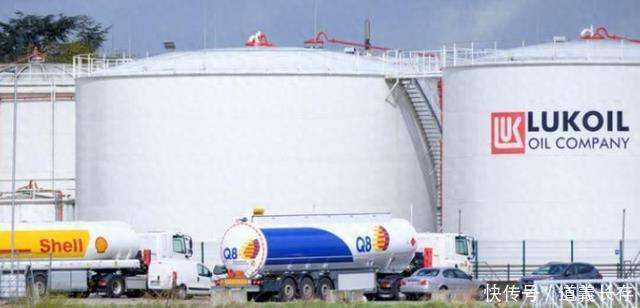
美欧制裁刚落地,瑞士富豪闪电收割俄油资产,保加利亚陷油荒危机
Sou Hu Cai Jing· 2025-11-19 05:52
Core Insights - The article discusses the challenges faced by Russian oil company Lukoil due to sanctions imposed by the US and Europe, particularly affecting its overseas assets and operations in Bulgaria [1][3] - The Bulgarian government has implemented a policy requiring security approval for any acquisition of Lukoil's refinery, highlighting the urgency of the situation [3] - The acquisition of Lukoil's overseas assets by Gunvor Group, led by Torbjorn Tornqvist, is a significant development, with the deal potentially valued at $20 billion [3][5] Group 1: Impact of Sanctions - Lukoil's overseas operations, including refineries and gas stations, are under threat due to sanctions, complicating asset management [3] - Bulgaria relies heavily on Lukoil's refinery for fuel supply, and any disruption could lead to a national fuel crisis [1][3] - The urgency for Lukoil to divest its overseas assets to avoid freezing and potential financial ruin is emphasized [3][5] Group 2: Acquisition Dynamics - Torbjorn Tornqvist's Gunvor Group is known for its risk-taking in volatile markets, and the acquisition of Lukoil's assets occurred shortly after sanctions were announced [5] - The deal structure involved profit-sharing rather than traditional financing, showcasing financial ingenuity and risk tolerance [5] - The acquisition highlights potential loopholes in Western sanctions, as it allows Russian entities to maintain financial inflows through strategic maneuvers [5][7] Group 3: Broader Economic Implications - The article suggests that the actions of large corporations in the energy sector ultimately affect ordinary consumers, as market prices for fuel and air travel may rise due to these corporate maneuvers [7][8] - The shift from reliance on Russian oil to increased dependence on American natural gas by European countries is noted, indicating a change in energy dynamics [5] - The ongoing regulatory review of the acquisition indicates uncertainty in the final outcome, but capital operations often find ways to profit amid such uncertainties [7]
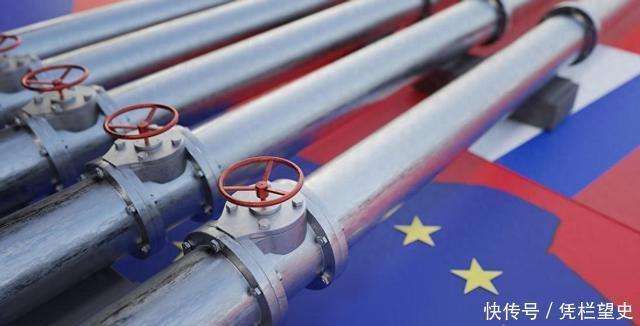
原油日报:俄罗斯新罗西斯克遇袭码头恢复装船-20251118
Hua Tai Qi Huo· 2025-11-18 03:16
Group 1: Market News and Key Data - The price of light crude oil futures for December delivery on the New York Mercantile Exchange fell 18 cents, closing at $59.91 per barrel, a decrease of 0.3%. The price of Brent crude oil futures for January delivery fell 19 cents, closing at $64.20 per barrel, a decrease of 0.3%. The main SC crude oil contract rose 0.24%, closing at 462 yuan per barrel [1] - Ukraine's General Staff claimed to have attacked the Novogubyshevsk Refinery of Rosneft in the Samara region of Russia, the latest in a series of attacks on Russia's fuel production industry in the country's deep - seated areas [1] - Serbian President Vucic said on October 16 that the government was willing to repurchase the controlling stake held by Gazprom at a premium to help NIS, the country's only refinery, get out of the US sanctions dilemma [1] - The Prime Minister of Iraq told the former CEO of Lukoil that Iraq remained committed to stabilizing the global oil market, and Lukoil's West Qurna oil field continued to produce about 480,000 barrels of oil per day [1] - The analysis of the US Treasury Department's Office of Foreign Assets Control (OFAC) pointed out that sanctions on Rosneft and Lukoil could have a long - term negative impact on Russia's oil sales volume, cutting Russia's oil revenue and driving Russian crude oil prices to multi - year lows [1] Group 2: Investment Logic - Media reported that the loading operations at the Sheskharis Oil Terminal in Novorossiysk, Russia, had resumed after last week's attack. However, satellite images showed that the loading of Urals crude oil was still interrupted, and two berths at the Sheskharis Port were not operating normally. The loading speed of the Sheskharis Oil Terminal, especially for Urals crude oil, was still below normal levels. The port used to export about 500,000 barrels per day of Russian crude oil [2] Group 3: Strategy - Short - term oil prices are expected to fluctuate, and a medium - term short position is recommended (shorting the monthly spread, Brent, or WTI) [3] Group 4: Risks - Downside risks include the US relaxing sanctions on Russian oil and macro black - swan events [3] - Upside risks include tighter supply of sanctioned oil (from Russia, Iran, and Venezuela) and large - scale supply disruptions due to conflicts in the Middle East [4]
Exclusive: Chevron joins race to explore potential purchase of Lukoil assets, sources say
Reuters· 2025-11-17 16:32
Core Insights - U.S. oil major Chevron is exploring options to acquire global assets from the sanctioned Russian oil company Lukoil [1] Group 1 - Chevron is studying potential acquisition strategies for Lukoil's assets, indicating a proactive approach to expanding its portfolio amidst geopolitical tensions [1]


邓正红能源软实力:印度继续购买俄油 制裁短期扰动市场 难以改变供过于求格局
Sou Hu Cai Jing· 2025-11-16 06:10
Group 1 - Despite U.S. pressure, India continues to purchase Russian oil, with Indian Oil Corporation paying for five batches of oil to be delivered in December [1] - Indian Oil Corporation procured approximately 3.5 million barrels of Russian ESPO crude oil at prices close to Dubai quotes, indicating a strategic procurement approach [1][3] - The U.S. government has approved potential buyers to negotiate with Lukoil for its overseas assets, highlighting the complexities of U.S.-Russia relations in the energy sector [1] Group 2 - India's energy strategy emphasizes soft power considerations, including risk diversification through multiple supply sources and a focus on renewable energy [3] - The Indian government has established a three-tier energy security framework, balancing long-term LNG agreements with the U.S. and Australia, emergency reserves from discounted Russian oil, and investments in hydrogen energy [3] - The procurement of Russian oil is driven by economic rationality, with discounts of up to $5 per barrel compared to other sources, showcasing a cost-optimization strategy [3] Group 3 - The limitations of U.S. pressure tactics are evident, as punitive tariffs on Indian imports have not deterred India from its energy procurement strategy [4] - India's firm stance against U.S. pressure reflects a broader geopolitical strategy, emphasizing its energy needs as a third-largest oil consumer [4] - The dynamics of global oil supply and demand remain influenced by India's continued engagement with Russian oil, despite U.S. sanctions [4] Group 4 - The deepening cooperation between Russia and India in energy and nuclear sectors indicates a strategic partnership that transcends geopolitical tensions [5] - India's flexible diplomatic approach allows it to maintain energy ties with Russia while exploring oil offers from other regions, reflecting a non-aligned strategy [5] - The operational stability of the Caspian pipeline, which transports over 1.6 million barrels of oil daily, is crucial for India's energy security [5] Group 5 - The ongoing purchase of Russian oil by India illustrates a shift in international energy competition from resource control to soft power dynamics, emphasizing rule-making and technological standards [6] - India's approach to energy procurement integrates diplomatic and technological cooperation, enhancing its strategic autonomy in the global energy landscape [6] - This case serves as a reference for developing countries in navigating global energy governance amidst geopolitical rivalries [6]
俄卢克石油公司海外资产寻新买家,美允许制裁生效后继续谈判
Sou Hu Cai Jing· 2025-11-15 09:30
Core Points - The U.S. government announced that certain transactions related to the sale of overseas assets by Russian private company Lukoil can continue after the sanctions take effect on November 21, with negotiations needing to be completed by December 13 [1][2] - Lukoil had initially planned to sell its overseas assets to a Swiss company but had to seek other buyers due to U.S. government opposition [1] - The U.S. Treasury Department's sanctions also include provisions for the sale of Lukoil's significant asset, the Burgas refinery in Bulgaria, allowing the transaction to be completed by April 29, 2026 [2] Group 1 - The U.S. Treasury's authorization allows for the completion of certain transactions related to Lukoil's overseas assets, including the purchase of goods and services for Lukoil's facilities outside Russia [2] - The approval for these transactions is contingent upon the assets being completely severed from Lukoil and the proceeds being deposited into a third-party escrow account inaccessible to Lukoil during the sanctions [2] - The U.S. Treasury aims to ensure energy security for its partners and allies while preventing the Russian government from benefiting from these transactions [2] Group 2 - Lukoil has been in discussions with potential buyers for its overseas assets, emphasizing the importance of maintaining operations during the sale process to avoid disruptions in energy supply and protect jobs [4] - The company previously agreed to sell its assets to Swiss company Gunvor but had to abandon the deal due to U.S. government restrictions [4] - U.S. private equity firm Carlyle Group is reportedly exploring options to acquire Lukoil's overseas assets, with other global companies also considering bids [4] Group 3 - Lukoil holds full or partial stakes in three refineries located in Bulgaria, Romania, and the Netherlands, and has oil and gas projects in several countries including Kazakhstan, Uzbekistan, Iraq, Mexico, Ghana, Egypt, and Nigeria [5] - The estimated value of Lukoil's international assets is approximately $22 billion according to documents disclosed in 2024 [5]
俄卢克石油公司海外资产寻新买家 美允许制裁生效后继续谈判
Xin Hua She· 2025-11-15 08:34
Core Points - The U.S. government announced that certain transactions related to the sale of overseas assets by Russian private company Lukoil can continue after the sanctions take effect on November 21, with negotiations needing to be completed by December 13 [1][2] - Lukoil had initially planned to sell its overseas assets to a Swiss company but had to seek other buyers due to U.S. government opposition [1][4] - The U.S. Treasury Department issued authorizations allowing certain transactions related to Lukoil's overseas assets, including the sale of the Burgas refinery in Bulgaria, which is the largest refinery in the country [2][3] Company and Industry Summary - Lukoil is engaged in ongoing negotiations to sell its overseas assets and aims to ensure that operations remain uninterrupted during the transition to new ownership [4] - The company has previously agreed to sell its overseas assets to Swiss company Gunvor, but the deal fell through due to U.S. government restrictions [4] - U.S. private equity firm Carlyle Group is reportedly exploring options to acquire Lukoil's overseas assets, with other global companies also considering bids [4] - Lukoil holds full or partial stakes in three refineries located in Bulgaria, Romania, and the Netherlands, and has oil and gas projects in several countries, with an estimated international asset valuation of approximately $22 billion [5]
美国延长对卢克石油的制裁豁免期,新竞购方出现
Sou Hu Cai Jing· 2025-11-15 06:04
Core Viewpoint - The Trump administration has extended sanctions waivers for certain transactions involving Lukoil to facilitate negotiations with foreign governments and potential buyers regarding the company's international assets [1] Group 1: Sanctions and Waivers - The U.S. Treasury has issued licenses for transactions related to Lukoil's retail gas stations and international asset sales, effective until December 13 [1] - The waiver for transactions involving Lukoil's Bulgarian entity has been extended until April 29 [1] Group 2: Negotiations and Future Plans - U.S. officials are consulting with allies from Central Europe to the Middle East to manage the complex process of disposing of Lukoil's overseas business before the original deadline of November 21 [1] - The aim is to allow more time for the completion of transactions and to explore alternative ownership structures to ensure that the relevant assets remain outside of Russian control [1]