OXY(OXY)

Search documents
闪迪飙涨15%,美股半导体深夜爆发,国际油价大跳水,特朗普称将降低印度关税至18%
21世纪经济报道· 2026-02-02 23:15
Market Overview - On February 2, US stock indices closed higher, with the Dow Jones up 1.05%, S&P 500 up 0.54%, and Nasdaq up 0.56% [1] - Major technology stocks showed mixed results, with Apple rising over 4% and Nvidia falling nearly 3% [2] Technology Sector - The Philadelphia Semiconductor Index increased by 1.7%, with Micron Technology up over 5% and Intel up nearly 5% [2] - SanDisk's stock surged over 15% due to better-than-expected earnings, while Western Digital and Seagate also saw gains [3] - NAND flash memory prices are expected to rise by over 30% according to reports from SK Hynix and SanDisk [3] Energy Sector - The energy sector experienced declines, with ExxonMobil down over 2% and Chevron down more than 1% [3] - WTI crude oil futures fell by 4.71%, closing at $62.14 per barrel, while Brent crude oil futures dropped by 4.36% to $66.30 per barrel [4] Cryptocurrency Market - Bitcoin prices rose above $78,000 after previously dipping to around $74,560, with significant market volatility leading to over 170,000 liquidations [4] - Bitcoin ETF saw a net outflow of $1.61 billion in January 2026, indicating liquidity issues in the market [4] International Relations and Trade - A trade agreement between the US and India was announced, reducing tariffs on Indian goods from 25% to 18%, effective immediately [5] - India is expected to increase its procurement of US products, including energy and agricultural goods, valued at over $500 billion [5] - The Indian stock index Nifty 50 saw a rise in futures, and the Indian Rupee strengthened against the US dollar following the trade announcement [6]





盘前:纳指期货跌0.66% 小摩与美银坚定6000美元金价信仰
Xin Lang Cai Jing· 2026-02-02 13:44
Market Overview - Global stock markets experienced a "collective retreat" with the S&P 500 futures indicating a fourth consecutive day of decline for U.S. stocks [2][27] - As of the latest update, Dow futures fell by 0.09%, S&P 500 futures dropped by 0.38%, and Nasdaq futures decreased by 0.66% [3][28] - Asian markets faced heavier declines, with the South Korean Kospi index plummeting by 5.3%, triggering a temporary trading halt [3][28] Commodity Market Volatility - Extreme volatility in the commodity market remains a focal point, with gold prices initially dropping by 10% before narrowing losses, and silver prices falling by 16% before recovering most of the decline [5][30] - The Chicago Mercantile Exchange raised margin requirements for precious metals futures, increasing holding costs for traders, which typically pressures prices and trading activity [5][30][31][32] Federal Reserve Leadership Impact - The nomination of Kevin Walsh as the next Federal Reserve Chair is shifting market expectations towards "less/fewer rate cuts," impacting precious metals prices [12][37] - Analysts suggest that Walsh's past criticisms of the Fed and focus on price stability may lead to a reassessment of the dollar's depreciation narrative, contributing to the recent drop in gold, silver, and copper prices [12][37] Upcoming Economic Data and Earnings Reports - Investors are focusing on the upcoming U.S. non-farm payroll report, expected to show an increase of 68,000 jobs, the largest gain in four months, scheduled for release on Friday [12][41] - A busy earnings week is anticipated, with major companies like Google and Amazon set to report their quarterly results [41][42] Individual Stock Movements - Energy stocks are experiencing pre-market declines, with Occidental Petroleum down 3.1% and ConocoPhillips down 2.6% [43] - Rare earth stocks surged in pre-market trading following President Trump's announcement of a $12 billion mineral reserve initiative [43] - Disney shares rose by 4% in pre-market trading after reporting quarterly revenue that exceeded expectations [44]


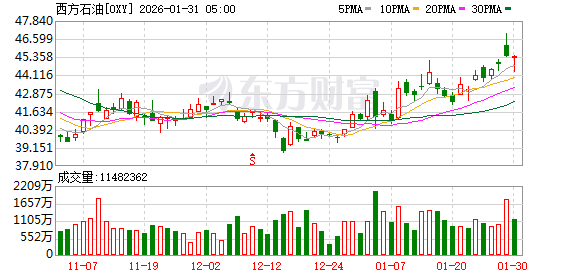
美股能源公司股价盘前下跌,西方石油跌3.1%


Mei Ri Jing Ji Xin Wen· 2026-02-02 09:28
Core Viewpoint - U.S. energy company stocks experienced a decline in pre-market trading on February 2, with notable drops across major companies in the sector [2] Group 1: Company Performance - Occidental Petroleum saw a decrease of 3.1% [2] - ConocoPhillips dropped by 2.6% [2] - Halliburton's stock fell by 4.1% [2] - Schlumberger experienced a decline of 2.9% [2] - ExxonMobil's shares decreased by 1.5% [2] - Chevron's stock was down by 1.7% [2]
美股能源公司股价盘前大跌
Ge Long Hui A P P· 2026-02-02 09:24
Core Viewpoint - Oil prices have dropped by 5%, leading to significant pre-market declines in the stock prices of major U.S. energy companies [1] Group 1: Company Stock Performance - Occidental Petroleum (OXY.US) shares fell by 3.1% [1] - ConocoPhillips (COP.US) shares decreased by 2.6% [1] - Halliburton (HAL.US) stock dropped by 4.1% [1] - Schlumberger (SLB.US) shares declined by 2.9% [1] - ExxonMobil (XOM.US) saw a decrease of 1.5% in its stock price [1] - Chevron (CVX.US) shares fell by 1.7% [1]
Occidental Petroleum (OXY) Price Target Raised at Piper Sandler
Yahoo Finance· 2026-01-30 17:53
Core Insights - Occidental Petroleum Corporation (NYSE:OXY) is recognized as one of the 10 Best American Oil and Gas Stocks to Buy [1] Price Target Adjustments - Piper Sandler analyst Mark Lear raised the price target for Occidental Petroleum from $46 to $47, maintaining a 'Neutral' rating, indicating an upside of nearly 5% from the current share price [3] - BofA also increased its price target for Occidental Petroleum from $44 to $45, while keeping a 'Neutral' rating, as part of a broader update on price targets for Integrated, Refining, and Midstream stocks [4] Market Context - The analyst from Piper Sandler anticipates strong performance from gas operators in Q4 2025, despite weak oil and NGL prices posing challenges for oil companies during the quarter [3] - As the market approaches 2026, there is an expectation that gas producers will seek growth in response to rising demand for LNG [3]
OXY vs. CNQ: Which Oil & Gas Stock Currently Offers Better Returns?
ZACKS· 2026-01-29 17:01
Industry Overview - The Zacks Oil-Energy sector presents a strong long-term investment outlook, driven by extensive shale reserves, advanced extraction technologies, and sustained global energy demand [1] - Innovations such as hydraulic fracturing and horizontal drilling have unlocked significant unconventional resources, benefiting operators in this sector [1][2] Geopolitical and Market Dynamics - Oil and gas exploration and production companies are benefiting from favorable geopolitical positioning and the rapid growth of LNG export markets [2] - Prudent capital allocation and tighter cost controls have enhanced free cash flow, while industry consolidation and operational improvements support resilient earnings and sustainable shareholder returns despite commodity price volatility [2] Company Profiles - **Occidental Petroleum (OXY)**: Offers a compelling investment case with a diversified asset base, strong free cash flow, and a focus on low-carbon solutions. Its position in the Permian Basin and international operations support steady production and earnings [4] - **Canadian Natural Resources (CNQ)**: Presents a strong long-term investment case with a diversified portfolio of low-risk, long-life assets across oil sands, conventional oil and gas, and offshore operations. Its balanced asset base ensures stable production and cost predictability [5] Financial Metrics Comparison - The Zacks Consensus Estimate indicates a decline of 51.3% in OXY's earnings for 2026, while CNQ's earnings are projected to decline by 4.41% [7][9] - CNQ has outperformed OXY with a 15.1% gain over six months compared to OXY's 1.4% decline [8] - CNQ's debt-to-capital ratio is 29.91%, significantly lower than OXY's 37.93%, indicating more conservative leverage [8][11] - CNQ's return on equity (ROE) stands at 18.93%, surpassing OXY's 12.35% [8][14] - CNQ offers a dividend yield of 4.59%, compared to OXY's 2.15%, both exceeding the S&P 500's yield of 1.36% [18] Valuation Metrics - OXY appears cheaper on a trailing 12-month EV/EBITDA basis, trading at 5.43X compared to CNQ's 6.5X, while both are above the sector average of 5.07X [16] Price Performance - In the past six months, OXY's shares have decreased by 1.4%, while CNQ has increased by 15.1%, outperforming the Oil-Energy sector's return of 10.8% [19] Conclusion - Both Occidental Petroleum and Canadian Natural Resources are strategically investing in infrastructure to meet rising global hydrocarbon demand [23] - Despite OXY's cheaper valuation, CNQ shows advantages in ROE, lower debt usage, better dividend yield, and superior price performance, leading to a favorable investment outlook for CNQ [24]

石油股普涨 西方石油(OXY.US)涨逾4%
Zhi Tong Cai Jing· 2026-01-29 15:16
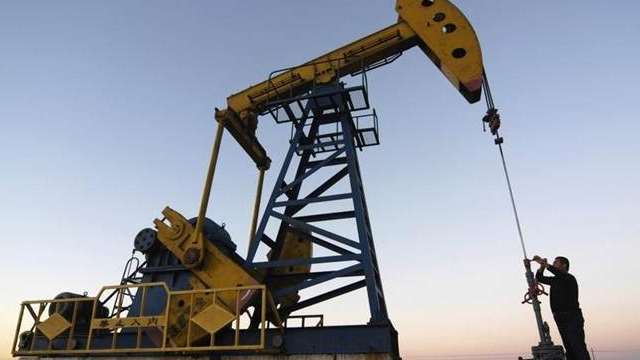
Group 1 - Oil stocks experienced a broad rally, with Occidental Petroleum (OXY.US) rising over 4%, ConocoPhillips (COP.US) increasing more than 3%, and ExxonMobil (XOM.US) and Chevron (CVX.US) both gaining over 2% [1] - Brent crude oil futures surged more than 4% during the day, strongly breaking through the $70 per barrel mark, driven by market concerns over escalating tensions between the U.S. and Iran [1] - President Trump continues to apply pressure on Iran to terminate its nuclear program, threatening military action and deploying naval forces to the region [1] Group 2 - Reports indicate that Trump is considering options that include precise strikes against Iranian security forces and leaders to incite protests and potentially overthrow the current Iranian regime [1] - Analysts warn that if Iran retaliates, such as by closing the Strait of Hormuz, it could have catastrophic effects on the transportation of over 20 million barrels of oil per day [1]
美股异动 | 石油股普涨 西方石油(OXY.US)涨逾4%
智通财经网· 2026-01-29 15:16
Core Viewpoint - Oil stocks experienced a significant rally, driven by rising tensions between the U.S. and Iran, which have led to a surge in Brent crude oil prices above $70 per barrel [1] Group 1: Oil Stocks Performance - Occidental Petroleum (OXY.US) rose over 4% - ConocoPhillips (COP.US) increased by more than 3% - ExxonMobil (XOM.US) and Chevron (CVX.US) both saw gains exceeding 2% [1] Group 2: Market Dynamics - Brent crude oil futures surged more than 4% in a single day, breaking the $70 mark - The market is concerned that escalating tensions between the U.S. and Iran are a primary driver of rising oil prices [1] Group 3: Geopolitical Factors - President Trump is intensifying pressure on Iran to halt its nuclear program, threatening military action and deploying naval forces to the region - Reports indicate that Trump is considering options for precise strikes against Iranian security forces and leaders to incite protests and potentially overthrow the current regime [1] Group 4: Potential Risks - Analysts warn that if Iran retaliates, such as by closing the Strait of Hormuz, it could have catastrophic effects on the transportation of over 20 million barrels of oil per day [1]
美国能源行业遭受重创,冬季风暴致日均200万桶原油产量中断
Xin Lang Cai Jing· 2026-01-26 21:39
Core Viewpoint - A severe winter storm has impacted the entire United States, leading to significant reductions in oil and gas production, with a peak daily decrease of 2 million barrels, representing a 15% drop in national output [2][11]. Oil Production Impact - The Energy Aspects consultancy reported that the peak reduction in U.S. oil production occurred on Saturday, with an average daily decrease of 2 million barrels, primarily from the Permian Basin, which accounted for approximately 1.5 million barrels of the reduction [2][11]. - By Monday, the reduction eased, with the Permian Basin's shutdown scale dropping to an average of 700,000 barrels per day, and full recovery is expected by January 30 [2][11]. - ConocoPhillips reported a reduction of 175,000 barrels per day in the Permian Basin due to the severe weather [2][11]. Operational Challenges - Chevron reported issues at its Midland, Texas facility due to frozen equipment, and the Texas Oil and Gas Association noted significant challenges in third-party transportation, particularly in water transport and technician scheduling [3][11]. - Over twenty companies, including Western Oil and Targa Resources, reported operational failures at their natural gas processing plants and compressor stations in Texas, although the number of failures was significantly lower than during the severe winter storm in 2021 [3][11]. Natural Gas Production - North Dakota's oil production is expected to decrease by 80,000 to 110,000 barrels per day, with associated natural gas production dropping by 240 to 330 million cubic feet [4][12]. - The average daily natural gas production in the U.S. has fallen to 10.69 billion cubic feet, down from a historical high of 10.97 billion cubic feet in December [5][13]. Refinery Operations - Several refineries along the Gulf Coast faced operational issues due to the freezing weather, including ExxonMobil, which closed parts of its facility in Baytown, Texas [5][13]. - The IIR reported that the Suncor refinery in Lima, Ohio, with a capacity of 172,000 barrels per day, experienced mechanical failures, delaying full restart until later in the week [6][14]. Electricity Supply and Demand - The winter storm has caused power outages for over 1 million households and businesses, with approximately 810,000 customers still without power as of Monday [7][16]. - The PJM Interconnection expects a generation interruption of 22.4 gigawatts, about 16% of its total committed capacity, primarily affecting the Mid-Atlantic region [8][17]. - Electricity prices surged, with wholesale prices reaching around $200 per megawatt-hour, having previously exceeded $3,000 [8][17]. Prices in New England spiked by approximately 82% to $313 per megawatt-hour, while prices in Pennsylvania and Maryland surged by about 360% to around $413 per megawatt-hour, the highest since January 2014 [8][17].


Prem Watsa: Positioning Through Deep Value & Optionality
Acquirersmultiple· 2026-01-25 23:58
Core Insights - Fairfax Financial's latest 13F indicates a strong commitment to real assets, energy, and restructuring platforms with minimal portfolio turnover, reflecting satisfaction with current holdings rather than tactical changes [1] Company Summaries - **Orla Mining (ORLA)**: Maintained a position of 56.8 million shares valued at $610.5 million, representing approximately 29.6% of the portfolio, indicating confidence in asset durability and inflation hedging [2] - **Occidental Petroleum (OXY)**: Held 6.05 million shares worth $285.9 million, about 13.9% of the portfolio, with no changes made, suggesting satisfaction with risk/reward dynamics as the company focuses on deleveraging [3] - **BlackBerry (BB)**: Reduced position by 5,389,380 shares to 35.4 million shares valued at $172.3 million, approximately 8.4% of the portfolio, reflecting a pragmatic de-risking approach amid ongoing restructuring [4] - **Kraft Heinz (KHC)**: Increased position by 235,000 shares to 5.12 million shares valued at $133.2 million, around 6.5% of the portfolio, consistent with a strategy of accumulating cash flow at discounted valuations [5] - **Molson Coors (TAP)**: Added 71,571 shares for a total of 1.29 million shares valued at $58.4 million, approximately 2.8% of the portfolio, indicating a preference for staples with pricing power [6] - **Vanguard S&P 500 ETF (VOO)**: Trimmed position by 14,652 shares to 58,248 shares valued at $35.7 million, about 1.7% of the portfolio, reflecting a strategy to reduce passive index exposure [7] - **Helmrich & Payne (HP)**: Increased position by 200,000 shares to 1.17 million shares valued at $25.9 million, approximately 1.3% of the portfolio, indicating a thematic bet on energy services and capital discipline [8] - **Full Exits**: Autohome (ATHM) and Lifeway Foods (LWAY) were fully exited, reflecting a cleanup of non-core positions [9] Portfolio Themes - **Low Turnover = High Conviction**: The stability of the portfolio suggests that Fairfax is already positioned for the macro environment anticipated last year [11] - **Hard Asset & Energy Bias**: The focus on ORLA, OXY, and HP highlights a preference for inflation hedging and real asset valuations [12] - **Restructuring Optionality**: BlackBerry is viewed as a multi-year operational value unlock rather than a growth investment [13] - **Cash Flow Defensives**: KHC and TAP are seen as providing income stability and potential for margin recovery [14] Takeaway - Fairfax remains committed to a strategy focused on value and optionality rather than momentum or AI trends, emphasizing hard assets and cash-flow consumers to realize intrinsic value [15]