Rio Tinto(RIO)

Search documents
RIO's Q3 Iron Ore Shipments Up 6% Sequentially: How to Play the Stock?
ZACKS· 2025-11-13 19:11
Core Insights - Rio Tinto reported stable iron ore shipments of 84.3 million tons in Q3 2025, flat year-over-year but a 6% increase sequentially, marking the second-highest Q3 performance since 2019 [1] - The company expects Pilbara iron ore shipments for 2025 to be between 323 million tons and 338 million tons, indicating a potential year-over-year decline of 2% to growth of 3% [5] - Analysts have raised earnings estimates for 2025-2026, reflecting improving sentiment towards Rio Tinto [9] Production Highlights - Bauxite production increased by 9% year-over-year to 16.4 million tons in Q3 2025, achieving a production record [3] - Aluminum output rose by 6% year-over-year to 0.86 million tons, while alumina output increased by 7% year-over-year to 1.9 million tons [3] - Copper production reached 204 thousand tons, a 10% increase year-over-year, with record production at Oyu Tolgoi [4] Production Guidance - Rio Tinto's bauxite production target for 2025 is revised to 59-61 million tons, up from 57-59 million tons, reflecting higher utilization rates [6] - Copper production is expected to be near the high end of the range of 780-850 thousand tons for 2025, driven by strong performance at Oyu Tolgoi [7] Financial Estimates - The Zacks Consensus Estimate for Rio Tinto's 2025 revenues is $54.90 billion, a 1.6% year-over-year increase, while earnings are projected at $6.09 per share, indicating a 9.1% decline [8] - For 2026, revenue estimates suggest a 3.72% year-over-year increase to $56.94 billion, with earnings projected to grow by 4.6% to $6.37 per share [10][11] Stock Performance - Year-to-date, Rio Tinto shares have gained 21.6%, lagging behind the industry's 26.5% growth [13] - The company operates across 35 countries with a diversified portfolio, focusing on new projects to support energy transition [15] Lithium Expansion - Rio Tinto is expanding its lithium portfolio to meet rising demand for batteries and electric vehicles, aiming to grow its capacity to over 200 thousand tons per year of lithium carbonate equivalent by 2028 [16] Valuation - Rio Tinto trades at a forward price-to-earnings multiple of 11.23, lower than the industry average of 16.43, indicating an attractive valuation [17] Investment Outlook - Despite potential operational headwinds, Rio Tinto's diversified portfolio and project pipeline position it well for future growth, supported by upward earnings revisions and attractive valuation [19]



Rio Tinto mothballs $2.95bn Jadar lithium project in Serbia
Yahoo Finance· 2025-11-13 14:46
Core Insights - Rio Tinto has decided to halt further development of the $2.95 billion Jadar lithium project in Serbia as part of a strategy to streamline operations and focus on near-term opportunities [1][3] - The Jadar project has faced multiple setbacks, including permitting delays and local opposition, despite hosting high-grade lithium resources [2][4] - The decision aligns with CEO Simon Trott's initiative to simplify the company's structure and prioritize capital allocation towards growth opportunities [3][4] Project Status - The Jadar project has not yet commenced production and has been placed into "care and maintenance" due to lack of progress in permitting [1][2] - The project has become a focal point of public discontent, complicating its advancement [2] Strategic Focus - Rio Tinto aims to optimize its portfolio and improve operational efficiency, remaining the only large diversified mining company to invest significantly in lithium [4] - The company reorganized into three core divisions: iron ore, aluminium combined with lithium, and copper under Trott's leadership [3] Market Context - The lithium market has seen a significant downturn, with prices dropping approximately 85% from their peak in 2022 [5] - Despite the downturn, Rio Tinto plans to increase its capital expenditure to the highest level in over a decade [5]
四大矿山第三季度报告释放了什么消息?
Fo Shan Jin Kong Qi Huo· 2025-11-13 06:53
Report's Investment Rating for the Industry There is no information provided regarding the report's investment rating for the industry. Core Viewpoints of the Report - In Q3, the cumulative global iron ore shipments turned positive year-on-year, mainly due to the increase in Chinese imports [1]. - Among the Big Four mines, FMG and Vale had strong shipments, while Rio Tinto's shipments this year may be at the lower end of the guidance target. However, the guidance targets of the Big Four mines remain unchanged, so the iron ore supply will still be strong in Q4 [1]. - With a strong iron ore supply and negative feedback from finished products on the demand side, fundamental contradictions are accumulating, and port inventories are increasing. The subsequent trend this year will be sideways with limited upside potential [1]. Summary by Relevant Catalogs 1. Global Shipments - As of Q3 2025, global iron ore shipments reached 1.20 billion tons, a year-on-year increase of 2.39%. The increase in Q3 shipments (422 million tons) was mainly due to a significant increase in Chinese imports (326 million tons) [2]. - Structurally, as of Q3, the cumulative shipments from Australia and Brazil were 1.00 billion tons, a year-on-year increase of 1.25%, while those from non-Australia and Brazil regions were 200 million tons, a year-on-year decrease of 4.51% [4]. - As of September, China's cumulative iron ore imports were 919 million tons, a year-on-year increase of 0.05%. In the first eight months, cumulative imports were negative year-on-year, but imports increased in the second half of the year due to higher steel mill profits and strong demand [4]. - In the first three quarters, China imported 560 million tons of iron ore from Australia, a year-on-year increase of 1.69%, accounting for 61% of the total imports, and 196 million tons from Brazil, accounting for 21% [7]. 2. Big Four Mines 2.1 Summary of Supply in the First Three Quarters - As of mid-October 2025, the cumulative shipments of the Big Four mines were 877 million tons, a year-on-year increase of 0.53%. FMG had the largest increase, Vale's shipments increased slightly year-on-year, while BHP and Rio Tinto's shipments decreased [8]. Rio Tinto - Rio Tinto's shipments may be at the lower end of the target. The shipments from its Pilbara mining area increased significantly in Q3, but its shipments in the first three quarters decreased year-on-year due to the impact of a hurricane in Q1 [11]. - The grades of PB fines and lumps decreased. In Q3, the shipments of PB fines and lumps increased significantly, while those of SP fines and lumps decreased significantly [13]. - The progress of the Simandou project (designed capacity of 60 million tons/year) exceeded expectations. It is expected to load the first batch of iron ore in October and ship in November, earlier than expected by one month. The capacity is expected to increase significantly in 2026 [14]. FMG - FMG's production and sales increased year-on-year, and the guidance target remained unchanged. In Q3, its production was 50.8 million tons, a year-on-year increase of 6%, and shipments were 49.7 million tons, a year-on-year increase of 4% [16]. - The guidance target for shipments in the 2026 fiscal year remained unchanged at 195 - 205 million tons, and the C1 cost target remained unchanged at $17.5 - $18.5 per wet ton [16]. BHP - BHP's Q3 shipments decreased, and the guidance target remained unchanged. Its Q3 production in Western Australia was 70.25 million tons, a year-on-year decrease of 2%, mainly affected by the reconstruction of the Car Dumper 3 project at Port Hedland [19]. - The guidance target for the 2026 fiscal year remained unchanged, about 2 million tons higher than that of the 2025 fiscal year. The average iron ore selling price in Q3 2025 was $84.04 per ton, a 5% increase both quarter-on-quarter and year-on-year [21]. Vale - Vale had strong production and sales in Q3. Its Q3 iron ore production was 94.4 million tons, a year-on-year increase of 4%, mainly due to the production increase in the S11D in the northern system, Minas Centrais in the southeastern system, and Vargem Grande in the southern system [23]. - Vale's Q3 sales were 86 million tons, a year-on-year increase of 5%. It adjusted its product strategy, reducing the sales of high-grade IOCJ fines by 52% year-on-year and increasing the sales of medium-grade fines such as Brazilian Blend and Carajas fines [23]. 2.2 Outlook for Future Supply - Overall, the guidance targets of the Big Four mines remain unchanged. Rio Tinto's shipments may be at the lower end of the target, while Vale's production is moving towards the upper end of the target, and FMG has strong production and sales. Therefore, it is expected that the mine shipments will still be strong in Q4, and there will be some supply pressure on iron ore [25]. 3. Fundamental Analysis 3.1 Domestic Supply - As of September, China's cumulative production of iron ore raw ore was 761 million tons, a year-on-year decrease of 2.55%. The cumulative production of iron concentrate from 433 domestic mines was 207 million tons, a year-on-year decrease of 4.13%. China's demand for iron elements is highly dependent on imports [26]. 3.2 Demand - As of the end of September, the cumulative crude steel production was 746 million tons, a year-on-year decrease of 2.89%, and the cumulative steel production was 1.104 billion tons, a year-on-year increase of 5.68%. The cumulative iron ore production of 247 sample steel enterprises was 648 million tons, a year-on-year increase of 3.45% [27]. - As steel mills have a certain profit margin, the iron ore production remains high, supporting the demand for iron ore. However, the weak demand for finished products is expected to reduce the demand for iron ore in the future [27]. 3.3 Inventory - Due to the contradiction between the strong supply and weak demand of iron ore, the port iron ore inventory has been continuously increasing, with certain inventory pressure. The steel mill inventory is currently maintained at around 90 million tons, and the overall inventory is at a low level [31]. - At the port end, due to the high inventory pressure last year, the year-on-year import of iron ore decreased in the early part of this year, and the port inventory continued to decline. However, with the recovery of steel mill profits and the increase in foreign ore shipments, the port has started to gradually accumulate inventory, and the current inventory is 150 million tons, with certain inventory pressure [33]. 4. Future Outlook - In the context of weak demand for finished products, the decline of iron ore in the first half of the year was smaller than that of coking coal and coke. After June, the prices of coking coal and coke continued to rise, while the increase of iron ore was less than that of coking coal and coke [34]. - Looking forward, this year's crude steel reduction is expected to be mainly through the independent production cuts of steel mills. The policy space for the demand side of finished products may be limited in the future. The supply side of iron ore remains strong, while the demand continues to weaken. Therefore, it is expected that iron ore will remain sideways in the future, but the upside potential is limited [35].
X @Bloomberg
Bloomberg· 2025-11-13 03:10
Project Update - Rio Tinto has mothballed the $295 billion Jadar lithium project in Serbia [1]
重塑全球铁矿石供应格局
Qi Huo Ri Bao Wang· 2025-11-13 01:15
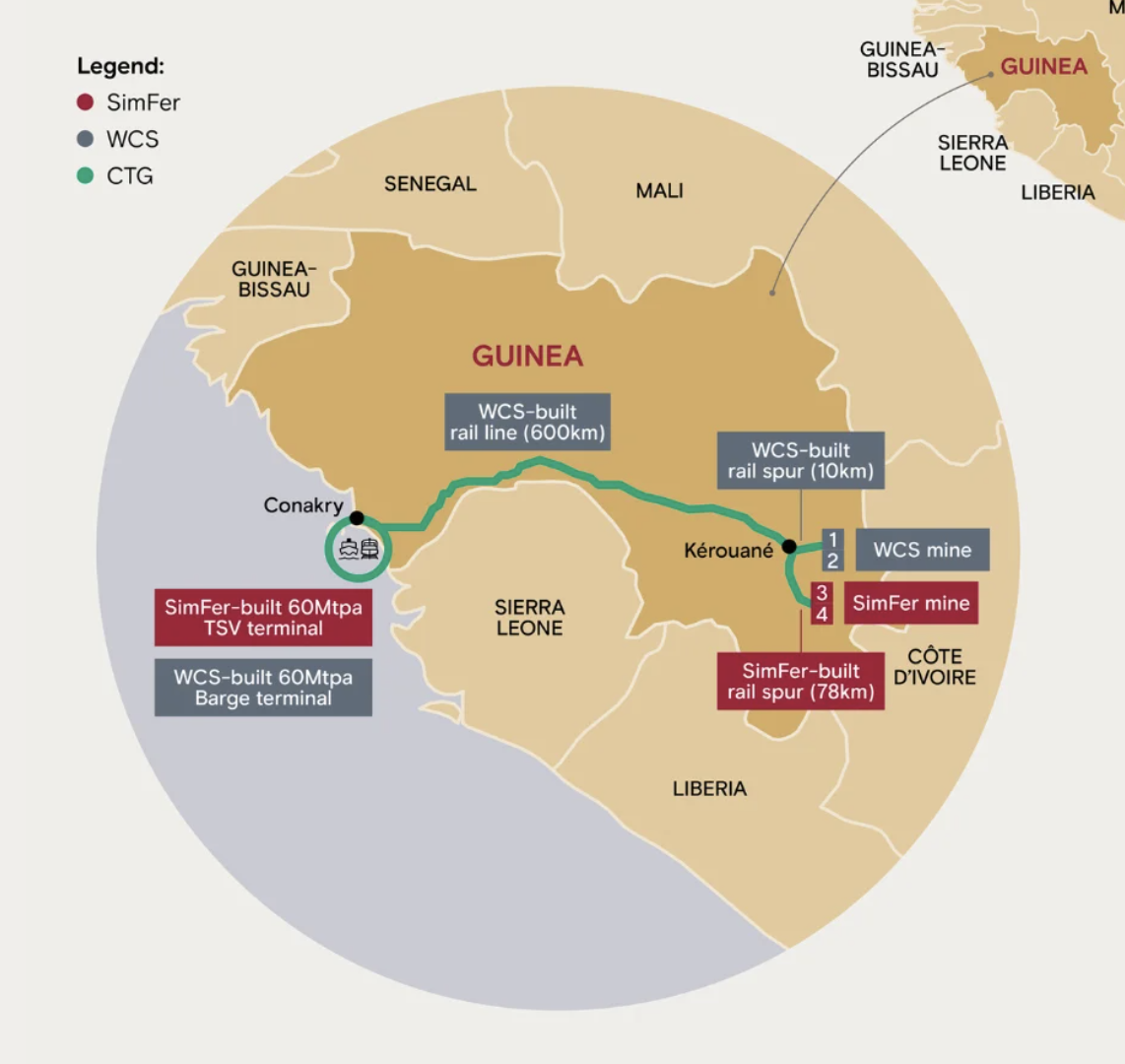
Project Overview and Latest Developments - The Simandou iron ore project in southeastern Guinea is one of the largest undeveloped mines globally, with iron ore reserves of 2.4 billion tons and a total resource estimate nearing 5 billion tons, featuring high-grade ore with a content of 66%-67% [2] - The project includes a vertically integrated mining operation and unprecedented infrastructure development in Guinea, with a total designed annual capacity of 120 million tons from its four mining blocks [2] - The project is a joint investment exceeding $20 billion, involving multiple stakeholders including China Baowu, Rio Tinto, and the Guinean government [2] Transportation Infrastructure - A comprehensive transportation system has been constructed, including a 650-kilometer railway connecting the inland mine to the coast and a port with a total export capacity of 120 million tons per year [3] - The total investment in the transportation infrastructure is approximately $12.3 billion, with $8.8 billion allocated for rail and $3.5 billion for port facilities [3] Production and Economic Impact - The project officially commenced commercial operations on November 11, 2025, with an expected GDP growth contribution of 26% for Guinea by 2030 [4] - The first shipment of 2 million tons of iron ore departed for China, with annual shipments projected to be between 2.5 million and 3 million tons in 2025 [4] - Production will ramp up gradually, with expectations of reaching 60 million tons annually by 2026 [5] Market Influence - The project is set to alter the global iron ore supply landscape, potentially increasing Africa's share from 3% to 10%-15% by 2030, while reducing Australia's share from 60% to 45%-50% [6][7] - Upon full production, Simandou will add 120 million tons of high-grade iron ore to the market, accounting for approximately 5% of global supply [7] Pricing Dynamics - The project is expected to challenge the existing pricing structure dominated by Australian and Brazilian companies, enhancing China's bargaining power in iron ore negotiations [8][10] - The introduction of a new pricing index, the "North Iron Index," will directly compete with traditional pricing benchmarks [9] Steel Industry Transformation - The high-grade iron ore from Simandou is anticipated to drive upgrades in the steel industry, supporting lower carbon emissions and aligning with global green steel trends [11] - The project is expected to reduce steel production costs by 10%-15%, saving over 20 billion yuan annually for Chinese steel companies [11][12] Cost Structure and Future Projections - The production cost of Simandou is estimated to be between $60-$70 per ton, competitive with other major producers despite higher infrastructure costs [13] - In the medium to long term, the project is likely to lead to a decline in iron ore prices, with projections suggesting a drop to $70-$80 per ton over the next 2-5 years [15]




几内亚西芒杜铁矿项目投产,美媒:让世界再次意识到中国在非洲的影响力
Guan Cha Zhe Wang· 2025-11-12 13:39
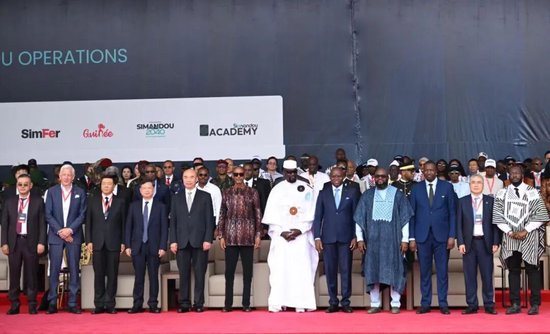
Core Insights - The Simandou iron ore project in Guinea has officially commenced production after 28 years of development, marking it as the largest greenfield iron ore project globally and one of Africa's largest mining investments with a total investment of $23 billion [1][11] - The project has proven iron ore reserves of 4.4 billion tons with an average iron content exceeding 65%, and it is expected to reach an annual production capacity of 120 million tons, potentially reshaping the global iron ore market [1][7] Investment and Economic Impact - The project is anticipated to significantly boost Guinea's economy, with the International Monetary Fund estimating a 26% increase in the country's GDP by 2030 due to the project [9] - The successful operation of the Simandou project is expected to provide a new high-grade iron ore source, enhancing the profitability of steel mills and potentially allowing for a premium pricing of around $14 per ton [7][16] Strategic Partnerships and Development Model - The project is a collaboration between the Guinean government, the SimFer joint venture (comprising Rio Tinto and Chalco), and the Winning Consortium, which acquired mining rights for the northern blocks in 2019 for $14 billion [3][11] - The development model emphasizes "infrastructure for resources," showcasing a long-term commitment to local development and infrastructure investment, contrasting with the short-term speculative nature of Western investments in Africa [14][21] Global Market Implications - With China being the largest importer of iron ore, a significant portion of the iron produced from Simandou is expected to be exported to China, potentially accounting for 7% of global iron ore trade once fully operational [2][16] - The project is seen as a game changer in the iron ore market, increasing supply and creating competitive pressure on major exporters like Australia [16][17] Infrastructure Development - The project includes extensive infrastructure development, such as a railway spanning 552 kilometers and a port with an annual throughput capacity exceeding 120 million tons, essential for transporting the iron ore [11][14] - The construction approach utilized by the Winning Consortium, leveraging Chinese standards and materials, has been noted for its efficiency compared to traditional Western methods [14][15]
The World's Largest Mining Project Starts Production - Rio Tinto (NYSE:RIO)
Benzinga· 2025-11-12 11:32
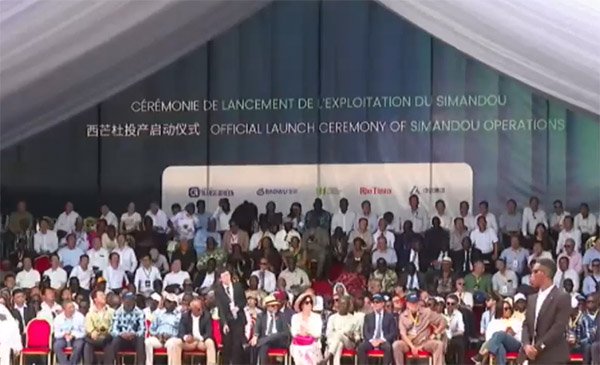
Core Insights - The Simandou project in Guinea, the world's largest mining project, officially launched on November 11, marking a historic milestone with a total investment of $23 billion and nearly three decades from discovery to production [1] - The project is a joint operation involving Rio Tinto, Winning Consortium Simandou, China Baowu, Chinalco, and the Government of Guinea [1] Project Scope and Global Iron Ore Impact - At full capacity, Simandou is expected to produce up to 120 million tons of iron ore annually, representing nearly 7% of the global seaborne iron trade [2] - The mine's output will have an average iron content of approximately 65%, making it one of the highest-grade iron ore sources globally [2] Economic and National Transformation - The Simandou project is projected to quadruple Guinea's GDP by 2040, leading to over $200 billion in investments across various sectors including infrastructure, education, and energy [4] - The project is seen as a driving force behind national transformation, reflecting the vision of the Guinean government and its leadership [5] Strategic Implications for China - China Baowu and Chinalco are major investors in the project, allowing China to secure a direct supply of premium iron ore and reduce dependence on Australia and Brazil [6] - This shift in control could influence global pricing dynamics, potentially pushing prices lower, which may benefit steel producers but pose challenges for investors recovering development costs [7] Environmental Considerations - The high purity of the iron ore from Simandou aligns with global decarbonization goals, making it a cornerstone for the green steel transition [7]
多国总统见证世界级矿山投产,中资深度参与
Di Yi Cai Jing· 2025-11-12 05:21
Core Viewpoint - The launch of the Simandou iron ore project in Guinea marks a significant milestone in the global mining industry, with deep involvement from Chinese enterprises, which is expected to influence the iron ore market and pricing dynamics in the future [3][4][7]. Group 1: Project Overview - The Simandou iron ore project is one of the largest and highest quality mining projects globally, with a total investment exceeding $20 billion and proven reserves of 4.4 billion tons, with an average iron content of over 65% [4]. - The project includes mining, railway, and port systems, with a total production capacity of 120 million tons per year once fully operational [4]. - The project is developed by the Guinean government, SimFer, and the Winning Consortium, with the infrastructure and equipment to be operated by the Cross Guinea Company, which is jointly owned by SimFer and Winning Consortium [4]. Group 2: Stakeholders and Ownership - The Winning Consortium consists of Weili International Group, Weiqiao Aluminum, and other companies, holding a collective 51% stake, while Baowu Resources holds 49% [4]. - Simfer Jersey, which holds the rights to the Simandou blocks 3 and 4, is a joint venture between Rio Tinto (53%) and Chalco Iron Ore (47%), with Chalco Iron Ore being led by Chalco Group and including several Chinese state-owned enterprises [5]. Group 3: Market Impact - The involvement of Chinese companies in the Simandou project is expected to significantly impact the iron ore market and pricing, potentially altering the global mining landscape [7]. - The successful operation of the Simandou project will provide a solid green raw material foundation for the steel industry in China and globally [7]. - China's iron ore imports from January to October 2023 reached 1,028.886 million tons, a year-on-year increase of 0.7%, with an average import price of $96.6 per ton [8]. - It is projected that the total iron ore import volume for the year will reach 1.2 billion tons, but domestic crude steel production is expected to continue its slow decline [8].
从“黑色”到“绿色”:铁矿石巨头发力新能源金属和低碳赛道
Sou Hu Cai Jing· 2025-11-12 04:40
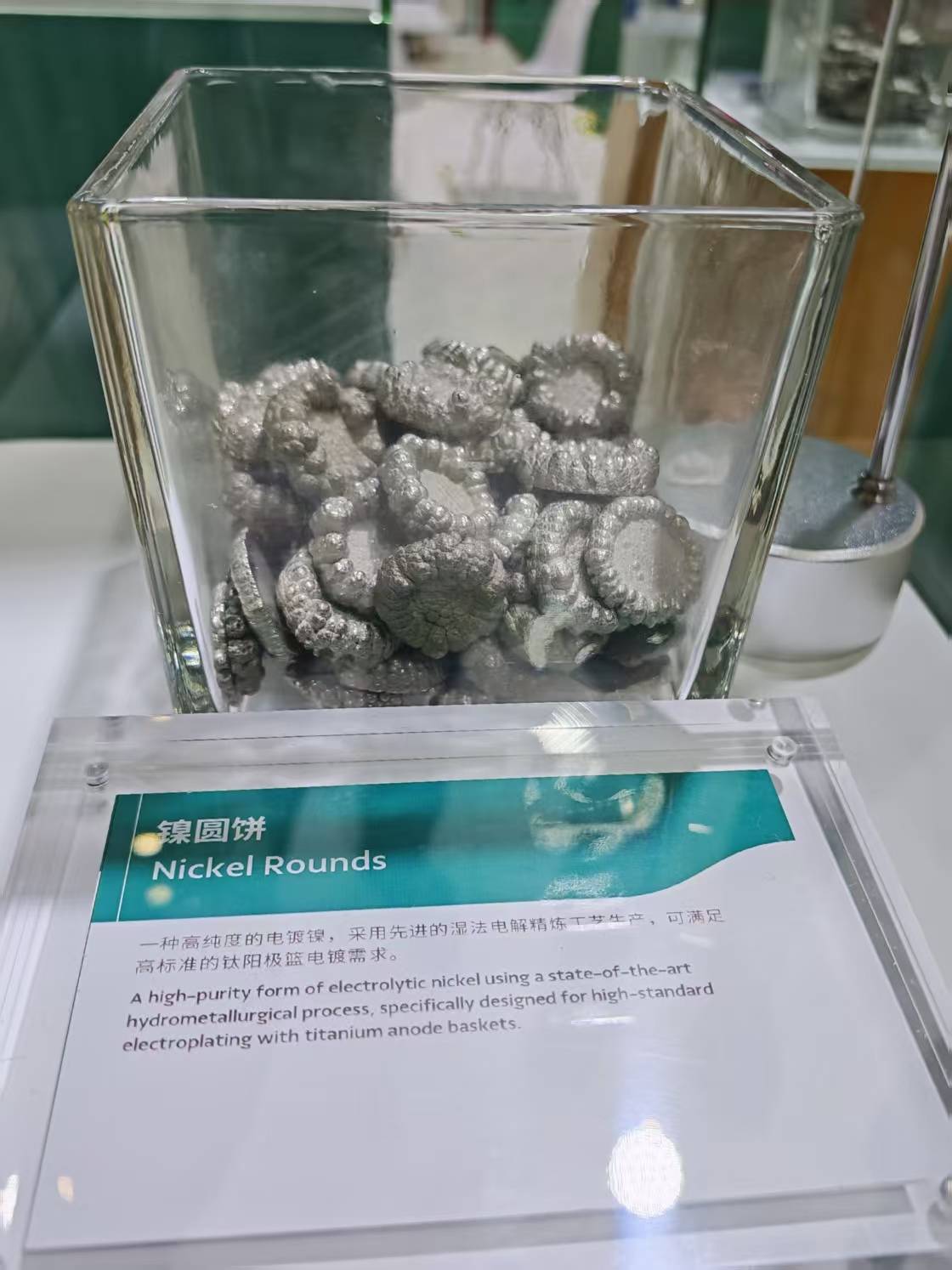
Core Viewpoint - The mining giants showcased their transformation at the recently concluded China International Import Expo, highlighting a shift from traditional iron ore to new energy metals and low-carbon technologies, particularly copper, which is emerging as a key focus for several iron ore companies [1][2]. Group 1: Industry Trends - Major mining companies like Vale, Rio Tinto, and BHP are diversifying their product offerings, moving beyond iron ore to include new energy metals in response to the plateauing demand for steel [2]. - The competition in the industry is evolving from a "black" (traditional) to a "green" (sustainable) focus, with companies exploring ways to produce greener iron ore and assist downstream steel producers in reducing carbon emissions [1][2]. Group 2: Company Strategies - Vale's financial report indicates that iron ore remains its primary product, generating $8.423 billion in net revenue for Q3 2025, while copper and nickel revenues were significantly lower at $1.086 billion and $1.01 billion, respectively [4]. - Vale is also expanding its copper production capacity in Brazil, with plans to increase annual output by 32% to approximately 350,000 tons by 2030, aiming for a long-term target of 700,000 tons [4]. - BHP's interest in copper is evident from its previous attempts to acquire Anglo American for £31.1 billion (approximately $38.8 billion), which would have made it the largest copper producer globally [4]. Group 3: Green Initiatives - Mining companies are increasingly integrating sustainability into their operations, with Vale showcasing its eco-friendly iron ore products that can reduce greenhouse gas emissions from steel production by up to 10% [6][9]. - BHP is utilizing innovative methods to convert carbon dioxide into high-value products, while Rio Tinto is developing technologies that significantly reduce greenhouse gas emissions during aluminum production [9].
延宕28年后西芒杜项目投产,将重塑全球铁矿格局
Xin Lang Cai Jing· 2025-11-12 03:04
Core Viewpoint - The official production launch of the Simandou iron ore project in Guinea marks a historic moment for the global iron ore market, expected to reshape supply dynamics and enhance the bargaining power of consuming countries like China [3][8]. Group 1: Project Overview - The Simandou iron ore project, known as the "pearl on Guinea's crown," has a mineral reserve of approximately 4 billion tons, making it the largest undeveloped iron ore reserve globally [3][4]. - The project consists of two main blocks, with the northern section acquired by a consortium led by Winning Consortium for $14 billion in November 2019 [4][5]. - The infrastructure development for the Simandou project is set to begin in 2024, with an investment of $6.2 billion allocated for port and railway infrastructure [5]. Group 2: Market Impact - The production of Simandou is expected to alleviate supply constraints in China, which imports about 70% of the world's iron ore, and could meet nearly 10% of China's iron ore import needs with an annual output of 12 million tons [6][9]. - The project will significantly impact global iron ore prices, with expectations of downward pressure due to increased supply amid already high port inventories [10][11]. - The average iron content of Simandou ore is 65%, which is higher than most other iron ores, potentially leading to lower environmental impact during processing [14][15]. Group 3: Economic Implications - The International Monetary Fund predicts that the Simandou project will contribute to a 26% increase in Guinea's GDP by 2030 [16]. - The project is also anticipated to force some high-cost suppliers out of the market due to increased competition and supply [13].