Starbucks(SBUX)

Search documents
美媒话糙理不糙:不在中国练级,西方企业迟早在全球被“卷”趴下
Sou Hu Cai Jing· 2025-12-07 14:14
Core Insights - The article emphasizes that Western companies' previous perception of the Chinese market as a "cash cow" is over, and they now face a challenging and competitive environment [1][3][5] Group 1: Market Dynamics - The Chinese market has transformed from a comfortable zone to a complex and competitive landscape, with foreign companies now facing significant challenges from local competitors [3][5] - Brands like Starbucks have lost their market leadership to local players such as Luckin Coffee, which employs aggressive pricing and speed strategies [3][5] - Foreign companies are now engaged in a fierce battle to protect their profits, having to lower prices and compete in ways they previously did not [3][5] Group 2: Competitive Pressure - The Chinese market is described as a "high-pressure chamber" for global business competition, where companies must innovate and control costs more effectively than in other regions [5][12] - Local companies' rapid product iterations and strict cost controls create a challenging environment for Western firms accustomed to slower development cycles [5][12] Group 3: Adaptation Strategies - Many Western brands are undergoing significant transformations to survive, such as Guerlain launching more affordable product lines to attract younger Chinese consumers [7] - Companies like 3M have reduced their product launch cycles to 10 months to keep pace with local competitors, while Volkswagen has increased its new model development speed by 30% [7][8] - Procter & Gamble has established R&D centers in China, treating the market as a testing ground for global innovation [8] Group 4: Corporate Decision-Making - There is a notable disconnect between the efforts of local teams in China and the conservative decision-making of their headquarters in the West, influenced by geopolitical tensions [10] - Some companies, like Ralph Lauren and 3M, have managed to achieve growth in China by quickly adapting to local market rhythms and committing to localization strategies [10] Group 5: Future Outlook - For most foreign companies, the Chinese market is no longer just a source of profits but a test of their competitive strength [12] - The choice for foreign firms is clear: either continue to struggle in the Chinese market to build competitiveness or retreat to their comfort zones and risk being surpassed by Chinese companies [12]





Black Coffee: The Price of Cheese
Len Penzo Dot Com· 2025-12-06 09:00
Group 1 - The holiday shopping season is experiencing a significant decline in temporary Christmas hiring, with retailers expected to hire only 265,000 seasonal workers, down from 442,000 in 2024, marking the lowest pace since 2012 [7] - Walmart's limited-edition "Mac Friday Box," containing 65 boxes of Kraft Mac & Cheese, sold out within seconds at a price of $19.37, which is 75% off the regular price, indicating high consumer interest in novelty items [4][5] - US tariff revenues reached a record high of over $31 billion in October, although this is insufficient to address the federal government's fiscal challenges, where 24 cents of every tax dollar goes to interest on the debt [11][14] Group 2 - Recent inflation data shows core prices increased by 3% year-over-year in September, the lowest inflation level entering the holiday shopping season since 2020, suggesting a potential easing of consumer price pressures [7] - The average American's purchasing power, when adjusted for gold, has decreased by 77% since 1998, highlighting the long-term impact of inflation on real income [20] - The performance of major asset classes year-to-date through November 30 shows gold up 61%, silver up 101%, and gold miners up 140%, indicating strong interest and investment in precious metals amidst economic uncertainty [26]

X @The Wall Street Journal
The Wall Street Journal· 2025-12-06 08:12
The coffee chain that won't leave Starbucks alone is now coming for America. 🔗 https://t.co/6bGV3QjjaM https://t.co/GZZOIgaBEt ...
官宣后1个月,博裕已经搞定了收购星巴克的资金,收购主体落地在宁波
Xin Lang Cai Jing· 2025-12-05 14:54
Core Insights - The core point of the article is the acquisition of 60% stake in Starbucks China by Boyu Capital for approximately $2.4 billion, marking a significant investment in the coffee chain's 8,000 stores in China [1][21]. Group 1: Acquisition Details - Boyu Capital is set to spend around $2.4 billion (approximately 165 billion RMB) to acquire the stake in Starbucks China [21][22]. - The acquisition is believed to be facilitated by a newly established equity fund in Ningbo, named Boyu New Intelligence New Industry (Ningbo) Equity Investment Partnership [23][24]. - The partnership was officially announced by the Ningbo government fund on December 1, 2025, indicating a strong governmental backing for the acquisition [23]. Group 2: Fundraising Strategy - Boyu Capital likely employed a "find project first, then raise funds" strategy for this acquisition [22]. - The initial fundraising for the equity fund amounts to 4 billion RMB, with contributions from companies like Ningde Times, Luoyang Molybdenum, and Yitai B, each investing 500 million RMB [31][32]. - The total committed capital for the fund is expected to reach 4 billion RMB, with potential for expansion to 8-10 billion RMB [31]. Group 3: Financing Structure - The total funding required for the acquisition is estimated at 16 billion RMB, with the shortfall potentially covered by additional investments from limited partners [19][38]. - A syndicate loan of 10 billion RMB (approximately $1.4 billion) is being arranged by three Chinese banks to support the acquisition, with a loan term of 7 years [19][38]. - Boyu Capital's ability to secure the necessary funding within a month highlights its strong influence and negotiation capabilities in the market [19][38].

星巴克工会罢工进入第三周,数百名成员在帝国大厦外集会
Ge Long Hui A P P· 2025-12-05 02:31
Core Viewpoint - Starbucks union strike has entered its third week, with hundreds of union members gathering at the Empire State Building, which houses a three-story Starbucks Reserve store and serves as the company's regional headquarters [1] Group 1 - The strike involves 145 stores, with 55 stores remaining closed during the protest [1]
Starbucks Workers United holds rally in NYC as strikes continue for a third week
CNBC· 2025-12-04 20:38
Core Viewpoint - Starbucks Workers United is currently in the third week of an open-ended strike, with no signs of resolution, highlighting ongoing labor disputes within the company [1][4]. Group 1: Strike Details - The strike began on Starbucks Red Cup Day, with baristas demanding improved hours, higher wages, and resolution of unfair labor practice charges [4]. - Out of 145 locations involved in the strike, 55 remain closed [4]. - The company has not engaged in active negotiations since talks fell apart late last year [5]. Group 2: Impact on Business - Despite the strike, Starbucks claims that its sales have not been affected, with CEO Brian Niccol stating that Red Cup Day was the strongest in the company's history [5]. - The company is focusing on a successful holiday season as part of its turnaround strategy, having recently ended a two-year streak of same-store sales declines [6]. - Past strikes have impacted less than 1% of Starbucks stores [6]. Group 3: Legal and Regulatory Context - Starbucks recently paid $38.9 million to settle violations of New York City's Fair Workweek Law, which the company described as "notoriously challenging" [7]. - The city's Department of Consumer and Worker Protection found Starbucks committed half a million violations of the Fair Workweek Law since 2021 [8]. - The law mandates regular scheduling and requires schedules to be provided 14 days in advance [8]. Group 4: Company Response and Future Plans - Starbucks is investing $500 million to improve employee experience as part of its "Back to Starbucks" strategy, which includes upgrading scheduling technology and increasing barista staffing [11]. - The company maintains that 99% of its 17,000 U.S. locations remain open and is prepared to negotiate when the union is ready [12].
How Good Has Starbucks (SBUX) Stock Actually Been?
The Motley Fool· 2025-12-04 04:39
Core Viewpoint - Starbucks is struggling to regain its former glory, with recent earnings reports reflecting a significant decline in performance, leading to a negative sentiment among investors [1][2]. Financial Performance - Over the past one, three, and five years, Starbucks has underperformed the S&P 500 index, with price declines exceeding double-digit percentages in all time frames [2]. - For fiscal 2025, Starbucks reported a net income of $1.86 billion, a substantial 51% decrease from fiscal 2024 [6]. - Net revenue for fiscal 2025 increased by less than 3% to nearly $32.2 billion, but comparable sales fell by 1%, with declines in both the U.S. and China markets [7]. Strategic Initiatives - In mid-2024, Starbucks initiated a turnaround strategy called "Back to Starbucks," aimed at increasing store traffic and reviving growth [8]. - The strategy includes enhancing the in-store experience through measures such as the return of the condiment bar, writing on cups, and a revised code of conduct, with a goal to close customer orders within four minutes [10]. Customer Experience - Despite the strategic changes, the in-store experience remains largely unchanged, with customers feeling less welcome and the atmosphere not conducive to relaxation [11][12]. - The company has been reducing its store footprint in the U.S., but these adjustments are not perceived as effective solutions to inspire customer engagement [13].
为什么都在抢购"洋品牌"的中国资产?
3 6 Ke· 2025-12-04 04:17
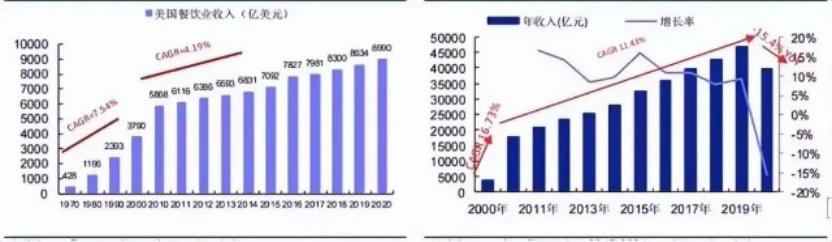
Core Insights - The recent ownership battle for Starbucks' China operations has concluded, highlighting a trend where foreign brands are being acquired by local capital in China [1][2] - This trend is not isolated, as seen with McDonald's China operations, which have thrived under local management after being acquired [3][10] Group 1: Market Dynamics - The competition between foreign brands' "slow operations" and local capital's "fast strategies" is evident in the Chinese market, leading to a clash of business logics [2][4] - The Chinese coffee market is growing at an annual rate of approximately 15%, with the industry scale expected to exceed 300 billion yuan by 2024, making it an attractive target for investment [3][10] Group 2: Case Studies - McDonald's China, after being acquired, increased its store count from 2,400 to over 7,100, becoming one of the fastest-growing markets globally [3][10] - Starbucks is viewed as a valuable asset due to its potential for operational improvement, particularly in its "third space" model, which lags behind competitors like Luckin Coffee [3][10] Group 3: Strategic Approaches - Local capital's "fast strategy" is characterized by rapid market adaptation and efficiency, contrasting with the slower, more methodical approach of foreign brands [4][5] - The difference in market growth rates—4.19% for the U.S. restaurant market from 2001 to 2020 versus 11.43% for China's restaurant market from 2010 to 2019—illustrates the need for different operational strategies [5][8] Group 4: Consumer Behavior and Market Potential - The saturation of high-tier cities in the coffee market contrasts with the growth potential in lower-tier cities, where local brands are increasingly focusing their efforts [10][12] - The rise of digital platforms and changing consumer perceptions in lower-tier cities have made them ripe for expansion, with local brands effectively targeting price-sensitive consumers [10][12] Group 5: Long-term Considerations - The rapid expansion of local brands, while beneficial in the short term, poses risks of brand dilution and profitability challenges in the long run [13][14] - The balance between maintaining brand integrity and adapting to local market dynamics is crucial for sustained success [15][16]

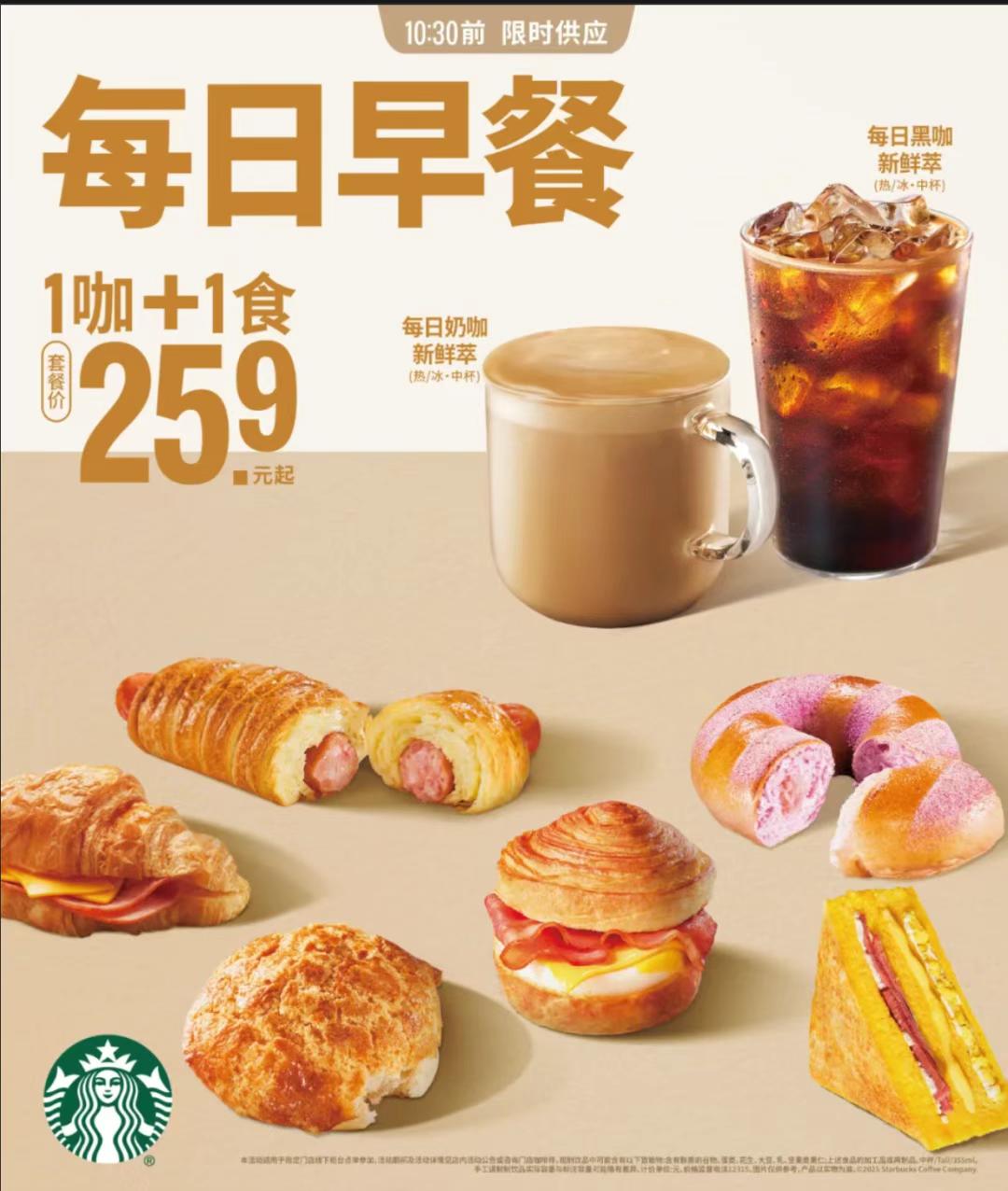
星巴克中国、蜜雪冰城……茶咖品牌们,都盯上了打工人的早餐
3 6 Ke· 2025-12-04 03:55
Core Insights - The article discusses the emerging trend of beverage brands, particularly coffee and tea chains, entering the breakfast market, indicating a shift in consumer behavior and market strategy [2][3][23] Group 1: Market Trends - Major beverage brands like Starbucks and Mixue Ice City are focusing on breakfast offerings, suggesting a strategic shift to capture consumer demand during this key meal period [2][4][22] - The trend of integrating food with beverages is becoming a standard practice rather than a differentiating factor, as seen with brands like Nayuki Tea and Tims Coffee [3][12][24] Group 2: Company Strategies - Starbucks launched a "Daily Breakfast" series in Shenzhen, offering value meal combinations at prices ranging from 25.9 to 31.9 yuan, which includes coffee and food items [6][8] - Tims Coffee has also entered the lunch market with a "Light Bagel Lunch Box" series, emphasizing health and freshness, indicating a broader strategy to attract consumers throughout the day [10][11] Group 3: Consumer Behavior - There is a growing consumer preference for convenient breakfast options, particularly among office workers and students, leading to increased demand for quick meal solutions [22][24] - The article highlights that breakfast consumption is becoming a necessity, with brands recognizing the importance of catering to this demand to enhance customer engagement and sales [22][26] Group 4: Competitive Landscape - The competitive landscape is shifting as beverage brands aim to capture a larger share of the breakfast market, which has traditionally been dominated by street vendors and local eateries [26][27] - The integration of food offerings is seen as a way to increase customer frequency and average transaction value, making it essential for brands to adapt to this evolving market [24][25]

Starbucks (SBUX) Laps the Stock Market: Here's Why
ZACKS· 2025-12-03 23:46
Core Insights - Starbucks (SBUX) stock closed at $87.11, up 2.24% from the previous session, outperforming the S&P 500's gain of 0.3% [1] - Over the past month, Starbucks shares have appreciated by 7.04%, while the Retail-Wholesale sector declined by 0.64% [1] Financial Performance Expectations - Analysts expect Starbucks to report earnings of $0.6 per share, reflecting a year-over-year decline of 13.04% [2] - Revenue is anticipated to be $9.64 billion, which is a 2.62% increase from the prior-year quarter [2] Fiscal Year Projections - For the entire fiscal year, earnings are projected at $2.4 per share, indicating a 12.68% increase, with revenue expected to reach $38.49 billion, up 3.5% from the previous year [3] - Recent changes in analyst estimates suggest optimism regarding Starbucks' business and profitability [3] Analyst Rating System - The Zacks Rank system, which ranges from 1 (Strong Buy) to 5 (Strong Sell), indicates that Starbucks currently holds a Zacks Rank of 3 (Hold) [5] - Over the past month, the Zacks Consensus EPS estimate has decreased by 3.76% [5] Valuation Metrics - Starbucks has a Forward P/E ratio of 35.56, significantly higher than the industry average of 20.24, suggesting it is trading at a premium [6] - The PEG ratio for Starbucks is 1.74, compared to the Retail-Restaurants industry's average PEG ratio of 2.28 [7] Industry Context - The Retail-Restaurants industry is ranked 188 out of over 250 industries, placing it in the bottom 24% [7] - The Zacks Industry Rank indicates that the top 50% rated industries outperform the bottom half by a factor of 2 to 1 [8]