Starbucks(SBUX)

Search documents
X @Forbes
Forbes· 2025-11-07 17:40
Over 90% of Starbucks Workers United members voted to strike this year following a six-month wait for Starbucks to put forward new proposals to address demands for better staffing, higher pay and resolutions to what SWU stated were “hundreds of unfair labor practice charges.” https://t.co/XdVe9NSkDc (Photo: Adam Gray via Getty Images) ...

I’m Glad I Don’t Have To Worry About China, Says Jim Cramer About Starbucks (SBUX)
Yahoo Finance· 2025-11-07 16:30
Group 1 - Starbucks Corporation announced the sale of 60% of its China business through a $4 billion deal [2] - Jim Cramer expressed confidence in CEO Brian Niccol's turnaround efforts but stated he would not invest in Starbucks until shares reach $75 [2] - Cramer highlighted the relief of not having to worry about the China market anymore, despite some confusion regarding the valuation from the sale [3] Group 2 - The article suggests that while Starbucks has potential as an investment, there are AI stocks that may offer higher returns with limited downside risk [3]
Starbucks Baristas Have Voted To Strike Next Thursday On ‘Red Cup Day'
Forbes· 2025-11-07 14:40
Core Viewpoint - Starbucks Workers United, representing around 9,000 baristas across 550 stores in 25 major cities, has voted to strike on November 13 unless a final employment contract is reached, coinciding with the company's 'Red Cup Day' promotion [1] Group 1: Strike Details - Over 90% of Starbucks Workers United members voted to strike after a six-month wait for new proposals from Starbucks addressing demands for better staffing, higher pay, and resolutions to numerous unfair labor practice charges [3] - In 2023, approximately 200 unionized stores participated in a "Red Cup Rebellion" strike on Red Cup Day, and a previous strike on Christmas Eve led to nearly 200 store closures [3] - More than 45 major organizations, representing over 85 million people, have urged Starbucks CEO Brian Niccol and the board to finalize a contract and pledged not to cross picket lines in the event of a strike [3] Group 2: Company Response and Union Representation - Starbucks stated that fewer than 4% of its hourly workers are unionized, and all 10,000 company-operated stores, along with 7,000 licensed locations, will remain open on Red Cup Day [4] - Previous CEO Laxman Narasimhan had promised to finalize a contract agreement by the end of 2024, but negotiations stalled after his departure and the arrival of CEO Niccol in September [4] Group 3: Background and Employee Relations - The dissatisfaction among Starbucks baristas has been ongoing since the first unionization effort in Buffalo stores in 2021, with 500 stores joining Starbucks Workers United by the end of last year [5] - Employee relations worsened after CEO Niccol's arrival, following media coverage of his lucrative employment contract, estimated at $113 million, which included a $10 million sign-on bonus and an annual salary of $1.6 million [5] - In 2024, Niccol earned $95.8 million, primarily in stock, which is reported to be 6,666 times the median barista's pay of $14,674, marking the widest pay gap among all S&P 500 companies [5]

四中全会精神在基层丨记者手记:不产一粒生豆,昆山何以打造千亿元级咖啡产业?
Xin Hua She· 2025-11-07 12:48
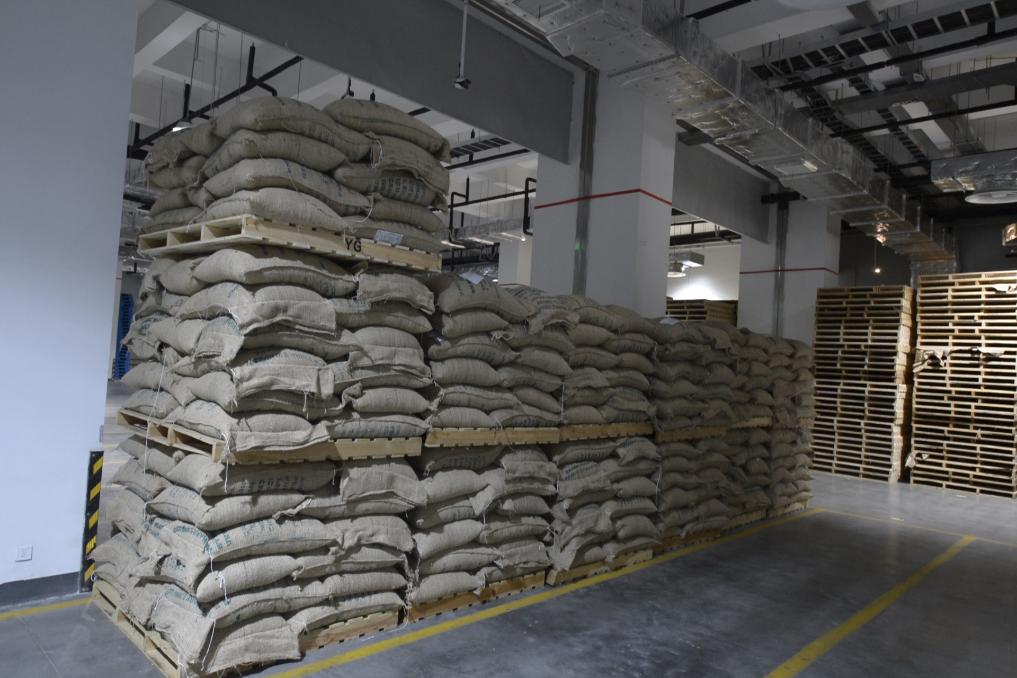
Core Insights - The coffee industry in Kunshan, Jiangsu, has rapidly developed into a billion-yuan industry chain, accounting for 60% of China's coffee bean roasting volume and over 60% of bean imports, with more than 100 leading coffee companies established in the area [1][2]. Industry Development - The Starbucks China Coffee Innovation Park, the largest roasting facility outside the U.S., began operations in 2023, significantly reducing the time from bean arrival to roasting and distribution to stores across China to as little as 10 days [2]. - Kunshan's strategic location near Shanghai, the integration of the Yangtze River Delta, and an optimized business environment have attracted major coffee companies [2]. Infrastructure and Supply Chain - The establishment of the Asia-Pacific Coffee Bean Distribution Center addresses the infrastructure gap in the coffee supply chain, allowing small and medium-sized roasting companies to purchase beans directly, thus reducing costs [4][5]. - 90% of imported coffee beans can now undergo inspection upon arrival, cutting inspection times by two-thirds and streamlining the import process [4]. Economic Impact - The coffee culture has become a significant part of Kunshan's identity, with coffee shops proliferating throughout the city, contributing to its cultural landscape [5]. - Companies like Fei Fu Biotechnology (Jiangsu) Co., Ltd. are experiencing growth, with projected revenues of 20 million yuan this year, a 20% increase from the previous year, due to the favorable conditions in Kunshan [5]. Future Outlook - Kunshan aims to establish itself as an international coffee capital, targeting a billion-yuan scale for its coffee industry and developing a "coffee+" cultural brand matrix [5]. - Initiatives like "coffee going rural" are being promoted to introduce quality coffee beans to rural areas, enhancing local coffee culture [7].
出售60%股权、引入新伙伴博裕投资!星巴克中国“再出发”|画说热点
Sou Hu Cai Jing· 2025-11-07 12:45
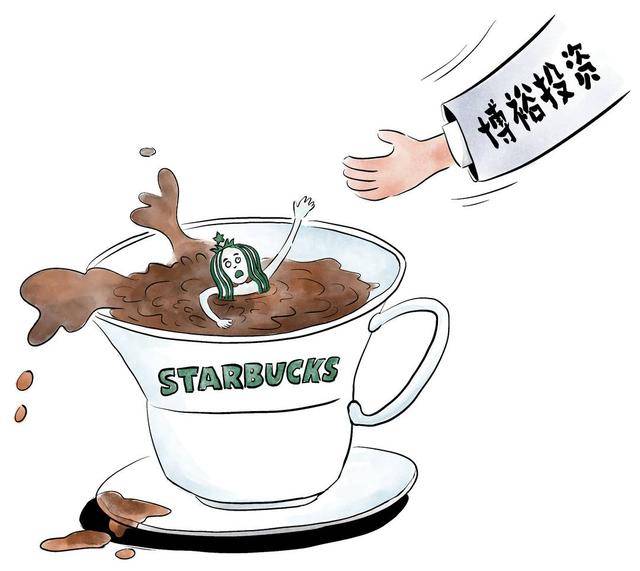
Core Insights - Starbucks has announced a strategic partnership with Chinese alternative asset management firm Boyu Capital to establish a joint venture for its retail operations in China [2][3] - Boyu Capital will hold up to 60% equity in the joint venture, while Starbucks retains 40% and continues to own and license its brand and intellectual property [2] - The estimated enterprise value of the joint venture is approximately $4 billion, with Starbucks projecting its total retail business value in China to exceed $13 billion [2] Group 1 - Boyu Capital, founded in 2011, has a diversified investment management platform and extensive experience in the consumer retail sector, having invested in over 200 companies [3] - The collaboration aims to leverage Boyu's local market insights and Starbucks' global leadership in the coffee industry to enhance product offerings and customer experiences in China [3] - Starbucks has over 60% of its stores located in the U.S. and China, with China being its second-largest market globally [3] Group 2 - In the most recent quarter, Starbucks reported a 1% increase in global same-store sales, marking the first positive growth in seven years, with a 2% increase in same-store sales in China contributing significantly [3]
外资品牌集体慌了,星巴克贱卖中国业务,汉堡王会是下一个目标吗
Sou Hu Cai Jing· 2025-11-07 09:45
Core Insights - Starbucks is at a critical juncture in its localization transformation in China, marked by the sale of a 60% stake in its Chinese operations for $4 billion and the introduction of Boyu Capital as a strategic partner, reflecting a significant shift in the development model of foreign brands in the Chinese market [1][3] Market Position and Competition - Starbucks' market share in China has declined from 42% to 14%, while competitors like Luckin Coffee and Kudi have expanded their store counts to over 26,000 and 15,000 respectively, leaving Starbucks with only 8,000 stores [3] - The opening of new stores for Starbucks has dropped significantly, with a year-on-year decline of 41.78% in the first half of 2025, indicating weakened bargaining power and challenges in commercial real estate [3] Valuation and Potential - The transaction values Starbucks' Chinese retail business at over $13 billion, considering the $4 billion transaction price, retained equity value, and long-term brand licensing revenue [3] Strategic Partnership - The choice of Boyu Capital as a partner is driven by the need for not just financial support but also access to deep resources in the consumer sector, including supply chain and commercial real estate, essential for achieving the goal of 20,000 stores [5] - Starbucks has initiated a year-long self-rescue operation, showing positive results with consecutive growth in same-store sales and transaction volume, indicating that user loyalty can be maintained without resorting to price wars [5] Product Adaptation and Innovation - Starbucks is adapting to local consumer demands by launching sugar-free products, expanding non-coffee offerings, and adjusting prices to attract price-sensitive customers [7] - The company is enhancing its "third space" concept by creating unique store experiences, such as heritage-themed stores and partnerships with platforms like Xiaohongshu to transform over 1,800 locations into interest-based social spaces [7][8] Industry Trends and Evolution - The blending of coffee and tea products is emerging as a new trend in the industry, with Starbucks launching collaborations like the Disney-themed iced tea, reflecting a shift towards providing comprehensive solutions for consumer needs [8] - The evolution of foreign brands in China is evident as they seek local partners, moving from simple ownership transfers to value co-creation models, as seen in successful cases like Yum China and McDonald's China [10][12] Challenges and Future Outlook - The partnership with Boyu Capital presents both opportunities and challenges, as Starbucks must balance resource expansion in lower-tier cities while maintaining its premium brand image [12] - The future of foreign brands in China hinges on their ability to achieve a harmonious balance between localization and brand integrity, as demonstrated by successful adaptations from competitors like KFC and McDonald's [14][16]
Starbucks Bids Adieu to China. Why It Could Boost the Stock.
Barrons· 2025-11-07 06:00
Core Insights - The coffee maker is selling a 60% stake in the business to Boyu Capital [1] Company Summary - The transaction involves a significant equity stake, indicating a strategic partnership or investment [1] Industry Context - The move reflects ongoing trends in the coffee industry, where investments and partnerships are becoming increasingly common to enhance growth and market presence [1]
星巴克卖掉经营权,留住品牌权:外资的“知产底牌”
Sou Hu Cai Jing· 2025-11-07 04:33
Core Viewpoint - Starbucks announced the sale of 60% of its Chinese business to Boyu Capital, marking a significant shift in its operational strategy while retaining control over its brand and intellectual property [2][6]. Group 1: Business Strategy - The transaction allows Starbucks to maintain ownership of its trademark, brand, recipes, store designs, and supply chain standards, ensuring that the core elements of its business remain under its control [2][6]. - This move aligns with a trend seen in the fast-food industry, where companies like Yum Brands and McDonald's have previously sold operational rights while retaining brand control [5][6]. Group 2: Industry Context - The decision reflects a broader industry pattern where foreign brands, after experiencing market saturation and increased local competition, opt to divest operational control while keeping brand rights [5][6]. - The strategy of "selling operational rights while retaining brand" is common among over 90% of global consumer brands, contrasting with the less frequent approach of fully transferring brand ownership [7]. Group 3: Intellectual Property Importance - Retaining intellectual property (IP) is crucial as it serves as a risk isolation mechanism, allowing companies to control brand direction and generate long-term revenue through licensing fees even after operational rights are transferred [6][10]. - The article emphasizes the importance of treating IP as a core asset rather than a cost-saving measure, highlighting the risks associated with inadequate IP protection in international markets [8][10]. Group 4: Future Considerations - Companies are encouraged to evaluate the financial implications of selling versus retaining their IP, with a focus on structuring agreements that protect their brand and operational interests [10]. - The article suggests that a shift in mindset is necessary for Chinese companies to transition from a model of "sales without ownership" to one where IP is secured before entering partnerships [10].
星巴克中国的「新合伙人」,博裕资本是什么来头?
首席商业评论· 2025-11-07 04:11
Core Insights - Starbucks has announced a strategic partnership with Boyu Capital to jointly manage its retail business in China, aiming to increase the number of stores from 8,011 to 20,000 by the end of 2025 [4][16] - Boyu Capital will hold up to 60% of the joint venture, while Starbucks retains 40% and continues to own the brand and intellectual property [4][7] - The total value of Starbucks' retail business in China is projected to exceed $13 billion, which includes the value of the joint venture and ongoing licensing fees [7][17] Group 1: Boyu Capital Overview - Boyu Capital is defined as an "alternative asset management company," focusing on non-traditional assets such as private equity and venture capital [9] - Founded in 2011 by former executives from Ping An Group and TPG Capital, Boyu manages a fund size of $10 billion and has invested in over 200 companies [10] - The firm has made significant investments in the consumer retail sector, including acquiring a stake in Beijing SKP, a top luxury department store, and investing in various leading projects in the Chinese economy [10][9] Group 2: Starbucks' Strategic Shift - Starbucks' CEO, Brian Niccol, emphasized the need for a fundamental strategic change to restore growth in China, indicating a shift towards exploring long-term partnerships [11][14] - The partnership with Boyu Capital is seen as a way to leverage local market knowledge and reduce operational risks in a rapidly changing market environment [14][15] - Historically, Starbucks has utilized joint ventures and partnerships in various markets to adapt to local conditions and enhance operational efficiency [15] Group 3: Future Goals and Market Potential - Starbucks aims to expand aggressively in China, particularly in smaller cities and emerging regions, with the new partnership expected to accelerate this growth [17][16] - The coffee market in China remains competitive, with Luckin Coffee as a strong rival, boasting over 27,000 stores and aiming for 30,000 by year-end [7][4] - The strategic partnership marks a new chapter for Starbucks in China, transitioning from a focus on introducing coffee culture to capturing differentiated market segments [17]
咖啡和空间,谁才是130亿美元星巴克中国的原点?
Xin Lang Cai Jing· 2025-11-07 03:36
Core Insights - Starbucks has finalized a strategic partnership with Boyu Capital to establish a joint venture in China, with a valuation of $4 billion, where Boyu will hold up to 60% equity and Starbucks will retain 40% [1] - The average store valuation for Starbucks in China is approximately $500,000, significantly lower than the global average of $2.24 million, indicating underutilization of store value [1] - Starbucks aims to expand its store count in China to 20,000, with a projected retail business value exceeding $13 billion [4] Financial Performance - Starbucks China reported a revenue of $3.105 billion for the fiscal year 2025, a 5% year-on-year increase, with same-store sales growing by 2% [4] - Despite growth in same-store transactions by 9%, the average transaction value has declined for 12 consecutive quarters, with a 7% drop in Q4 2025 [5][9] - The overall same-store sales for fiscal year 2025 saw a 1% decline, attributed to a 5% decrease in average transaction value [9][10] Market Dynamics - The competitive landscape in China's coffee market has intensified, with local brands like Luckin and Manner outperforming Starbucks in product innovation and cost control [6][7] - Coffee has transitioned into a low-margin retail business in China, challenging Starbucks' traditional high-margin model [7][11] - The shift in consumer behavior towards affordable coffee options has diminished Starbucks' competitive edge in the coffee segment [12][13] Strategic Focus - Starbucks' core business model revolves around creating a "third space" experience, emphasizing the importance of store ambiance over just coffee sales [12][14] - The company is exploring new themes for its stores, such as community spaces focused on interests like pets and outdoor activities, to enhance customer engagement [16] - Starbucks needs to redefine its value proposition in high-tier cities, where consumer perception of its space and experience has weakened [15][17]