TAL(TAL)

Search documents
【好未来(TAL.N)】收入继续高增,利润超预期——FY26Q1业绩点评(陈彦彤/汪航宇/聂博雅)
光大证券研究· 2025-08-04 23:03
Core Viewpoint - The company reported strong financial performance in FY26Q1, with significant year-on-year growth in revenue and net profit, indicating robust demand and operational efficiency [3][6]. Group 1: Financial Performance - In FY26Q1, the company achieved revenue of $575 million, a year-on-year increase of 38.8% [3]. - The net profit attributable to shareholders was $31.28 million, reflecting a year-on-year growth of 174.4% [3]. - Non-GAAP net profit reached $42.05 million, up 42.0% year-on-year [3]. Group 2: Learning Services and Other - The offline small class courses remain the largest revenue contributor in the learning services segment, with stable profit margins [4]. - Enrollment in offline small class courses increased year-on-year, with a retention rate of approximately 80% [4]. - Deferred revenue at the end of FY26Q1 was $968 million, showing a year-on-year growth of 50.8%, indicating resilient demand [4]. Group 3: Content Solutions - Learning device revenue continued to grow in FY26Q1, although it saw a quarter-on-quarter decline due to seasonal factors [5]. - The average selling price of learning devices decreased, attributed to changes in product mix, with the launch of three new series [5]. - The overall weekly active rate for learning devices was around 80%, with an average daily usage time of 1 hour per device [5]. Group 4: Profitability Metrics - The company’s gross margin in FY26Q1 was 54.9%, an increase of 3.1 percentage points year-on-year [6]. - The selling expense ratio was 31.4%, up 1.9 percentage points, primarily due to increased online marketing investments [6]. - Non-GAAP operating profit margin was 4.4%, reflecting a year-on-year increase of 4.2 percentage points [6].



TAL Education's Resurgence: Newfound Profitability Could Help Fuel Further Growth
Seeking Alpha· 2025-08-04 16:09
Group 1 - The article emphasizes the importance of seeking value and growth in investments, particularly in emerging and undervalued stocks, often contrary to conventional wisdom [1] - The author has successfully identified profitable investment opportunities in various companies, including Research in Motion, SuperValue, ZipCar, ClearWire, Apple, Netflix, Tesla, and Google, with significant gains ranging from 60% to over 2000% [1] - A focus on innovation across all sectors is highlighted as a key interest, with the author conducting personal research to assess the impact of companies on consumers [1] Group 2 - The investment strategy involves a combination of growth, unique opportunities, and value for both shareholders and customers [1]

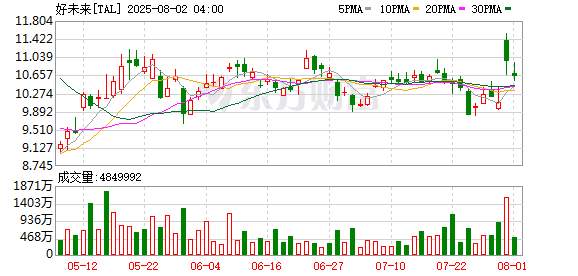
好未来上涨2.49%,报10.905美元/股,总市值66.52亿美元
Jin Rong Jie· 2025-08-04 15:01
Group 1 - The core viewpoint of the news highlights the positive financial performance of TAL Education Group, with a significant increase in revenue and net profit [1][2] - As of August 4, TAL's stock price rose by 2.49% to $10.905 per share, with a total market capitalization of $6.652 billion [1] - Financial data shows that TAL's total revenue is projected to reach $575 million by May 31, 2025, representing a year-on-year growth of 38.83%, while the net profit attributable to shareholders is expected to be $31.282 million, reflecting a growth of 174.36% [1] Group 2 - On August 1, TAL received a "Buy" rating from China International Capital Corporation, with a target price set at $13.3 [2] - TAL Education Group focuses on smart education and open platforms, serving both public and private education sectors globally [2] - The company has developed a diversified educational ecosystem catering to personalized learning needs for individuals aged 0 to 24, with various brands under its umbrella [2]
创新消费力 | 学而思:AI学习机让处处变课堂
Bei Jing Shang Bao· 2025-08-04 09:38
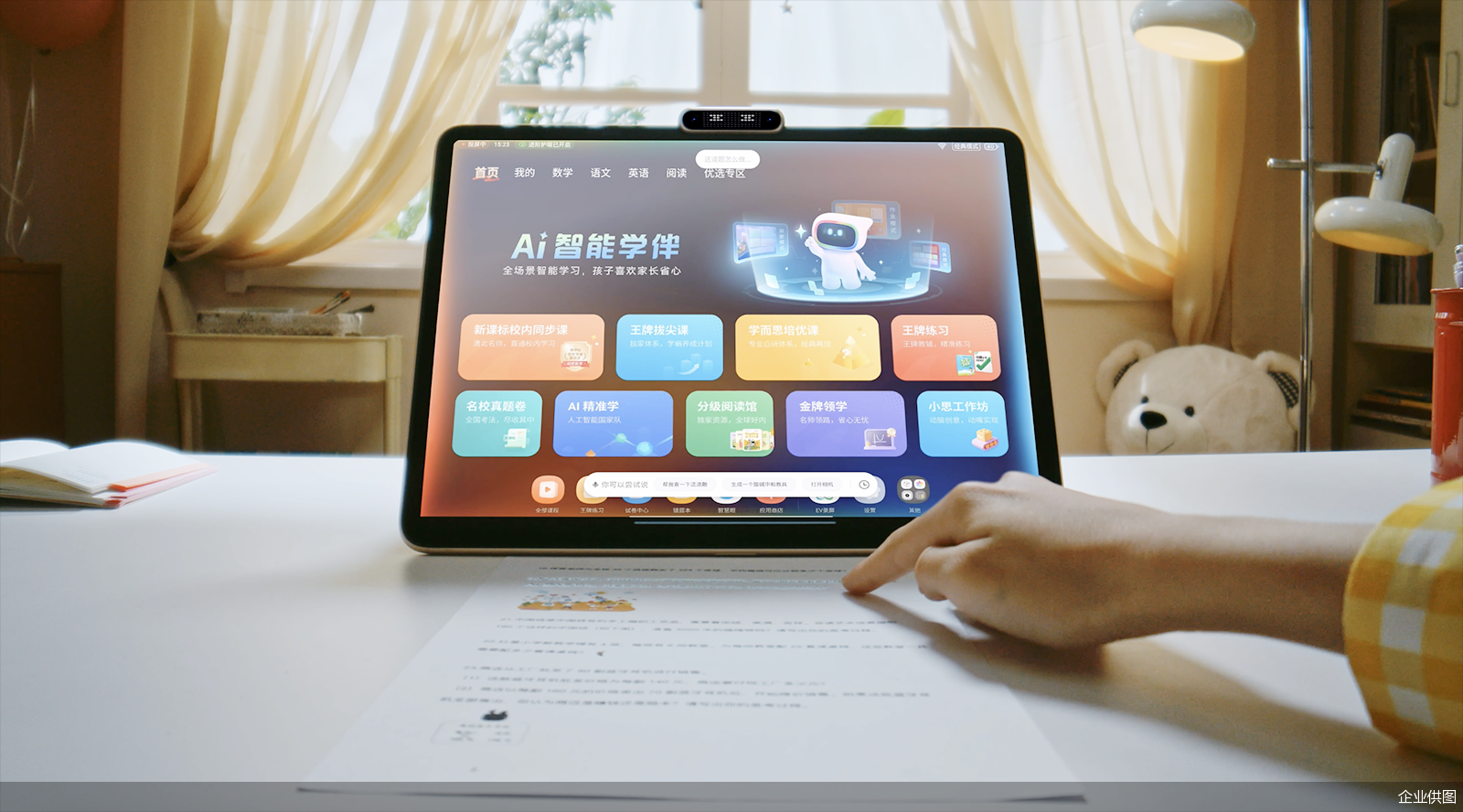
Core Insights - The article discusses the transformative impact of AI-powered learning machines on education, highlighting a shift from traditional tutoring to AI-assisted learning experiences for families [2][3][4]. Group 1: Market Trends and Growth - The AI learning machine market is projected to tap into a trillion-level consumer market, significantly enhancing educational experiences and family relationships [2]. - The Chinese education smart hardware market reached 80.7 billion yuan in 2023, with a year-on-year growth of 29.53%, and is expected to exceed 100 billion yuan by 2025 [9][10]. Group 2: Technological Advancements - The evolution of learning machines has progressed from basic answer-searching capabilities to interactive diagnostic systems that can analyze students' problem-solving processes in real-time [6][9]. - Multi-modal interaction technology allows AI to "see" and "hear" students, enhancing the understanding of their learning needs and improving the tutoring experience [5][9]. Group 3: Educational Impact - AI learning machines are reshaping the educational landscape by facilitating personalized learning experiences at home and in classrooms, thus enabling differentiated instruction [7][8]. - The integration of AI in education is not meant to replace teachers but to enhance their capabilities, allowing for more effective teaching strategies [7][10]. Group 4: Challenges and Future Directions - Despite rapid advancements, challenges remain in adapting learning machines for high school subjects, particularly in complex problem-solving scenarios [8][9]. - The competitive landscape is evolving, with major players adjusting their strategies to capture different market segments, indicating a shift towards more specialized educational tools [10][11].
好未来(TAL):FY26Q1业绩点评:收入继续高增,利润超预期
EBSCN· 2025-08-04 08:18
Investment Rating - The report maintains a "Buy" rating for the company, indicating a strong potential for investment returns over the next 6-12 months [5]. Core Insights - The company reported a revenue of $575 million for FY26Q1, representing a year-on-year increase of 38.8%, and a net profit attributable to shareholders of $31.28 million, up 174.4% year-on-year [1]. - The learning services segment, particularly small class courses, continues to be the largest revenue contributor, with a retention rate of approximately 80% [1]. - Deferred revenue at the end of FY26Q1 reached $968 million, reflecting a 50.8% year-on-year growth, indicating strong demand resilience [1]. - The company plans to continue expanding the number of learning centers to drive revenue growth, although growth rates are expected to slow compared to FY25 due to increasing base figures [1]. Revenue and Profitability - For FY26Q1, the company achieved a Non-GAAP net profit of $42.05 million, a 42.0% increase year-on-year, with a gross margin of 54.9%, up 3.1 percentage points [3]. - The operating profit margin for FY26Q1 was 2.5%, an increase of 6.7 percentage points year-on-year, while the Non-GAAP operating profit margin was 4.4%, up 4.2 percentage points [3]. - The company expects continued strong revenue growth in FY26Q2, which is anticipated to be a peak business season [3]. Financial Forecasts - The company forecasts net profits of $144 million, $234 million, and $349 million for FY26, FY27, and FY28, respectively, with corresponding EPS of $0.71, $1.15, and $1.72 [3][4]. - The projected P/E ratios for FY26, FY27, and FY28 are 45x, 28x, and 19x, respectively, indicating a favorable valuation outlook as profitability improves [3][4].
交银国际每日晨报-20250804
BOCOM International· 2025-08-04 07:20
Group 1: TAL Education (好未来教育) - The K12 education training business is performing steadily with a revenue of $580 million for Q1 FY2026, representing a 39% year-over-year increase. Adjusted operating profit reached $25 million, exceeding expectations [1] - The strong demand for small class tutoring and increased enrollment due to the expansion of teaching points are driving revenue growth. Sales of learning machines also showed healthy year-over-year growth, supported by the launch of new products [1] - For Q2 FY2026, the overall revenue growth is expected to be around 30%, maintaining the full-year revenue growth forecast at 28% with an adjusted operating profit margin projected to exceed 7%, doubling from FY2025 [1][2] Group 2: NIO Inc. (蔚来汽车) - The pricing strategy for the L90 model is aggressive, with the starting price set at RMB 265,800, which is lower than the previously announced pre-sale price. This pricing is expected to boost sales significantly [3] - The successful launch of the L90 model is anticipated to lead to stable monthly sales exceeding the market expectation of 5,000 units, paving the way for the upcoming L80 model [3][4] - Despite a 50% rebound from its low, NIO's 2025 price-to-sales ratio remains at 0.85, which is lower than its peers, indicating potential for continued stock price recovery [4]
异动盘点0804|英诺赛科涨超8%,优必选涨超5%;亚马逊跌超8%,Rocket股价走高涨超11%,Reddit涨超17%
贝塔投资智库· 2025-08-04 04:03
Group 1: Market Performance - Dongyue Group (00189) saw a rise of over 1%, with expectations for increased refrigerant demand as the new cooling season begins, despite a seasonal decline in August [1] - Hong Kong's banking stocks experienced a rally, with Agricultural Bank (01288) up over 2%, and other banks like ICBC (01398) and China Merchants Bank (03968) also gaining over 1%. The overall asset quality of listed banks remains stable, and profit growth is expected to continue [1] - In the gold sector, Lingbao Gold (03330) rose over 3%, with other companies like Chifeng Jilong Gold (06693) and Shandong Gold (01787) also seeing significant gains, driven by lower-than-expected U.S. job growth data which increased interest in gold [3] Group 2: Company Announcements - InnoCare (02577) surged over 8% after being named the only Chinese chip company in NVIDIA's 800VDC power architecture collaboration, indicating a significant partnership in AI data centers [2] - Derun Shipping (02510) announced a profit forecast of approximately $180 million to $200 million for the six months ending June 30, 2025, representing a 220% to 255% increase compared to the previous year [2] - China Eastern Education (00667) reported an expected profit increase of no less than 45% for the first half of the year, driven by a 7% increase in new student registrations and effective cost control [3] Group 3: Financial Results - Amazon (AMZN.US) reported second-quarter earnings that exceeded expectations, with AWS revenue growing 17% year-over-year, but the third-quarter profit guidance fell short of market expectations [5] - Coinbase (COIN.US) saw a 16.7% drop after reporting second-quarter revenue of $1.5 billion, which was below analyst expectations, despite a significant profit increase due to investments [5] - Moderna (MRNA.US) experienced a decline of over 10% due to delays in vaccine shipments, leading to a downward revision of its revenue forecast for 2025 [7]

金十图示:2025年08月04日(周一)中国科技互联网公司市值排名TOP 50一览




news flash· 2025-08-04 02:59
Core Viewpoint - The article presents the market capitalization rankings of the top 50 Chinese technology and internet companies as of August 4, 2025, highlighting significant players in the industry and their respective valuations in billions of USD [1]. Group 1: Top Companies by Market Capitalization - TSMC leads the ranking with a market capitalization of $121.99 billion [3]. - Tencent Holdings follows in second place with a valuation of $63.46 billion [3]. - Alibaba ranks third with a market cap of $27.92 billion [3]. - Xiaomi Group is fourth with a market capitalization of $18.07 billion [3]. - Pinduoduo holds the fifth position with a valuation of $15.62 billion [3]. Group 2: Additional Notable Companies - Meituan ranks sixth with a market cap of $9.45 billion [4]. - NetEase is seventh with a valuation of $8.06 billion [4]. - SMIC (Semiconductor Manufacturing International Corporation) is eighth with a market cap of $5.24 billion [4]. - Dongfang Fortune ranks ninth with a valuation of $5.11 billion [4]. - JD.com is in tenth place with a market capitalization of $4.46 billion [4]. Group 3: Rankings and Changes - Kuaishou is ranked eleventh with a market cap of $4.16 billion [5]. - Tencent Music holds the twelfth position with a valuation of $3.18 billion [5]. - Baidu is thirteenth with a market cap of $2.96 billion [5]. - Li Auto ranks fourteenth with a valuation of $2.70 billion [5]. - Beike is fifteenth with a market capitalization of $2.17 billion, showing an increase in ranking by 11 spots [5].

行业周报:中餐精细化管理释放利润弹性,经济结构变革为技术学校带来机遇-20250803
KAIYUAN SECURITIES· 2025-08-03 14:47
Investment Rating - The industry investment rating is "Positive" (maintained) [2] Core Views - The report highlights that the fine management of Chinese cuisine releases profit elasticity, while economic structural changes drive technological advancements [1][4] - The education sector is experiencing new opportunities due to social changes, with vocational education gaining traction as parents and students shift their views from "fallback options" to "active choices" [4][21] - The nutrition and health food market in China is steadily growing, with a focus on high-quality cross-border imported health brands [6][34] Summary by Sections Travel and Tourism - The summer travel volume has reached a historical high, with July's passenger transport volume expected to reach 71.2 million, a year-on-year increase of 3.0% [15] - Airlines have adopted a price-for-volume strategy, leading to a 7.5% decline in average domestic economy class ticket prices [15][16] Education - China Oriental Education expects a 7% year-on-year increase in new enrollment and a 10% increase in revenue for the first half of 2025, with net profit projected to grow by 45%-50% [21][23] - Good Future's revenue for FY2026 Q1 is expected to rise by 38.8% year-on-year, with net profit increasing by 174.4% [24][27] - New Oriental's revenue for FY2026 Q1 is projected to be $1.243 billion, a 9.4% increase year-on-year, despite a slowdown in overseas study demand [29] Chinese Cuisine - The "Little Garden" restaurant chain anticipates a net profit of RMB 360-380 million for the first half of 2025, reflecting a year-on-year increase of 28.6%-35.7% [30][35] - The Green Tea Group expects a net profit of RMB 230-237 million for the first half of 2025, a year-on-year increase of 32%-36% [32][33] Nutrition and Health - China's health food import value has grown from $408 million in 2008 to an estimated $7.753 billion in 2024, with a compound annual growth rate of 20.21% [34][37] - Cross-border imported health products are expected to gain market share due to relaxed entry qualifications and diverse consumer demands [43][44]


480亿好未来,攻坚大模型
2 1 Shi Ji Jing Ji Bao Dao· 2025-08-03 09:16
Core Insights - The company is focusing on developing AI-driven educational tools, particularly through its self-developed large model "九章" (Nine Chapters), which excels in mathematics and aims to transform the education sector [5][11][15]. Group 1: Company Strategy - The founder emphasized the need to prioritize the development of large models, indicating a strategic shift towards AI integration in education [3][4]. - The team conducted extensive research in the U.S. to understand advancements in AI, leading to the realization that AI could significantly disrupt education [3][7]. - The company has committed to an "AI teacher" model, aiming to enhance educational outcomes by leveraging AI capabilities [26]. Group 2: Product Development - The "九章" model was developed over six months and has achieved top rankings in the MathEval assessment, showcasing its effectiveness [5][12]. - The model's capabilities have expanded beyond mathematics to cover all subjects and educational stages, providing features like essay correction and personalized practice [15][16]. - The integration of AI into hardware, such as learning machines, has been a key focus, with products designed to enhance user interaction and learning efficiency [19][20]. Group 3: Market Impact - The company reported a 39% year-on-year increase in net revenue, driven by its AI-powered hardware business [5]. - Initial trials of the AI tools in public schools showed promising results, with classes using AI tools outperforming others by an average of 7 points in mathematics [22]. - The company is actively working on building trust and demonstrating effectiveness in AI integration within educational settings [23].