Toyota(TM)

Search documents
丰田:6月份从日本出口到美国的汽车数量同比增长16%,达到52,745辆。
news flash· 2025-07-30 04:50
Group 1 - The core point of the article is that Toyota's exports of cars from Japan to the United States increased by 16% year-on-year in June, reaching a total of 52,745 vehicles [1] Group 2 - The increase in exports indicates a positive trend for Toyota in the U.S. market, reflecting strong demand for its vehicles [1] - The specific figure of 52,745 vehicles exported highlights the scale of Toyota's operations and its competitive position in the automotive industry [1]

丰田:6月全球汽车产量同比增长7.4%,至854,565辆。6月海外汽车产量同比增长7.3%,至581,127辆。
news flash· 2025-07-30 04:33
丰田:6月全球汽车产量同比增长7.4%,至854,565辆。6月海外汽车产量同比增长7.3%,至581,127辆。 ...
丰田:6月份日本本土生产的汽车数量同比增长7.6%,达到273,438辆。6月全球纯电动车销量同比增长1.7%,达到867,906辆。
news flash· 2025-07-30 04:33
丰田:6月份日本本土生产的汽车数量同比增长7.6%,达到273,438辆。6月全球纯电动车销量同比增长 1.7%,达到867,906辆。 ...
高歌猛进VS黯然失色|中国高端豪华车市场格局巨变
Sou Hu Cai Jing· 2025-07-30 03:50
Core Insights - The Chinese luxury car market is experiencing a significant shift, with domestic high-end brands gaining market share and challenging traditional luxury brands [2][12][15] - In the first half of 2025, the total sales of luxury cars in China are projected to be around 1.6 million units, showing a slight decline of 5%-7% year-on-year, while domestic high-end brands report a growth of approximately 35% [2][14] - The key factor driving this change is the increasing importance of "intelligent features" in consumer decision-making, with brands that excel in smart technology gaining a competitive edge [2][16] Domestic High-End Brands Performance - Domestic high-end brands achieved total sales of approximately 920,000 to 950,000 units in the first half of 2025, marking a significant increase and filling the gap left by declining traditional luxury brands [14][15] - Notable performers include Li Auto with 208,000 units, AITO with 206,000 units, and a combined total of over 250,000 units from brands like NIO, Xpeng, and Xiaomi in the 300,000 yuan and above segment [14][15] - BYD leads the industry with total sales of 2.146 million units, including around 120,000 units from high-end models [14] Traditional Luxury Brands Performance - Traditional luxury brands, particularly the German trio (BBA: Benz, BMW, Audi), are experiencing significant declines in sales, with Benz down 14.2%, BMW down 19.6%, and Audi down 15% in the first half of 2025 [5][6][7] - Lexus stands out as the only traditional luxury brand showing growth, with sales of 85,000 units, maintaining its position as the top-selling imported luxury brand for five consecutive years [5][6] - The super-luxury segment is also facing challenges, with brands like Porsche and Bentley reporting declines of 28% and significant drops in sales across other super-luxury brands [10][11] Market Dynamics and Consumer Behavior - A shift in consumer preferences is evident, with buyers prioritizing technology and practicality over brand prestige, leading to increased demand for vehicles equipped with advanced smart features [16] - Policy changes, such as the adjustment of consumption tax for super-luxury cars, have raised costs for high-priced models, further impacting sales of traditional luxury brands [11][16] - The competitive landscape is evolving, with domestic brands leveraging local supply chains and rapid software updates to position "smart luxury" as a core selling point [3][16]




中国长安汽车集团挂牌成立,丰田最早将于2028年在欧洲启动电动汽车生产 | 汽车早参
Mei Ri Jing Ji Xin Wen· 2025-07-29 23:09
Group 1: China Automotive Industry Developments - China Changan Automobile Group officially established in Chongqing, marking the first central enterprise headquartered in the city, enhancing the integration of the automotive industry among major state-owned enterprises [1] - The restructuring of Changan Automobile is expected to improve market expectations regarding its resource integration capabilities, particularly in the areas of new energy transition and intelligent layout [1] - The establishment of three major state-owned automotive groups may accelerate industry concentration and promote collaborative development across the supply chain [1] Group 2: FAW Group's Diversification - FAW Group has established a new company, FAW Qiyu (Shenzhen) Technology Co., Ltd., focusing on smart unmanned aerial vehicles and artificial intelligence, indicating a significant step towards diversification into high-tech fields [2] - This move is likely to strengthen market expectations regarding FAW Group's technological transformation, particularly benefiting its new energy and intelligent connected vehicle business valuations [2] - The cross-industry layout reflects the trend of high-end manufacturing integration, potentially boosting investor confidence in the technological upgrades of traditional automotive companies [2] Group 3: Autonomous Driving Expansion - WeRide and Uber have expanded their Robotaxi service in Abu Dhabi, indicating a breakthrough for Chinese autonomous driving technology in international markets [3] - The expansion is expected to double the order volume, enhancing market evaluations of WeRide's commercialization capabilities and competitiveness in the global autonomous driving sector [3] - The overseas expansion of leading companies in the autonomous driving industry may increase investor interest in related sectors such as vehicle-road collaboration and high-precision mapping, boosting confidence in the long-term development of smart driving [3] Group 4: Toyota's Electric Vehicle Production Plans - Toyota plans to start producing electric vehicles in Europe as early as 2028, with an annual production target of approximately 100,000 units at its Czech subsidiary [4] - This acceleration of local electric vehicle production in Europe highlights a new phase in the electrification transformation of traditional automakers [4] - The plan is expected to enhance market recognition of Toyota's execution capabilities in its electrification strategy, especially in light of tightening carbon emission policies in Europe [4]


丰田计划到2026年在欧洲总共推出14款电动汽车车型。
news flash· 2025-07-29 16:17
Core Viewpoint - Toyota plans to launch a total of 14 electric vehicle models in Europe by 2026 [1] Group 1 - The initiative reflects Toyota's commitment to expanding its electric vehicle offerings in the European market [1] - This strategy aligns with the growing demand for electric vehicles in Europe as governments push for greener transportation solutions [1]
7月30日电,丰田计划到2026年在欧洲总共推出14款电动汽车车型。
news flash· 2025-07-29 16:16
Core Insights - Toyota plans to launch a total of 14 electric vehicle models in Europe by 2026 [1] Company Strategy - The initiative reflects Toyota's commitment to expanding its electric vehicle lineup in response to growing demand for sustainable transportation solutions [1]
外媒:多家车企涉“零公里二手车”,理想、长安、吉利等在列
凤凰网财经· 2025-07-29 15:32
Core Viewpoint - A recent Reuters investigation revealed that some Chinese car manufacturers are inflating sales figures through "pre-insurance" practices, which have become increasingly common in the industry, involving both domestic and foreign brands such as BYD, Volkswagen, Toyota, and Buick [1] Group 1: Consumer Complaints - The investigation identified 97 consumer complaints regarding the practice of pre-insurance, where vehicles were insured under someone else's name before being sold [1] - Dealers admitted that this practice is aimed at meeting monthly sales targets [1] - Affected brands include Neta, Zeekr, Li Auto, Changan, Geely, and FAW-Volkswagen, with many vehicles counted as "sold" before official sales, referred to as "zero-kilometer used cars" [1] Group 2: Company Responses - Volkswagen China stated it will investigate the complaints and emphasized that it does not use insurance to boost sales [1] - SAIC-GM clarified that its sales data is based on actual deliveries [1] - BYD and Geely did not respond to requests for comment [1] Group 3: Legal Actions and Industry Implications - Court records indicate that since 2023, consumers have filed lawsuits against dealers for concealing pre-insurance practices, with some cases resulting in consumer victories and compensation [1] - Industry insiders noted that such practices could mislead the market's understanding of actual demand and pose risks in production capacity allocation [1]


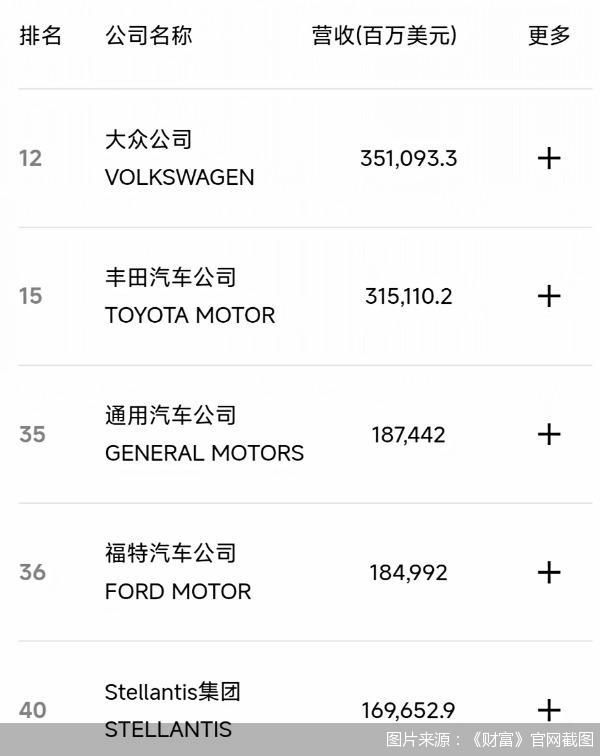
车企“交锋”《财富》世界500强:大众再超丰田、比亚迪首入百强榜
Bei Jing Shang Bao· 2025-07-29 14:09
Group 1 - In the 2025 Fortune Global 500 automotive and parts ranking, Volkswagen ranks first, followed by Toyota in second place, marking Volkswagen's fourth consecutive year at the top [2][3] - Stellantis dropped from third to fifth place, overtaken by General Motors and Ford, while Mercedes-Benz surpassed BMW, ranking 48th and 49th respectively [2] - Tesla, which first appeared in the Fortune Global 500 in 2021, rose four spots to rank 106th overall with a revenue of $97.69 billion, placing it 11th among automotive companies [2] Group 2 - Ten Chinese automotive and parts companies made the 2025 Fortune Global 500 list, including Geely, BYD, Chery, and FAW, with notable improvements in rankings for Geely, BYD, and Chery [3] - BYD ranked 91st overall, up 52 spots, with a revenue of 777.1 billion yuan, a 29% year-on-year increase, and a net profit of 40.25 billion yuan, up 34% [3][4] - Chery, which entered the Fortune Global 500 for the first time in 2024, ranked 233rd this year, a significant jump of 152 spots, driven by strong sales growth [3] - Geely ranked 155th, up 30 spots, with a revenue exceeding 240 billion yuan, a 34% increase, and a net profit of 16.6 billion yuan, up 213% [4]