
WB(WB)

Search documents
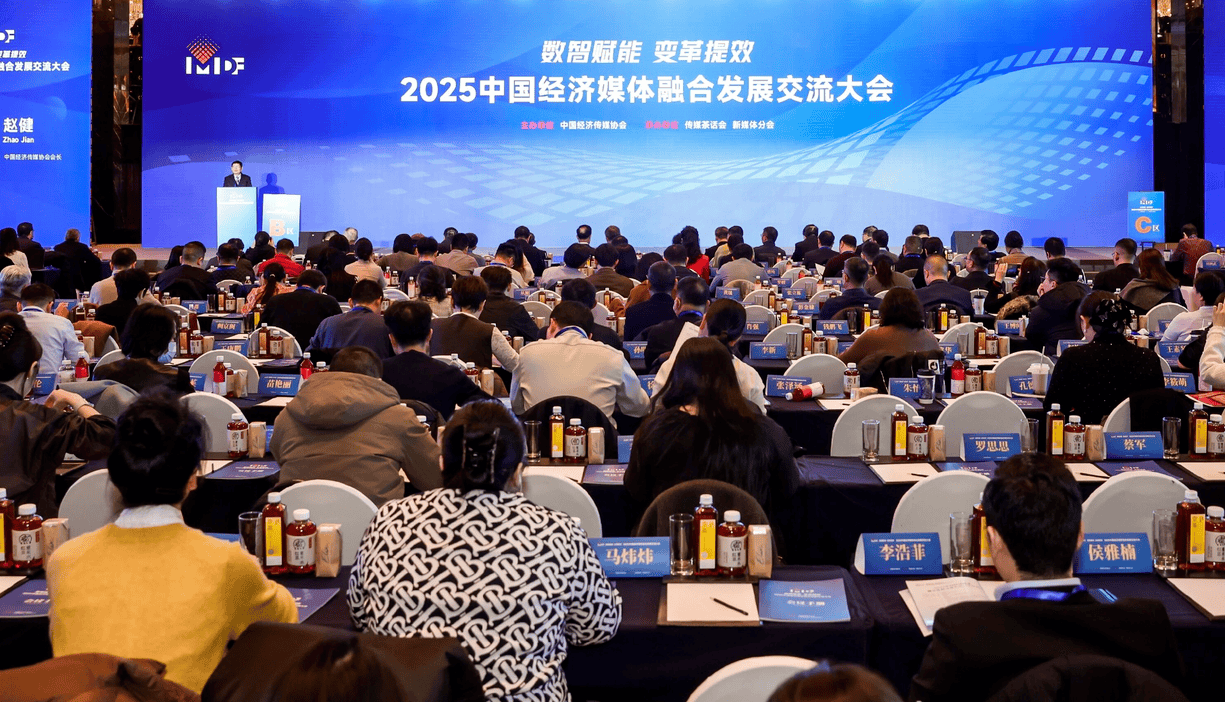
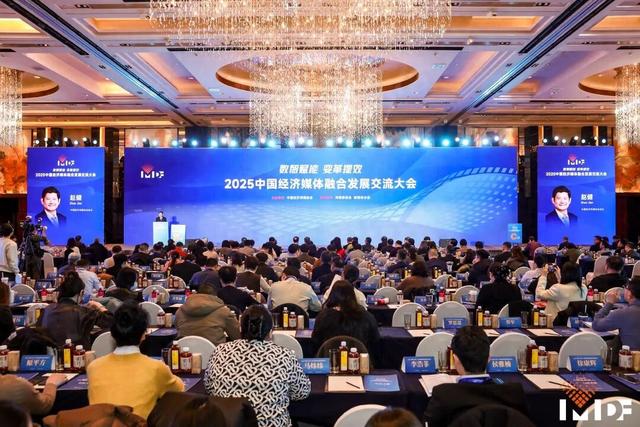
2025中国经济媒体融合发展交流大会北京举行 红星新闻揽获微博、微信等多项奖项
Sou Hu Cai Jing· 2025-12-20 18:12
Core Insights - The 2025 China Economic Media Integration Development Exchange Conference was held in Beijing, focusing on the theme "Digital Intelligence Empowerment, Transformation and Efficiency" [1] Group 1: Awards and Recognition - Hongxing News won two awards: "Top 10 Original Influence Index on Weibo" and "Top 10 Original Influence Index on WeChat Official Accounts" [1] - Hongxing News achieved first place in three metrics: number of journalist interviews, number of original materials, and video playback duration in the Weibo Original Influence Index [3] - The total number of articles published by Hongxing News on WeChat reached 6,994 [3] Group 2: Notable Reports - A report by Hongxing News titled "The Time-Stealing Video Platform Ads: Youku has 4 more seconds, Mango has 3 more seconds, and iQIYI has 123 seconds of ads in a two-minute slot" was selected as a typical case in the 2025 China Economic Media Integration Reporting [3]


媒体微博、微信公众号原创影响力哪家强?榜单来啦!
Xin Lang Cai Jing· 2025-12-20 11:52
Core Insights - The 2025 China Economic Media Integration Development Exchange Conference was held in Beijing, focusing on the theme "Digital Intelligence Empowerment and Transformation Efficiency" [1] - The conference released the "2025 China Economic Media Integration Development Practice Report," which includes the "Top 10 Original Influence Indexes for Weibo" and "Top 10 Original Influence Indexes for WeChat Official Accounts" [3] Weibo Original Influence Index Top 10 - The top ten media outlets in the Weibo Original Influence Index include Beijing Daily, Hongxing News, Modern Express, China News Network, Qilu Evening News, First Financial Daily, Central Radio Network, Southern Metropolis Daily, Daily Economic News, and Zhitong Finance APP [3][5] - Beijing Daily ranked first in exclusive material quantity and hot search counts, while Hongxing News led in reporter interview counts, original material quantity, and video play duration [5] - China News Network achieved the highest reading volume, interaction volume, and government blue V retweets [5] WeChat Official Account Original Influence Index Top 10 - The top ten media outlets in the WeChat Official Account Original Influence Index include Chang'an Street Observer, China News Network, Southern Metropolis Daily, China Fund News, Securities China, Zhitong Finance, First Financial, Hongxing News, Daily Economic News, and Qilu Evening News [6][9] - Chang'an Street Observer ranked first with an influence index score of 83.050, leading in total reading counts among member media [9] - China News Network ranked first in total published articles, total likes, and total "views" among member media [9] Data Collection Methodology - The "2025 China Economic Media Integration Development Practice Report" was organized and published by the New Media Branch of the China Economic Media Association and the Media Tea Talk, with data support from Weibo and Chuanbo Brain Technology Company [9] - The data collection period spanned from October 1, 2024, to September 30, 2025, capturing information from 47 Weibo accounts and 49 WeChat official accounts of member media [9]
2025年品牌微博营销:如何借势热点引爆流量?
Sou Hu Cai Jing· 2025-12-19 07:11
Core Insights - The essence of effective brand marketing on Weibo lies in leveraging trending topics to drive engagement and visibility, rather than merely posting content without strategic alignment [1][2] - Brands must establish a real-time monitoring mechanism for trending topics and align them with their values to create meaningful interactions [2] - Keyword optimization is crucial for ensuring brand content is discoverable on Weibo and search engines, requiring a focus on long-tail keywords relevant to user queries [3] Group 1: Brand Marketing Strategies - Brands should not only aim for exposure but also engage in discussions around trending topics to shape their image effectively [1][2] - A lightweight team structure, such as a "core planner + all staff creating accounts" model, is recommended for small and medium enterprises to manage costs while maximizing outreach [4] - Collaborating with KOLs should focus on the quality of their audience and their ability to create trust and engagement, rather than just their follower count [5] Group 2: Engagement and Interaction - Transforming one-way communication into two-way dialogue is essential for increasing interaction rates, which can be achieved through questions, polls, and user story submissions [8] - Timely and genuine responses to comments can turn user interactions into new content opportunities, enhancing brand relatability [8] Group 3: Measuring Effectiveness - A dual-level indicator system is necessary to measure the effectiveness of Weibo marketing, focusing on both process metrics (like engagement rates and search rankings) and outcome metrics (like direct sales conversions) [9] - Regular analysis of these metrics helps brands understand the tangible returns on their marketing investments and adjust strategies accordingly [9]
2025年度热词公布,我们正集体进入「赛博」时代
后浪研究所· 2025-12-19 03:06
微 博 上 的 " 赛 博 " 一 代 。 撰 文| J 封 面 来 源|电 影 《 银 翼 杀 手 2 0 4 9 》 2025 ,你 " 赛博 " 了吗? 年底了,又到了朋友圈被各种年度报告刷屏的时候。 当众多平台用数据勾勒用户画像、回溯个人足迹时, 微博发布的 "2025 年度十大热词 " 榜单 像一 面镜子,清晰地映照出过去一年舆论场中极具代表性的集体表情。 位居榜首的,并非某个具体事件或人物,而是一个概念 ——" 赛博 " 。 它压过了 " 谁懂 " 、 " 活 人感 " 、 " 如何呢又能怎 " 等热门选项,成为了这一年激起 1.5 亿条用户讨论与创造的最热词汇。 图源微博 这一结果也与其他平台的热词榜单形成了对比。比如在一些以知识和科技见长的平台上, " 具身智能 " 等专业术语跻身前列,因为专业性较强,容易在社交平台的大众讨论中遭遇 " 看不懂 " 的评论。 " 赛博 " 一词的登顶,则显得非常顺理成章,透着一股 " 心照不宣 " 的默契。 在微博的搜索框里输 入 " 赛博 " 二字,能看到大量被不断延展的用法与衍生表达: 赛博游戏、赛博对话、赛博朋克、赛 博徒步 ...... 图源微博截图 ...

香港餐饮冰火两重天!新势力扎堆赴美上市,老字号为何接连闭店?
Sou Hu Cai Jing· 2025-12-18 09:02
Core Insights - The Hong Kong restaurant industry is experiencing a stark contrast between new brands successfully listing on US stock exchanges and traditional establishments closing down [5][11][24] - New entrants focus on niche markets and growth potential, appealing to investors despite their small size [7][9] - Traditional restaurants face rising costs and changing consumer preferences, leading to closures and a struggle to adapt [13][18][20] Group 1: New Entrants and Market Dynamics - Several new restaurant brands, such as 牛大人 and 泰金锅, have successfully listed on US exchanges despite having only a few locations [3][5] - These brands leverage a "small but refined" approach, targeting specific niches within the market, which allows them to capture significant market shares in their categories [7][9] - The US market values growth potential over current size, enabling smaller, newer companies to attract investment [9][20] Group 2: Challenges for Traditional Restaurants - Established restaurants like 鸿星中菜 and 彩龙皇宫 are closing due to rising operational costs, including rent and labor [11][13] - The cost structure for Hong Kong restaurants shows that rent accounts for 30%, salaries for 35%, and food costs for 25%, leaving only 10% for profit [13][18] - Competition from mainland Chinese brands offering lower prices exacerbates the challenges faced by traditional establishments [16][18] Group 3: Consumer Behavior and Adaptation - Younger consumers prefer modern dining experiences that align with their social media habits, leading them to favor new brands over traditional ones [18][24] - Traditional restaurants are encouraged to adapt their offerings and business models to attract younger customers, such as simplifying menus and incorporating trendy elements [22][24] - The future of the Hong Kong restaurant industry may depend on the ability of traditional establishments to innovate while maintaining their core culinary identity [24][26]

微博视频怎么下载?详细介绍几个方法和步骤
Sou Hu Cai Jing· 2025-12-16 17:45
微博视频怎么下载?在当今信息高度发达的时代,社交媒体已经成为了人们获取信息、交流思想和分享生活的重要平台。其中,微博以其简洁明了的发布方 式和广泛的用户基础,成为了自媒体从业者必须掌握的工具。下载微博不仅是获取信息的途径,更是自媒体繁荣发展的重要助力。首先,下载微博可以让自 媒体从业者实时获取热点信息。微博上的热搜榜单和话题讨论迅速反映出社会各界的关注点,通过这一平台,自媒体从业者能够迅速捕捉到最新的动态和趋 势。这种快速的信息获取能力,使得他们在创作内容时能够紧跟时代潮流,充分把握公众心理,从而更好地与受众进行沟通。其次,微博是一个充满互动的 平台。自媒体从业者可以通过下载并使用微博,与受众建立更直接的联系。 第1步,请将这个方法需要结束的星优视频解析下载器软件安装到电脑上,安装结束后打开软件。 第2步,找到并复制微博视频链接: ① 在电脑上打开微博网站,从网站里找到需要的视频。如下图所示点击视频小图标右侧的橙色文字,打开视频播放主页。 ② 随后将视频比方也的网址链接复制下来。 第3步,再次回到刚安装的星优视频解析下载器软件,将复制的网址链接粘贴到上方输入框里。由于每次只能解析下载一个视频,所以只能粘贴一个 ...
QuestMobile发布2025新媒体报告:微博领跑AI交互,用户日均调用频次达8.1次
Sou Hu Cai Jing· 2025-12-16 09:41
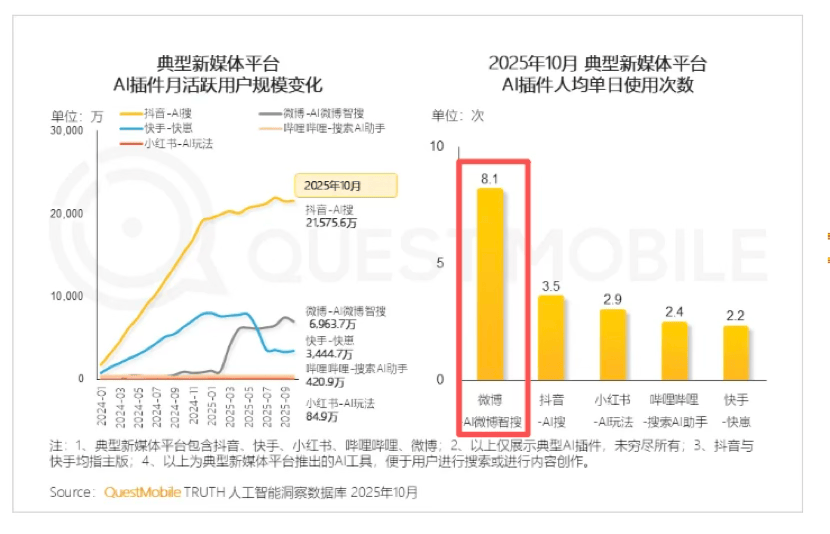
日前,国内权威第三方数据机构QuestMobile发布了《2025年新媒体生态盘点》报告。报告显示,随着人工智能技术的爆发 式增长,AI相关内容已深度融入主流内容平台,正在重塑用户的媒介使用习惯。数据显示,2025年10月AI相关内容用户渗 透率同比增长9.9个百分点,且深度兴趣用户呈年轻化特征。在这一轮技术变革中,微博凭借其独特的"开放社交+热点搜 索"生态,在AI应用落地方面展现出极高的用户粘性与活跃度。 领跑行业:日均8.1次高频调用,AI成微博用户"刚需" 报告披露,AI插件正在成为头部平台的新标配。2025年10月抖音、微博、快手平台AI插件月活跃用户规模均已超三千万 级。值得注意的是,在用户粘性指标上,微博用户APP端AI应用插件的人均单日使用次数高达8.1次,这一数据显著高于行 业同类平台的平均水平,位居前列。 QuestMobile披露的最新数据,从侧面印证了微博在AI业务布局上的阶段性成效。2024 年,面对AI这一全球科技巨头竞相 布局的核心赛道,微博基于DeepSeek大模型技术及平台内容生态,推出了AI 搜索产品"微博智搜",为用户提供"热点追踪- 即时搜索-深度解析"的闭环体验。今年 ...
微博热搜背后的逻辑
Sou Hu Cai Jing· 2025-12-16 06:59
Group 1 - The core viewpoint emphasizes that Weibo's trending topics are not merely marketing channels but are influenced by a complex algorithm assessing search popularity, interaction quality, content timeliness, and public sentiment [2] - Brands should align their content with public issues to avoid being ignored or disliked by users, positioning themselves as participants rather than promoters [2] - Authentic content that resonates with users is crucial, as stiff advertising language fails to generate shares, while emotionally valuable or socially relevant content encourages organic dissemination [3] Group 2 - Brands should respect user activity patterns but not solely rely on peak posting times; maintaining content quality and ongoing interaction is essential for sustaining topic vitality [4] - Initial interactions should come from genuine audiences, as attempts to artificially create buzz through non-natural means violate Weibo's community guidelines, leading to potential penalties [5] - Official advertising resources must be clearly marked, as these tools differ in user perception and interaction effectiveness compared to organic trending topics [6] Group 3 - Trending topics reflect genuine public interest rather than direct results of marketing budgets; brands should focus on whether their content is worthy of discussion while respecting platform rules and user attention for sustainable social influence [7]

QuestMobile2025年新媒体生态盘点:五大平台月活用户达11.49亿,多元内容与算法技术差异化竞争,年轻用户更爱跨平台
QuestMobile· 2025-12-16 02:01
Core Insights - The article discusses the evolving landscape of new media platforms and their user engagement trends, highlighting the growth in active users and usage duration by 2025 [4][5][6]. User Engagement and Demographics - By October 2025, the active user base of typical new media platforms is projected to reach 1.149 billion, with an average monthly usage time of 3367.5 minutes, reflecting year-on-year growth of 7.3% and 5.4% respectively [5]. - Platforms like Weibo, Xiaohongshu, and Bilibili show a significant concentration of users under 30 years old, with respective proportions of 58.6%, 54.2%, and 66.5%, while Douyin and Kuaishou have 22.2% and 22.6% of users aged 51 and above [5][6]. Multi-Platform Usage - A notable trend is the combination usage of multiple platforms, with 39.8% of users engaging with three or more new media platforms, particularly among users under 30 (54.2%) and those from first and new first-tier cities (31.6%) [6]. Content Quality and User Attention - The article emphasizes that the growth in user engagement is increasingly driven by content quality and algorithmic recommendations rather than just user base expansion [18]. - New media platforms are focusing on enhancing user attention through improved content quality and technology, leading to deeper user participation [13][18]. Competitive Landscape - The competitive landscape among platforms is stabilizing, with distinct user demographics and content strategies emerging. Platforms are shifting from broad traffic competition to focusing on unique ecological characteristics and user engagement [30][32]. - The rise of AI content and tools is reshaping user engagement, with a 9.9 percentage point increase in AI-related content penetration among users by October 2025 [34][36]. Monetization Strategies - New media platforms are entering a phase of strategic deepening in monetization, with hard advertising revenues leading the way. The unique characteristics of each platform are shaping differentiated advertising models [48][50]. - Soft advertising is becoming a significant revenue stream, with brands selecting platforms based on their marketing goals, reflecting the alignment of KOL income with platform content and user expectations [54]. Local Business Integration - Platforms are increasingly integrating local businesses into their ecosystems, transitioning from rapid growth to a more stable phase in local merchant numbers [63].


微博与WTT世界乒联达成战略合作 共筑乒乓球赛事社交新生态
Zheng Quan Ri Bao Wang· 2025-12-11 11:27
Group 1 - The core viewpoint of the news is the strategic partnership between Weibo and the World Table Tennis Professional League (WTT), focusing on enhancing social media engagement and building a vibrant fan community [1][2] - The partnership will last for two years, with Weibo acting as the official content cooperation platform for WTT events, leveraging its capabilities in hot topic planning, short video dissemination, and strong interactivity [1] - Data indicates a significant interest in table tennis content on Weibo, with over 1,800 trending topics related to WTT in 2024 and nearly 3,000 in 2025, reflecting the sport's growing popularity among millions of fans [1] Group 2 - Weibo's collaboration with WTT represents a deepening of its strategy in the table tennis sector, capitalizing on the sport's status as China's national game and its emotional connection with the public [2] - The partnership aims to explore innovative integration models between table tennis and social media, enhancing the appeal of the sport to younger generations [2] - Weibo is committed to creating a new paradigm for the development of top-tier sports IPs in the Chinese market by merging social elements with sports content [2]