Yum!(YUM)

Search documents
卖了半个世纪的“披萨之王”破产了
华尔街见闻· 2025-11-13 11:57
Core Viewpoint - The article discusses the severe operational crisis faced by Pizza Hut's UK business, highlighting its recent bankruptcy proceedings and the challenges within the broader UK restaurant industry. Group 1: Pizza Hut UK Crisis - Pizza Hut UK franchisee DC London Pie has entered bankruptcy management, resulting in the permanent closure of 68 dine-in restaurants and 11 delivery points, leading to the loss of 1,210 jobs [4][5] - This marks the second bankruptcy for Pizza Hut UK within nine months, with previous debts reaching approximately £40 million [7][8] - Despite intervention from Yum Brands, which managed to save 64 remaining restaurants and 1,277 jobs, the future remains uncertain due to underlying structural issues [11][12] Group 2: Historical Context - Pizza Hut has been a part of the UK market since 1973, once boasting over 700 locations and employing 14,000 people at its peak in 1999 [12][14] - The brand's decline began around 2012, with significant competition from rivals like Domino's and Papa John's, which capitalized on the growing preference for delivery services [16][17] - The COVID-19 pandemic further exacerbated the situation, forcing the closure of 29 locations and severely impacting dine-in operations [18] Group 3: Broader Industry Challenges - The UK restaurant industry is facing a crisis, with a 13.1% year-on-year increase in businesses in "critical" financial distress, and a 31.2% rise in bars and restaurants facing similar issues [20][21] - Factors contributing to this crisis include the pandemic, inflation, rising energy prices, and increased tax burdens, which have severely impacted profitability [25][26][28] - The hospitality sector has been particularly hard hit, with 45% of affected jobs in the industry, highlighting the vulnerability of employment in this sector [29]



外资正在批量“撤离”?
Sou Hu Cai Jing· 2025-11-13 01:41
Core Viewpoint - The recent trend of foreign brands selling their businesses in China reflects a significant shift in the market dynamics, where local brands are gaining ground and changing consumer preferences are impacting the competitive landscape [6][9][26] Group 1: Foreign Brands Selling - CPE Yuanfeng has entered a strategic partnership with Burger King, investing $350 million to acquire approximately 83% of the joint venture "Burger King China" [1] - Starbucks has also formed a partnership with Boyu Capital, with an investment of around $4 billion for up to 60% stake in Starbucks China [2] - Yum! Brands is reviewing its strategy for Pizza Hut, considering the sale of its business [4] Group 2: Market Dynamics - The Chinese market has shifted from a foreign brand-dominated "blue ocean" to a competitive "red ocean," with local brands like Luckin Coffee and Li Ning gaining market share [9][14] - Starbucks' market share has dropped from 34% in 1999 to less than 15% currently, indicating a significant decline in its competitive position [9] - The rise of domestic brands has led to a decrease in the perceived value of foreign brands, as consumers now prioritize quality and price over brand origin [11][12] Group 3: Changing Consumer Behavior - Consumers are increasingly aware of the value of domestic products, often finding similar quality at lower prices [11] - The rapid evolution of consumer preferences and marketing strategies has made it difficult for foreign brands to keep up [17][19] - The success of local brands in penetrating lower-tier cities highlights the challenges faced by foreign brands in adapting to the new market environment [21] Group 4: Strategic Shift of Foreign Brands - Foreign brands are transitioning from a "heavy asset direct operation" model to a "light asset cooperation" model, focusing on brand licensing and partnerships rather than direct management [24] - This shift allows foreign brands to minimize risks while still benefiting from the growing Chinese market through royalties and dividends [24][26] - The changing landscape indicates that local players are now leading the market, with foreign brands taking a backseat [26]


The Perils Of Losing A Brand’s Relevant Differentiation
Branding Strategy Insider· 2025-11-11 19:47
Core Insights - Pizza Hut is struggling in the competitive restaurant environment, particularly against rivals like Papa John's and Domino's, leading to a potential reevaluation of its brand strategy [1][2] - The brand has shifted its focus primarily to price, which has overshadowed its unique brand experience and promise [2][10] - The loss of a differentiated brand experience has resulted in Pizza Hut being perceived as a commodity rather than a unique offering [16][19] Brand Experience and Strategy - Pizza Hut has undergone various transformations, moving from a dine-in model to a take-out and delivery focus, which has not been successful in maintaining its market share [2][4] - The brand's messaging has become heavily price-focused, contrasting with competitors who emphasize quality and brand benefits [2][10] - A brand promise is essential for creating a strong bond with customers, and Pizza Hut's current approach risks losing this connection [5][19] Market Position and Competition - In 2022, there were 44,644 independent pizza restaurants in the U.S., outnumbering chain units, which indicates a highly competitive landscape for Pizza Hut [2] - The brand's struggle is compounded by the fact that independent pizza restaurants hold a significant market share, making it difficult for chains to compete effectively [2][16] - Price-focused customers are less likely to develop brand loyalty, which poses a long-term risk for Pizza Hut's revenue generation [9][10] Recommendations for Improvement - To regain market relevance, Pizza Hut must articulate a clear and differentiated brand experience that goes beyond price [4][10] - The brand should focus on reinforcing its core values and customer experience rather than solely competing on price [15][19] - Effective communication strategies should elevate the brand's appeal and avoid generic messaging that leads to commoditization [19][16]
汉堡王中国易主:CPE源峰斥资3.5亿美元拿下83%股权
Guan Cha Zhe Wang· 2025-11-11 12:09
Core Insights - The recent establishment of a joint venture "Burger King China" between CPE Yuanfeng and RBI Group marks a significant shift in the ownership structure of Burger King's operations in China, with CPE Yuanfeng acquiring approximately 83% control [1][2] - CPE Yuanfeng will inject $350 million (approximately 2.5 billion RMB) into the joint venture to support expansion, marketing, menu innovation, and operational improvements [1] - The joint venture aims to increase the number of Burger King outlets in China from around 1,250 to over 4,000 by 2035, representing more than a twofold increase [3] Company Background - Burger King entered the Chinese market in 2005 and has undergone several ownership changes, with RBI acquiring full control in 2025 before this latest transaction [2] - CPE Yuanfeng has extensive investment experience in the consumer services sector, with a total investment of approximately 10 billion RMB in various well-known brands [2] Market Context - The expansion plan for Burger King China comes amid challenges, as the brand currently lags behind competitors like KFC and McDonald's, which have over 12,000 and nearly 8,000 outlets in China, respectively [3][4] - The trend of foreign restaurant brands in China shifting to local capital partnerships is evident, as seen with Starbucks recently selling 60% of its Chinese operations to a local investor [3]




Pizza Hut Helps You Holiday Harder with the Return of the Iconic Triple Treat Box
Prnewswire· 2025-11-11 11:00
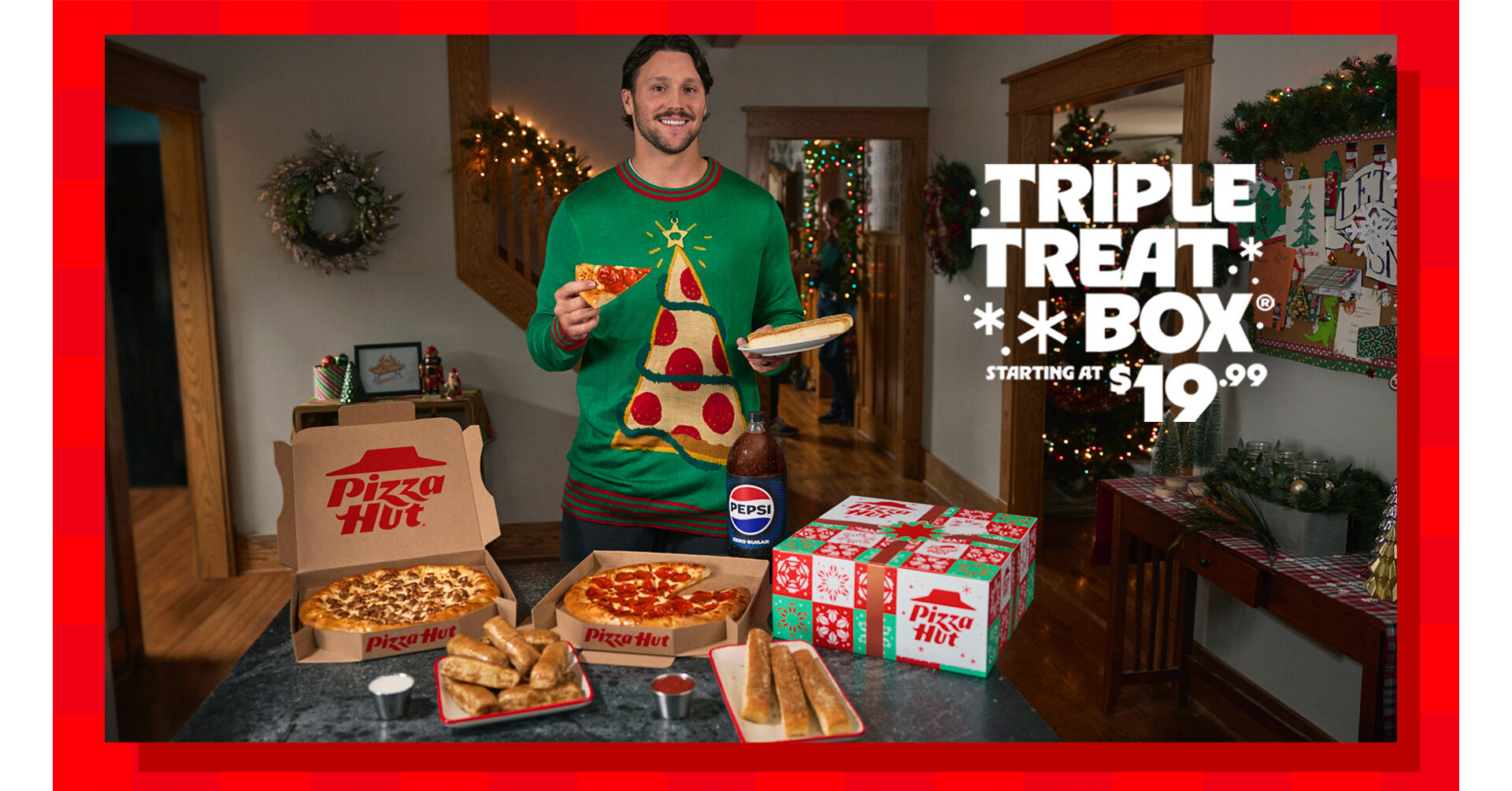
Core Insights - Pizza Hut is reintroducing the Triple Treat Box for the holiday season, featuring two medium one-topping pizzas, five breadsticks, and a dessert in festive packaging [1][5] - The campaign includes a partnership with quarterback Josh Allen and a live reindeer to enhance holiday festivities [2][3] - New packaging for the Triple Treat Box will allow customers to participate in a white elephant game, unlocking promo codes and gift cards [4] Product Offering - The Triple Treat Box includes two medium one-topping pizzas, five breadsticks, and a choice of dessert, available for a limited time at participating locations [5] - The festive packaging is designed to enhance holiday gatherings and create memorable experiences [4] Marketing Strategy - Pizza Hut's collaboration with Josh Allen aims to promote the holiday spirit and the Triple Treat Box [2] - The company is leveraging partnerships with iHeartRadio's Jingle Ball and Bucketlisters to engage customers through events and promotions [4][10] Brand Positioning - Pizza Hut, a subsidiary of Yum! Brands, operates nearly 20,000 restaurants globally and is recognized for its innovative offerings in the pizza category [6] - The brand emphasizes digital ordering, with over half of transactions coming from online platforms [6]

卖了半个世纪“披萨”破产了
首席商业评论· 2025-11-11 03:52
Core Viewpoint - The article discusses the severe operational crisis faced by Pizza Hut's UK business, highlighting its recent bankruptcy proceedings and the challenges posed by market competition and changing consumer habits [4][6][10]. Group 1: Bankruptcy and Operational Challenges - Pizza Hut UK has entered bankruptcy management for the second time within a year, with the latest incident resulting in the closure of 68 dine-in restaurants and 11 delivery points, leading to the loss of 1,210 jobs [4][8]. - The brand's decline began around 2012, with significant competition from rivals like Domino's and Papa John's, which have capitalized on the growing preference for delivery services [13][16]. - The UK operations of Pizza Hut have seen a drastic reduction in store numbers, dropping from a peak of nearly 700 locations to just 132 after recent closures [10][12]. Group 2: Corporate Interventions and Future Outlook - Following the bankruptcy announcement, Yum Brands, the global parent company of Pizza Hut, intervened to rescue the remaining 64 restaurants, ensuring job security for 1,277 employees [11][6]. - Despite the intervention, analysts express skepticism about the long-term viability of Pizza Hut in the UK, citing deep-rooted structural issues and the inadequacy of temporary rescue agreements to address core problems [11][21]. - The overall UK restaurant industry is facing a crisis, with a 31.2% increase in businesses in financial distress, particularly affecting bars and restaurants [18][20]. Group 3: Broader Industry Context - The UK leisure and dining sector is experiencing significant challenges due to a combination of factors, including the pandemic, inflation, rising energy costs, and tax pressures, which have severely impacted profitability [20][21]. - The energy crisis has led to a 300% increase in energy bills for some establishments, further straining their financial health [20]. - The recent changes in national insurance contributions have disproportionately affected entry-level positions in the hospitality sector, exacerbating the industry's struggles [20][21].
Yum! Brands: Tasty Fundamentals, But Valuation And Technicals Are Unappetizing (NYSE:YUM)
Seeking Alpha· 2025-11-10 14:15
Core Insights - Yum! Brands, Inc. (YUM) has experienced a slight increase in value over the past three months, but overall performance remains flat, indicating a cautious outlook due to inflationary pressures and potential overpricing [1] Company Overview - The company operates in the fast-food sector and is subject to macroeconomic factors such as inflation, which can impact consumer spending and pricing strategies [1] Market Context - The analyst has a background in logistics and stock investing, focusing on various sectors including banks, telecommunications, logistics, and hotels, which provides a broader context for understanding market dynamics affecting Yum! Brands [1] Investment Strategy - The analyst emphasizes the importance of portfolio diversification, suggesting that investors should consider a mix of asset classes rather than concentrating solely on savings accounts or real estate [1]
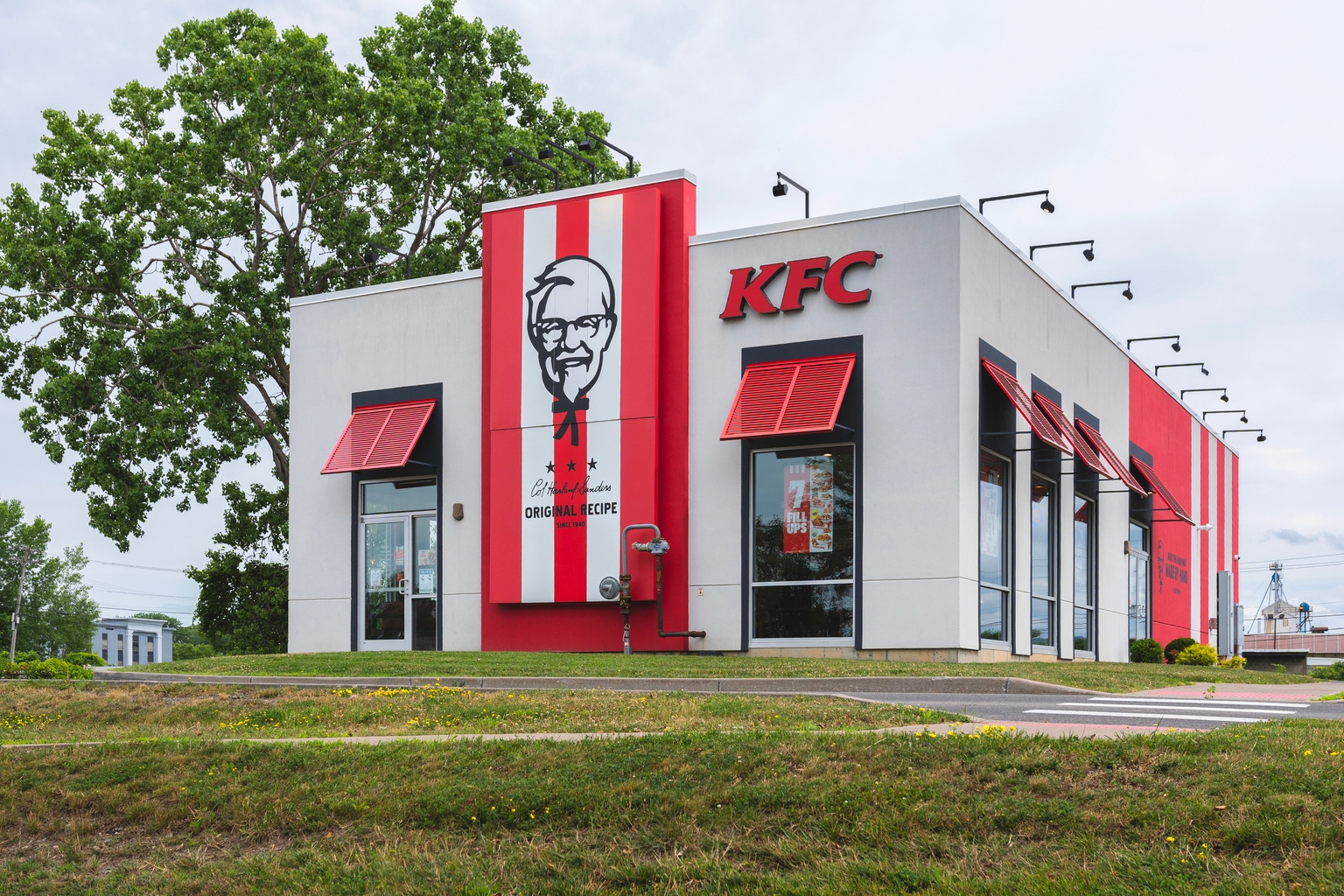
「留英」半个世纪的「披萨」破产了
36氪· 2025-11-10 10:23
Group 1: Core Issues of Pizza Hut UK - Pizza Hut UK is facing severe operational crises, with its franchisee DC London Pie entering bankruptcy management, resulting in the permanent closure of 68 dine-in restaurants and 11 delivery points, leading to the loss of 1,210 jobs [4][10] - This marks the second time within a year that Pizza Hut UK has entered bankruptcy management, with previous debts reaching approximately £40 million [9] - The global parent company, Yum Brands, intervened quickly to rescue the remaining 64 restaurants, ensuring job security for 1,277 employees [10] Group 2: Historical Context and Market Challenges - Pizza Hut's UK operations began in 1973, peaking with over 700 locations and employing 14,000 people by 1999, but has since struggled due to increased competition and changing consumer habits [5][12] - The brand's decline became evident around 2012, with significant losses attributed to competition from rivals like Domino's, which capitalized on the growing preference for delivery services [13] - The COVID-19 pandemic further exacerbated the situation, forcing the closure of 29 locations and severely impacting dine-in business [14] Group 3: Broader Industry Trends - The UK casual dining sector is experiencing a crisis, with a 13.1% year-on-year increase in businesses facing financial distress, and a staggering 31.2% increase in bars and restaurants in critical financial situations [17] - In the first half of the year, 209 pubs permanently closed, averaging 8 closures per week, highlighting the broader challenges faced by the industry [17] - Factors such as inflation, rising energy costs, and tax pressures are contributing to the struggles of the restaurant sector, with energy bills for some establishments increasing by up to 300% [18]
必胜客要被卖了?最新回应
Nan Fang Du Shi Bao· 2025-11-10 03:29
Core Viewpoint - Yum! Brands is considering a strategic review of its Pizza Hut brand, which may include the potential sale of the business. This has raised questions about the future of Pizza Hut in the Chinese market, although Yum China has stated that it operates independently and that daily operations will not be affected [2][3][4]. Group 1: Strategic Review and Operations - Yum! Brands announced a strategic review of Pizza Hut, with CEO Chris Turner indicating that additional actions may be necessary to realize its full value [3]. - Yum China operates Pizza Hut independently in China, and the strategic review by Yum! Brands will not impact its daily operations [4]. - The strategic review does not have a set deadline or specific outcome, and further comments or announcements will be made only if deemed necessary [3]. Group 2: Financial Performance - In Q3 2025, Pizza Hut's revenue for Yum! Brands was $240 million, showing a year-over-year increase of 0.84%, but system sales declined by 0.22% to $3.177 billion [8]. - For the first three quarters of 2025, Pizza Hut's revenue decreased by 0.70% to $710 million, with system sales down 1.79% to $9.321 billion [8]. - In contrast, Yum China reported a 3.25% year-over-year increase in Pizza Hut revenue to $635 million in Q3 2025, with system sales up 4% [10]. Group 3: Market Dynamics - Pizza Hut in China has shown signs of recovery, with same-store sales increasing by 1% due to a 17% rise in transaction volume, despite a 13% decline in average ticket price [10][12]. - The number of Pizza Hut restaurants in China reached 4,022, with a net increase of 158 locations in the latest quarter [10]. - The brand's strategy has shifted towards offering more cost-effective products, contributing to the recovery in revenue and customer traffic [12].

新十年,重新定义 | 5万字解读2025年中国餐饮全品类、全球餐饮认知及三大趋势
3 6 Ke· 2025-11-09 09:16
Core Viewpoint - The report highlights the evolution of the Chinese restaurant industry over the past decade, emphasizing the shift towards chain operations and capital investment, while also outlining future trends and opportunities for growth in the sector [4][6][9]. Industry Overview - The chain rate of the Chinese restaurant industry has reached 23%, with revenue approximately 6.4 trillion RMB and nearly 9 million stores [4][6]. - The past decade has been characterized as the "chain era," marked by significant capital investment and the emergence of influential associations like the China Chain Store & Franchise Association [4][6][8]. Future Trends - The report anticipates that the chain rate will rise to 25% in 2025 and potentially reach 28% by 2026 [14]. - Key trends identified for the next decade include the evolution of chains, the globalization of Chinese cuisine, and a focus on cost reduction while maintaining quality [10][12][14]. Restaurant Categories Hot Pot - The number of hot pot restaurants in China is approximately 528,298, with a net increase of 62,000 stores [17][18]. - Haidilao has initiated the "Pomegranate Plan," which aims to empower new brands using its supply chain and operational capabilities, resulting in significant revenue growth [18][19]. Barbecue - The barbecue segment has around 413,682 operating stores, with a net increase of 16,029 [33]. - Brands like "Very Long Ago" and "Guan's Chicken Wings" exemplify different operational philosophies, focusing on quality and customer relationships [36][39]. Regional Cuisines - Hunan cuisine is experiencing a transformation into a national favorite, with brands like "Fei Chef" emphasizing fresh ingredients and healthy cooking methods [70][76]. - Sichuan cuisine faces challenges in scaling due to reliance on franchising and a lack of standardized operations, which hinders brand strength [79][84]. Cantonese Cuisine - Cantonese cuisine is expanding both nationally and globally, with brands like "Dian Dou De" successfully adapting their offerings to attract a broader audience [93][94]. - The focus on fresh supply chains and innovative dining experiences is driving growth in this segment [95][96]. Jiangsu-Zhejiang Cuisine - Jiangsu-Zhejiang cuisine, known for its delicacy and refinement, has around 110,463 operating stores, with a focus on cultural experiences and high-quality ingredients [104][106]. - The global appeal of dishes like soup dumplings is highlighted as a key opportunity for international expansion [108].