
国电南瑞

Search documents
许继电气股份有限公司九届三十五次董事会决议公告
Shang Hai Zheng Quan Bao· 2026-02-05 18:48
登录新浪财经APP 搜索【信披】查看更多考评等级 ■ 许继电气股份有限公司 九届三十五次董事会决议公告 本公司及董事会全体成员保证信息披露的内容真实、准确、完整,没有虚假记载、误导性陈述或重大遗 漏。 一、会议召开情况 许继电气股份有限公司(以下简称"公司")九届三十五次董事会于2026年1月29日以电话和邮件方式发 出会议通知,在保障董事充分表达意见的前提下,于2026年2月5日以现场会议结合视频方式召开,现场 会议地点为公司本部会议室,会议由公司董事季侃先生主持;应参加表决的董事9人,实际参加表决的 董事9人(其中:以视频方式出席会议的董事5人),董事许涛先生、余明星先生、张友鹏先生、邹永军 先生、胡继晔先生视频出席本次会议;公司部分高级管理人员列席本次会议。本次董事会的召开符合 《公司法》《证券法》及《公司章程》的有关规定。 二、会议审议情况 1.会议以9票同意、0票反对、0票弃权审议通过公司《关于选举第九届董事会董事长的议案》; 公司董事会选举季侃先生为公司第九届董事会董事长(简历详见附件1),任期至第九届董事会届满之 日止,同时为代表公司执行公司事务的董事。在公司总经理空缺期间,由季侃先生代行公司总 ...

让电网设备的利润飞一会儿
新财富· 2026-02-05 08:06
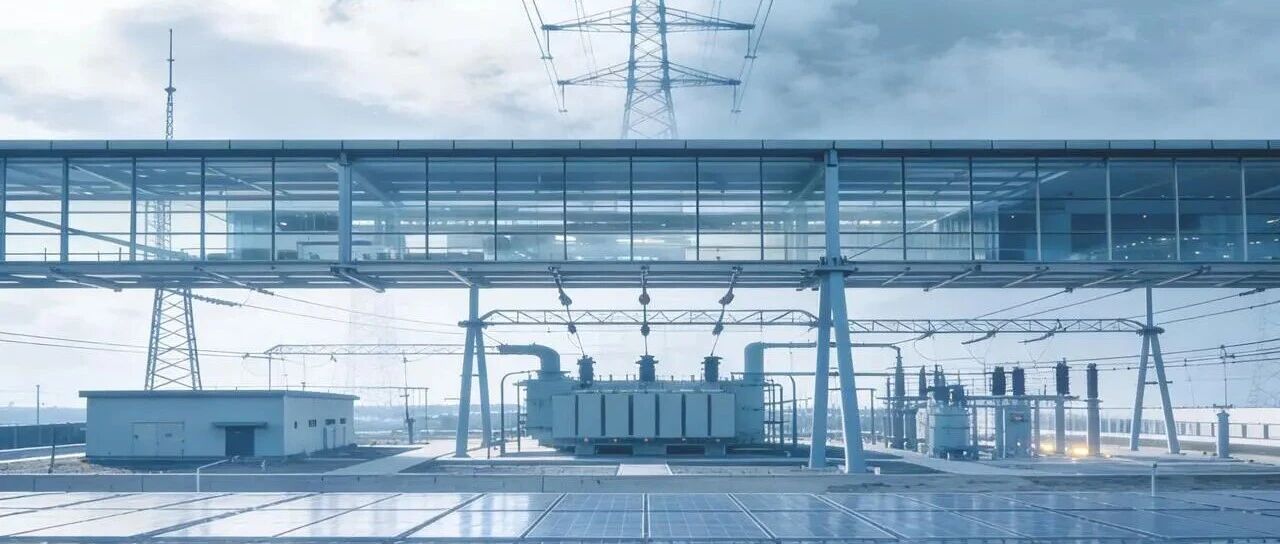
Core Viewpoint - The State Grid has announced a fixed asset investment plan for the "14th Five-Year Plan" period, with a total investment expected to reach 4 trillion yuan, representing a 40% increase compared to the previous period. This indicates a clear high-growth trend in China's power grid investments, leading to unprecedented market expectations for the "power grid cycle" [2]. Investment Dimensions - The power system can be divided into generation, transmission, transformation, distribution, and consumption. The investment in power grid projects can be categorized into three dimensions: trunk network/super high voltage, smart grid/digitalization, and distribution and consumption equipment [10]. - Trunk network/super high voltage investments focus on primary equipment for physical transmission channels, characterized by large single amounts and long construction cycles, typically requiring 2-2.5 years from approval to operation [10]. - Smart grid/digitalization investments pertain to secondary equipment, which includes control systems and automation, with shorter delivery cycles of 0.5-1 year and more stable revenue driven by both new line construction and upgrades of existing networks [11]. - Distribution and consumption side investments target distributed energy access and end-users, characterized by fragmented orders and fast turnover, with profits recognized in line with annual grid construction progress [11]. Company Analysis - Group A companies, such as Pinggao Electric and China XD Electric, exhibit strong cyclical performance linked to super high voltage construction, with profits closely tied to specific project completion timelines [13]. - Group B, represented by State Grid NARI, shows strong certainty and anti-cyclicality in its performance, driven by the increasing complexity of the power grid and technological premiums rather than direct dependence on grid investment fluctuations [15]. - Group C focuses on the end of the power grid, emphasizing access and consumption, with companies like Samsung Medical experiencing accelerated profit growth due to the shift from urbanization-driven to consumption-driven investments, particularly in response to the rapid growth of distributed solar energy [17]. New Power System Cycle - The current "14th Five-Year Plan" power grid cycle differs from previous ones, with its driving factors shifting from "scale expansion" to "reconstruction of the power grid under a new power system." The main challenge has evolved to system stability and capacity for renewable energy integration [20]. - It is anticipated that a significant portion of the 4 trillion yuan investment will be allocated to addressing the randomness and volatility of renewable energy sources. Key factors influencing the industry include cost fluctuations of raw materials, technological upgrades, investment policies, and supply-demand dynamics [20].


广东加码“AI+工业软件”核心赛道,聚焦工业软件ETF博时(159108)配置机遇
Xin Lang Cai Jing· 2026-02-05 05:37
Group 1 - The industrial software ETF Boshi (159108) has seen a decline of 1.48% as of February 5, 2026, with the latest price at 1.07 yuan, while it has accumulated an increase of 8.73% over the past month as of February 4, 2026 [1] - The liquidity of the industrial software ETF Boshi showed a turnover rate of 2.59% during the trading session, with a transaction volume of 5.6082 million yuan, and the average daily transaction volume over the past month was 34.1823 million yuan as of February 4, 2026 [1] - Guangdong Province has issued implementation opinions to accelerate the high-quality construction of a digital society, focusing on the application of artificial intelligence technology and supporting the cultivation of AI application service providers in vertical fields such as "AI + industrial software" and intelligent robotics [1] Group 2 - Huatai Securities believes that the core logic of domestic AI application development is "scenarios first, efficiency is king," with clear and urgent demand in sectors like finance, government, healthcare, and industry, where data foundations are strong and payment capabilities are high [1] - The development of lightweight models and edge computing technology is expected to continuously reduce application costs, promoting widespread adoption among small and medium-sized enterprises [1] - The year 2026 is anticipated to be a critical year for AI applications transitioning from pilot projects to large-scale deployment [1] Group 3 - The industrial software ETF Boshi closely tracks the National Certificate Industrial Software Theme Index, which reflects the price changes of listed companies related to the industrial software industry on the Shanghai and Shenzhen stock exchanges [2] - As of January 30, 2026, the top ten weighted stocks in the National Certificate Industrial Software Theme Index (980034) include Huada Jiutian, Guanglian Da, Zhongkong Technology, and others, with these stocks collectively accounting for 56.17% of the index [2]
机械工业年度成绩单发布:利润转正、外贸总额创新高
第一财经· 2026-02-05 05:24
2026.02. 05 本文字数:1854,阅读时长大约4分钟 作者 | 第一财 经 祝嫣然 2025年,机械工业规模以上企业增加值同比增长8.2%,增速高于全国工业和制造业2.3和1.8个百分点。实现营业收入33.2万亿元,总量创新高。实现 利润总额1.7万亿元,增速由上年的下降转为增长,同比增长5.9%。 2月5日,中国机械工业联合会召开2025年全年机械工业经济运行形势信息发布会,发布了上述数据。 中国机械工业联合会副会长叶定达在发布会上表示,2025年机械工业经济运行呈高位趋缓、稳中有进态势,行业表现出向新、向优的特点。今年支撑行 业高质量发展的有利条件也在不断积累和增多,预计行业全年主要指标增速在5.5%左右。 2025年,机械工业规模以上企业实现营业收入33.2万亿元,总量创新高,同比增长6.0%,增速高于全国工业4.9个百分点;实现利润总额1.7万亿元, 增速由上年的下降转为增长,同比增长5.9%,增速较全国工业高5.3个百分点。营业收入和利润总额占全国工业的比重分别为23.9%和23.1%,较上年 同期分别提升1.1和1.2个百分点。 不过,叶定达谈到,受供需结构性矛盾影响、市场竞争激烈,机械 ...
智算集群迎来吉瓦级时代
Zhong Guo Dian Li Bao· 2026-02-05 02:48
Core Insights - The report by the China Academy of Information and Communications Technology highlights the rapid growth of computing power in the artificial intelligence (AI) industry, indicating a shift towards a gigawatt-level era, with energy becoming a critical bottleneck for scaling up [1][2] Group 1: Investment Trends - Major companies are increasingly investing in the power sector to support the explosive growth of computing power driven by AI applications, with predictions of a significant increase in global cluster power over the next three years [2] - Notable companies like Amazon, Google, Microsoft, and Nvidia are exploring energy privatization and investing in nuclear fusion, geothermal, and power plant construction to ensure sustainable energy for AI computing clusters [2] - Global AI investment is projected to rise from 8.1% of total industry financing in 2023 to 23% by Q2 2025, with a stark contrast in investment amounts between the US and China [2] Group 2: Model as a Service (MaaS) - MaaS is becoming essential for the industrial application of large models, transitioning from optional to necessary as demand for large models grows across various industries [3] - Major domestic cloud service providers are enhancing their MaaS offerings to optimize resource allocation and improve model inference performance while reducing costs and energy consumption [3] Group 3: AI Penetration in High-Value Sectors - AI applications are expanding into high-value sectors, enhancing productivity in agriculture, transforming industrial manufacturing, and deepening integration in service industries [4] - Different industrial sectors exhibit varied AI adoption characteristics, with significant applications in electronics, consumer goods, and automotive manufacturing, while energy and power sectors are also showing promising trends [4] Group 4: Challenges in AI Implementation - Despite the rapid growth of the AI industry, challenges remain in the practical implementation of AI technologies, with a focus on four core areas: scenario selection, technology adaptation, business integration, and data support [5] - The report emphasizes the need for tailored approaches to AI implementation based on company-specific resources, data foundations, and compliance requirements [5] - The example of State Grid Corporation illustrates a successful top-down strategy for AI integration in power grid scheduling and equipment maintenance, enhancing operational capabilities [6] Group 5: Global AI Development Disparities - The report indicates a widening gap in AI development globally, highlighting the need for international cooperation and the establishment of ESG assessment guidelines for AI [6] - A comprehensive evaluation framework covering algorithm ethics, data privacy, and energy consumption is recommended to ensure inclusivity and applicability across different countries [6]
未来货币是“瓦特”?
Ren Min Ri Bao· 2026-02-05 00:36
Core Insights - China's total electricity consumption is projected to exceed 10 trillion kilowatt-hours by 2025, marking a historic milestone for a single country globally, which is more than double the annual electricity consumption of the United States and higher than the combined total of the EU, Russia, India, and Japan [1][2] Group 1: Electricity Consumption Growth - The electricity consumption in China has nearly doubled from approximately 5.5 trillion kilowatt-hours in 2015 to over 10 trillion kilowatt-hours in 2025, illustrating a steep growth curve [2] - This significant increase in electricity demand is driven by advancements in infrastructure and a robust energy production system, which accounts for over 20% of global energy production [3] Group 2: Infrastructure and Planning - The growth in electricity consumption is supported by proactive planning and unified scheduling, with investments in the power grid expected to reach 4 trillion yuan during the 14th Five-Year Plan, a 40% increase from the previous plan [4] - China's unified electricity market, covering over 1.4 billion people, allows for efficient distribution of clean energy from resource-rich western and northern regions to the eastern and central load centers [5] Group 3: Technological Advancements - China's advancements in ultra-high voltage (UHV) technology have positioned it as a leader in the energy sector, with significant breakthroughs in insulation materials and equipment standardization [6] - The integration of artificial intelligence with the power grid is transforming the coordination of energy sources, networks, loads, and storage, enhancing the overall efficiency of the electricity system [6] Group 4: Future Outlook - The established strong, stable, and green electricity system is not only a foundation for current economic development but also accumulates essential physical conditions for future growth [7] - Despite the progress, challenges remain in profitability for power generation companies, the pace of green transformation, and the sustainability of innovation investments [7]
吉林推进新能源产业发展,年内投资逾千亿元
Zhong Guo Xin Wen Wang· 2026-02-05 00:31
免责声明:Mysteel发布的原创及转载内容,仅供客户参考,不作为决策建议。原创内容版权归Mysteel所有,转载需取得Mysteel书面授 权,且Mysteel保留对任何侵权行为和有悖原创内容原意的引用行为进行追究的权利。转载内容来源于网络,目的在于传递更多信息,方 便学习与交流,并不代表Mysteel赞同其观点及对其真实性、完整性负责。 当次会议明确,今年将充分挖掘风、光、水、秸秆等资源潜力,加快推动"绿氢+"重大项目落地建设、 投产达效。 资讯编辑:罗莹 021-26093550 资讯监督:乐卫扬 021-26093827 资讯投诉:陈跃进 021-26093100 2月4日,吉林省召开专题会议,研究2026年新能源开发及"绿氢+"产业发展工作。据悉,该省锚定今年 新能源新增开发装机突破1000万千瓦,产业投资超过1000亿元。 吉林省风光资源富集。目前,该省"陆上风光三峡"工程持续推进,新能源产业链条聚优成势。据国网吉 林省电力有限公司数据,"十四五"期间,吉林新增风电、光伏装机1692.1万千瓦,是"十三五"时期新增 规模的3.6倍;新能源装机容量突破全省总装机容量50%,超越火电成为第一大电源。 ...
未来货币是“瓦特”?(读数)
Ren Min Ri Bao· 2026-02-04 22:05
Core Insights - China's total electricity consumption is projected to exceed 10 trillion kilowatt-hours by 2025, marking a historic milestone for a single country globally, which is more than double the annual electricity consumption of the United States and higher than the combined total of the EU, Russia, India, and Japan [1][2]. Group 1: Electricity Consumption Growth - The electricity consumption in China has nearly doubled from approximately 5.5 trillion kilowatt-hours in 2015 to over 10 trillion kilowatt-hours in 2025, illustrating a steep growth curve [2]. Group 2: Infrastructure and Energy Security - The substantial electricity demand is supported by robust infrastructure, establishing China's competitive edge in the energy sector, with over 20% of global energy production [3]. - Since the 14th Five-Year Plan, China's energy self-sufficiency rate has remained above 80%, with over 90% of the increase in energy consumption being domestically secured [3]. Group 3: Strategic Planning and Investment - The success is attributed to "proactive planning" and "unified scheduling," with investments in the power grid being made based on a 5 to 10-year forward-looking layout [4]. - The State Grid has announced a fixed asset investment of 4 trillion yuan for the 15th Five-Year Plan, a 40% increase from the previous plan, to meet future electricity demand [4]. Group 4: Unified Power Market - China's unified electricity market, supported by the world's largest power transmission network, allows for efficient distribution of clean energy from resource-rich western and northern regions to the eastern and central load centers [5]. - The "West-to-East Power Transmission" capacity has reached 340 million kilowatts, with expectations for significant growth in high-voltage direct current transmission channels by 2050 [5]. Group 5: Technological Advancements - China's advancements in ultra-high voltage technology are pivotal, achieving breakthroughs in insulation materials and equipment weight, along with the localization and standardization of core devices [6]. - Over one-third of electricity consumed in China is generated from renewable sources, with wind and solar power installations expected to surpass thermal power by 2025 [6]. Group 6: Future Outlook - The strong, stable, and green electricity system built through proactive planning is not only a guarantee for current economic development but also lays the foundational physical conditions for future growth [7]. - Despite the advantages in scale among power generation companies, challenges remain in profitability, structural optimization for green transition, and sustained innovation investment [7].
每日市场观察-20260204
Caida Securities· 2026-02-04 05:08
Market Performance - The Shanghai Composite Index rose by 1.29%, the Shenzhen Component Index increased by 2.19%, and the ChiNext Index gained 1.86% on February 3, 2026[3] - A total of 4,646 stocks rose while 520 stocks fell, with total trading volume exceeding 2.54 trillion yuan, slightly down from the previous period[1] Sector Highlights - Key sectors showing strong performance included shipbuilding, photovoltaic equipment, small metals, glass fiber, engineering machinery, communication equipment, and aerospace, while banking, insurance, and liquor sectors experienced slight adjustments[1] - The photovoltaic equipment and aerospace sectors saw significant gains due to expectations surrounding the merger of SpaceX and xAI, indicating potential for increased investor interest[1] Capital Flow - On February 3, net inflows into the Shanghai Stock Exchange amounted to 40.933 billion yuan, while the Shenzhen Stock Exchange saw net inflows of 36.253 billion yuan[4] - The top three sectors for capital inflow were photovoltaic equipment, communication equipment, and IT services, while industrial metals, securities, and precious metals saw the largest outflows[4] Policy Developments - The State-owned Assets Supervision and Administration Commission (SASAC) emphasized the need to accelerate the cultivation of leading technology enterprises and "specialized, sophisticated" small giants, aiming for a modern industrial system[5][6] - SASAC plans to implement a "one enterprise, one policy" assessment approach in 2026 to enhance the management of income distribution and promote high-quality development[7] Industry Dynamics - The China Nonferrous Metals Industry Association proposed expanding the national copper strategic reserve and exploring commercial reserve mechanisms for copper concentrate[9] - Shanghai aims to accelerate major industrial projects in integrated circuits, biomedicine, and artificial intelligence, while supporting the development of smart connected vehicles and aerospace industries[9]
AIDC引发全球缺电,电网设备ETF(159326)全市场规模最大,杭电股份4连板
Mei Ri Jing Ji Xin Wen· 2026-02-04 03:21
Group 1 - The A-share market showed mixed performance on February 4, with the only electric grid equipment ETF (159326) experiencing a decline of 0.39% after an initial surge, while trading volume reached 394 million yuan, and stocks like Hangdian Co. and Hongsheng Huayuan hit the daily limit [1] - The electric grid equipment ETF has seen a net inflow of over 10 billion yuan this year, bringing its total size to 17.577 billion yuan, making it the largest power-related ETF in the market [1] - The global AI computing power boom has led to a persistent electricity shortage in data centers, with high-power and stable electricity supply becoming crucial for computing clusters, thus upgrading transformers to core infrastructure for computing power [1] Group 2 - The electric grid equipment ETF (159326) is the only ETF tracking the China Securities Electric Grid Equipment Theme Index, with a strong representation in sectors such as transmission and transformation equipment, grid automation equipment, and distribution equipment [2] - The smart grid sector holds a significant weight of 88% in the index, while the ultra-high voltage segment accounts for 65%, both being the highest in the market [2] - The ETF includes leading companies such as TBEA, China XD Electric, and Baobian Electric, which are prominent players in the export market [2]
