
国联安基金

Search documents
基金早班车丨新基发行两连降,FOF与债基撑起冷清档期
Sou Hu Cai Jing· 2025-11-26 00:47
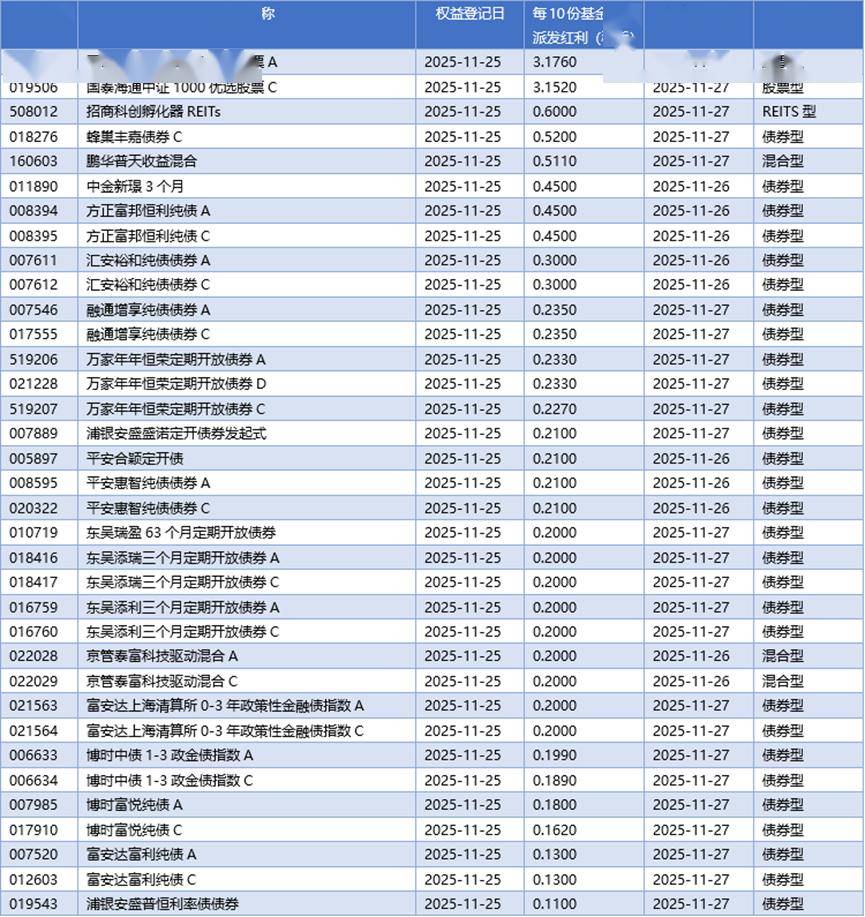
Group 1: Market Overview - The fund issuance continues to show a cold trend, with only 23 new funds launched from November 24 to 30, representing a 32% decrease compared to the previous period, and the average subscription period extended to 23.65 days [1] - On November 25, A-shares saw a rise in the three major indices, with the Shanghai Composite Index up 0.87% to 3870.02 points, the Shenzhen Component Index up 1.53% to 12777.31 points, and the ChiNext Index up 1.77% to 2980.93 points, with a total market turnover of 1.81 trillion [1] Group 2: Fund News - No new funds were launched on November 25, but 50 funds distributed dividends, primarily bond funds, with the highest dividend payout from the Guotai Haitong CSI 1000 Preferred Stock Fund at 3.1760 yuan per 10 shares [2] - Despite A-share adjustments triggering risk aversion, public funds are operating contrary to expectations, with bond funds, money market funds, and dividend-themed products recently implementing purchase limits while broad-based equity indices are seeing accelerated new fund launches [2] - As of November 25, there are 80 public fund products in the market with a total planned fundraising amount exceeding 210 billion yuan, indicating a moderate recovery expectation and an optimized investor structure [2] Group 3: Fund Performance - On November 25, the best-performing fund was the浦银安盛数字经济混合A, with a daily growth rate of 6.5864%, followed closely by the 华商均衡成长混合C at 6.5856% and the 华商均衡成长混合A at 6.5849% [5] - In terms of investment types, the top-performing stock fund was 同泰行业优选股票C with a daily growth rate of 6.0587%, while the top bond fund was 南方昌元转债C with a growth rate of 1.5297% [6]

科技股爆发,场内千基上涨
Zhong Guo Zheng Quan Bao· 2025-11-25 13:15
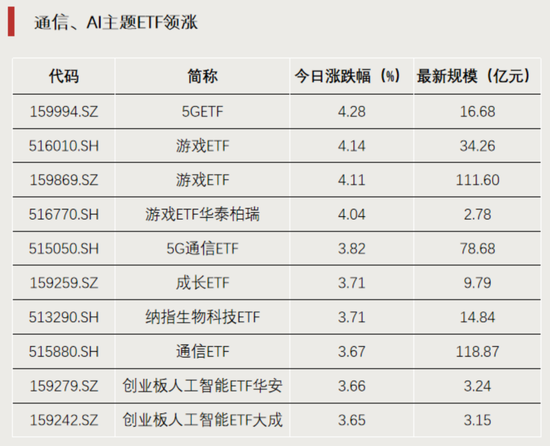
Group 1 - The technology growth sector, represented by optical modules, saw a collective surge on November 25, with some 5G and gaming-themed ETFs rising over 4% and multiple communication and AI-themed ETFs increasing over 3% [1][2] - The A-share market experienced wide fluctuations, leading to broad-based ETFs like CSI 300 and CSI 500 becoming a "safe haven" for funds, with net inflows exceeding 5.3 billion yuan for CSI 300 ETFs on November 24 [1][7] - Several funds reported the first batch of sci-tech entrepreneurship robot ETFs, and a semiconductor ETF was also submitted for approval, indicating a growing interest in these sectors [1][11] Group 2 - The AI sector led the gains on November 25, with stocks like Zhongji Xuchuang and Xinyi Sheng rising by 5% and 4% respectively, while the gaming and non-ferrous metals sectors also performed well [2] - The 5G ETF (159994) and multiple gaming-themed ETFs saw increases of over 4%, with over a thousand ETFs closing higher overall [2][3] - The recent volatility in the AI industry has led to more reasonable valuations, with performance improvements expected to drive continued upward movement in the sector [2] Group 3 - The Hong Kong stock market saw active trading in thematic ETFs, with significant increases in trading volumes for Hong Kong Securities ETF and Hong Kong Innovative Drug ETF compared to the previous trading day [5][6] - The broad-based ETFs have attracted significant net inflows, with the CSI 300 ETF leading with over 3.6 billion yuan in net inflows, marking a trend of consistent investment in these funds [7][8] - The recent performance of various sector ETFs indicates a shift in investor focus, with technology and growth sectors gaining traction while traditional sectors like coal and banking are seeing reduced interest [7][9] Group 4 - The first batch of sci-tech entrepreneurship robot ETFs was reported by several major fund companies, highlighting a strategic focus on robotics and semiconductor sectors [11] - The indices for the newly proposed ETFs include companies that provide essential software and hardware for robotics, as well as significant players in the semiconductor industry [11]
宽基指数增速放缓!内部分化显现,这个挂钩ETF年内净赎回超900亿
Sou Hu Cai Jing· 2025-11-25 12:24
Core Insights - The growth rate of broad-based index ETFs has significantly slowed down in 2025 compared to the explosive growth seen in the previous year [2][3] - The number of stock ETFs increased from 832 at the end of last year to 1,066, with net asset value rising from 28,876.80 billion to 36,021.33 billion, a year-on-year increase of 24.74% [2] - In contrast, the scale of index ETFs grew at a much slower rate of approximately 8.77%, with net asset value increasing from 21,856.45 billion to 23,773.29 billion [2] ETF Market Dynamics - The leading growth in stock ETFs this year comes from thematic ETFs, which saw their number and scale rise to 495 and 7,738.70 billion respectively, marking an 88.54% increase [2] - Industry and strategy ETFs also experienced significant growth, with increases of 58.58% and 50.21% respectively [2] - The market is characterized by uneven opportunities, with active funds focusing on a few high-growth sectors, leading to reduced attractiveness of broad-based ETFs [3] Performance of Specific ETFs - The CSI A500 index ETF has seen the highest net redemption, with outflows exceeding 900 billion, despite a 15.74% increase in its value [5][10] - The CSI A500 ETF products collectively have a scale of approximately 1,919.26 billion, but this is down by about 635.80 billion from the end of last year [7] - The market has seen a shift in fund flows from broad-based ETFs to industry-specific ETFs, particularly in TMT and financial real estate sectors [8] Management and Competition - The top two ETF managers, Huaxia Fund and E Fund, dominate the market with total ETF scales of 8,983.07 billion and 8,327.23 billion respectively, showing significant growth in non-money market ETFs [12] - Seven ETF managers have added over 1,000 billion in scale this year, accounting for nearly 60% of the total market growth [13] - Huaxia Fund's robot ETF has shown remarkable growth, increasing from 41.37 billion to 239.30 billion, a growth rate of 478.44% [13] Global ETF Landscape - Huaxia Fund and E Fund have entered the top twenty global ETF providers, marking a significant achievement for Chinese firms in the global market [14] - The competitive landscape remains stable among the top global ETF providers, with BlackRock and Vanguard leading the market [14]
航空航天ETF领涨,商业航天进入快速发展期丨ETF基金日报
2 1 Shi Ji Jing Ji Bao Dao· 2025-11-25 03:03
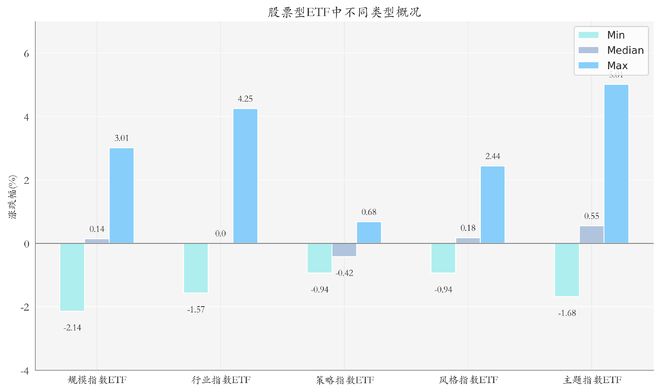
Market Overview - The Shanghai Composite Index rose by 0.05% to close at 3836.77 points, with a daily high of 3854.33 points [1] - The Shenzhen Component Index increased by 0.37% to close at 12585.08 points, reaching a high of 12655.29 points [1] - The ChiNext Index gained 0.31%, closing at 2929.04 points, with a peak of 2951.43 points [1] ETF Market Performance - The median return of stock ETFs was 0.2%, with the highest return from the Penghua SSE Sci-Tech Innovation Board 200 ETF at 3.01% [2] - The highest performing industry ETF was the China Securities Satellite Industry ETF, yielding 4.25% [2] - The highest return among thematic ETFs was the China Securities Aerospace Industry ETF, which achieved 5.01% [2] ETF Gain and Loss Rankings - The top three ETFs by gain were: - Huaxia China Securities Aerospace Industry ETF (5.01%) - Tianhong China Securities Aerospace Industry ETF (4.66%) - Wanji China Securities Aerospace Industry ETF (4.64%) [4] - The top three ETFs by loss were: - Xingyin SSE Sci-Tech Innovation Board Comprehensive Price ETF (-2.14%) - Huaxia China Securities Sci-Tech Innovation 50 ETF (-1.88%) - Jiashi China Securities Rare Metals Thematic ETF (-1.68%) [4] ETF Fund Flow - The top three ETFs by fund inflow were: - Huatai-PB SSE 300 ETF (inflow of 3.665 billion yuan) - Huaxia SSE 50 ETF (inflow of 1.53 billion yuan) - Southern CSI 500 ETF (inflow of 895 million yuan) [6] - The top three ETFs by fund outflow were: - Huabao CSI Bank ETF (outflow of 211 million yuan) - Fuguo CSI Military Industry Leaders ETF (outflow of 209 million yuan) - Guotai CSI Coal ETF (outflow of 207 million yuan) [6] ETF Margin Trading Overview - The highest margin buy amounts were for: - Huaxia SSE Sci-Tech Innovation 50 ETF (593 million yuan) - E Fund ChiNext ETF (440 million yuan) - Guotai CSI All-Share Securities Company ETF (415 million yuan) [8] - The highest margin sell amounts were for: - Huatai-PB SSE 300 ETF (34.95 million yuan) - Southern CSI 500 ETF (7.56 million yuan) - Huaxia SSE 50 ETF (3.97 million yuan) [9] Institutional Insights - Shenwan Hongyuan expects strong resonance between demand and supply in China's military trade, driven by expanding global military trade demand and enhanced product capabilities [10] - Debon Securities highlights a historic opportunity for the commercial aerospace industry, transitioning from manufacturing to application, with significant growth in low-orbit satellite demand [11]

两市ETF两融余额减少3.68亿元丨ETF融资融券日报
2 1 Shi Ji Jing Ji Bao Dao· 2025-11-25 02:43
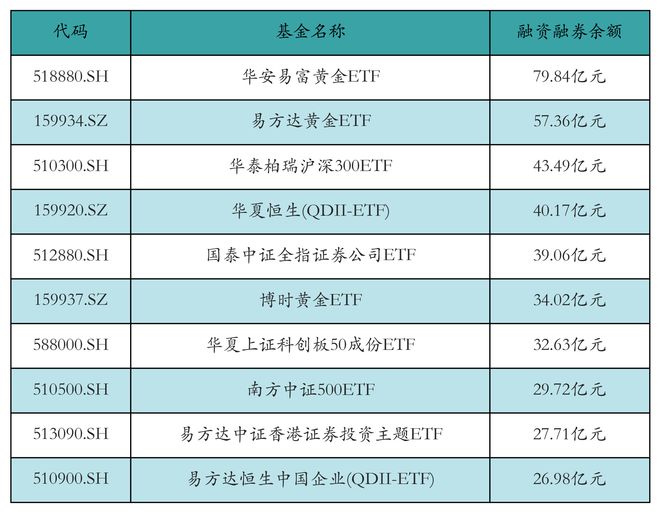
Market Overview - On November 24, the total ETF margin balance in the two markets was 120.92 billion yuan, a decrease of 368 million yuan from the previous trading day [1] - The financing balance was 113.92 billion yuan, down by 347 million yuan, while the margin short balance was 7.00 billion yuan, a decrease of 21.07 million yuan [1] - In the Shanghai market, the ETF margin balance was 84.43 billion yuan, a decrease of 27.65 million yuan, with a financing balance of 78.28 billion yuan, down by 1.48 million yuan [1] - In the Shenzhen market, the ETF margin balance was 36.49 billion yuan, a decrease of 341 million yuan, with a financing balance of 35.64 billion yuan, down by 346 million yuan [1] ETF Margin Financing Balances - The top three ETF margin financing balances on November 24 were: - Huaan Yifu Gold ETF (7.98 billion yuan) - E Fund Gold ETF (5.74 billion yuan) - Huatai-PB CSI 300 ETF (4.35 billion yuan) [2] - The detailed top 10 list includes funds such as Huaxia Hang Seng (QDII-ETF) and Guotai CSI All-Share Securities Company ETF [2] ETF Margin Financing Buy Amounts - The top three ETF financing buy amounts on November 24 were: - Huatai-PB South East Asia Hang Seng Technology Index (1.39 billion yuan) - Bosera CSI Convertible Bonds and Exchangeable Bonds ETF (1.28 billion yuan) - E Fund CSI Hong Kong Securities Investment Theme ETF (898 million yuan) [3] - The detailed top 10 list includes funds like Hai Futong CSI Short-term Bond ETF and Huaxia Hang Seng Technology (QDII-ETF) [4] ETF Margin Financing Net Buy Amounts - The top three ETF financing net buy amounts on November 24 were: - Bosera CSI Convertible Bonds and Exchangeable Bonds ETF (203 million yuan) - Huatai-PB CSI 300 ETF (115 million yuan) - Huaxia Shanghai Stock Exchange Sci-Tech Innovation Board 50 ETF (79.07 million yuan) [5] - The detailed top 10 list includes funds such as Huatai-PB South East Asia Hang Seng Technology Index (QDII-ETF) and Pengyang 30-Year Treasury ETF [6] ETF Margin Short Selling Amounts - The top three ETF margin short selling amounts on November 24 were: - Huatai-PB CSI 300 ETF (34.95 million yuan) - Southern CSI 500 ETF (7.56 million yuan) - Huaxia SSE 50 ETF (3.97 million yuan) [7] - The detailed top 10 list includes funds like Guolian An CSI All-Share Semiconductor Products and Equipment ETF [8]
两市ETF两融余额增加3.7亿元丨ETF融资融券日报
2 1 Shi Ji Jing Ji Bao Dao· 2025-11-24 02:44
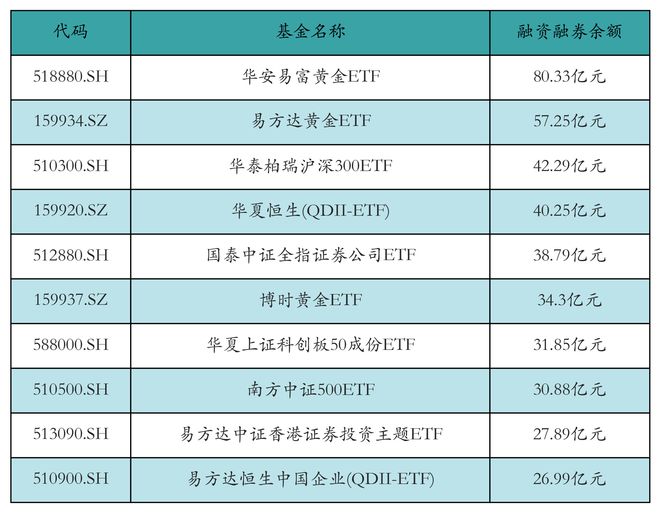
Market Overview - As of November 21, the total ETF margin balance in the two markets reached 121.289 billion, an increase of 0.037 billion from the previous trading day [1] - The financing balance was 114.266 billion, up by 0.0986 billion, while the securities lending balance decreased to 7.023 billion, down by 0.0616 billion [1] - In the Shanghai market, the ETF margin balance was 84.459 billion, increasing by 0.052368 billion, with a financing balance of 78.279 billion, up by 0.0553 billion [1] - The Shenzhen market's ETF margin balance was 36.83 billion, increasing by 0.0318 billion, with a financing balance of 35.987 billion, up by 0.0434 billion [1] ETF Margin Balance - The top three ETFs by margin balance on November 21 were: - Huaan Yifu Gold ETF (8.033 billion) - E Fund Gold ETF (5.725 billion) - Huatai-PB CSI 300 ETF (4.229 billion) [2] - The detailed list of the top 10 ETFs by margin balance includes various funds, with the total balances reflecting significant investor interest in gold and large-cap indices [2] ETF Financing Buy Amount - The top three ETFs by financing buy amount on November 21 were: - Huatai-PB Southern Dongying Hang Seng Technology Index (1.58 billion) - Bosera CSI Convertible Bonds and Exchangeable Bonds ETF (1.278 billion) - Huaxia Hang Seng Technology (1.981 billion) [3] - The data indicates a strong demand for technology-focused ETFs, particularly those linked to the Hang Seng index [3] ETF Financing Net Buy Amount - The top three ETFs by financing net buy amount on November 21 were: - E Fund ChiNext ETF (0.329 billion) - Huatai-PB CSI 300 ETF (0.186 billion) - Guotai CSI All-Share Securities Company ETF (0.137 billion) [5] - This reflects a positive sentiment towards growth-oriented sectors, particularly in the ChiNext market [5] ETF Securities Lending Sell Amount - The top three ETFs by securities lending sell amount on November 21 were: - Huatai-PB CSI 300 ETF (25.6611 million) - Southern CSI 500 ETF (22.2563 million) - Huaxia SSE 50 ETF (7.9742 million) [7] - The data suggests active trading strategies among investors, particularly in large-cap and mid-cap ETFs [7]
40只中证A500基金再度全线收跌,总规模跌破2000亿元
2 1 Shi Ji Jing Ji Bao Dao· 2025-11-21 11:25
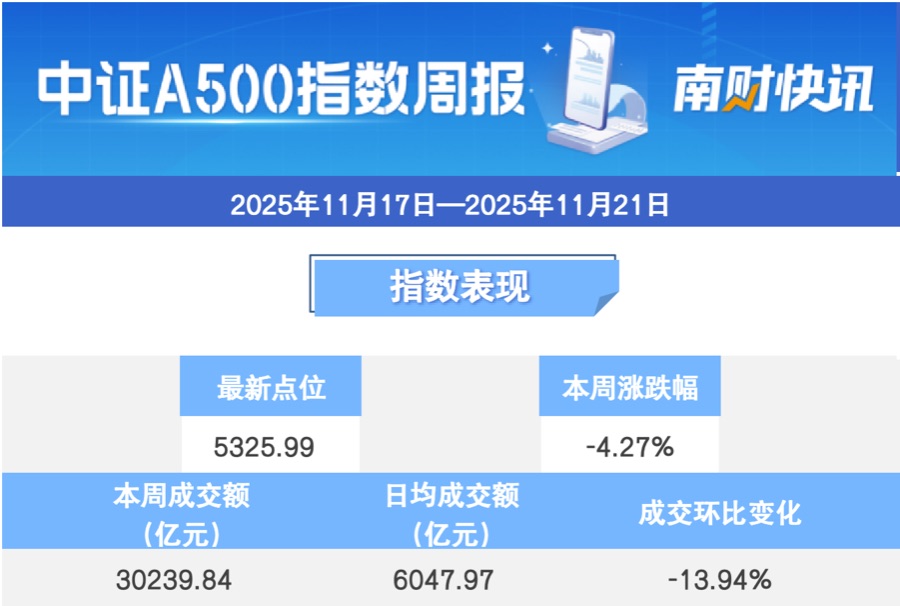
Index Performance - The CSI A500 Index decreased by 4.27% this week, closing at 5325.99 points as of November 21 [3][8] - The average daily trading volume for the week was 6047.97 billion yuan, reflecting a decrease of 13.94% compared to the previous week [3][8] Component Stock Performance - The top ten gainers in the CSI A500 Index this week included: 1. Aerospace Development (000547.SZ) with a gain of 31.77% 2. BlueFocus Communication Group (300058.SZ) with a gain of 20.18% 3. Tongcheng New Materials (603650.SH) with a gain of 14.75% [5] - The top ten losers included: 1. Defang Nano (300769.SZ) with a loss of 19.27% 2. Xinzhou Bang (300037.SZ) with a loss of 17.98% 3. GoodWe (688390.SH) with a loss of 17.59% [5] Fund Performance - All 40 CSI A500 funds experienced declines, with losses exceeding 3% this week [8] - The smallest decline was seen in the E Fund CSI A500 Enhanced ETF, which fell by 3.23%, while the largest decline was in the Huaan Fund's CSI A500 Enhanced ETF, which dropped by 4.67% [8] - The total scale of the funds has fallen below 200 billion yuan, now standing at 1920.64 billion yuan, with the top three funds being: 1. Huatai-PB CSI A500 ETF at 256.97 billion yuan 2. E Fund CSI A500 ETF at 226.45 billion yuan 3. Guotai Fund's CSI A500 ETF at 212.14 billion yuan [8] Market Analysis - Huaxin Securities reports that the A-share market is currently in a tug-of-war around the 4000-point mark, influenced by external factors such as the rising US dollar index and internal factors including profit-taking in technology stocks and disappointing earnings reports [9] - The report indicates that while there are signals of short-term adjustments in the market, there are no clear signs of a peak, suggesting that the bull market is still in its mid-stage, awaiting further capital inflows from residents, public funds, and foreign investments [9]
越跌越买,抄底来了
Zhong Guo Ji Jin Bao· 2025-11-21 05:51
Core Insights - The overall net inflow of stock ETFs reached 9 billion yuan on November 20, with a total inflow of nearly 28.5 billion yuan for the week from November 17 to November 20 [1][3]. Fund Inflows - The top five sectors for net inflow included Hang Seng Technology (2.35 billion yuan), Semiconductors (1.15 billion yuan), Sci-Tech 50 Index (1.08 billion yuan), Hong Kong Internet (890 million yuan), and Gold (870 million yuan) [3]. - The leading fund company, E Fund, reported a total ETF size of 810.53 billion yuan, with a net inflow of 1.57 billion yuan on November 20, and an increase of 209.88 billion yuan since 2025 [3]. Fund Outflows - The top five sectors for net outflow included the CSI 300 Index (1.2 billion yuan), New Energy (910 million yuan), Banks (600 million yuan), Computers (250 million yuan), and Media (250 million yuan) [3][8]. - The Securities ETF, Bank ETF, and Battery ETF were among the largest outflow products, with the CSI 300 ETFs experiencing significant net outflows [8]. Market Trends - The current A-share market is experiencing a technology-led structural market, with a strong long-term outlook for sectors such as semiconductors, innovative technology products, and innovative pharmaceuticals [8][9]. - The market is expected to focus more on the 2026 economic outlook as year-end approaches, with technology sectors showing clearer investment opportunities [9].
建筑材料、银行等防御类ETF逆市领涨丨ETF基金日报
2 1 Shi Ji Jing Ji Bao Dao· 2025-11-21 03:09
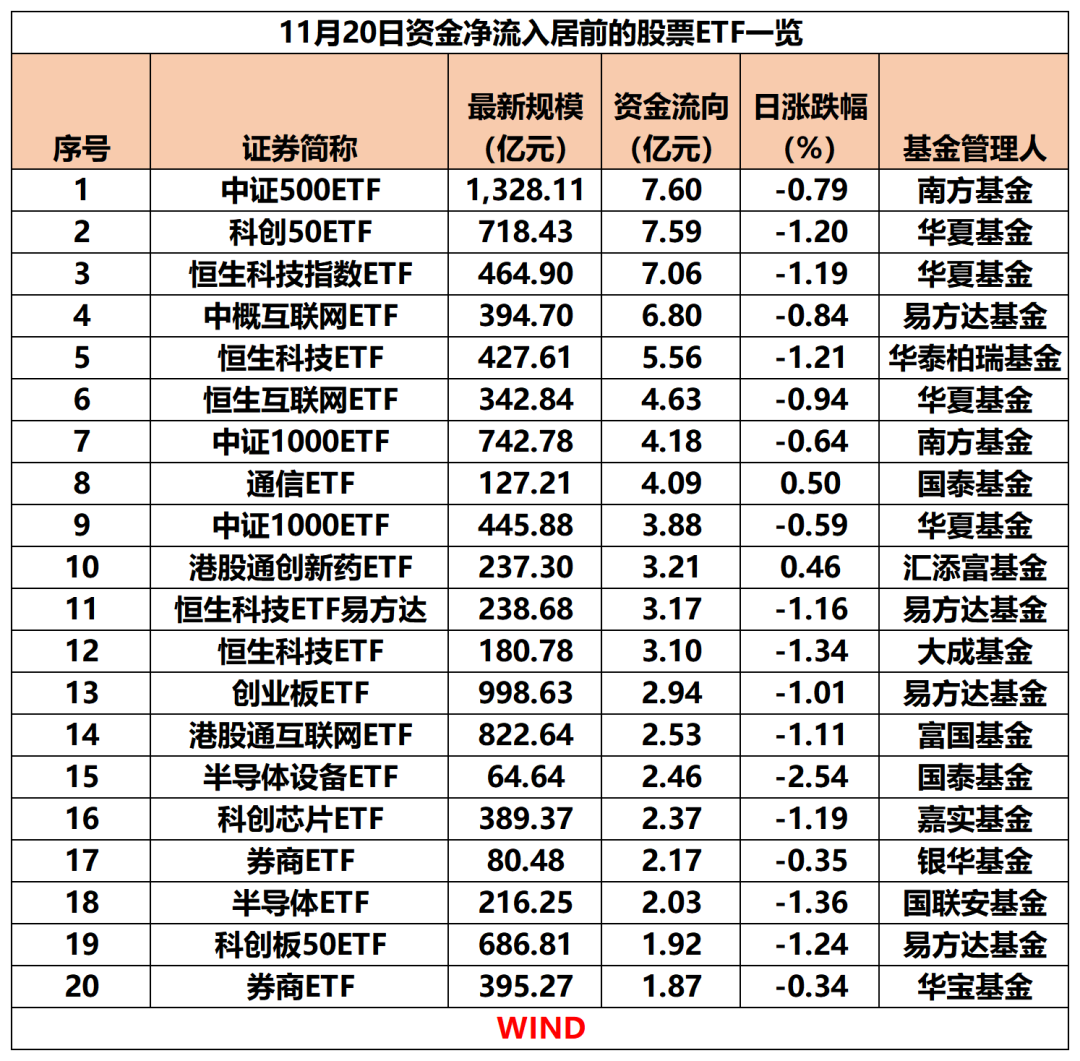
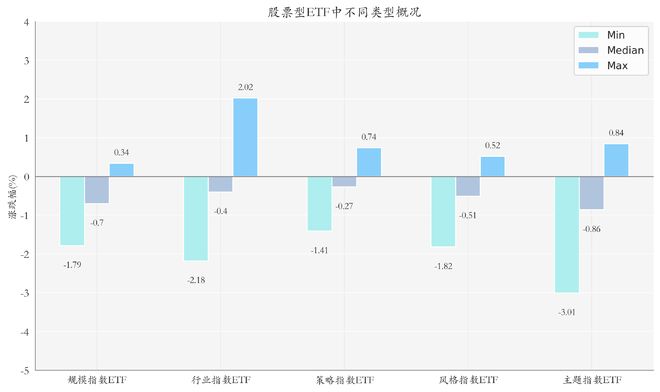
Market Overview - The Shanghai Composite Index fell by 0.4% to close at 3931.05 points, with a high of 3967.97 points during the day [1] - The Shenzhen Component Index decreased by 0.76% to 12980.82 points, reaching a peak of 13226.04 points [1] - The ChiNext Index dropped by 1.12% to 3042.34 points, with a maximum of 3137.07 points [1] ETF Market Performance - The median return of stock ETFs was -0.67% [2] - The highest performing scale index ETF was the China Southern Shenzhen 100 ETF with a return of 0.34% [2] - The top industry index ETF was the China Tai Zhongzheng All Index Building Materials ETF, yielding 2.02% [2] - The highest return among strategy index ETFs was the China Tai Baichuan Zhongzheng Dividend Low Volatility ETF at 0.74% [2] - The best performing thematic index ETF was the Yinhua Zhongzheng Mainland Real Estate Theme ETF, with a return of 0.84% [2] ETF Performance Rankings - The top three ETFs by return were: - Guotai Zhongzheng All Index Building Materials ETF (2.02%) [4] - Fuguo Zhongzheng All Index Building Materials ETF (1.56%) [4] - Huabao Zhongzheng 800 Real Estate ETF (1.52%) [4] - The worst performing ETFs included: - Penghua SSE Sci-Tech Innovation Board New Energy ETF (-3.01%) [4] - Yifangda SSE Sci-Tech Innovation Board New Energy ETF (-2.91%) [4] - Fuguo SSE Sci-Tech Innovation Board New Energy ETF (-2.78%) [4] ETF Fund Flows - The top three ETFs by fund inflow were: - Southern Zhongzheng 500 ETF (7.6 billion) [6] - Huaxia SSE Sci-Tech Innovation Board 50 Component ETF (7.59 billion) [6] - Southern Zhongzheng 1000 ETF (4.18 billion) [6] - The largest outflows were from: - Huabao Zhongzheng Bank ETF (4.33 billion) [6] - Huatai Baichuan SSE 300 ETF (4.07 billion) [6] - Huabao Zhongzheng Financial Technology Theme ETF (3.25 billion) [6] ETF Margin Trading Overview - The highest margin buy amounts were: - Huaxia SSE Sci-Tech Innovation Board 50 Component ETF (5.56 billion) [8] - Guotai Zhongzheng All Index Securities Company ETF (4.8 billion) [8] - Yifangda ChiNext ETF (4.78 billion) [8] - The largest margin sell amounts were: - Southern Zhongzheng 500 ETF (37.88 million) [8] - Huatai Baichuan SSE 300 ETF (37.87 million) [8] - Huaxia Zhongzheng A500 ETF (25.01 million) [8] Institutional Insights - Huafu Securities suggests that the building materials capacity cycle may reach an inflection point due to accelerated expectations of "anti-involution" [9] - The combination of declining interest rates and monetary support for housing may stabilize the real estate market, potentially boosting post-cycle demand [9] - Debon Securities highlights that undervalued financial stocks, such as insurance and banks, possess defensive allocation value amid a weak market [10]
丰元股份(002805) - 2025-009投资者关系活动记录表
2025-11-19 10:02
Group 1: Production Capacity - The company has established a lithium iron phosphate production capacity of 225,000 tons, with 75,000 tons currently under construction [2] - The company plans to adjust production capacity based on industry trends and customer demand [2] Group 2: Competitive Strategy - The company ensures product competitiveness through technological innovation, customer collaboration, product layout, and economies of scale [2][3] - Continuous R&D investment enhances innovation capabilities and product performance, creating differentiated advantages [3] - The company is developing lithium manganese iron phosphate and solid-state battery cathode materials to meet diverse market needs [3] Group 3: Product Development - High-density lithium iron phosphate products have successfully entered mass production, catering to core customer applications [3] - The company will track technological iterations and market demand in the power and energy storage sectors to enrich its product matrix [3] Group 4: Capacity Utilization - Starting from Q4 2025, increased downstream demand will drive high capacity utilization rates [3] - The company aims to enhance capacity digestion through improved product competitiveness and collaboration with existing customers [3]
