尼康

Search documents
小小的一张存储卡,到底该怎么选?
3 6 Ke· 2025-08-11 03:34
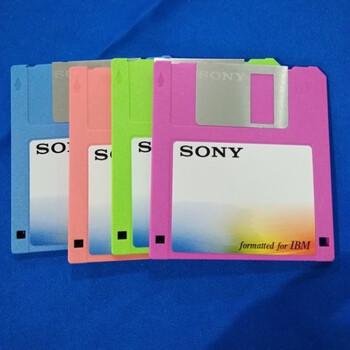
Core Viewpoint - The article discusses the evolution and current state of storage devices, particularly focusing on SD cards and CFE cards, highlighting their specifications, classifications, and recommendations for usage in various devices [3][29]. Group 1: SD Cards - SD cards, developed in 1999 by Panasonic, Toshiba, and SanDisk, have evolved into a family of products with various capacities and speed classifications [3][5]. - The capacity levels for SD cards are categorized into four types: SD (up to 2GB), SDHC (2GB to 32GB), SDXC (32GB to 2TB), and SDUC (2TB to 128TB) [5]. - SD cards are classified based on write speed into three standards: Speed Class (C), UHS Speed Class (U), and Video Speed Class (V), with specific minimum write speeds ranging from 2MB/s to 90MB/s [7][8]. - UHS levels (UHS-I, UHS-II, UHS-III) indicate bus speed, with theoretical maximum speeds of 104MB/s, 312MB/s, and 624MB/s respectively [8][11]. - Manufacturers may label speeds using X ratings, where 1X equals 150KB/s, allowing for easy conversion to MB/s [13]. Group 2: TF Cards - TF cards, originally known as TransFlash cards, are smaller than SD cards and share similar speed classifications [15][17]. - TF cards also include an A rating for application performance, with A1 and A2 levels indicating different IOPS performance for running apps directly from the card [17][18]. Group 3: CFE Cards - CFE cards, based on PCIe and NVMe standards, offer high performance suitable for high-end cameras, with maximum read/write speeds of 2000MB/s for CFE-A and 4000MB/s for CFE-B [20][22]. - CFE cards are categorized by VPG levels, ensuring minimum sustained write speeds of 200MB/s to 400MB/s, with future standards promising even higher speeds [22][23]. Group 4: Recommendations for Use - For entry-level cameras, a V30 SD card with a capacity starting at 64GB is recommended, while higher-end models should consider CFE cards of 256GB or more for optimal performance [24][26]. - High-end cameras require CFE cards to fully utilize their capabilities, and users are expected to be knowledgeable about their specific storage needs [27]. - For devices like drones and action cameras, TF cards of at least 128GB with U3 and A2 ratings are suggested for efficient 4K recording [27][30].

成都世运会主媒体中心启动运行 @媒体记者 “大本营”开始服务了
Si Chuan Ri Bao· 2025-08-05 00:26
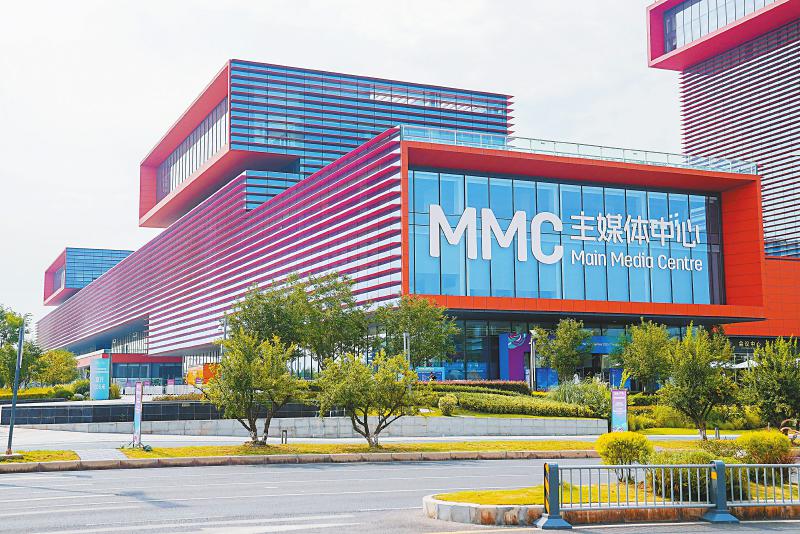
Group 1 - The main media center for the 2025 World Games in Chengdu has officially started operations, welcoming around 200 media organizations and nearly 2000 journalists [3] - The media center is located in the Western Financial Innovation Center, approximately 20 kilometers from Chengdu Tianfu International Airport, and is designed to serve as a hub for media coverage during the event [3] - Facilities provided at the media center include office space, language services, transportation, dining, technical support, and commercial services [3] Group 2 - The media work area is a core section of the main media center, equipped with 112 smart lockers and 120 workstations, each with international standard network and power interfaces [4] - An electronic results inquiry area is available for registered journalists to access various information, including event previews, recaps, and historical data about the World Games [4] - The international broadcasting center, located in the Western Financial Innovation Center, will provide signal production and coordination services for broadcasters, ensuring 24-hour support during the event [4]
日本政企合作强化尖端医药品生产
日经中文网· 2025-07-29 08:00
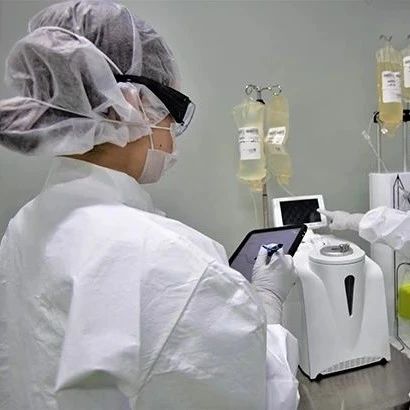
Core Viewpoint - Japan's regenerative medicine and related products are lagging behind the US and Europe in practical applications, with significant investments planned to enhance production capabilities by 2027 [1][2]. Group 1: Investment Plans - Nikon and four other Japanese companies plan to invest over 100 billion yen by 2027 to significantly increase production of iPS cell products and other advanced pharmaceuticals [1][2]. - Nikon will invest approximately 10 billion yen to expand its production base in Koto, Tokyo, increasing the cleanroom area by 50% and tripling its workforce by 2030 [2]. - AGC plans to invest 50 billion yen in its Yokohama facility to set up production equipment for regenerative medicine cells, with potential for mRNA vaccine production if necessary [2]. Group 2: Market Position and Challenges - The US has approved 25 drugs in the gene and CAR-T fields, Europe 22, while Japan has only 10, indicating a significant gap in production capabilities [1][2]. - Japan's domestic companies have a weak production foundation, which could hinder access to advanced medical treatments and reduce the competitiveness of the Japanese pharmaceutical industry [1][2]. Group 3: Government Support - The Japanese government will provide 38.3 billion yen in subsidies over four years to support equipment investment and talent development for CDMO in regenerative medicine [3]. - Emerging companies, such as SanBio and Cuorips, are seeking conditional production and sales licenses for their regenerative medicine products, indicating a growing interest in this sector [3]. Group 4: Market Growth Potential - The market for regenerative medicine products in Japan is projected to reach 53.8 billion yen by 2030, doubling from approximately 2024 levels [3].
大疆、影石刺向彼此腹地:智能影像市场硝烟再起
Hu Xiu· 2025-07-28 23:45
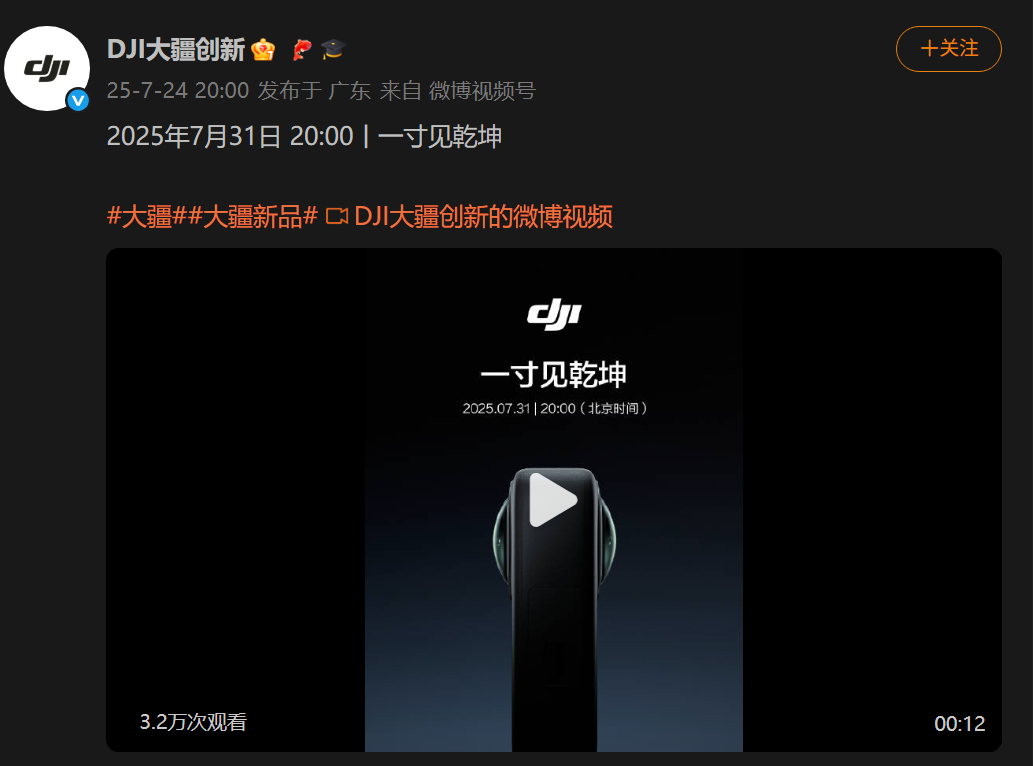
Core Viewpoint - The smart imaging device market is gearing up for a significant competition between two leading Chinese high-tech companies, DJI and Insta360, with their movements closely watched by the market [1]. Group 1: Company Developments - DJI announced the launch of its first 360-degree panoramic camera, Osmo 360, set for July 31, with the slogan "A Inch Sees the Universe" [2]. - DJI has completed its full-category layout in the smart imaging market, covering aerial drones, action cameras, handheld cameras, and panoramic cameras [3]. - Insta360, after four years of preparation, successfully listed on the Shanghai Stock Exchange's Sci-Tech Innovation Board on June 11, with a market capitalization of approximately 65.6 billion yuan [6]. Group 2: Market Competition - DJI and Insta360 have a history of competition, with DJI entering the action camera market after GoPro faced challenges, while Insta360 focused on panoramic cameras [9]. - In 2023, Insta360 launched its first action camera, Ace Pro, indicating its expansion into the action camera market [9]. - DJI's Osmo 360 is equipped with a 1-inch CMOS sensor, supporting up to 8K/30fps panoramic video, which theoretically offers better image quality than Insta360's flagship product [11]. Group 3: Market Size and Trends - The global consumer drone market was approximately $4.85 billion in 2023, with DJI holding around 70% market share [21]. - The global handheld smart imaging device market was about 31.5 billion yuan in 2023, with action cameras accounting for over 85% and panoramic cameras for 25% [21]. - The traditional camera market is dominated by Canon, Nikon, and Sony, with stable market conditions persisting for nearly a decade [20]. Group 4: Financial Performance - Insta360 reported revenue of 1.355 billion yuan in Q1 2025, a year-on-year increase of 40.7%, but its net profit decreased by 2.5% [26]. - Analysts predict a compound annual growth rate of 11.8% for the global panoramic camera market from 2023 to 2027, with Insta360 expected to achieve over 30% revenue growth in the next two years [31]. Group 5: Future Outlook - Insta360's entry into the drone market may lead to increased R&D investments, potentially impacting short-term financial performance [27]. - The success of Insta360 in the drone market will depend on its ability to address unmet needs and improve user experience through patented technologies [29]. - DJI is also diversifying its product offerings, with plans to release a sweeping robot, ROMO, on August 6, further exploring cross-application of its technology [32].
2亿一台嫌贵?佳能说我这十分之一!光刻机价格战要来了?
Xin Lang Cai Jing· 2025-07-28 13:06
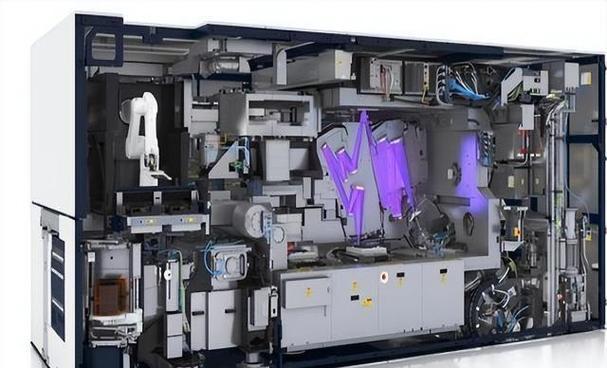
Core Viewpoint - The competition in the lithography machine market is intensifying, with Canon's nanoimprint lithography (NIL) technology emerging as a cost-effective alternative to ASML's extreme ultraviolet (EUV) lithography, challenging ASML's dominance in the high-end market [1][10]. Group 1: ASML's Dominance - ASML currently holds a 90% market share in the EUV segment, selling machines for $200 million each, with buyers required to sign agreements prohibiting sales to China [4][5]. - Historically, ASML was not a leader in the lithography market, with Japanese companies Canon and Nikon dominating until the early 2000s when ASML pivoted to EUV technology [3][4]. Group 2: Canon's Strategy - Canon has developed NIL technology, which allows for direct imprinting of circuit patterns onto wafers, achieving 14nm line width suitable for 5nm chip production at a significantly lower cost, estimated to be one-tenth of ASML's EUV machines [5][6]. - The NIL technology has a lower energy consumption, reportedly 10% of that of EUV, making it an attractive option for manufacturers looking to reduce costs [6][10]. Group 3: Challenges and Improvements - Canon's NIL technology initially faced challenges with yield rates, which were around 60%, but improvements have raised this to over 90% through better mask materials [7][10]. - Canon is strategically targeting markets such as 3D NAND and CMOS image sensors, where precision requirements are lower, allowing for cost-effective production [7][9]. Group 4: Nikon's Approach - Nikon is not directly competing with ASML in the EUV space but is instead focusing on markets that ASML overlooks, such as the ArF lithography market and advanced packaging technologies [8][9]. - Nikon's return to the ArF market targets 65nm logic chips and CMOS sensors, offering competitive pricing and compatibility with existing facilities [8][9]. Group 5: Global Competition - Other companies globally are also developing alternatives to EUV, with innovations like laser-based X-ray lithography and self-assembling lithography, aiming to reduce costs significantly [10]. - The semiconductor industry is shifting towards a focus on cost-effectiveness rather than solely on advanced technology, indicating a potential shift in market dynamics [10][11]. Group 6: Conclusion - The lithography machine market is evolving, with multiple technologies coexisting, and the emphasis on cost-effectiveness may reshape the competitive landscape, challenging ASML's current supremacy [11].


光刻机输家,强势反击!
半导体芯闻· 2025-07-28 10:35
Core Viewpoint - The semiconductor lithography machine market is dominated by ASML, particularly in the EUV lithography segment, while Canon and Nikon, once industry leaders, are exploring new technologies to regain their competitive edge [1][2][3]. Group 1: Historical Context - Canon and Nikon were once the giants of the lithography machine industry, holding a significant market share in the 1980s and 1990s due to their advancements in step-and-repeat and scanning lithography technologies [2]. - The shift in industry dynamics was closely tied to technological choices, with Canon and Nikon falling behind due to misjudgments in the transition from DUV to EUV technology, allowing ASML to dominate the market [3]. Group 2: Canon's New Strategy - Canon is focusing on nanoimprint lithography (NIL) as a core development direction, which differs fundamentally from traditional optical lithography by directly imprinting semiconductor circuit patterns onto wafers [5][8]. - The launch of Canon's NIL equipment, FPA-1200NZ2C, achieved a minimum line width of 14 nanometers, with aspirations to reach 10 nanometers, indicating its potential in advanced chip manufacturing [5][12]. - Canon has integrated its optical and materials science expertise to enhance the precision and durability of NIL technology, aiming to improve yield rates in chip production [8][9]. Group 3: Market Positioning - Canon's NIL technology is positioned to compete in cost-sensitive markets, such as 3D NAND flash memory, where it can provide a cost-effective alternative to ASML's EUV machines [12][14]. - Collaborations with companies like Kioxia and DNP have been pivotal for Canon, focusing on practical applications of NIL technology and improving mask quality, which is crucial for pattern transfer accuracy [9][10]. Group 4: Nikon's Response - Nikon is also actively pursuing new technologies to regain its market position, including the development of a new generation of ArFi lithography machines compatible with ASML's ecosystem, expected to launch in the 2028 fiscal year [23][24]. - The new ArFi machines will feature innovative lens and stage designs to enhance optical performance and production efficiency, targeting the growing demand for advanced semiconductor manufacturing [23][24]. Group 5: Industry Innovations - Various companies are exploring disruptive technologies as alternatives to EUV, such as Inversion Semiconductor's laser wakefield acceleration technology and Lace Lithography's atomic lithography, which promise lower costs and energy consumption [34][35]. - The emergence of these technologies indicates a potential shift from a single-giant monopoly to a multi-technology landscape in the lithography sector, fostering competition and innovation [36][39].
光刻机产业链深度讲解
2025-07-28 01:42
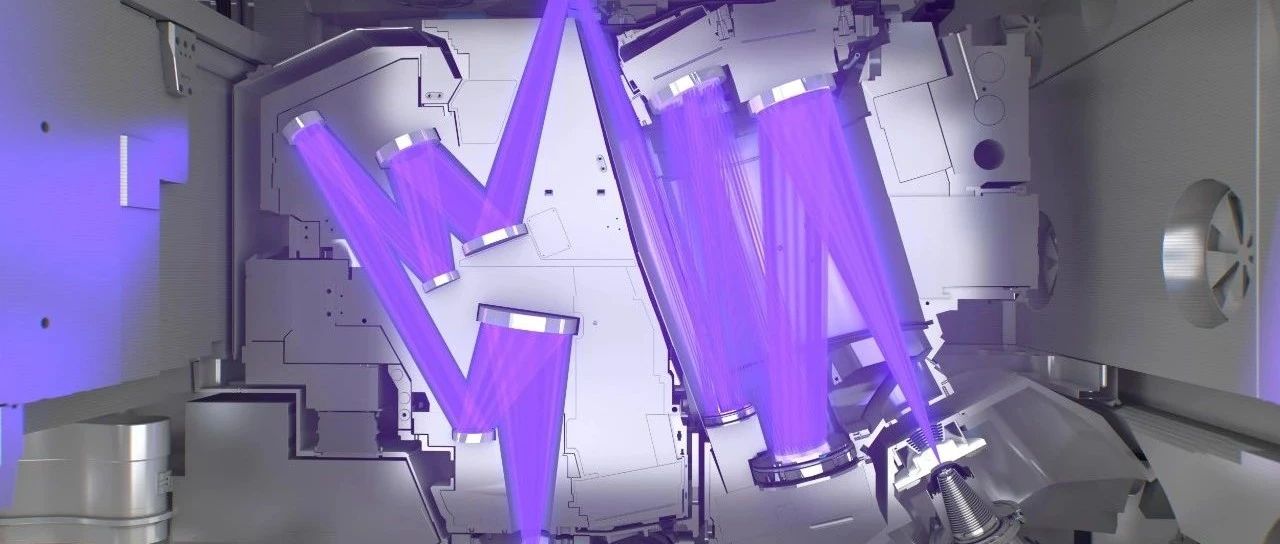
Summary of Key Points from the Conference Call Industry Overview - The global photolithography equipment market is dominated by ASML, holding over 80% market share, while Canon and Nikon have significantly lagged behind [1][10] - The photolithography technology has evolved from contact lithography to projection lithography, with immersion technology introduced to enhance imaging precision [1][5] - The high-end photolithography equipment supply chain is highly globalized, primarily concentrated in the Netherlands, the USA, Japan, and Germany [1][6] Core Insights and Arguments - The domestic semiconductor industry is in a critical phase of development, particularly in advanced manufacturing and photolithography, necessitated by the embargo on high-end photolithography machines [2][11] - Photolithography accounts for approximately one-third of the total chip manufacturing cost, making it a crucial component in the semiconductor production process [2] - The market outlook for photolithography is positive, as it is closely linked to advanced processes and is not significantly affected by short-term performance fluctuations [3][22] - Key companies in the domestic market include SMIC, Huahong Semiconductor, Fuzhong Technology, and ASMC, which are positioned to benefit from the ongoing shift towards domestic production [2][3][22] Market Dynamics - The global photolithography equipment market is the second largest in semiconductor manufacturing equipment, with a market size of approximately $17.1 billion in 2021 [3] - The domestic market for photolithography is also substantial, providing ample growth opportunities for related companies [3] - The competitive landscape is highly concentrated, with ASML leading in high-end products, particularly in the EUV segment, where it is the sole producer [10][11] Challenges and Opportunities - Domestic companies face significant challenges in achieving self-sufficiency in high-end photolithography due to technological barriers and the need for a complete supply chain [6][11] - Future domestic substitution efforts will focus on advanced manufacturing and high-end equipment, with significant market potential and long-term growth prospects [7][8] - The core components of photolithography machines include the light source system, illumination system, and projection lens system, with the projection lens system being the most valuable and complex [1][15][17] Technical Aspects - The development of photolithography technology has progressed through various stages, with the current mainstream being projection lithography, which utilizes immersion technology for improved precision [5][9] - The light source system is critical for processing accuracy and yield, influencing the overall resolution of the photolithography process [12][15] - The design and manufacturing of projection lenses present significant challenges due to their complexity and the need for high precision [18][19] Conclusion - The market is optimistic about the photolithography sector, with key players like SMIC, Fuzhong Technology, and ASMC being highlighted for their potential to drive industry growth [22] - The ongoing shift towards domestic production in the semiconductor industry is expected to create new opportunities, despite the challenges posed by technological dependencies and supply chain issues [6][11][22]
十万零件筑就的工业明珠!中国光刻机突围战打响
材料汇· 2025-07-26 15:45
Core Viewpoint - The article emphasizes the critical role of lithography machines in semiconductor manufacturing, highlighting their technological evolution and the importance of resolution, which is the ultimate goal in the development of lithography technology [2][8]. Group 1: Lithography Technology - Lithography is a key technology in wafer manufacturing, with lithography machines being the most valuable and technically challenging equipment in the process [8]. - The core of lithography technology involves transferring chip design patterns onto silicon wafers through a process that includes exposure, development, and cleaning [9]. Group 2: Resolution as a Key Indicator - Resolution is defined as the minimum feature size that can be clearly projected onto a wafer, influenced by factors such as light wavelength, numerical aperture (NA), and process factor (k1) [15][25]. - The evolution of lithography has seen a significant reduction in light source wavelengths, with the current extreme ultraviolet (EUV) light source at 13.5nm being the most advanced [35][36]. Group 3: Key Components of Lithography Machines - Lithography machines consist of three core systems: the light source system, optical system, and workpiece stage system [63]. - The light source system provides the energy for exposure, with the most advanced sources being EUV, which require high precision in control [67][68]. - The optical system is responsible for light propagation and aberration correction, utilizing complex lens assemblies to achieve high precision [63][64]. Group 4: Historical Development of Lithography Leaders - The lithography machine industry has seen a shift in leadership through three main eras, with ASML currently dominating the advanced lithography market due to its technological advancements [4][5]. - The transition from early American companies to Japanese firms, and now to ASML, illustrates the impact of technological breakthroughs and government support on industry leadership [4][5]. Group 5: Domestic Lithography Development - China's lithography machine industry has made significant progress since the implementation of the "02 Special Project" in 2006, although it still lags behind international standards [6]. - Domestic manufacturers like Shanghai Micro Electronics have made strides in the mid-to-low-end market, but face challenges in high-end lithography machine production [6].
半导体基石系列之四:工业明珠灿若星河,光刻机国产化行则将至
Changjiang Securities· 2025-07-26 11:24
Investment Rating - The report maintains a "Positive" investment rating for the semiconductor and semiconductor production equipment industry [11]. Core Insights - The lithography machine is considered the crown jewel of the semiconductor industry, characterized by its complex components designed to achieve ultra-fine precision. The development of lithography machines has evolved through three major eras, with significant breakthroughs in key technologies leading to the dominance of companies like Nikon and ASML over their competitors. The report suggests that China's lithography machine industry can leverage its latecomer advantage to focus on overcoming core challenges and ultimately achieve self-sufficiency [4][10]. Summary by Sections Lithography Technology - Lithography is a critical process in semiconductor manufacturing, utilizing light-sensitive photoresist to transfer patterns from masks to wafers. The resolution of lithography machines is influenced by the wavelength of the light source, numerical aperture (NA), and process factor (k1). The evolution of lithography technology has seen a transition from mercury lamps to KrF, ArF, and currently to EUV light sources [7][22][28]. Key Components of Lithography Machines - The lithography machine consists of three core components: 1. **Light Source System**: Provides the energy for exposure, with the most advanced sources using CO2 lasers to generate EUV light [8]. 2. **Optical System**: Optimizes the light path and minimizes aberrations, with EUV systems relying entirely on mirrors due to the poor penetration of EUV light [8]. 3. **Wafer Stage System**: Controls the movement of the wafer and mask, crucial for the exposure process [8]. Historical Overview of Lithography Leaders - The lithography machine industry has experienced shifts in leadership across three eras, beginning with early American companies like GCA and Perkin Elmer, followed by Japanese firms Nikon and Canon, and currently dominated by ASML through technological advancements such as dual-stage and immersion lithography, as well as EUV technology [9][10]. Prospects for Domestic Lithography in China - China's lithography machine industry has made significant progress since the implementation of the "02 Special Project" in 2006, with domestic manufacturers like Shanghai Micro Electronics achieving advancements in the mid-to-low-end market. However, challenges remain in the high-end lithography machine sector [10].
沃兰特航空签订中国eVTOL最大采购订单;我国首台第四代百万千瓦商用快堆完成初步设计丨智能制造日报
创业邦· 2025-07-24 03:04
Group 1 - China's first fourth-generation commercial fast reactor, CFR1000, has completed its preliminary design, showcasing advancements in safety, sustainability, and economic efficiency with a capacity of 1.2 million kilowatts [1] - UBTECH has launched the Walker S2, a full-size industrial humanoid robot designed for smart manufacturing, utilizing the BrainNet 2.0 network and Co-Agent technology for autonomous and collaborative operations [1] - Nikon has introduced the world's first maskless lithography system, DSP-100, specifically for semiconductor backend processes, capable of handling large substrates up to 600mm with high resolution [1] Group 2 - Volant Aerospace has signed the largest procurement order for eVTOLs in China, with Pan Pacific purchasing 500 VE25-100 eVTOLs for short-distance transport and emergency services, totaling $1.75 billion [1]