库卡

Search documents
家电龙头美的入局人形机器人,明年有更清晰的量产计划
Nan Fang Du Shi Bao· 2025-07-30 12:00
Core Insights - Midea is entering the humanoid robot market by developing its own models, contrasting with Haier's investment approach in startups [2] - The humanoid robot innovation center was established in 2024, with two models: a wheeled humanoid and a full humanoid robot [2] - The full humanoid robot design is complete and is currently in the internal R&D phase, with application validation expected to begin next year [2] - The wheeled humanoid robot "Mei Luo" has been tested in Midea's factory for various tasks, including injection molding and equipment maintenance [2] - Midea aims to integrate humanoid robots into its smart home stores for customer service and appliance demonstrations later this year [2] Industry Context - Midea's focus remains on factory applications due to the controlled environment and detailed task division, allowing for targeted skill training [3] - The company has a history in industrial robotics, having acquired KUKA in 2017, which provides a technological foundation for humanoid robot development [3] - The innovation center is advancing the technology for core components such as joints, sensors, and robotic limbs, with significant progress noted in domestic companies [3] - The software aspect of embodied intelligence is crucial for the current wave of humanoid robots, with Midea developing a robot skill learning platform [3] Technical Challenges - Domestic robot motion control standards are on par with or even superior to international levels, but complex skill operations in real-world environments remain challenging [4] - Despite advancements in task execution, there is still a gap between current capabilities and practical applications in the industry [5]



揭秘2025中国工博会机器人展,展品亮点抢“鲜”看!
半导体芯闻· 2025-07-21 10:44
Core Viewpoint - The 2025 China Industrial Expo Robot Exhibition, themed "Embodied Industry, Intelligent Future," will showcase over 500 renowned global companies and highlight cutting-edge robotic technologies and applications in a vast space of 56,000 square meters [2]. Group 1: Collaborative Robots - ABB's PoWa is a compact collaborative robot designed for speed and efficiency, achieving industrial-grade speeds of up to 5.8 m/s, making it ideal for small and medium enterprises with its no-code programming and plug-and-play capabilities [4]. - JAKA Lumi is an embodied intelligent platform designed for lightweight scenarios, featuring a 12-degree-of-freedom collaborative motion system that enhances production efficiency and product quality in tight spaces [7]. - GBT-C12A from Jiebo is a collaborative robot with a repeat positioning accuracy of 0.03mm, suitable for high hygiene and precision requirements in food processing environments [10]. Group 2: Industrial Robots - FANUC's ROBODRILL DC series is a high-efficiency machining center that enhances processing speed and quality through structural optimization and AI algorithms [19]. - Yaskawa's MOTOMAN-ME1000 is a heavy-duty SCARA robot capable of handling loads up to 1 ton, specifically designed for electric vehicle battery assembly [22]. - KUKA's KR IONTEC ultra is optimized for battery handling and lightweight spot welding, offering high dynamics and precision in compact spaces [25]. Group 3: Humanoid Robots - The Doco humanoid robot from Siasun integrates intelligent interaction and autonomous operation, capable of performing complex assembly tasks and providing services in commercial settings [48][49]. - Kepler's K2 "Bumblebee" humanoid robot combines cloud-based models with physical capabilities, enabling it to autonomously complete tasks in logistics and hazardous environments [52]. - DexForce W1 is a humanoid robot designed for precise operations in complex environments, featuring 34 actuators for flexibility and real-time environmental sensing [56]. Group 4: Intelligent Perception - Mech-GPT from Mechamand is an intelligent system that combines perception, decision-making, and execution capabilities, enhancing robots' ability to understand and interact with their environment [58][60]. Group 5: Logistics Innovations - Jiateng's single-arm unmanned forklift is designed for low-profile material handling, improving logistics efficiency in warehouses [80]. - Sainade's iLoabot series includes intelligent robots capable of autonomous loading and unloading, with advanced navigation and operational capabilities [83]. Group 6: Industry Applications - Songchuan's AIS-200 mechanical arm box-opening machine offers high cost-effectiveness and compatibility across various industries, streamlining the box-opening process [87].
走访多地,这场调研看到了广东AI与机器人产业的哪些趋势?
Nan Fang Du Shi Bao· 2025-07-11 08:40
Core Insights - Guangdong's artificial intelligence and robotics industry shows strong growth potential, with the core industry scale expected to exceed 220 billion yuan in 2024, reflecting a year-on-year increase of approximately 25% [3] - The industrial robot production in Guangdong reached 246,800 units, accounting for 44% of the national total, marking five consecutive years of being the highest in the country [3] - The province has over 1,500 core AI enterprises and 147 "little giant" companies in the AI sector, leading the nation in quantity [3] Industry Strengths - Guangdong's industrial chain competitiveness is highlighted by a complete "chip-algorithm-terminal-application" structure [3] - Significant technological breakthroughs have been achieved, such as Huawei's Ascend 910B chip and the world's first industrial multimodal large model by Simo Technology [4] - The province is set to establish 31 national-level intelligent manufacturing pilot demonstration factories and 99 excellent scenarios by the end of 2024, leading the country [5] Regional Advantages - The proximity to Hong Kong and Macau enhances collaborative development, with Hong Kong focusing on foundational algorithm research and Macau on specialized disciplines [5] - Guangdong's emerging industries, including new energy and quantum technology, have also made significant progress, with the new energy sector becoming the ninth trillion-level cluster [5] Challenges Identified - Key technological support is insufficient, with a lack of high-quality data and limited public data availability hindering industry growth [6] - The application of AI in various sectors is still shallow, with fragmented and homogeneous government applications [6] - The market for embodied intelligent robots faces multiple obstacles, including a lack of large-scale training environments and high costs limiting commercial viability [7] Recommendations - Strengthening government functions to accelerate industry development, focusing on key technology breakthroughs and enhancing core technology support [8] - Promoting legislative measures to support the development of the AI and robotics industry, including a comprehensive legal framework [10] - Enhancing talent acquisition and funding support to address structural talent shortages and improve financing conditions [7]
AI与机器人技术融合全面提速——2025年德国慕尼黑自动化展观察
机器人圈· 2025-07-07 11:14
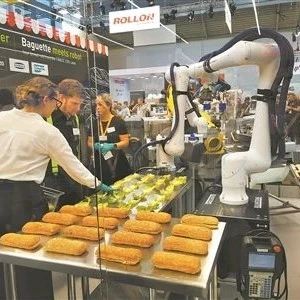
详细会议介绍参看往期文章: (点击蓝字跳转) 一文看懂2025智能机器人关键技术大会(IRCTC)全景!专家报告、学术征文、青年交流全揭晓! 展览展示|抢位2025智能机器人关键技术大会!高曝光商务合作虚位以待,共赴解锁新机遇 9大期刊联合征文|投稿2025智能机器人关键技术大会,年底正刊发表! 机器人制造商发那科(FANUC)在展会上展示机器人做汉堡包。 照片由本报驻德国记者李山摄 在两年一届的2025年德国慕尼黑自动化展上,可以深刻感受到自动化技术在人工智能(AI)加持下更加智能,驱 动工业生产与管理不断变革。AI与机器人技术的融合发展在诸多领域全面提速,展现未来工作生活新方式。多家 公司推出了新一代人形机器人,不过从现场表现来看,人形机器人在技术和实际应用等方面都还有很多工作要 做。 让自动化技术更智能 智能自动化解决方案供应商库卡希望从根本上重新定义机器人的控制方式,并推出了可扩展、可灵活调整的机器 人操作系统iiQKA.OS2。这个软件和控制器平台将人工智能与视觉系统结合,使机器人变得更加灵活,而无需进 行复杂的编程。库卡还与微软合作,开发了一个AI聊天机器人,可将自然语言命令转化为程序代码。此外, ...

AI赋能机器人产业,推动自动化技术加速发展
Ke Ji Ri Bao· 2025-07-07 01:32
Group 1: Automation Technology Advancements - Automation technology is increasingly intelligent due to the integration of AI, driving changes in industrial production and management [1] - Companies are introducing next-generation humanoid robots, but significant work remains in terms of technology and practical applications [1] - AI is being applied to CNC machine tools, enabling automated processes for part handling without the need for custom fixtures or programming [1] Group 2: Machine Vision and AI Integration - Over 130 exhibitors showcased machine vision and image processing technologies, highlighting the importance of 2D, 3D, and scanning camera technologies [2] - AI and digitalization are expanding the boundaries of traditional automation, leading to resource savings and emission reductions [2] - Intelligent systems for flexible process control and real-time energy optimization are becoming a reality [2] Group 3: User-Friendly Robotics - AI has simplified the use of robotics, with many manufacturers integrating generative AI for intuitive programming through voice control [3] - KUKA introduced a scalable and flexible robot operating system, iiQKA.OS, combining AI with vision systems for easier robot control [3] - Yaskawa Electric showcased a "dynamic safety zone" concept, allowing robots to operate without protective barriers while ensuring safety [3] Group 4: Humanoid Robots and Learning Capabilities - NEURA Robotics launched its humanoid robot 4NE1Gen3, designed for safe collaboration with humans and capable of lifting up to 100 kg [4] - An open software platform was introduced to connect robots and enable them to share learning experiences, fostering a collaborative ecosystem [4] - The appeal of humanoid robots for manufacturing automation is expected to grow as technology advances [4] Group 5: Chinese Companies in the Robotics Market - Chinese manufacturers like Estun and KUKA showcased their products, with Estun's robots already in use for battery assembly in Germany [5] - China has been the largest global robot market since 2014, with half of the world's robots installed in the country [5] - Despite their advancements, Chinese manufacturers face challenges in entering the German and European markets, including understanding local standards and addressing data security concerns [5]
AI与机器人技术融合全面提速
Ke Ji Ri Bao· 2025-07-06 23:32
Group 1: Automation Technology Advancements - Automation technology is increasingly becoming intelligent with the integration of AI, driving changes in industrial production and management [1] - Companies are introducing next-generation humanoid robots, although significant work remains in terms of technology and practical applications [1] - AI is being applied to CNC machine tools, enabling automated processes for part picking and placement without the need for custom fixtures or programming [1] Group 2: Machine Vision and AI Integration - Over 130 exhibitors showcased machine vision and image processing technologies, highlighting the importance of 2D, 3D, and scanning camera technologies [2] - AI and digitalization are expanding the boundaries of traditional automation, with intelligent systems optimizing energy consumption and resource use [2] - New health technologies are emerging, demonstrating the diversity and social relevance of automation solutions in areas like laboratory automation and healthcare logistics [2] Group 3: User-Friendly Robotics - AI has simplified the use of robots, with many manufacturers integrating generative AI for intuitive programming through voice control [3] - KUKA introduced a flexible robot operating system, iiQKA.OS, combining AI with vision systems to enhance robot flexibility without complex programming [3] - Yaskawa Electric showcased a "dynamic safety zone" concept, allowing robots to operate without protective barriers while ensuring safety [3] Group 4: Humanoid Robots and Learning Capabilities - NEURA Robotics launched its humanoid robot, 4NE1 Gen 3, designed for safe collaboration with humans and capable of lifting up to 100 kg [4] - NEURA is developing an open software platform for robots to connect and share learning experiences, enabling collaborative learning among robots [4] - The appeal of humanoid robots for manufacturing automation is growing, with companies like BMW and Mercedes-Benz actively exploring their applications [4][5] Group 5: Chinese Companies in the Robotics Market - Chinese manufacturers like Estun and KUKA showcased their products, with Estun's robots already in use for battery assembly in Germany [5] - China has been the largest global robotics market since 2014, accounting for half of the world's robot installations [5] - Despite their advancements, Chinese manufacturers face challenges in entering the German and European markets, including understanding local standards and addressing concerns about service reliability [5]
机器人企业为何青睐广东?
机器人圈· 2025-07-03 12:20
Core Viewpoint - Guangdong has emerged as China's largest hub for the intelligent robotics industry, leading in both industry scale and the number of enterprises, fostering a vibrant ecosystem for innovation and entrepreneurship in robotics [1][2][11]. Group 1: Industry Overview - Guangdong Province hosts over 160,000 robotics-related companies, ranking first in the nation, including global giants like KUKA and ABB, as well as emerging companies like Zhongqing Robotics [2]. - The Midea KUKA Intelligent Manufacturing Technology Park in Shunde exemplifies a complete value chain in robotics, achieving an 85% supply chain integration rate within a single park [2][5]. Group 2: Innovation and Development - KUKA China emphasizes local supply chain integration and continuous investment in basic research to enhance the usability and maintainability of robots, aiming to lead the industry [5]. - Huashu Robotics has positioned itself as a leading domestic industrial robotics company through independent innovation, addressing critical challenges in robotics technology [5][10]. Group 3: Ecosystem and Collaboration - The "Robot Valley" in Shenzhen is a significant innovation hub, housing numerous robotics companies and research institutions, facilitating collaboration and rapid development [10][11]. - The XbotPark Robotics Base in Dongguan has incubated over 140 companies, boasting an 80% survival rate for startups, significantly higher than the global average [13][14]. Group 4: Market Potential - The robotics industry is projected to evolve into a massive sector worth tens of trillions, necessitating collaboration across the entire ecosystem to achieve this scale [12]. - The Guangdong region's dense manufacturing base, particularly in 3C electronics and automotive sectors, provides abundant application scenarios for industrial robots, enhancing market responsiveness [5][9].
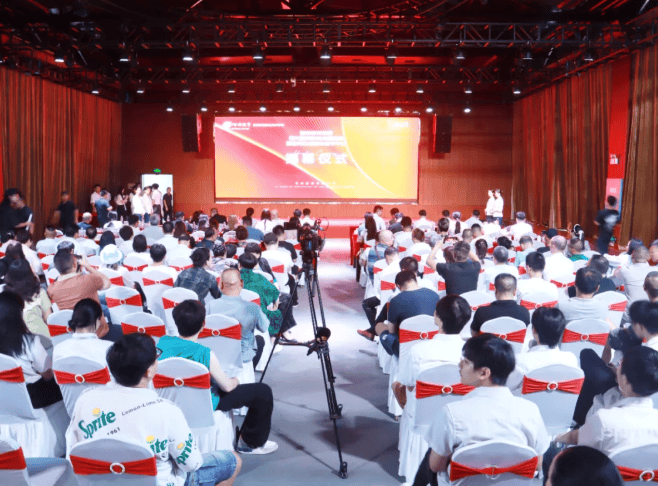
进军职业教育新高地 智邦教育集团和光智邦影视传媒基地暨智邦迈威国际留学中心揭幕仪式圆满举行
Sou Hu Cai Jing· 2025-07-01 17:19
Core Points - The inauguration of the Zhibang Education Group and Guangzhibang Film and Media Base, along with Zhibang Maiwei International Study Center, marks a significant milestone in vocational education and collaboration with Hunan Guang Media Co., Ltd [2][5][10] - Zhibang Education Group has established partnerships with over 100 higher education institutions across multiple provinces, focusing on cultivating high-end technical talent in line with China's manufacturing strategies [3][10] - The new media base aims to integrate quality resources for talent training and practical creation, providing students with opportunities to engage in real film projects [5][7] Company Overview - Founded in 2004, Zhibang Education Group has achieved a high employment rate of 99.16% for its graduates, with an average starting salary of 8,738 yuan per month, positioning itself as a leader among IT vocational schools in Hunan [3][10] - The collaboration with Hunan Guang Media is expected to enhance the educational offerings by providing advanced teaching facilities and practical training in film production [7][10] Industry Context - The establishment of the film and media base aligns with the growing demand for skilled professionals in the media industry, as highlighted by the success of Hunan Guang Media's influential productions [7][10] - The initiative reflects a broader trend towards diversified education, aiming to equip students with a wider range of career development opportunities [10][11]
长三角机器人之城竞逐赛,沪苏杭宁肥谁是王者?
2 1 Shi Ji Jing Ji Bao Dao· 2025-06-30 11:25
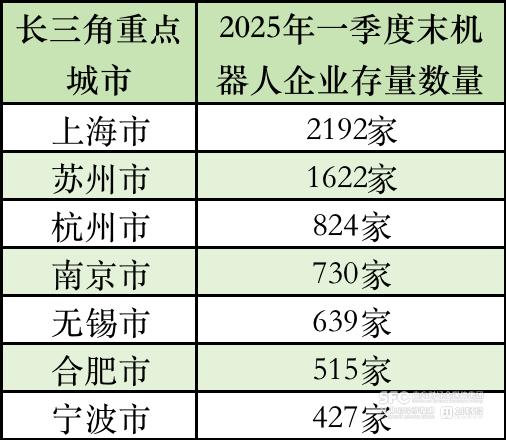
Core Insights - The robot industry is becoming a key sector for future development, with significant market potential in the trillion-yuan range, particularly in the Yangtze River Delta region [1][22] - Shanghai and Suzhou are leading in the number of registered robot-related enterprises, while Hangzhou is emerging as a star city in terms of patent applications and financing [3][10] - The Yangtze River Delta cities are focusing on both hardware (robot manufacturing) and software (intelligent control systems), creating a comprehensive industrial chain [19][21] Group 1: Industry Overview - The Yangtze River Delta is a crucial area for robot industry development, with plans for large-scale production and a target of generating hundreds of billions in output value over the next three years [1] - Shanghai has 2,192 registered robot-related enterprises, while Suzhou has 1,622, significantly outpacing other cities in the region [4][3] - The industrial robot market in China has shifted from foreign dominance to local manufacturers, with domestic brands capturing 52.3% of the market share by 2024 [4] Group 2: City Comparisons - Hangzhou has shown remarkable progress in patent applications, ranking second after Shanghai, with 34,863 applications in 2023 [10][11] - Nanjing and Hefei are lagging in enterprise numbers and patent applications compared to Hangzhou, but Hefei is expected to catch up by Q1 2025 [2][18] - The recruitment numbers in 2024 show significant growth in cities like Hefei and Ningbo, indicating a rising demand for talent in the robot industry [17][18] Group 3: Investment and Financing - In 2023, Shanghai led in financing activities with 32 deals, while Hangzhou's financing activities increased significantly in 2024, indicating a growing investment landscape [13][14] - Zhejiang Province's initiatives to support humanoid robot development have contributed to Hangzhou's rise in financing and investment [15][16] - The overall investment environment in Hangzhou is bolstered by a robust local robot industry ecosystem, attracting more resources and capital [9][16] Group 4: Technological Development - Shanghai's robot industry benefits from a strong industrial base and supportive policies, with significant advancements in humanoid robots and intelligent manufacturing [5][7] - Suzhou is focusing on innovation through partnerships between enterprises and research institutions, exemplified by the establishment of the Harbin Institute of Technology's research institute [8] - The Yangtze River Delta is developing a complete industrial chain that includes both the physical components of robots and the intelligent systems that control them [21]
内卷的解药不是涨价
海豚投研· 2025-06-27 11:59
Core Viewpoint - The article discusses the evolution of competition in the business landscape from price-cutting strategies to concerns about "low-price internal competition," highlighting the complexities of pricing, quality, and value addition in manufacturing and consumer goods [1][2]. Group 1: Pricing Dynamics - The article argues that the decline in prices is often linked to increased market scale and fragmented market structures, where larger consumer bases lead to heightened price sensitivity [5][6]. - It emphasizes that price reductions are not necessarily indicative of lower quality but can result from economies of scale and advancements in production technology [4][5]. - The case of air purifiers illustrates that while average prices fell by 34% since 2016, production volume increased by 53%, indicating a growing market demand [5][6]. Group 2: Value Addition and Quality - The article questions where the added value comes from when prices rise, suggesting that without improvements in product attributes or production processes, price increases may not lead to sustainable benefits for supply chains or employee wages [14][15]. - It highlights that true consumption upgrades occur when previously unaffordable products become accessible to a broader audience, rather than merely shifting consumer preferences to higher-priced items [15][16]. - The concept of "white label" products and alternatives arises from the competition based on cost rather than genuine value addition, which can lead to a race to the bottom in pricing [15][16]. Group 3: Market Structure and Competition - The article notes that as market structures stabilize and consolidate, price competition diminishes, leading to a more sustainable pricing environment among major players [9][10]. - It points out that in a mature market, companies may find themselves in a "consumption war," where the focus shifts from aggressive pricing to maintaining market share and profitability [9][10]. - The narrative suggests that the characteristics of entrepreneurs are often shaped by the industry dynamics they operate within, particularly in stable or stagnating markets [11][12]. Group 4: Labor and Productivity - The article argues that the solution to low-price internal competition is not to eliminate low-priced goods but to enhance labor productivity, drawing parallels to historical examples like Ford's assembly line innovations [23][24]. - It emphasizes that the value created in manufacturing comes from human knowledge and skills rather than just raw materials and production processes [19][21]. - The discussion includes the importance of recognizing and rewarding the intellectual contributions of workers, which can lead to higher market valuations for products and services [28][29].