
宝洁公司

Search documents
广告教父的“救赎局”?S4 Capital 与 MSQ 的潜在联姻,或将改写行业版图
Jing Ji Guan Cha Bao· 2025-08-13 02:20
Group 1 - The core message of the article revolves around the potential merger between S4 Capital, founded by Martin Sorrell, and MSQ Partners, which could reshape the advertising and marketing industry landscape [1] - S4 Capital, once valued at £4.5 billion in 2021, has seen its market value plummet by 97% to approximately £132 million (around $178 million) due to financial warnings and accounting issues [2] - MSQ Partners, in contrast, has a diversified client base and stable cash flow, which provides it with a stronger risk resilience compared to S4 [3] Group 2 - The merger is seen as a strategic move to complement client structures, as S4's focus on tech giants lacks the stability found in MSQ's traditional consumer and healthcare sectors [4] - The integration of S4's strengths in digital content production and data-driven marketing with MSQ's comprehensive service and brand management experience is expected to create a more balanced business model [5] - The merger signals to investors that S4 is actively seeking to revitalize its business approach by moving beyond a purely digital model [7] Group 3 - Despite the promising outlook, the outcome of the merger remains uncertain, as S4 has previously rejected acquisition offers, indicating that negotiations will depend on the terms presented [8] - The potential merger reflects a broader trend in the advertising industry, where companies are increasingly seeking to enhance their capabilities through mergers and acquisitions in a fragmented and technology-driven market [8]
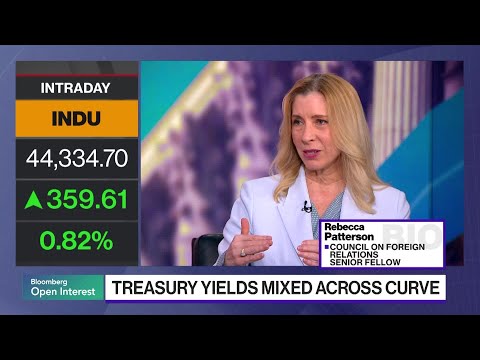
Tariffs Will Hit the Stock Market, Says Patterson
Bloomberg Television· 2025-08-12 19:54
Goldman Sachs also had a study that two thirds of companies have absorbed tariffs so far in corporate margins. Is it your expectation that some at some point that will end and potentially result in weaker growth as consumers push back against higher prices. I think it's going to be very company dependent.If the companies have the wiggle room in their margins to absorb and if they have a price sensitive customer, they'll probably absorb. But I think we are seeing more and more companies, as Mike mentioned, N ...

Bigcommerce (BIGC) 2025 Conference Transcript
2025-08-12 19:00
Summary of Conference Call Company and Industry Overview - The conference is hosted by BVA Global Research, focusing on small and mid-cap (SMID) companies, covering approximately 900 stocks across various sectors including software, biotech, consumer, utilities, and financials [4][5] - The main company discussed is BigCommerce, which has recently rebranded to Commerce, focusing on e-commerce solutions and data orchestration [6][10] Key Points and Arguments Business Opportunity and Market Position - BigCommerce is viewed as an undervalued opportunity with a turnaround story, emphasizing the need for better scale and profitability post-pandemic [8][9] - The company is pivoting towards AI's impact on commerce, with a focus on optimizing data feeds for merchants to enhance discoverability across various channels [10][11] - The rebranding aims to clarify the company's strategy and market positioning, moving beyond just being an e-commerce platform to a more comprehensive data orchestration and optimization provider [14][15] AI and Commerce Evolution - The rise of AI and answer engines like ChatGPT is changing how products are discovered online, with a noted 30% decline in Google search traffic over recent quarters [19][18] - Merchants are urged to adapt quickly to these changes, as traditional search methods are becoming less effective [19][37] - BigCommerce's Feedonomics product is designed to optimize product catalog data for better visibility in these new search environments [20][70] Financial Performance and Growth Strategy - The company is currently experiencing mid-single-digit growth and is profitable, with a focus on increasing growth rates through strategic changes and a larger sales team [26][27] - The rebranding and transformation efforts are expected to set the stage for accelerated growth in the future [29][88] - The company is optimistic about its positioning in the B2B market, particularly through partnerships that enhance its capabilities [52][54] Market Sentiment and Demand - Consumer sentiment remains stable, with e-commerce volume higher than expected, while business sentiment is more cautious, particularly among smaller merchants [43][46] - The demand environment is described as tight, affecting new deal flow but not transaction volumes [47][48] Product Overview - **BigCommerce**: A SaaS e-commerce platform that processes orders and generates revenue based on order volume, with a significant portion of revenue coming from partner and services revenue [67][69] - **Feedonomics**: A data optimization engine that charges on a per SKU basis, enhancing product visibility across multiple channels [70] - **MakeSwift**: A newer product aimed at simplifying website design, expanding the company's market reach beyond traditional e-commerce [72] Future Outlook - The company plans to launch a new payment strategy in 2026, focusing on providing flexible payment solutions for small and mid-market customers without taking on fintech risks [91][95] - The rebranding and strategic changes are expected to improve market penetration and customer engagement, particularly in the B2B space [52][54] Additional Important Insights - The shift towards AI-driven commerce is creating both challenges and opportunities for merchants, who need to adapt quickly to maintain their market presence [36][37] - The upcoming holiday season is a critical period for merchants, with many looking to optimize their platforms and strategies in preparation [38][85] - The partnership with PROS is expected to enhance BigCommerce's capabilities in dynamic pricing and complex B2B transactions [52][61]

首个减糖指数发布: 今年低糖、无糖消费创新高 气温高则吃糖少
Mei Ri Shang Bao· 2025-08-11 22:46
Core Insights - The "Resident Sugar Reduction Index" has been officially released, indicating a continuous growth in the consumption of low-sugar and sugar-free food and beverages in China, reflecting an increasing awareness of healthy eating among residents [1][2] - The index is calculated based on the sales proportion of low-sugar and sugar-free products among all food and beverage sales, with data sourced from JD Supermarket [1] Group 1: Index and Consumption Trends - The index for the first half of this year stands at 180, showing a consistent increase over the past three years [1] - Low-sugar food and beverage consumption is growing at a faster rate compared to sugar-free products, despite the latter having a higher market share [2] - Seasonal variations are evident in the consumption habits of urban and rural residents, with the second quarter consistently showing higher index values compared to other quarters [2] Group 2: Industry Support and Challenges - JD Supermarket has implemented various support measures in terms of traffic, marketing, and supply chain collaboration for low-sugar and sugar-free products [2] - Despite the rapid development of the low-sugar and sugar-free food and beverage industry, significant development obstacles still exist [2]

“立即修改!”石破茂向美国下通牒,措辞非常罕见强硬
Sou Hu Cai Jing· 2025-08-10 21:14
Group 1 - The core issue revolves around the impact of Trump's tariffs on global trade, particularly affecting Japan, which feels betrayed by the U.S. government's failure to honor previous agreements regarding tax reductions on imports [1][5][7] - The new tariffs have led to significant cost increases for U.S. companies, which are now passing these costs onto consumers, resulting in price hikes across various sectors, including automotive and retail [4][5] - The tariffs are part of a broader trend, marking the highest tariff rates in nearly a century, with specific countries facing varying levels of tax pressure, such as Japan, South Korea, and the EU receiving a 15% rate, while others like Canada and India face much higher rates [2][4] Group 2 - The financial implications of the tariffs are stark, with U.S. tariff revenue soaring to $27 billion in June, primarily sourced from American importers rather than foreign entities, indicating a direct financial burden on U.S. businesses [4] - The situation has led to a significant shift in Japan's perception of its trade relationship with the U.S., as initial optimism over a $550 billion investment framework has turned into disappointment due to the realization that the actual investment is minimal and heavily skewed in favor of the U.S. [5][7] - The ongoing trade tensions and tariff impositions are expected to trigger a wave of inflation in the U.S., with predictions of steep price increases in supermarkets by the end of the year [4][5]

零碳先锋企业的共性: 动力、方法和愿景 | 《财经》书摘
Sou Hu Cai Jing· 2025-08-10 09:59
Core Insights - The low-carbon economy has become a national policy in China, with enterprises being the main force in implementing this policy [2][6] - The book "Towards Zero Carbon: Action Guide for Chinese Enterprises on 'Dual Carbon'" presents 22 case studies from various industries, highlighting common paths and innovative technologies for carbon reduction [2][4] Group 1: Common Paths for Carbon Reduction - Enterprises share common carbon reduction paths, including transitioning to renewable energy sources, improving energy efficiency, utilizing carbon trading, and understanding their carbon emissions data [2][3] - The role of leading enterprises in supply chain carbon reduction is crucial, emphasizing the importance of carbon data assessment as the first step [2][4] Group 2: Technological Innovations - Digital technology plays a significant role in carbon reduction, with companies promoting their experiences and technologies across supply chains and industries [3][4] - Various innovative technologies are highlighted, such as Lenovo's low-temperature soldering process, low-carbon concrete from China State Construction Engineering, and hydrogen metallurgy in the steel industry [4] Group 3: Market Dynamics and Public Engagement - Companies that have engaged with international markets tend to be the earliest adopters of carbon reduction practices, often aligning with global standards [5] - Public participation in carbon reduction is essential, with companies like Alibaba and Tencent leveraging their influence to educate consumers and promote carbon accountability [5][6] Group 4: Economic Context - The global shift towards a low-carbon economy is seen as a critical turning point, with low-carbon growth being a necessary driver for sustainable development in China [7][8]

最后24小时,54国站队中国:要让中国成为全球顶流,特朗普没料到
Sou Hu Cai Jing· 2025-08-10 08:22
Group 1 - The recent global tariff order signed by Trump has led to significant backlash, with 54 countries expressing support for China and advocating for its leadership in the global economy [1][4] - The tariff measures imposed by the U.S. on 69 countries have resulted in severe economic impacts, such as a 35% tariff on Canadian auto parts, a 50% tariff on Brazilian soybeans, and a 25% tariff on Indian industrial products [4][8] - Even small and impoverished nations like Lesotho are affected, facing a 15% tariff due to accusations of currency manipulation and overcapacity, highlighting the widespread confusion and anger among affected populations [8] Group 2 - The burden of the tariffs is primarily falling on American consumers, with nearly 90% of tariff revenues being borne by U.S. importers, leading to increased prices for goods such as a 40% rise in shoe prices at Walmart and an overall annual expenditure increase of at least $2,400 per American household [10] - In response to the tariffs, China has proactively established a free trade zone with 53 African countries, significantly boosting trade, with exports of South African citrus to China surging by 88.6% [13][15] - China's economic presence in Africa is growing, with exports of construction machinery increasing by 58.5%, and the internal trade volume of the African free trade zone rising from $192.2 billion to $520 billion [15] Group 3 - The unilateral tariff policies of the U.S. are accelerating global support for China, particularly in Africa, where over 55% of smartphones and 70% of solar panels are produced by China, overshadowing U.S. influence [17] - The U.S. is facing unprecedented challenges to its hegemonic system, with legal rulings against Trump's tariffs and retaliatory measures from traditional allies, including a 25% retaliatory tariff from the EU [19] - The increasing support for China from 54 countries indicates a potential shift in global trade dynamics, with the possibility of the end of dollar hegemony as China signs 31 economic partnership agreements [23][27]

This 8.5% Dividend Loves A Market Panic
Forbes· 2025-08-09 13:55
Core Viewpoint - The current market volatility presents an opportunity for investors to buy into closed-end funds (CEFs) that offer high dividends, particularly those utilizing covered-call options to generate income [2][3][12]. Group 1: Market Conditions - Volatility has returned to the market, prompting a potential selloff, which is a typical cycle where stocks rise, followed by a selloff due to investor fear, and then recovery as "smart money" buys the dip [5][8]. - The recent disappointing jobs report has contributed to rising fears in the market, although job growth continues, indicating that the economy is not in a dire state [8][9]. - The CNN Fear and Greed index has shifted from extreme greed to a neutral stance, suggesting a cooling sentiment that may lead to a short-term selloff followed by recovery [10]. Group 2: Investment Opportunities - Three covered-call CEFs are highlighted as attractive investment options: Nuveen Dow 30 Dynamic Overwrite Fund (DIAX) with an 8.5% yield, Nuveen S&P 500 Dynamic Overwrite Fund (SPXX) with a 7.6% yield, and Nuveen NASDAQ 100 Dynamic Overwrite Fund (QQQX) also with an 8.5% yield [4][12]. - DIAX is particularly noted for its near-11% discount to net asset value (NAV), making it a compelling choice for investors looking to hedge against short-term volatility [13][15]. - The strategy of selling covered-call options allows these funds to generate income even in volatile markets, turning rising fear into cash for investors [12][14].

Is the Vanguard Value ETF the Simplest Way to Consistently Collect More Passive Income Than the S&P 500?
The Motley Fool· 2025-08-09 08:22
Core Insights - The Vanguard Value ETF (VTV) is highlighted as a preferable investment option over the Vanguard S&P 500 ETF (VOO) for those seeking passive income and better valuation [4][16] - The S&P 500 has seen a decline in yield, currently at 1.2%, while the Vanguard Value ETF offers a higher yield of 2.2% [3][6] Expense Ratios - The Vanguard S&P 500 ETF has an expense ratio of 0.03%, while the Vanguard Value ETF has a slightly higher expense ratio of 0.04% [2][6] - The minimal difference in fees translates to just one cent more per $100 invested in the Value ETF compared to the S&P 500 ETF [6] Yield and Valuation - The Vanguard Value ETF provides a 30-day SEC yield of 2.2%, significantly higher than the S&P 500 ETF's yield of 1.2% [6] - The price-to-earnings (P/E) ratio for the Value ETF is 19.6, compared to 27.2 for the S&P 500 ETF, indicating a more attractive valuation for the Value ETF [7] Composition and Holdings - The Vanguard Value ETF holds 335 stocks, while the S&P 500 ETF has 505 holdings, with a more concentrated top-heavy structure in the S&P 500 [7][11] - The top holdings of the Value ETF include Berkshire Hathaway (4%) and JPMorgan Chase (3.6%), while the S&P 500 ETF is dominated by companies like Nvidia (7.3%) and Microsoft (7%) [10] Performance and Returns - Over the last decade, the Vanguard Value ETF has increased by 111.5%, with a total return of 173.5%, indicating strong capital gains [12] - The investment strategy of the Value ETF focuses on the quality of companies held rather than solely on yield, contrasting with other ETFs that prioritize passive income [12][17] Market Positioning - The Vanguard Value ETF is positioned as a strong option for investors looking to diversify their portfolios and achieve higher passive income compared to the S&P 500 [16] - The ETF is recommended for those already invested in top growth stocks and seeking to balance their investments with value-oriented options [16]

品牌“互嘲”背后:挑战者的营销“拉踩”
Zhong Guo Jing Ying Bao· 2025-08-08 20:52
Core Insights - The article discusses the recent surge in interactive marketing strategies among brands in the consumer sector, highlighting a competitive landscape driven by attention economy dynamics [1][4][6] Group 1: Interactive Marketing Trends - Interactive marketing has seen a significant rise in July, with brands like Lafang and Duyuan engaging in direct competition through provocative advertising [1][4] - Lafang's marketing campaign for its hair mask product directly references Pantene's "3-minute miracle" controversy, showcasing a trend of brands targeting competitors in their promotions [2][4] - Retailer Duyuan has also employed similar tactics, using signage that indirectly critiques Sam's Club membership fees and product offerings [2][3] Group 2: Industry Dynamics - The competitive strategies reflect a broader issue in the consumer market, where brands are increasingly resorting to controversial marketing to capture consumer attention amid rising customer acquisition costs [4][5] - The current market environment is characterized by saturation, leading brands to adopt more aggressive marketing tactics as traditional methods become less effective [5][6] - Brands like Lafang and Duyuan are positioned as challengers in their respective industries, striving to enhance their market presence against established leaders [6][7] Group 3: Marketing Risks and Considerations - While interactive marketing can generate immediate consumer interest, it carries potential risks, including damage to brand reputation and possible legal issues [9][10] - Companies are advised to carefully evaluate the net benefits of such marketing strategies, balancing short-term sales boosts against potential long-term brand damage [10]


