平安银行

Search documents
银行集体发力降本增效 三大维度破局
Zheng Quan Shi Bao· 2025-11-17 16:57
Core Viewpoint - The banking industry is focusing on cost reduction and efficiency improvement in response to narrowing net interest margins and declining asset yields, with strategies including managing high-cost deposits, optimizing operational expenses, and integrating digital ecosystems [1] Group 1: Cost Management Strategies - Commercial banks are actively reducing high-cost deposits as a response to the central bank's interest rate cuts, leading to historically low deposit rates and the withdrawal of long-term deposit products [2][3] - Effective management of liability costs can significantly alleviate interest expense pressures for banks, with 42 listed banks reporting a total interest expense of 3.43 trillion yuan in the first three quarters, an 11.36% decrease year-on-year [4] - Banks like Chongqing Bank are implementing strategies to clean up high-cost deposits and adjust deposit product structures to further lower overall liability costs [4] Group 2: Operational Cost Optimization - In a context of sluggish revenue growth, banks are adopting frugality in operations, with half of the listed banks reporting a decrease in their cost-to-income ratios compared to the previous year [5] - Among the 42 listed banks, 17 reported negative growth in business and management expenses, while those with positive growth kept it within 0% to 3% [5] - Postal Savings Bank reported a 2.66% decrease in business and management expenses, attributing this to enhanced cost management and accelerated digital transformation [6] Group 3: Digital Integration and Streamlining - Banks are engaging in a "declutter" initiative, closing down independent apps and consolidating functions into main banking apps to improve efficiency and reduce operational costs [8][9] - The trend includes shutting down independent credit card apps and merging their functions into main banking applications, reflecting a shift from vertical management to localized operations [9]
央国企动态系列报告之51:地方国资资产盘活提速,央企红利指数表现相对较优
CMS· 2025-11-17 14:32
Group 1: Policy and Economic Context - The "14th Five-Year Plan" emphasizes optimizing incremental growth and revitalizing existing assets to promote sustainable economic development[1] - Central policies have established a comprehensive framework for asset revitalization, enhancing the efficiency of state-owned enterprises and optimizing fiscal resource allocation[1][10] - Local governments are implementing unique "three assets" (resources, assets, funds) management strategies, with provinces like Hubei, Hunan, and Anhui leading innovative practices[1][14][17] Group 2: Financial Performance and Market Trends - The total market capitalization of A-share listed central enterprises is 35.8 trillion yuan, accounting for 30.2% of the A-share market[22] - The Chengtong Central Enterprise Dividend Index rose by 2.5% in the last two weeks, outperforming the Shanghai and Shenzhen 300 Index by 2.7 percentage points[23] - Over the past year, the best-performing index was the Guoxin Central Enterprise Small Cap, with a growth of 12.1%[23] Group 3: Regional Case Studies - Hunan province achieved a total revenue of approximately 150 billion yuan from asset revitalization between 2022 and 2023, contributing over 50 billion yuan to fiscal income[17] - Anhui province's "large asset" management approach aims to integrate asset revitalization with local government debt resolution and effective investment expansion[21] - Shanxi province generated about 684.83 billion yuan in fiscal revenue through market-oriented mining rights transfers from January to November 2024[21]
“银行直供房”卷席市场,低于市价!释放了什么信号?
Sou Hu Cai Jing· 2025-11-17 14:12
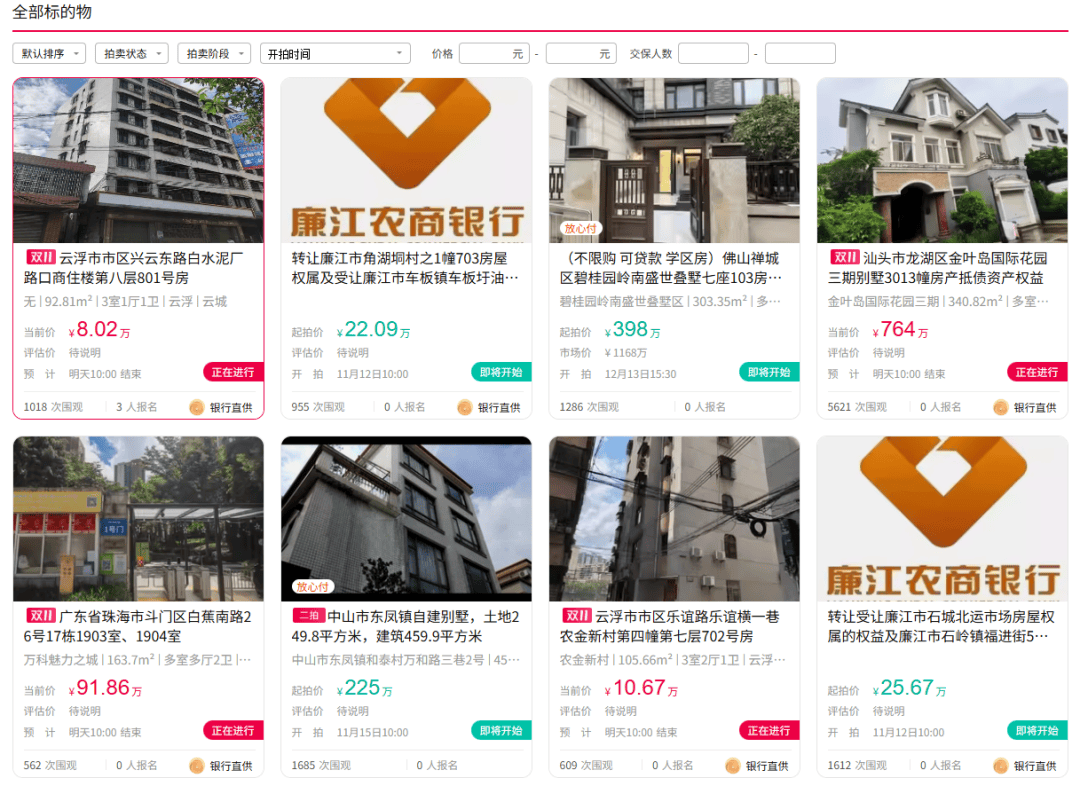
Core Viewpoint - A wave of property asset disposals led by banks is emerging, with "bank direct supply housing" being sold through online platforms like Alibaba and JD.com, indicating a shift in asset management strategies within the banking sector [1][3]. Group 1: Market Dynamics - Banks are accelerating property disposals primarily to enhance debt recovery rates during the real estate market adjustment period, with direct sales becoming a new choice for quickly revitalizing assets [3][4]. - "Bank direct supply housing" offers significant price advantages, often priced below market rates compared to regular second-hand and auctioned properties [4][5]. - As of November 10, 2023, JD.com’s asset trading platform lists 414 residential and 957 commercial properties for auction, significantly exceeding the same period last year [5]. Group 2: Pricing and Sales Strategy - For example, a 125 square meter property auctioned by Lanzhou Rural Commercial Bank sold for 1.51 million yuan, while similar properties in the area were listed between 1.8 million and 2.2 million yuan [4]. - The auction platforms are promoting these properties with slogans like "bank direct supply, sold at no cost," highlighting the aggressive pricing strategy [4][5]. Group 3: Bank Participation and Trends - City commercial banks and rural credit cooperatives are the main players in this direct sale trend, with significant numbers of properties listed for sale, such as over 2,000 by Jilin Bank and nearly 1,300 by Tianjin Bank [9]. - Large state-owned and joint-stock banks are also increasing their direct sales, with Agricultural Bank of China listing 3,436 properties and China Construction Bank 1,571 properties [9][10]. Group 4: Operational Efficiency and Cost Reduction - The direct sale process allows banks to recover funds faster, reducing the time from six months in judicial auctions to about three months [14]. - By bypassing traditional auction costs, banks can retain more revenue from sales, creating a beneficial cycle of "discounting to sell quickly" [15]. Group 5: Strategic Insights and Future Directions - This direct sale trend serves as a market research tool for banks to understand pricing dynamics and property values, which can inform future lending policies [15][16]. - Banks are also exploring partnerships with asset management companies to bundle these properties into real estate investment trusts, transitioning from a "heavy asset" to a "light asset" model [16]. Group 6: Risk Assessment and Market Impact - There are differing opinions on the impact of these direct sales on the real estate market, with some analysts suggesting potential pressure on prices in certain cities, while others believe the scale is too small to significantly affect overall market prices [18][19]. - The risk associated with bank-held properties is considered manageable, particularly in first and second-tier cities, where property values are more stable [18].




第十四届“沪上金融家”评选结果揭晓,21位金融英才分获三大奖项
Guo Ji Jin Rong Bao· 2025-11-17 13:58
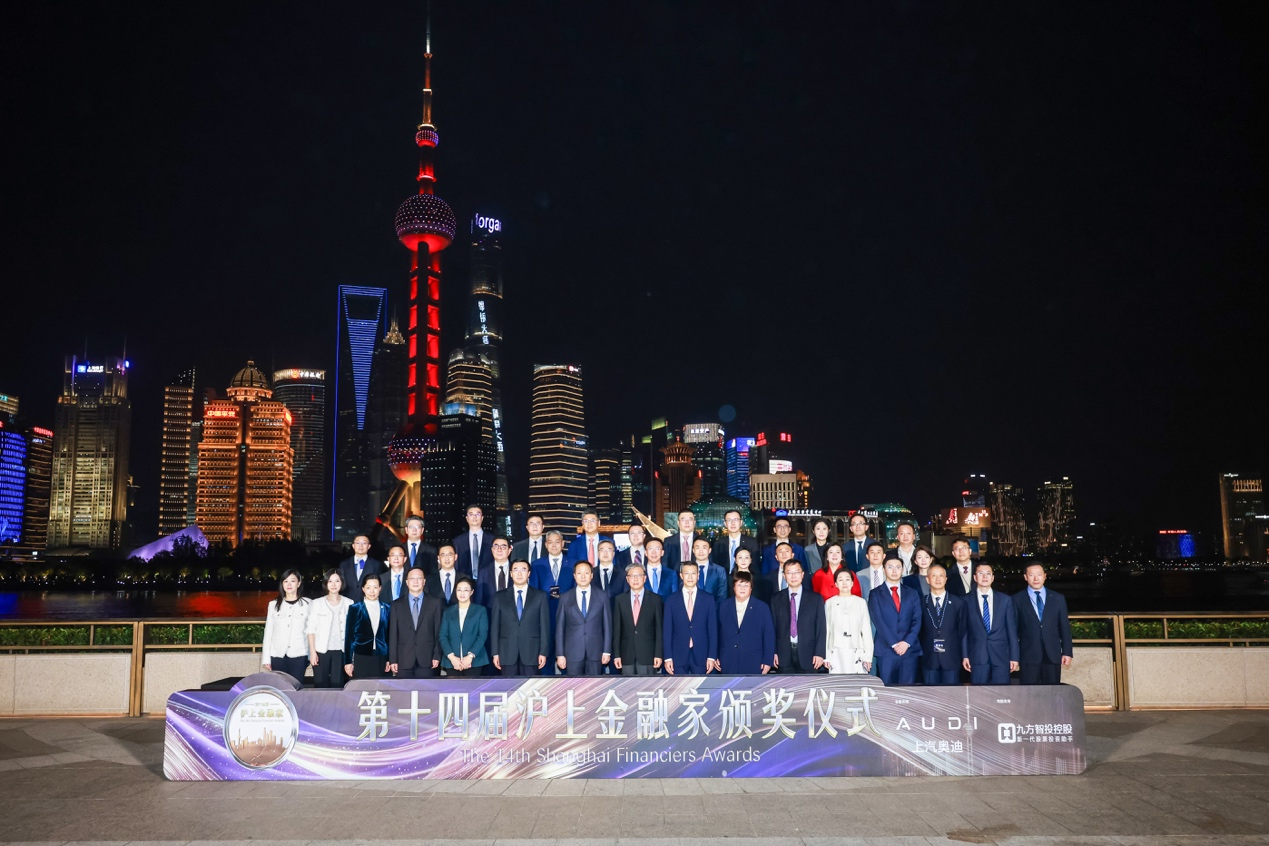
Core Insights - The 14th "Shanghai Financial Talents" awards recognized 21 financial professionals for their contributions to the Shanghai International Financial Center [1][2] - Significant policies and initiatives have been implemented this year to enhance Shanghai's status as an international financial center, leading to a continuous improvement in its capabilities [1] - Shanghai's financial market saw a total trading volume of 2967.83 trillion yuan in the first nine months of the year, marking a 12.7% year-on-year increase [1] Group 1: Awards and Recognition - Three individuals were awarded "Annual Figures in the Construction of Shanghai International Financial Center," eight as "Leaders in Shanghai's Financial Industry," and ten as "Innovators in Shanghai's Financial Industry" [2] - Notable awardees include executives from major banks and financial institutions, highlighting the recognition of leadership in the financial sector [4][5] Group 2: Financial Market Performance - Shanghai's stock market capitalization and interbank bond market scale rank among the top globally, reflecting the city's financial strength [1] - The successful launch of the digital yuan international operation center and offshore bond issuance in the Shanghai Free Trade Zone are key developments [1] Group 3: Financial Innovation and Talent Development - The event featured the release of the first "Green Finance Development Index Report," emphasizing the connection between the securities industry and green finance [5] - The importance of a strong financial talent pool was highlighted as a critical resource for building a financial powerhouse and enhancing the international financial center [5][6] Group 4: Ongoing Initiatives and Discussions - A roundtable discussion included experts from financial infrastructure, banking, and fintech sectors, focusing on how technology can support the development of Shanghai as an international financial center [6] - The "Shanghai Financial Talents" awards have been held for 14 consecutive years, contributing to the soft power and cultural atmosphere of Shanghai's financial sector [7]
银行下场卖房:规模庞大,性价比高
Mei Ri Jing Ji Xin Wen· 2025-11-17 13:29
Core Insights - The article highlights the emergence of a "bank direct supply housing" market, where banks are selling properties at significantly lower prices than market rates, yet facing challenges in attracting buyers [1][2][6]. Group 1: Market Dynamics - On November 10, Lanzhou Rural Commercial Bank auctioned over a hundred residential units at prices as low as half the market rate, but all units received zero bids, indicating a lack of interest [1][2]. - The average starting price for these properties was around 2000 yuan per square meter, compared to the market price of approximately 5000 yuan per square meter [2][6]. - As of November 10, there were 414 residential and 957 commercial properties listed for auction on JD Asset Trading Platform, significantly higher than the previous year [2]. Group 2: Bank Participation - City commercial banks and rural credit cooperatives are leading the direct sale of properties, with significant listings from banks like Lanzhou Bank and Jilin Bank [3]. - Major state-owned banks are also participating, with Agricultural Bank listing 3436 properties and other banks like China Construction Bank and Postal Savings Bank listing over a thousand each [3]. Group 3: Asset Disposal Strategy - The surge in bank direct supply properties is closely linked to the disposal of non-performing assets, primarily properties that serve as collateral for loans that borrowers have defaulted on [4][5]. - Banks typically handle these assets through two methods: selling the debt at a discount or accepting properties in lieu of debt [4][5]. Group 4: Market Challenges - Despite the attractive pricing, the direct supply properties are struggling to sell, with some properties remaining unsold despite significant price reductions [6][10]. - The market for these properties is characterized by a disconnect between the listings and potential buyers, particularly in lower-tier cities where demand may not align with the marketing channels used by banks [10]. Group 5: Regulatory Environment - Banks face regulatory pressures to dispose of acquired properties within two years, but many find it challenging to sell these assets in a timely manner, leading to a backlog of unsold properties [9][10]. - The regulatory framework emphasizes the need for banks to manage these assets efficiently to avoid them becoming burdensome on their balance sheets [9].
银行三季度净息差环比持平,股份行回升1BP!三类银行机构利润下滑
Xin Lang Cai Jing· 2025-11-17 12:24
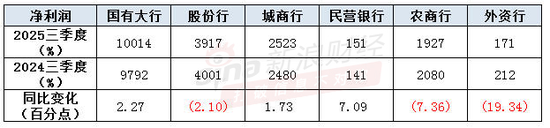
Core Insights - The banking sector in China reported a slight decline in net profit for the first three quarters of 2025, with a total of 1.87 trillion yuan, representing a year-on-year decrease of 0.02%, although the decline has narrowed compared to the first half of the year [1][6] Profitability - State-owned banks, city commercial banks, and private banks saw an increase in net profit, with private banks leading at a growth rate of 7.09% [1][3] - The net profit for state-owned banks was 1.00 trillion yuan, while city commercial banks and private banks reported 252.3 billion yuan and 15.1 billion yuan, respectively [3] - In contrast, joint-stock banks, rural commercial banks, and foreign banks experienced declines in net profit, with decreases of 2.1%, 7.36%, and 19.34%, respectively [1][3] Net Interest Margin - The net interest margin (NIM) for commercial banks remained stable at 1.42% in Q3, with private banks having the highest NIM at 3.83% [1][8] - State-owned banks had the lowest NIM at 1.31%, while joint-stock banks saw a slight increase of 0.01 percentage points to 1.56% [8][9] - Year-on-year, all types of banks experienced a decline in NIM, with state-owned and rural commercial banks both down by 0.14 percentage points [9][10] Asset Quality - As of the end of Q3 2025, the non-performing loan (NPL) balance for commercial banks was 3.5 trillion yuan, with an NPL ratio of 1.52%, reflecting a slight increase of 0.03 percentage points from the previous quarter [13][14] - Foreign banks had the lowest NPL ratio at 1.06%, while rural commercial banks had the highest at 2.82% [14] - Only state-owned banks saw a decrease in NPL ratios compared to the end of the previous year, while other types of banks experienced varying degrees of increase [14] Provision Coverage - The loan loss provision balance for commercial banks was 7.3 trillion yuan, with a provision coverage ratio of 207.15%, both showing a decrease from the previous quarter [16]



股份制银行板块11月17日跌0.97%,浦发银行领跌,主力资金净流入7840.71万元
Zheng Xing Xing Ye Ri Bao· 2025-11-17 08:49
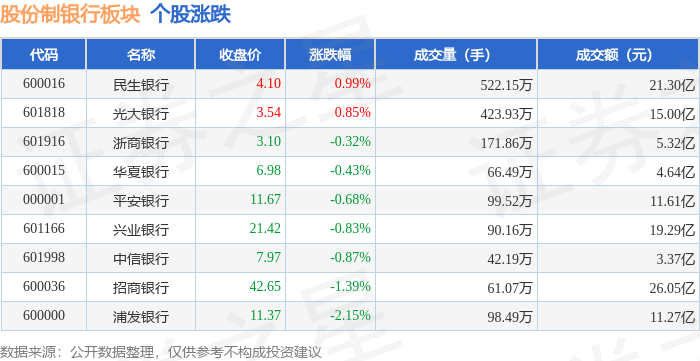
Core Viewpoint - The banking sector experienced a decline, with the Shanghai Composite Index closing at 3972.03, down 0.46%, and the Shenzhen Component Index at 13202.0, down 0.11% [1] Group 1: Stock Performance - The banking sector fell by 0.97%, with Pudong Development Bank leading the decline [1] - Individual stock performances included: - Minsheng Bank: closed at 4.10, up 0.99% - Everbright Bank: closed at 3.54, up 0.85% - Zheshang Bank: closed at 3.10, down 0.32% - Huaxia Bank: closed at 6.98, down 0.43% - Ping An Bank: closed at 11.67, down 0.68% - Industrial Bank: closed at 21.42, down 0.83% - Citic Bank: closed at 7.97, down 0.87% - China Merchants Bank: closed at 42.65, down 1.39% - Pudong Development Bank: closed at 11.37, down 2.15% [1] Group 2: Capital Flow - The banking sector saw a net inflow of 78.41 million yuan from main funds, while retail funds had a net inflow of 96.49 million yuan, and speculative funds experienced a net outflow of 175 million yuan [1]






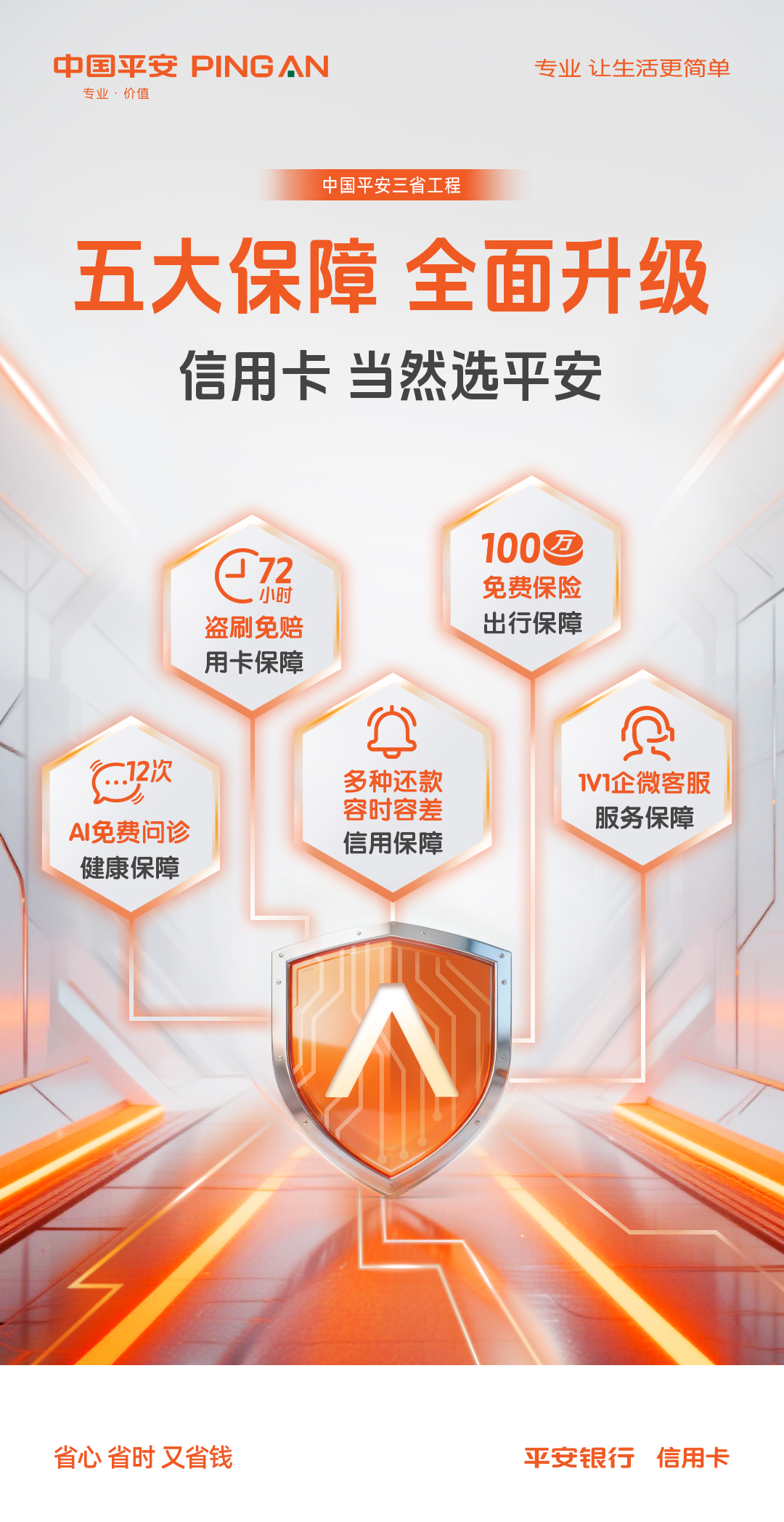
平安银行信用卡五大基础保障升级,打造信用卡三省名片
Quan Jing Wang· 2025-11-17 08:34
Core Viewpoint - Ping An Bank has upgraded its credit card services by introducing five major basic protections, focusing on user experience and aiming to enhance its brand reputation as a reliable credit card provider [1][11]. Group 1: Cardholder Protections - The upgraded "72-hour fraud liability waiver" service offers coverage for fraudulent transactions up to 300,000 yuan, making Ping An Bank the only institution in the industry to provide such extensive protection [5]. - Travel protection includes coverage for transportation accidents up to 1 million yuan, covering various modes of transport such as planes, trains, ships, and cars, ensuring comprehensive safety for cardholders [6]. - Health protection features a free AI doctor consultation service, allowing cardholders to access 12 free consultations per year, with rapid response times and personalized medical plans [7]. Group 2: Repayment and Service Enhancements - The repayment service has been upgraded to include multiple options such as automatic repayment, scheduled repayment, installment repayment, and minimum repayment, enhancing convenience for users [8]. - A dedicated customer service system via WeChat provides personalized support, allowing users to receive real-time updates on transactions and manage their accounts efficiently [9]. Group 3: Strategic Alignment - The upgrades align with Ping An Group's "Three Savings Project," emphasizing innovation and service enhancement as key themes for 2025 [10]. - This initiative is part of a broader strategy to differentiate Ping An Bank's credit card offerings and position them as essential tools for accessing comprehensive financial services [11].
银行业发展图景:在复杂环境中蓄势突围,于转型攻坚中彰显韧性
2 1 Shi Ji Jing Ji Bao Dao· 2025-11-17 05:40
Core Insights - The global economic recovery in 2025 is characterized by increasing divergence and intertwined risks, impacting the stability of the global financial system [1] - The Chinese banking industry is experiencing a period of transformation, focusing on quality improvement and efficiency enhancement as core strategic anchors [1][3] - The overall resilience and risk resistance of the banking sector have been further highlighted through structural adjustments and precise support for the real economy [1][3] Financial Performance - In the first half of 2025, A-share listed banks reported stable growth in revenue and net profit, with total revenue reaching 2.92 trillion yuan, a 1% year-on-year increase, and net profit of 1.1 trillion yuan, up 0.8% [3][4] - The net interest margin for A-share listed banks was 1.53%, down 8 basis points from the beginning of the year, but the decline was less severe compared to the previous year [5][6] - The six major state-owned banks contributed significantly to the industry's stability, with total revenue of 1.83 trillion yuan and net profit of 682.52 billion yuan, accounting for over 60% of the total for A-share listed banks [4] Industry Trends - The banking sector is shifting from a focus on scale and speed to a differentiated development path emphasizing quality and effectiveness, as highlighted by the central government's call to prevent "involution" [7][8] - Non-interest income for listed banks grew by 6.97% year-on-year in the first half of 2025, indicating a move towards a diversified income structure [10][11] - The integration and restructuring of small and medium-sized banks have accelerated, with 326 banks exiting the market by mid-October 2025, reflecting a significant optimization of the industry structure [14][15] Strategic Initiatives - Banks are increasingly focusing on non-credit services and high-quality development, with many emphasizing the importance of non-interest income and cost management [9][10] - The trend of "merging and restructuring" among small and medium-sized banks is seen as a key measure for risk prevention and enhancing local financial ecosystems [14][16] - State-owned banks are leading the way in acquiring village banks, enhancing regional financial stability and providing a model for smaller banks [15]
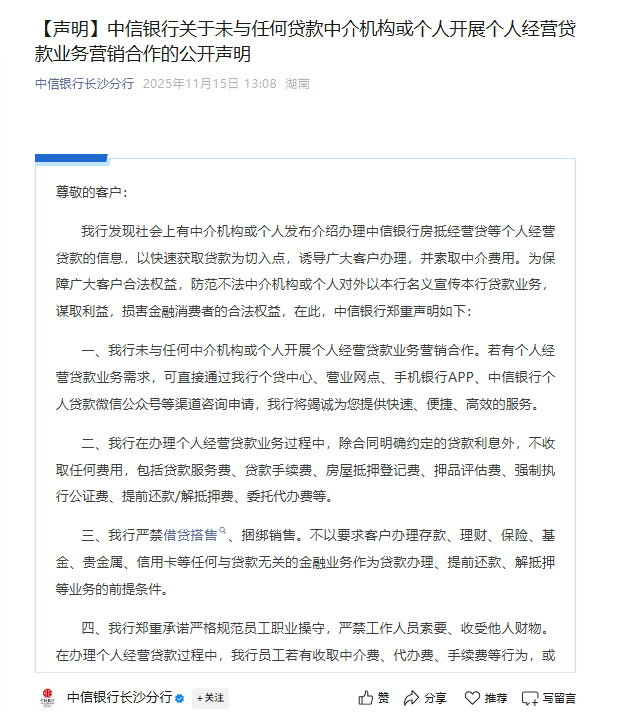
年底“冲量”压力下多家银行密集提示经营贷合规风险,释放何种信号?
Xin Lang Cai Jing· 2025-11-17 05:01
Core Viewpoint - Multiple banks, including CITIC Bank, have issued warnings regarding fraudulent activities related to personal business loans, highlighting the risks posed by intermediaries posing as bank representatives [1][2][4]. Group 1: Bank Warnings and Fraud Alerts - CITIC Bank's Changsha branch announced that it has not partnered with any intermediaries for personal business loan marketing and warned customers against fraudulent schemes [2][4]. - Other banks, such as Postal Savings Bank and Traffic Bank, have also issued alerts about intermediaries misrepresenting their services and soliciting fees from customers [4][5]. - The warnings come as several banks are under pressure to meet year-end lending targets, which may lead to increased vigilance against fraudulent activities [5][6]. Group 2: Loan Market Conditions - The demand for personal business loans has been declining, with banks reporting a decrease in applications and existing loan amounts [6][7]. - Some banks have seen a rise in overdue loans, indicating potential risks in the current lending environment [6][7]. - The economic climate and ongoing declines in real estate prices are contributing to banks' cautious approach towards issuing new business loans [7].