
大疆

Search documents
国际农业服务贸易大会10月28日在穗举行
Guang Zhou Ri Bao· 2025-10-25 01:36
Group 1 - The 2025 International Agricultural Service Trade Conference will be held at the Nansha International Convention and Exhibition Center on October 28, focusing on "Innovation Driven, Digital Empowerment - Sharing New Opportunities in Global Agricultural Service Trade" [1] - The conference aims to create a high-level dialogue and cooperation platform for global agricultural service trade, promoting deep integration and innovative development of global agricultural industry chains, supply chains, and value chains [1] - The event has received interest from 18 countries and international organizations, with approximately 200 confirmed attendees, including representatives from China's Ministry of Agriculture and Rural Affairs, over 20 provincial agricultural departments, industry associations, and research institutions, as well as several high-profile foreign guests [1] Group 2 - During the conference, Nansha District will also host the "Guangzhou (Nansha) Agricultural Open Cooperation Pilot Zone High-Quality Development Promotion Conference" [2] - The conference will feature multiple themed exhibition areas, including a special zone for international agricultural trade services, showcasing the achievements of Nansha's agricultural innovation and openness [2] - Specific exhibition areas will include an "International Ornamental Fish" section to promote local ornamental fish and related equipment for international markets, a "Buy Global, Sell Global" area to highlight the achievements of Nansha's agricultural product circulation hub, and an "International Pet Community" section focusing on high-value pet industry products [2]
前小米高管马骥创业融资近2亿,研发AI影像消费硬件
Xin Lang Ke Ji· 2025-10-24 13:45
Core Insights - Former Xiaomi executive Ma Ji has founded a new company, "Guangqi Zhijing," focusing on AI imaging consumer hardware, specifically a camera that automatically generates popular stylized photos with a single click [1][2] - The digital camera market has seen a significant decline, with sales dropping from over 100 million units at its peak to around 8 million units currently, raising questions about the demand for additional photography devices beyond smartphones [1] - The company has successfully raised $27 million in angel funding, led by Honghui Capital, Dinghui VGC, and Shunwei Capital, with several other institutions participating [2] Company Insights - Ma Ji's background includes extensive experience in software and hardware at Xiaomi, where he was recognized for his ability to tackle challenging projects [1] - The new camera aims to address the creative challenges faced by users, emphasizing that the need is not for more devices but for enhanced creative capabilities [1] - The first product from Guangqi Zhijing is still in development, with plans for a release expected next year [2] Industry Insights - Recent successes of products from companies like DJI and Insta360 indicate that there is still potential for new categories within the imaging hardware market [2] - The rising prices of Fuji and film cameras suggest a willingness among consumers to pay for unique and aesthetically pleasing products [2]


(投资中国)柏林国际消费电子展CEO:中国企业参展比例创历史新高
Zhong Guo Xin Wen Wang· 2025-10-24 09:27
另一方面,他认为,许多中国企业在产品上市节奏方面也作出优化。过去部分中国企业产品在完成度达 到60%时就会被推向市场,但现在在上市时,中国企业产品的完成度会提升到90%至95%,兼顾创新速 度与质量控制。 在他看来,近些年中国企业变化很大。一方面产品质量显著提高,而且逐渐改变欧洲品牌对中国企业创 新力的低估认知。 林德纳发现,越来越多中国自有品牌开始崛起,产品质量显著提升,也更注重创新和与消费者的沟 通。"就在三四年前,很多中国品牌还没有提供完善的售后服务,但近几年这种情况已经改变了",中国 企业也更加关注欧洲市场的需求,在可持续性、透明度等方面做出许多提升。 以创新为例,他提到,今年京东在欧洲零售市场掀起了一场变革。今年9月,京东宣布以180亿元人民币 的代价收购德国家电零售巨头"万得城电器"(Media Markt)和"土星电器"(Saturn)的母公司Ceconomy集 团。"在今年的IFA上,这是零售行业的头号热门话题",林德纳说,京东在利用人工智能优化供应链方 面的能力非常突出。这对很多欧洲人来说是一种新的体验,它带来了更高效利用技术的新方式,甚至改 变了零售流程。另外,"直播带货的模式,也让我非常 ...
前小米高管创业,融资近2亿元,要做AI影像消费硬件丨智能涌现独家
3 6 Ke· 2025-10-24 09:27
Core Viewpoint - The article discusses the entrepreneurial journey of Ma Ji, a former Xiaomi executive, who is venturing into the AI imaging hardware market with his new company, "Light of the Future" (光启之境), aiming to create a camera that simplifies photography for users by automatically generating popular styled photos without requiring technical knowledge [2][3][4]. Group 1: Company Background - Ma Ji has worked at Xiaomi for 11 years, transitioning from a frontline employee to management, and has been involved in various key projects including MIUI and Xiaomi's internet business [1][7]. - The new venture, "Light of the Future," focuses on developing an AI camera that addresses the creative needs of users rather than just providing hardware [2][3]. Group 2: Market Opportunity - The digital camera market has seen a significant decline, with sales dropping from over 100 million units at its peak to around 8 million units currently, raising questions about the necessity of new photography devices [2]. - Despite the decline in traditional camera sales, there is evidence of a growing demand for unique and aesthetically pleasing photography, as seen with the success of products from companies like DJI and Insta360 [3]. Group 3: Investment and Funding - "Light of the Future" has successfully completed a seed funding round, raising $27 million, led by Honghui Capital, with participation from several other investment firms [3]. Group 4: Product Development - The first product from "Light of the Future" is still in development, with plans for a release in the following year [4]. - The camera aims to allow users to take satisfactory photos effortlessly, without needing to understand complex camera settings or post-editing [14][30]. Group 5: User Insights and Challenges - Ma Ji emphasizes that the primary challenge is to create a product that meets the unarticulated needs of users, who often do not know what they want in terms of photography [19][20]. - The company aims to leverage AI to enhance the creative process, focusing on how to capture images that align with current aesthetic trends [21][22]. Group 6: Competitive Landscape - The company is entering a new product category, differentiating itself from existing competitors like DJI and Insta360, and aims to establish a unique market position [37]. - Ma Ji acknowledges the competitive pressure from larger companies but believes that the current landscape offers opportunities for smaller firms to innovate [36].

5个大疆离职员工,把3D打印带回风口
量子位· 2025-10-24 07:50
Core Insights - The resurgence of 3D printing is characterized by its transition from a concept to practical everyday products, with a notable increase in street vendors selling 3D printed items like dragon eggs and jointed toys [2][3] - The business potential is significant, with some vendors reporting earnings exceeding 10,000 RMB in just half a month [4] - The popularity of 3D printing is amplified by social media platforms, where numerous influencers are promoting a specific 3D printing brand, leading to millions of views [7][8] Market Dynamics - According to market research firm CONTEXT, global shipments of entry-level 3D printers are expected to surpass 1 million units by Q1 2025, marking a 15% year-on-year growth, with Chinese suppliers contributing 95% of this volume [10] - Among the manufacturers, TuoZhu Technology stands out with a remarkable 64% year-on-year increase in shipments, rapidly gaining popularity [11] Company Overview - TuoZhu Technology, founded in Shenzhen in 2020, focuses on using robotic technology to innovate desktop 3D printing [13] - The company's first product, the X1, launched in 2022, achieved nearly 50 million RMB in global orders within a month, setting a record for Kickstarter [16] Software and Community Engagement - The launch of TuoZhu's UGC platform, MakerWorld, in 2023 has been pivotal in driving the 3D printing craze, offering an open-source community for 3D models with integrated printing parameters [18][19] - MakerWorld's unique points system incentivizes users to upload models, allowing them to earn points that can be redeemed for TuoZhu products, enhancing user engagement [23][24][26] Technological Advancements - The integration of AI in 3D modeling has lowered the entry barrier for users, enabling them to create printable models from simple photo uploads [30] - TuoZhu's shipment volume reached approximately 1.2 million units in 2023, capturing 29% of the domestic market share, surpassing its main competitor [31] Retail Strategy - TuoZhu has expanded its reach by opening a physical store in Shenzhen, allowing customers to print models on demand, which serves as a marketing strategy to elevate brand awareness [38][44] - The store's design showcases 3D printed components, reinforcing the brand's identity as a lifestyle choice rather than just a tool [41][44] Historical Context - The 3D printing industry has evolved significantly since its inception, with early developments in the 2000s primarily serving research institutions due to high costs [47][48] - The RepRap project initiated in 2005 marked a turning point, making 3D printing accessible to the public and sparking a wave of commercialization [51][52] Competitive Landscape - The current market is characterized by improved cost-effectiveness and technological advancements, with entry-level 3D printers now available for as low as 1,000 RMB, significantly enhancing their appeal [61][62] - The shift towards personalized and creative uses of 3D printing has attracted a younger demographic, positioning 3D printers as essential tools for creativity [63][66]

童庆禧:低空经济万亿级市场的崛起与未来图景
Sou Hu Cai Jing· 2025-10-24 06:47
低空经济不仅承载着推动经济高质量发展、构建现代化产业体系的重任,更预示着人类社会活动将从传统的二维平面向 三维立体空间拓展,开启全新的商业模式和生活图景。 文|金琪均(实习) 朱耘 ID | BMR2004 当前全球经济格局深刻变革、新一轮科技革命和产业变革加速演进,低空经济正以前所未有的速度崛起,成为各国竞相 布局的战略高地。 作为国家战略性新兴产业的重要组成部分,低空经济不仅承载着推动经济高质量发展、构建现代化产业体系的重任,更 预示着人类社会活动将从传统的二维平面向三维立体空间拓展,开启全新的商业模式和生活图景。 2021年2月,中共中央、国务院印发《国家综合立体交通网规划纲要》,首次将"低空经济"概念写入国家规划,标志着其 正式上升为国家战略。2024年政府工作报告明确将商业航天和低空经济列为经济发展的"新增长引擎",《"十四五"国家战 略性新兴产业发展规划》也将其纳入国家战略布局,国务院发布的《无人驾驶航空器飞行管理暂行条例》进一步规范空 域使用和管理,推动低空经济规模化发展。 低空经济的战略定位 "国家现在把商业航天、低空经济作为国家战略性新兴产业的两大重要组成部分,这两大部分也是我国数字经济的重 ...

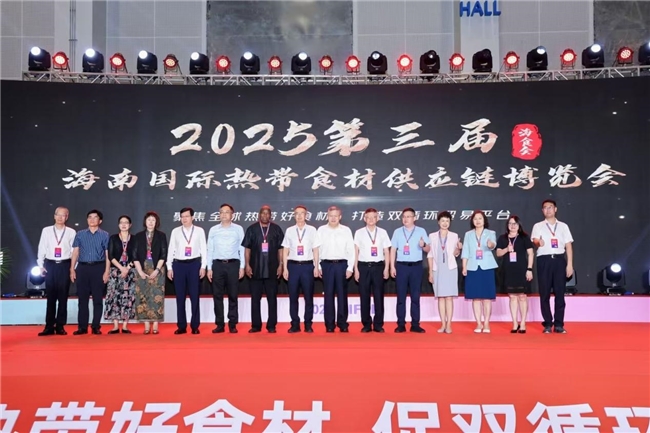
第三届海南国际热带食材供应链博览会圆满落幕,开启“五大帮卖”全年服务新纪元
Zhong Guo Shi Pin Wang· 2025-10-24 06:35
Core Insights - The 2025 Third Hainan International Tropical Ingredients Supply Chain Expo concluded successfully, showcasing a total exhibition area of 50,100 square meters and attracting over 50 countries and regions, with total transaction value exceeding 1.258 billion yuan [1][17] - The expo introduced an innovative "Five Major Selling" service system, extending services beyond the event duration, marking a new phase of continuous industry support [1][16] Industry Highlights - The expo attracted 486 high-quality domestic and international enterprises, with international exhibitors accounting for 32.7%, featuring major global food companies and leading domestic brands [3][5] - Unique products from Southeast Asian countries were showcased, emphasizing Hainan's role as a bridge between China and Southeast Asia in tropical agricultural trade [5] Key Features - The introduction of dedicated industry zones, such as the "Coconut Full Industry Chain Exhibition Area" and "Hainan Intangible Cultural Heritage Vinegar Industry Zone," highlighted the upgrade from local specialties to branded products [8] - The "Golden Coconut Award" competition recognized top-quality products, establishing benchmarks for market quality [10] Economic Impact - The expo attracted 137,000 visitors and 1,867 professional buyers, leading to a 23% increase in surrounding industry consumption, demonstrating significant social and economic benefits [17] - A total of 280 companies have established year-round "selling" cooperation frameworks with the organizing committee, indicating sustained value beyond the event [17] Future Outlook - The success of the expo reflects the advantages of Hainan's free trade port policies and industry potential, with the "Five Major Selling" system set to continue supporting the global tropical ingredients industry [19] - The fourth edition of the expo is scheduled for October 2026, inviting global industry partners to collaborate for a brighter future in the tropical ingredients sector [21]
2025人工智能发展白皮书
Sou Hu Cai Jing· 2025-10-24 03:38
Core Viewpoint - The "2025 Artificial Intelligence Development White Paper" outlines the rapid transformation of AI across technology, industry, and society, providing a comprehensive overview of global AI development trends and future prospects [1][8]. Global Industry Landscape - Different countries exhibit varied development paths in AI, with the U.S. transitioning from "wild growth" to "value reconstruction," experiencing fluctuations in enterprise formation due to increased technical barriers and compliance costs [1][19]. - The UK faces declining entrepreneurial vitality, although venture capital is rebounding, while basic research output has contracted due to Brexit and the pandemic [1][19]. - India encounters challenges such as insufficient computing power and a shortage of top talent, impacting enterprise formation and research ecosystems [1][19]. China's AI Development - China has adopted a unique "application-driven" approach, with a significant increase in AI invention patent applications, positioning itself as a key player in global AI innovation [2][19]. - Shenzhen stands out as a leading city in AI innovation, with a diverse industrial structure and a high concentration of AI-related enterprises, particularly in the Nanshan district [2][19]. - In 2024, Shenzhen's AI sector saw a substantial rebound in equity financing, with job postings related to large models increasing over fourfold year-on-year, indicating strong industrial resilience [2][19]. Technological Advancements - AI is undergoing a critical transition from "perceptual intelligence" to "cognitive and decision-making intelligence," with large models driving this change [3][19]. - Multi-modal capabilities are advancing significantly, with notable developments such as Google's Gemini 1.5 Pro and domestic models like Vidu and Qwen 2.5, enhancing local processing capabilities on devices [3][19]. Embodied Intelligence - Humanoid robots are gaining attention, with advancements in physical interaction capabilities, such as Figure 02's ability to lift 25 kg and real-time voice interaction [4][19]. - Brain-machine interface technology is breaking medical boundaries, enabling paralyzed patients to control devices through thought, with potential applications in education and entertainment [4][19]. Smart Terminal Evolution - AI terminals are evolving from isolated devices to ecological hubs, integrating across personal, home, and industrial applications [5][19]. - Shenzhen's comprehensive electronic information industry foundation positions it advantageously in the AI terminal sector, fostering collaboration across the entire value chain [5][19]. Future Outlook - The path toward Artificial General Intelligence (AGI) is becoming clearer, with the integration of quantum computing, supercomputing, and intelligent computing [6][19]. - The emergence of intelligent agents is crucial for AGI implementation, with platforms like Baidu's Wenxin attracting significant enterprise participation [6][19]. Sustainable Development Challenges - AI is reshaping the job market and wealth distribution, creating new roles while posing challenges to traditional jobs [7][19]. - AI's role in high-precision climate forecasting and ecological management is highlighted, although energy consumption concerns remain significant [7][19]. - The AI industry is forming a tightly coordinated ecosystem, with various companies contributing to foundational technologies and applications [7][19].



做了几期线上交流,我发现大家还是太迷茫
自动驾驶之心· 2025-10-24 00:04
Core Viewpoint - The article emphasizes the establishment of a comprehensive community called "Autonomous Driving Heart Knowledge Planet," aimed at providing a platform for knowledge sharing and networking in the autonomous driving industry, addressing the challenges faced by newcomers in the field [1][3][14]. Group 1: Community Development - The community has grown to over 4,000 members and aims to reach nearly 10,000 within two years, providing a space for technical sharing and communication among beginners and advanced learners [3][14]. - The community integrates various resources including videos, articles, learning paths, Q&A, and job exchange, making it a comprehensive hub for autonomous driving enthusiasts [3][5]. Group 2: Learning Resources - The community has organized over 40 technical learning paths, covering topics such as end-to-end autonomous driving, multi-modal large models, and data annotation practices, significantly reducing the time needed for research [5][14]. - Members can access a variety of video tutorials and courses tailored for beginners, covering essential topics in autonomous driving technology [9][15]. Group 3: Industry Insights - The community regularly invites industry experts to discuss trends, technological advancements, and production challenges in autonomous driving, fostering a serious content-driven environment [6][14]. - Members are encouraged to engage with industry leaders for insights on job opportunities and career development within the autonomous driving sector [10][18]. Group 4: Networking Opportunities - The community facilitates connections between members and various autonomous driving companies, offering resume forwarding services to help members secure job placements [10][12]. - Members can freely ask questions regarding career choices and research directions, receiving guidance from experienced professionals in the field [87][89].

银禧科技(300221) - 300221银禧科技投资者关系管理信息20251023
2025-10-23 14:11
Group 1: Company Overview - Guangdong Yinhui Technology Co., Ltd. was established in 1997 and focuses on high-performance polymer materials development, production, and sales [3] - The company has established production and R&D bases in multiple locations, including Dongguan, Suzhou, and Vietnam, to support international expansion [3] - Key product areas include modified plastics, smart lighting, 3D printing materials, and electronic chemicals, with applications across various industries such as automotive, aerospace, and electronics [3] Group 2: Business Performance - The company's revenue primarily comes from modified plastics, accounting for over 80% of total revenue, with significant growth in emerging markets like low-altitude economy and service robots [5] - Despite fluctuations in net profit over the past five years, the company has maintained positive management profits, with a notable decline in 2022 attributed to high stock incentive expenses [5] - The company has seen a positive trend in profits for 2023, driven by product structure adjustments and a focus on high-quality, high-margin customized products [5] Group 3: Market Position and Strategy - The company has shifted its product structure to focus on high-value-added products and has developed a stable customer base in emerging industries such as electronics and service robots [4] - The company actively participates in customer product design and development, fostering deep partnerships with clients [6] - The company is planning to upgrade production lines to increase capacity for PPO products, which are currently in high demand [6] Group 4: Shareholder Structure - Since 2021, the company has had no controlling shareholder, resulting in a dispersed ownership structure among the top ten shareholders [8] - The company maintains a low debt-to-asset ratio, allowing for cost-effective financing options [8] - Shareholder proposals for board elections will be conducted in accordance with legal requirements, allowing for potential new board members through cumulative voting [8]
