招商银行

Search documents
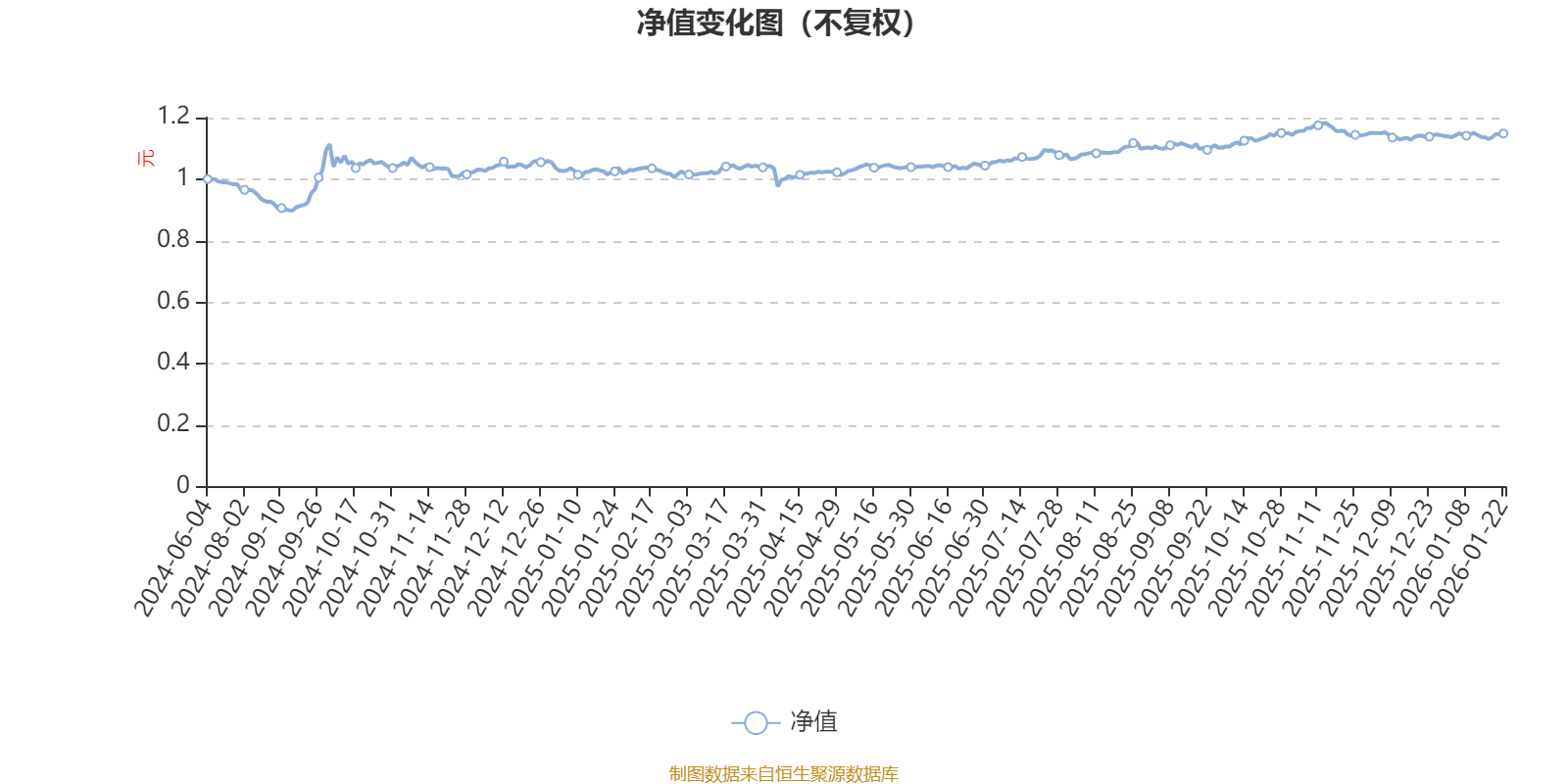
中泰红利量化选股股票发起A:2025年第四季度利润34.94万元 净值增长率2.76%
Sou Hu Cai Jing· 2026-01-23 01:41
Core Viewpoint - The AI Fund Zhongtai Dividend Quantitative Stock Selection A (021167) reported a profit of 349,400 yuan in Q4 2025, with a weighted average profit per fund share of 0.0311 yuan. The fund's net value growth rate for the reporting period was 2.76%, and the fund size reached 12.6287 million yuan by the end of Q4 2025 [3]. Fund Performance - As of January 22, the fund's unit net value was 1.148 yuan. The fund manager, Zou Wei, currently manages five funds. The Zhongtai CSI 500 Index Enhanced A had the highest one-year growth rate at 43.81%, while the Zhongtai Dividend Quantitative Stock Selection A had the lowest at 13.09% [3]. - The fund's performance over the past three months showed a growth rate of 0.96%, ranking 105 out of 121 comparable funds. Over the past six months, the growth rate was 4.90%, ranking 103 out of 121. The one-year growth rate was 13.09%, ranking 110 out of 119 [4]. Risk and Management - The fund's Sharpe ratio since inception is 0.748 [9]. The maximum drawdown since inception is 12.37%, with the largest quarterly drawdown occurring in Q2 2025 at 6.3% [11]. - The average stock position since inception is 90.65%, compared to the peer average of 88.34%. The fund reached a peak stock position of 92.43% at the end of H1 2025 and a low of 85.08% at the end of Q3 2024 [13]. Fund Holdings - As of the end of Q4 2025, the fund's size was 12.6287 million yuan. The top ten holdings are stable and include China Merchants Bank, China State Construction, Agricultural Bank of China, Midea Group, Kweichow Moutai, Chengdu Bank, China National Offshore Oil Corporation, Hisense Visual Technology, Nanjing Steel, and Industrial and Commercial Bank of China [16][19].

大额存单利率步入“0字头” 到期资金该往哪搬?
2 1 Shi Ji Jing Ji Bao Dao· 2026-01-22 23:45
Core Viewpoint - The decline in large-denomination certificate of deposit (CD) rates into the "0% era" is a result of structural interest rate cuts and banks' need to stabilize net interest margins, indicating a shift in asset allocation logic for residents and liability management for banks [1][3]. Group 1: Current Trends in Large-Denomination CDs - The issuance of large-denomination CDs is increasingly characterized by short-term products, with most banks focusing on 1-year or shorter maturities, while 3-year CDs have sharply decreased and 5-year products are nearly non-existent [2][3]. - Major banks, including ICBC, ABC, BOC, and CCB, have set the annual interest rate for 1-month and 3-month CDs at 0.9%, with minimum deposit amounts concentrated at 200,000 yuan, resulting in minimal income compared to regular fixed-term deposits [2][3]. - The trend of declining deposit rates has been ongoing since 2025, with average rates for various terms falling below 2%, indicating a significant shift in the banking landscape [3][4]. Group 2: Implications for Banks and Investors - The short-term nature of deposits is a dual result of banks adjusting their term structures and customers seeking increased liquidity, leading to a potential shortage of large-denomination CDs for long-term depositors [3][4]. - The pressure on banks' net interest margins has led to a strategic choice to lower CD rates and reduce the issuance of long-term products, aligning with the policy direction of facilitating economic benefits [3][6]. - The ongoing low interest rates are expected to continue, with predictions of further rate cuts in 2026, which will likely maintain the low-rate environment for large-denomination CDs [7][8].
信用卡行业高管密集调整
Nan Fang Du Shi Bao· 2026-01-22 23:11
Core Viewpoint - The upcoming leadership change at China Merchants Bank's credit card center, with Li Mingdong set to replace Liu Jialong, has drawn industry attention as it reflects broader trends of executive turnover in the credit card sector [2][8]. Group 1: Leadership Transition - Liu Jialong, the current general manager of the credit card center, is retiring due to reaching the legal retirement age and may transition to an advisory role [2]. - Li Mingdong, the incoming general manager, has extensive experience within the bank, having held various positions including general manager of the wealth management department [4][5]. - Liu Jialong has been a significant figure in the credit card industry, leading the center during critical periods and implementing key innovations such as the mobile app "Zhangshang Shenghuo" [3][4]. Group 2: Industry Trends - Since 2025, there have been 16 executive changes across credit card centers in various banks, indicating a trend of leadership adjustments in the industry [2][8]. - The credit card sector is experiencing challenges, with a decline in transaction amounts and revenue, despite an increase in active customers and transaction counts [4][6]. - The competitive landscape is shifting, with banks needing to adapt to changing market conditions and consumer behaviors to maintain their positions [9]. Group 3: Performance Metrics - As of June 2025, China Merchants Bank's credit card circulation reached 96.93 million cards, maintaining a leading position in the industry, but the total transaction amount decreased by 8.54% year-on-year to 2.02096 trillion yuan [6]. - Credit card interest income fell by 4.96% to approximately 30.61 billion yuan, while non-interest income saw a more significant decline of 16.23% to about 10.47 billion yuan [6]. - The monthly active users of the "Zhangshang Shenghuo" app decreased from 40.44 million at the end of 2024 to 37.09 million, indicating a drop in user engagement [6]. Group 4: Strategic Focus - The bank plans to enhance its retail financial strategy by improving customer engagement and advancing digital transformation, focusing on high-frequency consumption scenarios and optimizing credit structures [7]. - Li Mingdong emphasizes a customer-centric approach, aiming for stable growth in customer numbers and assets under management (AUM) to expand market share [5].


“太空”再添玩家 银行扎堆发卫星
Mei Ri Shang Bao· 2026-01-22 22:29
Group 1 - The banking industry is increasingly exploring space, with China Merchants Bank and Shanghai Pudong Development Bank successfully launching two satellites as part of the "Tianqi Constellation," China's first global low-orbit satellite IoT constellation [1][2] - China Merchants Bank has launched satellites for three consecutive years, with "Zhaoyin 1" and "Zhaoyin 2" launched in 2024 and 2025, respectively, while Ping An Bank has also launched its own satellites [1][2] - The recent launches aim to enhance global communication capabilities, improve data transmission, and support more terminal devices, marking the establishment of a comprehensive low-orbit satellite communication matrix for China Merchants Bank [2] Group 2 - The banking sector's involvement in space is driven by practical needs such as business upgrades, risk management, and supporting national strategies, rather than merely chasing trends [1][2] - The commercial space industry is entering a golden era, with multiple companies actively pursuing capital market opportunities and several firms updating their IPO progress [4] - The 14th Five-Year Plan has prioritized the construction of a strong space nation, which is expected to accelerate industry development [4][5] Group 3 - Data from the National Space Administration indicates that by 2025, China plans to complete 50 launches, with commercial rockets accounting for 25 of these, and a significant number of commercial satellites expected to be launched [5][6] - The commercial space sector is experiencing rapid growth, with a notable increase in stock prices for companies involved in this industry, reflecting strong market interest [6]
银行探路“航天+”: 一本成本账 一盘生态棋
Zhong Guo Zheng Quan Bao· 2026-01-22 21:51
Core Insights - The article discusses the increasing involvement of commercial banks in the "finance + aerospace" integration, highlighting the significant financial investments required for satellite development, launch, and operation [1] Group 1: Satellite Launches and Applications - Several banks, including China Merchants Bank and Pudong Development Bank, successfully launched satellites, namely "Zhaoyin Jinkui" and "Puyin Shuzhi," which are part of China's first low-orbit satellite IoT constellation, "Tianqi Constellation" [1] - Pudong Development Bank aims to leverage its communication service expertise to innovate applications in financial asset lifecycle management and cross-border asset and trade supervision using the satellite data capabilities [1] Group 2: Technological Integration in Banking - China Merchants Bank has integrated remote sensing satellite technology into its financial risk control system, enhancing efficiency in post-loan monitoring of real estate projects across the country [3] - The bank has initiated the application verification of low-orbit satellite communication technology in its financial disaster recovery systems, establishing a technical foundation for a comprehensive financial emergency communication network [3] Group 3: Value Proposition and Investment Returns - The technology is expected to address three core pain points in traditional banking risk control: remote monitoring of collateral and project progress, application in agricultural finance to reduce data collection costs and loan default risks, and obtaining independent data from space to mitigate information asymmetry [4] - Investment returns from satellite systems are characterized by low initial returns, stable mid-term returns, and increasing long-term value as applications expand into green finance, cross-border finance, and disaster recovery [4] - Differentiated strategies are emerging, with large banks building their satellite systems to control data and create technological barriers, while smaller banks are opting for data service procurement or third-party platform integration for practical participation [4]

银行探路“航天+”:一本成本账 一盘生态棋
Zhong Guo Zheng Quan Bao· 2026-01-22 20:56
Core Insights - The banking sector is actively exploring the integration of finance and aerospace, particularly in the context of commercial space ventures, while facing challenges related to the significant funding required for satellite development, launch, and operation [1] Group 1: Satellite Launches and Applications - Several banks, including China Merchants Bank and Shanghai Pudong Development Bank, successfully launched satellites, namely "Zhaoyin Jinkui" and "Puyin Shuzhi," which are part of China's first low-orbit satellite IoT constellation, "Tianqi Constellation" [1] - Shanghai Pudong Development Bank aims to leverage its communication service capabilities to innovate applications in financial asset lifecycle management and cross-border asset and trade supervision, supporting the large-scale development of the satellite IoT industry [1] Group 2: Technological Integration and Risk Management - China Merchants Bank has integrated remote sensing satellite technology into its financial risk control system, enhancing the efficiency of post-loan inspections through high-precision monitoring of construction progress across the country [2] - The bank has initiated the application verification of low-orbit satellite communication technology in its financial disaster recovery systems, establishing a technical foundation for a comprehensive financial emergency communication network [2] Group 3: Strategic Importance and Value Realization - Banks have been pursuing satellite-related strategies for years, driven by needs for risk control and business upgrades, with technologies like big data and satellite remote sensing becoming crucial for rural revitalization efforts [3] - The investment return from satellite systems is characterized by low initial returns, stable mid-term returns, and increasing long-term value as applications expand into green finance, cross-border finance, and disaster recovery systems [3] Group 4: Implementation Strategies - There is a consensus in the industry regarding differentiated implementation strategies, where large banks build their satellite systems to control data and create technological barriers, while smaller banks opt for purchasing data services or accessing third-party platforms to participate effectively [4]
广发消费领航股票型发起式证券投资基金基金份额发售公告
Xin Lang Cai Jing· 2026-01-22 19:11
基金管理人:广发基金管理有限公司 基金托管人:华夏银行股份有限公司 发售日期:2026年1月28日至2026年2月3日 重要提示 1.广发消费领航股票型发起式证券投资基金(以下简称"本基金")于2025年11月17日经中国证监会证监 许可〔2025〕2542号文准予募集注册。 2.本基金为契约型开放式证券投资基金。 3.本基金的管理人和注册登记机构为广发基金管理有限公司(以下简称"本公司"或"基金管理人"),基 金托管人为华夏银行股份有限公司。 4.本基金募集对象为符合法律法规规定的可投资于证券投资基金的个人投资者、机构投资者、合格境外 投资者以及法律法规或中国证监会允许购买证券投资基金的其他投资人。 5.本基金首次募集规模上限为80亿元人民币(不包括募集期利息,下同)。 在募集期内任何一天(含第一天)当日募集截止时间后累计有效认购申请金额超过80亿元人民币,基金 管理人将采取末日比例确认的方式实现规模的有效控制。当发生末日比例确认时,基金管理人将及时公 告比例确认情况与结果。未确认部分的认购款项将在募集期结束后退还给投资者,由此产生的损失由投 资人自行承担。其中,本基金对发起资金认购申请全额确认。 末日认购 ...

“旭易”东升 基金重仓股变迁 折射中国资本市场深刻变化
Shang Hai Zheng Quan Bao· 2026-01-22 18:42
Group 1 - The A-share market experienced fluctuations at relatively high levels in Q4 2025, with a slight decrease in overall equity positions of public funds compared to Q3 2025 [1][2] - The average equity positions for stock and mixed funds were 89.06% and 81.05%, respectively, showing a minor decline from the previous quarter [2] - Major holdings in public funds included leading light module companies, with Zhongji Xuchuang and Xinyi Sheng surpassing Ningde Times and Tencent Holdings to become the top two heavyweights [1][4] Group 2 - Several actively managed equity funds significantly increased their positions, with notable examples including Bosera Huixing and GF Chengxiang, which raised their equity positions by 12.31 and 10.3 percentage points, respectively [2] - Fund managers expressed optimism about the A-share market for 2026, citing potential dual benefits from domestic and international liquidity [3][9] - The focus on technology sectors continued, with managers identifying investment opportunities in storage chips, solid-state batteries, and humanoid robots [7][10] Group 3 - The top 50 heavyweights in public funds were primarily concentrated in information technology, consumer goods, and investment sectors, with 18 stocks in the information technology sector [4][6] - AI-related stocks gained prominence, with Zhongji Xuchuang, Xinyi Sheng, and Hanwujing entering the top seven heavyweights due to the AI boom [4][6] - The number of innovative drug companies in the top 50 heavyweights decreased from eight to five by the end of Q4 2025, indicating a shift in investment focus [5] Group 4 - Fund managers anticipate that the AI investment theme will continue to be a primary focus, with expectations for rapid growth in AI applications in the coming years [9][10] - The investment strategy is shifting towards AI applications, including smart driving, edge AI, and humanoid robots, as the industry matures [9][10] - The overall sentiment among fund managers is that the AI-driven technology market will remain a significant area of investment for the next several years [9][10]





银价上涨带火银质品 银行多款产品脱销
Zheng Quan Ri Bao Zhi Sheng· 2026-01-22 16:37
本报记者 彭妍 娄飞鹏补充说,中长期来看,银价受供需结构支撑仍有上行空间,但当前价格已快速反映市场预期,叠 加交易所调控措施及技术替代压力,短期可能维持高位震荡,需重点关注政策转向与市场情绪变化。 开年以来,白银市场表现亮眼,涨幅显著跑赢黄金。Wind资讯数据显示,截至1月21日,伦敦现货银价 格盘中最高触及95.42美元/盎司,年内累计涨幅近32%,大幅超过黄金同期涨幅。银价的快速攀升,直 接引爆了投资者的投资与收藏需求,多家银行出现部分银质品暂时缺货现象,缺货品类主要集中在生肖 主题类与低溢价投资类两大核心领域。 2026年以来,贵金属价格在多重风险因素共振下强势攀升,多位业内分析人士对后续白银价格走势持乐 观态度,但同时提醒投资者需警惕阶段性回调风险。 中国邮政储蓄银行研究员娄飞鹏对《证券日报》记者表示,近期银价上涨是供需缺口、避险需求及政策 预期共同作用的结果。在供给端,矿产银产量下滑,再生银补充能力有限;在需求端,光伏等工业领域 的刚性需求持续增长,叠加地缘因素升温引发避险资金流入。 东方金诚研究发展部高级副总监瞿瑞在接受《证券日报》记者采访时表示,未来银价将呈现短期强势震 荡、中长期回归基本面的态 ...

黄金涨个不停,“挂钩存款”卖爆了
Qi Lu Wan Bao· 2026-01-22 16:11
Core Insights - Gold prices have been on the rise since 2025, leading to a surge in demand for gold-linked structured deposit products from various banks, with some products offering annualized returns as high as 8% [1] Group 1: Product Offerings - Multiple banks have launched gold-linked structured deposit products, with variations in minimum investment, duration, and yield, resulting in some popular products being sold out [1] - China Bank introduced a product with a minimum investment of 10,000 yuan and a term of 87 days, offering an annualized yield ranging from 0.2% to 5.2% [2] - Other banks, such as the Bank of Communications and Minsheng Bank, have also released competitive products with varying yields and investment thresholds [2] Group 2: Market Trends - As of December 2025, the balance of structured deposits in Chinese banks reached 4.25 trillion yuan, marking a year-on-year growth of 6.01%, with unit structured deposits accounting for 69.49% of the total [3] - The trend of companies investing in structured deposits has increased, with numerous A-share companies announcing investments in gold-linked products [3] Group 3: Investment Appeal - The popularity of structured deposits is attributed to their dual advantages of capital protection and higher returns compared to traditional savings, especially in a low-interest-rate environment [4] - The rising gold prices, driven by its safe-haven and anti-inflation properties, have made gold-linked structured deposits attractive for investors seeking to capitalize on market gains [5]