
宝马

Search documents
连超市、图书馆、文创园都开始“卖车”了|一线
吴晓波频道· 2025-08-02 00:30
点击上图▲立即收听 编者按:最近车圈好不热闹,尽管新车新技术扎堆发布,但"车圈恒大论"余波未 散,评测领域又起波澜——前有懂车帝的评测引来争议,后有SUV在对撞测试 中"完胜"重卡点燃舆论。而当视角从赛博世界转到真实世界里的一些隐秘角落, 嬉笑怒骂却转变成挣扎的声音…… " ' 野 ' 的东西少一点, ' 正 ' 的东西可以再多一些。 文 / 巴九灵(微信公众号:吴晓波频道) "这是我第一次看到如此野生的车展。" 快餐厅和便利店时不时飘出饭菜味,打工人步履匆匆,一辆辆锃亮的新车躺在路旁,车型不一,品牌混杂,既有新势力极氪、蔚来,也有宝马、奔 驰、奥迪。此处,没有行业的剑拔弩张,只有一幕幕银行地推信用卡般的场景。 展车后面是临时搭建的舞台,装饰以红色为主,氛围音乐动次打次。 舞台一侧的签到台前,时不时排起队伍,人们和工作人员聊了会儿,便扫码领取礼物后离开。也有人坐进驾驶座,摇下车窗与销售简单沟通。 " 广场中的"野生车展" 这个微型车展位于某物流大厂新建没几年的建筑群门口,已是杭州主城区的边缘地带。离展厅200米处,满载货物的列车呼啸而过。 像这样没有炫酷的场景搭建,没有发布会,没有车模等元素的非官方车展,同事 ...


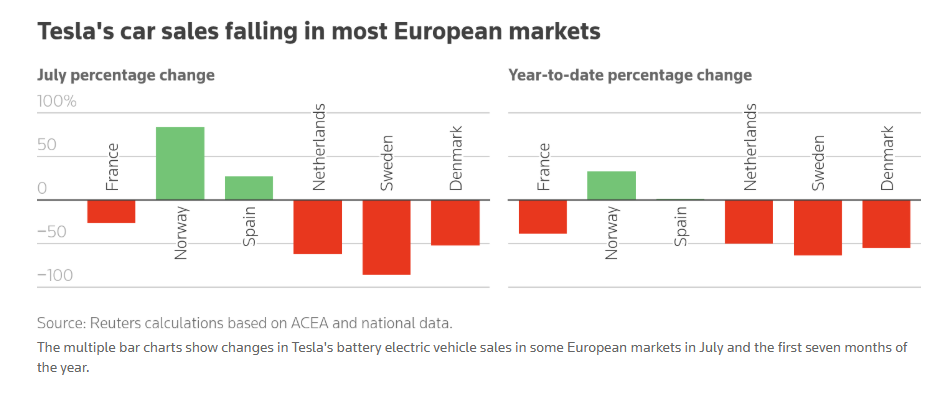
?Model Y 升级难救场!特斯拉(TSLA.US)欧洲销量七连跌
Zhi Tong Cai Jing· 2025-08-01 13:02
Core Viewpoint - Despite significant improvements to the globally popular Model Y, Tesla's new car registrations in several key European markets saw a substantial decline in July, attributed to CEO Elon Musk's aggressive political stance in Europe, regulatory challenges regarding autonomous driving, and increasing competition from low-cost electric vehicle manufacturers, particularly from China [1][2]. Group 1: Sales Performance - Tesla's vehicle registrations in Europe continued to shrink, with July showing a year-on-year drop: 86% in Sweden (163 units), 52% in Denmark (336 units), 27% in France (1,307 units), and 62% in the Netherlands (443 units) [1]. - In the first half of the year, Tesla's sales in the European market decreased by over one-third compared to the previous year [2]. - Conversely, in Norway and Spain, Tesla's registrations increased by 83% and 27% respectively in July, reaching 838 and 702 units, with Spain's overall electric vehicle sales surging by 155% [3]. Group 2: Market Challenges - Tesla is facing intensified competition from a wave of low-cost electric vehicle rivals, particularly from new Chinese entrants, while the company is launching a revamped Model Y and a more affordable new model, which will see significant production increases only in the next quarter [1]. - The company anticipates "several very difficult quarters" ahead, especially with the impending expiration of a $7,500 tax credit in the U.S. market [3]. - Regulatory challenges in Europe regarding autonomous driving are complicating sales growth for the Model Y and the promotion of the Full Self-Driving (FSD) subscription service [3]. Group 3: Future Outlook - Tesla plans to launch the updated Model Y long-range all-wheel drive version in Europe by March 2025, with two rear-wheel drive versions starting sales in May [4]. - The company has not indicated plans to introduce more affordable entry-level electric vehicle models before the last three months of the year [3].

Model Y 升级难救场!特斯拉(TSLA.US)欧洲销量七连跌
智通财经网· 2025-08-01 12:53
Group 1 - Tesla's new car registrations in key European markets saw a significant decline in July, despite major improvements to the Model Y [1] - The company's vehicle registrations in Sweden dropped by 86% to 163 units, Denmark by 52% to 336 units, France by 27% to 1,307 units, and the Netherlands by 62% to 443 units [1] - Tesla's sales in Europe fell by over one-third year-on-year in the first half of the year [1] Group 2 - In contrast, Norway and Spain experienced growth in Tesla registrations, with increases of 83% and 27% respectively, reaching 838 and 702 units [1] - The overall sales of electrified vehicles in Spain surged by 155%, with BYD selling 2,158 units, nearly eight times the amount from July 2024 [2] - Tesla's Model Y registrations in Sweden and Denmark fell by 88% and 49% respectively, while in Norway, they surged over fourfold to 715 units [7] Group 3 - Tesla is facing challenges due to strict European regulations on autonomous driving, which complicate the sales growth of the Model Y and the promotion of its Full Self-Driving subscription service [7] - The company does not expect to launch more affordable entry-level electric vehicle models before the last three months of the year [7] - Major European automakers like Volkswagen, Mercedes-Benz, Stellantis, Renault, and BMW reported weaker-than-expected second-quarter results, citing pressures from U.S. import tariffs and slowing demand [11]
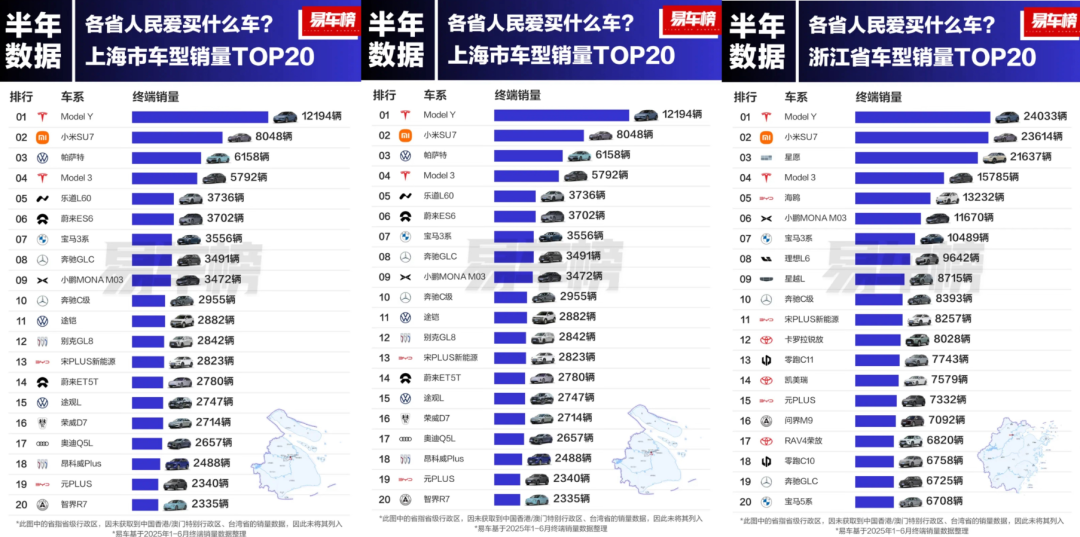
江浙沪爱特斯拉、东北喜欢比亚迪、山东热衷买小车……2025上半年各省购车偏好出炉
Guo Ji Jin Rong Bao· 2025-08-01 11:56
Core Insights - The sales rankings of popular car models across various regions in China for the first half of 2025 have been released, highlighting regional preferences and trends in consumer behavior [1] Group 1: Regional Sales Trends - In the Yangtze River Delta region, Tesla's Model Y leads the sales chart, followed by Xiaomi's SU7 and XPeng's MONA M03, indicating a strong preference for new energy vehicles in this area [3][4] - In Beijing, Tesla's Model Y also tops the sales with 10,649 units sold, while BYD's Qin PLUS and other models dominate the top six positions [6] - The Shandong province shows a strong demand for economical electric vehicles, with models like Wuling Hongguang MINIEV and Changan Lumin frequently appearing in the top five [8] Group 2: Model Performance - The top-selling models in the Yangtze River Delta include Tesla Model Y (10,649 units), BYD Qin PLUS (6,265 units), and Volkswagen Passat (4,955 units), showcasing a mix of new energy and traditional vehicles [4] - In Guangdong province, 11 out of the top 20 models are new energy vehicles, with GAC AION S leading the sales [10] - In the Northeast region, BYD's new energy models are prominent, with the Qin PLUS being the best-seller in Heilongjiang province [11] Group 3: Market Dynamics - The luxury segment remains strong in the Yangtze River Delta, with models like BMW 3 Series and Mercedes-Benz GLC maintaining their market presence [3] - In regions with less developed charging infrastructure, such as Tibet, traditional fuel SUVs dominate the market, indicating a challenge for new energy vehicle penetration [13] - The overall trend shows a growing acceptance of new energy vehicles across various provinces, with BYD's models frequently appearing in the top sales lists [8][12]

比亚迪上线全面兼容功能 手车互联:从封闭生态到“壁垒”打开
Zhong Guo Qi Che Bao Wang· 2025-08-01 11:25
Core Viewpoint - BYD has officially launched the vehicle-to-phone connectivity feature across all its brand models, enhancing the smart experience for users by integrating with major domestic smartphone brands [2][3]. Group 1: Vehicle-to-Phone Connectivity Features - The vehicle-to-phone connectivity has become a significant highlight in the automotive industry, with increasing collaboration between automakers and smartphone manufacturers to meet growing consumer demand for smart mobility [3]. - BYD's connectivity feature supports three major ecosystems: Carlink, HUAWEI HiCar, and Honor Car Link, offering various functionalities such as screen mirroring, privacy mode, navigation transfer, and music continuation [3]. - Other automakers, like MG and Deep Blue, are also exploring vehicle-to-phone connectivity, with MG announcing a partnership with OPPO to implement comprehensive connectivity features in their new models [4][5]. Group 2: Evolution and Development of Vehicle-to-Phone Connectivity - The concept of vehicle-to-phone connectivity began in 2004 with Nokia and BMW, evolving significantly with the introduction of technologies like MirrorLink, CarPlay, and Android Auto [6]. - The industry is transitioning from a basic connectivity model to a more integrated approach, where mobile devices and vehicle systems seamlessly share information and functionalities [7]. - Experts believe that the future of vehicle-to-phone connectivity will involve deeper integration, allowing for a more unified ecosystem between smartphones and vehicle systems [8]. Group 3: User Experience and Market Trends - Enhancing user experience is crucial for the success of vehicle-to-phone connectivity, as consumers seek more convenient ways to integrate their mobile and driving experiences [8]. - The market is witnessing a trend where vehicle manufacturers are not creating proprietary smartphone brands but are instead focusing on interoperability with existing mobile ecosystems [8]. - The integration of AI technology is expected to further enhance the vehicle-to-phone connectivity experience, providing personalized services and improving overall functionality [9][13]. Group 4: Future Prospects and Challenges - The future of vehicle-to-phone connectivity appears promising, with potential advancements in AI and new business models that could lead to enriched application ecosystems and differentiated insurance pricing based on driving behavior [13]. - However, challenges such as connectivity stability and user interface responsiveness remain significant hurdles that need to be addressed for broader adoption [10].

专家解读《中国汽车产业竞争力评价研究(2025)》:全球格局下的中国机遇与突破路径
Zhong Guo Jin Rong Xin Xi Wang· 2025-07-31 10:23
Core Viewpoint - The report titled "China Automotive Industry Competitiveness Evaluation Research (2025)" highlights the competitive landscape of the global automotive industry, emphasizing China's opportunities and pathways for breakthroughs in the context of global dynamics [1]. Group 1: Research Framework - The study establishes a "1+1+N" evaluation framework focusing on comprehensive automotive industry competitiveness and specialized competitiveness in intelligent connected new energy vehicles, with additional evaluations for key segments of the industry chain [2]. - The framework integrates classic theories such as Porter's Diamond Model and PEST analysis, aligning with the automotive industry's transformation towards electrification, connectivity, and intelligence [2]. Group 2: Global Competitiveness Ranking - Based on 2023 data, the global automotive industry competitiveness ranking is as follows: EU, Japan, USA, China, and South Korea, reflecting a clear tiered structure [4]. - The EU leads due to its balanced advantages, including strong technological innovation and a mature automotive culture, while Japan follows with deep technological expertise and global market presence [4]. - The USA and China are in the second tier, with the USA excelling in innovation and China in scale and transformation speed, having established a complete industrial system [4]. Group 3: China's Performance in Key Segments - China ranks first globally in the intelligent connected new energy vehicle sector, driven by a robust policy framework, collaborative innovation, and a massive market demand [6]. - In specific segments, China leads in power batteries and hydrogen fuel cell vehicles, showcasing advanced technology and a complete supply chain [7]. - The intelligent cockpit sector is also competitive, sharing the top tier with the USA, thanks to high market penetration and integration of AI technologies [8]. Group 4: Future Trends and Strategic Directions - The next decade is critical for the global automotive industry, with three major transformations anticipated: a shift in competitive discourse towards new energy vehicles, regionalization of supply chains, and a reconfiguration of productivity driven by data and technology [9]. - China's automotive industry is positioned to transition from the second tier to the first tier, with a focus on enhancing technological innovation, upgrading industry structure, and expanding domestic market presence [9].

【深度报道】解耦、进化、共生,破解汽车产业技术新难题
Jing Ji Guan Cha Wang· 2025-07-31 09:18
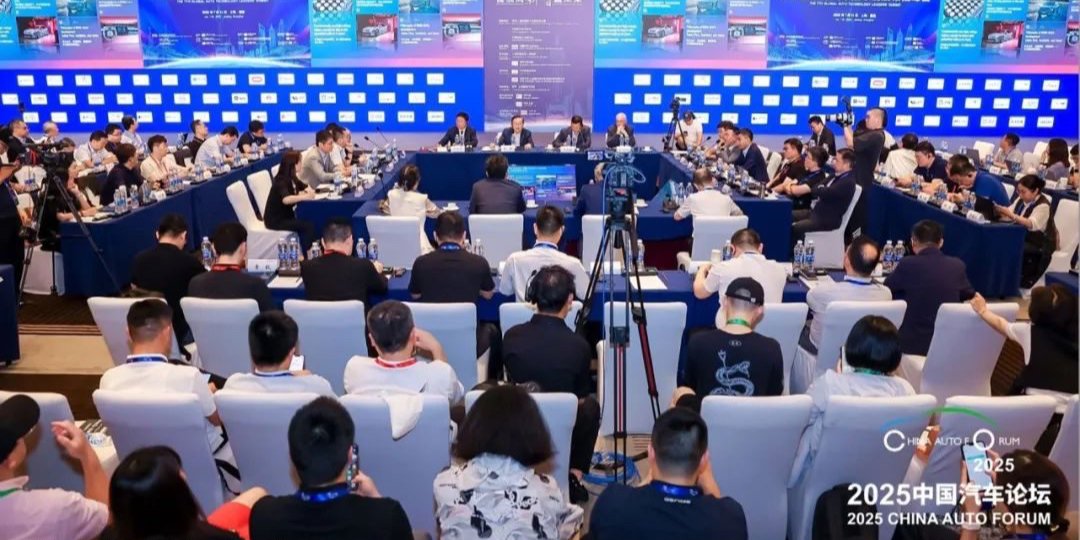
汽车纵横全媒体 中国科学技术协会主席万钢出席了本次会议;东风汽车集团有限公司原董事长、行业技术专家竺廷风为本次会议作引导发言;OICA(国际汽车制造商协 会) Technical Director Olivier FONTAINE,上海汽车集团股份有限公司副总裁、总工程师祖似杰,宝马中国研发中心高级副总裁Dr.Robert Kahlenberg,吉 利汽车集团高级副总裁王瑞平,奇瑞汽车股份有限公司副总工程师、开阳实验室CTO宋廷伦,中国汽车工业协会副总工程师王耀,中国第一汽车股份有限 公司研发总院副院长赵慧超,中国信息通信研究院总工程师敖立,北京汽车研究总院有限公司党委书记、院长王磊,广汽集团执委会委员吴坚,华为智能 驾驶解决方案产品线总裁李文广,博世电驱动系统事业部中国区总裁许长春,东软睿驰汽车技术(上海)有限公司总裁兼CTO杜强,地平线副总裁、战略 部&智驾产品规划与市场部负责人吕鹏,芯擎科技创始人、董事兼CEO汪凯分别在会上发表演讲;中国汽车工业协会常务副会长兼秘书长付炳锋出席并主 持了本次会议全程。 当下,中国汽车产业正面临智能化与碳中和双重变革。与会嘉宾以"松桦恋"共生哲学破题,并提出技术应当化繁为 ...
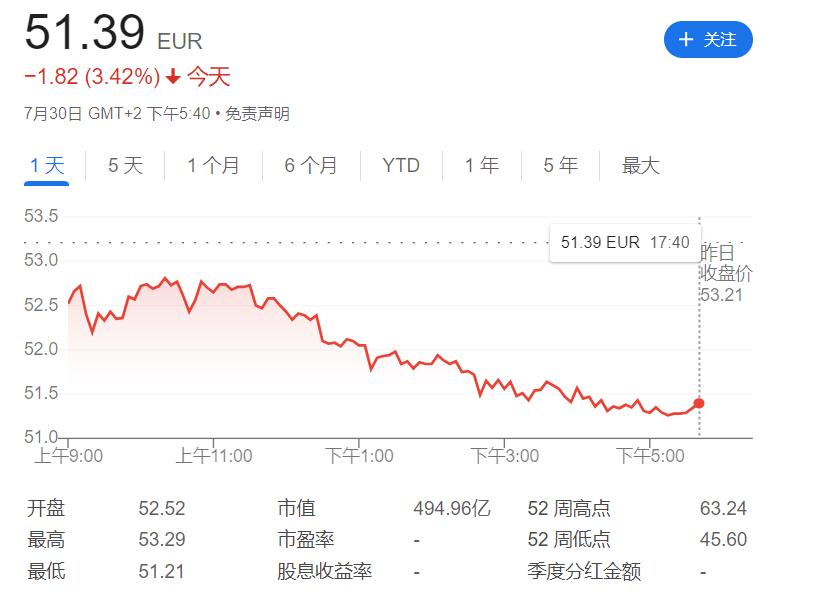
奔驰崩了,业绩新低利润暴跌68%,经销商转卖华为了
3 6 Ke· 2025-07-31 09:01
Core Viewpoint - Mercedes-Benz's stock price dropped over 3% in one night, with its market value falling below 50 billion euros, resulting in a loss of approximately 20 billion RMB due to disappointing financial results [1][3]. Financial Performance - In the first half of the year, Mercedes-Benz reported revenue of 66.377 billion euros, a year-on-year decline of 8% [4]. - The net profit for the same period was 2.688 billion euros, a staggering 55.8% decrease compared to the previous year [12]. - The second quarter saw revenue drop to 33.153 billion euros, marking a 9.8% year-on-year decline and the lowest quarterly revenue in four years [4][9]. Sales and Market Challenges - Global vehicle sales for Mercedes-Benz in the first half totaled 1.0763 million units, down 8% year-on-year, with electric vehicle sales declining by 14% [15]. - The Asian market contributed 23% of total revenue, but this was a decrease of 2.3 percentage points from the previous year, with revenue from Asia dropping 16.68% [7]. - The company faced significant sales declines across its major markets: Asia down 16%, Europe down 3%, and North America down 6% [21]. Strategic Adjustments - Mercedes-Benz is experiencing a retreat in its dealership network, with many 4S stores closing or being taken over by other brands, indicating a potential shift in market strategy [27][29]. - The company is implementing cost-cutting measures, including a plan to lay off 20,000 employees and relocate some production to lower-cost countries [31]. - Despite the challenges, Mercedes-Benz is still focusing on electric vehicle development, with plans to launch a new electric GLC model [37].
观车 · 论势 || 二线豪华品牌“护城河”失守启示
Zhong Guo Qi Che Bao Wang· 2025-07-31 03:24
Core Viewpoint - The second-tier luxury brands are rapidly losing their appeal and market position due to significant price reductions and competition from Chinese brands, particularly in the context of the electric vehicle (EV) era [1][2][3] Group 1: Market Dynamics - Second-tier luxury brands like Jaguar, Volvo, and Lexus are experiencing dramatic price cuts, with examples such as the Jaguar XEL 90th Anniversary Edition priced at 159,800 yuan and the Volvo XC60 reduced by 174,000 yuan [1] - The market share of Chinese brands in passenger vehicles has reached 68.5%, while foreign brands are losing ground [3] - Consumers are increasingly willing to pay more for smart features, with a 47% increase in budget allocation for intelligent experiences [3] Group 2: Technological Shifts - Chinese brands have achieved technological parity, while traditional luxury brands are lagging in their transition to EVs, leading to a widening technological gap [2] - The shift in value standards from traditional metrics like engine efficiency to new dimensions such as battery energy density and smart cockpit interaction is reshaping the competitive landscape [4] Group 3: Challenges and Transformation - The decline of second-tier luxury brands is a result of their inability to adapt to the new value chain, where traditional mechanical advantages are losing relevance [4] - Brands face a dilemma of either lowering prices to remain competitive or risking market exit, as seen in the case of Lexus and its diminishing service advantages [4] - A comprehensive transformation is required, moving from mere electrification to a complete overhaul of technology paradigms and ecosystem structures [5] Group 4: Future Opportunities - Brands must innovate their cultural symbols and user experiences to survive, with suggestions for collaborations in new lifestyle sectors [5][6] - The future of competition lies in the ability to create a sustainable value innovation ecosystem rather than merely reinforcing existing competitive advantages [6]
亚太科技股价微跌0.34% 拟153万欧元收购欧洲两家公司股权
Jin Rong Jie· 2025-07-30 17:28
Group 1 - The core business of the company is aluminum products, which are applied in automotive thermal management systems and lightweight components, with clients including BMW, BYD, and Li Auto [1] - The company announced plans to acquire 100% equity of Alunited France SAS and Alunited Denmark A/S for €1.533 million and to increase capital by €1.467 million for production operations [1] - The target companies specialize in manufacturing high-end aluminum safety components for automobiles, with major clients including BMW and Jaguar Land Rover [1] Group 2 - As of July 30, 2025, the stock price of the company was reported at 5.95 yuan, down 0.34% from the previous trading day, with a trading volume of 0.055 billion yuan [1] - On the same day, the main capital outflow for the company was 943,400 yuan [2]
