GLC

Search documents
Mercedes-Benz USA CEO: Auto market environment is 'a little tougher than we anticipated' this year
Youtube· 2026-03-31 17:24
Core Insights - Mercedes-Benz plans to invest over $7 billion in its US operations to achieve 400,000 annual car sales by the end of the decade [1] - The company aims to increase sales by approximately 30% by the end of this decade, focusing on its core models such as GLC, GLE, and GLS [2] - The company has only increased prices by 1.3% since tariffs were implemented, which is significantly lower than inflation, to maintain competitiveness [5] Sales Strategy - The company is working closely with dealer partners to simplify operations and enhance customer experience [3] - Despite challenges from tariffs affecting margins, the company prioritizes volume growth over immediate profit recovery [6] - There is a focus on ensuring competitive positions for products and decluttering processes for dealers to improve customer service [8] Market Conditions - The market environment has become tougher than anticipated, with some signs of consumer hesitancy and confusion [7][9] - Consumer confidence remains relatively robust, although rising gas prices could impact purchasing decisions if sustained at higher levels [10][11] - The company offers efficient engine options, including combustion engines with 48V technology, plug-in hybrids, and new electric vehicles to mitigate the impact of gas prices on consumer choices [11]


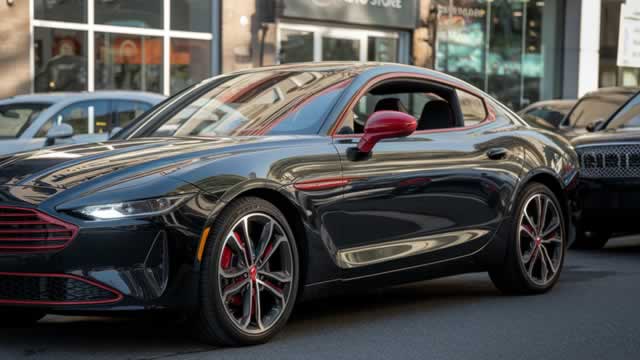
奔驰、宝马、奥迪集体换帅
21世纪经济报道· 2026-03-04 15:08
Core Viewpoint - The recent leadership changes in the German luxury car brands (BBA) in China are a response to significant sales and profit declines, indicating a need for strategic restructuring in the face of intense competition and market shifts [1][2][10]. Group 1: Sales Performance - In 2025, Mercedes-Benz's global sales fell by 10% to 2.16 million units, with a 19.5% drop in China to 575,000 units, returning to 2017 levels [1][2]. - BMW's global sales slightly increased by 0.5% to 2.4637 million units, but in China, sales dropped by 12.5% to 625,500 units [1][2]. - Audi's sales in China were 617,500 units, down 5%, marking the third consecutive year of negative growth [1][2]. Group 2: Profitability Issues - Mercedes-Benz's adjusted EBIT for 2025 plummeted by 40% to €8.2 billion, with net profit nearly halving to €5.331 billion [2]. - BMW's EBIT for the first three quarters of 2025 fell by 16.2% to €8.06 billion, with net profit dropping to €5.7 billion [2]. - Audi's operating profit for the first three quarters of 2025 was only €1.6 billion, with bleak full-year profit expectations [2]. Group 3: Market Challenges - The luxury brands are facing a "double whammy" in the Chinese market, with price wars eroding profits in the fuel vehicle sector and a lack of competitive electric vehicle offerings [7][12]. - Mercedes-Benz's sales profit margin has dropped to 5.0%, down from previous double-digit figures, due to increased competition and cost pressures [6]. - BMW's product line is experiencing a structural imbalance, with significant sales declines in higher-margin SUV models [6][7]. Group 4: Strategic Shifts - The leadership changes signal a shift from a "remote control" approach to a more localized strategy that emphasizes understanding and responding to Chinese consumer needs [10][11]. - Mercedes-Benz plans to introduce over 15 new and updated models in China in 2026, focusing on local demand and collaboration with tech companies [11]. - BMW and Audi are also ramping up their electric vehicle offerings to regain market share, with new models set to launch in 2026 [12]. Group 5: Competitive Landscape - Chinese luxury brands are gaining ground, with significant sales figures and a new definition of luxury that emphasizes technology and smart features [12][13]. - The shift in consumer perception towards "technology equals luxury" poses a challenge for BBA, which historically defined luxury through materials and brand heritage [12][13]. - The urgency for BBA to adapt is underscored by the rapid rise of domestic brands and the need for a fundamental rethinking of their market strategies in China [13].

奔驰卖不动了
投资界· 2026-03-03 07:35
Core Viewpoint - Mercedes-Benz is experiencing unprecedented challenges, with significant declines in revenue, profit, and sales, particularly in the Chinese market, which is crucial for its future growth and transformation [4][7][12]. Financial Performance - In the fiscal year 2025, Mercedes-Benz reported revenue of €132.14 billion, a year-on-year decline of 9.2%, and a net profit of €5.33 billion, down 48.8% [4]. - Adjusted EBIT was €8 billion, reflecting a decrease of approximately 40% [4]. - Free cash flow from industrial operations was €5.4 billion, significantly lower than the previous year's nearly €9.2 billion [4]. Sales and Market Challenges - In 2025, Mercedes-Benz sold 575,000 vehicles in China, a decline of about 19%, marking the lowest sales since 2016 [7]. - Global sales fell by 10% to 2.16 million vehicles, the lowest level since 2014 [11]. - The passenger car segment, a key revenue driver, saw a revenue drop of 10.5% to €96.41 billion, with EBIT down 57.9% [11]. Cost Pressures and Strategic Adjustments - The company faced approximately €1 billion in tariff expenses and incurred €1.6 billion in restructuring costs due to a voluntary departure program [8]. - R&D expenditures remained high at €9.68 billion, with a slight year-on-year decrease of 0.4%, while capital investments surged by 35.7% to €5.48 billion [9]. - The management acknowledged the need for cost reduction and efficiency improvements, with plans to launch over 40 new models in the next three years [7][9]. Electric Vehicle Strategy - Mercedes-Benz's electric vehicle sales in 2025 were only 168,800 units, down 9%, significantly trailing competitors like BMW and Audi [10]. - The CEO revised the goal for full electrification from 2030 to a dual-track approach of both fuel and electric vehicles due to underperformance in the electric segment [10]. Focus on the Chinese Market - The Chinese market is critical for Mercedes-Benz, with plans to introduce 7 models specifically tailored for this market between 2025 and 2027 [16]. - The company aims to enhance local partnerships and supply chain localization to reduce costs by 10% for materials and 20% for variable and fixed production costs by 2027 [17]. - Recent price adjustments on key models indicate a response to competitive pressures in the Chinese market [13]. Management Changes - The appointment of Oliver Thöne as the head of Greater China operations reflects a strategic shift towards local market focus and value chain optimization [16][18]. - The new management is expected to drive the product offensive and address the challenges posed by local competitors and changing consumer preferences [18].

梅赛德斯-奔驰预计新车型和成本削减将推动今年收益走高
Xin Lang Cai Jing· 2026-02-12 07:33
Core Viewpoint - Mercedes-Benz expects significant improvement in earnings this year due to the launch of new models and efforts to enhance competitiveness across the group [1][5] Group 1: New Models and Production Capacity - The company plans to launch over 40 new models by 2027 and has orders booked until the second half of 2026, operating production lines in three shifts to meet high demand [1][5] - CEO Ola Kallenius highlighted strong demand for new models such as CLA, GLC, and S-Class, indicating customer excitement [6] - By 2028, production capacity will be adjusted to approximately 2.2 million vehicles, with a joint venture factory in Aguascalientes, Mexico, ceasing assembly of Mercedes-Benz vehicles in 2026 [6] Group 2: Cost Reduction and Efficiency Measures - The company aims to reduce production costs by 10% per vehicle by 2027 compared to 2024 levels through efforts to lower energy costs, enhance automation, and reduce logistics costs [2][6] - Measures initiated last year, including layoffs and outsourcing non-core activities, are expected to further improve efficiency, with fixed costs projected to decrease by 10% from 2024 to 2027 [2][6] Group 3: Financial Projections and Market Conditions - The company anticipates a profit increase of over €3.5 billion (approximately $4.16 billion) by 2025 [3][8] - In the U.S., the company is committed to shifting more production locally to mitigate the impact of import tariffs [9] - The automotive division's adjusted profit margin guidance is set at 3%-5% for this year, with expectations to maintain sales levels similar to 2025 [9] - The company reported a 45% decline in automotive division earnings last year due to decreased sales and adverse pricing, tariff, and exchange rate factors [9]
理想汽车召回逾万辆MEGA 近五年汽车行业年均召回超过200次
Zhong Guo Jin Rong Xin Xi Wang· 2025-10-31 10:31
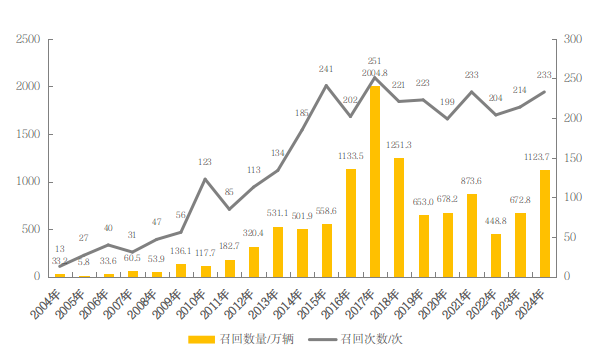
Core Viewpoint - Li Auto announced a voluntary recall of 11,411 units of its MEGA model due to insufficient corrosion resistance of the coolant, highlighting the importance of proactive measures in ensuring vehicle safety and quality control in the automotive industry [1] Group 1: Company Actions - Li Auto will replace the power batteries and related equipment for the recalled vehicles free of charge [1] - The company is committed to conducting safety inspections and repairs for the affected batch of vehicles to eliminate risks [1] Group 2: Industry Context - The automotive recall system has become a normalized practice in the industry, essential for quality control and consumer safety [1][2] - In the past five years, the average number of annual recalls in China has reached 216, with over 7.59 million vehicles recalled, indicating a trend towards normalization of recalls [2] - International automotive companies, including Mercedes-Benz, Audi, and Tesla, have also implemented recalls this year, demonstrating that recalls can enhance product optimization and reflect a mature quality management system [4] Group 3: Challenges and Perceptions - Over half of the recalls in China are driven by regulatory actions rather than voluntary corporate initiatives, revealing a significant challenge in the industry's perception of recalls [4][5] - There exists a cognitive bias among both companies and consumers regarding recalls, with many viewing them as a negative mark rather than a demonstration of corporate responsibility [5] - The normalization of recalls is crucial for the high-quality development of the automotive industry, as it allows companies to address defects that are nearly impossible to avoid entirely [5]

Mercedes‑Benz reports softer third quarter
Yahoo Finance· 2025-10-30 09:07
Core Insights - Mercedes-Benz Group reported weaker results for Q3 2025, with a 7% decline in group revenue to €32.14 billion ($37.37 billion) and a 70% drop in EBIT to €750 million, impacted by reduced gross profitability and significant special charges [1][2] Financial Performance - Group revenue decreased by 7% to €32.14 billion ($37.37 billion) [1] - EBIT fell 70% to €750 million, while adjusted EBIT decreased 17% to €2.09 billion [1] - Net profit declined by 31% to €1.19 billion, resulting in earnings per share of €1.22, a 33% drop [1] Special Charges and Legal Proceedings - Legal proceedings and related measures amounted to €427 million, a significant increase from €20 million, primarily recognized at Mercedes-Benz Mobility [3] - The group increased other provisions related to the UK's motor finance redress scheme by a mid-three-digit million-euro amount in Q3 2025 [3] Segment Performance - Mercedes-Benz Cars revenue fell 7.3% to €23.74 billion, with adjusted EBIT at €1.13 billion, down from €1.20 billion [4] - The division sold 441,453 vehicles in the quarter, affected by market conditions in China and tariff policies in the US [4] - Mercedes-Benz Vans revenue decreased by 13.2% to €4.04 billion, with adjusted EBIT at €412 million; electric van sales increased by 96% [5] - Mercedes-Benz Mobility's revenue slipped 3.4% to €5.80 billion, but adjusted EBIT improved to €313 million from €285 million [5] Overall Trends - Over the first nine months of 2025, group revenue decreased by 8% to €98.52 billion [5] - EBIT dropped 59% to €4.31 billion, with adjusted EBIT falling 35% to €6.63 billion, and net profit halved to €3.87 billion [6]
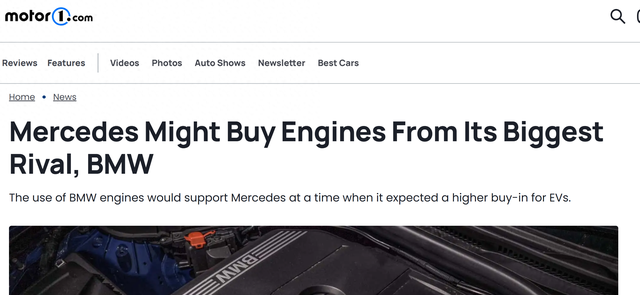
大和解?奔驰拟采用宝马四缸发动机
Huan Qiu Wang· 2025-08-22 05:57
Group 1 - The core point of the article is that Mercedes-Benz and BMW are in high-level negotiations to collaborate on engine technology, specifically for BMW to supply its four-cylinder gasoline engines for multiple Mercedes models, marking a historic cross-brand technology sharing initiative [1][3]. - The collaboration aims to reduce R&D costs and adapt to industry changes, with the potential to enhance the market sustainability of fuel vehicles and accelerate the deployment of plug-in hybrid models for Mercedes [1][3]. - The specific models that may utilize BMW's engines include CLA, GLA, GLB, C-Class, E-Class, GLC, and a planned small SUV, which indicates a broad application of the partnership [3]. Group 2 - The BMW B48 series 2.0-liter turbocharged four-cylinder engine is expected to be produced in Austria and offers layout flexibility for both compact and mid-size vehicles, which could benefit Mercedes' vehicle lineup [3][4]. - The partnership may extend beyond engine sharing to include technology collaboration in areas such as transmissions, although no official confirmation of the details has been made yet [4]. - The outcome of the negotiations is anticipated to be announced by the end of the year, indicating a timeline for potential developments in this collaboration [4].
奔驰崩了,业绩新低利润暴跌68%,经销商转卖华为了
3 6 Ke· 2025-07-31 09:01
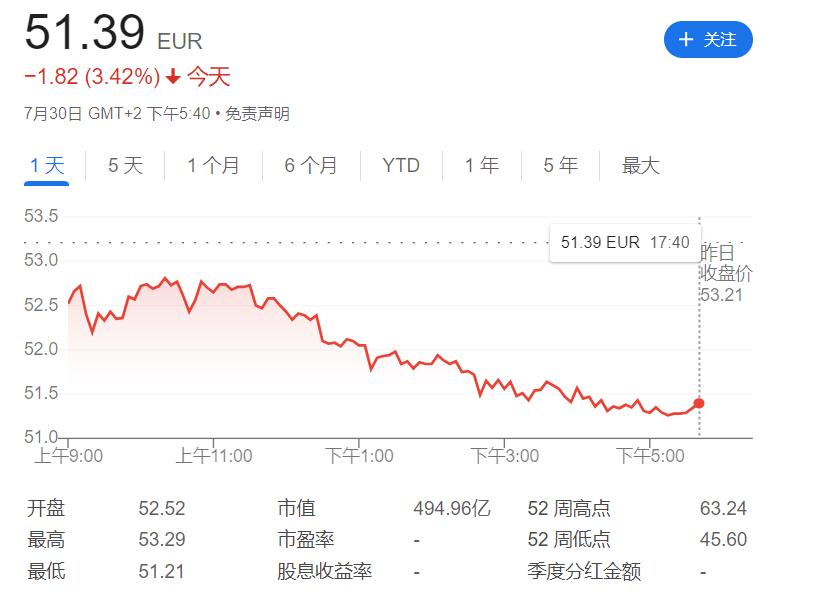
Core Viewpoint - Mercedes-Benz's stock price dropped over 3% in one night, with its market value falling below 50 billion euros, resulting in a loss of approximately 20 billion RMB due to disappointing financial results [1][3]. Financial Performance - In the first half of the year, Mercedes-Benz reported revenue of 66.377 billion euros, a year-on-year decline of 8% [4]. - The net profit for the same period was 2.688 billion euros, a staggering 55.8% decrease compared to the previous year [12]. - The second quarter saw revenue drop to 33.153 billion euros, marking a 9.8% year-on-year decline and the lowest quarterly revenue in four years [4][9]. Sales and Market Challenges - Global vehicle sales for Mercedes-Benz in the first half totaled 1.0763 million units, down 8% year-on-year, with electric vehicle sales declining by 14% [15]. - The Asian market contributed 23% of total revenue, but this was a decrease of 2.3 percentage points from the previous year, with revenue from Asia dropping 16.68% [7]. - The company faced significant sales declines across its major markets: Asia down 16%, Europe down 3%, and North America down 6% [21]. Strategic Adjustments - Mercedes-Benz is experiencing a retreat in its dealership network, with many 4S stores closing or being taken over by other brands, indicating a potential shift in market strategy [27][29]. - The company is implementing cost-cutting measures, including a plan to lay off 20,000 employees and relocate some production to lower-cost countries [31]. - Despite the challenges, Mercedes-Benz is still focusing on electric vehicle development, with plans to launch a new electric GLC model [37].
瑞银:“反内卷”下的中国汽车经销商、保险业、互联网巨头们
Zhi Tong Cai Jing· 2025-07-25 10:30
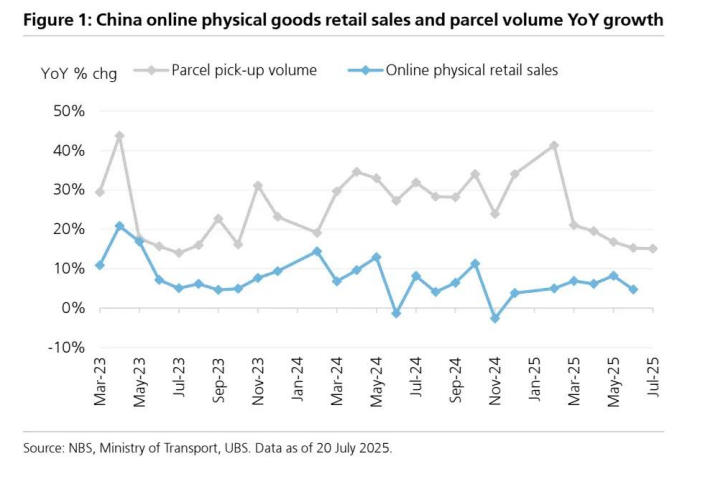
Group 1: Chinese Luxury Car Dealers - UBS analysts noted a recent stock price increase for Zhongsheng Group and Yongda Automotive, with respective rises of approximately 20% and 5% over the past five days, attributed to expectations of improved new car profit margins and market speculation on industry consolidation [2][3] - The Chinese government's crackdown on irrational competition is expected to stabilize retail prices and improve profit margins for dealers, which are sensitive to changes in new car profit margins [3][4] - Traditional luxury car brands are facing declining sales, with a 14% year-on-year drop in the first half of 2025, as domestic brands capture a larger market share, leading to potential further retail price discounts [4][5] Group 2: Chinese Insurance Industry - Following recent anti-involution measures, the Chinese life insurance sector saw a 9.1% increase in H-shares over four trading days, outperforming the Hang Seng Index [7] - Rising interest rates are expected to benefit life insurance companies in the long term, enhancing net asset value and reducing risks associated with interest spreads [8] - UBS anticipates that the upcoming lower pricing interest rate benchmark may make dividend-type policies more attractive, benefiting insurers with strong investment and distribution capabilities [8][9] Group 3: Chinese E-commerce Industry - The second quarter saw a 6.3% year-on-year increase in online retail sales, indicating a shift towards high-quality growth, with improved return rates attributed to policy changes on e-commerce platforms [11][12] - Instant retail investments by Alibaba and JD.com have led to a recovery in daily active users, although the conversion rate of new traffic remains lower compared to traditional channels [13][14] - UBS favors Alibaba in the e-commerce sector due to its potential in artificial intelligence-related businesses and expects significant value realization if execution is successful [18]
中升豪赌代步车,打的什么算盘?
Zhong Guo Qi Che Bao Wang· 2025-07-01 00:39
Core Insights - The automotive dealership industry is facing significant challenges, with scale becoming a potential liability rather than an asset, and transformation being essential for survival [3][4] - The domestic leading automotive dealer, Zhongsheng Group, is successfully navigating this transformation by investing heavily in high-quality replacement vehicle services [3][5] Group 1: Industry Challenges - The automotive dealership sector is experiencing a downturn due to chaotic pricing competition, leading to store closures and financial strain on various dealership groups [3][4] - Many dealerships are resorting to inventory liquidation strategies, which are seen as desperate measures rather than proactive business strategies [8] Group 2: Zhongsheng Group's Strategy - Zhongsheng Group has made substantial investments in acquiring luxury vehicles for replacement services, purchasing 1,500 Mercedes-Benz vehicles to enhance customer service during maintenance periods [4][5] - The company has also established strategic partnerships, such as with FAW Audi, to expand its service offerings and improve customer experience [4][5] Group 3: Service Innovation - The replacement vehicle service is becoming a significant extension of Zhongsheng Group's after-sales service, with over 170,000 instances of service provided in 2024, averaging more than 450 services per day [5][8] - By offering high-quality replacement vehicles, Zhongsheng Group aims to enhance customer loyalty and satisfaction, with reported increases in repurchase rates by 15% to 20% and referral rates by over 30% [8][9] Group 4: Cost Considerations - The high costs associated with purchasing luxury vehicles for replacement services pose a challenge for many dealerships, with significant financial investments required [11][12] - Industry experts suggest that dealerships may need to explore alternative models, such as leasing vehicles, to mitigate the financial burden while still providing quality service [11][12]