海康威视

Search documents
国内研究团队突破算力效能,数字经济ETF(560800)红盘蓄势
Xin Lang Cai Jing· 2025-10-15 03:13
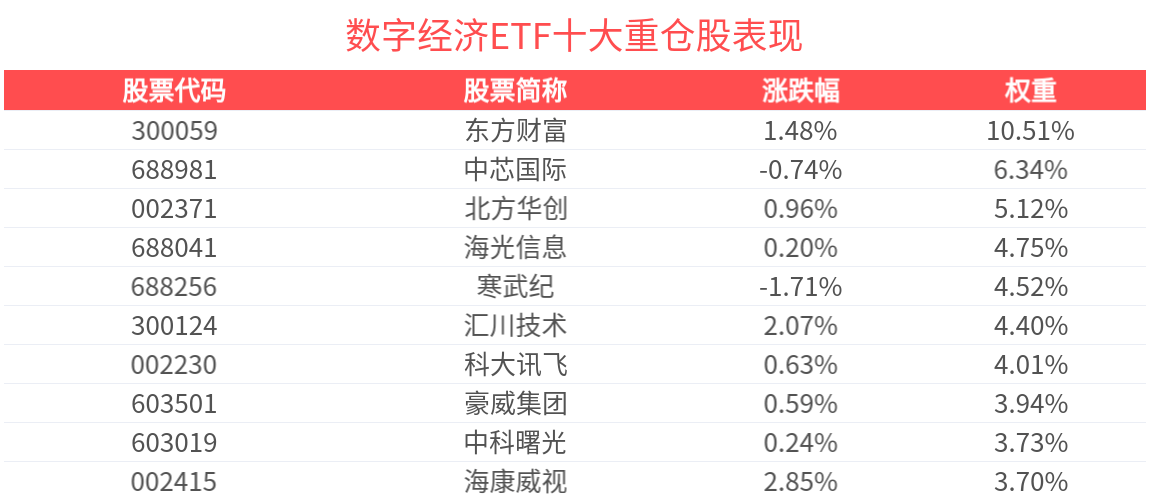
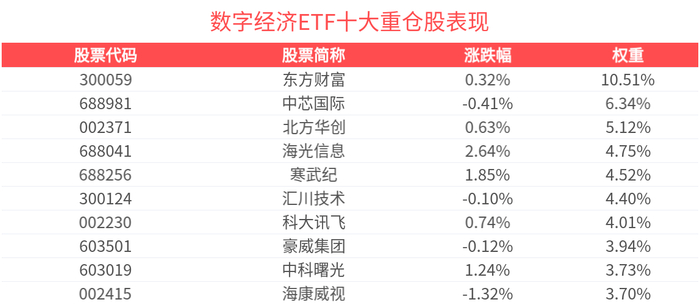
Core Insights - The digital economy theme index (931582) has shown a slight increase of 0.02% as of October 15, 2025, with notable gains in constituent stocks such as BGI Genomics (301269) up 7.80% and Haiguang Information (688041) up 2.64% [1] - The digital economy ETF (560800) has also increased by 0.20%, with a significant trading volume of 9.8533 million yuan and a turnover rate of 1.44% [1] - A research team from Peking University has developed a high-precision, scalable analog matrix computing chip based on resistive random-access memory, achieving computational throughput and energy efficiency that surpasses current top digital processors by 100 to 1000 times [1] Market Trends - The Chinese artificial intelligence market is projected to reach a scale of $50 billion this year, with an expected growth rate exceeding 50% [2] - Domestic semiconductor companies are improving product performance and maturity, leading to an increase in the shipment volume of AI computing chips [2] - The semiconductor industry chain is anticipated to enter a new upward cycle due to the rapid growth of the AI market and the increasing penetration of domestic computing power [2] Index Composition - As of September 30, 2025, the top ten weighted stocks in the digital economy theme index account for 54.31% of the index, with companies like Eastmoney (300059) and SMIC (688981) being the most significant contributors [3] - The detailed performance of the top ten stocks includes Eastmoney at 0.32% weight and SMIC at -0.41% weight, indicating varied performance among leading companies [4]

年内上市公司回购超1000亿元 498家上市公司或重要股东获得回购增持再贷款,总金额约1025亿元
Shen Zhen Shang Bao· 2025-10-15 00:43
Core Viewpoint - A-share listed companies are experiencing a surge in stock buybacks, driven by supportive policies and increasing market interest [1][4]. Group 1: Stock Buyback Trends - As of October 14, 2023, 1,374 A-share listed companies have implemented stock buybacks, totaling over 11.25 billion yuan in repurchased shares [2]. - In the latest wave, 17 companies announced stock buyback progress on October 14, with 6 companies disclosing new buyback plans and 4 completing their buyback initiatives [1][2]. Group 2: Notable Buyback Cases - Thirteen companies have repurchased over 1 billion yuan, with Midea Group leading at 6.769 billion yuan, followed by Kweichow Moutai at 6 billion yuan and Muyuan Foods at 3.002 billion yuan [2]. - The trend of "cancellation buybacks" is increasing, with companies like Baosteel announcing plans to cancel shares for equity incentive programs [3]. Group 3: Policy Support - The People's Bank of China has optimized stock buyback financing policies, reducing the self-funding ratio from 30% to 10% and extending loan terms from 1 year to 3 years [4]. - The total quota for stock buyback financing tools has been consolidated to 800 billion yuan, enhancing the flexibility and efficiency of these financial instruments [4]. Group 4: Financing and Market Impact - As of October 14, 2023, 750 companies or major shareholders have accessed buyback financing, amounting to approximately 151.85 billion yuan [5]. - The buyback financing has provided low-cost capital to companies, boosting investor confidence and market attention [5].



美国又对数百万中国电子产品做“大扫除”了
虎嗅APP· 2025-10-14 13:39
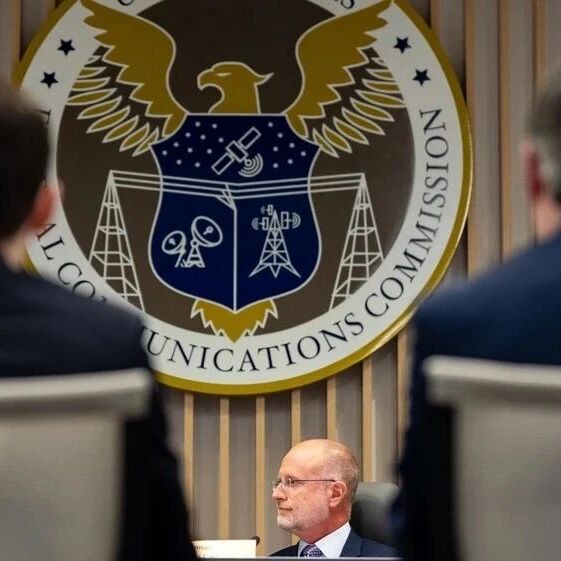
Core Viewpoint - The article discusses the recent "clean shopping cart action" initiated by the FCC, which has led to the removal of millions of Chinese electronic products from major U.S. e-commerce platforms, significantly impacting companies like Hikvision and Dahua [4][10]. Group 1: Impact of FCC Actions - The FCC has declared that millions of products containing banned brand keywords or lacking proper authorization have been removed from e-commerce platforms [6][10]. - Hikvision and Dahua have already seen a decline in their U.S. business, with Hikvision reporting that U.S. revenue accounts for less than 3% of its overseas income [4][10]. - The FCC's tightening regulations may also affect overseas companies that use components from blacklisted firms, potentially leading to broader market disruptions [14][20]. Group 2: Market Dynamics - The U.S. remains the largest single market for surveillance equipment, with approximately 30 million units shipped annually, compared to 20 million in China and 10 million in Europe [19]. - Chinese security brands face challenges in the U.S. market due to local competitors like Ring and Arlo, which benefit from better software services and localized support [20][21]. - The tightening of FCC regulations adds further pressure on Chinese brands, which must adapt to maintain market presence [20][26]. Group 3: Strategic Responses - Chinese security companies are exploring new strategies, such as adopting local storage solutions to reduce costs and address privacy concerns [22][23]. - There is a growing focus on expanding into emerging markets in Southeast Asia, South America, and Africa, where demand for surveillance solutions is increasing [24][25]. - Hikvision's 2024 annual report indicates that developing countries now account for over 70% of its overseas revenue, highlighting a shift in focus due to regulatory pressures in the U.S. [26].


美国又对数百万中国电子产品做“大扫除”了
Hu Xiu· 2025-10-14 12:49
Core Viewpoint - The recent "clean shopping cart action" led by the FCC has resulted in the removal of millions of banned Chinese electronic products from major U.S. e-commerce platforms, significantly impacting the market dynamics for Chinese brands in the U.S. [2][3][10] Group 1: Regulatory Actions - The FCC has declared that millions of products have been removed, which either fall under the banned device list or lack FCC authorization [2][3] - The FCC's tightening regulations began with the NDAA ban in 2019, which initially only affected federal procurement, but has since expanded to include consumer markets following the 2022 Security Equipment Act [12][13] - A vote scheduled for October 28 could further restrict any devices containing components from blacklisted companies, potentially affecting previously authorized products [13][14] Group 2: Impact on Chinese Brands - Major Chinese brands like Hikvision and Dahua have already seen a decline in their U.S. market presence, with Hikvision reporting that U.S. business accounts for less than 3% of its overseas revenue [4][10] - The removal of products is primarily targeting those that use banned brand keywords or lack complete FCC documentation, complicating the re-listing process for affected products [5][9] - The tightening regulations pose significant challenges for Chinese security brands, which already struggle against local competitors that benefit from better software services and localized support [22][23] Group 3: Market Dynamics - The U.S. remains the largest single market for surveillance equipment, with an annual shipment of approximately 30 million units, compared to 20 million in China and 10 million in Europe [20][21] - The demand for surveillance cameras in the U.S. is driven by the prevalence of single-family homes, which require multiple camera setups [21] - As domestic infrastructure development peaks and population declines in China, overseas expansion has become a primary strategy for Chinese security companies [19][24] Group 4: Future Strategies - Chinese security brands are exploring new strategies, such as adopting local storage solutions to reduce costs and address privacy concerns, particularly in the U.S. market [25][26] - There is a growing interest in expanding into emerging markets like Southeast Asia, South America, and Africa, where demand for surveillance solutions is increasing [27][28] - Hikvision's 2024 annual report indicates that developing countries now account for over 70% of its overseas revenue, highlighting a shift in focus for these companies [29] Group 5: Broader Implications - The FCC's actions are seen as a pressure test for the export strategies of Chinese manufacturers, determining which companies can withstand the regulatory challenges [30]
家电智能化,迈入“合纵连横”时代
2 1 Shi Ji Jing Ji Bao Dao· 2025-10-14 12:04
Core Insights - The article discusses the recent strategic cooperation between Haier Group and Alibaba Group, focusing on AI collaboration to build a new digital industry ecosystem [2][8] - The increasing frequency of collaborations among major players in the home appliance industry is driven by the need for product development and ecosystem construction amid digitalization and globalization [3][10] Industry Trends - The home appliance industry is experiencing a shift from incremental expansion to stock competition, with significant market declines observed in 2020 and 2022 [4][7] - The introduction of the "trade-in" policy in 2024 is expected to shift the market focus from scale expansion to value reconstruction, emphasizing high-value segments like R&D and services [7][11] Strategic Collaborations - Major companies are forming partnerships to address challenges in product development and ecosystem building, with a focus on AI, advanced manufacturing, e-commerce, and globalization [8][9] - Collaborations extend beyond product upgrades to include B2B operations, infrastructure, and global market expansion, enhancing competitiveness and operational efficiency [9][10] Ecosystem Competition - The competition in the home appliance sector is evolving from individual brand competition to ecosystem-based competition, driven by consumer demand for integrated smart home solutions [12][13] - The emergence of AI and large models is transforming the competitive landscape, shifting focus from hardware to integrated smart home experiences [13][14] Future Outlook - The future of competition will center around open, collaborative, and intelligent ecosystems that create higher user value, rather than just manufacturing excellence [14]


今年以来上市公司回购总额超1000亿元 回购增持再贷款提供低成本资金
Sou Hu Cai Jing· 2025-10-14 10:49
Core Insights - A-share listed companies are experiencing a surge in stock buybacks, with 17 companies announcing buyback progress on October 14 alone [1] - From January 1 to October 14, 2023, 1,374 A-share companies have executed buybacks, totaling over 11.25 billion yuan in repurchased shares [1] - The trend of "cancellation buybacks" is gaining attention, driven by policy guidance and market logic [2] Group 1: Buyback Trends - 1374 A-share listed companies have repurchased over 11.25 billion shares, amounting to 112.596 billion yuan [1] - 13 companies have repurchased over 1 billion yuan, with Midea Group leading at 6.769 billion yuan [1] - The number of companies disclosing buyback plans and implementing them is increasing, indicating a growing trend [1] Group 2: Policy Support - The People's Bank of China has optimized stock buyback financing policies, reducing the self-funding ratio from 30% to 10% and extending loan terms from 1 year to 3 years [2] - A total of 750 companies or major shareholders have accessed buyback financing, amounting to approximately 151.854 billion yuan [3] - The merger of financing tools aims to enhance flexibility and efficiency in utilizing policy funds [3] Group 3: Market Impact - The stock buyback financing has provided low-cost capital to companies, boosting investor confidence and market attention [3] - The ongoing support for buybacks is expected to evolve from a temporary measure to a more permanent mechanism, stabilizing the market [3]


计算机设备板块10月14日跌3.04%,凯旺科技领跌,主力资金净流出30.36亿元
Zheng Xing Xing Ye Ri Bao· 2025-10-14 08:46
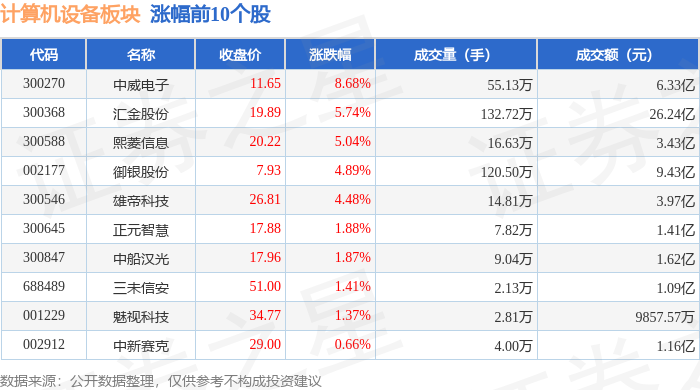
Market Overview - On October 14, the computer equipment sector declined by 3.04%, with Kaiwang Technology leading the drop [1] - The Shanghai Composite Index closed at 3865.23, down 0.62%, while the Shenzhen Component Index closed at 12895.11, down 2.54% [1] Stock Performance - Notable gainers in the computer equipment sector included: - Zhongwei Electronics (300270) with a closing price of 11.65, up 8.68% [1] - Huijin Co., Ltd. (300368) with a closing price of 68.61, up 5.74% [1] - Xiling Information (300588) with a closing price of 20.22, up 5.04% [1] - Major decliners included: - Kaiwang Technology (301182) with a closing price of 37.15, down 10.57% [2] - Zhongke Shuguang (603019) with a closing price of 105.50, down 8.00% [2] - Yutong Optical (300790) with a closing price of 28.52, down 6.00% [2] Capital Flow - The computer equipment sector experienced a net outflow of 3.036 billion yuan from institutional investors, while retail investors saw a net inflow of 2.121 billion yuan [2][3] - Notable capital flows included: - Hikvision (002415) with a net inflow of 205 million yuan from institutional investors [3] - Huijin Co., Ltd. (300368) with a net inflow of 86.09 million yuan from institutional investors [3] - Yuyin Co., Ltd. (002177) with a net inflow of 50.34 million yuan from institutional investors [3]


七部门发文推动“AI+制造”,人工智能AIETF(515070)获资金积极布局
Mei Ri Jing Ji Xin Wen· 2025-10-14 04:18
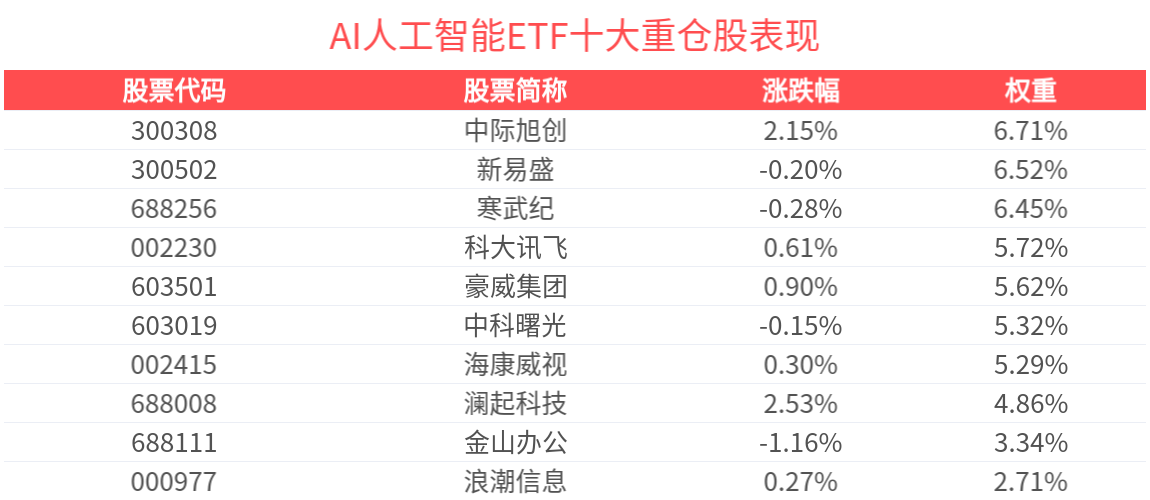
Group 1 - The A-share market showed mixed performance with the Shanghai Composite Index rising by 0.38%, while the Shenzhen Component Index fell by 0.19%, and the ChiNext Index declined by 1.33% [1] - The technology sector saw gains in rare earth permanent magnets, while consumer electronics and gaming sectors continued to adjust [1] - The AI ETF (515070) saw leading gains from stocks such as Hikvision, Langchao Technology, and Beijing Junzheng, with increases of 2.76%, 1.85%, and 1.33% respectively [1] Group 2 - On October 11, the Ministry of Industry and Information Technology and six other departments jointly issued a plan to promote the integration of artificial intelligence technology with service-oriented manufacturing from 2025 to 2028, injecting new momentum into the sector [1] - The plan emphasizes strengthening new information infrastructure, strategically deploying computing power infrastructure, and deepening the integration of "5G + industrial internet," accelerating the intelligent transformation of manufacturing [1] - Huatai Securities believes that the long-term growth logic of the AI industry remains clear, with artificial intelligence being one of the main lines of future prosperity, and expectations for the domestic industrial chain continue to improve [1] Group 3 - The AI ETF (515070) tracks the CS Artificial Intelligence Theme Index (930713), selecting component stocks that provide technology, basic resources, and applications for artificial intelligence, focusing on the midstream and upstream of the AI industry chain [2] - The top ten weighted stocks include leading domestic technology companies such as Zhongji Xuchuang, Xinyi Sheng, Cambricon Technologies, and others [2]
OpenAI和博通宣布战略合作,AI人工智能ETF(512930)涨超0.6%,近3个月跟踪误差精度同类最高
Xin Lang Cai Jing· 2025-10-14 02:04
Group 1 - OpenAI and Broadcom plan to launch custom data center chips in 2026, deploying 10 gigawatts of AI accelerators designed by OpenAI [1] - The collaboration will involve Broadcom's accelerators and Ethernet solutions for vertical and horizontal scaling, with deployment starting in the second half of 2026 and completion by the end of 2029 [1] - As of October 14, 2025, the CSI Artificial Intelligence Theme Index (930713) increased by 0.70%, with notable gains in constituent stocks such as Beijing Junzheng (3.99%) and Lanke Technology (2.53%) [1] Group 2 - The CSI Artificial Intelligence Theme Index tracks 50 listed companies involved in providing foundational resources, technology, and application support for artificial intelligence [2] - As of September 30, 2025, the top ten weighted stocks in the index accounted for 61.36% of the total index weight, including companies like New Yisheng and Cambricon [2] - The AI Artificial Intelligence ETF (512930) closely tracks the CSI Artificial Intelligence Theme Index, with a management fee of 0.15% and a custody fee of 0.05%, the lowest among comparable funds [1][2]
OpenAI与博通宣布合作开发定制芯片,数字经济ETF(560800)盘中拉涨,涨超1%
Sou Hu Cai Jing· 2025-10-14 01:57
截至2025年10月14日 09:38,中证数字经济主题指数(931582)强势上涨1.09%,成分股三环集团(300408)上涨14.26%,兆易创新(603986)上涨4.79%,澜起科技 (688008)上涨4.46%,指南针(300803),财富趋势(688318)等个股跟涨。数字经济ETF(560800)上涨1.03%。 流动性方面,据Wind数据显示,数字经济ETF盘中换手0.58%,成交423.82万元。拉长时间看,截至10月13日,数字经济ETF近1周日均成交3722.19万元。 消息面上,10月13日,OpenAI与博通启动战略合作,计划联合开发10 gigawatts级定制化AI加速器。根据分工协议,OpenAI主导加速器架构及系统设计,博 通则负责芯片开发与规模化部署。这种垂直整合模式使OpenAI能够将其在AI模型研发中的技术积淀直接注入硬件设计,从而突破现有性能瓶颈。整套系统 将基于博通以太网技术构建,其模块化设计既支持OpenAI自有数据中心的部署,也可灵活扩展至合作伙伴的全球基础设施,以应对爆发的AI算力需求。 随着OpenAI宣布与博通联合开发定制芯片,科技巨头的自研芯片竞赛进 ...