
平安银行

Search documents
上市银行大类资产配置跟踪:信贷投放稳健,债券配置灵活性提升
Ping An Securities· 2025-11-07 08:10
Industry Investment Rating - The investment rating for the banking sector is "Outperform" [1] Core Insights - The proportion of corporate loans has increased, while retail demand recovery is being monitored. As of mid-2025, the proportion of corporate loans among listed banks rose by 1.65 percentage points from the end of 2024 to 60.2%. The manufacturing sector's loans accounted for 18.5% of corporate loans, reflecting a recovery in the operations of manufacturing enterprises [3][12] - The flexibility in bond allocation has increased, with bond trading helping to stabilize market fluctuations. In the first half of 2025, listed banks saw a significant decline in other comprehensive income and fair value changes due to interest rate fluctuations. Some banks, primarily state-owned, increased bond trading to enhance investment returns and stabilize net profit growth [3][6] - Asset quality pressure is manageable, with a focus on risks in the retail sector. The overall asset quality remains stable, with the non-performing loan (NPL) ratio for A-share listed banks holding steady at 1.15% as of Q3 2025. However, the average NPL ratio for retail loans increased by 15 basis points to 1.58% compared to the end of 2024 [3][6] Summary by Sections Corporate Loan Structure - The overall asset structure of listed banks shows an increase in loan allocation, with the loan proportion rising by 0.1 percentage points from the end of 2024. State-owned banks increased interbank asset allocation, while small and medium-sized banks focused more on loan issuance [12][19] - Corporate loans remain the primary focus of credit allocation, with corporate loans accounting for 91.1% of all new loans in the first nine months of 2025. Short-term corporate loans made up 33.7% of new corporate loans [17][18] Bond Investment Preferences - The preference for flexible bond allocation has increased, with banks primarily investing in government bonds and central bank bills. The proportion of OCI accounts has risen, indicating a shift towards more flexible investment strategies [6][3] Asset Quality and Risk Monitoring - The asset quality of the banking sector is stable, with a non-performing loan ratio of 1.15% as of Q3 2025. The retail loan sector has shown slight increases in NPL ratios, necessitating ongoing monitoring of risks in this area [3][6]




平安银行(000001) - 投资者关系管理信息
2025-11-07 07:38
Group 1: Financial Performance - The bank's operating income for the first three quarters of 2025 was CNY 1,006.68 billion, a decrease of 9.8% year-on-year [1] - The net interest margin for the same period was 1.79%, down 14 basis points compared to the previous year [1] - Net profit for the first three quarters was CNY 383.39 billion, a decline of 3.5% year-on-year [1] Group 2: Cost Management - Business and management expenses amounted to CNY 276.49 billion, a decrease of 9.6% year-on-year [1] - Credit and other asset impairment losses were CNY 259.89 billion, down 18.8% year-on-year [1] - The average interest rate on interest-bearing liabilities was 1.73%, a decrease of 47 basis points year-on-year [1] Group 3: Asset Quality - The non-performing loan ratio as of September 2025 was 1.05%, a decrease of 0.01 percentage points from the end of the previous year [1] - The provision coverage ratio stood at 229.60%, indicating strong risk compensation capability [1] Group 4: Retail and Corporate Banking - Personal deposit balance as of September 2025 was CNY 12,796.30 billion, a decrease of 0.6% from the end of the previous year [3] - The average interest rate on personal deposits was 1.87%, down 37 basis points year-on-year [3] - The bank's automotive finance loan balance reached CNY 3,003 billion, an increase of 2.2% year-on-year [1] Group 5: Customer Engagement and Strategy - The bank focuses on enhancing low-cost deposit acquisition and adjusting the pace of deposit and interbank liabilities [1] - The number of value clients in interbank institutions reached 1,438 as of September 2025 [3] - The bank emphasizes a customer-centric approach in corporate banking, focusing on industry-specific financial services [3]

多家股份行城商行前三季发力个人房贷
Feng Huang Wang· 2025-11-07 02:27
Core Insights - The latest reports indicate a significant increase in personal housing loans from several listed banks, contrasting with the decline observed in state-owned banks' mortgage lending [1][2][6][7] Group 1: Personal Housing Loan Growth - Nearly ten listed banks, including Minsheng Bank, Ping An Bank, and others, reported a clear increase in personal housing loans by the end of Q3 compared to the beginning of the year [1][2] - Specific banks like Ping An Bank reported a housing loan balance of 3,523.50 billion yuan, growing by 8.1% from the beginning of the year [2] - Minsheng Bank's mortgage loan balance increased by 180.41 billion yuan, marking a growth of 3.24% [2] Group 2: State-Owned Banks' Decline - The six major state-owned banks experienced a reduction of over 1,000 billion yuan in personal housing loans in the first half of the year, continuing a downward trend for three consecutive years [1][6] - By the end of Q3, the total personal housing loan balance for these banks was approximately 25.086 trillion yuan, reflecting a decrease of 1,078 billion yuan since the beginning of the year [6] Group 3: Market Dynamics and Regional Insights - The demand for housing loans remains strong in certain regions, such as Jiangsu, Zhejiang, and Shanghai, prompting banks to increase mortgage lending [4][5] - The new personal housing loans issued in key economic regions accounted for 87.70% of the total new loans issued by Shanghai Pudong Development Bank, indicating a regional focus in lending strategies [3] Group 4: Overall Market Trends - As of the end of Q3 2025, the total personal housing loan balance in the market was 37.44 trillion yuan, showing a year-on-year decline of 0.3% despite the growth from smaller banks [7] - The overall trend suggests that while some smaller banks are increasing their mortgage lending, it is not sufficient to offset the overall decline in the personal housing loan market driven by the larger state-owned banks [7]


私行业务成银行“香饽饽”?七家客户数破10万大关
Xin Lang Cai Jing· 2025-11-07 00:20
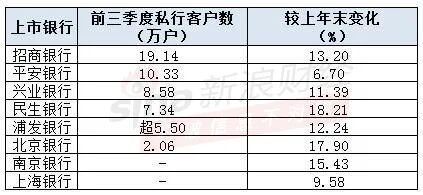
Core Insights - The private banking sector in China is experiencing significant growth, with several listed banks reporting an increase in private banking clients exceeding 10% [1][2][3] - Notably, Minsheng Bank, Beijing Bank, and Nanjing Bank have all reported client growth rates above 15% [1][2][3] - As of the end of September, the total number of private banking clients at Minsheng Bank reached 73,409, marking an 18.21% increase from the previous year [3][5] Private Banking Client Growth - Multiple banks have shown robust growth in private banking clients, with Minsheng Bank, Beijing Bank, and Nanjing Bank leading with growth rates over 15% [1][2][3] - As of September 30, 2023, the number of private banking clients at major banks is as follows: - China Merchants Bank: 191,418 clients, up 13.2% - Ping An Bank: 103,300 clients, up 6.7% - Minsheng Bank: 73,409 clients, up 18.21% - Beijing Bank: 20,586 clients, up 17.9% - Nanjing Bank: growth of 15.43% [3][5][6] Wealth Management Market Expansion - The wealth management market in China continues to expand, with listed banks reporting steady growth in wealth clients [8][9] - As of September 30, 2023, Ping An Bank reported 1.4911 million wealth clients, a 2.4% increase from the previous year [9] - Nanjing Bank's wealth clients grew by 16.31%, while Guiyang Bank's wealth clients increased by 7.77% [9] Asset Under Management (AUM) Growth - The total assets under management (AUM) for private banking clients at Minsheng Bank reached 1,014.72 billion yuan, an increase of 148.75 billion yuan, or 17.18% [3][5] - Beijing Bank's private banking AUM was 224 billion yuan, up 14.39% from the beginning of the year [4] Revenue from Wealth Management Services - Several banks reported positive growth in wealth management fee income, with many exceeding 15% growth [10][12] - For instance, China Merchants Bank's wealth management fee income reached 20.67 billion yuan, an 18.76% year-on-year increase [10] - Ping An Bank's wealth management fee income was 3.979 billion yuan, up 16.1% [10] Distribution and Sales Growth - The distribution of financial products has become a significant revenue source for banks, with many reporting substantial increases in sales [11][12] - For example, Ping An Bank's income from personal insurance sales grew by 48.7%, while its income from personal fund sales increased by 6.7% [12] - China Merchants Bank's income from fund sales rose by 38.76%, driven by increased sales and improved product structure [12]



平安银行珠海分行:筑牢金融反诈防线 守护群众的“钱袋子”
Nan Fang Du Shi Bao· 2025-11-06 23:14
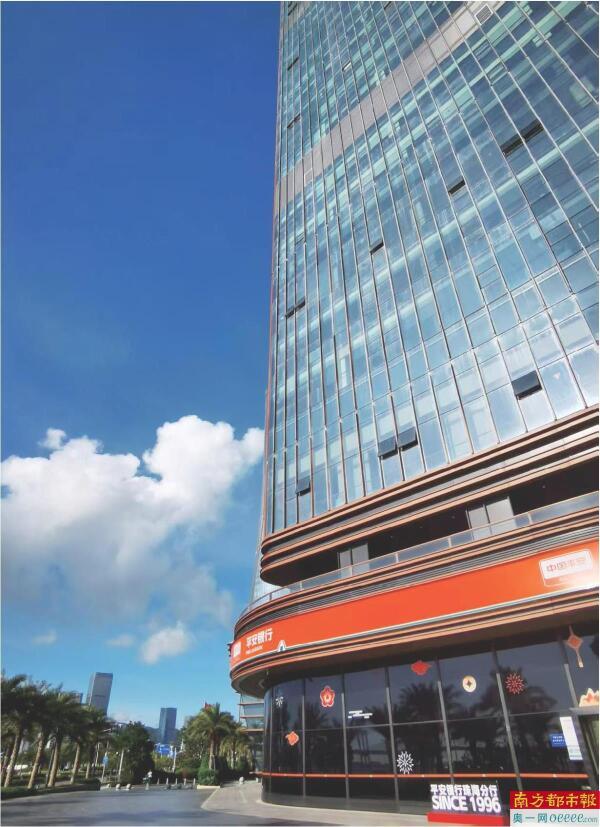
Core Viewpoint - The article highlights the efforts of Ping An Bank's Zhuhai branch in combating fraud, emphasizing the importance of social responsibility and financial security through various initiatives and community engagement [3][4][5]. Internal Management - The bank has strengthened account lifecycle management and optimized risk monitoring and control models with the support of its headquarters [3]. - Employee training on fraud prevention has been enhanced, and collaboration with law enforcement has been deepened to create a comprehensive risk defense system [3]. External Promotion - The bank has conducted various anti-fraud promotional activities targeting vulnerable groups in the community, including a successful anti-fraud comedy competition held from August to October [4]. - The competition attracted over 50 entries from diverse participants, and the event aimed to raise awareness about common fraud tactics while entertaining the audience [4]. Achievements - In 2023, the bank successfully blocked 103 suspicious personal account openings and assisted law enforcement in intercepting 1,259 suspicious transactions, preventing fraudulent activities amounting to 19.02 million yuan [5]. - The bank has conducted 214 promotional activities and sent out 330,000 anti-fraud messages, reaching approximately 430,000 individuals [4]. Case Studies - Case 1: The bank helped an elderly couple recover 280,000 yuan after they were victims of telecom fraud, showcasing the staff's empathy and efficient emergency response [6]. - Case 2: A customer was prevented from losing 300,000 yuan due to a loan scam, thanks to the staff's vigilance and risk awareness [7]. - Case 3: The bank's fraud detection system successfully intercepted a shopping refund scam, demonstrating the effectiveness of technology in fraud prevention [8].
5家银行不良率下降,零售AUM增长成亮点
Nan Fang Du Shi Bao· 2025-11-06 23:10
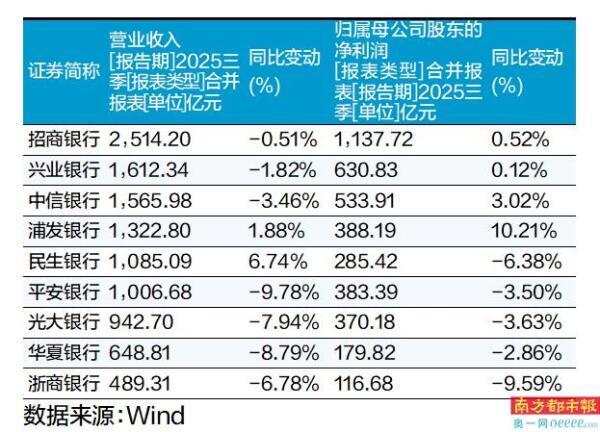
Core Viewpoint - The performance of A-share listed joint-stock banks in the third quarter of 2025 shows a mixed picture, with seven banks experiencing a year-on-year decline in operating income and five banks reporting a drop in net profit. Only Shanghai Pudong Development Bank achieved growth in both metrics [1][2][3]. Group 1: Revenue Performance - Among the nine listed joint-stock banks, only Shanghai Pudong Development Bank and Minsheng Bank reported year-on-year revenue growth, with Minsheng Bank achieving the highest growth rate of 6.74% [2]. - China Merchants Bank led in revenue scale with 2,514.20 billion yuan, followed by Industrial Bank and CITIC Bank with 1,612.34 billion yuan and 1,565.98 billion yuan, respectively [2][3]. - Ping An Bank experienced the most significant revenue decline at -9.78%, while several other banks, including Everbright Bank and Huaxia Bank, also saw declines exceeding 6% [2][3]. Group 2: Net Profit Analysis - China Merchants Bank maintained the highest net profit at 1,137.72 billion yuan, with a slight increase of 0.52% year-on-year. Shanghai Pudong Development Bank saw a notable increase of 10.21% in net profit [3]. - The banks that reported a decline in net profit include Zhejiang Commercial Bank, which had the largest drop at -9.59%, along with Minsheng Bank, Ping An Bank, and others experiencing varying degrees of decline [3]. Group 3: Interest Income and Net Interest Margin - Interest income growth varied significantly, with China Merchants Bank leading at 1,600.42 billion yuan and a 1.74% increase. Shanghai Pudong Development Bank had the highest growth rate in interest income at 3.93% [5]. - The net interest margin faced pressure across the industry, with CITIC Bank experiencing the largest decline of 16 basis points. Only Minsheng Bank reported a slight increase of 2 basis points [5][6]. Group 4: Asset Quality and Provision Coverage - The asset quality of joint-stock banks showed resilience, with a mixed performance in non-performing loan (NPL) ratios. China Merchants Bank had the best NPL ratio at 0.94%, while several banks saw slight increases in their NPL ratios [8]. - Provision coverage ratios decreased for most banks, with China Merchants Bank still leading at 405.93%, despite a decline of 6.05 percentage points [9][10]. Group 5: Loan Structure - The loan structure indicates a shift towards corporate loans, with all five banks reporting growth in corporate loans, while personal loan growth was weak for several banks [11][12]. - China Merchants Bank led in personal loan balance with nearly 3.7 trillion yuan, while corporate loan growth was particularly strong for CITIC Bank, which saw a 10.45% increase [11][12].
债市波动拖累投资收益 银行非息收入增长现分化
Zhong Guo Zheng Quan Bao· 2025-11-06 22:34
Core Viewpoint - In a low interest rate environment, banks are increasingly relying on non-interest income as a key driver for revenue growth, with significant disparities emerging among different banks in terms of non-interest income performance [1] Non-Interest Income Overview - In the first three quarters of this year, 42 listed banks achieved a total non-interest income of 1.22 trillion yuan, an increase of over 300 billion yuan compared to the first half of the year and an increase of 583 billion yuan year-on-year [1] - Among these banks, only 18 reported positive year-on-year growth in non-interest income, while 8 banks experienced a decline in investment income due to bond market fluctuations, and 31 banks reported negative fair value changes [1] Fee and Commission Income - A breakdown of non-interest income shows that net fee and commission income, investment income, and fair value changes significantly impact overall non-interest income [2] - In the first three quarters, 27 banks reported positive year-on-year growth in net fee and commission income, with 12 banks achieving growth rates exceeding 10% [2] - Notable performers include Changshu Bank and Ruifeng Bank, with increases of 364.75% and 162.66% respectively, while major state-owned banks like Agricultural Bank, Postal Savings Bank, and Bank of China also reported steady growth [2] Impact of Bond Market Fluctuations - The bond market's volatility has negatively affected investment income and fair value changes for several banks, leading to declines in non-interest income and overall revenue growth [3] - For instance, China Merchants Bank reported a 4.23% year-on-year decline in non-interest net income, primarily due to reduced returns from bond and fund investments [3] - Other banks, such as Ping An Bank and Huaxia Bank, also reported significant declines in revenue attributed to market fluctuations affecting their non-interest income [3] Regional Bank Performance - Regional banks like Qingdao Bank faced similar challenges, with a year-on-year decrease in investment income and fair value changes due to weaker bond market performance [4] - Conversely, some banks, such as China Construction Bank and Changsha Bank, reported over 100% year-on-year growth in investment income [4] Future Market Outlook - Analysts suggest that the bond market is likely to remain volatile in the short term, with fluctuations in fair value changes being more pronounced for joint-stock and regional banks due to their higher proportion of FVTPL assets [5] - Experts recommend that banks focus on differentiated operations and niche markets to support non-interest income growth, while also balancing short-term gains with long-term risks [6] - The outlook for the bond market indicates a gradual return to fundamentals and liquidity, but uncertainties remain regarding the growth of other non-interest income sources [6]
压降负债成本 有银行停售五年期定存产品
Zhong Guo Zheng Quan Bao· 2025-11-06 20:15
Core Viewpoint - The recent decision by a village bank in Inner Mongolia to discontinue five-year fixed-term deposits reflects a broader trend in the banking industry aimed at reducing liability costs through lower deposit rates and the removal of high-cost deposit products [1][2][3] Summary by Sections Deposit Products - A village bank in Inner Mongolia announced the cancellation of five-year fixed-term deposits effective November 5, 2025, while still offering shorter-term deposits with rates of 1.10%, 1.30%, 1.45%, 1.55%, and 1.85% for three months, six months, one year, two years, and three years respectively [1] - Many banks continue to offer five-year fixed-term deposits, but some have stopped offering high-value certificates of deposit, indicating a unique situation in the market [1][2] Interest Rates and Trends - The five-year fixed-term deposit rate at Industrial and Commercial Bank of China is 1.3%, which is lower than the three-year rate of 1.55% [2] - China Postal Savings Bank's researcher suggests that banks are reducing long-term liabilities to lower costs due to uncertain interest rate trends [2] Net Interest Margin - The overall net interest margin for banks is under pressure, with a reported decline to 1.42% in Q2 2025, down 0.01 percentage points from Q1 [2][3] - Many banks have adjusted deposit rates downward, with state-owned and joint-stock banks' rates falling below 2% [2] Strategic Responses - Analysts indicate that banks are collectively choosing to lower deposit rates and reduce liability costs as a strategy to stabilize net interest margins [3] - Future strategies may include further reductions in deposit rates and minimizing implicit costs associated with deposits [3][4] Market Outlook - Some listed banks are showing signs of marginal improvement in net interest margins, with expectations that the decline in margins will stabilize, potentially leading to positive growth in net interest income by 2026 [4]
债市波动拖累投资收益银行非息收入增长现分化
Zhong Guo Zheng Quan Bao· 2025-11-06 20:15
Core Viewpoint - In a low interest rate environment, banks are increasingly relying on non-interest income to drive revenue growth, with significant disparities in performance among different banks [1][2]. Non-Interest Income Overview - In the first three quarters of the year, 42 listed banks achieved a total non-interest income of 1.22 trillion yuan, an increase of over 300 billion yuan compared to the first half of the year and an increase of 583 billion yuan year-on-year [1]. - Only 18 banks reported a year-on-year increase in non-interest income, while 8 banks experienced a decline in investment income due to bond market volatility, and 31 banks reported negative fair value changes [1][2]. Fee and Commission Income - Among the non-interest income components, net fee and commission income, investment income, and fair value changes significantly impacted overall non-interest income [1]. - 27 banks reported a year-on-year increase in net fee and commission income, with 12 banks showing growth exceeding 10%. Notably, Changshu Bank and Ruifeng Bank saw increases of 364.75% and 162.66%, respectively [1][2]. Wealth Management and Consumer Finance - The recovery in domestic consumption and capital markets has created opportunities for wealth management and consumer finance, contributing to the growth of some banks' intermediary business income [2]. - China Bank attributed its growth in net fee and commission income to strong performance in agency, custody, and other entrusted businesses [2]. Impact of Bond Market Volatility - The bond market's fluctuations have negatively affected investment income and fair value changes for several banks. For instance, 8 banks reported a year-on-year decline in investment income, and 31 banks had negative fair value changes [2][3]. - For example, China Merchants Bank reported a 4.23% year-on-year decline in non-interest net income, with a 0.90% increase in net fee and commission income but an 11.42% decrease in other net income due to reduced bond and fund investment returns [2]. Regional Banks' Performance - Regional banks like Qingdao Bank also faced challenges, with a year-on-year decrease in investment income and fair value changes due to weaker bond market performance [3]. - Conversely, some banks, such as China Construction Bank and Changsha Bank, reported over 100% year-on-year growth in investment income [3]. Future Outlook - Analysts suggest that the bond market is likely to remain volatile in the short term, with various factors creating disturbances [4]. - The overall liquidity in the market is expected to remain favorable for the bond market, but the performance of risk assets may weaken the attractiveness of bonds [4][5].
长江出版传媒股份有限公司关于为子公司提供担保的进展公告
Shang Hai Zheng Quan Bao· 2025-11-06 18:59
Group 1 - The company has signed guarantee contracts with China Everbright Bank and Hubei Bank to support its wholly-owned subsidiaries' financing needs, with a total guarantee amount not exceeding RMB 1.05 billion [1][4][5] - The company plans to apply for a comprehensive credit limit of up to RMB 4 billion for the year 2025, which was approved at the 2024 annual shareholders' meeting [1][2][6] - The guarantees are intended to enhance the subsidiaries' financing capabilities and are within the limits approved by the shareholders [5][6][7] Group 2 - The company has utilized idle raised funds for cash management, specifically investing RMB 550 million in principal-protected floating income structured deposits [9][11] - The company has redeemed the structured deposits, recovering the principal of RMB 550 million and earning a profit of RMB 2.5861 million [11][12] - The company aims to improve the efficiency of fund usage and increase returns for shareholders while ensuring that the investment does not affect the normal operation of fundraising projects [12][19] Group 3 - The company has established risk control measures for its investment in financial products, ensuring that they are high in safety and liquidity, and meet the principal protection requirements [16][18] - The company’s financial management department is responsible for implementing the investment strategy, with oversight from the audit department and independent directors [18][19] - The investment in short-term financial products is expected to enhance the company's asset return rate and align with the interests of all shareholders [19]

