今世缘

Search documents
食品饮料行业周报:基金持仓更加集中,零食板块表现较好
KAIYUAN SECURITIES· 2025-04-27 10:05
Investment Rating - The industry investment rating is "Positive" (maintained) [1] Core Viewpoints - The report indicates that the retail sales growth rate rebounded month-on-month in March, reflecting strengthened expectations for consumption policies [3][4] - The food and beverage index declined by 1.4% from April 21 to April 25, ranking 28th among primary sub-industries, underperforming the CSI 300 by approximately 1.7 percentage points [12][14] - The allocation ratio of food and beverage in funds decreased from 10.6% in Q4 2024 to 9.8% in Q1 2025, marking a new low since 2020 [12][14] - The report highlights that the snack sector performed relatively well, with companies like Salted Fish and West Oat Food achieving significant revenue growth [4][12] Summary by Sections Weekly Insights - Funds reduced their allocation to food and beverage but concentrated their holdings, with the snack sector showing relatively strong performance [12] - The food and beverage index underperformed the market, with snacks (+4.5%), soft drinks (+2.2%), and other alcoholic beverages (+0.1%) leading the sub-industry performance [12][14] Market Performance - The food and beverage index fell by 1.4%, ranking 28th out of 28 industries, and lagged behind the CSI 300 by about 1.7 percentage points [12][14] Upstream Data - Some upstream raw material prices have decreased, with the price of whole milk powder increasing by 28.7% year-on-year, while fresh milk prices fell by 10.7% year-on-year [17][22] Alcohol Industry News - Wuliangye is set to launch 17 new product series, indicating ongoing innovation in the sector [43] Memorandum - Attention is drawn to the upcoming Q1 report disclosure of Kweichow Moutai on April 30 [44]





食品饮料行业周报:基金持仓更加集中,零食板块表现较好-20250427
KAIYUAN SECURITIES· 2025-04-27 08:43
Investment Rating - The industry investment rating is "Positive" (maintained) [1] Core Viewpoints - The consumer retail sales growth rate rebounded month-on-month in March, indicating strengthened expectations for consumption policies. The food and beverage index declined by 1.4% from April 21 to April 25, ranking 28th among primary sub-industries, underperforming the CSI 300 by approximately 1.7 percentage points. The snack food (+4.5%), soft drinks (+2.2%), and other alcoholic beverages (+0.1%) sectors performed relatively well [3][12][14] - The first quarter of 2025 saw a decrease in the allocation of food and beverage stocks by funds, with the allocation ratio dropping from 10.6% in Q4 2024 to 9.8%, marking a new low since 2020. Active equity funds reduced their allocation to food and beverage stocks, while the allocation to liquor stocks increased slightly [3][12][14] - The Central Political Bureau meeting emphasized increasing income for low- and middle-income groups and boosting service consumption to enhance economic growth. This aligns with the optimistic outlook for the consumption sector. Despite pressures on the performance of liquor, condiments, and frozen food in Q1, the snack sector showed strong growth, with companies like Salted Fish and West Oat achieving significant revenue increases [4][13] Summary by Sections Weekly Insights - Funds reduced their allocation to food and beverage stocks, but holdings became more concentrated, with the snack sector showing outstanding performance [12] - The food and beverage index underperformed the market, with a decline of 1.4% [14] Market Performance - The food and beverage index fell by 1.4%, ranking 28th out of 28 sectors, underperforming the CSI 300 by about 1.7 percentage points. Snack food, soft drinks, and other alcoholic beverages showed relative strength [12][14] Upstream Data - Some upstream raw material prices have decreased, with the price of whole milk powder increasing by 28.7% year-on-year, while fresh milk prices fell by 10.7% year-on-year [17][22] Liquor Industry News - Wuliangye plans to launch 17 new product series, indicating ongoing innovation in the liquor sector [43] Memorandum - Attention is drawn to the upcoming Q1 report disclosure of Kweichow Moutai on April 30 [44]
白酒这轮调整,会持续多久?
雪球· 2025-04-27 07:03
风险提示:本文所提到的观点仅代表个人的意见,所涉及标的不作推荐,据此买卖,风险自负。 作者: 红鑫24 来源:雪球 请持有白酒的朋友理性讨论 。 先上观点: 白酒业绩成长性面临永久性下滑甚至停滞 , 再也不会回到过去 。 长按即可参与 就行业长期趋势而言 , 投资逻辑 , 不如品牌中药 。 头部业绩都出来了 , 行业集中度继续提升 , 但空间远不如过去了 , 体现在增速上就是下滑 。 五粮液 , 基本已经进入利润增长停滞状态 , 5%的增速也是千方百计整出来的 。 高端白酒疲态尽显 , 已是不争的事实 。 三线酒企的业绩和股价 , 至少5年内 , 回不到21年的高点 。 洋河 , 被两面夹击 , 上有老窖 和五粮液 , 下有汾酒和今世缘 , 短期也不用看 。 这轮调整 , 伴随着国内固定资产投资见顶后持续走低 , 这是大背景 。 在房地产没有见底前 , 行业不会有多好 , 这基本是确定的 。 个人预计 , 必须等房地产见底 , 新一轮刺激政策出台 后才具备投资时机 。 现在估值合理 , 但说特别便宜绝对没有 。 很多人对白酒的认识还停留在静态和过去的业绩里 , 但行业大背景和发展阶段早已不如过去 。 这轮大周 ...
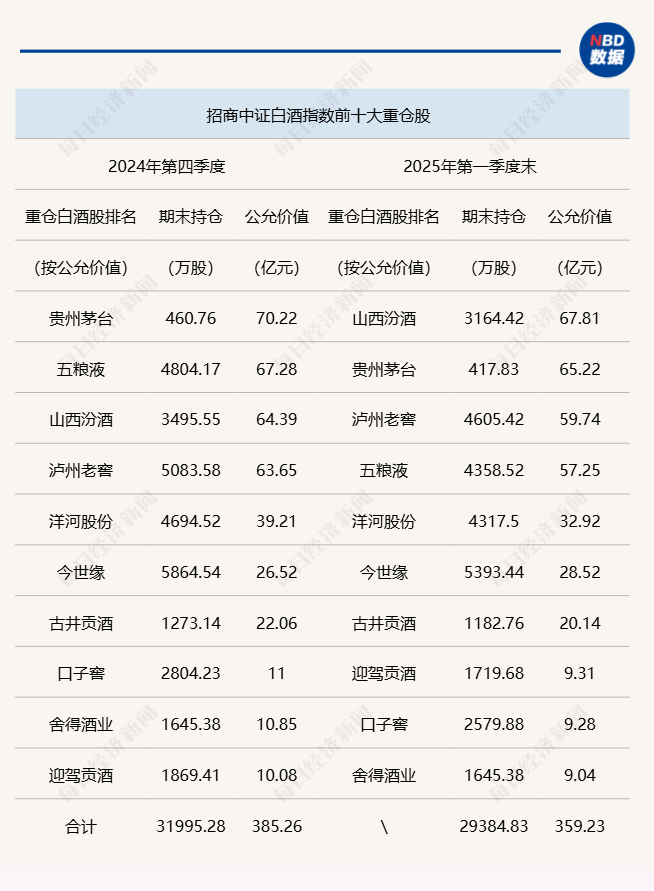
茅台、五粮液仍是白酒基金“心头好”,山西汾酒的增仓幅度也亮了
Mei Ri Jing Ji Xin Wen· 2025-04-24 14:28
Group 1 - Public funds have adjusted their holdings in the first quarter, with the top three heavyweights being CATL, Kweichow Moutai, and Tencent Holdings, with total market values of 146.78 billion, 141.49 billion, and 84.89 billion respectively [1] - The overall market for alcoholic beverages in China is facing challenges such as intensified competition, excess capacity, and changing consumer preferences, leading to a noticeable decline in market growth and profitability [1][6] - Some funds have reduced their holdings in liquor stocks, particularly in well-known brands like Wuliangye and Yanghe, while others, such as E Fund and Huatai-PineBridge, have increased their positions in Shanxi Fenjiu and Luzhou Laojiao [1][2] Group 2 - The latest data shows that the total market value of the liquor-related funds has changed little despite some reductions in holdings, with the total market value of the top ten holdings in the China Securities Liquor Index Fund decreasing by approximately 2.6 billion [2] - Shanxi Fenjiu has emerged as a significant highlight, with 28 funds making it their top holding, reflecting a shift in investment focus [7] - Fund managers emphasize the importance of cash flow and are looking for companies with strong business models and competitive advantages, indicating a strategic shift in investment logic [11]


格林基金旗下格林稳健价值混合C一季度末规模0.18亿元,环比增加4.91%
Jin Rong Jie· 2025-04-24 12:20
Core Viewpoint - As of March 31, 2025, the net asset of the Green Stable Value Mixed C Fund (009941) reached 0.18 billion RMB, reflecting a 4.91% increase from the previous period, managed by Li Huizhong [1]. Group 1: Fund Performance - The fund's recent three-month return is 2.86%, while the one-year return is -13.96%, and the cumulative return since inception is -37.87% [3]. - The fund's total share size at the end of the reporting period is 0.02 billion shares, with a net asset value of 0.02 billion RMB, showing a net asset change rate of -2.54% as of March 31, 2025 [3]. Group 2: Fund Manager Profile - Li Huizhong holds a master's degree in economics from Tsinghua University and has been with Xinhua Fund Management since September 2007, serving in various roles including industry researcher and strategy analyst [2]. - Currently, Li Huizhong is the deputy director of the Financial Engineering Department at Xinhua Fund Management and manages multiple funds, including the Green Stable Value Flexible Allocation Mixed Fund since October 21, 2020 [2]. Group 3: Fund Holdings - The top ten stock holdings of the fund include Shanxi Fenjiu, Jinshiyuan, Wuliangye, Guizhou Moutai, Luzhou Laojiao, Yanghe Brewery, Yingjia Gongjiu, Gujing Gongjiu, Shede Liquor, and Jiu Gui Jiu, with a combined holding percentage of 87.99% [3]. Group 4: Company Overview - Green Fund Management Co., Ltd. was established in November 2016 and is based in Beijing, primarily engaged in capital market services, with a registered capital of 200 million RMB [3].
黄酒“一哥”古越龙山叫停高端系列线上销售
Xin Lang Cai Jing· 2025-04-24 10:25
Core Viewpoint - Gu Yue Long Shan, a leading Huangjiu producer, has decided to halt online sales of its high-end products to stabilize prices and enhance confidence among distributors and consumers [1][2]. Group 1: Company Actions - The company issued a notice to distributors, prohibiting online sales of four specific high-end products, effective immediately [1]. - Distributors are required to remove these products from online platforms by the end of May, with strict penalties for non-compliance [1][5]. - The decision aims to regulate the product sequence between online and offline sales channels [1][5]. Group 2: Market Context - Gu Yue Long Shan's high-end products are priced between 100 to 600 yuan per bottle, with significant price discrepancies observed on e-commerce platforms [2]. - The company faces challenges from price undercutting by some online sellers, which disrupts the market pricing system [2][3]. - The trend of controlling online sales to maintain pricing integrity has been adopted by several other liquor companies since 2024 [3]. Group 3: Financial Performance - In 2024, Gu Yue Long Shan reported revenues of 1.398 billion yuan from mid-to-high-end wines, a 12.47% increase, while ordinary wines generated 507 million yuan, up 5.10% [4]. - Despite revenue growth, the company experienced a decline in gross margins for both mid-to-high-end and ordinary wines [4]. - The company aims to enhance its high-end product offerings to improve overall profitability and maintain its leading position in the Huangjiu market [4].

富国国企改革灵活配置混合:2025年第一季度利润468.12万元 净值增长率3.87%
Sou Hu Cai Jing· 2025-04-24 09:16
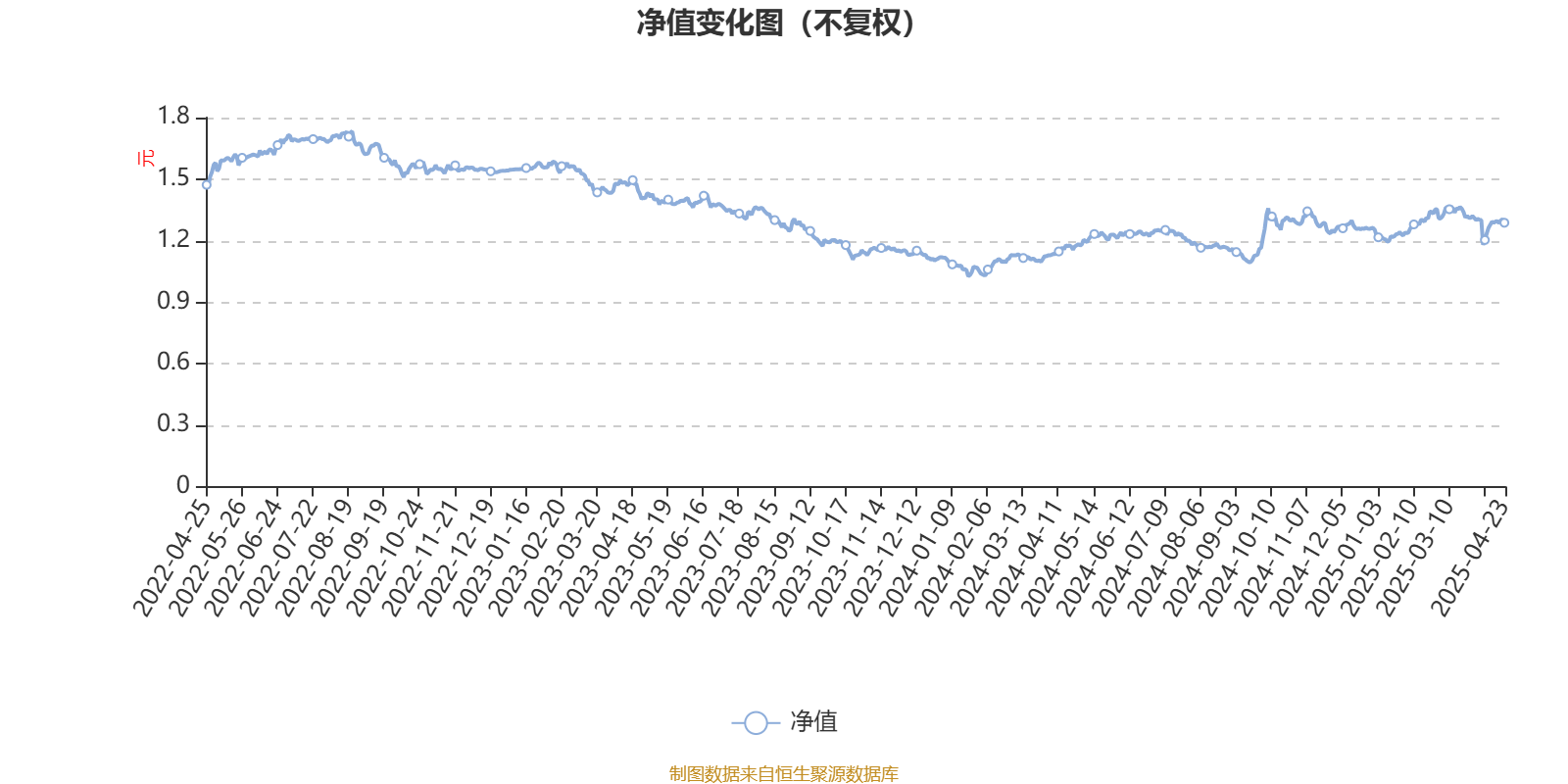
AI基金富国国企改革灵活配置混合(005357)披露2025年一季报,第一季度基金利润468.12万元,加权平均基金份额本期利润0.0489元。报告期内,基金净 值增长率为3.87%,截至一季度末,基金规模为1.24亿元。 该基金属于灵活配置型基金。截至4月23日,单位净值为1.287元。基金经理是周宁,目前管理2只基金近一年均为正收益。其中,截至4月23日,富国国企改 革灵活配置混合近一年复权单位净值增长率最高,达11.37%;富国天兴回报混合A最低,为8.31%。 基金管理人在一季报中表示,报告期,本基金总体维持了相对偏高的权益配置比例,同时对持仓结构进行了部分调整,增配内需方向优质标的。近期短期市 场面临的不确定性因素较为复杂,我们依然坚定认为优质权益资产在大类资产类别中仍具有突出的配置价值,我们对于中长期获取合理的投资回报依然具有 较好的信心。本基金将继续深化研究、精选标的,提升组合配置胜率和有效性,在兼顾控制净值波动的情况下,积极把握市场潜在机会。 截至4月23日,富国国企改革灵活配置混合近三个月复权单位净值增长率为5.09%,位于同类可比基金150/918;近半年复权单位净值增长率为-1.84%, ...
今世缘(603369) - 江苏今世缘酒业股份有限公司关于召开2024年度业绩说明会的公告
2025-04-24 07:51
证券代码:603369 证券简称:今世缘 公告编号:2025-006 江苏今世缘酒业股份有限公司 关于召开 2024 年度业绩说明会的公告 本公司董事会及全体董事保证本公告内容不存在任何虚假记载、误导 性陈述或者重大遗漏,并对其内容的真实性、准确性和完整性承担法律责 任。 重要内容提示: 投资者可于 2025 年 04 月 25 日(星期五)至 05 月 06 日(星期二)16:00 前登录上证路演中心网站首页点击"提问预征集"栏目或通过公司邮箱 jsydmb@163.com 进行提问。公司将在说明会上对投资者普遍关注的问题进 行回答。 江苏今世缘酒业股份有限公司(以下简称"公司")将于 2025 年 4 月 30 日发布公司 2024 年度报告,为便于广大投资者更全面深入地了解公司 2024 年度经营成果、财务状况,公司计划于 2025 年 05 月 07 日 (星期三) 09:30-11:30 举行 2024 年度业绩说明会,就投资者关心的问题进行交流。 会议召开时间:2025 年 05 月 07 日(星期三)09:30-11:30 会议召开地点:上海证券交易所上证路演中心(网址: https://roa ...
多只基金一季度获净申购超10亿份,除了科技赛道,消费主题基金仍受资金关注
Mei Ri Jing Ji Xin Wen· 2025-04-23 09:51
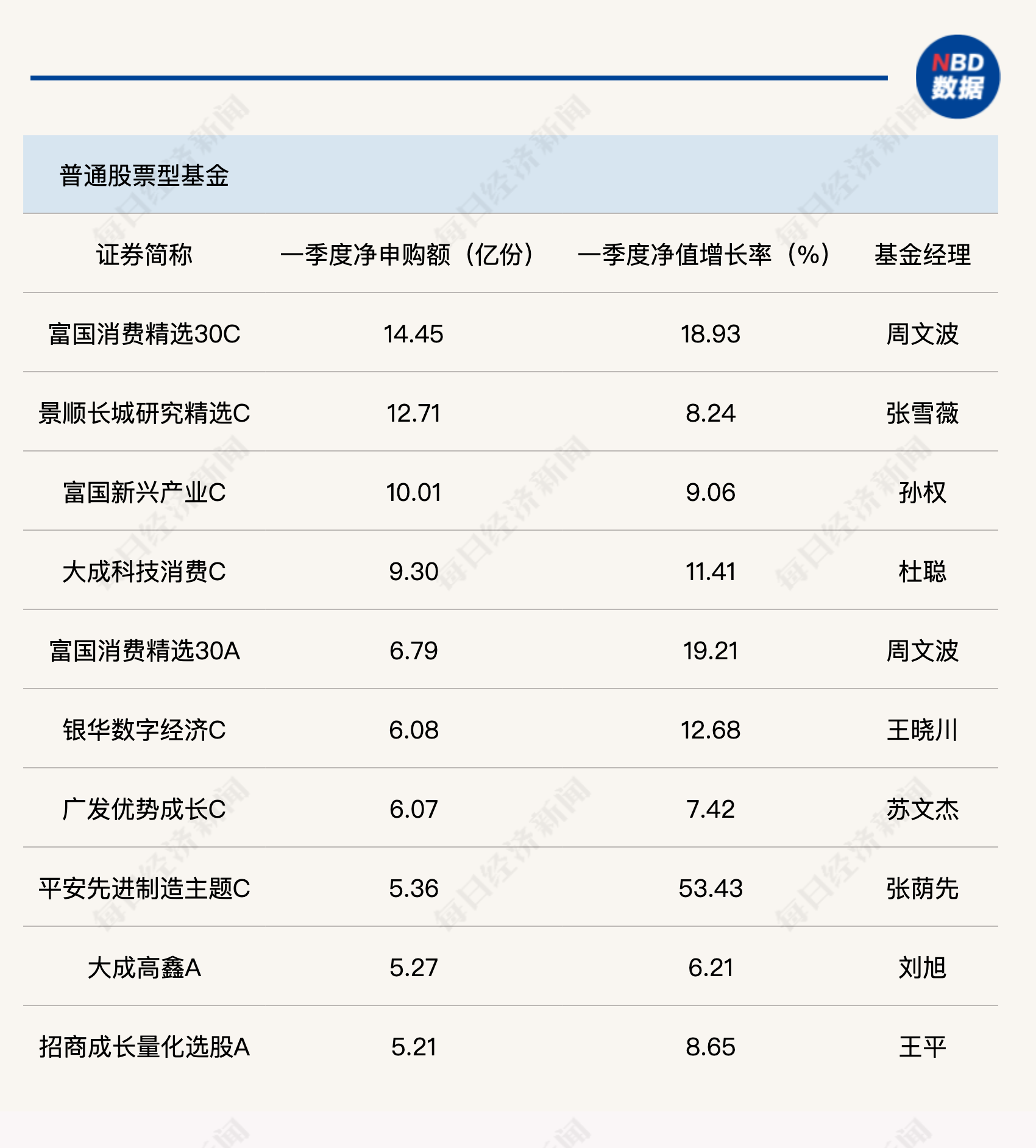
Core Insights - The first quarter of 2025 saw a net redemption trend in active equity funds, with significant outflows from various fund types, although some funds managed to attract substantial inflows [1][2][8] Fund Performance Summary - Ordinary stock funds experienced a net redemption of 34.13 billion units, while mixed equity funds saw a net redemption of 492.44 billion units, and flexible allocation funds had a net redemption of 161.44 billion units [2] - Despite the overall trend, several funds recorded net subscriptions exceeding 10 billion units, including 富国消费精选30C, 鹏华碳中和主题C, and 天弘价值精选C, which led their respective categories [2][4][5] Top Performing Funds - The top net subscription in ordinary stock funds was 富国消费精选30C with 14.45 billion units, followed by 景顺长城研究精选C with 12.71 billion units, and 富国新兴产业C with 10.01 billion units [3][9] - In the mixed equity fund category, 鹏华碳中和主题C topped the list with 44.27 billion units, followed by 富国稳健增长A with 36.45 billion units, and 永赢先进制造智选C with 32.01 billion units [4][6] Investment Themes - The funds that attracted significant capital were primarily focused on technology and consumer sectors, indicating a strong market interest in these themes [8][10] - Fund managers expressed confidence in traditional consumer leaders, suggesting an increase in allocation to these sectors due to improved risk-reward ratios and stable fundamentals [11]
白酒行业的库存周期
雪球· 2025-04-23 06:14
Core Viewpoint - The inventory cycle in the liquor industry is influenced by multiple factors including production rigidity, demand elasticity, channel dynamics, and policy regulation. The industry is currently in the late stage of active destocking, expected to transition to restocking by the end of 2025. Structural changes such as price differentiation, increased concentration, and consumer segmentation will reshape the competitive landscape. Companies need to build brand moats, optimize channel efficiency, and innovate products to navigate through the cycle, while investors should focus on leading high-end brands and strong regional players, avoiding liquidity risks associated with small and medium enterprises [2][20]. Group 1: Nature of the Inventory Cycle - The essence of the liquor inventory cycle is the mismatch between supply rigidity and demand elasticity [2][3]. - High-end liquor production involves a long cycle with significant lag in capacity release, making it difficult for companies to respond quickly to market demand changes, leading to inventory pressure [3]. - Seasonal demand characteristics drive inventory levels, with major holidays accounting for 30%-40% of annual sales, necessitating advance stockpiling [4]. Group 2: Inventory Cycle Phases and Historical Patterns - Since 2010, the liquor industry has experienced six complete inventory cycles characterized by alternating phases of restocking and destocking [7]. - The current cycle is in the active destocking phase, which began at the end of 2023 and is expected to conclude by the end of 2025, marked by longer duration and smaller amplitude due to increased industry maturity and slower economic growth [7]. Group 3: Price Differentiation - High-end liquor (priced above 800 RMB) shows resilience due to strong brand barriers and demand primarily driven by business and investment needs, with inventory turnover days maintained under six months [9]. - Mid-range liquor (300-800 RMB) is significantly affected by macroeconomic conditions, with a 25% inventory backlog expected in 2024, leading to increased inventory turnover days for some brands [10]. - Low-end liquor (below 300 RMB) is closely tied to regional markets and banquet consumption, with varying performance based on local economic conditions [11]. Group 4: Policy and Macroeconomic Impact - Proposed reforms in consumption tax could increase tax burdens by 10%-20%, disproportionately affecting small and medium enterprises while larger firms may offset costs through price increases [13]. - Economic growth is projected at around 5% in 2025, with increasing disposable income but also heightened consumer segmentation, benefiting high-end liquor while putting pressure on lower-end products [14][15]. - The younger generation's preference for lower-alcohol and healthier products is reshaping demand, potentially extending inventory cycles as traditional products take longer to sell [16]. Group 5: Structural Changes in the Industry - The concentration of the liquor industry is increasing, with the top six companies holding an 86.24% market share, allowing them to leverage brand, channel, and capacity advantages [18]. - Regional leaders are finding growth through deepening banquet channel engagement and expanding into the mass market, although they face challenges in competing with products priced above 300 RMB [19]. Group 6: Future Trends and Company Strategies - A turning point in destocking is anticipated in the second half of 2025, with high-end liquor leading the restocking phase, while mid-range and low-end products lag by 1-2 quarters [21]. - Companies are advised to control volume and maintain prices, focusing on core products and enhancing direct sales and e-commerce channels to shorten inventory turnover [22]. - Product upgrades are essential, with a focus on cultural IP and healthier options to meet the demands of a segmented consumer base [23].