
vivo

Search documents
中国主导的全球首个快充标准发布,华为、OPPO、vivo参与制定
Feng Huang Wang· 2025-10-29 04:57
Core Points - The International Telecommunication Union (ITU) has officially released the first global universal fast charging standard for mobile terminals, developed by the China Academy of Information and Communications Technology (CAICT) in collaboration with Huawei, OPPO, and vivo [1][2] - The new standard aims to address the long-standing issue of incompatible charging protocols and chargers across different brands, which has caused inconvenience for users and contributed to electronic waste [1] - The standard promotes a unified fast charging solution, allowing consumers to use a single charger for various devices from different manufacturers, enhancing user experience and aligning with global environmental trends [1] Industry Impact - China's innovative fast charging technology was recommended as the only global case in the "best practices" section of the international standard, highlighting China's technological accumulation and influence in the mobile charging sector [2] - The approval of this international standard, led by Chinese institutions and companies, signifies a critical shift for China from technology follower to standard leader in consumer electronics charging technology [2] - The global promotion of this standard is expected to effectively regulate the global charging market, reduce production and R&D costs across the industry chain, and lay the foundation for a unified and efficient global charging ecosystem across brands and devices [2]
黄仁勋口中的“中国硅谷”,正在批量生产AI独角兽
创业邦· 2025-10-29 03:27
Core Viewpoint - Hangzhou is emerging as a competitive technology innovation hub in China, often referred to as "China's Silicon Valley," driven by AI and supported by a robust ecosystem of companies, policies, and talent [6][51]. Group 1: Overview of Hangzhou's Tech Ecosystem - Recent stock price surges of Alibaba and the IPO launches of local companies like Yushutech and Qunhe Technology highlight the city's growing prominence in the tech sector [6]. - Hangzhou's tech ecosystem is characterized by top universities, a vibrant entrepreneurial culture, active private capital, and a complete technology enterprise hierarchy from giants to startups [7]. Group 2: Key Companies and Innovations - Alibaba's global headquarters in Hangzhou serves as a core hub for AI talent and innovation, with plans for a 380 billion yuan investment in AI infrastructure over three years [11]. - Numerous "Alibaba-affiliated" AI startups are emerging, such as: - BetterYeah AI, focusing on enterprise-level AI agents, has raised over 100 million yuan in its latest funding round [15]. - Half Universe, aiming to create a personal AI computer, is led by former Alibaba Cloud chief security scientist [15]. - Rokid, specializing in AR technology, has gained international recognition for its smart glasses [15]. - The establishment of the Zhijiang Laboratory, focusing on intelligent perception and AI, showcases the city's commitment to cutting-edge research [17]. Group 3: Policy Support and Talent Attraction - The "Future Science City" in Yuhang District has implemented generous talent policies, including up to 12 million yuan in research subsidies and 3 million yuan in housing subsidies to attract high-level talent [22]. - The city government has set ambitious goals for the AI industry, aiming for over 390 billion yuan in core AI industry revenue and more than 700 AI enterprises by the end of 2025 [52]. Group 4: Competitive Landscape - Hangzhou faces competition from other major cities like Beijing, Shenzhen, and Shanghai, but it is carving out a niche in AI application transformation [51]. - The city is developing a unique "Silicon Alley" model, with tech companies like DeepSeek and Qunhe Technology establishing themselves in urban centers rather than traditional tech parks [36]. Group 5: Future Prospects - The integration of Alibaba's ecosystem, Zhejiang University's talent pool, and the capital from Ant Group positions Hangzhou favorably for future growth in the AI sector [51]. - The city's cultural inclusivity and willingness to embrace new talent contribute to its attractiveness as a tech hub, fostering a diverse and innovative environment [53].





OpenAI完成重组;英伟达入股诺基亚丨新鲜早科技
2 1 Shi Ji Jing Ji Bao Dao· 2025-10-29 01:51
Group 1: OpenAI and Microsoft Partnership - Microsoft and OpenAI have signed a new agreement to support the formation and capital restructuring of OpenAI Group PBC, with Microsoft holding approximately $135 billion in investment rights, equating to about 27% ownership in the profit-making entity [2] - OpenAI's non-profit foundation will continue to control the profit-making organization, with an estimated valuation of $130 billion [2] - OpenAI plans to purchase $250 billion worth of Microsoft Azure cloud services, resulting in Microsoft losing its preferential rights to provide computing services to OpenAI [2] Group 2: Nvidia's Investment in Nokia - Nvidia announced a $1 billion investment in Nokia at a subscription price of $6.01 per share, which will give Nvidia a 2.9% stake in Nokia [3] - The investment aims to accelerate AI-RAN innovation and facilitate the transition from 5G to 6G [3] - Both companies will collaborate on developing next-generation 6G mobile communication technology, with Nokia adapting its software for Nvidia's chips [3] Group 3: Xiaomi's Smart Appliance Factory - Xiaomi's smart appliance factory officially commenced production in Wuhan, marking the company's third large-scale smart factory [6] - The factory can produce a high-end air conditioner every 6.5 seconds, with 100% AI visual inspection for key components [6] - Xiaomi's "Panghuai Smart Manufacturing Platform" enables intelligent control of manufacturing equipment, achieving industry-leading efficiency and quality [6] Group 4: Strategic Developments in the Tech Sector - Xiaopeng Huitian signed a strategic cooperation agreement with the Dunhuang Municipal Government to launch the first low-altitude self-driving tourism route in Northwest China [7] - Baidu's AI glasses will begin pre-sales on November 1, featuring various AI capabilities and stylish designs [8] - Shanghai Xinyang has started construction on a project to produce 50,000 tons of key materials for integrated circuits, with an investment of 1.85 billion yuan [13] Group 5: Mergers and Acquisitions - Skyworks plans to merge with competitor Qorvo in a cash and stock transaction, with a combined valuation of approximately $22 billion [10] - The merger aims to enhance capabilities in high-performance RF, analog, and mixed-signal semiconductor sectors [11] - ChipLink Integration revealed progress in its SiC business, with samples sent to AI companies in Europe and the US, indicating a strong market presence [14]




一加只想把游戏用户“哄”好
Jing Ji Guan Cha Wang· 2025-10-29 01:31
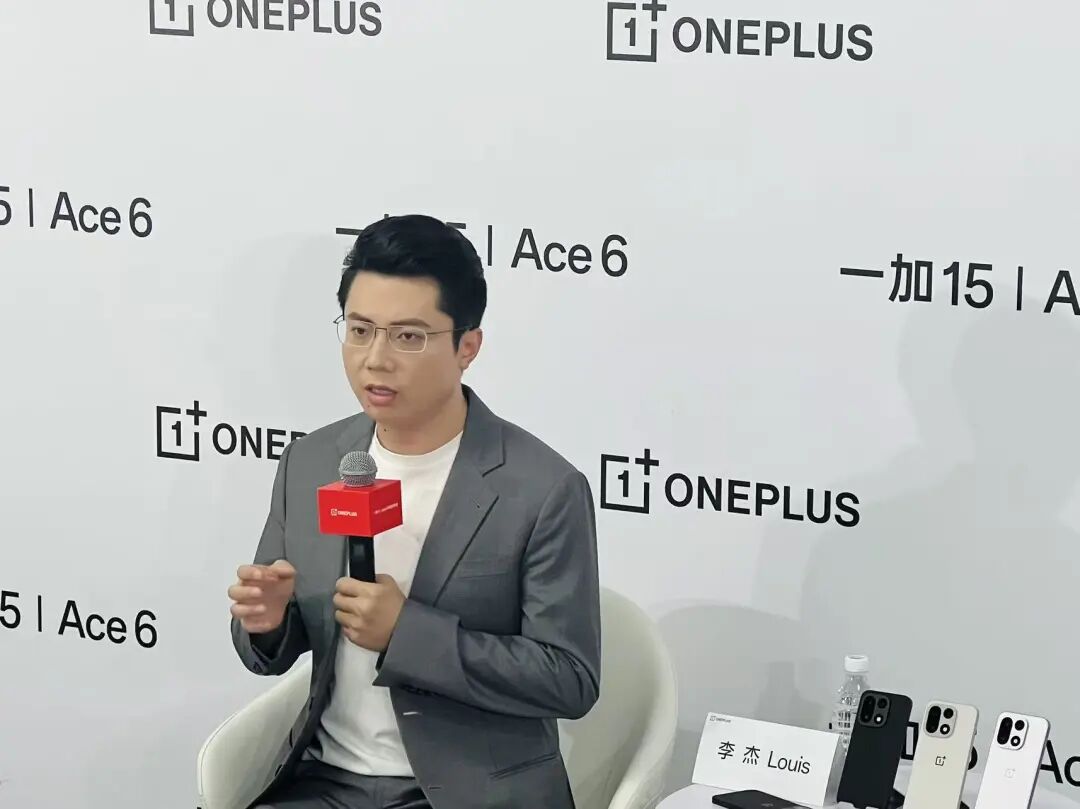
Core Viewpoint - OnePlus is focusing on performance and gaming experience with the launch of OnePlus 15, differentiating itself from competitors by not following trends of higher-end models or diversifying its product line [1][2]. Product Features - OnePlus 15 features a 165Hz high refresh rate, which is 40 frames more than 120Hz, enhancing gaming performance by allowing quicker enemy detection and response [1]. - The device includes a gyroscope equivalent to that of the PS5 controller, improving stability during intense gaming scenarios [1]. - The phone's cooling system utilizes lightweight materials like ultra-thin steel and aerospace-grade aerogel to maintain performance without adding excessive weight [3]. Design and Technical Choices - OnePlus 15 opts for a 1.5K resolution screen to support the 165Hz refresh rate, as current technology does not allow for a 2K+165Hz combination [4]. - The decision to use a 1.5K screen is based on user data showing that most users prefer battery efficiency over higher resolution, with only about 20% opting for 2K resolution in previous models [4]. - The camera system has shifted from a partnership with Hasselblad to using OPPO's Lomo imaging system, which has raised concerns about image quality among some users [5]. Market Dynamics - The smartphone market is increasingly segmented, with a growing preference for performance-oriented devices over traditional imaging-focused models [6]. - IDC forecasts that China's smartphone market will see shipments of approximately 271 million units in 2023 and 286.2 million in 2024, indicating a substantial but maturing market [6]. - Competition is intensifying in the online market, where brands like OnePlus and iQOO target young consumers, particularly students, who prioritize performance and affordability [7].
一天连发两款旗舰 手机大厂争夺“游戏一代”
Guo Ji Jin Rong Bao· 2025-10-28 20:08
Core Insights - OnePlus has launched two flagship models, OnePlus 15 and OnePlus Ace 6, on October 27, marking a strategic shift in pricing with OnePlus 15 starting at 3999 yuan, down from 4499 yuan for OnePlus 13, while Ace 6 starts at 2599 yuan, up from 2299 yuan for Ace 5 [1][4] Group 1: Product Launch and Market Positioning - The launch of both flagship models simultaneously is a rare occurrence in the smartphone industry, aligning with market demand and technological readiness [1][2] - OnePlus has reported a sales growth of 36.7% in 2025, with expectations to reach nearly 50% by year-end, particularly among users under 24, whose numbers have increased by 106% year-on-year [1][2] - The focus on gaming performance is highlighted by the introduction of a 165Hz refresh rate, which is a significant advancement over the previous 120Hz standard [1][2] Group 2: Competitive Landscape - The smartphone market is currently experiencing a contraction, with IDC reporting a 0.6% year-on-year decline in shipments for Q3 2025, and Omdia noting a 3% drop in sales [4] - The competitive environment is intensifying, with major brands like Apple, Xiaomi, and Vivo also launching new models around the same time [4] Group 3: Strategic Direction and Future Plans - OnePlus aims to continue focusing on high-performance and gaming-centric products, with plans to explore other product categories while maintaining its core user base [4][6] - The company has integrated closely with OPPO, leveraging its extensive retail network to enhance customer experience and support [6] - OnePlus is committed to making advanced technologies like the 165Hz refresh rate accessible to a broader audience, emphasizing user experience over immediate financial considerations [6]
一天连发两款旗舰,手机大厂争夺“游戏一代”
Guo Ji Jin Rong Bao· 2025-10-28 14:37
Core Insights - OnePlus has launched two flagship models, OnePlus 15 and OnePlus Ace 6, with starting prices of 3999 yuan and 2599 yuan respectively, marking a strategic price shift compared to previous models [1][2] - The company reported a 36.7% sales growth in 2025, with expectations to reach nearly 50% by year-end, and a 106% increase in users under 24 years old [1][2] - The introduction of a 165Hz refresh rate is a significant advancement in gaming performance, enhancing display speed by 27% and reducing response time by 10 milliseconds [2] Product Launch and Market Positioning - The dual flagship launch aligns with the chip release cycle and market peak buying season, driven by technological maturity and user demand [2] - OnePlus is focusing on young users with a strong preference for gaming, optimizing product design and software to meet their needs [2][3] - The competitive landscape in the smartphone market is intensifying, with major brands like Apple, Xiaomi, and others releasing new models simultaneously [3] Company Background and Strategy - OnePlus, founded in 2013, has evolved from a newcomer to a significant player in the smartphone industry, now operating under OPPO's umbrella since 2021 [4][5] - The company aims to provide a consistent high-quality experience across all sales channels, leveraging OPPO's extensive retail network [5] - OnePlus is committed to making advanced technologies like the 165Hz refresh rate accessible to a broader audience, focusing on user experience over immediate financial returns [5]
vivo周围:共赢共建智能体未来 全力打造端侧创新能力
Cai Jing Wang· 2025-10-28 07:08
Core Insights - The 2025 vivo Developer Conference showcased the company's strategic advancements in AI, operating systems, and ecosystem collaborations, emphasizing its commitment to intelligent hardware development [1][2] Group 1: AI Strategy - vivo's investment in AI is evident, with a focus on achieving top rankings in large model benchmarks in 2023 and integrating AI with mobile technology for personalized intelligence in 2024 [2] - The company aims to lead in edge computing capabilities, highlighting the complexity of developing edge-side models compared to cloud functionalities [2] Group 2: Intelligent Agents - vivo views the current landscape of intelligent agents as similar to the early days of mobile apps, emphasizing the importance of distribution rights and boundaries within the industry [1] - The company advocates for a collaborative approach to the distribution of intelligent agents, maintaining its core values of mutual benefit and community building [1]
智能体上场,手机厂商猛攻AI
2 1 Shi Ji Jing Ji Bao Dao· 2025-10-28 06:53
Core Insights - The smartphone industry is transitioning from "hardware competition" to "intelligent evolution" by 2025 [1] - AI and form innovation are the two core competitive directions for smartphone manufacturers, representing both technological innovation and brand differentiation [2] AI Development and Strategy - Domestic smartphone manufacturers are accelerating their AI strategies, with Honor being particularly aggressive, launching the Magic 8 and the first Honor AI Terminal Ecological Conference [4] - Honor's Magic 8 emphasizes "self-evolving AI native phone" with the upgraded MagicOS 10, featuring various AI agents supported by the MagicGUI model, which integrates multimodal data for task execution [6] - Honor's AI strategy includes the HONOR AI Connect platform and eight AI solutions, aiming to lower the entry barrier for ecosystem partners and promote collaboration across various industries [6][7] Competitive Landscape - Other major domestic manufacturers are also enhancing their AI capabilities, with Huawei launching HarmonyOS 6 and over 80 AI applications, OPPO introducing intelligent computing frameworks, and vivo integrating multimodal reasoning models [7] - The evolution of AI in smartphones is shifting from isolated features like voice assistants to system-level intelligent collaboration, with AI capabilities moving from cloud to edge computing [7] Consumer Insights and Market Trends - According to Omdia, Chinese consumers frequently use AI features such as AI tools, smart voice assistants, photo editing, enhanced search engines, and real-time translation [8] - There is a noted disconnect between the AI capabilities highlighted by manufacturers and the features most used by consumers, although significant improvements have been made in functionality and user experience over the past year [8][9] Future Directions - Manufacturers need to effectively communicate their AI development roadmap to consumers and partners, focusing on user pain points to enhance understanding and retention of AI features [9] - Form innovation is evolving alongside AI, with new designs like foldable and robotic phones being explored, indicating a shift towards embodied intelligence [9][10] - Honor views the AI Phone era as the next stage in smartphone evolution, following the feature phone and smartphone eras, with ongoing exploration into new hardware directions [10]
2025vivo手机观察:来自Counterpoint研究的10篇报告数据
Counterpoint Research· 2025-10-28 04:26
Core Insights - The article discusses the performance and market trends of vivo smartphones based on 10 research reports from Counterpoint Research, highlighting the brand's growth in various regions and its transition to 5G technology [4]. Group 1: Market Performance - In Q2 2025, global smartphone revenue surpassed $100 billion for the first time, marking a historical high for the period, with vivo's revenue growing by 4% year-on-year and shipment volume increasing by 5% [10]. - The Indian smartphone market saw an 8% year-on-year increase in shipments in Q2 2025, with vivo achieving a 23% year-on-year growth driven by strong demand for its Y and T series in the ₹10,000-15,000 price range (approximately $110-170) [14]. - In Q1 2025, vivo maintained its leading position in the Indian smartphone market with a 9% year-on-year growth, particularly benefiting from strong sales of its Y29 5G and T4x models priced below ₹15,000 [22]. Group 2: Regional Insights - In Vietnam, the share of 5G smartphones in total shipments exceeded 50% for the first time in Q2 2025, with vivo completing its transition from the 4G Y29 to the 5G Y39 model [5]. - The Chinese smartphone market experienced a 2% year-on-year decline in shipments in Q2 2025, but vivo ranked second in shipments, supported by strong performance in lower-tier cities and successful promotions for its S30 series [17]. - In Indonesia, vivo's shipments grew by 12% year-on-year in 2024, focusing on the entry-level market (under $200), with its Model Y series being the most popular in that price segment [31]. Group 3: Competitive Landscape - The competitive landscape in the Indian smartphone market is evolving, with local manufacturers gaining ground. Dixon has partnered with vivo to establish a joint venture, indicating a strategic move to enhance local production capabilities [7]. - The overall smartphone market is recovering after two years of decline, with vivo ranking fifth globally, particularly excelling in the Indian and Chinese markets [36].

中国移动:携手合作伙伴共绘地方经济新蓝图,用心服务点亮百姓美好生活
Jiang Nan Shi Bao· 2025-10-28 04:20
Core Viewpoint - The article highlights the initiatives taken by China Mobile's Taizhou branch to enhance local economic development and improve citizens' quality of life through industry collaboration and technological services [1]. Group 1: Industry Collaboration - Taizhou Mobile and Huawei co-hosted the "2025 Taizhou Mobile Huawei Product Exhibition," showcasing over 30 representatives from the terminal industry chain, emphasizing the effective practice of upgrading the local industry chain [2]. - The collaboration between communication enterprises and terminal industry partners is described as a "strong union" that not only complements technology but also boosts local employment and tax revenue [2]. - The exhibition focused on Huawei's new products, with experts providing detailed explanations on performance, functionality, and user experience, enhancing the recognition and sales of mobile terminals and related products [2]. Group 2: Technology and Cultural Integration - The "Vivo Cup Photography Contest and X300 New Product Appreciation Meeting" was launched by Taizhou Mobile and Vivo, merging technology with local culture, particularly the early tea culture of Taizhou [3]. - The photography contest encourages citizens to capture the essence of early tea making and the communal experience of tea drinking, revitalizing traditional culture through digital means and attracting tourists [3]. - The concurrent "Vivo Mobile Cup Taizhou Early Tea Photography Exhibition" further ignited public participation, showcasing diverse perspectives and expressions of love for life through photography [3]. Group 3: Future Directions - Moving forward, Taizhou Mobile aims to deepen collaborations with companies like Huawei and Vivo, exploring new applications of 5G and AI technologies in industry and cultural tourism to foster economic growth [4]. - The company plans to continuously upgrade public services, optimizing communication network coverage and launching convenient digital services to ensure that technological benefits reach the citizens effectively [4]. - Taizhou Mobile is committed to taking practical actions and providing warm services to build a new industrial high ground and enhance the prosperity of the local economy and the happiness of its citizens [4].
