
三生制药

Search documents
特朗普想断中国新药出海“财路”,业内评:杀敌一千自损八百
3 6 Ke· 2025-09-12 09:29
Core Viewpoint - The Trump administration is preparing a new executive order targeting the Chinese pharmaceutical industry, particularly focusing on the licensing-out (BD) of innovative drugs, which may restrict U.S. pharmaceutical companies from importing new drugs from China and impose stricter reviews on drug licensing transactions and clinical data from China [1][3]. Group 1: Impact on the Market - Following the news, shares of innovative drug companies in both A-shares and H-shares fell, with companies like BeiGene and Rongchang Bio experiencing declines, while the Hang Seng Biotechnology Index saw a significant drop [1]. - Despite initial declines, the innovative drug sector showed signs of recovery, with a partial rebound observed on September 12 [1]. Group 2: Details of the Proposed Executive Order - The draft executive order includes four main points: limiting U.S. pharmaceutical companies from importing in-development drugs from China, requiring licensing transactions to undergo mandatory review by the Committee on Foreign Investment in the United States (CFIUS), enhancing FDA scrutiny on projects using Chinese clinical data, and promoting domestic drug production in the U.S. [3][5]. - The proposed restrictions are seen as a response to the increasing trend of U.S. pharmaceutical companies acquiring Chinese innovative drug pipelines, which has raised concerns among some U.S. investors [3][4]. Group 3: Industry Reactions and Feasibility - Industry insiders express skepticism about the feasibility of the executive order due to the complex interests involved, suggesting that even if the order is implemented, it may only affect the most sensitive areas like cell therapy and human genetic resources, while allowing other transactions to proceed normally [2][6]. - The potential impact of the order on U.S. pharmaceutical companies is significant, as it could limit their access to innovative drugs and hinder their development capabilities [6][7]. Group 4: Economic Implications - The executive order is perceived as a move that could harm both U.S. and Chinese companies, as it may restrict BD transactions that are crucial for innovation and collaboration in the pharmaceutical sector [2][6]. - The financial stakes in BD transactions are substantial, with the potential for significant profits for multinational companies, as evidenced by BioNTech's recent acquisition and subsequent sale of a Chinese innovative drug [7].


创新药的“收获季”:从亏损到盈利,药企中报答卷亮了
Xin Lang Cai Jing· 2025-09-12 09:21
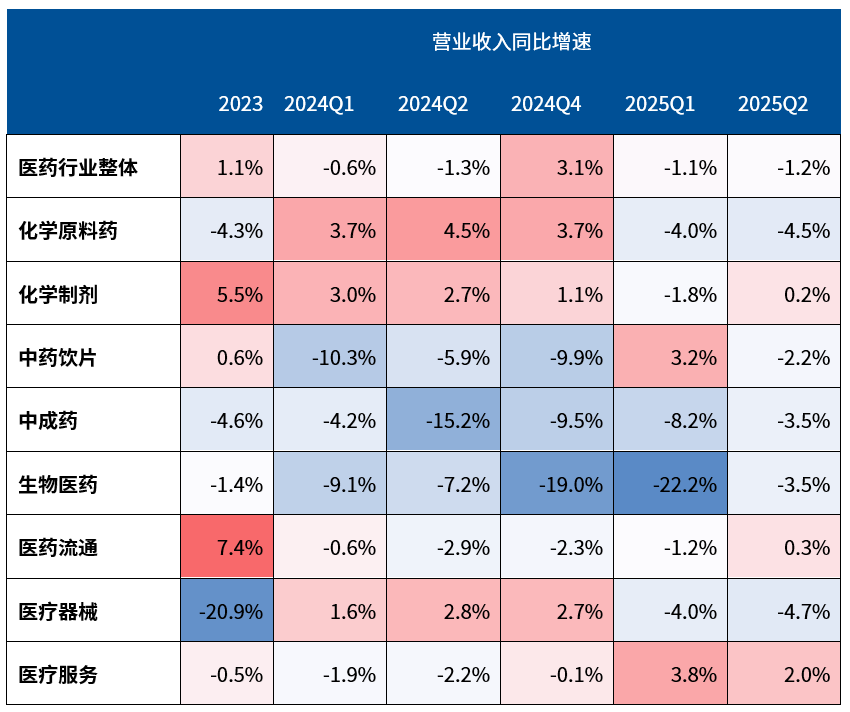
Core Viewpoint - The pharmaceutical industry is experiencing structural differentiation, with the innovative drug sector (Biotech) emerging as a significant growth driver, showcasing a revenue increase of 14.12% in the first half of 2025, particularly a remarkable 44.63% growth in Q2 [1][4]. Industry Overview - The overall pharmaceutical industry reported a slight revenue decline of 1.15% in Q2 2025, but net profit showed a positive growth of 0.79% [1]. - Despite challenges such as centralized procurement and external disruptions, there are signs of performance recovery driven by policy optimization, commercial insurance expansion, and AI empowerment [1][2]. Financial Performance - The Biotech sector's revenue growth in H1 2025 was 14.1%, with Q2 alone achieving a growth rate of 44.6% [6]. - The gross profit margin for the Biotech sector was 85.0%, indicating a narrowing of losses and a shift towards profitability [6]. - The sales expense ratio increased, but management and R&D expense ratios decreased, reflecting cost control and efficiency improvements [6]. Growth Drivers - The growth in innovative drugs is attributed to the launch of effective and safe new drugs, supportive national policies, and significant revenue from licensing agreements [4][6]. - The average transaction amounts for licensing agreements in 2025 have reached global averages, indicating a robust international market for Chinese innovative drugs [9][11]. Market Trends - The innovative drug sector is transitioning from a "burning cash" phase to a "profit-making" phase, with several companies reporting net profits for the first time [6][14]. - The number of significant licensing deals has surged, with China accounting for over 25% of global heavy-weight transactions in 2025 [11][13]. Investment Opportunities - The innovative drug sector is entering a harvest phase, with expectations for further growth driven by upcoming clinical data and favorable economic conditions [14]. - Investors are encouraged to consider diversified investment products, such as ETFs, to mitigate risks associated with individual stock selection in the innovative drug space [14][16].


美国政府行政令草案“雷声大雨点小” 中国创新药BD出海仍有长期利好?
Di Yi Cai Jing· 2025-09-12 06:12
Core Viewpoint - The recent market turbulence in the innovative drug sector is attributed to reports of a potential executive order from the Trump administration aimed at tightening scrutiny on U.S. acquisitions of Chinese biotech firms and increasing FDA review standards for Chinese clinical trial data, reflecting concerns over China's biotech rise [1][4][5]. Market Reaction - The innovative drug sector saw a significant drop, with the index falling over 4% in A-shares and over 7% in the Hang Seng Biotech Index during early trading [1]. - However, market panic subsided quickly as analysts suggested that the likelihood of the executive order being implemented is low, indicating that the immediate impact on innovative drug business development (BD) would be limited [2][3]. Executive Order Implications - The proposed executive order includes stricter reviews by the Committee on Foreign Investment in the United States (CFIUS) for U.S. multinational pharmaceutical companies acquiring pipelines from Chinese firms, which is a response to the increasing share of new drugs from China in the U.S. market [4][5]. - In the first half of this year, the total value of BD transactions for Chinese innovative drugs reached nearly $66 billion, with projections suggesting that by 2040, drugs from China could account for 35% of new drug approvals by the FDA [4][5]. Competitive Dynamics - The situation highlights a conflict between U.S. biotech companies, which lobby for restrictions, and multinational corporations (MNCs) that benefit from acquiring overseas assets to reduce R&D time and costs [5]. - MNCs are expected to resist any restrictions on acquiring Chinese assets, as they face significant patent expirations in the coming years, necessitating new pipeline acquisitions [5]. Clinical Trial Data Scrutiny - The executive order also proposes stricter scrutiny of clinical trial data from Chinese patients by the FDA, but industry insiders believe this will not significantly alter the current landscape, as the FDA has already been tightening its review processes [7][8]. - The high costs associated with conducting clinical trials abroad compared to domestic trials lead many Chinese firms to retain domestic rights while transferring overseas rights to MNCs through BD transactions [7][8]. Future Outlook - Despite the potential for political interference, analysts believe that the BD market for innovative drugs will continue to thrive for the next 5 to 10 years due to ongoing high demand from large pharmaceutical companies [8][9]. - The increasing quality and efficiency of Chinese clinical trials are making them more attractive to MNCs, suggesting a long-term trend of collaboration rather than conflict [8][10]. Strategic Considerations - The recent developments serve as a reminder for innovative drug companies to balance their international ambitions with a strong domestic market presence, as domestic support for innovative drugs is improving [10].
每日投资策略-20250912
Zhao Yin Guo Ji· 2025-09-12 05:43
Global Market Overview - The Hang Seng Index closed at 26,086, down 0.43% for the day but up 30.04% year-to-date [1] - The Shanghai Composite Index rose by 1.65% to 3,875, with a year-to-date increase of 15.62% [1] - The US markets saw the Dow Jones increase by 1.36% to 46,108, with a year-to-date gain of 8.38% [1] Sector Performance - In the Hong Kong market, the healthcare, energy, and consumer discretionary sectors led the decline, while materials, utilities, and industrials saw gains [3] - The semiconductor and rare metals sectors performed notably well, with significant inflows from southbound funds amounting to HKD 189.89 billion [3] Economic Indicators - The European Central Bank (ECB) maintained interest rates and revised down its inflation forecast for 2027 to 1.9% [3] - The US Consumer Price Index (CPI) showed a month-on-month increase of 0.4% and a year-on-year increase of 2.9%, aligning with market expectations [3] Investment Recommendations - Geely Automobile is rated as a "Buy" with a target price of HKD 25.00, representing a potential upside of 33% [4] - Luckin Coffee is also rated as a "Buy" with a target price of USD 44.95, indicating a 19% upside [4] - Semiconductor companies like Horizon Robotics and Beike Micro are rated as "Buy" with target prices of HKD 12.30 and HKD 93.00, respectively, showing potential upsides of 19% and 76% [4]



9月11日南向资金净买入189.89亿港元
Zheng Quan Shi Bao Wang· 2025-09-11 13:32
Market Overview - On September 11, the Hang Seng Index fell by 0.43%, closing at 26,086.32 points, while southbound funds through the Stock Connect recorded a net purchase of HKD 18.989 billion [1][3] - The total trading volume for the Stock Connect on September 11 was HKD 172.214 billion, with a net purchase of HKD 18.989 billion [1] Stock Performance - In the Shanghai Stock Connect, the total trading volume was HKD 103.737 billion, with a net purchase of HKD 8.073 billion [1] - In the Shenzhen Stock Connect, the total trading volume was HKD 68.477 billion, with a net purchase of HKD 10.916 billion [1] Active Stocks - The most actively traded stock in the Shanghai Stock Connect was Alibaba-W, with a trading volume of HKD 80.75 billion and a net purchase of HKD 29.46 billion, closing up by 0.35% [1][2] - Meituan-W had the highest net sell amount of HKD 9.36 billion, closing down by 5.06% [1][2] - In the Shenzhen Stock Connect, Alibaba-W also led with a trading volume of HKD 43.575 billion and a net purchase of HKD 7.835 billion [2] - The top net purchase stock was Innovent Biologics, with a net purchase of HKD 0.847 billion, despite closing down by 2.51% [2] Summary of Key Stocks | Stock Code | Stock Name | Trading Volume (HKD million) | Net Purchase (HKD million) | Daily Change (%) | |------------|------------------|------------------------------|----------------------------|-------------------| | 09988 | Alibaba-W | 807.48 | 294.62 | 0.35 | | 03690 | Meituan-W | 618.38 | -93.59 | -5.06 | | 00981 | SMIC | 491.04 | 41.75 | 4.97 | | 01801 | Innovent Biologics| 253.79 | 84.73 | -2.51 | | 00700 | Tencent Holdings | 263.33 | -92.26 | -0.63 | [2]



南向资金今日成交活跃股名单(9月11日)
Zheng Quan Shi Bao Wang· 2025-09-11 13:13
Market Overview - On September 11, the Hang Seng Index fell by 0.43% with a total southbound trading volume of HKD 172.21 billion, including buy transactions of HKD 95.60 billion and sell transactions of HKD 76.61 billion, resulting in a net buy of HKD 18.99 billion [1] Southbound Trading Activity - The southbound trading through Stock Connect (Shenzhen) had a total trading volume of HKD 68.48 billion, with buy transactions of HKD 39.70 billion and sell transactions of HKD 28.78 billion, leading to a net buy of HKD 10.92 billion [1] - The southbound trading through Stock Connect (Shanghai) had a total trading volume of HKD 103.74 billion, with buy transactions of HKD 55.91 billion and sell transactions of HKD 47.83 billion, resulting in a net buy of HKD 8.07 billion [1] Active Stocks - Alibaba-W was the most actively traded stock with a total trading volume of HKD 124.32 billion and a net buy of HKD 37.30 billion, closing with a price increase of 0.35% [1][2] - Other notable stocks included Meituan-W and SMIC, with trading volumes of HKD 84.52 billion and HKD 80.43 billion, respectively [1] - Tencent Holdings had the highest net sell amount of HKD 11.51 billion, closing down by 0.63% [1][2] Continuous Net Buying and Selling - Alibaba-W and SMIC were the only two stocks with continuous net buying for more than three days, with Alibaba-W having a total net buy of HKD 371.43 billion over 15 days and SMIC with HKD 15.76 billion over 3 days [2] - Stocks with continuous net selling included Kangfang Biotech, Tencent Holdings, and Meituan-W, with total net sell amounts of HKD 17.48 billion, HKD 14.61 billion, and HKD 10.28 billion, respectively [2]



资金动向 | 北水净买入港股189.89亿港元,加仓阿里巴巴、信达生物
Ge Long Hui· 2025-09-11 12:36
Group 1: Investment Trends - Significant net purchases were observed in Alibaba-W (37.3 billion), Innovent Biologics (9.56 billion), and SMIC (9.32 billion) among others, while Tencent Holdings saw a net sell-off of 11.51 billion [1][4] - Southbound funds have continuously net bought Alibaba for 15 days, totaling 371.4389 billion HKD, and have net sold Tencent for 3 days, totaling 14.6076 billion HKD [4] Group 2: Company Developments - Alibaba's "Gaode Street Ranking" launched on September 10, attracting over 40 million users, indicating a strategic move to enhance user engagement and monetization through local services [6] - Reports suggest that the Trump administration is drafting an executive order to impose strict restrictions on Chinese pharmaceuticals, which may impact companies like Innovent Biologics and BeiGene [7] - SMIC is benefiting from high demand in the semiconductor industry driven by AI computing needs and accelerated domestic substitution in equipment and materials [7] Group 3: Market Reactions - UBS reports that the recent price correction of Pop Mart is creating buying opportunities ahead of key product launches and the Christmas sales season, maintaining a "Buy" rating with a target price of 432 HKD [7] - Tencent has repurchased 874,000 shares for 5.5 billion HKD and is considering issuing offshore RMB bonds, marking its first bond issuance since April 2021 [8]

智通港股通活跃成交|9月11日
智通财经网· 2025-09-11 11:05
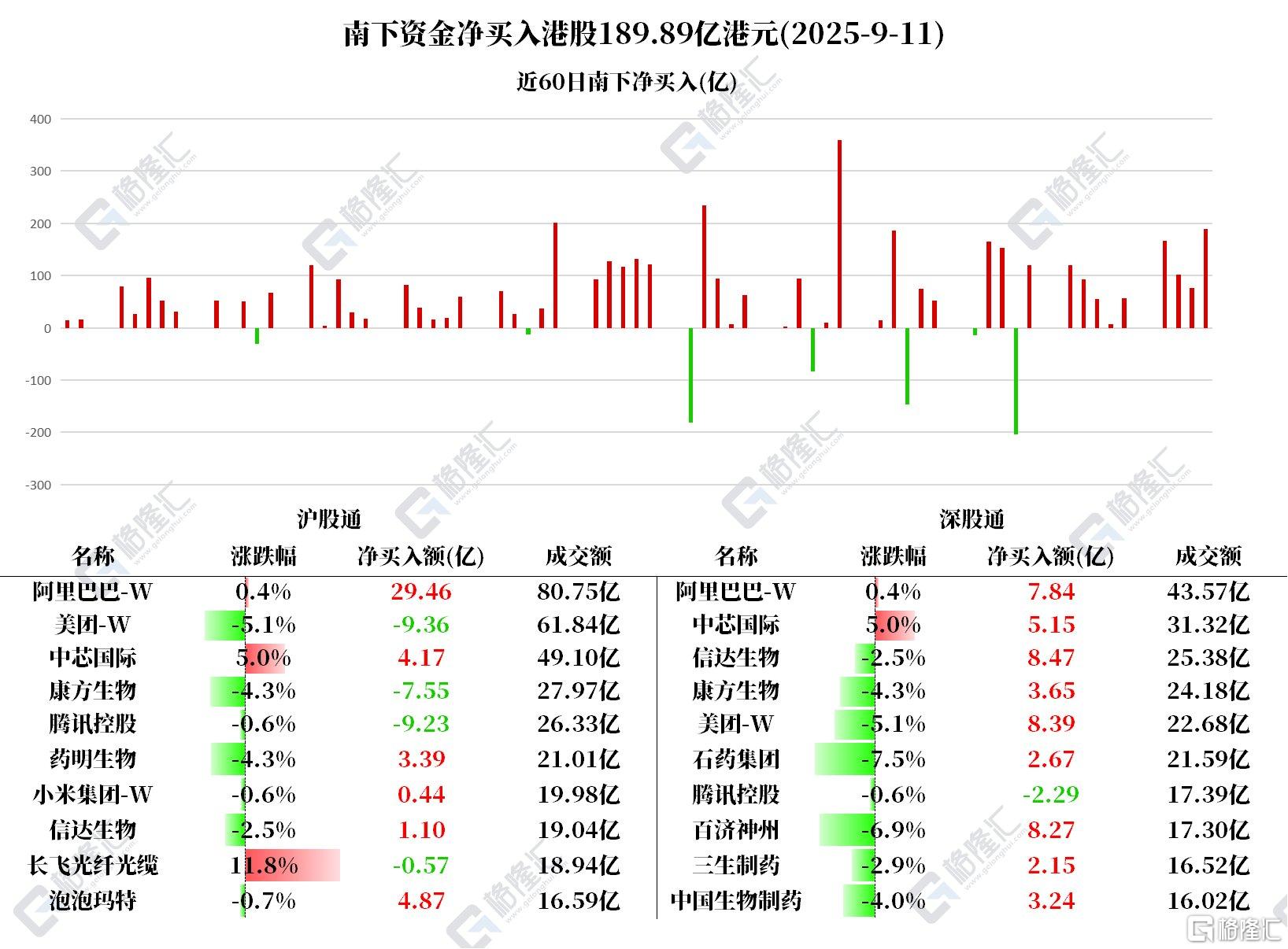
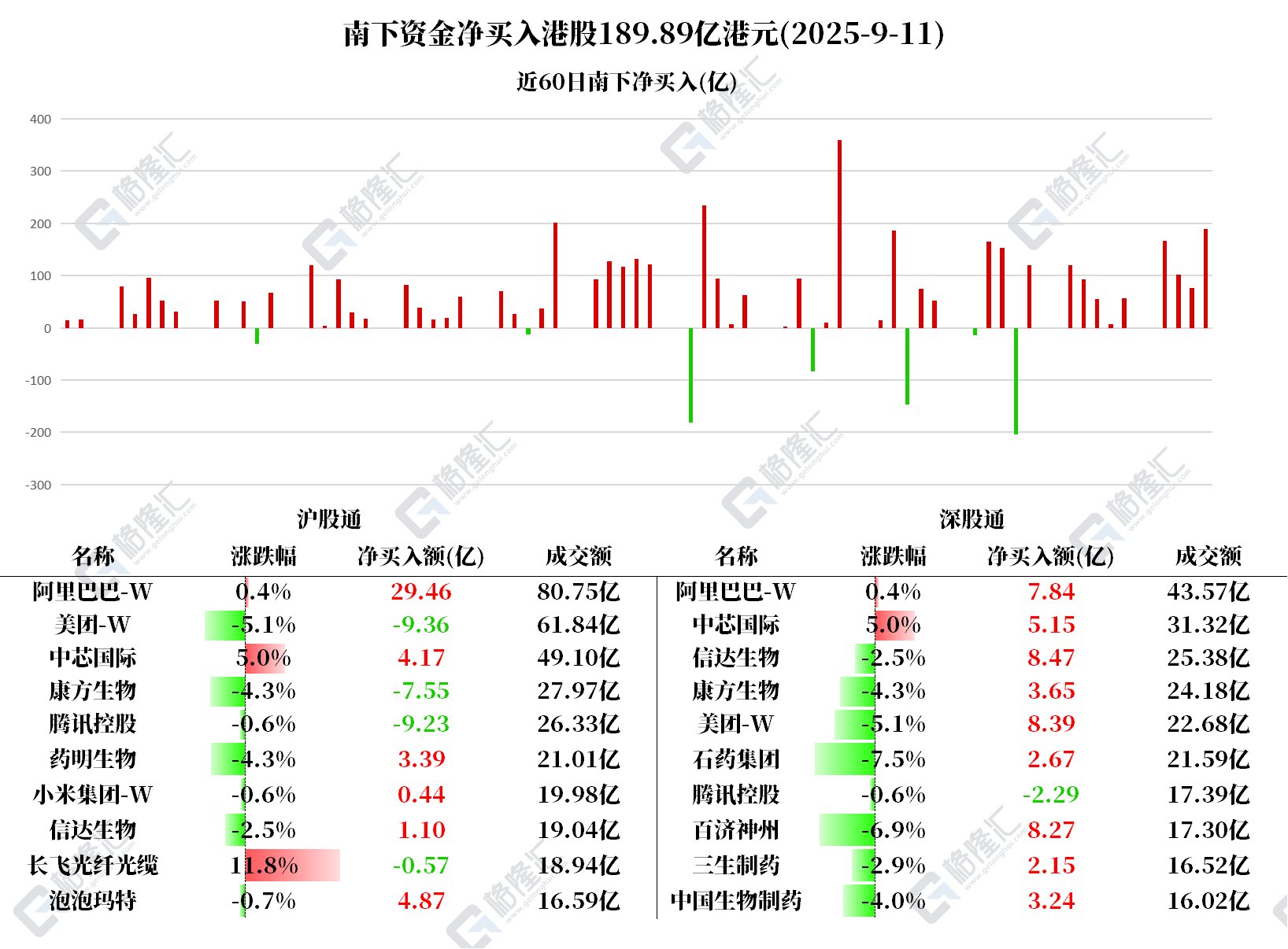
Core Insights - On September 11, 2025, Alibaba-W (09988), Meituan-W (03690), and SMIC (00981) were the top three stocks by trading volume in the southbound trading of the Shanghai-Hong Kong Stock Connect, with trading amounts of 8.075 billion, 6.184 billion, and 4.910 billion respectively [1] - In the southbound trading of the Shenzhen-Hong Kong Stock Connect, Alibaba-W (09988), SMIC (00981), and Innovent Biologics (01801) led the trading volume, with amounts of 4.357 billion, 3.132 billion, and 2.538 billion respectively [1] Southbound Trading Highlights - **Shanghai-Hong Kong Stock Connect:** - Alibaba-W (09988): Trading amount of 8.075 billion, net buying of 2.946 billion - Meituan-W (03690): Trading amount of 6.184 billion, net selling of 0.936 billion - SMIC (00981): Trading amount of 4.910 billion, net buying of 0.417 billion - Other notable companies include Kangfang Biologics (09926) with a trading amount of 2.797 billion and net selling of 0.755 billion, and Tencent Holdings (00700) with a trading amount of 2.633 billion and net selling of 0.923 billion [2] - **Shenzhen-Hong Kong Stock Connect:** - Alibaba-W (09988): Trading amount of 4.357 billion, net buying of 0.784 billion - SMIC (00981): Trading amount of 3.132 billion, net buying of 0.515 billion - Innovent Biologics (01801): Trading amount of 2.538 billion, net buying of 0.847 billion - Other significant companies include Kangfang Biologics (09926) with a trading amount of 2.418 billion and net buying of 0.365 billion, and Meituan-W (03690) with a trading amount of 2.268 billion and net buying of 0.839 billion [2]

图解丨南下资金净买入港股189亿港元,加仓阿里、信达生物和中芯国际
Ge Long Hui A P P· 2025-09-11 10:01
格隆汇9月11日|南下资金今日净买入港股189.89亿港元。其中: | | 沪股通 | | | | | --- | --- | --- | --- | --- | | 名称 | 涨跌幅 | 净买入额(亿) | 成交额 | 名称 | | 阿里巴巴-W | 0.4% | 29.46 | 80.75 Z | 阿里巴巴-W | | 美团-W | -5.1% | -9.36 | 61.84 ( | 中芯国际 | | 中芯国际 | 5.0% | 4.17 | 49.10亿 | 信达生物 | | 康方生物 | -4.3% | -7.55 | 27.97 L | 康方生物 | | 腾讯控股 | -0.6% | -9.23 | 26.33 Z | 美团-W | | 药明生物 | 4.3% | 3.39 | 21.01亿 | 石药集团 | | 小米集团-W | -0.6% | 0.44 | 19.98 Z | 腾讯控股 | | 信达生物 | -2.5% | 1.10 | 19.04亿 | 百济神州 | | 长飞光纤光缆 | 11.8% | -0.57 | 18.94 Z | 三生制药 | | 泡泡玛特 | -0.7% | 4.8 ...
港股创新药ETF(159567)跌1.90%,成交额34.73亿元
Xin Lang Cai Jing· 2025-09-11 09:10
Core Viewpoint - The Hong Kong Innovative Drug ETF (159567) has shown significant growth in both share volume and fund size since its inception, despite a recent decline in its closing price [1][2]. Group 1: Fund Performance - As of September 10, 2024, the Hong Kong Innovative Drug ETF (159567) had a total share volume of 6.892 billion shares and a total fund size of 6.859 billion yuan [1]. - The fund's share volume increased by 1643.13% and its size increased by 1715.37% compared to December 31, 2023, when the share volume was 395 million shares and the size was 378 million yuan [1]. Group 2: Trading Activity - The ETF recorded a trading volume of 34.73 billion yuan on September 11, 2024, with a closing price decline of 1.90% [1]. - Over the past 20 trading days, the cumulative trading amount reached 35.879 billion yuan, averaging 1.794 billion yuan per day; since the beginning of the year, the cumulative trading amount was 194.73 billion yuan, averaging 1.145 billion yuan per day [1]. Group 3: Fund Management - The current fund manager, Ma Jun, has managed the Hong Kong Innovative Drug ETF (159567) since its inception, achieving a return of 99.04% during the management period [2]. - The ETF's top holdings include companies such as Innovent Biologics, WuXi Biologics, BeiGene, and others, with significant percentages of the portfolio allocated to these stocks [2].