英飞凌

Search documents
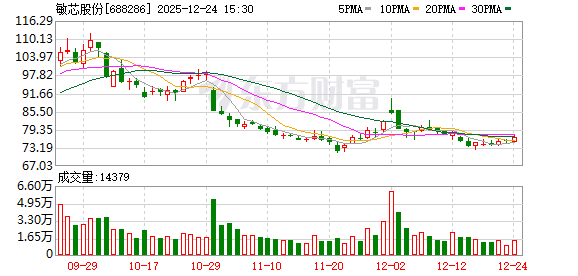
敏芯股份:以全链路自研竞逐全球传感器市场
Shang Hai Zheng Quan Bao· 2025-12-24 20:11
Core Insights - The article highlights the significant growth and development of the MEMS (Micro-Electro-Mechanical Systems) industry in China, particularly through the achievements of Minxin Co., which has become a leader in MEMS sensors, producing 100 million sensors monthly and accumulating over 5 billion units shipped since its inception in 2007 [1][2]. Group 1: Company Development - Minxin Co. has evolved from a startup in 2007, when there were no domestic MEMS wafer foundries, to a leading MEMS chip company in China, achieving a revenue share of 47.61% from MEMS acoustic sensors in 2024 [1][3]. - The company has expanded its product matrix to include acoustic sensors, pressure sensors, inertial sensors, and posture sensors, with global rankings of fourth in MEMS microphones and third in MEMS acoustic sensor chip shipments [3][5]. Group 2: Product Strategy - The company aims to produce world-class products, with ongoing development of high-performance MEMS microphones and sensors for emerging markets such as humanoid robots and AR/VR applications [3][5]. - Minxin Co. emphasizes the importance of continuous R&D investment, with a planned R&D expenditure of over 80 million yuan in 2024, representing 16.01% of its revenue [5][6]. Group 3: Customer Relationships - The company collaborates with high-profile clients like Samsung, Xiaomi, and OPPO, focusing on building relationships that allow for mutual growth and high-quality product development [5][6]. - Minxin Co. recognizes that the value of its customers directly influences its own value, driving the company to invest heavily in assets to meet the quality and delivery expectations of premium clients [6][7]. Group 4: Industry Positioning - Minxin Co. has played a pivotal role in establishing the MEMS production capabilities in China, contributing to the creation of the first MEMS wafer fab through collaboration with state initiatives [7][8]. - The company aims to transition from being a participant in the industry chain to becoming an ecosystem builder, offering a comprehensive range of sensors for various applications [7][8]. Group 5: Future Outlook - The company has a clear strategic plan for the next five years, focusing on technology reserves in emerging fields like humanoid robots and IoT, as well as pursuing mergers and acquisitions to avoid homogenization in competition [8]. - Minxin Co. is committed to strengthening its R&D innovation, expanding its product categories, and targeting top-tier clients to become a global leader in MEMS solutions [8].


七大预测揭开AI供电革命拐点!英飞凌白皮书前瞻下一代技术
硬AI· 2025-12-24 08:10
Core Viewpoint - The article discusses the transformative impact of AI on power supply systems, highlighting predictions from Infineon regarding future power demands and technological advancements in the next decade [3][4]. Group 1: Key Predictions - Prediction 1: Vertical power supply will dominate future processor architectures, with current load currents expected to reach 10,000 amperes, ten times the current level [6]. - Prediction 2: High-voltage direct current (DC) power supply architectures will replace the existing 48V ecosystem as power requirements exceed 1 megawatt [12]. - Prediction 3: AI server rack power consumption will enter the megawatt era, with total power expected to exceed 1 megawatt as more GPUs are integrated into single racks [16]. - Prediction 4: Power supply rack power levels will surpass 100 kilowatts, laying the groundwork for 1 megawatt IT racks [19]. - Prediction 5: New data center power demands will approach gigawatt levels, with dedicated "AI factories" expected to consume several gigawatts of power [22]. - Prediction 6: Distribution systems will shift towards DC microgrids to accommodate gigawatt-level power demands [24]. - Prediction 7: Renewable energy will become a critical constraint for AI development, with nearly 50% of power used by global data centers expected to come from renewable sources [27][28]. Group 2: Technological Innovations - Infineon is developing a complete product portfolio from discrete power levels to four-phase vertical power modules, achieving unprecedented power density in vertical power supply solutions [9]. - The company’s 6 kW 800V to 12V demonstration board has a power density exceeding 2300W/in³, with peak efficiency reaching 97.4% [14]. - Solid-state transformer (SST) technology will play a key role in the new distribution infrastructure, capable of receiving energy directly from medium-voltage AC grids [24].

2025年全球及中国汽车MOSFET行业发展背景、市场规模、企业格局及未来趋势研判:汽车已成为MOSFET最大应用领域,需求强劲驱动市场规模持续扩张[图]
Chan Ye Xin Xi Wang· 2025-12-23 01:09
Core Insights - The automotive sector has become the largest application area for MOSFETs, accounting for 33% of global MOSFET applications by 2024, driven by the growth of automotive electrification and intelligence [12][11] - The global automotive MOSFET market is projected to grow from 23.7 billion yuan in 2020 to 33.4 billion yuan in 2024, with a compound annual growth rate (CAGR) of 9.0% [12][11] - China, as the largest automotive market and electric vehicle producer, holds over 30% of the global automotive MOSFET market, with its market size expected to reach 12.27 billion yuan in 2024, growing by 11.9% year-on-year [12][11] Automotive MOSFET Industry Overview - MOSFET, or Metal-Oxide-Semiconductor Field-Effect Transistor, is essential in both analog and digital circuits, converting input voltage changes into output current changes [1][2] - In the automotive sector, MOSFETs are critical components, with applications in traditional fuel vehicles and electric vehicles [4][5] Industry Development Background - China's automotive industry has rapidly developed over the past few decades, maintaining its position as the world's largest automotive producer and seller [7][9] - The growth of the automotive industry has led to increased demand for upstream components, including automotive MOSFETs [7][9] Market Status 1. **Global Market** - The automotive sector has become the largest application area for MOSFETs, with a 33% share in 2024, followed by the industrial sector at 31% [12] - The global automotive MOSFET market is expected to grow from 23.7 billion yuan in 2020 to 33.4 billion yuan in 2024, achieving a CAGR of 9.0% [12] 2. **Chinese Market** - China's automotive MOSFET market surpassed 10 billion yuan in 2023 and is projected to reach 12.27 billion yuan in 2024, with an 11.9% year-on-year growth [12][11] 3. **Competitive Landscape** - The global automotive MOSFET market is competitive, with international firms like Infineon, ON Semiconductor, and Renesas dominating high-end markets due to their technological expertise [12][11] - Domestic companies such as Wentai Technology and Huazhong Microelectronics are accelerating the localization of automotive MOSFETs to meet domestic demand, although they primarily serve lower-end applications [12][11] Future Trends - The automotive MOSFET industry is expected to evolve towards higher performance, smaller sizes, and lower costs, with the increasing adoption of wide-bandgap semiconductor materials like SiC and GaN [15][16]


GaN,生变
半导体行业观察· 2025-12-19 01:40
Core Viewpoint - The GaN market is experiencing a dramatic shift, with major players like NXP and TSMC withdrawing from GaN-related businesses, while other companies continue to invest heavily in GaN technology, indicating a complex interplay of market demand, business logic, and technological evolution [2][4][15]. Group 1: Major Players' Withdrawal - NXP has decided to close its ECHO wafer fab in Arizona, marking its exit from the GaN-based 5G power amplifier market due to disappointing market demand and low investment returns from 5G base station deployments [6][8]. - TSMC announced plans to gradually exit the GaN foundry business by 2027, citing low profitability and intense competition from lower-cost manufacturers [9][10]. - Wolfspeed sold its GaN RF business for $125 million, focusing instead on its SiC business due to declining market share and demand in the SiC sector [12][13]. Group 2: Market Dynamics and Opportunities - Despite the withdrawal of major players, companies like Infineon, Texas Instruments, and domestic firms such as Innoscience and Sanan continue to expand their investments in GaN technology, indicating a bifurcated market landscape [2][15][20]. - The GaN market is shifting from a focus on technological advancement to a competition based on market potential, engineering capabilities, and profitable business models [15][26]. - The power GaN market is projected to grow significantly, with a compound annual growth rate of 42%, reaching approximately $3.0 billion by 2030, driven by demand in sectors like electric vehicles and data centers [26][28]. Group 3: IDM vs. Foundry Models - The competition between IDM (Integrated Device Manufacturer) and foundry models is intensifying, with IDM firms like Infineon leveraging their vertical integration to optimize product performance and reliability [31][32]. - Foundry models, while allowing for rapid market entry and lower initial capital investment, face challenges in customization and supply chain stability, especially with the exit of key players like TSMC [31][32]. - The future of GaN technology may favor the IDM model due to its advantages in cost control and supply chain stability, although foundry models will still play a role in niche markets [33][34]. Group 4: Future Pathways for GaN - The industry is undergoing a profound restructuring, moving away from blind expansion towards a focus on specific market applications and sustainable business models [36][38]. - Cost efficiency is becoming a critical competitive factor, with Chinese manufacturers adopting strategies to lower production costs through large-scale production [37]. - The GaN industry is expected to see increased consolidation, with smaller firms facing challenges in a market that favors those with scale and technological advantages [39].





6份料单更新!出售安世、博通、英飞凌等芯片
芯世相· 2025-12-18 09:11
Core Viewpoint - The article discusses the challenges and opportunities in managing excess inventory of electronic components, highlighting the need for effective promotion and sales strategies to mitigate financial losses from storage and capital costs [1]. Group 1: Inventory Management - The company faces significant costs associated with excess inventory, including at least 5,000 per month in storage and capital costs, leading to potential losses of 30,000 after six months [1]. - There is a call for assistance in promoting and selling excess inventory, indicating a need for strategic marketing efforts [1]. Group 2: Current Inventory and Sales Opportunities - The company, Chip Superman, has a substantial inventory with over 5,000,000 chips across more than 1,000 models and 100 brands, valued at over 100 million [7]. - The company has served 22,000 users and offers discounts to clear inventory, with transactions completed in as little as half a day [8]. - Specific excess inventory items are listed, including various models from brands like Nexperia, Infineon, and Broadcom, with quantities ranging from 300 to 351,000 [4][5]. Group 3: Purchase Requests - There are active requests for specific components, indicating ongoing demand in the market for certain electronic parts [6].

这公司IPO!报告期业绩持续增长,经营活动产生的现金流量净额却持续下降
梧桐树下V· 2025-12-17 12:23
文 /Ronald 江阴市赛英电子股份有限公司( 874558)申报北交所IPO于2025年6月27日获得受理,现已完成两轮 问询。公司是一家专业从事陶瓷管壳、封装散热基板等功率半导体器件关键部件研发、制造和销售的高 新技术企业,是国家级专精特新"小巨人"企业。公司前身有限公司成立于2002年11月,2016年1月整 体变更为股份公司,2025年4月14日挂牌新三板。目前公司注册资本3240万元。 一、报告期营收、净利润持续增长,但经营活动产生的现金流量净额持续下降,最近一年半为负数 2022年、2023年、2024年,公司实现营业收入分别为2.190亿元、3.206亿元、4.573亿元,扣非归 母净利润分别为0.429亿元、0.554亿元、0.737亿元。 虽然报告期营收、净利润同比增长,但经营活动产生的现金流量净额却出现了不良变化。 2022年、 2023年,公司经营活动产生的现金流量净额分别为0.237亿元、0.172亿元,到2024年在营收增长 42.65%的情况下,经营活动产生的现金流量净额却为-0.077亿元,同比下降145%。2025年上半 年,公司经营活动产生的现金流量净额为-0.075亿元, ...

eFuse时代,来袭
半导体行业观察· 2025-12-16 01:22
Core Viewpoint - The rise of eFuse technology represents a paradigm shift in circuit protection, transitioning from traditional fuses to intelligent, real-time monitoring and control systems, essential for modern electronic applications across various industries [2][40]. Group 1: eFuse Technology Overview - eFuse is an advanced circuit protection solution that integrates power MOSFETs, current detection circuits, control logic, and multiple protection functions, offering features like overcurrent, overvoltage, and thermal protection with microsecond response times [4][5]. - Compared to traditional fuses, eFuse provides significant advantages such as programmability, self-recovery, and enhanced reliability, making it a critical component in modern electronic systems [4][5]. Group 2: Market Drivers - The electric vehicle (EV) sector is a major driver for eFuse adoption, with global EV sales surging by approximately 3.6 million units from 2022 to 2023, necessitating advanced protection for high-voltage components [6][7]. - eFuse technology is crucial in the transition from 12V to 48V systems in vehicles, ensuring safe operation and preventing fault propagation between different voltage systems [11][8]. Group 3: Applications in Various Industries - In AI data centers, eFuse is essential for managing high power demands, with AI servers consuming up to 8.4 kW, necessitating reliable power paths and real-time monitoring to maximize uptime and reduce total cost of ownership [11][12]. - eFuse is increasingly used in high-density storage systems to optimize performance and prevent overheating, integrating into power transmission architectures [12]. - In consumer electronics, eFuse provides precise protection for critical components, supporting the growing demand for faster charging and more complex power architectures [14]. Group 4: Market Growth and Projections - The global eFuse IC market is projected to reach approximately $550 million by 2024 and is expected to grow to $950 million by 2037, driven by the digitalization and smartization of electronic products [15]. - The demand for eFuse is supported by the increasing complexity of electronic systems and the need for reliable protection mechanisms across various applications [15]. Group 5: Competitive Landscape - Major semiconductor companies are intensifying their investments in the eFuse market, leveraging technological innovation and product diversification to strengthen their market positions [17][18]. - Texas Instruments (TI) has developed a family of 48V hot-swappable eFuse devices tailored for data centers, significantly simplifying circuit design and enhancing reliability [18][19]. - Toshiba and STMicroelectronics are also expanding their eFuse product lines, focusing on integrated designs that meet diverse application needs in automotive and industrial sectors [20][22]. Group 6: Challenges and Future Directions - The eFuse market faces challenges related to technology, certification, and cost, particularly for domestic manufacturers aiming to compete with established international players [36][37]. - Future developments in eFuse technology will focus on enhancing integration, functionality, and adaptability to meet the evolving demands of smart power management in various industries [40][41].

20份料单更新!出售安世、博通、MURATA等芯片
芯世相· 2025-12-09 06:35
Core Insights - The article discusses the challenges of managing excess inventory in the semiconductor industry, highlighting the financial burden of storage and capital costs associated with unsold materials [1] - It promotes a service called "Chip Superman," which has served 21,000 users and offers rapid inventory clearance solutions [8] Group 1: Inventory Management - Excess inventory of 100,000 units incurs monthly storage and capital costs of at least 5,000, leading to a potential loss of 30,000 over six months [1] - The article emphasizes the difficulty in promoting and selling surplus materials, suggesting that companies can seek assistance from Chip Superman for better pricing and faster transactions [1][10] Group 2: Inventory Offerings - Chip Superman has a substantial inventory, including over 50 million chips across 1,000+ models and 100+ brands, with a total inventory value exceeding 100 million [7] - A detailed list of available materials is provided, showcasing various brands and quantities, indicating a wide range of options for potential buyers [4][5] Group 3: Purchase Requests - The article includes a section for companies looking to purchase specific components, indicating active demand in the market for certain semiconductor parts [6] Group 4: Service Efficiency - Chip Superman claims to complete transactions in as little as half a day, highlighting the efficiency of their service in clearing inventory [8]


彭博数据洞察 | 什么样的数据流能让报价与突发事件同时抵达交易台,助其抢得先机?
彭博Bloomberg· 2025-12-08 06:05
Core Insights - The article emphasizes the importance of real-time data in enhancing front-office trading capabilities, highlighting how previously backend information is now crucial for driving stock market dynamics [1][4]. Group 1: Transformations in Front-Office Trading - There are three fundamental changes impacting trading desk decisions, liquidity acquisition, and risk management [4]. - Over 75% of U.S. stock trading volume is handled by "low-touch" trading engines, with over 60% of European stock orders originating from algorithms [5]. - A unified real-time data stream is essential for both algorithms and traders to maintain effective collaboration, especially during periods of market volatility [5]. Group 2: The Rise of Daily Options - Zero-day-to-expiration (0-DTE) options now account for 23% of the U.S. options market, contributing 56% of SPX options trading volume [6]. - Daily options have become the preferred tool for event-driven trading, with their associated hedging activities closely linked to rising volatility [7]. Group 3: Decentralization of Liquidity - By the end of 2024, major exchanges will handle less than half of U.S. stock trading, with trading report facilities (TRF) and regional platforms capturing 51% of the market share [8]. - The emergence of alternative trading systems (ATS) like Blue Ocean allows for trading during off-hours, increasing market fragmentation and necessitating a unified data stream to capture price movements and their driving events [8]. Group 4: Practical Implications of Real-Time Data - Bloomberg's recent launch of a "real-time event data" solution enhances its B-PIPE market data stream, allowing trading desks to respond promptly to market-moving information [10]. - Three case studies illustrate the impact of timely data on trading decisions, showing that delays in information can lead to significant financial consequences [22]. Group 5: Infrastructure for Continuous Trading - The market structure is evolving towards a 24/5 trading reality, requiring infrastructure that delivers both price and contextual information [24]. - B-PIPE provides a single API that pushes real-time quotes from all public markets and dark pools, along with machine-readable events that drive these quotes [24].

中国功率半导体,逆袭!
半导体行业观察· 2025-12-07 02:33
Core Viewpoint - The article highlights the significant transformation in the global semiconductor industry, particularly in the power semiconductor sector, where Chinese companies are rapidly advancing from a position of dependency to becoming key players in the global market [1][2][3]. Group 1: Industry Dynamics - Onsemi and Innoscience have formed a deep collaboration to develop next-generation efficient power devices based on Innoscience's 8-inch silicon-based GaN technology, indicating a shift in global partnerships towards Chinese technology leaders [1][3]. - The global power semiconductor giants are increasingly engaging in comprehensive collaborations with Chinese firms, including joint R&D and supply chain integration, reflecting a recognition of China's industrial strength [2][8]. - The power semiconductor sector is identified as a leading area for China's semiconductor industry to achieve breakthroughs, supported by a growing number of domestic companies emerging in this field [2][9]. Group 2: Market Opportunities - The global market for GaN power semiconductors is projected to reach approximately $2.9 billion by 2030, with a compound annual growth rate of 42% from 2024 to 2030, highlighting the growth potential in this segment [3][12]. - The Chinese power semiconductor market is expected to reach 105.775 billion yuan in 2024, maintaining its position as the largest consumer market globally, with a significant increase in domestic production rates [11][12]. - The domestic market for low-end power devices has surpassed 80% in localization, with expectations for SiC manufacturers' market share to increase by 10-15 percentage points this year [11][12]. Group 3: Technological Advancements - Innoscience has become the first global company to achieve mass production of 8-inch GaN wafers, with a market share exceeding 42.4% in 2024, showcasing its technological and production capabilities [12]. - Chinese companies have made significant advancements in SiC substrate and epitaxial wafer technologies, with Tianyu Semiconductor leading in market share for carbon silicon epitaxial wafers [11][12]. - The collaboration between international firms and Chinese manufacturers is evolving from technology licensing to joint R&D and supply chain binding, indicating a deeper integration of Chinese firms into the global semiconductor ecosystem [8][9]. Group 4: Strategic Collaborations - STMicroelectronics and Sanan Optoelectronics are collaborating to build a SiC manufacturing facility in Chongqing, with an expected investment of approximately 23 billion yuan, marking a significant step in localizing SiC production [5][6]. - Infineon has established long-term supply agreements with domestic SiC substrate manufacturers to secure competitive materials for its semiconductor production, further integrating Chinese suppliers into its supply chain [6][7]. - Other international companies, such as ROHM and Panasonic, are also forming strategic partnerships with Chinese firms to enhance their product offerings and market reach in the power semiconductor sector [7][8]. Group 5: Future Outlook - The article emphasizes that the rise of China's power semiconductor industry is not coincidental but a result of multiple factors, including strong market demand, strategic opportunities in third-generation semiconductors, and supportive policies [12][13][14]. - The industry is transitioning from a focus on domestic market replacement to actively participating in global competition, with Chinese firms expanding their international presence and capabilities [14][15]. - The future competition in the power semiconductor sector will hinge on technological endurance, ecosystem development, and global operational capabilities, as Chinese companies aim to lead in key areas like SiC and GaN [15][16].