lululemon athletica inc.

Search documents
特朗普关税,突发!欧盟,即将反击!
券商中国· 2025-04-06 13:27
Group 1: EU's Response to Tariffs - The EU is seeking to unite against Trump's tariffs, potentially approving targeted countermeasures against up to $28 billion of U.S. imports [1][3][4] - The EU faces 25% tariffs on steel, aluminum, and automobiles from the U.S., with a broader 20% "reciprocal tariff" on nearly all other goods starting next week [3][4] - The EU Commission will present a list of U.S. products for countermeasures, including meat, grains, wine, wood, and clothing [3][4] Group 2: Impact on Apparel and Footwear Brands - Major apparel brands like Nike and Lululemon may be forced to raise prices due to tariffs on imports from countries like Cambodia, Vietnam, and Thailand [2][9] - Currently, only 2.5% of clothing and 1% of footwear in the U.S. is domestically produced, making these brands heavily reliant on imports [9][10] - The Vietnamese textile and apparel sector, which exports $44 billion to the U.S., is particularly vulnerable to the impending tariffs [10] Group 3: Apple's Cost Increase - Apple's annual costs could increase by approximately $8.5 billion due to tariffs on Chinese imports, potentially raising the retail price of the iPhone 16 Pro Max from $1,599 to $2,300 [2][11] - 90% of Apple's phones are assembled in China, presenting a significant challenge in absorbing or passing on tariff costs [11] Group 4: Jaguar Land Rover's Export Suspension - Jaguar Land Rover has suspended exports to the U.S. for one month to mitigate the impact of a 25% tariff on imported cars [6][7] - The U.S. is the second-largest market for British car exports, accounting for nearly 20% of total sales [6][7]



This Growth Stock Is Down 45%. Should You Buy It Like There's No Tomorrow?
The Motley Fool· 2025-04-05 22:32
Core Viewpoint - Lululemon Athletica has shown strong revenue and earnings growth but faces challenges due to slowing growth, economic concerns, and competitive pressures Group 1: Financial Performance - Lululemon's fiscal 2024 fourth quarter revenue increased by 13% year over year to $3.6 billion, with diluted EPS rising by 16% to $6.14 [1] - The company's growth in fiscal 2024 was the lowest revenue gain in at least a decade, and management's guidance for fiscal 2025 fell below Wall Street estimates [2] - Lululemon's stock currently trades at a price-to-earnings ratio of 19.1, which is a slight discount to the S&P 500 index and near the lowest valuation in 10 years [7] Group 2: Economic and Competitive Environment - The U.S. economy is facing challenges, including record credit card debt of $1.2 trillion and the lowest consumer confidence in almost three years, which may lead to reduced consumer spending [3] - Lululemon's premium positioning in the market means that consumers may delay purchases during economic uncertainty [4][5] - The competitive landscape is intense, with Lululemon facing competition from both high-end and low-end market segments, and changing fashion trends affecting consumer spending [5][6] Group 3: Future Outlook - Consensus analyst estimates project Lululemon's revenue and EPS to grow at compound annual rates of 7.2% and 8.3%, respectively, between fiscal 2024 and fiscal 2027, which is disappointing compared to historical performance [8] - Despite the weaker economic outlook and fierce competition, the current valuation presents a potential buying opportunity for investors willing to take on risk [9]


关税战影响最大的行业!
雪球· 2025-04-05 03:03
Core Viewpoint - The article discusses the implications of the recent tariff measures announced by former President Trump, which are expected to significantly impact various industries and companies, particularly in the technology and manufacturing sectors [4][10]. Group 1: Tariff Overview - The new tariffs represent the highest level in a century, increasing from an average of 2% to 29%, surpassing the previous peak of 20% in 1930 [7]. - Target countries for the highest tariffs include Southeast Asian nations, with Cambodia at 49%, Vietnam at 46%, and Laos at 48% [8]. - The overall tariff on Chinese goods will reach 54%, combining existing tariffs with new measures, approaching Trump's 2024 election promise of 60% [9]. Group 2: Reasons for Tariff Implementation - The primary goal of the tariffs is "America First," driven by increasing trade deficits, which rose by 17% to $918.4 billion in 2024 [11]. - Political support is a key factor, as Trump aims to appeal to voters in manufacturing-heavy regions affected by job losses [13]. - The tariffs are also intended to pressure trade partners into renegotiating unfavorable trade agreements, such as NAFTA [14]. Group 3: Market Impact and Company Analysis - The tariffs are expected to adversely affect global technology companies like Apple, Nvidia, and Tesla, which rely heavily on international supply chains [16]. - Retailers such as Walmart and Costco may face profit pressures due to increased import costs, leading to higher consumer prices [17]. - The aviation industry, including companies like Boeing, may experience cost increases and potential impacts on overseas orders due to rising material costs and retaliatory tariffs [17]. - Short-term market volatility is anticipated, with capital likely flowing into safer assets like gold and U.S. Treasuries, while emerging markets and A-shares may face pressure, particularly in export-oriented sectors [18].



持续暴跌,美股入熊!能否西降东升?
Shang Hai Zheng Quan Bao· 2025-04-05 01:07
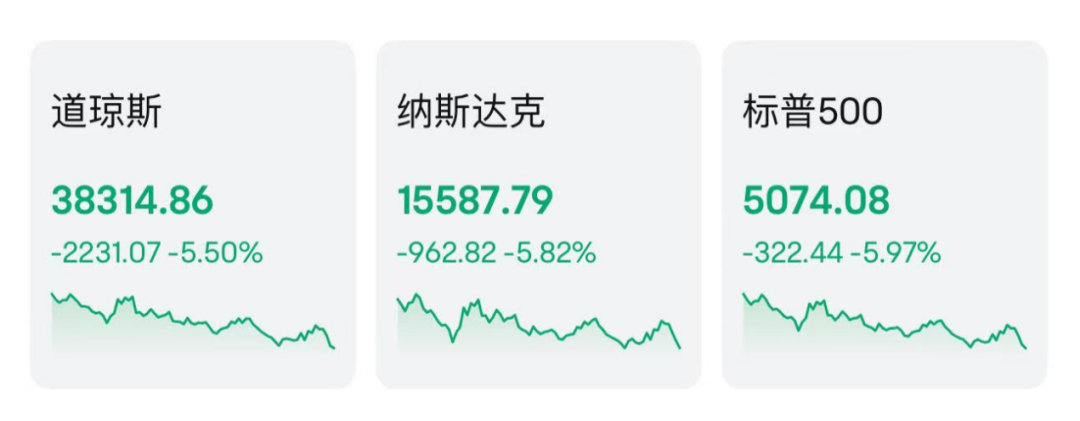
大型科技股齐跌。特斯拉收跌10.24%,苹果收跌7.29%,亚马逊跌4.15%,Meta跌5.06%,英伟达跌7.36%,谷歌A跌3.4%,微软跌3.56%。 一夜过去,在美国"对等关税"引发反制措施等影响下,美股市场连遭重挫。 截至美东时间周五收盘,美股三大指数均跌超5%。其中,道指较前一交易日跌超2000点,纳指下跌近千点。至此,纳指已较去年12月的纪录高点下跌超 过20%,正式进入技术性熊市。美股遭遇五年来最惨烈一周,道指周内累计重挫7.86%,纳指本周下跌10.02%,标普500指数本周下跌9.08%。 美国总统特朗普再次公开呼吁美联储尽快降息,但美联储主席鲍威尔并不买账。在特朗普宣布大范围征收对等关税后的首次公开表态中,鲍威尔重申,美 联储目前有足够的空间等待更清晰的信号后,再考虑调整政策立场。鲍威尔说,已宣布的关税"远高于预期",对经济的影响将比之前认为的要大。 据新华社报道,美国总统特朗普4日在社交媒体上宣布,他将签署行政令,再次给予TikTok"不卖就禁用"法律75天宽限期。字节跳动发布声明称,公司尚 在与美政府商谈之中,未达成任何协议,双方在很多关键问题上仍存分歧。按照中国法律规定,任何协议 ...
Price of Lululemon's leggings could jump due to Trump's hefty tariffs on Vietnam
New York Post· 2025-04-04 20:31
Core Viewpoint - Lululemon is expected to increase prices by 11% to 12% due to new tariffs imposed by the US government, significantly impacting its manufacturing costs and pricing strategy [1][3]. Group 1: Tariff Impact - Lululemon's manufacturing is heavily concentrated in countries affected by high tariffs, with 40% of products made in Vietnam facing a 46% tariff and another 46% produced in Cambodia, Sri Lanka, Indonesia, and Bangladesh facing tariffs between 32% and 49% [1][2]. - The company is facing a blended tariff rate of 39%, which could lead to a price increase for its popular $118 leggings, potentially rising to $132 [3]. Group 2: Pricing Strategy - Analyst Sharon Zackfia anticipates that any price increases will be more targeted rather than a blanket increase across all products [4]. - Lululemon's CFO indicated that the company is monitoring the situation closely and has previously taken a cautious approach to price hikes during supply chain crises [4][5]. Group 3: Market Context - Lululemon's sales are significantly reliant on the US market, with over 60% of sales coming from this region in 2024 [3]. - Other brands, including Nike and Apple, are also likely to face similar price increases due to their supply chains being tied to Asia [5].

lululemon athletica: President Trump's Reciprocal Tariffs Kill The Turnaround Story For Now
Seeking Alpha· 2025-04-03 13:31
Core Insights - The article discusses lululemon athletica's (NASDAQ: LULU) performance and efforts to stabilize declines observed in previous quarters [1]. Group 1 - The last analysis of lululemon was conducted in December 2024, focusing on the company's third quarter performance [1]. - The company is making progress in addressing the declines it has faced [1].

Markets Shudder: Here's What Stocks Are Losing The Most In Tariff Selloff
Forbes· 2025-04-03 13:14
Core Viewpoint - The announcement of aggressive tariffs by President Donald Trump has led to a significant decline in stock markets, with major indexes facing their worst daily losses in years [1]. Market Impact - The Dow Jones Industrial Average fell by 2.8%, or 1,190 points, the S&P 500 decreased by 3.3%, and the Nasdaq dropped by 4.4%, marking the worst day for all three indexes since September 2022 [2]. - The "magnificent seven" tech companies experienced substantial losses, with Apple down 8%, Alphabet down 3%, Amazon down 6%, Meta down 7%, Microsoft down 2%, Nvidia down 6%, and Tesla down 4% [2]. Sector Performance - Retail stocks also suffered, with Walmart, Costco, and Home Depot losing 2% or more, while Lululemon and Nike saw declines close to 10% due to their manufacturing reliance on China and Vietnam, which are heavily targeted by the new tariffs [3]. - Financial services companies faced declines as well, with American Express down 7%, JPMorgan Chase down 5%, and Robinhood down 8% [3]. Bond Market Reaction - U.S. government bonds rallied as investors sought safer assets, leading to a decline in yields for the benchmark 10-year Treasury by more than 15 basis points to just above 4%, the lowest level since before the election [4]. Specific Company Analysis - Apple is particularly affected, facing an estimated $39.5 billion in tariff costs, which could result in a 32% hit to earnings. Analysts speculate that a carveout for Apple may be necessary due to its significant non-U.S. manufacturing [5]. - The total market value loss for the "magnificent seven" was approximately $784 billion, with Apple's loss alone accounting for $263 billion [6]. Strategic Outlook - Wall Street strategists have raised concerns about the likelihood of a bear market, with UBS setting a target of 5,300 for the S&P, indicating a potential further decline of 4% from premarket levels. Bank of America's top equity strategist noted the absence of a clear tariff playbook [7].



Markets Gird For Rough Day: Here's What Stocks Are Losing The Most In Tariff Selloff
Forbes· 2025-04-03 13:14
ToplineStocks nosedived across the board Thursday as Wall Street largely panned the highly aggressive tariffs announced by President Donald Trump, sending major indexes toward what could be their worst daily losses in years, and several prominent names were hit particularly hard by the latest tariff developments.Traders work on the floor of the New York Stock Exchange at the start of President Donald Trump's ... More news conference on tariffs Wednesday.Getty Images Key FactsThe blue chip Dow Jones Industri ...

消费符号与经济周期:从口红到Lululemon的百年演变
创业邦· 2025-04-03 09:58
Core Viewpoint - The article discusses the evolution of five significant consumer symbols over the past century, illustrating how they reflect economic cycles and the interplay of technological breakthroughs, business models, and cultural recognition, termed as the "innovation multiplier effect" [4][6]. Economic Cycles and Consumer Symbols - Economic cycles are characterized by the periodic adjustment of social resource allocation efficiency, driven by different factors such as technological revolutions, capital changes, and supply-demand dynamics [6]. - The article identifies three main economic cycles: - Kondratiev cycle (long-term, 50-60 years) driven by technological and institutional changes - Juglar cycle (medium-term, 7-11 years) focused on fixed asset updates - Kitchin cycle (short-term, 3-5 years) related to inventory adjustments [6]. - The current historical moment is marked by the resonance of these three cycles, leading to the emergence of unique consumer symbols [6]. Five Major Consumer Symbols 1. **Lipstick (1920-1930s)**: - Represents the "comfort economics" during the recession, with lipstick sales increasing by 50% despite a 25% unemployment rate in 1929 [9][12]. - The production cost of lipstick decreased by 80% due to advancements in synthetic dye technology, making it an affordable luxury [12]. 2. **Ford Model T (1908-1927)**: - Symbolizes industrial recovery and economies of scale, with production time reduced from 728 hours to 12.5 hours through assembly line techniques [13][14]. - By 1921, the Model T accounted for 56.6% of global automobile production, contributing 15% to the GDP growth of the 1920s [14]. 3. **Nike Air Jordan (1984-2020s)**: - Represents cultural dominance during the globalization boom, with Nike leveraging strategic sponsorships to gain market share in the NBA [15][19]. - Nike's focus on cultural empowerment through targeted sponsorships allowed it to become the leading sports brand [19]. 4. **iPhone (2007-present)**: - Acts as a technological revolutionary symbol, with the tech industry market cap increasing by 433% from 2009 to 2018, largely driven by Apple [20][21]. - The introduction of the iPhone 4 marked a significant shift in smartphone penetration and redefined market standards for consumer electronics [21]. 5. **Lululemon (2000-present)**: - Embodies the rise of self-care consumerism in the post-pandemic era, with a CAGR of 25% in revenue and net profit, positioning it as the second-largest sportswear company after Nike [22][25]. - Lululemon's success is attributed to its innovative product offerings and deep understanding of its target market, leading to high customer loyalty and profitability [22][24]. Insights from Consumer Symbols - Each consumer symbol reflects the historical context and market dynamics of its time, demonstrating how they adapt to economic cycles [26]. - The article emphasizes that while consumer symbols may experience peaks and troughs, their resilience often stems from meeting specific market demands, as seen with Lululemon and lipstick during economic downturns [26]. - The enduring pursuit of a better life remains a constant driver of economic innovation, regardless of the cyclical nature of the economy [26].


用户运营,故事才是最好的广告!
Sou Hu Cai Jing· 2025-04-03 05:20
Core Insights - The article emphasizes the importance of content power in brand communication, suggesting that effective storytelling can significantly enhance user engagement and conversion rates [2][17][18] Group 1: Challenges in Traditional Content Operations - Users are bombarded with approximately 12,000 messages daily, but can only remember brand content for about 7 seconds [3] - Traditional content operations face three main pitfalls: information overload, value misalignment, and emotional detachment [3][4] - Brands that successfully engage users, like Pop Mart, utilize storytelling to create emotional connections, transforming users from passive recipients to active emotional investors [3][4] Group 2: Engaging User Systems - Effective content must activate three user systems: cognitive impact, emotional resonance, and behavioral drive [5] - Cognitive impact can be achieved through unconventional insights that challenge user perceptions, such as using surprising facts or data [6][7] - Emotional resonance involves making users feel like protagonists in the story, enhancing relatability and connection with the brand [8][9] - Behavioral drive focuses on creating compelling calls to action that resonate with user pain points and urgency [10] Group 3: Engines of User Engagement - Four key engines can enhance user engagement: 1. Product content transformation, turning product manuals into engaging narratives [11] 2. Service dramatization, making customer service interactions feel like engaging stories [12] 3. User-generated content monetization, allowing users to earn rewards for their contributions [12] 4. Promotional gamification, turning discounts into interactive challenges [12] Group 4: Industrialization of Content Production - Leading brands have established content production systems that streamline the creation of engaging narratives [14] - The process includes topic discovery through data analysis, standardized production lines for content quality, and strategic distribution to capture user attention [15] - Continuous improvement through A/B testing allows brands to refine their content strategies based on user feedback [16]