巨子生物

Search documents
美护618第一阶段结果出炉!来看品牌排名变化
智通财经网· 2025-05-29 11:58
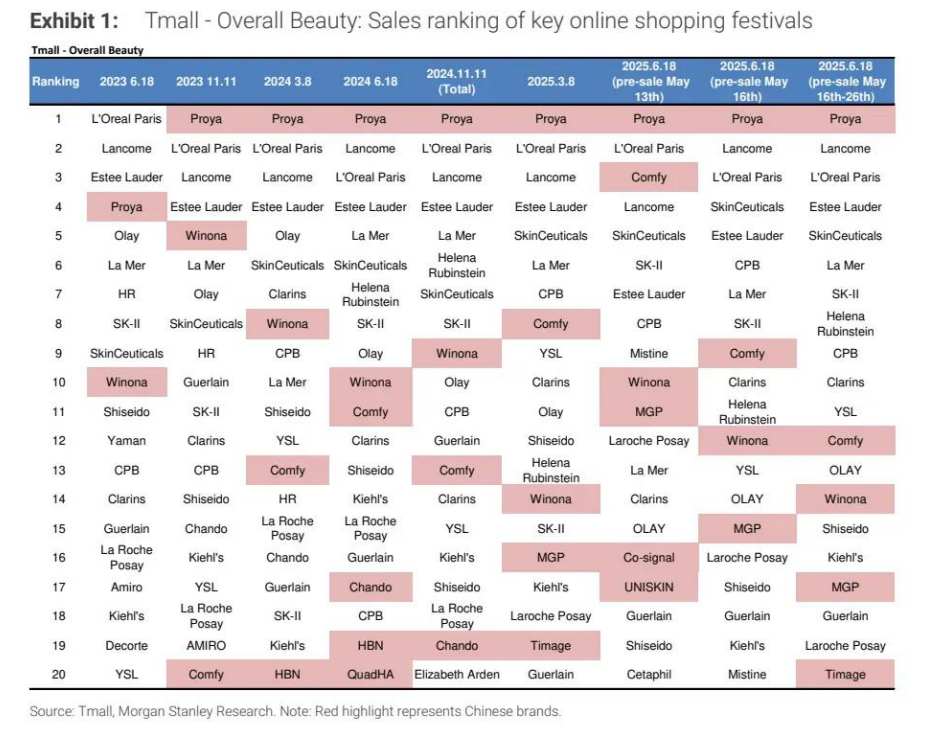
Core Insights - Morgan Stanley reported that during the 618 promotional period from May 13 to 26, 2023, promotional efforts varied significantly among brands, with Proya leading in Tmall beauty and Caitang ranking first in Douyin makeup [1][5] Tmall Rankings - Proya maintained the top position in Tmall beauty rankings during the 618 event, with L'Oreal Paris and Estee Lauder following in the top three [2] - Comfy, a brand under Giant Bio, ranked 3rd on May 13, dropped to 9th on May 15, and fell to 12th from May 16 to 26 in Tmall beauty rankings [1][6] Douyin Rankings - In Douyin makeup, Caitang ranked first, while Comfy's performance fluctuated, indicating a preference for balancing sales growth and profit margins rather than pursuing high rankings [1][5] - High-end skincare brands showed increased focus on Douyin, with seven brands entering the top ten during the promotional period [5] Comfy Brand Insights - Comfy's initial high rankings during e-commerce shopping festivals tend to decline, a pattern observed in previous events like Double 11 [1][6] - The brand's strategy includes collaborating with less promotional-driven key opinion leaders (KOLs) and limiting supply on heavily discounted packages [6] - Recent consumer concerns regarding Comfy products on social media may impact consumer confidence, although the company is expected to address these issues with independent testing results [6] Market Outlook - Morgan Stanley estimates that the recent decline in Giant Bio's stock price to a forward P/E ratio of approximately 22x reflects the market's absorption of some earnings downside risks from consumer feedback [7] - Despite short-term uncertainties, Morgan Stanley maintains a buy rating and advises investors to build long-term positions during stock price weaknesses [7]


知名医美巨头,涉嫌严重造假?官方回应→
第一财经· 2025-05-28 10:16
Core Viewpoint - The article discusses the recent controversy surrounding Juzhibio's product quality and testing methods, particularly related to its flagship brand Kefu Mei, which significantly impacts the company's revenue and stock performance [3][6]. Company Overview - Juzhibio's flagship brand Kefu Mei contributes over 80% of the company's revenue, with 2024 revenue reported at 5.539 billion yuan and net profit at 2.062 billion yuan, where Kefu Mei's revenue alone was 4.542 billion yuan, accounting for 82% of total revenue [6]. - The company was established in September 2001, with a registered capital of approximately 688 million yuan, and operates in various sectors including medical devices and daily chemical products [7]. Recent Controversy - Beauty blogger Dazui Doctor has raised concerns about Juzhibio's testing methods, claiming that the use of biuret could lead to inflated test results due to the presence of sodium polyglutamate in Kefu Mei products [3]. - Following criticism from Huaxi Biological on May 17, Juzhibio's stock price dropped significantly, with a market value decline noted [6]. - The ranking of Kefu Mei on Tmall's 618 promotion list fell from 7th to 12th, indicating a potential loss of consumer confidence [6]. Regulatory Response - The Xi'an Market Supervision Bureau has acknowledged the situation and is conducting investigations, although cosmetic regulation falls under higher authorities [6]. - The Shaanxi provincial regulatory department has also stated that they are looking into the matter [6]. Product Availability - Feedback from consumers indicates that the original version of Kefu Mei's collagen repair essence is no longer available on major e-commerce platforms, while the newer version remains for sale [7]. Intellectual Property and Business Structure - Juzhibio has applied for multiple trademarks related to Kefu Mei, with many successfully registered, and holds over 120 patents, primarily in the fields of recombinant collagen and immune-boosting compositions [9].
知名医美龙头,配方被质疑造假!涉事产品1.0版本多平台下架,省、市监管部门最新回应
21世纪经济报道· 2025-05-28 08:44
Core Viewpoint - The article discusses allegations against Juzhi Biotechnology regarding potential fraud in their collagen products, specifically questioning the accuracy of the testing methods used to measure collagen content [1][10]. Group 1: Allegations and Testing Methods - A video and post alleging that Juzhi Biotechnology's collagen product cannot be detected for collagen content have sparked significant discussion [1]. - The controversy centers around the testing method used, with the blogger claiming that the "biuret method" (双缩脲法) is flawed for complex cosmetic formulations, as it may yield inflated results due to interference from other ingredients [3][8]. - Juzhi Biotechnology claims to have used the biuret method as per the Chinese Pharmacopoeia and relevant industry standards to test their product [7]. Group 2: Product Versions and Consumer Impact - The blogger pointed out discrepancies between the product versions sent for testing, indicating that Juzhi Biotechnology submitted a 2.0 version while the blogger tested a 1.0 version, which has since been reportedly "shelved" [8][9]. - Consumers have reported that the 1.0 version of the product is no longer available on major e-commerce platforms, while the 2.0 version remains for sale [10]. Group 3: Regulatory Attention - The incident has attracted regulatory scrutiny, with local market supervision authorities acknowledging the situation and beginning investigations [10]. - The ongoing controversy has led to a notable decline in the company's stock price, with reports of a 10% drop following the allegations [10].
国际化妆品医美公司25Q1业绩跟踪报告:业绩下滑或增长降速,国际集团复苏尚需时日
Shenwan Hongyuan Securities· 2025-05-28 08:41
Investment Rating - The report maintains a "Positive" outlook on international cosmetics and medical beauty companies for Q1 2025 [2]. Core Insights - The global beauty market is projected to grow at a rate of 4.5% in 2024, a decline from the 8% growth seen in 2023, with significant regional disparities [3][12]. - The North Asia market, particularly China, has shown signs of improvement, but overall performance remains subdued, with North America exhibiting signs of fatigue [3][12]. - International beauty groups are still grappling with performance declines or slower growth, which may become the new normal due to various factors including the pandemic and macroeconomic conditions [3][15]. - Companies are adopting localization strategies and investing in local brands to maintain market share amid fierce competition from domestic brands [3][19]. Summary by Sections 1. Global Beauty Market Trends - The beauty market continues a stable trend from 2024, with Europe outperforming other regions at a 7.5% growth, while North Asia has seen a 2% decline [3][12]. - The international beauty groups are facing a challenging environment with performance fluctuations and strategic adjustments [15]. 2. L'Oréal Performance - L'Oréal's Q1 2025 revenue growth slowed to 4.4%, with the Chinese market remaining flat and tourism retail channels under pressure [3][27]. - The company is actively investing in local brands and expanding its product matrix to compete with domestic brands [3][27]. 3. Estée Lauder Performance - Estée Lauder reported a 9.9% decline in revenue for Q1 2025, continuing a trend of three consecutive quarters of revenue decline [3][51]. - The company is undergoing strategic reforms to address issues related to brand and product positioning [47][51]. 4. Shiseido Performance - Shiseido's revenue decreased by 8.5% in Q1 2025, with its main brand struggling while the ELIXIR brand showed growth [3][18]. - The company is focusing on strategic product launches and price adjustments to enhance profitability [3][27]. 5. Investment Recommendations - Recommended companies include Up Beauty and Proya for their strong brand matrices and growth potential, as well as Marubi for leveraging Douyin traffic [4]. - In the medical beauty sector, companies with strong R&D capabilities and broad product pipelines, such as Aimeike, are highlighted as key investment opportunities [4].
巨子生物“成分争议”最新进展:争议产品1.0多平台下架,省、市监管部门官方回应
2 1 Shi Ji Jing Ji Bao Dao· 2025-05-28 07:24
Core Viewpoint - The controversy surrounding the authenticity of collagen content in a product by Juzhi Biotechnology has sparked significant discussion, particularly regarding the testing methods used to measure collagen levels [1][2]. Group 1: Testing Methods and Controversy - The testing method used by Juzhi Biotechnology, known as the Biuret method, has been questioned for its reliability in complex cosmetic formulations, as it may yield inflated results due to interference from other ingredients [5][7]. - A blogger has raised concerns that the Biuret method cannot accurately distinguish between collagen and other peptide components, such as sodium polyglutamate, which could lead to misleading results [5][6]. - The blogger also highlighted discrepancies between the product versions sent for testing by Juzhi Biotechnology and their own submissions, indicating potential inconsistencies in the testing process [6]. Group 2: Regulatory Attention and Market Impact - The controversy has attracted regulatory scrutiny, with local market supervision authorities acknowledging the issue and beginning investigations [9][10]. - Following the controversy, the 1.0 version of the product has reportedly been removed from major e-commerce platforms, while the 2.0 version remains available for sale [10].
凯氏定氮法VS质谱法:千亿重组胶原蛋白背后的分析仪器之争?
仪器信息网· 2025-05-28 06:52
Core Viewpoint - The recent controversy surrounding the detection of collagen content in cosmetic ingredients highlights the need for improved technical adaptability and the establishment of standardized testing protocols within the industry [1][2]. Group 1: Industry Trends and Market Potential - The "14th Five-Year Plan" for bio-economy development emphasizes synthetic biology as a strategic frontier technology, encouraging its application in health and beauty sectors [2]. - The recombinant collagen market in China is projected to reach 108.3 billion yuan by 2027, with a compound annual growth rate (CAGR) of 44.93% from 2023 to 2027, driven by policy incentives and technological advancements [2]. - Established players like Juzhi Bio, Jinbo Bio, and Chuangjian Medical are intensifying their R&D and market expansion efforts, while new entrants are also emerging in this high-growth sector [2]. Group 2: Detection Method Controversy - The controversy centers on the choice of detection methods and the lack of standardized protocols, with significant discrepancies in collagen content measurements depending on the method used [2][4]. - Official statements indicate that the collagen content detection methods referenced include mass spectrometry and total protein quantification methods, with the Kjeldahl method being the most likely employed due to its simplicity [4]. - The Kjeldahl method, while widely used, has limitations as it cannot distinguish the nitrogen source, raising concerns about its accuracy in complex formulations [5]. Group 3: Technical Challenges and Standardization - The complexity of cosmetic formulations necessitates advanced detection methods that can provide high sensitivity and selectivity, as conventional methods often fall short [8]. - The absence of a unified national standard in China's cosmetics industry leads to inconsistent testing results, as different institutions rely on varying standards, creating potential risks [8][9]. - The analysis and detection industry must take a more active role in standard-setting and method validation to ensure reliable and transparent testing processes in the rapidly evolving fields of bio-materials and cosmetics [9].

巨子生物明星产品遭美妆博主质疑 可复美连夜公开回应
Xi Niu Cai Jing· 2025-05-28 06:44
Core Viewpoint - The controversy surrounding the collagen content in the "可复美重组胶原蛋白肌御修护次抛精华" product has raised significant concerns regarding the accuracy of its labeling and the validity of the testing methods used to assess its ingredients [2][5]. Group 1: Product Testing and Claims - A beauty influencer claimed that the collagen content in the product was only 0.0177%, which is below the national standard minimum of 0.1% for non-trace ingredients [2]. - The influencer's testing method, HPLC, is not recognized by current industry standards, leading to questions about the reliability of the results [5]. - 可复美's internal tests reportedly show collagen content between 0.27% and 0.28%, which complies with the labeling regulations [5]. Group 2: Regulatory Compliance and Labeling - According to the "Cosmetic Labeling Management Measures," non-trace ingredients must be listed separately if they are present in amounts greater than or equal to 0.1% [5]. - 可复美 asserts that "soluble collagen" is listed seventh in the ingredient order, which aligns with regulatory requirements [5]. - The influencer's claim that the actual collagen content is 0.0177% raises concerns about potential false labeling practices [5]. Group 3: Market Impact - The product, known as "胶原棒," is a top-selling item for 可复美, with over 1 million units sold through a single link on its flagship store [5]. - The timing of the controversy, just before the "618" shopping festival, could lead to increased returns and cautious behavior from distributors [5].

各方都在等待巨子生物第三方检测报告之际,大嘴博士再曝质疑
Jing Ji Guan Cha Wang· 2025-05-28 04:43
Core Viewpoint - The controversy surrounding the product testing methods and results of Juzhibio has raised significant consumer trust issues, particularly affecting its KefuMei brand ahead of the critical 618 shopping festival [2][3] Group 1: Allegations and Responses - Beauty influencer "Big Mouth Doctor" has publicly questioned the testing methods used by Juzhibio, specifically the "biuret method," claiming it could lead to inflated results due to the presence of sodium polyglutamate in the products [2] - Juzhibio has denied the allegations and stated that they have commissioned a third-party organization for further testing [2] - The influencer has raised three key scientific questions regarding the presence of recombinant collagen in the products and the absence of glycine, a critical component [2] Group 2: Consumer Impact - The negative publicity has led to a noticeable decline in consumer trust towards KefuMei products, with many consumers expressing doubts in the comments section of major e-commerce platforms [2] - As the 618 shopping festival approaches, the potential impact on KefuMei's sales performance is significant, with concerns that consumer hesitation may persist until third-party test results are released [2][3] Group 3: Urgency for Resolution - The internal testing by Juzhibio was completed on May 24, but the results from the third-party testing have not yet been disclosed, leading to increased public scrutiny [3] - The need for authoritative testing results and clear explanations is critical for restoring consumer confidence and resolving the ongoing controversy [3]
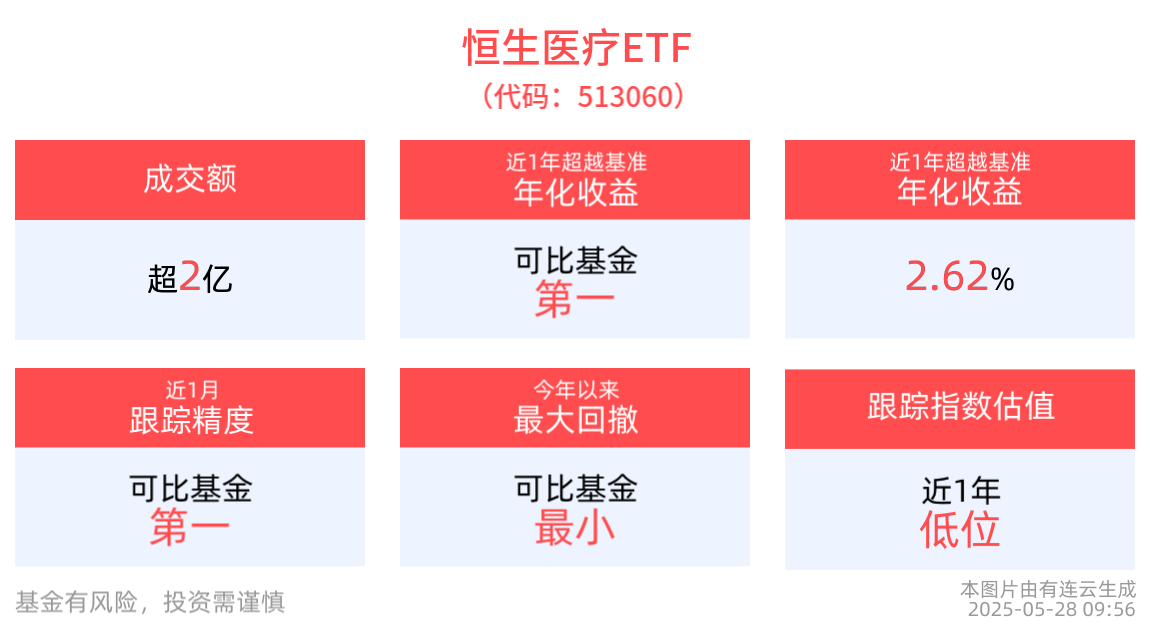
ASCO即将召开,恒生医疗ETF(513060)成交额超2亿元
Sou Hu Cai Jing· 2025-05-28 02:12
截至2025年5月28日 09:56,恒生医疗保健指数(HSHCI)下跌0.57%。成分股方面涨跌互现,美中嘉和(02453)领涨12.34%,药师帮(09885)上涨3.20%,讯飞医 疗科技(02506)上涨2.92%;一脉阳光(02522)领跌3.50%,科伦博泰生物-B(06990)下跌3.40%,药明合联(02268)下跌2.84%。恒生医疗ETF(513060)下跌 0.40%,最新报价0.5元。流动性方面,恒生医疗ETF盘中换手2.3%,成交2.06亿元。拉长时间看,截至5月27日,恒生医疗ETF近1周日均成交13.29亿元,居 可比基金第一。 2025年5月30日至6月3日,美国临床肿瘤学会(ASCO)年会将在美国芝加哥及线上同步举行。作为全球规模最大的临床肿瘤学会议之一,ASCO年会是众多 生物医药公司发布最新临床研究成果的重要平台,大会已正式公布会议摘要。 跟踪精度方面,截至2025年5月27日,恒生医疗ETF近1月跟踪误差为0.024%,在可比基金中跟踪精度最高。 从估值层面来看,恒生医疗ETF跟踪的恒生医疗保健指数最新市盈率(PE-TTM)仅24.68倍,处于近1年11.68%的分位, ...
隆基绿能连续六个季度亏损后,李振国辞任总经理,90后女儿“接棒”任董事
Sou Hu Cai Jing· 2025-05-27 15:31
Core Viewpoint - The resignation of Li Zhenguo from his positions at Longi Green Energy marks a significant shift in the company's management, as he aims to focus on research and development in photovoltaic technology while the company faces declining financial performance [2][3]. Management Changes - Li Zhenguo has stepped down as director, general manager, and legal representative of Longi Green Energy but will continue as the head of the Central Research Institute and Chief Technology Officer [2]. - Li Zhenguo's wife and he collectively hold 19.1% of Longi Green Energy's shares, making them the de facto major shareholders [2]. - The board has appointed Zhong Baoshan, the current chairman, to also serve as the general manager following Li's resignation [2]. Financial Performance - In 2024, Longi Green Energy's revenue decreased by 36.23% to 82.523 billion yuan, and the company reported a net loss of 8.618 billion yuan after two years of negative growth [3]. - Longi Green Energy has experienced six consecutive quarters of losses, with its stock price at 14.44 yuan per share, resulting in a market capitalization of approximately 109.4 billion yuan, down over 40 billion yuan from its peak in 2021 [3]. Strategic Focus - The company is accelerating the upgrade and expansion of its advanced BC production capacity, shifting investment from a previously planned project to a new 12GW high-efficiency monocrystalline battery project [3]. - Longi Green Energy's management cited the need to adapt to the cyclical adjustments in the photovoltaic industry and the uncertainty in supply-side capacity clearance as reasons for the strategic shift [3]. Succession Planning - Li Zhenguo's daughter, Li Shuxuan, has been nominated as a non-independent director candidate for Longi Green Energy's sixth board, indicating a potential succession plan [4]. - Li Shuxuan, born in 1993, currently works as a brand promotion manager at Xi'an Juzi Biological Technology Co., Ltd., which has seen significant stock price increases this year [4]. - She also holds a 23.5% stake in Dongguan Hive Smart Technology Co., Ltd., where she serves as a director [5]. Industry Trends - The entry of the next generation into leadership roles within photovoltaic companies is becoming more common, with several second-generation leaders, particularly women, stepping into significant positions in the industry [6].