中国财险

Search documents
长护险,“拨开乌云”之后如何行稳致远?
Qi Lu Wan Bao· 2025-07-22 07:51
Group 1 - The core value of long-term care insurance (LTCI) is to address the significant issue of "one person losing independence, the whole family losing balance" in an aging society [3][12] - LTCI is designed for individuals who lose the ability to care for themselves due to aging, illness, or disability, providing funding for basic daily care and related medical services [3][6] - The service model of LTCI aims to reach the disabled population effectively, offering various services such as home visits by caregivers to relieve family caregivers [3][6] Group 2 - Yantai Reina Fan Nursing Home, a designated institution for LTCI, provides comprehensive care services for moderately to severely disabled elderly individuals, with reimbursement of over 6,000 yuan per month for specialized care [6][10] - As of now, LTCI pilot programs have covered 49 cities in China, with over 180 million people insured and more than 2.6 million beneficiaries [6][10] - The pilot program in Shandong province has achieved significant coverage, with 54.44 million insured individuals and 650,000 beneficiaries as of May this year [6][10] Group 3 - Despite the success of LTCI, it remains in the pilot phase due to challenges such as sustainable funding sources, a shortage of professional caregivers, and regulatory difficulties [7][8][9] - The funding mechanism primarily relies on medical insurance allocations and government subsidies, with medical funds covering 70% and personal contributions only 10% [8] - The shortage of certified caregivers is a pressing issue, with only 26,000 certified caregivers available for over 735,000 disabled elderly individuals in Shanghai [8][9] Group 4 - The LTCI system is undergoing efforts to establish a more robust funding mechanism, enhance the training and supply of professional caregivers, and improve regulatory frameworks [10][13] - Commercial insurance companies are increasingly involved in the LTCI ecosystem, providing opportunities for developing supplementary insurance products and investing in caregiver training [10][11] - The LTCI's expansion is seen as a critical pathway to address the challenges of an aging population, with potential for significant growth in the insurance sector [11][12]

小案快赔 大案优办|济南人保财险中小工程保险,让开工收工都放心
Qi Lu Wan Bao· 2025-07-22 03:41
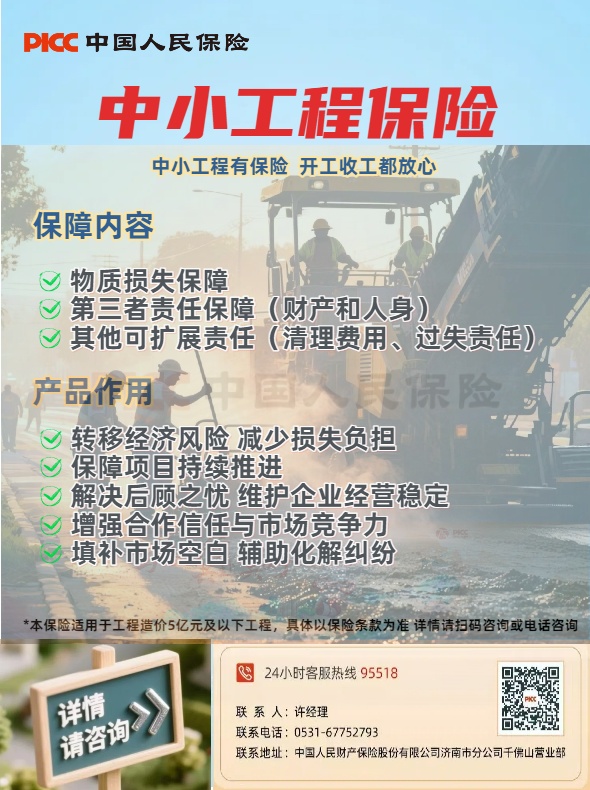
在济南,无论是老商埠的店铺翻新,还是新城周边的配套建设,亦或是社区里的管网改造,每一个中小工程都牵动着城市更新的脉搏。可施工中的风险从不 因项目大小而 "区别对待":泉边的外墙修缮遇上连阴雨,建材受潮影响进度;路灯安装时设备突发故障,耽误工期;工地上的师傅不慎磕碰,医疗费用让 本就紧凑的预算更吃紧……这些突发状况,往往让中小工程的负责人措手不及。 济南人保财险深耕泉城多年,懂这里的街巷肌理,更懂中小工程的痛点。量身打造的中小工程保险,就像为项目配上了"本土护航员":建材在顺河高架运输 时遇意外?济南人保财险快速定损,承担维修费用;施工时突降暴雨影响了芙蓉街的改造?停工损失由济南人保财险来补;工人在工地受伤需要去省立医院 治疗?医疗、误工等费用一站覆盖;甚至连施工设备临时"罢工",济南人保财险也能联动本地维修资源,让项目尽快复工。 从大明湖畔的景观升级到新旧动能转换区的小型基建,济南人保财险始终与泉城的建设者站在一起。依托遍布全市的服务网点,济南人保财险承诺"小案快 赔、大案优办",让理赔不跑路、服务不脱节。给中小工程一份保障,让每一次施工都踏踏实实,让济南的每一处更新都更安心——济南人保财险,用专业 守护您的 ...
年内规模增幅达997%!全市场唯一港股通非银ETF(513750)规模突破86亿元再创新高,关注低估区间布局机会
Xin Lang Cai Jing· 2025-07-22 01:50
Core Insights - The Hong Kong Stock Connect Non-Bank ETF (513750) has reached a record high of 8.658 billion yuan in size as of July 21, 2025, with a year-to-date growth of 997.33% [1] - The ETF has seen continuous net inflows over the past 14 days, totaling 3.673 billion yuan, with a single-day peak inflow of 820 million yuan [1] - The ETF's net asset value has increased by 79.30% over the past year, ranking 51 out of 2929 index stock funds, placing it in the top 1.74% [2] Fund Performance - The Hong Kong Stock Connect Non-Bank ETF has achieved a maximum monthly return of 31.47% since its inception, with the longest consecutive monthly gain being 4 months and a total increase of 38.25% [2] - The ETF has outperformed its benchmark with an annualized excess return of 22.98% over the last three months [2] Index Composition - As of June 30, 2025, the top ten weighted stocks in the index include China Ping An, AIA, Hong Kong Exchanges, and others, accounting for 77.92% of the index [3] - The top three holdings, China Ping An, AIA, and Hong Kong Exchanges, each represent over 14% of the index [3] Market Outlook - The insurance sector is expected to see a year-on-year net profit growth of 12.1% in the first half of 2025, driven by improved performance in the second quarter [3] - The insurance industry is currently undervalued, with a PE ratio at the 8.92x percentile and a PB ratio at the 1.50x percentile, suggesting potential investment opportunities [4] Investment Strategy - The market is advised to focus on undervalued stocks, mid-year performance, and business expansion opportunities in the insurance sector [4] - The Hong Kong Stock Connect Non-Bank ETF is the first and only ETF tracking the non-bank index, with over 60% of its composition in the insurance sector, which is seen as a "second flagbearer" in a bull market [4]
中证港股通非银行金融主题指数上涨1.19%,前十大权重包含中国平安等
Jin Rong Jie· 2025-07-21 12:02
Group 1 - The core index, the CSI Hong Kong Stock Connect Non-Bank Financial Theme Index, rose by 1.19% to 3984.14 points, with a trading volume of 22.457 billion yuan [1] - Over the past month, the index has increased by 11.28%, by 36.78% over the last three months, and by 35.47% year-to-date [1] - The index consists of up to 50 listed companies that meet the non-bank financial theme criteria from the Hong Kong Stock Connect securities, reflecting the overall performance of these companies [1] Group 2 - The top ten weighted companies in the index include China Ping An (15.24%), Hong Kong Exchanges (13.97%), AIA Group (13.55%), China Life (8.76%), China Pacific Insurance (6.94%), China Property & Casualty Insurance (6.21%), New China Life (3.96%), People's Insurance Group of China (3.73%), CITIC Securities (2.9%), and Shandong Hi-Speed (2.46%) [1] - The index is composed entirely of financial sector companies, with a 100% allocation to this industry [1]




广东人保财险应对台风“韦帕”:预赔理赔有速度,救灾减灾有温度
Nan Fang Nong Cun Bao· 2025-07-21 07:03
Core Viewpoint - Guangdong Ping An Property & Casualty Insurance has effectively implemented pre-compensation measures and disaster relief efforts in response to Typhoon "Wipha," demonstrating both speed in claims processing and warmth in disaster response [1][5]. Group 1: Pre-Compensation and Emergency Response - As of July 19, the company had already paid out 886,700 yuan (approximately 0.13 million USD) in pre-compensation to 31 aquaculture farmers affected by the typhoon [3][4]. - The company activated its emergency disaster response plan immediately upon the typhoon's approach, coordinating various resources for disaster prevention and mitigation [5][6]. - A total of 990 personnel were deployed for service, with 500 vehicles dispatched for inspections in high-risk areas [35][41]. Group 2: Agricultural Support and Risk Mitigation - The company has provided emergency harvesting services for over 11,400 acres of rice, aiming to reduce losses by more than 500,000 yuan (approximately 0.07 million USD) [10][40]. - In addition to rice, the company has conducted risk assessments and assisted in the harvesting of various fruits, including longan and bananas, covering 5,200 acres of longan and 1,300 acres of other fruits [16][18]. - The company has also utilized drones for monitoring and risk assessment, ensuring timely responses to the agricultural impacts of the typhoon [21][39]. Group 3: Claims Processing and Customer Service - The company has established a "green claims channel" for typhoon-related claims, allowing customers to apply for claims through an online platform, significantly shortening the claims processing time [32][41]. - As of July 21, the company had received a total of 1,203 claims, including 716 vehicle insurance claims and 401 agricultural insurance claims [41][42]. - The company plans to integrate internal and external resources to efficiently advance subsequent claims processing and support post-disaster recovery efforts [42][43].

工银瑞信中国机会全球配置股票型证券投资基金2025年第2季度报告
Zheng Quan Zhi Xing· 2025-07-21 05:28
Core Viewpoint - The report highlights the performance and investment strategy of the ICBC Credit Suisse China Opportunity Global Allocation Equity Fund for the second quarter of 2025, emphasizing its focus on benefiting from China's economic growth through diversified global investments. Fund Overview - Fund Name: ICBC Global Equity (QDII) - Fund Code: 486001 - Fund Type: Contractual open-end fund - Total Fund Shares at Period End: 309,974,669.75 shares - Investment Objective: To provide domestic Chinese investors with opportunities to invest in companies benefiting from China's economic growth globally, while controlling portfolio risk and pursuing long-term asset appreciation [2][3]. Financial Performance and Net Value - Net Value Growth Rate for the past three months: 5.42% - Benchmark Return Rate for the past three months: 7.48% - Net Value Growth Rate for the past six months: 11.31% - Benchmark Return Rate for the past six months: 12.56% - Net Value Growth Rate for the past year: 23.44% - Benchmark Return Rate for the past year: 24.49% [5][16]. Investment Strategy - The fund primarily invests in Chinese companies listed on overseas markets such as Hong Kong, as well as global companies benefiting from China's economic growth. - Key themes for stock selection include domestic consumption, import demand, and export advantages related to China's economy [2][12]. Portfolio Composition - Total Assets: 421,616,987.40 RMB - Major Holdings: - Ordinary Shares: 375,494,458.82 RMB (81.46%) - Depositary Receipts: 46,122,528.58 RMB (10.01%) - Geographic Allocation: - United States: 193,532,734.96 RMB (42.25%) - Hong Kong: 138,554,459.58 RMB (30.25%) [17][18]. Sector Allocation - The fund's sector allocation includes: - Consumer Staples: 4.83% - Financials: 20.81% - Health Care: 6.56% - Industrials: 5.63% - Communication Services: 92.04% of total assets [18][21]. Management and Advisory - Fund Manager: ICBC Credit Suisse Fund Management Co., Ltd. - Custodian: Bank of China Co., Ltd. - Overseas Investment Advisor: Wellington Management Company, LLP [2][9].



非银周观点:两融规模有望破前高,券商、金融IT波动前行-20250721
Great Wall Securities· 2025-07-21 05:02
Investment Rating - The industry rating is "Outperform the Market" [3][23]. Core Viewpoints - The report indicates that the scale of margin trading is expected to surpass previous highs, with brokerages and financial IT sectors experiencing volatility [1]. - The report emphasizes that significant domestic and international events in July may influence market strength, with a focus on internal issues such as capacity reduction and PPI recovery [1][9]. - The report suggests that the insurance sector is currently undervalued, presenting an opportunity for valuation recovery [12]. Summary by Sections 1. Main Points - The report highlights that the Shanghai Composite Index was at 4058.55 points, reflecting a 1.09% increase, while the insurance index decreased by 1.35% [7]. - The report notes that the U.S. core CPI has been below expectations for five consecutive months, which may lead to calls for interest rate cuts [7]. - The report discusses the establishment of a regulatory framework for digital stablecoins in the U.S. [7]. 2. Key Investment Portfolio 2.1 Insurance Sector - The report recommends focusing on companies like China Ping An, China Pacific Insurance, and New China Life for their strong operational performance and growth potential [12]. - It mentions that the insurance sector is currently at a low valuation level, making it attractive for investment [12]. 2.2 Brokerage Sector - The report suggests focusing on mid-sized securities firms benefiting from innovation and market conditions, such as East Money and Zhejiang Securities [13]. - It also highlights the importance of large, stable brokerage firms with diversified revenue structures, recommending Huatai Securities and others [13]. 3. Market Trends - The report indicates that the market is experiencing increased volatility due to factors such as trade relations and new public fund regulations [9]. - It emphasizes the need to monitor the impact of currency fluctuations and upcoming political meetings on market dynamics [8][9].
最新规模逼近80亿元!全市场孤品港股通非银ETF(513750)连续13天“吸金”近31亿元,年内规模增幅达912.04%!
Xin Lang Cai Jing· 2025-07-21 03:30
Core Viewpoint - The Hong Kong Stock Connect Non-Bank ETF (513750) has reached a record high in both scale and shares, indicating strong investor interest and market activity [1][2]. Group 1: Fund Performance - As of July 18, 2025, the Hong Kong Stock Connect Non-Bank ETF has seen a net value increase of 75.44% over the past year, ranking 59th out of 2917 index stock funds, placing it in the top 2.02% [2]. - The ETF has achieved a maximum monthly return of 31.47% since its inception, with the longest consecutive monthly gains being 4 months and a total increase of 38.25% during that period [2]. - The ETF has outperformed its benchmark with an annualized return of 21.19% over the last three months [2]. Group 2: Market Activity - The Hong Kong Stock Connect Non-Bank ETF reached a scale of 7.985 billion yuan, marking a 912.04% increase year-to-date, with the latest share count at 5.072 billion [1]. - The ETF experienced a turnover rate of 13.01% with a trading volume of 1.054 billion yuan, indicating active market participation [1]. - Over the past 13 days, the ETF has seen continuous net inflows, with a peak single-day inflow of 820 million yuan, totaling 3.096 billion yuan in net inflows [1]. Group 3: Index Composition - The CSI Hong Kong Stock Connect Non-Bank Financial Theme Index (931024) includes up to 50 listed companies, with the top ten weighted stocks accounting for 77.92% of the index [3]. - The top three holdings—China Ping An, AIA Group, and Hong Kong Exchanges—each represent over 14% of the index [3]. - Recent regulatory policies in the insurance sector have been favorable, aimed at mitigating risks associated with interest rate spreads and enhancing the operational environment for insurance companies [3]. Group 4: Industry Outlook - Analysts remain optimistic about investment opportunities in the non-bank sector, driven by macroeconomic stability and liquidity release from monetary policy adjustments [4]. - New regulations in the securities industry are expected to boost revenue growth for brokerage firms, while long-term investment policies for insurance companies may improve valuation and returns [4]. - The Hong Kong Stock Connect Non-Bank ETF is the first and only ETF tracking the non-bank index, providing unique investment access without QDII quota restrictions [4].
深圳保险业迎击台风“韦帕”:报案逾千件,多笔赔付已到位
Nan Fang Du Shi Bao· 2025-07-21 02:52
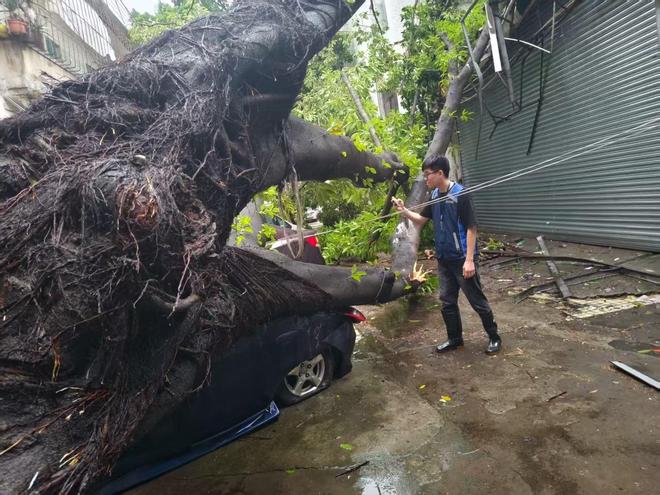
如何构建协同模式,前置服务筑牢"安全线",也成为考验。早在7月18日,鼎和保险构建总分联动、多 部门协同工作模式,广东、广西、海南和深圳分公司启动应急预案,理赔、承保、客服多线同步行动。 相关人士表示,利用鼎和风险云系统灾害预警功能,全面排查承保标的各类重大风险隐患,对风险隐患 及时采取措施,最大程度降低潜在风险。数据统计,鼎和保险通过鼎和风险云系统向受灾区域客户推送 预警信息共计14.3万条,并紧急组织开展风险排查,预警信息精准流向涉险区域车主和企业主等客户手 机。 查勘现场 据悉,目前深圳头部保险机构均成立应急工作小组,部署预警、防灾、救援、查勘工作,开通绿色理赔 通道。 借助科技力量进行风险前置、防灾减灾,成为本次深圳保险业迎击台风的一个看点。人保财险方面称, 以"科技+人力"双轮驱动,打造"全周期"防线。灾前通过短信、APP、公众号等6大渠道向120万+客户推 送预警信息,针对新能源车主定制"涉水处理指南";组建44台应急查勘车、130台可调度救援车,配备 无人机3台,科技设备15套,对全市169处低洼点设置风险提示牌,通过系统自动触发3107条易涝区域车 辆挪车提醒。 首笔赔付也迅速到位。7月20日 ...
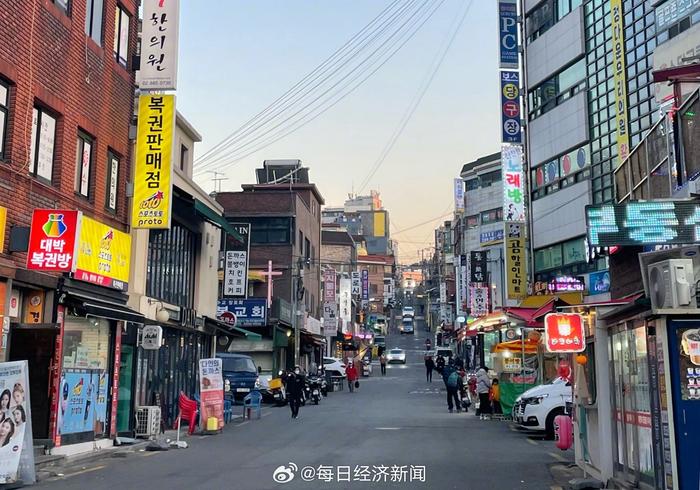
韩国股民最爱港股小米,净买入1.6亿美元
Mei Ri Jing Ji Xin Wen· 2025-07-21 00:34
Group 1 - The core viewpoint of the articles highlights the increasing interest of South Korean investors in Chinese stocks, particularly in Hong Kong-listed companies, with Xiaomi being the most favored [1][2]. - As of July 18, 2023, South Korean investors held a total of 66.7 trillion KRW in investable deposits, indicating significant potential for further investments [1]. - The top ten Hong Kong stocks net purchased by South Korean investors over the past year include Xiaomi, BYD, CATL, Alibaba, and others, with Xiaomi leading at a net purchase of 160 million USD [2][3]. Group 2 - In the past month, the most net purchased stocks by South Korean investors include Old Town Gold, Sanhua Intelligent Control, and Xiaomi, with Old Town Gold receiving a net purchase of approximately 2.94 million USD [3]. - The net purchase amounts for other notable stocks include 6.24 million USD for BYD, 6.08 million USD for CATL, and 5.77 million USD for Old Town Gold, showcasing a diverse interest in various sectors [2][3]. - The data indicates a strong trend of South Korean investors favoring technology and consumer goods sectors, as reflected in their stock selections [1][2].