巨子生物

Search documents
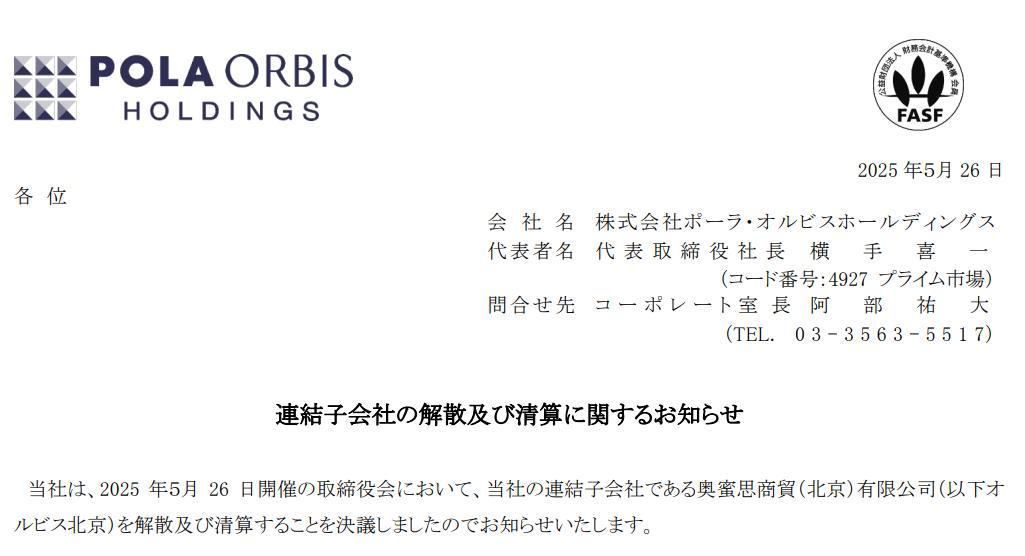
连亏3年,知名日妆解散中国子公司
3 6 Ke· 2025-05-27 02:59
Core Viewpoint - POLA ORBIS HOLDINGS has announced the dissolution and liquidation of its subsidiary, Orbis Beijing, indicating challenges in the Chinese market but not a complete exit from China [1][3][5]. Company Overview - POLA ORBIS was established in 1929, focusing on beauty care, real estate, and other sectors, with beauty care accounting for 97% of its total revenue in 2024 [6]. - The Orbis brand, launched in 1984, targets the mid-range market with products priced between 2,000 and 5,000 yen (approximately 101 to 252 RMB) [8]. Financial Performance - Orbis Beijing's revenue for 2024 was 783 million yen (approximately 39 million RMB), the lowest in three years, with continuous losses in operating profit and net profit [8][9]. - The financial data shows a decline in net assets and total assets over the past three years, with net sales dropping significantly [9]. Strategic Decisions - The decision to dissolve Orbis Beijing aligns with POLA's "VISION 2029" strategy, which aims to expand globally and optimize brand portfolios [10]. - The company cited the slowing Chinese economy and intensified e-commerce competition as reasons for the inability to achieve short-term profitability [10][11]. Market Challenges - POLA faces significant competition in the Japanese cosmetics market, ranking last among the top four Japanese cosmetic groups [11]. - The overall performance of POLA's brands has been declining, with the main brand POLA and Jurlique experiencing revenue drops, while Orbis showed some growth [15][20]. Industry Context - The Chinese beauty market is becoming increasingly competitive, with local brands like Proya and Han Shu achieving significant revenue growth, contrasting with the struggles of international brands [21]. - The challenges faced by POLA are not unique, as other Japanese cosmetic companies are also experiencing difficulties in the Chinese market [20][21].

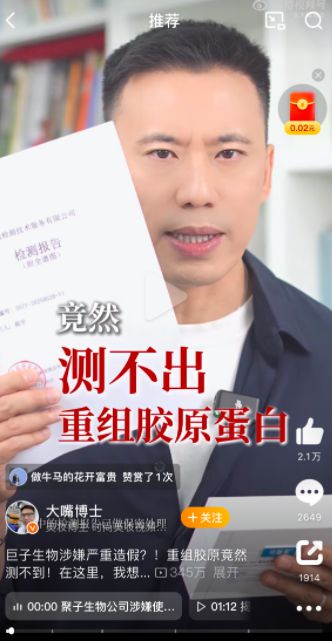
检测方法被质疑!是否涉及同行竞争?“大嘴博士”回应了
Nan Fang Du Shi Bao· 2025-05-27 00:10
Core Viewpoint - The controversy surrounding the alleged fraud of the collagen essence product from Giant Biological (02367.HK) continues to escalate, with significant focus on the testing methods used to validate the claims made by Dr. Hao Yu, who has accused the product of containing only 0.0177% of recombinant collagen [1][3][5]. Group 1: Allegations and Responses - Dr. Hao Yu claims that the key component "glycine" is missing from the collagen essence, raising doubts about the product's authenticity [3]. - Giant Biological has issued a statement denying the allegations, asserting that their internal testing shows collagen content greater than 0.1%, contradicting Dr. Hao's findings [5][6]. - The company emphasizes adherence to regulatory standards and claims that all products undergo rigorous quality control processes [6][8]. Group 2: Testing Methods - The testing methods used by Dr. Hao Yu have been questioned by Giant Biological, which argues that the methods are not recognized by industry standards and lack proper validation [1][10]. - Dr. Hao Yu defends his use of high-precision HPLC amino acid quantification method, stating it is widely accepted internationally and has been validated for accuracy [1][10]. - Giant Biological has committed to obtaining third-party testing results to further validate their claims, indicating that they are awaiting the results from multiple authoritative testing agencies [2][8]. Group 3: Industry Context - The lack of established industry standards for measuring recombinant collagen content in cosmetics has been highlighted as a significant issue in this controversy [10]. - Dr. Hao Yu's background in organic chemistry and experience in the cosmetics industry lend credibility to his claims, although he asserts that there is no competitive motive behind his allegations [11][14]. - The ongoing debate raises questions about product quality and consumer trust in the cosmetic industry, particularly regarding the accuracy of ingredient labeling [16].
测不到胶原?医美龙头被质疑造假风波发酵,今日股价一度重挫10%
21世纪经济报道· 2025-05-26 14:31
Core Viewpoint - The article discusses the controversy surrounding Giant Bio (巨子生物) and its flagship product, Kefu Mei (可复美), which has been accused of potential fraud regarding its collagen content, leading to a crisis of trust among investors and consumers [1][4]. Group 1: Controversy and Market Impact - On May 24, a report from "Dr. Yan's Research Institute" claimed that Kefu Mei's collagen content was undetectable, raising questions about the company's credibility and regulatory compliance [1][4]. - Following the allegations, Giant Bio's stock price fell over 10% on May 26, closing at 73.6 HKD per share, with a total market capitalization of 788.19 billion HKD [4]. - Other companies in the collagen market, such as Jinbo Bio (锦波生物), Marubi (丸美生物), and Furuida (福瑞达), also experienced stock price declines amid the controversy [4]. Group 2: Product and Testing Disputes - The report highlighted three main issues with Kefu Mei: the claimed collagen content was only 0.0177%, below the regulatory threshold of 0.1%, and the absence of glycine, a key amino acid in collagen [9][11]. - Giant Bio defended its product, stating that it complies with national standards and has undergone multiple testing phases to ensure quality [11]. - The lack of standardized testing methods for collagen products in China has been identified as a significant issue, leading to discrepancies in test results from different institutions [12]. Group 3: Industry Context and Growth Potential - The collagen market in China reached 192.4 billion CNY in 2022, with a projected compound annual growth rate of 44.93%, expected to reach 585.7 billion CNY by 2025 [20]. - Companies like Jinbo Bio and Marubi are actively developing their collagen products, with Jinbo Bio reporting a revenue increase of 84.92% in 2024 [20][21]. - The article emphasizes the need for a scientific testing framework and transparent regulatory oversight to address the ongoing challenges in the collagen industry [17][22].

巨子生物因可复美配方起争议,两大核心问题待解
Xin Lang Cai Jing· 2025-05-26 13:56
Core Viewpoint - The controversy surrounding the collagen product "Human-Like Recombinant Collagen Essence" from Giant Bio is primarily focused on the alleged discrepancy between the claimed and actual content of recombinant collagen, with accusations of misleading advertising and lack of industry standards for testing [1][4][5]. Group 1: Allegations and Responses - A blogger claimed that the actual recombinant collagen content in the product is only 0.0177%, significantly lower than advertised [1][4]. - Giant Bio responded by stating that their internal tests show collagen content above 0.1%, disputing the blogger's claims and questioning the validity of the testing methods used [1][5][6]. - The blogger criticized Giant Bio for not addressing two key scientific questions in their response and emphasized the need for transparency and accountability [2]. Group 2: Testing Standards and Methodology - The lack of established industry and national standards for testing recombinant collagen in cosmetics has led to disputes over testing methods and ingredient definitions [3][6]. - The blogger used HPLC (High-Performance Liquid Chromatography) to detect amino acid content, finding only 0.0177%, which raises questions about the product's labeling [4][10]. - Industry experts noted that the testing methods used by both parties require proper validation to ensure reliability, and the methods referenced by Giant Bio may not be directly applicable to cosmetic regulations [6][7]. Group 3: Ingredient Definition and Labeling - The core issue also revolves around how recombinant collagen is defined and whether the product contains genuine collagen, as the absence of glycine in the test results raises doubts [8][11]. - The blogger argued that the product's labeling as "soluble collagen" may mislead consumers regarding its actual collagen content, similar to how other cosmetic ingredients can be misrepresented [7][11]. - Giant Bio claimed that their product meets labeling regulations, asserting that the soluble collagen content is above 0.1% and should be listed as a primary ingredient [6][9].
5月26日南向资金净卖出15.07亿港元
Zheng Quan Shi Bao Wang· 2025-05-26 13:55
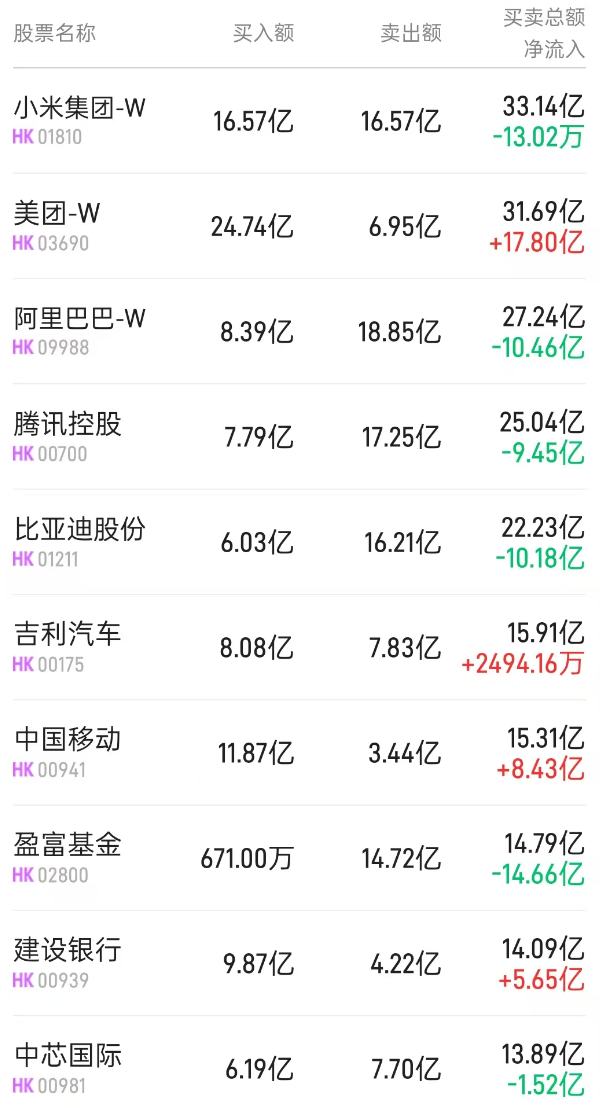
成交活跃股方面,沪市港股通前十大成交活跃股中,小米集团-W成交额为33.14亿港元,成交金额居 首;其次是美团-W、阿里巴巴-W,成交金额分别为31.69亿港元、27.24亿港元。以净买卖金额统计, 美团-W净买入额为17.80亿港元,净买入金额居首,该股收盘股价下跌5.48%。净卖出金额最多的是盈 富基金,净卖出14.66亿港元,收盘股价下跌1.26%。 深市港股通前十大成交活跃股中,成交额居首的是小米集团-W,成交金额23.12亿港元;其次是美团- W、腾讯控股,成交金额分别为22.17亿港元、17.29亿港元。以净买卖金额统计,有2只股为净买入,净 买入金额最多的是地平线机器人-W,净买入7.30亿港元,该股收盘下跌6.45%。净卖出金额最多的是腾 讯控股,净卖出11.46亿港元,收盘股价下跌1.54%。(数据宝) 5月26日恒生指数下跌1.35%,报收23282.33点,全天南向资金通过港股通渠道合计净卖出15.07亿港 元。 证券时报·数据宝统计,5月26日港股通全天合计成交金额为996.72亿港元,成交净卖出15.07亿港元。 具 体来看,沪市港股通成交金额639.69亿港元,成交净买入18.56 ...
华熙生物炮轰券商研报风波:西部证券涉事报告离奇“消失”,九家遭点名券商又为何集体沉默?
Mei Ri Jing Ji Xin Wen· 2025-05-26 12:39
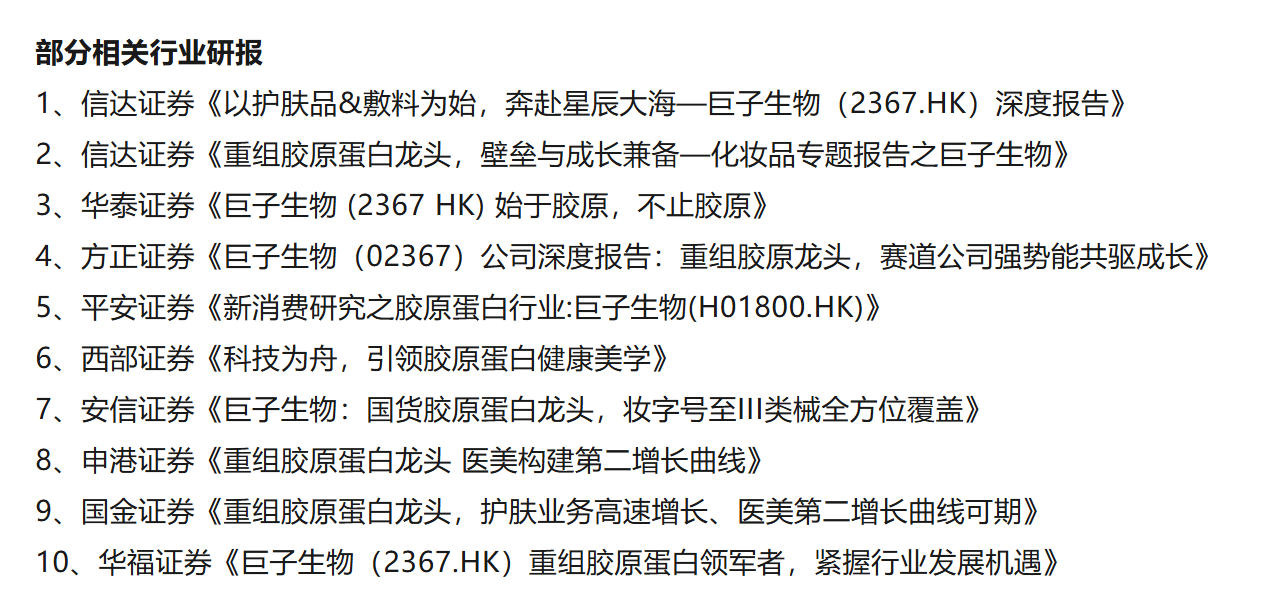
Core Viewpoint - The leading domestic hyaluronic acid company, Huaxi Biological, has publicly criticized 10 research reports from 9 securities firms for containing misleading statements, highlighting the competitive dynamics between hyaluronic acid and recombinant collagen products [1][2][3] Group 1: Criticism of Research Reports - Huaxi Biological published a nearly 5000-word article accusing the reports of creating inflated expectations around recombinant collagen products at the expense of the hyaluronic acid industry [2][3] - The criticized reports include those from major firms such as Huatai Securities, Ping An Securities, and Western Securities, with specific claims of bias and contradictions in their analyses [3][5][12] - Some reports have been reportedly deleted, particularly the one from Western Securities, raising questions about the integrity of the research [5][22] Group 2: Market Dynamics and Product Comparison - The reports discussed the advantages and disadvantages of hyaluronic acid and recombinant collagen, with some showing a preference for collagen, which has led to concerns about the objectivity of the analyses [7][16] - Huaxi Biological's core product is hyaluronic acid, while the competitor, Juzhi Biological, focuses on recombinant collagen, both of which are used in medical and cosmetic applications [3][19] - The market for recombinant collagen is expected to grow rapidly, potentially surpassing that of hyaluronic acid, due to its higher technical barriers and product characteristics [20][19] Group 3: Analyst Reactions and Industry Implications - The incident has sparked discussions among analysts, with some suggesting that securities firms may feel pressured to remain silent due to their weaker position against prominent companies like Huaxi Biological [23][22] - Analysts have noted that while both products have their merits, the technical complexity of recombinant collagen is higher than that of hyaluronic acid, reflecting broader trends in consumer preferences [23][20] - Despite the criticism, several securities firms continue to issue positive ratings for Huaxi Biological, indicating a complex relationship between market perception and research integrity [22][19]

“测不到胶原”风波发酵:巨子生物陷信任危机,重组胶原蛋白市场震荡
2 1 Shi Ji Jing Ji Bao Dao· 2025-05-26 12:09
Core Viewpoint - The controversy surrounding Juzhibio's flagship product, Kefu Mei, has raised significant concerns about the authenticity of its collagen claims, leading to a crisis of trust among investors and consumers [1][3][6]. Company Summary - Juzhibio, known as a leader in recombinant collagen, has faced allegations of product falsification, particularly regarding its Kefu Mei product, which reportedly contains only 0.0177% collagen, below the regulatory threshold of 0.1% [3][4]. - The company has stated that all its products are compliant with regulatory standards and have undergone rigorous quality checks [4][6]. - Following the controversy, Juzhibio's stock price fell by 4.04% to HKD 73.6, with a total market capitalization of HKD 788.19 billion as of May 26 [2]. Industry Summary - The demand for aesthetic products, including hyaluronic acid and collagen, has been rising, with major players like Juzhibio and Jinbo Bio seeing growth despite market challenges [2][9]. - The recombinant collagen market in China is projected to grow significantly, reaching CNY 585.7 billion by 2025, with a compound annual growth rate of 44.93% [10][12]. - The lack of standardized testing methods for collagen products has led to discrepancies in product claims and consumer trust issues, highlighting the need for regulatory frameworks in the industry [5][8][12].
化学博士质疑可复美“重组胶原蛋白精华”成分造假,医美新贵巨子生物急回应
Guo Ji Jin Rong Bao· 2025-05-26 11:55
Core Viewpoint - The recent controversy surrounding Giant Biological (巨子生物) has led to a significant decline in its stock price and raised questions about the integrity of its flagship product, "Recombinant Collagen" [1][2][6] Company Overview - Giant Biological, established in September 2001, is a leader in the global recombinant collagen market, with a registered capital of 68,752.179 million RMB [3] - The company's product line includes "Recombinant Collagen Essence," which claims to enhance skin firmness and elasticity [3] Controversy Details - A report by Dr. Hao Yu accused Giant Biological of product fraud, stating that the collagen content in its "Recombinant Collagen Essence" was only 0.0177%, below the non-trace standard of 0.1% [3][4] - The company has strongly denied these allegations, asserting that all products undergo rigorous quality control and testing [4][5] Market Impact - Following the controversy, Giant Biological's stock price fell by over 8% on May 26, 2023, closing at 73.600 HKD, resulting in a market capitalization of 788 billion HKD [1][6] - The company's market value has decreased from 900 billion HKD to 788 billion HKD due to the ongoing scandal [7] Financial Performance - For 2024, Giant Biological is projected to have a revenue of 5.678 billion RMB, with a year-on-year growth of 56.53% [8] - The company's net profit is expected to be 2.062 billion RMB, reflecting a growth of 42.06% [8] - Despite strong revenue growth, the company's R&D expenditure is only 107 million RMB, accounting for less than 2% of its revenue [8]
智通港股通活跃成交|5月26日



智通财经网· 2025-05-26 11:05
Group 1 - On May 26, 2025, Xiaomi Group-W (01810), Meituan-W (03690), and Alibaba-W (09988) ranked as the top three in southbound trading volume under the Shanghai-Hong Kong Stock Connect, with transaction amounts of 3.314 billion, 3.169 billion, and 2.724 billion respectively [1] - In the southbound trading volume under the Shenzhen-Hong Kong Stock Connect, Xiaomi Group-W (01810), Meituan-W (03690), and Tencent Holdings (00700) also ranked as the top three, with transaction amounts of 2.312 billion, 2.217 billion, and 1.729 billion respectively [1] Group 2 - In the southbound trading of the Shanghai-Hong Kong Stock Connect, the top active companies included Xiaomi Group-W (01810) with a transaction amount of 3.314 billion and a net buy of -130.2 thousand, Meituan-W (03690) with 3.169 billion and a net buy of 1.780 billion, and Alibaba-W (09988) with 2.724 billion and a net buy of -1.046 billion [2] - In the southbound trading of the Shenzhen-Hong Kong Stock Connect, the top active companies included Xiaomi Group-W (01810) with a transaction amount of 2.312 billion and a net buy of -696 million, Meituan-W (03690) with 2.217 billion and a net buy of 302 million, and Tencent Holdings (00700) with 1.729 billion and a net buy of -1.146 billion [2]
北水动向|北水成交净卖出15.07亿 内资抢筹美团(03690)超20亿港元 继续抛售盈富基金(02800)
智通财经网· 2025-05-26 09:59
智通财经APP获悉,5月26日港股市场,北水成交净卖出15.07亿港元,其中港股通(沪)成交净买入18.56 亿港元,港股通(深)成交净卖出33.63亿港元。 北水净买入最多的个股是美团-W(03690)、中国移动(00941)、地平线机器人-W(09660)。北水净卖出最 多的个股是腾讯(00700)、阿里巴巴-W(09988)、盈富基金(02800)。 | 股票名称 | 买入额 | 卖出额 | 买卖总额 | | --- | --- | --- | --- | | | | | 净流入 | | 小米集团-W | 16.57 乙 | 16.57 亿 | 33.14 乙 | | HK 01810 | | | -13.02万 | | 美团-W | 24.74 Z | 6.95亿 | 31.69 亿 | | HK 03890 | | | +17.80 乙 | | 阿里巴巴-W | 8.39亿 | 18.85 乙 | 27.24亿 | | HK 09988 | | | -10.46 Z | | 腾讯控股 | 7.79亿 | 17.25亿 | 25.04亿 | | HK 00700 | | | -9.45 Z | | 比 ...