
软银集团

Search documents
字节跳动估值,传飙升至3.7万亿
Xin Lang Cai Jing· 2025-11-21 06:22
Group 1 - Capital Today has acquired a stake in ByteDance, valuing the company at $480 billion (approximately HKD 3.7 trillion) [2] - The acquisition occurred during a bidding process on November 19, where Capital Today outbid multiple interested companies to purchase shares from early institutional investor Bank of China [2] - The initial pricing for the shares was around $200 million, corresponding to a valuation of approximately $360 billion for ByteDance, but due to competition from seven bidders, the final price rose to nearly $300 million [2] Group 2 - ByteDance initiated an employee stock buyback program in September, with an estimated valuation of about $330 billion at that time [2] - Earlier this year, investors including SoftBank and Fidelity Investments raised their valuations of ByteDance's shares to over $400 billion [2] - SoftBank's Vision Fund considered the potential of ByteDance's AI business "Doubao," leading to a valuation exceeding $400 billion, which factored in a zero valuation for TikTok's U.S. operations [2]


全球AI争霸背后的电力较量:能源焦虑与联想液冷的爆发式增长
Zhi Tong Cai Jing· 2025-11-21 05:47
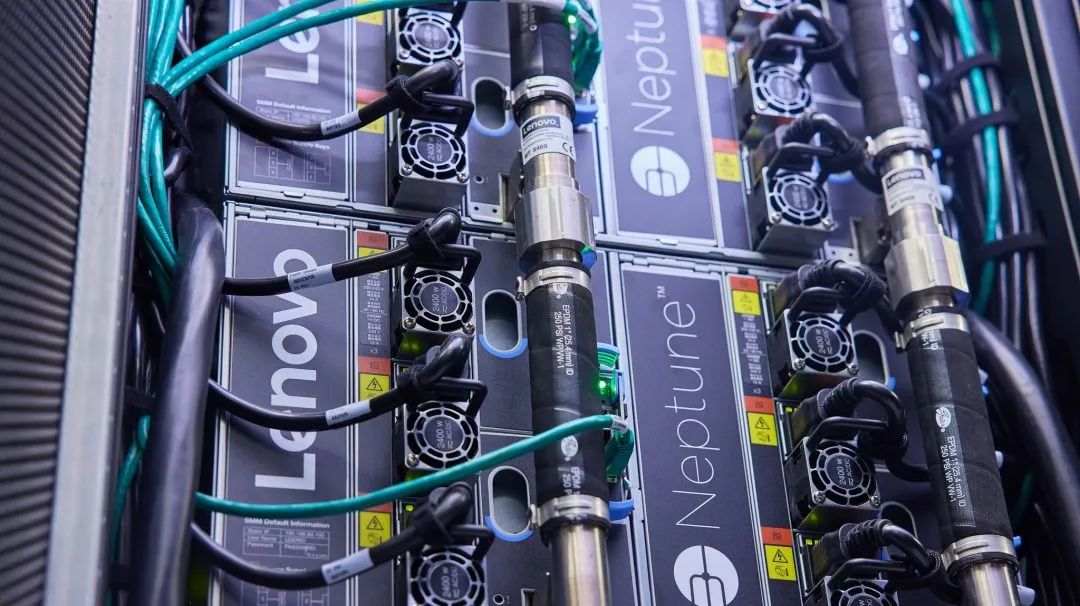
Group 1: AI and Energy Demand - The AI competition has shifted from chip supply to power supply, with significant implications for data center investments, projected to reach $3 trillion globally [1] - AI's energy consumption is rapidly increasing, with the energy demand for AI inference workloads expected to reach petawatt-hours by 2026, potentially overwhelming power grids [2][3] - The cost of electricity for data centers is substantial, with a 1 GW data center potentially incurring annual electricity costs of $700 million to $876 million [3] Group 2: Energy Strategies of Tech Giants - Tech companies are increasingly viewing energy as a survival necessity, with energy efficiency improvements translating to significant cost savings [4] - Major tech firms are adopting aggressive strategies, such as building their own power plants to ensure energy supply for their data centers [5][6] - The "Stargate" project, involving OpenAI, SoftBank, and Oracle, aims to invest $500 billion in constructing multiple giant data centers globally [6] Group 3: China's Energy Strategy - China is leveraging its clean energy advantages and policy guidance to meet AI computing power demands, with a massive $1.2 trillion power project expected to fulfill 75% of the national AI computing needs [7] Group 4: Cooling Technologies - AI data centers face a cooling crisis, with cooling energy consumption accounting for approximately 40% of total power demand [9] - Liquid cooling technology is becoming essential for AI data centers, with its ability to handle higher heat densities compared to traditional air cooling methods [11] - The global data center cooling market is projected to grow from $18.78 billion in 2025 to $42.48 billion by 2032, with a CAGR of 12.4% [11] Group 5: Lenovo's Position in Liquid Cooling - Lenovo has established itself as a key player in the liquid cooling market, with a 154% year-on-year revenue growth in its liquid cooling technology [13] - The company’s liquid cooling solutions have demonstrated significant energy efficiency, achieving a PUE value below 1.1 [13] - Lenovo's liquid cooling systems have been deployed in over 80,000 units globally, showcasing its competitive edge and market recognition [14] Group 6: Future Outlook - The global AI boom is transforming energy infrastructure into a high-growth asset class, with liquid cooling technology becoming a critical solution for energy efficiency [15] - Companies like Lenovo are positioned to benefit from the increasing demand for efficient cooling solutions in the AI sector [15]

全球AI争霸背后的电力较量:能源焦虑与联想(00992)液冷的爆发式增长
智通财经网· 2025-11-21 05:34
Core Insights - The AI competition has shifted from chip supply to power supply, highlighting a critical bottleneck in the industry [1][2] - Nvidia's market valuation has surged from $4 trillion to $5 trillion, driven by exponential growth in AI infrastructure demand, with global data center investments projected to reach $3 trillion [1][2] - The energy consumption of AI has expanded significantly, with predictions that global AI inference demand will reach petawatt-hours by 2026, potentially overwhelming power grids [3][4] Energy Crisis in AI - AI's energy consumption is increasingly distributed across model inference, with daily requests leading to exponential energy use, matching or exceeding training energy demands [3][4] - By 2030, global AI data centers will require an additional 96 gigawatts of power, equivalent to Sweden's annual output or 100 nuclear power plants [3][4] Cost Implications - A data center with a power demand of 1 gigawatt could incur annual electricity costs between $700 million and $876 million, with larger centers potentially reaching 10 gigawatts [4][5] - Energy efficiency improvements of just 1% can save companies hundreds of millions in long-term costs, emphasizing the critical nature of energy supply for tech firms [5] Strategies for Energy Supply - Major tech companies are adopting aggressive strategies to ensure energy supply, including building their own power plants [6][8] - Companies like xAI are constructing integrated facilities that combine data centers with on-site power generation to mitigate grid dependency [6][8] Global Energy Strategies - The U.S. faces power shortages due to aging infrastructure, prompting companies to self-generate energy [6][9] - In contrast, China is leveraging policy and clean energy advantages to meet AI power demands, with a massive $1.2 trillion hydropower project expected to fulfill 75% of national AI power needs [9] Cooling Technology - AI data centers consume significant power for cooling, necessitating advanced cooling technologies to manage heat effectively [11][12] - Liquid cooling technology is becoming essential for AI chip deployment, with the market for cooling expected to grow significantly [15][20] Lenovo's Position in Liquid Cooling - Lenovo has established itself as a leader in liquid cooling technology, with a 154% year-over-year revenue growth in its liquid cooling segment [17][19] - The company’s solutions have been successfully implemented in various critical sectors, showcasing its competitive advantages and market recognition [19][20]
全线暴跌!22.7万人爆仓
天天基金网· 2025-11-21 05:20
Market Overview - Risk assets have experienced a significant sell-off, with cryptocurrencies and tech stocks leading the decline. Bitcoin and Ethereum both fell over 5%, while the total liquidation in the cryptocurrency market exceeded $8 billion, affecting approximately 227,000 traders [3][4]. - The South Korean Composite Index dropped over 3%, and the Nikkei 225 Index fell more than 2%, reflecting a broader concern over tech stock valuations [3][7]. Cryptocurrency Market - Bitcoin's price has dropped to approximately $87,200, marking a decline of over 7% year-to-date, which could result in its first annual drop since 2022 [4]. - The likelihood of Bitcoin falling below $90,000 by year-end has risen to 50%, while the chance of it surpassing $100,000 by 2025 is only 30% [4][6]. - Analysts indicate that Bitcoin has broken below its 50-day and 200-day moving averages, leading to a loss of interest from trend-following investors [5]. Federal Reserve and Economic Indicators - The Federal Reserve's expectations for interest rate cuts have significantly diminished, with Morgan Stanley no longer predicting a rate cut in December. The recent employment data showed a substantial increase in non-farm jobs, which has led to a reassessment of economic conditions [8][9]. - Federal Reserve officials have expressed concerns about inflation remaining around 3%, indicating a cautious approach towards future rate cuts [9][10]. Tech Stock Performance - Major tech stocks have seen substantial declines, with companies like SanDisk and Micron experiencing drops of over 20% and 10%, respectively. This trend is attributed to renewed fears of a tech valuation bubble [7][8]. - The sell-off in tech stocks has been exacerbated by the Fed's stance on interest rates, as officials have downplayed the likelihood of imminent rate cuts [8][9].

AI泡沫担忧加剧!日韩股市早盘大幅下挫
Sou Hu Cai Jing· 2025-11-21 04:48
此外,据中新经纬报道,越来越多的美联储官员担心,在通胀仍高企的情况下过度降息的风险。根据上 月会议纪要,在连续第二次降息后,美联储许多官员倾向于反对12月再降息。 韩国市场上,SK海力士股价下跌9%,三星电子跌5%。日股AI及半导体概念股集体下挫,铠侠跌超 12%,软银集团一度跌超10%,爱德万测试跌近9%,东京电子跌超5%。 隔夜的美股市场上演"过山车"式行情,尽管英伟达强劲财报一度显著提振了市场情绪,纳指一度涨超 2%,但随着估值担忧卷土重来,以及降息预期进一步受挫,美国三大指数悉数收跌。 截至收盘,道琼斯指数跌0.84%,标普500指数跌1.56%,纳斯达克综合指数跌486.18点,跌幅2.15%。大 型科技股集体下挫,AMD跌超7%,甲骨文跌超6%,英伟达跌超3%,亚马逊跌逾2%,微软跌逾1%,特 斯拉跌超2%,谷歌跌超1%,苹果跌近1%,脸书跌0.19%。 导致美股上演"过山车"行情的背后,是美联储官员的鹰派言论和对AI高估值的担忧引发市场风险偏好回 落,这再度触发了美股大规模技术性抛售。 知名投资人、华尔街"大空头"迈克尔·伯里(Michael Burry)则在社交平台再度发文,抨击AI泡沫。他 ...





SoftBank and Asian chip stocks fall as Nvidia's selloff ripples through global semiconductor sector
Invezz· 2025-11-21 04:43
Core Viewpoint - Asian semiconductor stocks experienced significant declines following Nvidia's unexpected drop on Wall Street, despite Nvidia reporting stronger-than-expected results [1] Group 1: Market Reaction - The decline in Asian semiconductor stocks was triggered by Nvidia's performance, indicating a sector-wide pullback [1] - Nvidia's unexpected drop highlights the volatility in the semiconductor market, affecting investor sentiment across the region [1] Group 2: Company Performance - Nvidia posted stronger-than-expected results, yet this did not prevent the subsequent decline in semiconductor stocks [1] - The contrast between Nvidia's performance and the market reaction suggests underlying concerns within the semiconductor sector [1]


独立研究员:6100亿美元AI庞氏骗局崩盘!“大空头”买入看跌期权,押注英伟达股价将在2026年3月前跌至140美元,华尔街算法:英伟达账面数据存在严重矛盾
Sou Hu Cai Jing· 2025-11-21 04:41
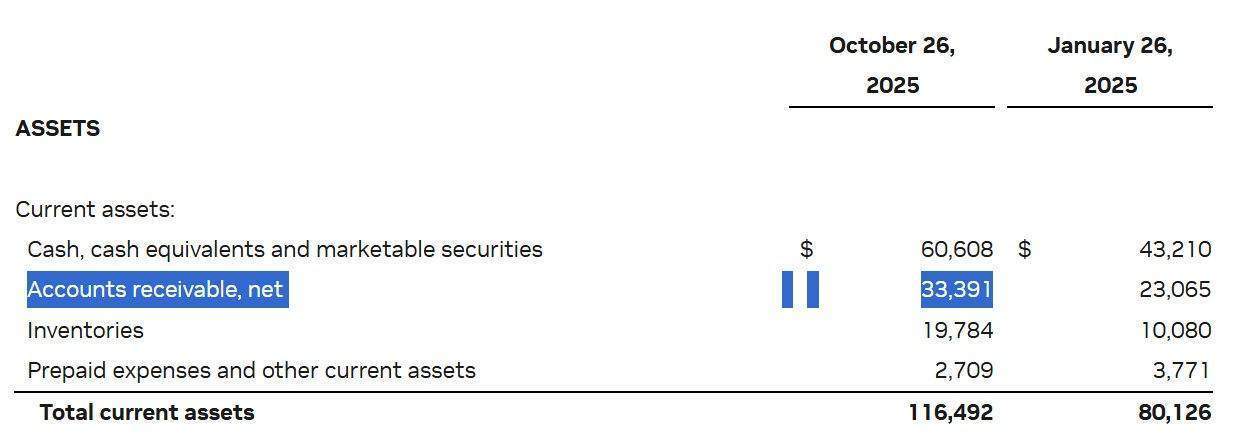
| | October 26, | | Janu | | --- | --- | --- | --- | | | 2025 | | 2 | | ASSETS | | | | | Current assets: | | | | | Cash, cash equivalents and marketable securities | $ | 60,608 | $ | | Accounts receivable, net | | 33,391 | | | Inventories | | 19,784 | | | Prepaid expenses and other current assets | | 2,709 | | | Total current assets | | 116.492 | | 格隆汇11月21日|金融市场独立研究员佩雷拉(Shanaka Anslem Perera)发文称,昨日,一场史无前例的剧变发生。英伟达股价在财报发布后飙升5%,却在18 小时内暴跌至负值区间。华尔街算法捕捉到了人类未能察觉的异常:账面数据存在严重矛盾。具体发现如下: 英伟达披露未结账款达334亿美元,一年内激增89%。购 ...
Three billionaires just issued a shocking Nvidia warning
Yahoo Finance· 2025-11-21 04:33
Core Viewpoint - Nvidia is central to the ongoing AI revolution, with its earnings being a focal point for analysts and investors, despite some top investors expressing skepticism about the AI boom [1][2]. Group 1: Investor Sentiment - Michael Burry has expressed concerns about a potential bubble in the market, indicating that some prominent investors share similar reservations about Nvidia's stock [2]. - Mike O'Rourke warns that speculative parts of the market are beginning to falter, which could impact major players like Nvidia [3]. Group 2: Nvidia's Market Position - Nvidia is viewed as the primary investment vehicle for AI, with its GPUs being essential for data centers operated by major companies like OpenAI, Google, and Microsoft [4]. - The stock has transitioned from being merely an AI leader to serving as a gauge for the AI market bubble [5]. Group 3: Recent Investor Actions - Michael Burry's Scion Asset Management purchased over $1 billion in put options on Nvidia and Palantir, indicating a bearish stance [6]. - Peter Thiel's Thiel Macro divested all its Nvidia shares, valued at nearly $100 million, while SoftBank Group is selling its entire 32.1 million-share stake for approximately $5.8 billion to invest in AI infrastructure [6].
6100亿美元AI庞氏骗局崩盘
Xin Lang Cai Jing· 2025-11-21 04:16
来源:格隆汇APP 格隆汇11月21日|金融市场独立研究员佩雷拉(Shanaka Anslem Perera)发文称,昨日,一场史无前例的 剧变发生。英伟达股价在财报发布后飙升5%,却在18小时内暴跌至负值区间。华尔街算法捕捉到了人 类未能察觉的异常:账面数据存在严重矛盾。具体发现如下: 硅谷风投教父彼得·蒂尔于11月9日抛售价值1亿美元的英伟达股票。软银集团11月11日抛售58亿美元持 股。"大空头"迈克尔·伯里买入看跌期权,押注英伟达股价将在2026年3月前跌至140美元。 与人工智能投机密切相关的比特币,已从10月的12.6万美元跌至今日的89,567美元,跌幅达29%。人工 智能初创企业持有价值268亿美元的比特币作为贷款抵押品。当英伟达股价再跌40%时,这些贷款将违 约,迫使抛售230亿美元比特币,导致加密货币崩盘至5.2万美元。 时间线已然明朗:2026年2月,英伟达公布财报揭露逾期账款规模;2026年3月,评级机构下调信用评 级;2026年4月,首次财务重述。这场耗时18个月构筑的骗局,在90天内土崩瓦解。 | | October 26, | | January 26, | | | --- | ...
英伟达的“引力”与“孤岛”:业绩增速再度抬头,中国市场仍是缺口
Hua Xia Shi Bao· 2025-11-21 04:10
Core Viewpoint - Nvidia's recent financial report indicates a significant recovery in revenue and net profit growth, driven primarily by strong demand in the data center business, despite challenges in the Chinese market [3][4]. Financial Performance - For the third quarter of fiscal year 2026, Nvidia reported revenue of $57 billion, a 22% increase from the previous quarter and a 62% increase year-over-year; net profit reached $31.9 billion, up 65% year-over-year and 21% quarter-over-quarter [4]. - The revenue growth rate had previously slowed down, but this quarter marks the first simultaneous increase in both revenue and net profit after several quarters of decline [4]. - The data center segment remains the primary revenue driver, generating $51.215 billion, a 66% increase year-over-year; gaming revenue was $4.265 billion, up 30%; professional visualization revenue was $760 million, up 56%; and automotive revenue was $592 million, up 32% [5]. Market Dynamics - Nvidia's CEO Jensen Huang dismissed concerns about an "AI bubble," asserting that the company is well-prepared to succeed in all stages of AI development [6][7]. - The demand for Nvidia's Blackwell architecture GPUs has exceeded expectations, contributing significantly to revenue growth [5][7]. - Despite Nvidia's strong performance, major stakeholders, including SoftBank and Huang himself, have sold off significant shares, raising concerns about potential market bubbles [6][7]. Strategic Investments - Nvidia continues to invest strategically in companies like Intel, OpenAI, and Nokia to expand its AI ecosystem and ensure optimal performance across its product range [8]. - The company aims to maintain a robust cash flow management approach while pursuing these investments [8]. Challenges in the Chinese Market - Nvidia's market share in China has plummeted from 95% to 0% for high-end AI chips due to U.S. export controls, leading to a complete withdrawal from the Chinese market [10]. - The company expressed disappointment over missed large purchase orders in China due to geopolitical issues and increased competition [10]. - Nvidia's absence in the Chinese market has created opportunities for local AI chip manufacturers, such as Cambrian, which reported a 1332.52% year-over-year revenue increase [11].
